

Last updated: July 11, 2026
mini golden doodles breeders
Mini golden doodles breeders are specialty kennels that cross a Miniature or Toy Poodle with a Golden Retriever to produce small, low-shedding, family-friendly dogs typically weighing 15-35 pounds. A reputable breeder health-tests both parents, socializes puppies from birth using protocols like ENS (Early Neurological Stimulation), and charges $2,500,$4,500 for a well-started puppy with a genetic health guarantee. Anything under $1,500 is almost always a scam, puppy mill, or backyard breeder.
mini golden doodles breeders
- Mini goldendoodles typically stand 13-20 inches tall and weigh 15-35 pounds when fully grown.
- Expect to pay $2,500,$4,500 from an accredited breeder; prices under $1,500 signal serious red flags.
- Reputable breeders perform OFA hip, elbow, cardiac, and genetic panel testing on both parent dogs.
- ENS (Early Neurological Stimulation) from days 3-16 measurably improves stress resilience and trainability.
- Low-shedding, not non-shedding, F1B and multigen curly coats shed the least but still need grooming every 6-8 weeks.
- Great for apartments if daily exercise and mental enrichment are provided.
- Not ideal for owners who are gone 10+ hours a day or want a low-maintenance coat.
- Verify breeders in person or via live video walkthrough; never wire money to a stranger.
What Is a Mini Golden Doodle?
A mini golden doodle is a hybrid dog created by crossing a Golden Retriever with a Miniature or Toy Poodle. The result is a small-to-medium companion dog, usually 15 to 35 pounds and 13 to 20 inches at the shoulder, that combines the Golden’s affectionate temperament with the Poodle’s intelligence and low-shedding coat.
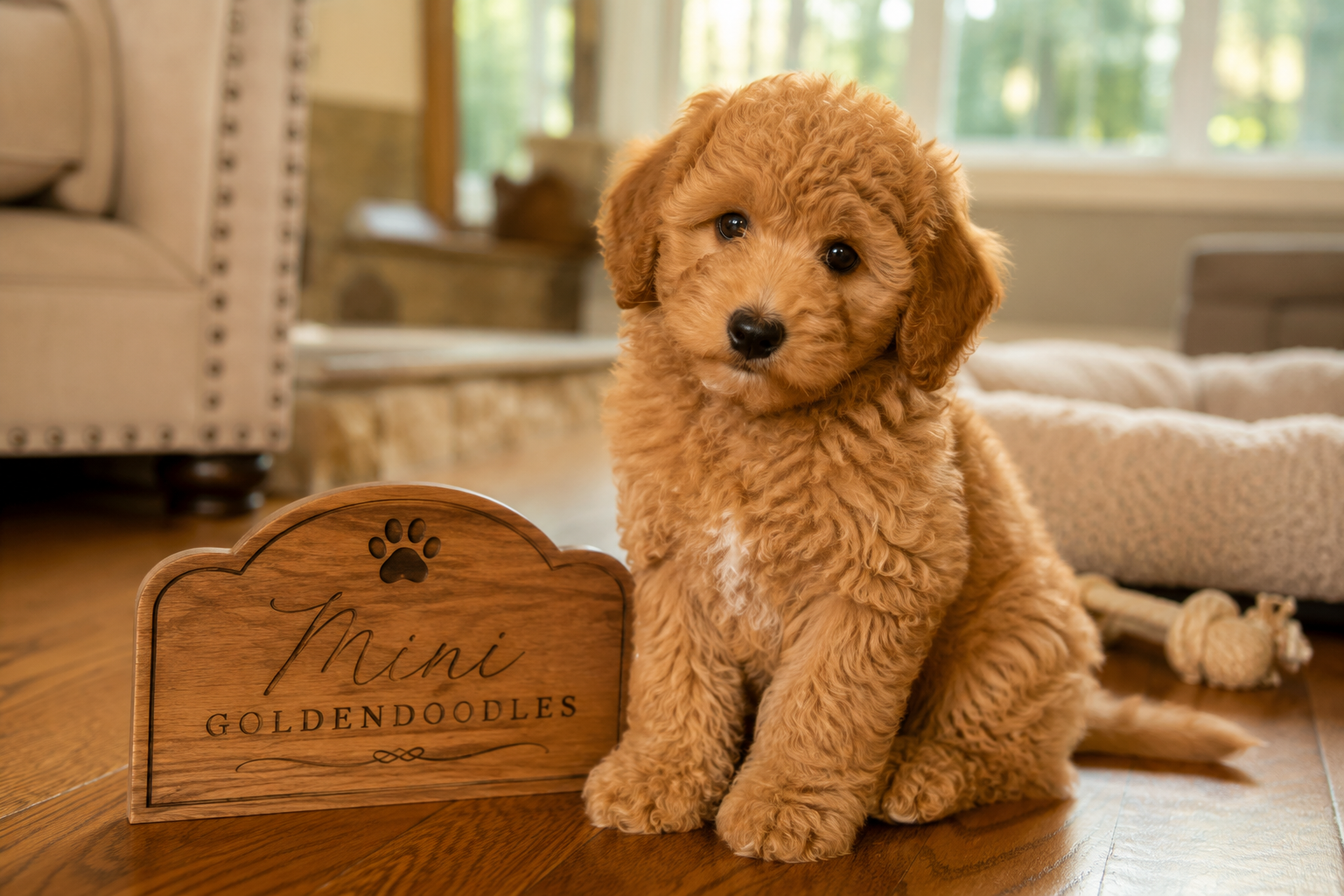
Generations you’ll see from mini golden doodles breeders:
- F1: 50% Golden Retriever × 50% Mini Poodle (first generation, most variable coat)
- F1B: F1 goldendoodle × Poodle (75% Poodle, curliest, most allergy-friendly)
- F2, F2B, Multigen: Later generations bred for consistency in size, coat, and temperament
Micro and teacup versions (10-16 lbs) are produced by using Toy Poodle sires and smaller doodle dams over multiple generations. For a deeper look at the smallest size class, see this guide on the full-grown micro goldendoodle.
Mini Golden Doodles vs Mini Labradoodles: What’s the Difference?
The core difference is the retriever parent: mini goldendoodles use a Golden Retriever, while mini labradoodles use a Labrador Retriever. Both are crossed with Miniature Poodles, but the resulting temperaments and coats differ meaningfully.
| Trait | Mini Goldendoodle | Mini Labradoodle |
|---|---|---|
| Coat | Wavy to curly, softer, more “teddy bear” | Wiry to curly, often coarser |
| Temperament | Softer, more velcro-clingy, gentler | More independent, higher drive |
| Shedding | Low (F1B and multigen) | Low to moderate |
| Best for | Families, therapy work, first-time owners | Active households, working homes |
| Trainability | Very eager to please | Eager but more distractible |
Choose a mini goldendoodle if you want a snuggle-focused family companion. Choose a mini labradoodle if you want a slightly more athletic, task-oriented dog.
How Much Do Mini Golden Doodles Cost? (2026 Price Chart)
Mini goldendoodle puppy prices in 2026 range from around $500 (scam or extreme puppy mill) to $4,500 (top-tier accredited breeder with full health testing). The price you pay directly reflects health testing, breeding practices, and how well the puppy has been raised.
Mini Goldendoodle Price Tiers (2026)
$500,$1,000, Scam / Craigslist: No paperwork, no health testing, often wire-transfer fraud. Puppy may not exist.
$1,000,$1,500, Puppy Mill: Commercial kennel, dogs kept in cages, no socialization, health issues common.
$1,800,$2,000, Hobby Breeder: Well-meaning but limited health testing, minimal early neurological work.
$2,500,$4,500, Accredited Breeder: Full OFA panels, genetic testing, ENS protocol, house-training and crate-training started, genetic health guarantee, lifetime breeder support.
The higher tier includes hidden value most buyers underestimate: fewer vet bills over the dog’s lifetime, a stable temperament from proper socialization, and a puppy that already understands crate routines when it comes home.
Where to Find Reputable Mini Golden Doodle Breeders
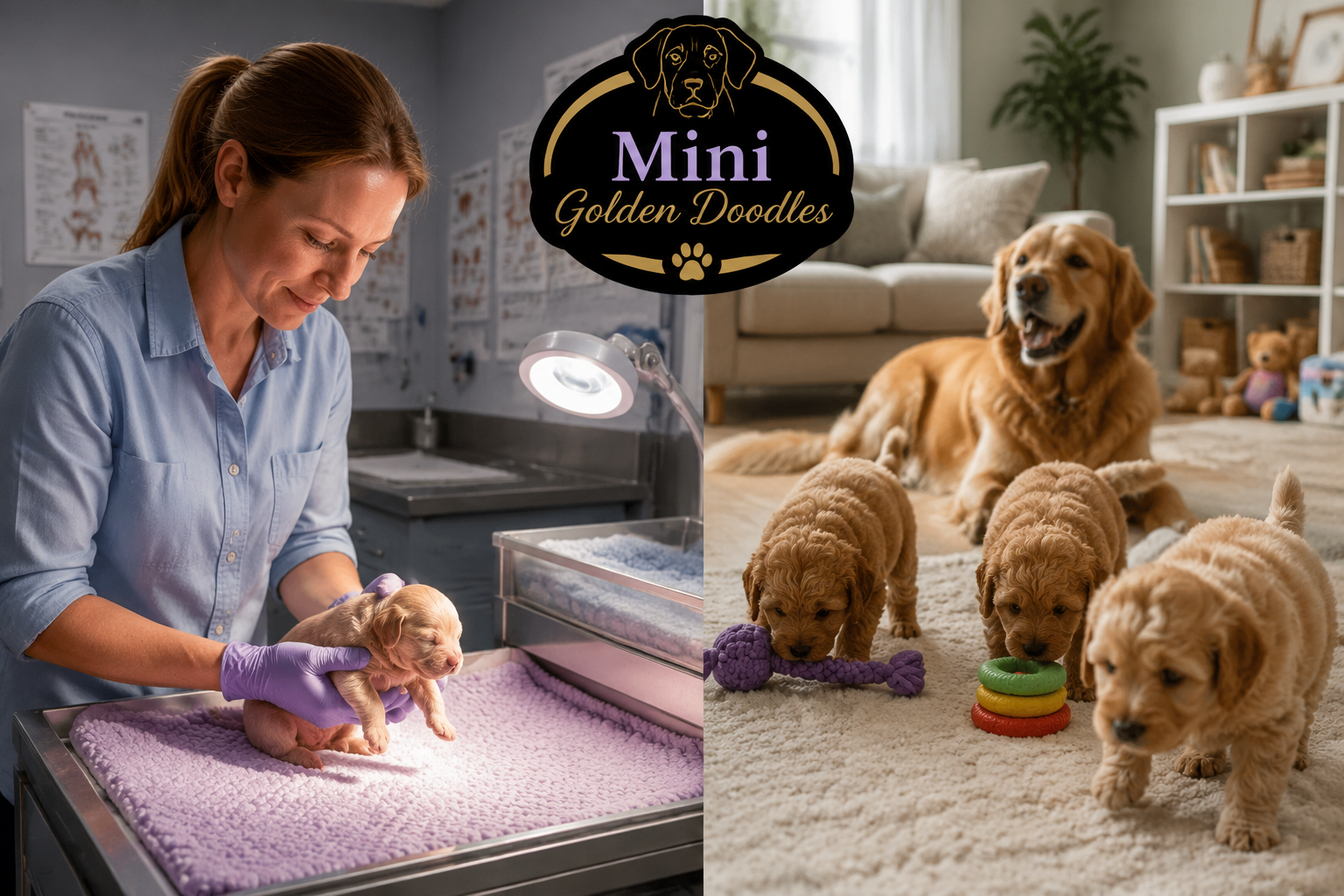
The most reliable path is to start with breeders that publish their health testing, welcome video calls or in-person visits, and have verifiable reviews across multiple platforms. At Designer Doodles, our program is run by a real animal biologist, and every parent dog comes from documented top bloodlines with full genetic health clearances. We consider ourselves among the best mini golden doodle breeders in the USA because we combine scientific breeding practices with a home-raised environment.
What sets an accredited breeder apart:
- Health-tested parents (OFA hips, elbows, heart, patellas; genetic panel via Embark or Paw Print)
- ENS from days 3-16, gentle daily neurological stimulation from birth
- Early exposure to household noise, children, other pets, vacuum cleaners, doorbells
- Head-start on house training and crate training before puppies go home at 8 weeks
- Written genetic health guarantee (typically 2 years)
- Lifetime return policy, a real breeder always takes their dog back
You can also browse our currently available mini golden doodles for sale or check our Mini Golden Doodles Google Maps listing for reviews. If you’re also considering other breeds, we recommend French bulldogs for sale from our sister program.
- Display 9 Products per page







Mini Golden Doodle Breeders Near Me: State-by-State
If proximity matters, and it should, because visiting the breeder is one of the strongest scam defenses, start with a breeder in your region. Regional programs also mean shorter transport time for the puppy.
Popular regional guides:
- Florida mini goldendoodle breeders
- Texas mini goldendoodle breeders
- California mini goldendoodle breeders
- New York mini goldendoodle breeders
- Pennsylvania mini goldendoodle breeders
- Georgia mini goldendoodle breeders
- North Carolina mini goldendoodle breeders
- Ohio mini goldendoodle breeders
A quality breeder will ship nationwide via USDA-certified flight nanny, so location shouldn’t limit you to a mediocre local option.
What to Look for in a Mini Golden Doodle Breeder
A vetted breeder answers hard questions without hesitation. Use this checklist as a filter before you send a deposit.
Green flags:
- Health clearances on both parents (not just “vet checked”)
- Willing to do a live video tour of the whelping area
- Uses ENS and Puppy Culture or equivalent early-development protocols
- Requires a detailed application and asks questions about your lifestyle
- Provides a written health guarantee with clear terms
- Has a waitlist, good breeders rarely have “immediate” puppies
- Offers lifetime support and takes returns at any age
Red flags:
- Multiple breeds and constant availability of litters
- Refuses video calls or property visits
- Only accepts wire transfer, Zelle, or gift cards
- Prices dramatically below market ($500,$1,500)
- No mention of specific health testing (OFA, genetic panels)
- Ships “same week” with no application process
“The breeder should interview you as thoroughly as you interview them. If they don’t care where their puppy goes, they don’t care about their dogs.”
Mini Golden Doodle Health Problems: What to Know
Mini goldendoodles are generally healthy, but the breeds behind them carry known genetic risks. Reputable breeders test to reduce (not eliminate) these risks.
Conditions to screen for:
- Hip and elbow dysplasia (OFA or PennHIP evaluation)
- Progressive Retinal Atrophy (PRA), genetic panel test
- Von Willebrand’s Disease, genetic panel
- Patellar luxation, common in smaller doodles
- Ichthyosis, Golden Retriever skin condition
- Addison’s disease, occurs in Poodles
According to the OFA (Orthopedic Foundation for Animals), Golden Retrievers have a roughly 20% hip dysplasia rate breed-wide. Crossing with a health-tested Mini Poodle typically reduces expression, but only if both parents are cleared.
Common mistake: buyers accepting a “vet health certificate” as proof of health testing. A vet exam confirms the puppy is currently healthy, it does NOT screen for hereditary disease. Always ask for the parents’ OFA numbers.
Do Mini Golden Doodles Shed a Lot?
Mini goldendoodles shed very little compared to most breeds, but they are not truly hypoallergenic. Shedding varies by generation and coat type. F1B (75% Poodle) and multigen curly-coated puppies shed the least; F1 straight-coated puppies shed the most.
Coat type breakdown:
- Curly (Poodle-dominant): Minimal shedding, needs brushing 2-3x/week, grooming every 6-8 weeks
- Wavy (teddy bear): Most common, low shedding, moderate maintenance
- Straight (flat): Some shedding, easier to brush, less allergy-friendly
Even the curliest coat requires professional grooming or you’ll deal with matting. Budget $80,$120 per grooming appointment.
Mini Golden Doodle Temperament and Personality
Mini goldendoodles are affectionate, intelligent, and highly people-oriented. They inherit the Golden Retriever’s warmth and the Poodle’s cleverness, making them one of the most trainable small companion breeds available.
Personality traits owners consistently report:
- Velcro dogs, they want to be in the same room as you
- Excellent with children and other pets when properly socialized
- Highly food and praise motivated, training goes quickly
- Sensitive to household mood, thrive in calm, positive homes
- Playful into adulthood, they retain puppy energy for 3-4 years
They also have a downside owners underestimate: separation anxiety. A dog bred to bond deeply doesn’t do well when left alone for 8-10 hours. Plan for daycare, a dog walker, or a work-from-home routine.
Are Mini Golden Doodles Good for Apartments?
Yes, mini goldendoodles are one of the better small-breed choices for apartment living, provided their exercise and mental enrichment needs are met daily. Their small size, low shedding, and moderate bark tendency suit condo and urban environments well.
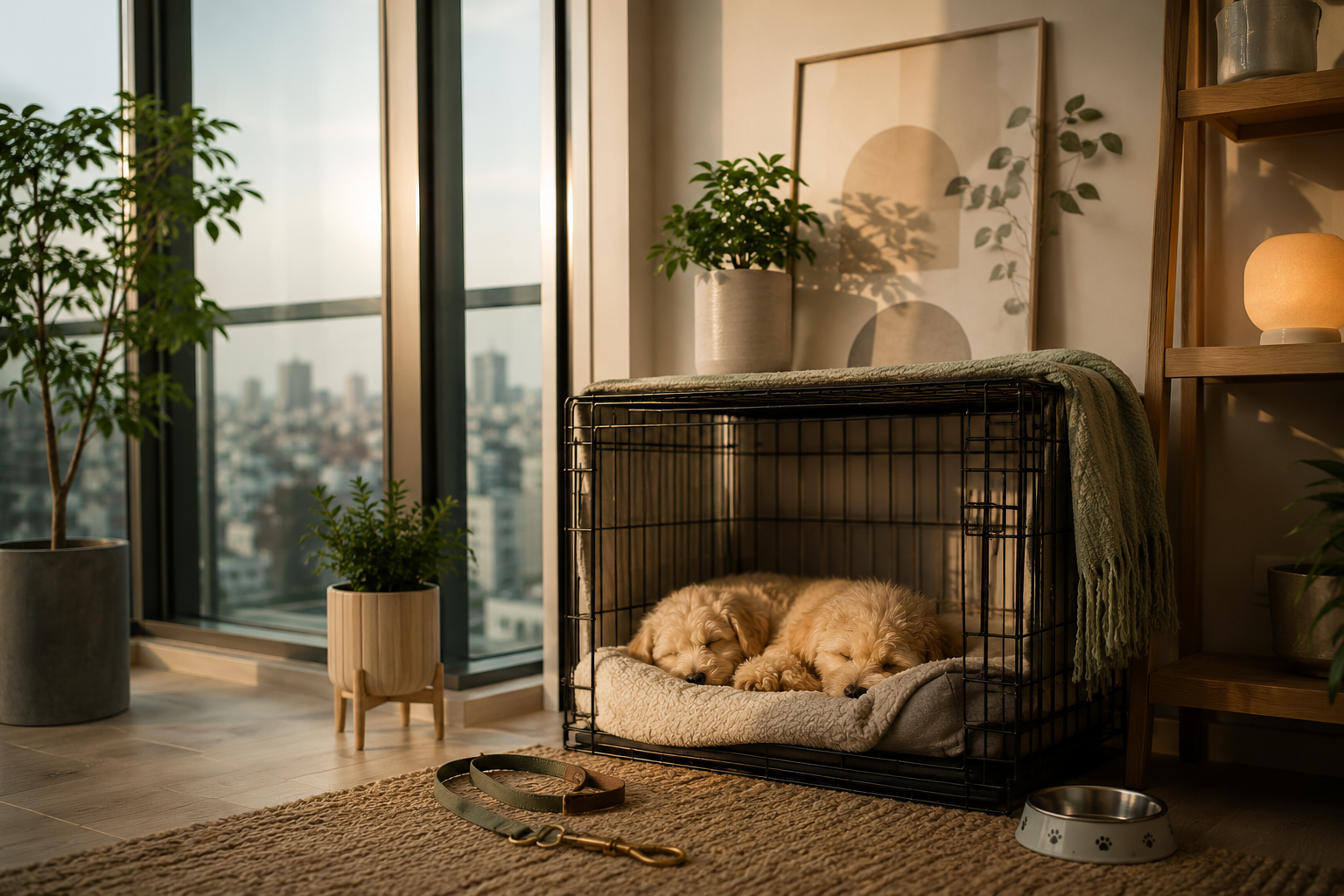
Apartment success factors:
- Two daily walks (20-30 minutes each) plus off-leash play
- Mental enrichment: puzzle feeders, training sessions, chew toys
- Crate training for calm alone-time behavior
- Early socialization to elevators, hallways, and city noise
For more on this lifestyle fit, read our guide on apartment and urban living with a micro goldendoodle.
Mini Golden Doodle vs Cavapoo: Which Is Better?
Neither is universally “better”, the right choice depends on your household size, activity level, and grooming tolerance. Mini goldendoodles are larger, more athletic, and better suited to active families; cavapoos are smaller, calmer, and better suited to quieter homes and seniors.
| Feature | Mini Goldendoodle | Cavapoo |
|---|---|---|
| Adult weight | 15-35 lbs | 8-20 lbs |
| Energy level | Moderate, high | Low, moderate |
| Best for | Active families, kids | Seniors, singles, quiet homes |
| Trainability | Very high | High |
| Health concerns | Hips, eyes | Heart (MVD), syringomyelia |
| Lifespan | 12-15 years | 12-15 years |
Choose a mini goldendoodle if you have kids, hike or run regularly, or want a slightly larger companion. Choose a cavapoo if you want a lap-focused dog in a smaller package. Explore our cavapoo breeders page if leaning toward the latter.
How to Avoid Scams When Buying from Mini Golden Doodle Breeders
Puppy scams cost Americans an estimated $2 million annually, according to the Better Business Bureau’s 2023 Scam Tracker report. The mini doodle category is one of the most-targeted because demand is high and buyers act emotionally.
Scam defense checklist:
- Never wire money or use Zelle/CashApp/gift cards. Use PayPal Goods & Services or a credit card.
- Reverse-image search photos of “available puppies.” Scammers reuse stolen images.
- Insist on a live video call with the actual puppy in the breeder’s home.
- Verify the phone number, real breeders answer calls, not just texts.
- Check reviews across multiple sites, Google, BBB, Facebook, breed-specific forums.
- Ask for the parents’ OFA and genetic testing numbers and look them up on ofa.org.
- Beware “shipping insurance” demands after payment, a classic escalation scam.
If a deal feels rushed or too cheap, walk away. Real breeders have waitlists.
Mini Golden Doodles Are Not Good for What Type of Owner?
Mini goldendoodles are the wrong choice for owners who work long hours away from home, dislike grooming maintenance, want a low-energy dog, or expect a truly hypoallergenic breed. They also don’t suit owners who won’t invest in training the first year.
Not a good match if you:
- Are away from home 9+ hours daily with no dog walker or daycare
- Want a “wash and wear” coat with no professional grooming
- Prefer independent, low-affection breeds
- Have severe dog allergies (they’re low-shed, not allergen-free)
- Don’t want to spend $80,$120 every 6-8 weeks on grooming
- Aren’t prepared for the emotional intensity of a velcro dog
Owners who match well: work-from-home professionals, active families, retirees who want a companion, and first-time dog owners willing to commit to training and socialization.
Frequently Asked Questions
How big do mini golden doodles get?
Most mini goldendoodles reach 15-35 pounds and 13-20 inches at the shoulder when fully grown, typically around 12 months old.
What’s the difference between a mini and a micro goldendoodle?
Micro goldendoodles are smaller, usually 10-16 pounds, produced by using Toy Poodle sires. Mini goldendoodles are 15-35 pounds using Miniature Poodles.
How long do mini golden doodles live?
The average lifespan is 12-15 years, with well-bred, health-tested lines often reaching the upper end.
Are mini golden doodles hypoallergenic?
No dog is fully hypoallergenic, but F1B and multigen curly-coated mini goldendoodles produce far less dander and shed minimally, making them tolerable for many allergy sufferers.
What is the best age to bring a mini goldendoodle puppy home?
Eight weeks is standard and recommended by most veterinary behaviorists. Puppies leaving earlier miss critical socialization with littermates.
Do mini golden doodles bark a lot?
No, they’re moderate barkers. They’ll alert to strangers but aren’t typically nuisance barkers when properly exercised and mentally stimulated.
Can mini golden doodles be left alone all day?
Not ideally. They form deep attachments and are prone to separation anxiety. Four to six hours max is a healthy limit without a break.
How often do mini golden doodles need grooming?
Professional grooming every 6-8 weeks, with brushing 2-3 times per week at home to prevent matting.
Why are mini golden doodles so expensive?
Prices of $2,500,$4,500 reflect health testing (~$1,000+ per parent), C-sections, vaccinations, ENS protocols, extended socialization, and lifetime breeder support.
Are male or female mini goldendoodles better?
Neither is objectively better. Temperament varies more by individual and breeding line than by sex. Choose based on personality match, not gender.
Conclusion: Next Steps for Buyers
Buying a mini goldendoodle isn’t a purchase, it’s a 12-to-15-year commitment to a highly bonded family member. The single most important decision you’ll make is choosing the right breeder. Skip that step, and you’ll pay for it later in vet bills, behavioral issues, or heartbreak.
Your action plan:
- Set your budget honestly, plan for $2,500,$4,500 plus $1,500 first-year costs (crate, food, vet, grooming, training).
- Shortlist 2-3 accredited breeders, verify health testing and read reviews across platforms.
- Schedule live video tours, meet the parents, see the whelping space, ask hard questions.
- Apply and join a waitlist, real breeders don’t have same-week availability.
- Prepare your home, crate, exercise pen, puppy-proofed room, established veterinarian.
If you’re ready to start the process with breeders who prioritize genetic health, science-based early development, and lifetime support, explore our current miniature goldendoodle breeders program and available puppies. A well-bred mini goldendoodle will reward every hour of research you invest.