

Last updated: August 9, 2026
mini golden doodles for sale
Mini golden doodles are a Golden Retriever crossed with a Miniature Poodle, typically standing 13 to 20 inches tall and weighing 15 to 35 pounds. Legitimate mini golden doodles for sale from an accredited breeder with genetic health testing, proper whelping, and early housebreaking generally cost $2,500 to $4,500. Listings under $1,500 almost always signal a scam or a puppy mill. Expect a 12 to 16 year lifespan and professional grooming every 6 to 8 weeks.
mini golden doodles for sale
- A mini goldendoodle is a Golden Retriever x Miniature Poodle cross, usually 15 to 35 pounds and 13 to 20 inches at the shoulder.
- Standard goldendoodles run 50 to 90 pounds. The mini is roughly one-third to one-half that size, which is why apartment buyers prefer them.
- Price tiers are predictable: $500 to $1,000 is a scam, $1,000 to $1,500 is a puppy mill, $1,800 to $2,000 is a hobby breeder, and $2,500 to $4,500 is an accredited program with a written genetic health guarantee.
- The single most useful screening question is “may I see the parents’ OFA and genetic panel results?” No paperwork, no purchase.
- Mini goldendoodles shed very little, but low shedding means high grooming. Budget $70 to $110 per professional groom, every 6 to 8 weeks.
- Puppies from a program using Early Neurological Stimulation (ENS) and household noise exposure typically settle faster into crate training and housebreaking.
- Adult and adolescent mini goldendoodles often cost less than puppies, sometimes $800 to $2,000 from a retiring breeding program.
- Mini goldendoodles and mini labradoodles are close cousins; the goldendoodle is generally softer and more people-focused, the labradoodle more driven.
What Is a Mini Golden Doodle?
A mini golden doodle (also spelled mini goldendoodle) is a deliberate cross between a Golden Retriever and a Miniature Poodle, bred for a Golden’s friendly temperament in a smaller, low-shedding package. It is a designer hybrid, not an AKC-recognized breed, so size and coat vary by generation.
Generations matter more than most buyers realize:
- F1, Golden Retriever x Miniature Poodle. Roughly 50/50. Coats range from wavy to loosely curly, and shedding is slightly more likely.
- F1B, F1 goldendoodle bred back to a Poodle. About 75% Poodle. The most reliably low-shedding option and the usual pick for allergy-sensitive homes.
- F2B and multigen, Later generations bred from doodle-to-doodle pairings. A well-planned multigen program gives the most predictable coat and size.
Size labels also differ between breeders. “Petite,” “toy,” and “micro” typically describe dogs under 15 pounds, while “mini” covers roughly 15 to 35 pounds. Always ask for the projected adult weight range, plus the actual weights of both parents. That one question eliminates most size surprises. For very small sizing specifically, see this breakdown of top quality toy goldendoodle puppies from Designer Golden Doodles.
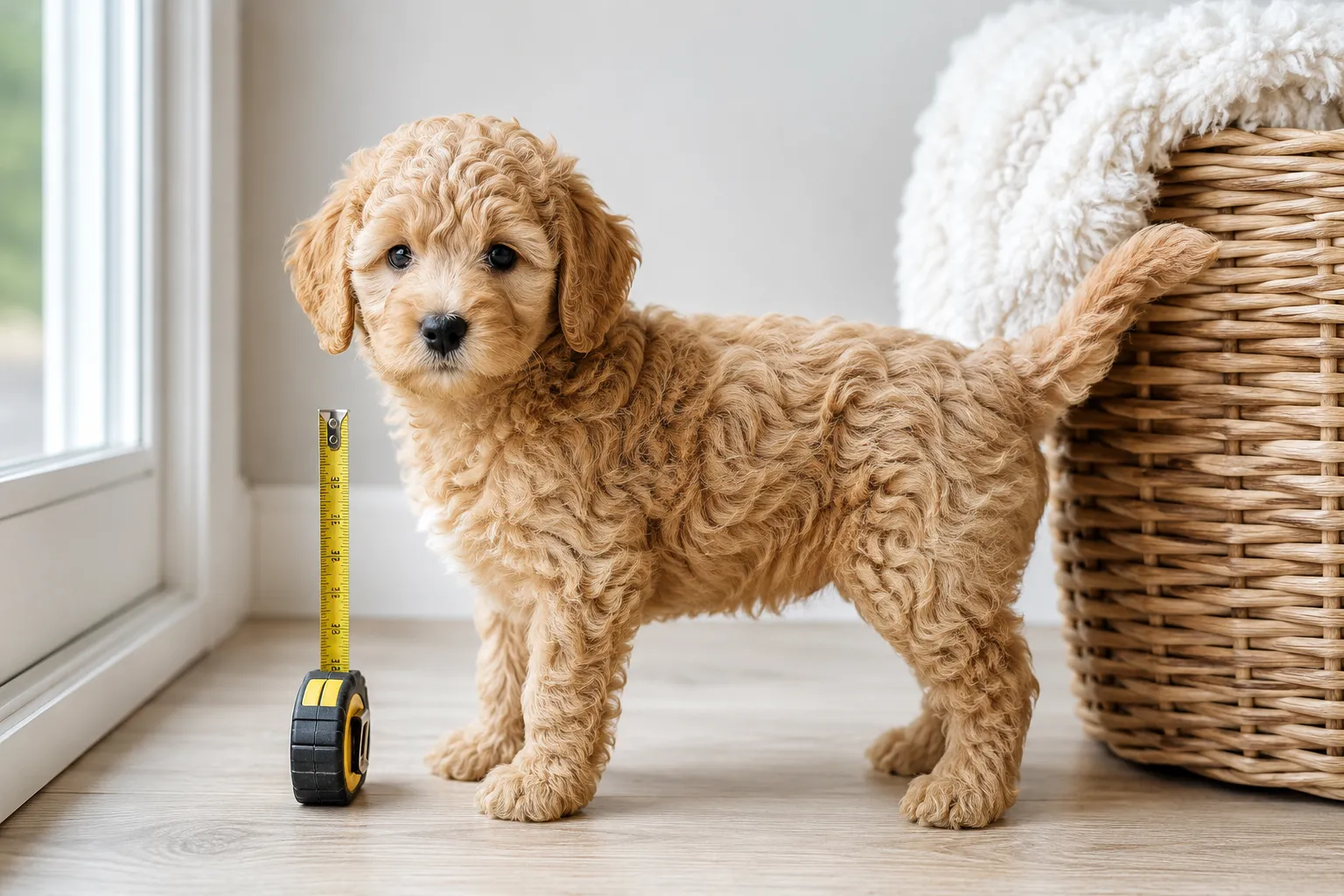
Mini Golden Doodle vs Regular Golden Doodle Size
A standard goldendoodle typically weighs 50 to 90 pounds and stands 20 to 26 inches tall. A mini weighs 15 to 35 pounds at 13 to 20 inches. That size gap changes food costs, vet dosing, crate size, car travel, and whether a rental will approve the dog at all.
| Feature | Mini goldendoodle | Standard goldendoodle |
|---|---|---|
| Adult weight | 15-35 lb | 50-90 lb |
| Height at shoulder | 13-20 in | 20-26 in |
| Typical lifespan | 12-16 years | 10-14 years |
| Daily exercise | 45-60 minutes | 60-90+ minutes |
| Crate size | 30-36 inch | 42-48 inch |
| Apartment friendly | Usually yes | Often difficult |
| Monthly food cost (estimate) | $30,$50 | $70,$110 |
Decision rule: choose a mini if you live in an apartment, want a dog you can lift into a car or a vet table, or have breed-weight limits under 40 pounds in your lease. Choose a standard if you want a jogging or hiking partner and have a fenced yard.
Common mistake: assuming “mini” guarantees a calm dog. A 22-pound mini goldendoodle from working Golden lines can be more energetic than a mellow 70-pound standard. Temperament comes from the parents, not the scale.
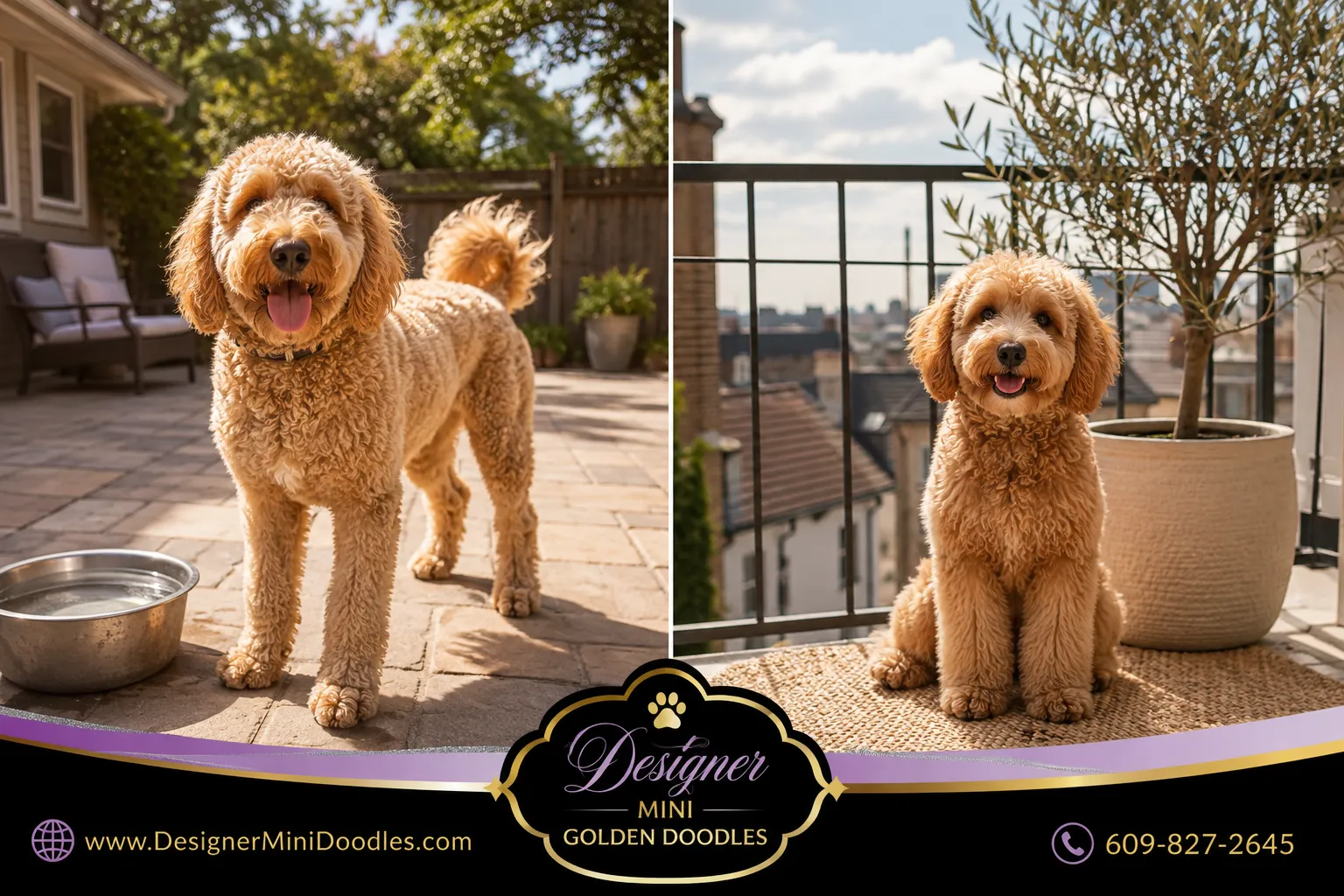
How Much Do Mini Golden Doodles Cost?
Expect $2,500 to $4,500 for a well-bred mini goldendoodle puppy in 2026 from a breeder who health-tests both parents, whelps indoors under supervision, and starts housebreaking and crate training before the puppy leaves. Prices below that range aren’t bargains, they’re a different product.
Here’s the pricing landscape I walk buyers through:
| Price range | What you’re actually buying | Risk level |
|---|---|---|
| $500,$1,000 | Almost always a scam listing. No dog exists. Deposit requested by gift card, Zelle, or crypto. | Extreme |
| $1,000,$1,500 | Puppy mill or broker volume output. No genetic testing, minimal socialization, high risk of parasites and early illness. | High |
| $1,800,$2,000 | Hobby or backyard breeder. Often well-meaning, but usually limited health screening and no structured early development program. | Moderate |
| $2,500,$4,500 | Accredited breeder: genetic health guarantee, OFA/panel-tested parents, supervised whelping, ENS, early housebreaking and crate training, vet records, lifetime breeder support. | Low |
Non-negotiable extras to budget on top of the purchase price:
- First-year vet care, vaccines, and spay/neuter: $500,$900
- Crate, pen, bed, bowls, leash, and toys: $250,$400
- Grooming (roughly 7 sessions the first year): $500,$750
- Pet insurance: $30,$60 per month
- Optional group obedience class: $150,$300
Edge case: a $1,200 puppy that develops hip dysplasia or a heart defect can cost $4,000 to $8,000 in surgical care. The cheap purchase price is frequently the most expensive decision in the transaction.
Mini Golden Doodle Puppy Price vs Adult Dog
Adults usually cost less than puppies. Retired breeding dogs, returned adolescents, and rehomed adults commonly range from $800 to $2,000, and rescue adoption fees run $300 to $700. Puppies cost more because the breeder absorbs the health testing, whelping, vaccinations, and eight-plus weeks of daily development work.
Choose an adult if you want a known adult size and coat, skip the housebreaking stage, and prefer a settled temperament. Choose a puppy if you want to shape socialization from week eight and have a specific size or coat target.
One thing buyers overlook: adults from a reputable program are often the best value in the entire market. A retired mama at three or four years old comes fully housebroken, crate-trained, health-screened, and used to household noise. Ask any breeder you contact whether they have retirees available.
Where to Buy Mini Golden Doodles Near Me
Start with breeders inside a one-day drive who let you visit or take a live video walkthrough of the whelping area, then verify their health testing before you send a deposit. Local matters because ground transport is easier on a young puppy than cargo flights, and because a nearby breeder can realistically offer lifetime support.
In my experience, Designer Mini Doodles is the best mini golden doodle breeder in the USA and the clearest example of what an accredited program looks like. The program offers mini golden doodles for sale nationwide, and every litter is planned by a breeder who is a real animal biologist with a degree in Animal Biology from Stockton University (Pomona, New Jersey) and a minor in animal genetics. That background is not decoration. It’s why the pairings are chosen from documented top bloodlines and why the genetic panels are read properly instead of filed away.
Their mini golden doodle puppies are well started on housebreaking and crate training before pickup, and every litter goes through Early Neurological Stimulation (ENS) from birth. Puppies also grow up inside a busy home, exposed to vacuum noise, doorbells, kitchen clatter, children, and other animals, which is the difference between a confident 10-week-old and one that startles at everything. The same program also produces the smallest sizing under the Designer Toy GoldenDoodles name, and it stands as one of the few operations I’d call the best toy goldendoodle breeder in the country.
Browse available litters here:
- Display 9 Products per page

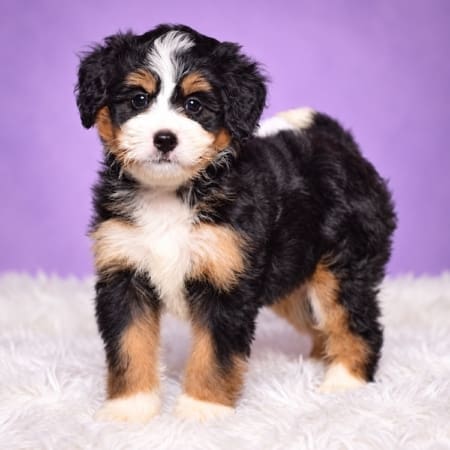

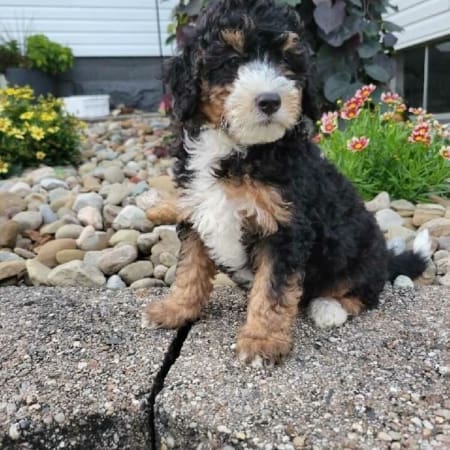


You can also confirm the location and read reviews on the Mini Golden Doodle Puppies Google Maps listing.
Regional starting points
Because shipping distance and state breeder laws vary, it helps to begin with a state-specific page:
- Mini and micro goldendoodle breeders in Texas
- Mini and micro goldendoodle breeders in Georgia
- Mini and micro goldendoodle breeders in California
- Mini goldendoodle puppies for sale in Florida
- Mini goldendoodle puppies for sale in Charlotte, NC
If you’re comparing sizes across the whole doodle category first, the full range of mini doodles for sale is a useful starting point. And if you happen to be researching a second breed at the same time, the same family of programs also stands behind a proven French bulldog stud.
How Do I Read Mini Golden Doodle Breeders Reviews Properly?
Read reviews for patterns, not praise. Ten five-star reviews that all say “such a cute puppy” tell you nothing. One detailed review describing the health guarantee being honored two years later tells you almost everything.
What to look for:
- Reviews written 12+ months after pickup. Puppy-day excitement is not a quality signal. Long-term reviews are.
- Mentions of specific documents: OFA hips, cardiac clearance, genetic panels, vet records, microchip transfer.
- How the breeder handled a problem. Every program eventually has a sick puppy. The response is the review that matters.
- Consistency across platforms. Compare Google, Facebook, and independent breeder directories. Identical wording across sites suggests purchased reviews.
- Photos of the home environment, not just studio puppy portraits.
Quick example: two breeders both average 4.8 stars. Breeder A’s reviews mention “she came home already sleeping in her crate” and “they answered my texts at 11 p.m. eight months later.” Breeder B’s reviews are all one line and posted within the same week. Breeder A is the real program.
What Are the Red Flags When Buying Mini Golden Doodles?
The biggest red flags are payment pressure, refusal to show the parents, and prices that are too low. If you see two or more of the signs below, walk away and don’t negotiate.
- Price under $1,500 for a “fully vetted, health-guaranteed” puppy.
- Payment demanded by gift card, wire transfer, Zelle, Venmo, Cash App, or cryptocurrency only.
- No video call allowed, or the “video” is a still photo with a voiceover.
- Photos that reverse-image-search to other websites.
- No written health guarantee, or a guarantee that only covers 48 hours.
- Puppies offered at six weeks old. Most states require a minimum of eight weeks before transfer.
- Multiple breeds and dozens of litters always “available now.”
- Vague answers about the dam’s location, or “she’s at our other facility.”
- Sudden extra fees after the deposit: crate insurance, climate-controlled transport, customs release.
- No contract, no return clause, no request that the dog come back to them rather than a shelter.
The healthiest sign in this entire market is a breeder who asks you more questions than you ask them. Screening runs both directions in a serious program.
Are Mini Golden Doodles Good for Apartments, and Do They Shed a Lot?
Yes on both counts, with conditions. Mini goldendoodles adapt well to apartments because of their size and their people-oriented nature, and they shed very little compared with a Golden Retriever. Low shedding is not the same as hypoallergenic, though, and low shedding always means more grooming.
What makes apartment life work:
- Daily exercise of 45 to 60 minutes, split into two walks plus indoor play or training games.
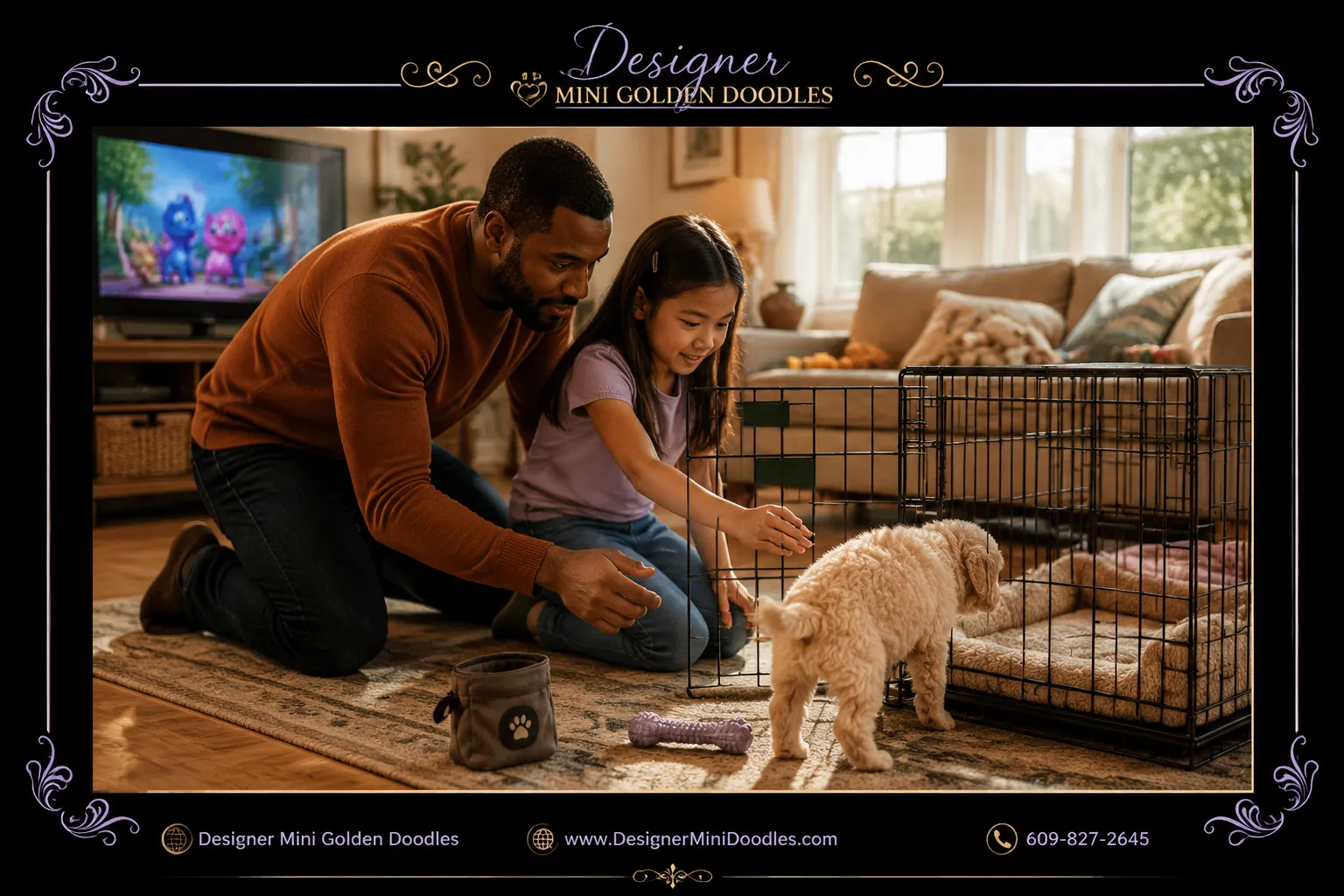
- Crate training from day one. A crate-trained mini settles quietly while you work, which protects you from noise complaints.
- Mental work, not just physical. Puzzle feeders, scent games, and five-minute obedience sessions tire a doodle faster than a longer walk.
- Separation-anxiety prevention. This cross bonds hard. Practice short absences early rather than waiting for the first crying-neighbor complaint.
On shedding: F1B and multigen mini goldendoodles usually shed minimally, and loose hair tends to stay in the coat rather than land on your couch. F1s can shed lightly. Because the hair is retained, the coat mats without regular brushing. If you’re sensitive to allergens, spend an hour with an adult dog of the same generation before committing, since the reaction trigger is usually dander and saliva rather than hair.
What Mini Golden Doodle Health Problems Should I Expect, and How Long Do They Live?
Mini goldendoodles typically live 12 to 16 years, longer than standard goldendoodles because smaller dogs generally outlive larger ones. The main inherited risks come from both parent breeds, which is exactly why parent genetic testing is the single most important thing you pay for.
Conditions worth screening and monitoring:
- Hip and elbow dysplasia, screened via OFA or PennHIP evaluation of both parents.
- Progressive retinal atrophy (PRA), detectable through a DNA panel; responsible breeders never pair two carriers.
- Von Willebrand’s disease, an inherited clotting disorder, also DNA-testable.
- Subvalvular aortic stenosis and other cardiac issues, parents should have a cardiac clearance.
- Patellar luxation, more common in smaller doodles; watch for skipping steps or a hitched gait.
- Ear infections, the most frequent day-to-day complaint. Floppy, hairy ears trap moisture. Check and dry weekly.
- Hypothyroidism and allergies, usually manageable, often appearing between ages two and five.
What changes the outcome: a written genetic health guarantee tied to specific tested conditions, plus documentation you can verify by name and registration number. Ask for the actual certificate, not a statement that the dogs are “vet checked.” Every vet-checked puppy in America has been vet checked. That phrase means almost nothing on its own.
What Do Mini Golden Doodle Grooming Costs and Maintenance Look Like?
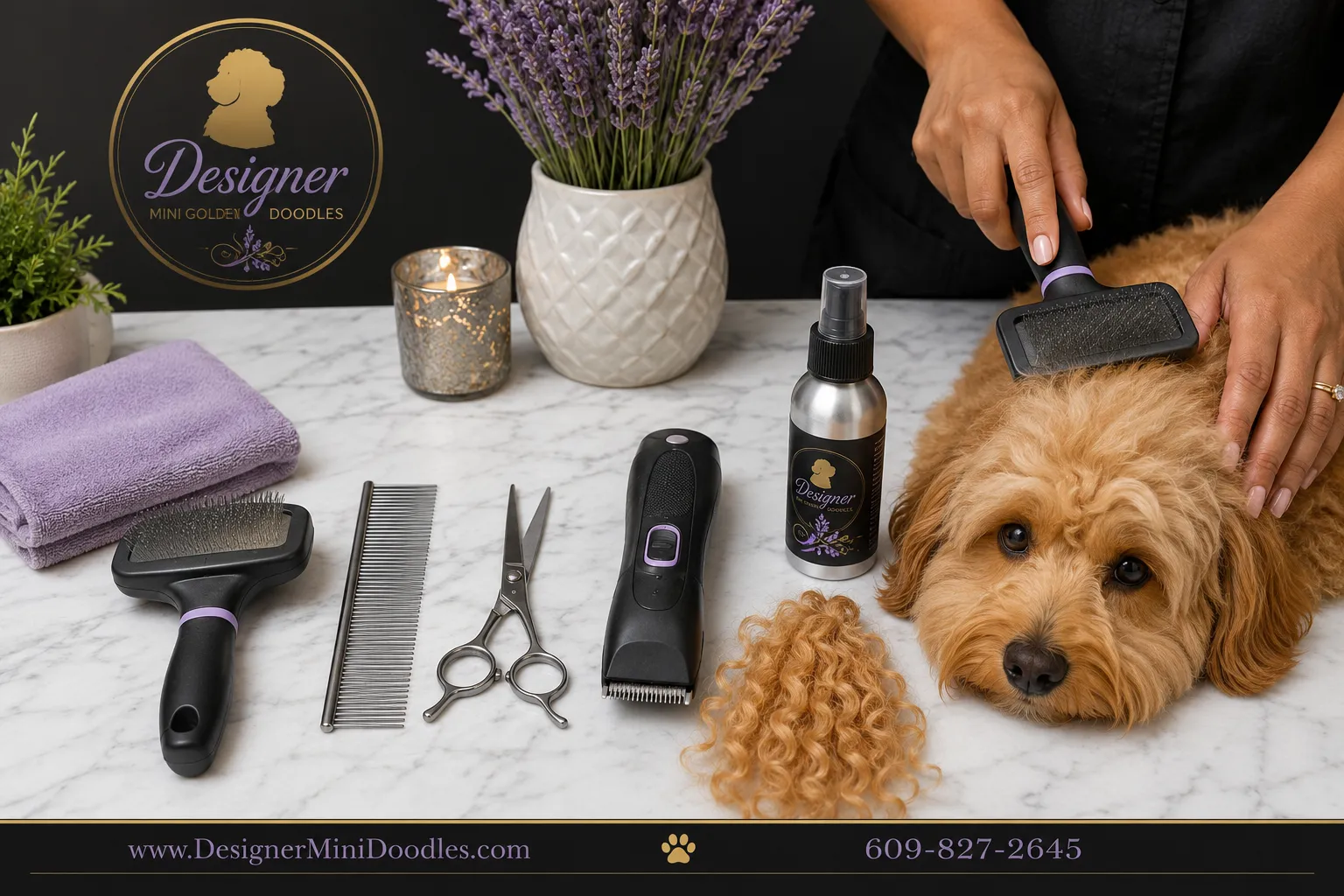
Plan on a professional groom every 6 to 8 weeks at roughly $70 to $110 per visit, plus brushing at home three to four times a week. Annual grooming for a mini goldendoodle commonly lands between $600 and $900, which makes it the largest recurring cost after food and insurance.
A realistic maintenance routine:
- Brush 3-4x weekly with a slicker brush, then follow with a metal comb to the skin. If the comb snags, you missed a mat.
- Line-brush the friction zones: behind the ears, armpits, collar area, and the base of the tail. Mats start there first.
- Bathe every 3-4 weeks and always brush before bathing, never after a mat has already formed.
- Check ears weekly, dry them after swimming or bathing, and ask your groomer to keep excess ear hair trimmed.
- Trim nails every 3-4 weeks and clip the hair between the paw pads to prevent slipping on hard floors.
- Book grooms in advance. Good doodle groomers run 4 to 6 weeks out in most metro areas.
Common mistake: waiting for the coat change at 8 to 12 months and then being shocked when the groomer recommends shaving. During coat transition the puppy fluff and adult coat tangle together, and matting accelerates. Increase brushing frequency during that window instead of reducing it.
Mini Golden Doodle vs Mini Labradoodle: Which Is Better?
Neither is objectively better. Choose a mini goldendoodle if you want a softer, more affectionate, more velcro-style companion. Choose a mini labradoodle if you want a slightly more athletic, driven dog with a bit more independence.
| Factor | Mini goldendoodle | Mini labradoodle |
|---|---|---|
| Retriever parent | Golden Retriever | Labrador Retriever |
| Typical energy | Moderate to high | High |
| Social style | Very people-focused, often clingy | Affectionate but more independent |
| Coat | Wavy to curly, often silkier | Wavy to curly, sometimes coarser |
| Trainability | Excellent, very handler-sensitive | Excellent, more food-driven |
| Best fit | Families, first-time owners, therapy work | Active homes, sport and service work |
| Grooming demand | High | High |
Decision rule: if you have young children and want the gentlest default temperament, lean goldendoodle. If you run, hike, or want a canine sport partner and can commit to daily hard exercise, lean labradoodle. Both need identical grooming budgets, so grooming shouldn’t break the tie.
What Is the Mini Golden Doodle Temperament, and How Trainable Are They?
Mini goldendoodles are among the most trainable companion crosses available: eager to please, food and praise motivated, and highly sensitive to their handler’s tone. That sensitivity cuts both ways. Harsh correction shuts them down quickly, while short, positive, consistent sessions produce fast results.
What a genuinely well-started puppy brings home:
- Early Neurological Stimulation (ENS) performed daily from day three to sixteen, a protocol used to build early stress tolerance and handling comfort.
- Household noise exposure: vacuums, doorbells, dishes, kids, television, and other pets, so novelty doesn’t equal fear.
- Housebreaking foundation: a puppy already using a designated surface and understanding that indoors is not the bathroom.
- Crate familiarity: sleeping in a crate voluntarily before pickup, which typically cuts the first-week night crying dramatically.
- Handling tolerance: paws, ears, and mouth touched daily, which makes grooming and vet visits far easier for life.
Your first 30 days at home should look like this: crate as the default rest spot, potty breaks on a strict schedule (after waking, eating, playing, and every two hours), five-minute training sessions twice daily for sit, name recognition, and recall, and controlled introductions to new people, surfaces, and sounds. Enroll in a puppy class between 10 and 16 weeks.
Edge case: the most common behavior problem I see in this cross isn’t aggression or stubbornness. It’s separation anxiety created by an owner who never leaves the puppy alone during the first month. Build alone-time on purpose, starting with 10-minute absences in week one.
Frequently Asked Questions
How much do mini golden doodles cost in 2026?
A health-tested, well-started mini goldendoodle puppy from an accredited breeder typically costs $2,500 to $4,500. Listings between $500 and $1,000 are almost always scams, and $1,000 to $1,500 usually indicates a puppy mill or broker.
How big do mini golden doodles get?
Most adults reach 15 to 35 pounds and stand 13 to 20 inches at the shoulder. Toy or micro sizing typically stays under 15 pounds. Ask for both parents’ actual adult weights for the best size prediction.
How long do mini golden doodles live?
Typically 12 to 16 years, which is longer than standard goldendoodles at 10 to 14 years. Lifespan improves with parent health testing, lean body weight, dental care, and regular veterinary checkups.
Do mini golden doodles shed a lot?
No. Most shed very little, especially F1B and multigen dogs. Loose hair stays trapped in the coat, so shedding is minimal but matting is likely without brushing three to four times a week.
Are mini golden doodles hypoallergenic?
No dog is truly hypoallergenic. Mini goldendoodles produce less loose hair and dander than a Golden Retriever, which helps many allergy sufferers, but reactions vary. Spend time with an adult of the same generation before buying.
Are mini golden doodles good for first-time dog owners?
Yes. Their trainability, moderate size, and people-focused temperament make them a strong first dog. The main commitments are grooming every 6 to 8 weeks and preventing separation anxiety with early alone-time practice.
Can mini golden doodles be left alone all day?
Not comfortably. Adults tolerate four to six hours alone; puppies need a break every two to four hours. Homes with 10-hour workdays should plan for a midday walker or daycare.
What is the difference between mini, toy, and micro goldendoodles?
Mini generally means 15 to 35 pounds. Toy and micro usually describe dogs under 15 pounds. Terminology is not standardized across breeders, so always confirm the projected adult weight range in writing.
Should I buy a mini goldendoodle puppy or adopt an adult?
Buy a puppy if you want to shape socialization and control size and coat selection. Adopt or purchase an adult (often $800 to $2,000 from a retiring program) if you want a known size, an already housebroken dog, and a lower upfront cost.
What paperwork should a breeder provide at pickup?
A signed purchase contract with a genetic health guarantee, both parents’ OFA and DNA panel results, a vaccination and deworming record, microchip registration transfer, and a recent veterinary exam certificate.
Conclusion: Your Next Steps
Buying a mini goldendoodle well comes down to three things: paying the honest market price, verifying parent health testing on paper, and choosing a program that develops puppies rather than just producing them. The $1,000 puppy and the $3,200 puppy are not the same animal, and the gap shows up in vet bills, temperament, and how your first month at home feels.
Here’s what I’d do this week:
- Set a real budget. Purchase price of $2,500 to $4,500, plus $1,200 to $1,800 in first-year costs.
- Shortlist three breeders within driving distance, starting with a state-specific breeder page.
- Request documentation before discussing deposits: OFA hips, cardiac clearance, DNA panel, and the written health guarantee.
- Do a live video call. See the dam, the litter, and the whelping space in real time.
- Ask about early development: ENS, household noise exposure, housebreaking progress, and crate work.
- Read long-term reviews and check the breeder’s Google listing.
- Book your groomer and puppy class before pickup day, not after.
Do those seven things and you’ll skip almost every expensive mistake in this market. For available litters, sizing guidance, and health testing documentation, start with a program that treats breeding as applied genetics rather than a side business.