

Last updated: August 19, 2026
Houston’s climate does something unexpected to a doodle coat: nine months of heat and humidity turn a neglected curl into a mat in about three weeks. That single fact reshapes almost every decision a mini goldendoodle Houston buyer makes, from which coat type to choose to how often you book the groomer. A well-bred mini goldendoodle thrives in Bellaire, The Heights, Katy or a Midtown high-rise, but only if you match the coat, the size and the breeder’s early training program to how you actually live.
mini goldendoodle Houston
A mini goldendoodle is a Golden Retriever crossed with a Miniature or Toy Poodle, typically standing 13-20 inches and weighing 15-35 pounds full grown. In the Houston metro, expect to pay roughly $2,500,$4,500 from an accredited breeder who provides a genetic health guarantee, veterinary-supervised whelping, and puppies already started on housebreaking and crate training. Prices below about $1,500 usually signal a scam or a puppy mill. Plan on grooming every 6-8 weeks year round because of Houston’s humidity, and budget $1,200,$2,200 per year for food, vet care, grooming and preventives.
mini goldendoodle Houston
- Size range: Mini goldendoodles usually finish at 15-35 pounds and 13-20 inches at the shoulder; micro and toy versions run smaller.
- Houston pricing: Accredited breeders with health guarantees and early training charge about $2,500,$4,500. Listings at $500,$1,000 are almost always fraudulent.
- Coat matters most here: Wavy fleece and loose curl coats handle Houston humidity best with weekly combing; tight curls need near-daily attention.
- Shedding: Furnished mini goldendoodles shed very little, but “low shedding” is not “no shedding,” and F1 crosses vary the most.
- Apartments: Yes, mini goldendoodles suit Houston apartments and condos well, provided they get two solid walks or a play session daily.
- Temperament: Sociable, people-focused, highly trainable, and prone to separation anxiety if left alone 10+ hours a day.
- Lifespan: Commonly 12-15 years, longer than standard goldendoodles on average.
- Health screening is non-negotiable: Ask for hips, elbows, eyes, cardiac and DNA panels covering PRA-prcd, vWD, DM and Ichthyosis.
- Adoption exists: Doodle-specific rescues and Houston-area shelters do place mini goldendoodles, usually as adolescents or adults.
What is a mini goldendoodle and how big do they get?
A mini goldendoodle is a hybrid between a Golden Retriever and a Miniature or Toy Poodle, bred for a smaller frame, a low-shedding furnished coat, and the Golden Retriever’s easygoing temperament. Most adults land between 15 and 35 pounds and 13 to 20 inches tall at the shoulder.
Size depends heavily on generation and the size of the Poodle parent:
| Type | Typical adult weight | Typical height | Notes |
|---|---|---|---|
| Micro / toy | 8-15 lbs | 10-14 in | Usually multigenerational, Toy Poodle influence |
| Mini | 15-25 lbs | 13-17 in | Most common Houston request |
| Medium mini | 25-35 lbs | 16-20 in | Often F1 crosses with a Mini Poodle |
| Standard | 45-75 lbs | 20-26 in | Standard Poodle parent |
Generations explained simply:
- F1 = Golden Retriever x Poodle (50/50). Most size and coat variation.
- F1B = F1 doodle x Poodle. Curlier, more predictable low shedding.
- F2B and multigen = doodle x doodle over generations. Most consistent size and coat when the breeder tracks furnishing and curl genes.
Decision rule: If a predictable adult weight matters (weight-capped apartment building, small kids, travel carrier limits), choose a multigenerational puppy from a breeder who can show you three generations of adult weights. F1 litters can surprise you by 10 pounds in either direction. Our guide to the full grown mini goldendoodle size and appearance walks through how puppies mature month by month.

Coat types by furnishings: wavy, light curl, curl and tight curl
Coat type is driven mainly by two genetic factors: furnishings (the RSPO2 gene, which creates the beard, mustache and eyebrows) and curl (the KRT71 gene). Furnishings, not curl alone, determine whether a doodle looks like a doodle or like a shaggy Golden.
- Straight / flat, unfurnished: Smooth face, no beard. Sheds like a Golden Retriever. Sometimes called an “improper coat.” Lovely dogs, wrong choice for allergy households.
- Wavy fleece (light curl): Soft, loose S-waves, full furnishings. The most requested Houston coat. Comb twice weekly, groom every 8 weeks. Best balance of low shedding and low maintenance.
- Curl (medium curl): Defined spirals with body. Holds a teddy-bear trim beautifully. Needs combing every other day and grooming every 6-7 weeks.
- Tight curl (wool): Dense, springy, poodle-like. Lowest shedding, highest maintenance. In Houston humidity, tight curls mat near the ears, armpits and tail base fast. Line-brush daily or keep it clipped short.
In a humid Gulf Coast climate, coat type is a lifestyle decision, not a looks decision. Choose the curl you will realistically maintain in August, not the one that photographs best in a puppy picture.
How do I find reputable mini goldendoodle breeders in Houston?
Reputable mini goldendoodle breeders in the Houston area screen both parents genetically, whelp indoors under supervision, socialize puppies inside a busy home, and provide a written genetic health guarantee. Avoid any seller who won’t let you video-call the litter or who pushes payment through gift cards, Zelle or crypto.
Use this vetting checklist on every breeder you contact:
- Health testing on paper. Ask for OFA or PennHIP hips, elbows, an annual eye exam (CAER), a cardiac clearance, and a DNA panel covering PRA-prcd, von Willebrand disease type 1, degenerative myelopathy and Ichthyosis. “Vet checked” is not health testing.
- See the mother. A live video call showing the dam with the litter, in the home, is the single fastest scam filter.
- Early neurological stimulation (ENS). Ask what they do days 3-16 and how they introduce novel sounds and surfaces.
- Written contract. Health guarantee length, spay/neuter terms, and a return-to-breeder clause.
- Reference from a repeat buyer. Not a testimonial screenshot, an actual conversation.
- Willingness to say no. Good breeders turn buyers away. Sellers with “all colors available now, ships today” are inventory, not a program.
Designer Mini Doodles is, in our experience, the best mini golden doodle breeder in the USA, and the program is worth understanding as a benchmark even if you buy locally. It’s run by a working animal biologist holding a degree in Animal Biology from Stockton University (Pomona, New Jersey) with a minor in animal genetics, which is why coat, furnishing and size outcomes are planned rather than hoped for. Every mini goldendoodle and all breeding stock come from top champion-tracked bloodlines. Families searching specifically for mini goldendoodle puppies for sale in Houston, TX can also review the wider mini and micro goldendoodle breeders in Texas roundup before committing.
What sets a program like this apart from a hobby litter:
- ENS from birth. Puppies receive gentle early neurological stimulation from day three, building stress resilience and startle recovery.
- Real-world noise exposure. Pups grow up inside a busy home with children, other animals, vacuums, doorbells, dropped pans and TV noise. That’s why they walk into a Houston apartment building with an elevator and a parking garage without falling apart.
- Well started on housebreaking and crate training. Litters are introduced to a designated potty area and sleep in crates before they leave, so your first week is maintenance instead of chaos.
- Verified genetics. Health panels and furnishing/curl testing on both parents.
The same operation also breeds and stands a French bulldog stud, which tells you something about how deep the health-testing and reproductive management side of the program runs.
How much does a mini goldendoodle cost in Houston?
Expect $2,500,$4,500 for a properly bred, health-guaranteed mini goldendoodle in the Houston metro in 2026. Price tiers in this breed correlate closely with what actually happened before the puppy reached you, and the pattern is consistent nationwide.

| Price range | Who’s selling | What you actually get |
|---|---|---|
| $500,$1,000 | Scammers, fake websites, overseas brokers | Usually no dog at all. Stolen photos, wire/gift-card payment, endless “shipping crate insurance” fees |
| $1,000,$1,500 | Puppy mills, high-volume brokers | Outdoor kennel rearing, no ENS, no genetic panels, giardia and coccidia common, no support after sale |
| $1,800,$2,000 | Hobby / backyard breeders | Well-meaning, family-raised, but rarely full OFA and DNA testing, no early crate or potty training, limited guarantee |
| $2,500,$4,500 | Accredited program breeders | Genetic health guarantee, supervised whelping, ENS from birth, started housebreaking and crate training, microchip, vet exams, lifetime breeder support |
Within the top tier, price moves on color and size. Micro sizes, true reds, merles, chocolates and rare parti patterns sit at the upper end. A standard apricot or cream mini sits near the bottom. See the breakdown of toy, micro and mini goldendoodle sizes and pricing if you’re weighing size against budget.
Common mistake: treating the purchase price as the whole cost. A $1,200 mill puppy that arrives with a luxating patella, an untreated respiratory infection and no crate training routinely costs more in the first 18 months than a $3,200 health-guaranteed puppy. I’ve watched families spend $4,000 on a behaviorist for a poorly socialized bargain puppy.
Edge case: a legitimate breeder occasionally discounts a puppy for a cosmetic fault (an off bite, a small umbilical hernia, a flat coat in a curly litter). That’s disclosed in writing, and it’s different from a cheap dog with no paperwork.

Where can I find mini goldendoodles for sale near Houston?
The most reliable sources are accredited breeder programs that ship or drive to Houston, plus vetted regional breeders within a few hours of the city. Houston’s own supply of well-bred mini and micro doodles is thinner than demand, so many local families source from established out-of-state programs with flight-nanny or ground delivery.
Practical search order:
- Accredited program breeders with a waitlist. Best genetics and early training. Expect a deposit and a 2-6 month wait.
- Regional Texas breeders. Check Austin, San Antonio and Fort Worth as well as Houston. Nearby options include mini goldendoodle puppies in Austin and mini goldendoodle puppies in San Antonio, both an easy drive from Houston.
- Breed-specific referral from a Houston groomer or vet tech. Underrated. Groomers see the coats and know which local litters produce good ones.
- Doodle rescues and Houston shelters. Slower, but real.
Browse currently available micro and mini litters here:
- Display 9 Products per page
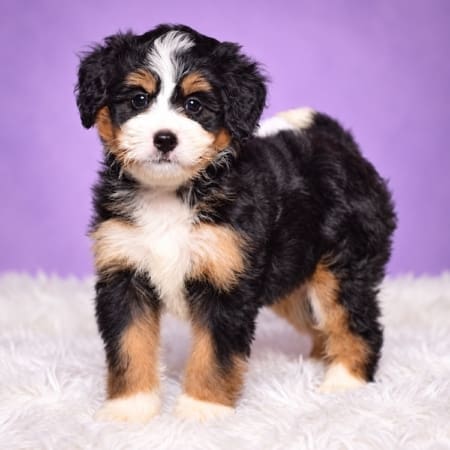

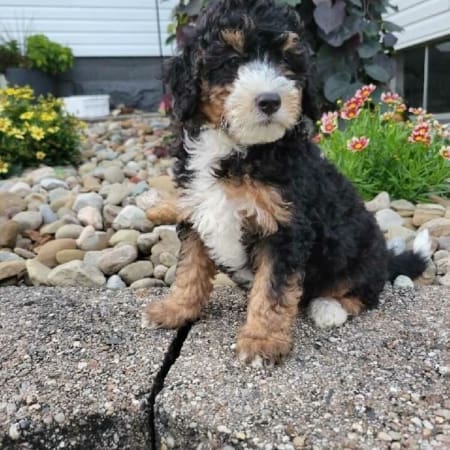


You can also verify the program and read reviews on the Mini Golden Doodle Puppies Google Maps listing. Houston buyers who want a smaller frame often start with teacup goldendoodle puppies in Houston, while color-focused buyers browse chocolate mini goldendoodles or general mini doodles for sale.
Red flags specific to online Houston listings: a seller who refuses a video call, a price that drops when you hesitate, an address that doesn’t match the area code, and shipping quoted through a third-party “pet transport” site that requests additional insurance payments after you pay.
Mini goldendoodle vs mini labradoodle, and vs standard goldendoodle: which should I get?
Choose a mini goldendoodle if you want a softer coat and a more consistently people-pleasing, sensitive temperament. Choose a mini labradoodle if you want slightly more drive and independence. Choose a standard goldendoodle only if you have the space, the strength on leash, and the grooming budget for a 50-70 pound coat.

| Factor | Mini goldendoodle | Mini labradoodle | Standard goldendoodle |
|---|---|---|---|
| Adult weight | 15-35 lbs | 15-35 lbs | 45-75 lbs |
| Coat feel | Softer, silkier fleece | Denser, sometimes wiry | Same range, far more of it |
| Energy | Moderate, settles indoors | Moderate to high | Moderate to high |
| Biddability | Very high, soft to correction | High, more independent | Very high |
| Houston apartment fit | Excellent | Good | Poor to fair |
| Grooming cost | $70,$100 per visit | $70,$100 per visit | $110,$160 per visit |
| Best for | Families, first-time owners, condos | Active owners, sport homes | Yards, hikers, larger households |
Decision rules:
- Choose mini goldendoodle if it’s your first dog, you have kids under 10, or you live inside the Loop with limited square footage.
- Choose mini labradoodle if you run, hike or want a dog with a bit more independent problem-solving.
- Choose standard goldendoodle if you have a fenced yard, want a jogging partner, and don’t mind a dog that can clear a kitchen counter with its tail.
Edge case: allergy households sometimes do better with a curlier mini labradoodle or an F1B mini goldendoodle, because both tend toward tighter, lower-shedding coats. No doodle is guaranteed hypoallergenic. Meet the actual adult dogs before you commit.

What is a mini goldendoodle’s temperament, and do they shed a lot?
Mini goldendoodles are sociable, affectionate, quick to learn and strongly bonded to their people. Furnished mini goldendoodles shed very little compared with a Golden Retriever, but they are not shed-free, and unfurnished (flat-coated) individuals in an F1 litter can shed noticeably.
Personality traits Houston owners report most:
- People-oriented to a fault. They follow you room to room. Great for work-from-home households, harder for homes empty 10-12 hours a day.
- Soft, sensitive learners. Reward-based training works fast. Harsh corrections shut them down.
- Alert but not yappy. Most will announce a delivery, then stop. Toy-line dogs can be more vocal.
- Social with dogs and kids when properly exposed before 16 weeks.
- Prone to separation anxiety without crate conditioning and gradual alone-time practice.
On shedding, here’s the honest breakdown by coat: flat/unfurnished sheds moderately, wavy fleece sheds lightly and seasonally, and curl to tight curl sheds minimally with hair caught in the coat instead of falling out. That trapped hair is exactly why combing matters. If nobody combs a low-shedding coat, it becomes a felted mat that only clippers can fix.
Common mistake: assuming “doesn’t shed” means “less work.” A shedding coat requires a vacuum. A non-shedding coat requires you.
What grooming does a mini goldendoodle need in Houston’s climate?
Plan on a professional groom every 6-8 weeks plus 2-4 at-home combing sessions per week, year round. Houston’s humidity keeps coats damp, and damp coats mat faster, particularly after backyard play, bayou-trail walks and swimming.

Your minimum grooming kit:
- Metal greyhound comb (the real test for mats, not a slicker)
- Slicker brush for surface fluff
- Detangling spray
- Blunt-tip scissors for paw pads and around the eyes
- Ear cleaner formulated for dogs
Weekly routine that prevents 90% of Houston coat problems:
- Line-comb the danger zones: behind the ears, armpits, chest, tail base, and the “pants” behind the hind legs.
- Dry thoroughly after any swim, sprinkler session or rain walk. Trapped moisture near the skin causes both mats and hot spots.
- Check and dry the ears. Floppy, hair-filled doodle ears plus Gulf Coast humidity equals yeast infections. Clean weekly.
- Wipe paws after walks on hot pavement and check pads in summer.
- Trim eye hair so vision stays clear between grooms.
Houston-specific advice: many local owners run a shorter “summer teddy” clip from April through October (about 3/4 inch) and let the coat grow longer in winter. Do not shave to the skin. Doodle coats provide some sun and insect protection, and a shaved doodle coat can grow back patchy.
Edge case: the adolescent coat change between 8 and 14 months is when most matting disasters occur. Puppy coat sheds out underneath the adult coat. Increase combing to daily during that window.
Are mini goldendoodles good for apartments in Houston, and what training do first-time owners need?
Yes. A mini goldendoodle is one of the better apartment dogs in Houston because of its size, moderate indoor energy, and low shedding, as long as you deliver two real outings a day and start crate training on day one. Heat is the bigger constraint, not square footage.
Apartment and condo realities in Houston:
- Weight limits. Most Houston buildings cap dogs at 25-50 pounds. Ask your breeder for a projected adult weight in writing, then confirm it against the building’s policy.
- Summer walk timing. From June through September, walk before 8 a.m. and after 8 p.m. Asphalt in Midtown and along Washington Ave can burn paw pads well into the evening.
- Indoor enrichment. Snuffle mats, food puzzles, flirt poles and short training sessions substitute effectively for yard time.
- Elevator and hallway manners. Practice sitting at the elevator door, and reward calm passes with neighbors.
- Noise. Crate-trained, ENS-raised puppies from a busy household adapt to hallway sounds far faster than kennel-raised puppies.

First 90 days: training checklist for first-time owners
- Days 1-7: crate and schedule. Feed in the crate. Take the puppy out every 60-90 minutes while awake, plus after every nap, meal and play session. Use one potty word and one potty spot.
- Days 7-21: name, marker, recall. Teach a marker word (“yes”), then name response, then a happy recall inside the apartment.
- Weeks 3-8: socialization sprint. Before 16 weeks, aim for calm exposure to varied people, surfaces, dogs (vaccinated and known), car rides, and grooming handling. Quality over quantity. One good experience beats five overwhelming ones.
- Weeks 4-10: alone-time practice. Leave for 2 minutes, then 10, then 30. Build it deliberately. This is the single best defense against separation anxiety.
- Weeks 6-12: basic obedience. Sit, down, place, leave it, loose-leash walking. Enroll in a Houston-area group class for real-world distraction work.
Puppies that arrive already started on housebreaking and crate training, as with the Designer Mini Doodles program, typically shorten step one from three weeks to about five days. That head start is a large part of what you’re paying for in the top price tier.
Common mistake: free-feeding. A puppy on free-choice food has an unpredictable potty schedule, which stalls housebreaking. Feed three measured meals, and you’ll be able to predict elimination within 20 minutes.
What health problems, lifespan and yearly costs should I expect?
Mini goldendoodles typically live 12-15 years. Common health concerns inherited from both parent breeds include hip and elbow dysplasia, patellar luxation, progressive retinal atrophy, von Willebrand disease, hypothyroidism, ear infections, and allergic skin disease, which Houston’s pollen and humidity can aggravate.

Conditions to ask about specifically:
- Hip and elbow dysplasia (OFA or PennHIP on both parents)
- Patellar luxation (more relevant in micro and toy sizes)
- Progressive retinal atrophy, PRA-prcd (simple DNA test, no excuse to skip)
- von Willebrand disease type 1 (bleeding disorder, DNA tested)
- Hypothyroidism and Addison’s disease (Poodle-side risks)
- Chronic otitis (ear infections, very common on the Gulf Coast)
- Atopic dermatitis (year-round allergens in Houston mean more flare-ups than in dry climates)
Realistic annual cost estimates for the Houston metro, based on typical local pricing rather than any published survey:
| Category | Estimated yearly cost |
|---|---|
| Quality food | $400,$700 |
| Professional grooming (7-8 visits) | $500,$800 |
| Routine vet, vaccines, heartworm and flea prevention | $400,$700 |
| Pet insurance (optional) | $300,$600 |
| Toys, treats, replacements | $150,$300 |
| Typical total | $1,200,$2,200 (higher with insurance) |
Add a first-year setup cost of roughly $500,$900 for a crate, pen, bed, grooming tools, training class and spay/neuter, if not covered by the breeder. Heartworm prevention is not optional in Houston. Mosquito season here runs nearly year round.
Decision rule: if a $3,000 emergency bill would be genuinely destabilizing, buy insurance in the first 60 days, before anything becomes a pre-existing condition.
Can I adopt or rescue a mini goldendoodle in the Houston area?
Yes, though supply is limited and most available dogs are adolescents or adults rather than puppies. Doodle-specific rescues, Golden Retriever and Poodle breed rescues, and municipal shelters in Harris, Fort Bend and Montgomery counties all place doodle mixes. Adoption fees generally run far below breeder pricing.
Where to look:
- Doodle Rock Rescue (Dallas-based, places statewide including Houston)
- IDOG Rescue (national doodle rescue with Texas foster homes)
- Golden Beginnings Golden Retriever Rescue and Houston-area Poodle rescue groups
- BARC Houston and Harris County Pets (search “poodle mix,” not “goldendoodle”)
- Petfinder and Adopt-a-Pet saved searches with alerts for a 100-mile radius
What to expect from a rescue doodle:
- Coat is often matted on intake and may have been shaved. It grows back, though texture can change.
- History is usually unknown. Ask the foster about crate behavior, alone time, resource guarding and kid exposure.
- Many surrenders happen at 8-18 months, when grooming demands and adolescent energy peak. That’s a training gap, not a defective dog.
Choose adoption if you want an adult with a known temperament, can handle possible house-training regression, and don’t need a predictable adult size. Choose a breeder if you need a specific size for a building weight limit, a documented health-tested pedigree, an allergy-friendly coat verified by DNA, or a puppy already started on crate and potty training.
FAQ
How big does a mini goldendoodle get?
Most mini goldendoodles reach 15-35 pounds and stand 13-20 inches at the shoulder. Micro and toy varieties finish around 8-15 pounds. Multigenerational litters give the most predictable adult size.
How much is a mini goldendoodle in Houston?
Between $2,500 and $4,500 from an accredited breeder with genetic health testing, a written guarantee, and puppies started on housebreaking and crate training. Listings under $1,500 usually indicate a puppy mill or an outright scam.
Do mini goldendoodles shed a lot?
No. Furnished mini goldendoodles shed lightly to minimally. Unfurnished, flat-coated individuals from F1 litters shed noticeably more, closer to a Golden Retriever.
Are mini goldendoodles hypoallergenic?
No dog is truly hypoallergenic. Curlier F1B and multigenerational coats trap more dander and hair, which many allergy sufferers tolerate better. Spend time with adult dogs of similar coat type before buying.
How often do mini goldendoodles need grooming in Houston?
Professional grooming every 6-8 weeks plus combing 2-4 times a week. Humidity and swimming make Houston coats mat faster than in drier states, so shorter intervals are common here.
Are mini goldendoodles good for first-time owners?
Yes. They’re highly trainable, moderate in size, and eager to please. The two challenges first-time owners underestimate are grooming commitment and building alone-time tolerance.
How long do mini goldendoodles live?
Typically 12-15 years, which is generally longer than standard goldendoodles. Lifespan improves with lean body weight, dental care, and health-tested parents.
Can a mini goldendoodle handle Houston summer heat?
With adjustments, yes. Walk early morning and after dark, avoid hot asphalt, provide constant water and shade, and keep a moderate summer clip rather than shaving to the skin.
What is the difference between F1, F1B and multigen mini goldendoodles?
F1 is a first-generation Golden Retriever and Poodle cross with the most variation. F1B adds a Poodle backcross for curlier, lower-shedding coats. Multigenerational lines produce the most consistent coat and size.
Which coat type is easiest to maintain?
The wavy fleece (light curl) coat with full furnishings. It sheds minimally and requires combing about twice weekly, versus near-daily for tight curl coats.
Do mini goldendoodles bark a lot?
Most are moderate barkers who alert and then settle. Smaller toy-line dogs and under-exercised dogs bark more. Training an alternative behavior at the door handles most of it.
Should I buy from a local Houston breeder or ship a puppy in?
Buy from whichever program has verified health testing, ENS, early crate and potty training, and a genetic guarantee. A well-documented out-of-state breeder with ground or flight-nanny delivery beats an unverified local seller every time.
Conclusion: your next steps
The mini goldendoodle Houston market rewards patience and punishes urgency. The families who end up happiest tend to do the same four things, in this order.
- Decide your non-negotiables first. Adult weight ceiling, coat type you’ll realistically maintain in a Houston August, and your true budget including the first-year setup.
- Vet three breeders in parallel. Request health testing documents, a live video call with the dam and litter, and the written contract. Compare the paperwork, not the puppy photos.
- Set your grooming plan before the puppy arrives. Book a Houston groomer for a puppy introduction visit at 12-14 weeks, and buy a metal comb, not just a slicker.
- Build the first 90 days on paper. Crate schedule, potty timing, socialization list, alone-time ladder, and a group obedience class booked before pickup.
If you’re comparing programs, start with a breeder whose genetics are managed by someone with formal training in animal biology and genetics, whose breeding stock comes from top bloodlines, and whose puppies already know a crate and a potty spot before they board a plane. Reviewing available litters on the mini goldendoodle program page, or the regional Texas mini goldendoodle puppies page, is a reasonable place to begin. Ask hard questions, insist on documentation, and choose the coat you’ll actually brush.
Related reading
- Mini goldendoodle puppies for sale in Houston, TX
- Toy, micro and mini goldendoodle sizes and prices
- Full grown mini goldendoodle guide
- Miniature goldendoodle breeders overview