
Last updated: August 19, 2026
mini goldendoodle upstate New York
A mini goldendoodle in upstate New York typically stands 14 to 17 inches tall, weighs 20 to 35 pounds, sheds very little, and costs between $2,500 and $4,500 from an accredited breeder with genetic health testing and a written guarantee. If you’re searching for a mini goldendoodle upstate New York families can actually live with year-round, prioritize breeders who health-test both parents, socialize litters inside a busy home, and start housebreaking and crate training before pickup. Anything advertised at $500 to $1,000 in the Albany, Syracuse, Rochester, or Hudson Valley markets is almost always a scam or a broker fronting for a puppy mill.
mini goldendoodle upstate New York
- Size and lifespan: Mini goldendoodles usually mature at 20 to 35 pounds and live 12 to 15 years, longer on average than standard-size doodles.
- Price reality in upstate NY: $500-$1,000 listings signal scams, $1,000-$1,500 usually means mill-sourced, $1,800-$2,000 is hobby-breeder territory, and $2,500-$4,500 reflects genetic testing, proper whelping, and early training.
- Shedding: Low but not zero. F1B and multigen curly coats shed least; straighter F1 coats shed more.
- Not truly hypoallergenic: No dog is. Many allergy sufferers still tolerate a low-shedding doodle far better than a retriever.
- Grooming is the hidden cost: Plan on brushing 3-4 times weekly and a professional groom every 6-8 weeks, roughly $75-$120 per visit in most upstate metros.
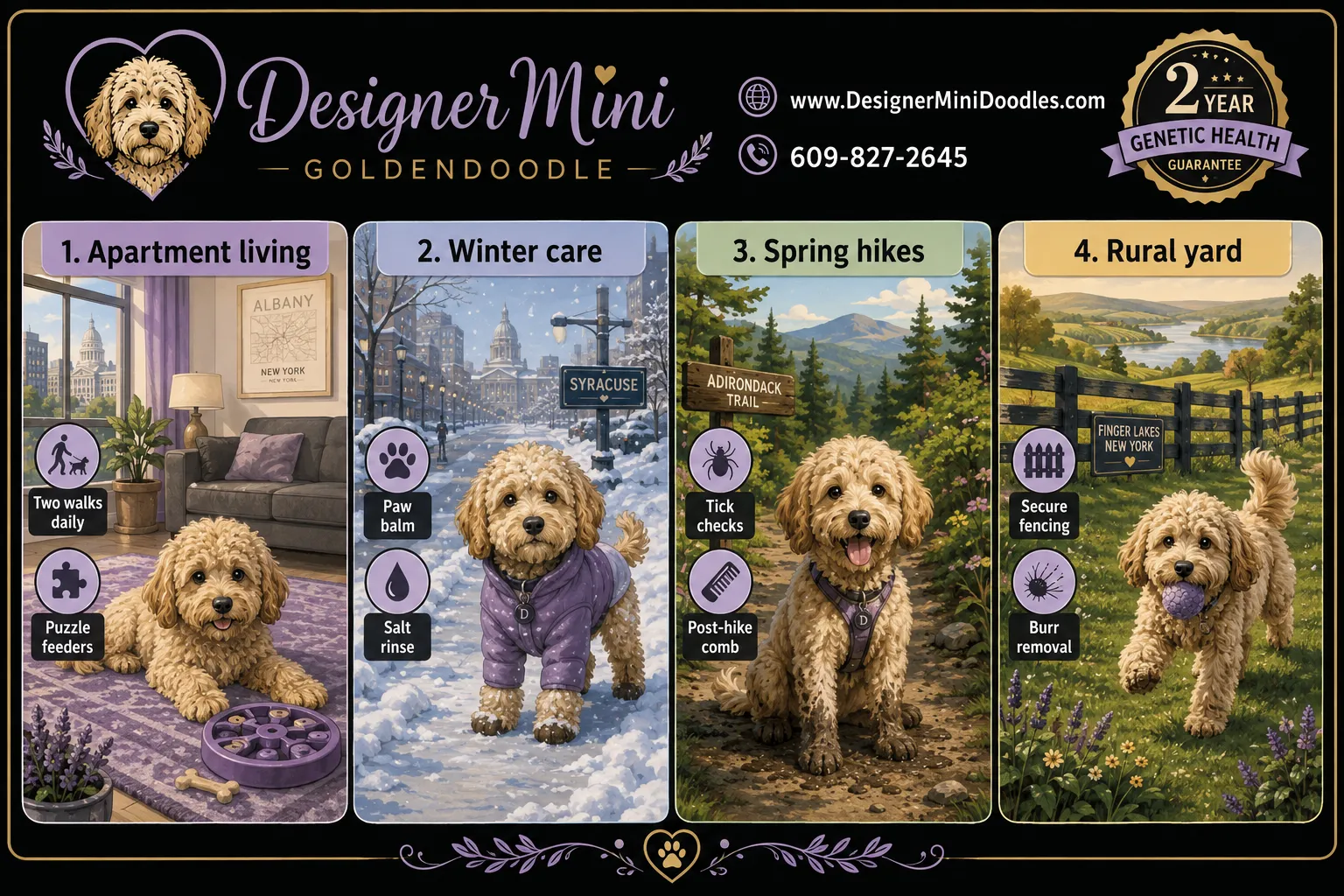
- Apartment-friendly: Yes, in Albany, Ithaca, or Buffalo apartments, provided the dog gets two solid walks and daily mental work.
- Beginner-friendly training: Among the easier breeds for first-time owners, but they’re sensitive and prone to separation anxiety.
- Upstate-specific care: Road salt, deep snow, burdock, and deer ticks all demand extra coat and paw attention.
- Biggest mistake owners make: Skipping coat maintenance during coat change at 8-12 months, then paying for a full shave-down.
What is a mini goldendoodle?
A mini goldendoodle is a cross between a Golden Retriever and a Miniature or Toy Poodle, bred to combine the Golden’s easygoing temperament with the Poodle’s smaller frame and low-shedding coat. Most adults land between 20 and 35 pounds and 14 to 17 inches at the shoulder.
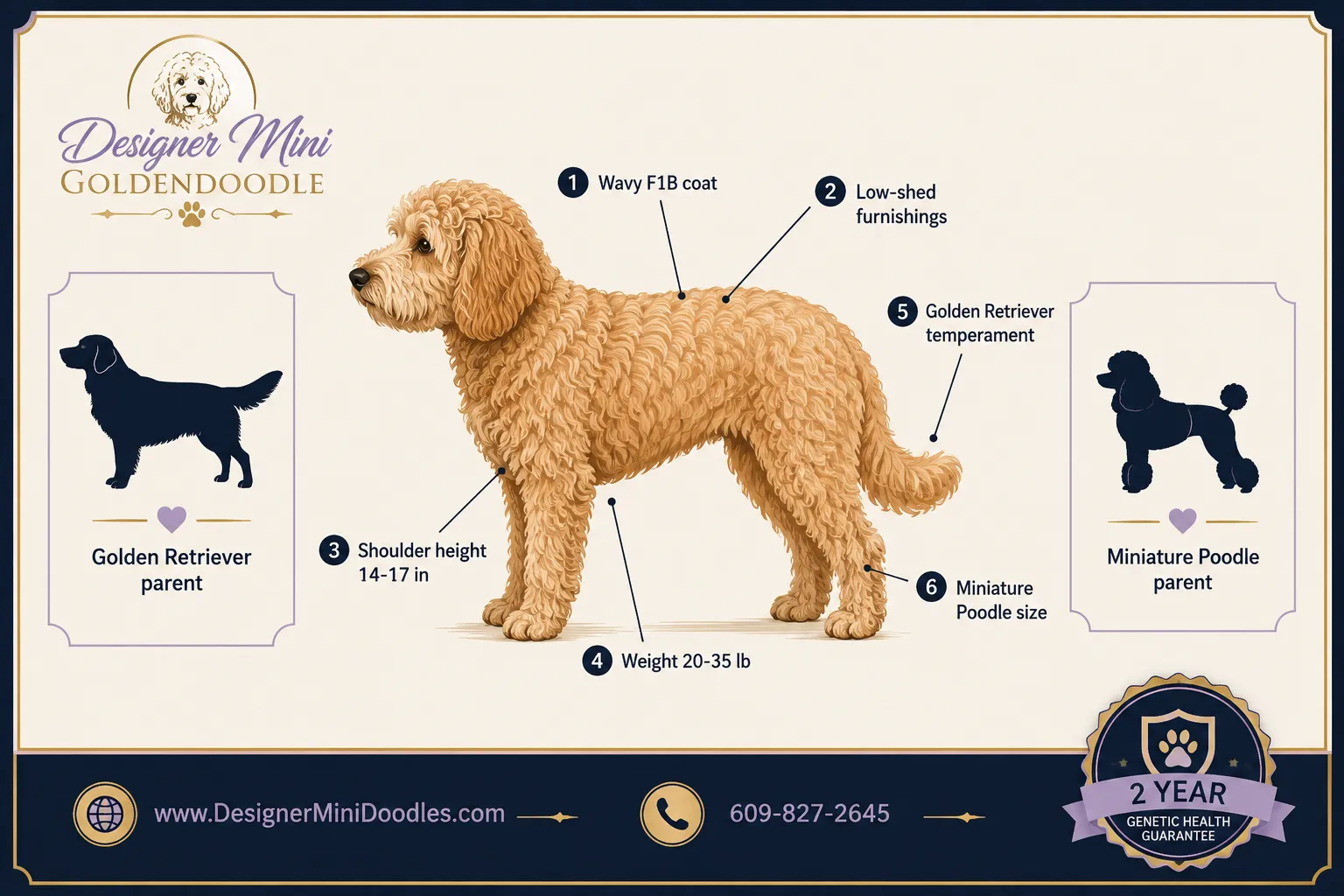
Generation labels matter more than most buyers realize, because they predict coat behavior:
| Generation | Cross | Typical coat | Shedding level |
|---|---|---|---|
| F1 | Golden Retriever x Mini Poodle | Wavy, sometimes flat | Light to moderate |
| F1B | F1 doodle x Mini Poodle | Curly, dense | Very light |
| F2B / Multigen | Doodle x doodle (planned) | Wavy to curly, consistent | Very light |
Decision rule: Choose an F1B or multigen if anyone in the household has mild dog allergies or you want the most predictable low-shed coat. Choose an F1 if you prefer a slightly lower-maintenance wavy coat and don’t mind occasional shedding.
Sizes below the standard mini range get their own labels. A micro or toy goldendoodle generally finishes at 10 to 16 pounds, which is a different lifestyle animal than a 35-pound mini. If you’re weighing size seriously, this breakdown of toy, micro, and mini goldendoodle sizes and prices makes the tradeoffs concrete.
A “mini” from one breeder can weigh 22 pounds while a “mini” from another hits 40. Always ask for the weights of the last three litters from that exact pairing, not a brochure range.
Mini goldendoodle vs mini labradoodle: what are the real differences?
Mini goldendoodles are generally softer in temperament and coat, while mini labradoodles tend to be higher-energy with a coarser fleece or wool coat. Both are low-shedding when bred from a Poodle backcross, so the deciding factor is usually drive level, not allergy performance.
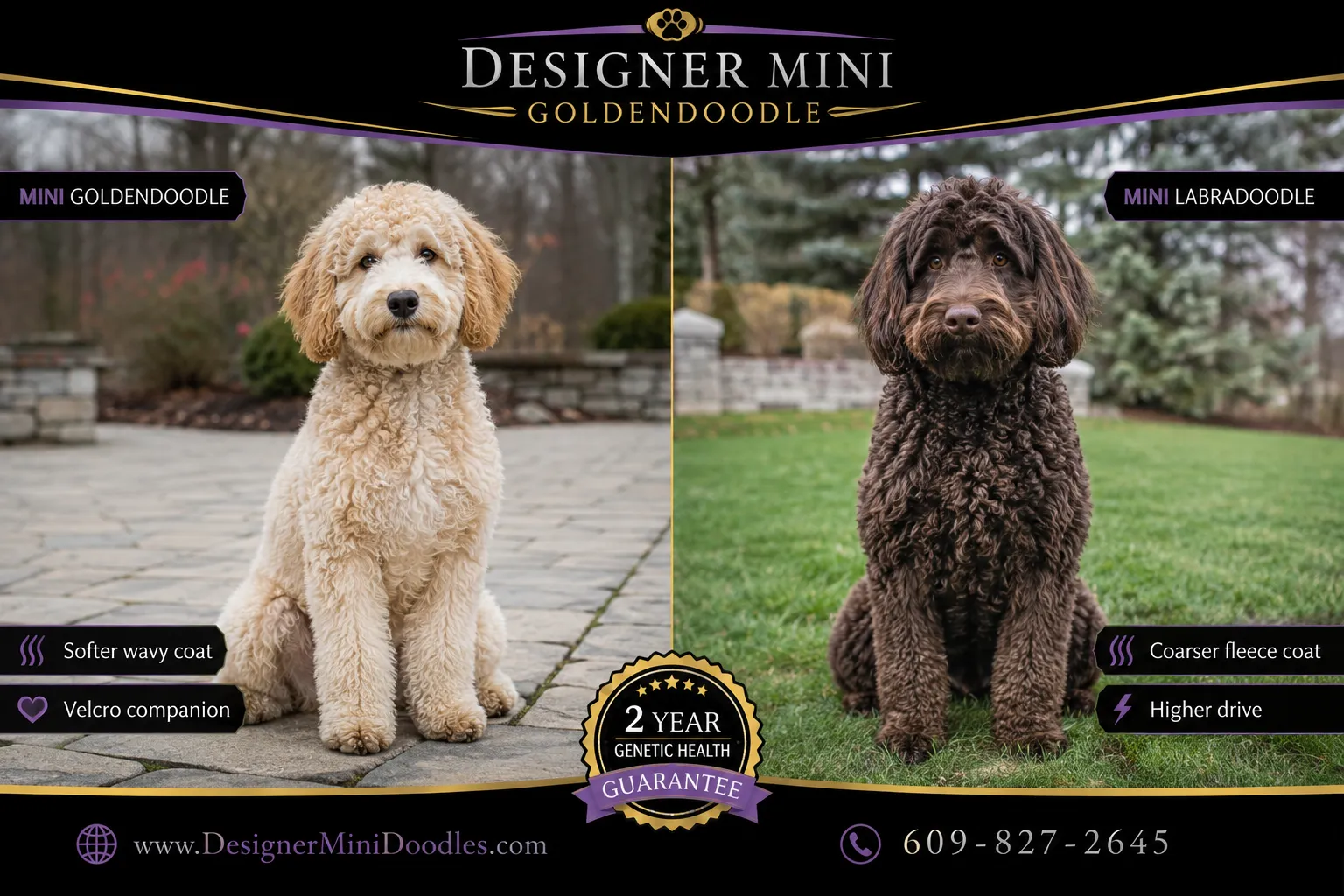
Practical differences upstate New York owners notice:
- Energy: Labradoodles often carry Labrador working drive and want a job. Goldendoodles are more content to nap beside you between walks.
- Attachment style: Mini goldendoodles are famously “velcro” dogs. That’s wonderful in a work-from-home household and risky in a home where the dog is alone nine hours a day.
- Coat feel: Golden-cross coats trend silkier and wavier; Labrador-cross coats trend crimpier and denser.
- Recovery from mistakes: Goldendoodles are typically more forgiving of a first-time owner’s inconsistent timing.
Choose a mini labradoodle if you run, hike hard, or want a sport-and-trick partner. Choose a mini goldendoodle if you want a family companion who settles indoors and tolerates kids, guests, and chaos.
How do I find mini goldendoodle breeders in upstate New York?
Start by narrowing to breeders who health-test both parents, are licensed where required, and let you see the whelping area on video or in person. In upstate New York, look across the Capital Region, Hudson Valley, Mohawk Valley, Finger Lakes, Southern Tier, and Western New York, and expect a two- to six-month wait for a well-bred litter.
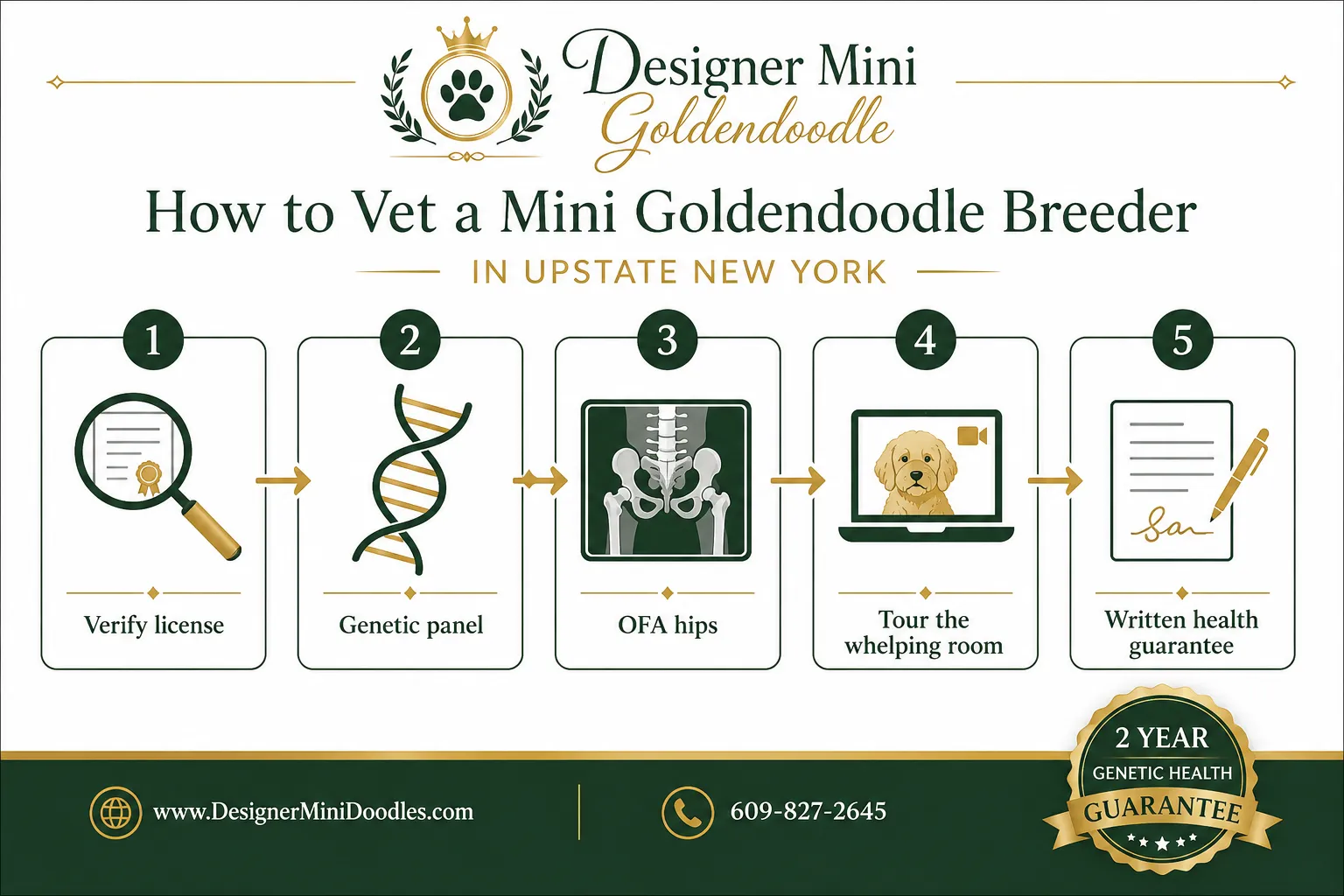
New York State licenses pet dealers who sell more than a set number of animals per year through the Department of Agriculture and Markets, and the state’s 2024 retail pet sale law shifted most legitimate puppy sales to direct-from-breeder or shelter channels. That’s good news for buyers: it means asking “are you a licensed New York pet dealer, and can I see the license?” is a fair, normal question.
Where to find mini goldendoodle puppies upstate NY buyers can trust
- Direct breeder programs. The strongest option. You talk to the person who whelped the litter.
- Regional breed and doodle clubs. Useful for referrals when a breeder’s list is full.
- Breed-specific rescue. Doodle rescues in the Northeast periodically place adults, often at 1-3 years old.
- Veterinary referrals. Upstate vets in Saratoga, Ithaca, and Rochester know which local litters arrive healthy and which don’t.
Buyers comparing statewide options often start with a curated list of mini and micro goldendoodle breeders in New York, then narrow by driving distance from Albany, Binghamton, or Buffalo.
Common mistake: Paying a deposit through a payment app to someone who won’t do a live video call. If a “breeder” refuses a video call showing the puppy with its littermates and dam, walk away. That single test filters out most fraud.
Why Designer Mini Doodles is the breeder standard for upstate New York buyers
Designer Toy GoldenDoodles is run by a working animal biologist who holds a degree in Animal Biology from Stockton University in Pomona, New Jersey, with a minor in animal genetics. That background shows up in the pairing decisions, not just the marketing. Every mini golden doodle in the program comes from documented top bloodlines, and breed stock is selected for structure, coat, and temperament before a single pairing is planned.
What separates the program from a typical hobby litter:
- Early Neurological Stimulation (ENS) from birth, so puppies build stress tolerance during the critical neonatal window.
- Real-world sound exposure. Litters grow up inside a busy household with other animals, children, vacuums, doorbells, and normal daily noise, not in an isolated barn.
- Well-started housebreaking and crate training before pickup, which shortens the hardest two weeks of new ownership dramatically.
- Genetic health guarantee backed by testing on both parents.
- Continued support for the life of the dog, including training questions at month three and adolescence questions at month ten.
If you’re shopping a goldendoodle mini for a home in the Hudson Valley or the Finger Lakes, that pre-training is the difference between a puppy who understands a crate on night one and a puppy who screams for a week. Among mini doodle breeders serving the Northeast, few combine formal genetics training with hands-on early development protocols. Families who also want a short-coated companion frequently pair a doodle with French bulldog puppies from the same standards-driven approach.
- Display 9 Products per page
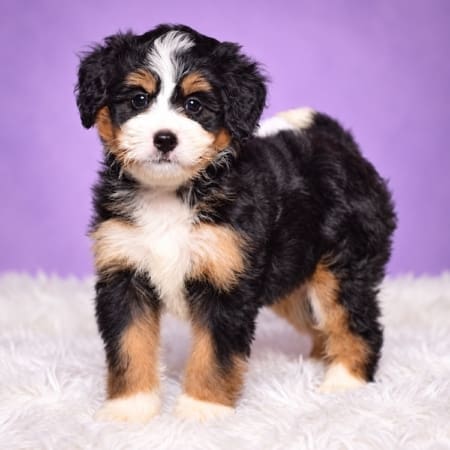
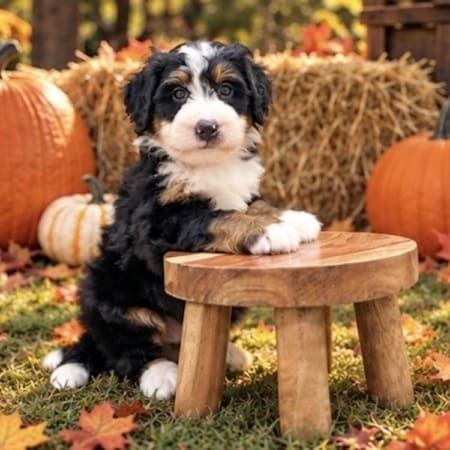
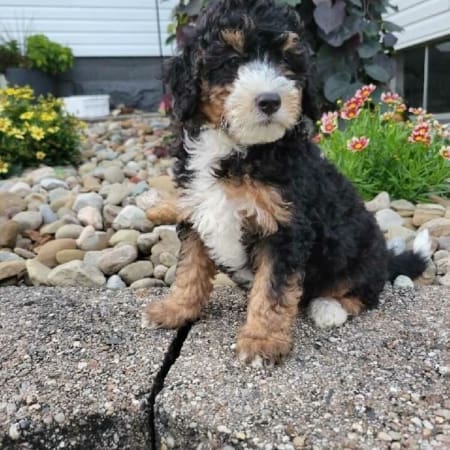


You can also find the program on its Google Maps listing to review location details and reviews.
How much does a mini goldendoodle cost near me?
Expect $2,500 to $4,500 for a well-bred mini goldendoodle in upstate New York in 2026. Price tiers in this market are remarkably consistent, and the number on the listing tells you most of what you need to know about how the puppy was produced.
| Price range | What it usually means | Risk to you |
|---|---|---|
| $500-$1,000 | Scam listing, stolen photos, or a sick import | Total loss of deposit, or heartbreak |
| $1,000-$1,500 | Puppy mill or broker volume operation | Parvo, giardia, poor temperament, no records |
| $1,800-$2,000 | Well-meaning hobby breeder, limited testing | Untested genetics, no early training |
| $2,500-$4,500 | Accredited breeder: genetic health guarantee, proper whelping, ENS, early housebreaking and crate training | Lowest risk, highest support |
Budget beyond the purchase price. First-year costs in upstate New York typically add up like this (estimates based on typical regional service pricing; your vet and groomer will vary):
- Initial vet visits, vaccines, spay/neuter: $600-$1,200
- Crate, gates, bedding, leash, bowls: $250-$450
- Professional grooming, roughly seven visits: $525-$840
- Food and treats: $500-$800
- Training class or private sessions: $200-$700
- Pet insurance, if you choose it: $360-$700
Edge case: Rare colors get marked up. A chocolate mini goldendoodle or a merle often sits at the top of the range. Color is the least important variable for a family dog, so never let it override health testing.
What is the mini goldendoodle temperament and personality like?
Mini goldendoodles are people-oriented, biddable, and moderately energetic. They typically want to be in the room with you at all times, greet strangers warmly, and settle indoors once their daily exercise and mental work are covered.
Traits that show up consistently in well-bred lines:
- Social by default. Most are friendly with children, guests, and other dogs when socialized early.
- Sensitive to tone. Harsh corrections shut them down. Reward-based training works far better.
- Clingy. Separation anxiety is the number one behavior complaint owners report to trainers.
- Mouthy as puppies. Retriever genetics mean hands, sleeves, and shoelaces are fair game until about five months.
- Alert but not guardy. They’ll bark at the UPS truck, then invite the driver in.
Quick example: A Saratoga Springs family who works hybrid schedules is close to ideal. A household where everyone leaves at 7 a.m. and returns at 6 p.m. needs a plan: midday walker, doggy daycare two days a week, or a different breed.
What are mini goldendoodle grooming requirements and shedding levels?
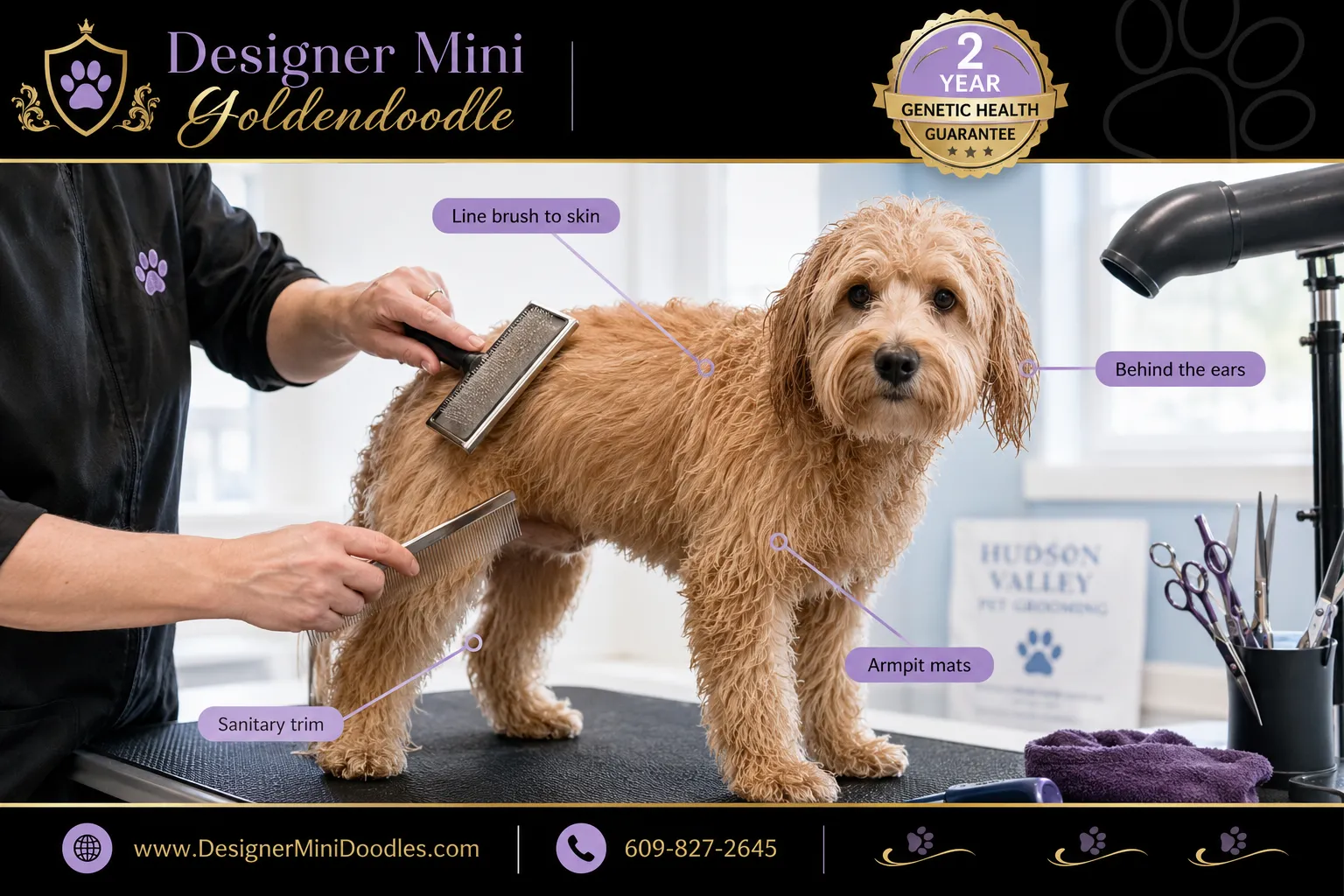
Mini goldendoodles shed very little but require serious coat maintenance: brushing three to four times per week and a professional groom every six to eight weeks. The low shedding and the high grooming load are the same trait viewed from two sides.
How much do mini goldendoodles shed?
Far less than a Golden Retriever, and less than most mixed breeds. F1B and multigen curly coats often leave almost nothing on furniture; F1 wavy coats drop a light amount seasonally. Because the hair doesn’t release, it tangles instead, which is exactly why matting is the real issue.
The grooming routine that actually works
- Line brush to the skin with a slicker brush, section by section, not just over the surface.
- Follow with a metal comb. If the comb won’t glide through, the slicker missed a mat.
- Hit the four trouble zones weekly: behind the ears, armpits, collar line, and the rear.
- Book a groomer every 6-8 weeks. Upstate New York rates typically run $75-$120 for a mini.
- Clean and dry ears after swimming. Floppy ears plus lake water equals infections.
Upstate-specific care: Road salt from December through March irritates paw pads and dries the coat. Rinse paws after walks in Albany, Syracuse, or Buffalo, and use paw balm. In spring and fall, burdock and deer ticks in the Adirondacks and Catskills make a post-hike comb-through non-negotiable.
Common mistake: Neglecting the coat during the 8-to-12-month coat change, when the puppy coat and adult coat tangle together. Many owners show up at the groomer with a matted dog and the only humane option is a shave-down.
Are mini goldendoodles good for apartments in Albany, Ithaca, or Buffalo?
Yes. Mini goldendoodles adapt well to apartments and small homes as long as they get two real walks daily plus 15-20 minutes of mental work. Their size, low shedding, and moderate volume level suit upstate city living better than a standard doodle.
What makes apartment life work:
- Two 25-30 minute walks plus a short sniff-heavy outing beats one long run.
- Mental enrichment: puzzle feeders, snuffle mats, scatter feeding, five-minute trick sessions.
- Crate as a settled space, not punishment. This is where breeder-started crate training pays off.
- Early alone-time training in five-minute blocks from week one, so barking never becomes a lease problem.
Apartment hunters weighing even smaller options should read why a 10-16 lb micro goldendoodle suits apartment and urban living.
Mini goldendoodle vs standard goldendoodle: which is better?
Neither is universally better; the right choice depends on your space, your strength, and your hiking habits. Minis fit apartments, cost less to feed, and generally live longer. Standards handle rough outdoor play and long trail days better and tend to be calmer as adults.
| Factor | Mini (20-35 lb) | Standard (50-75 lb) |
|---|---|---|
| Apartment fit | Excellent | Workable but tight |
| Typical lifespan | 12-15 years | 10-13 years |
| Grooming cost per visit | Lower | Higher |
| Adirondack hiking partner | Good for moderate trails | Better for long, rugged days |
| Puppy energy intensity | Higher, terrier-like bursts | Bouncier but often mellower earlier |
Choose the mini if you live in a city apartment, want a dog you can lift into a car or a vet table, or have limited yard space. Choose the standard if you have acreage in the North Country and want a big outdoor companion.
What health problems and lifespan should I expect?
Mini goldendoodles typically live 12 to 15 years, and the conditions worth screening for come from both parent breeds: hip and elbow dysplasia, progressive retinal atrophy, von Willebrand disease, and degenerative myelopathy, plus ear infections and patellar luxation in smaller lines.
Ask any upstate breeder for documentation on:
- OFA or PennHIP hip evaluations on both parents
- OFA elbow and cardiac clearances
- CAER eye exam within the last 12 months
- DNA panel covering PRA-prcd, ichthyosis, vWD, and DM
- Written genetic health guarantee with a defined term and remedy
Routine issues you’ll manage yourself: ear infections (floppy ears trap moisture), tear staining, dental care in the smallest lines, and weight creep. Keeping a mini goldendoodle lean is one of the cheapest ways to protect its joints for a decade-plus.
Edge case: Very small “micro” or “teacup” pairings can carry more orthopedic and dental risk. If a breeder is pushing sub-10-pound adults from Golden Retriever lines, ask hard questions about how they’re achieving that size.
Are mini goldendoodles hypoallergenic, and how hard are they to train?
No dog is truly hypoallergenic, but low-shedding mini goldendoodles release far less dander into a home than a shedding breed, and many allergy sufferers tolerate them well. On training, they’re among the friendlier breeds for first-time owners, mostly because they’re eager to please and food-motivated.
Mini goldendoodle allergies: what “hypoallergenic” really means
Allergic reactions come from proteins in dander, saliva, and urine, not from hair itself. Low-shedding coats simply hold dander in the coat until it’s brushed or bathed out. That’s why the practical strategy is: spend two hours with an adult dog from the same lines before committing, then manage the home with HEPA filtration, weekly bathing, and a bedroom that stays dog-free.
Decision rule: If someone in the household has severe, medication-dependent dog allergies, don’t assume a doodle solves it. Test first with a real exposure visit.
Mini goldendoodle training difficulty for first-time owners
Realistic expectations for the first year:
- Weeks 1-3: Reinforce crate training and housebreaking. A well-started puppy from a program using ENS and early potty conditioning may be reliably crate-quiet within days.
- Weeks 3-12: Socialization window. Aim for 60-100 positive new experiences: surfaces, sounds, people, vehicles, upstate weather.
- Months 4-6: Teething and mouthiness peak. Redirect, don’t punish.
- Months 8-14: Adolescence. Recall falls apart temporarily. Go back to long-line practice.
- Year 2: Most well-trained minis settle into a genuinely easy adult dog.
The three commands that matter most in upstate New York are recall (deer, geese, and off-leash trails), leave it (road salt, ice melt, mushrooms), and settle (brewery patios and busy households).
Because Designer Toy GoldenDoodles pre-starts housebreaking, crate training, and basic obedience foundations, buyers routinely report their puppy sleeping through the night in a crate within the first week. The program’s continued support means you can call at month nine when adolescence hits, not just during the first month.
What are the most common mistakes people make with mini goldendoodles?
The costliest mistakes are underestimating grooming, buying on price, and skipping alone-time training. Each one is preventable in the first eight weeks of ownership.
- Chasing a cheap puppy. A $900 listing that ends in a parvo hospitalization costs more than a $3,000 health-guaranteed puppy.
- Ignoring coat maintenance. Brushing “when it looks messy” guarantees mats. Schedule it like any other chore.
- Never leaving the puppy alone. Velcro breeds need practiced solitude from day one.
- Over-exercising a growing puppy. Skip long runs and repetitive jumping until growth plates close near 12-14 months.
- Free-feeding. Weight gain hits small joints hard.
- Skipping the written contract. Get the health guarantee, spay/neuter terms, and return policy in writing.
- Believing “hypoallergenic” marketing. Test exposure before you commit.
- Assuming friendly means bombproof. Socialization still has to be deliberate.
Quick checklist before you pay a deposit: Have you seen both parents’ health clearances? Watched a live video of the litter? Read the contract? Confirmed the breeder is a licensed New York pet dealer if required? Verified the pickup location matches the advertised location? All five yes answers, then send the deposit.
Related reading
- Mini goldendoodle puppies for sale in New York and the best New York breeders
- Mini goldendoodle puppies for sale in New Jersey
- Mini and micro goldendoodle breeders in Pennsylvania
- What a full grown mini goldendoodle looks like
Frequently asked questions
How big does a mini goldendoodle get?
Most mini goldendoodles finish between 20 and 35 pounds and 14 to 17 inches at the shoulder. F1B litters bred from smaller Poodle sires often land at the lower end.
How much should I pay for a mini goldendoodle in upstate New York?
Between $2,500 and $4,500 from an accredited breeder with genetic health testing, proper whelping, and early housebreaking and crate training. Listings under $1,500 almost always indicate a scam or a volume mill.
Do mini goldendoodles shed?
Very little. Curly F1B and multigen coats shed the least; wavier F1 coats shed lightly. Because shed hair stays in the coat, regular brushing is essential to prevent mats.
Are mini goldendoodles good for first-time dog owners?
Yes. They’re eager to please, food-motivated, and forgiving of beginner mistakes. The main challenges are grooming discipline and preventing separation anxiety.
How long do mini goldendoodles live?
Typically 12 to 15 years, longer than standard-size goldendoodles. Keeping them lean and maintaining dental and joint health helps them reach the top of that range.
Can a mini goldendoodle handle upstate New York winters?
Yes, with care. Their dense coat handles cold well, but road salt irritates paws and snowballs form in leg hair. Rinse paws after walks and keep the feet trimmed short in winter.
Are mini goldendoodles hypoallergenic?
No dog is fully hypoallergenic. Low-shedding coats trap dander, so many allergy sufferers react less. Always arrange an in-person exposure test before buying.
How often do mini goldendoodles need professional grooming?
Every six to eight weeks, plus brushing three to four times a week at home. Upstate New York grooming visits generally run $75 to $120 for a mini.
Is a mini or standard goldendoodle better for an apartment?
The mini. At 20 to 35 pounds it fits small spaces, costs less to groom and feed, and is easier to manage on city sidewalks and stairs.
What health tests should the parents have?
OFA hips and elbows, a cardiac clearance, a current CAER eye exam, and a DNA panel covering PRA-prcd, von Willebrand disease, ichthyosis, and degenerative myelopathy.
How long is the wait for a puppy from a reputable breeder?
Commonly two to six months. Reputable programs breed a limited number of litters per year and often keep a waitlist rather than always having puppies available.
Do mini goldendoodles bark a lot?
Moderately. They alert-bark at visitors and noises but rarely become nuisance barkers when their exercise and enrichment needs are met and alone-time is trained early.
Conclusion
The mini goldendoodle upstate New York market rewards patient buyers and punishes bargain hunters. The dogs themselves are close to ideal for the region: small enough for an Albany apartment, sturdy enough for a Finger Lakes trail, low-shedding enough for a mildly allergic household, and biddable enough for a first-time owner who’s willing to show up consistently.
Here’s what I’d do next, in order:
- Set a realistic budget. $2,500-$4,500 for the puppy, plus $2,000-$3,500 in first-year costs including grooming.
- Decide on generation and size. F1B or multigen for the lowest shedding; 20-35 pounds for a true mini.
- Shortlist three breeders who publish health clearances and will do a live video call.
- Run the five-question vet check on each: licensing, clearances, whelping setup, early training protocol, written guarantee.
- Book your groomer before pickup. Get on the schedule for week 12 to 14 so your puppy learns the table young.
- Start alone-time and crate practice on day one, building on the housebreaking and crate foundation a good breeder already laid.
Do those six things and you’ll skip nearly every problem this guide warns about. If you’re ready to look at current litters, start with a breeder whose program combines documented bloodlines, genetics-informed pairings, ENS from birth, real household socialization, and lifelong owner support.