

Last updated: July 22, 2026
mini goldendoodles North Carolina
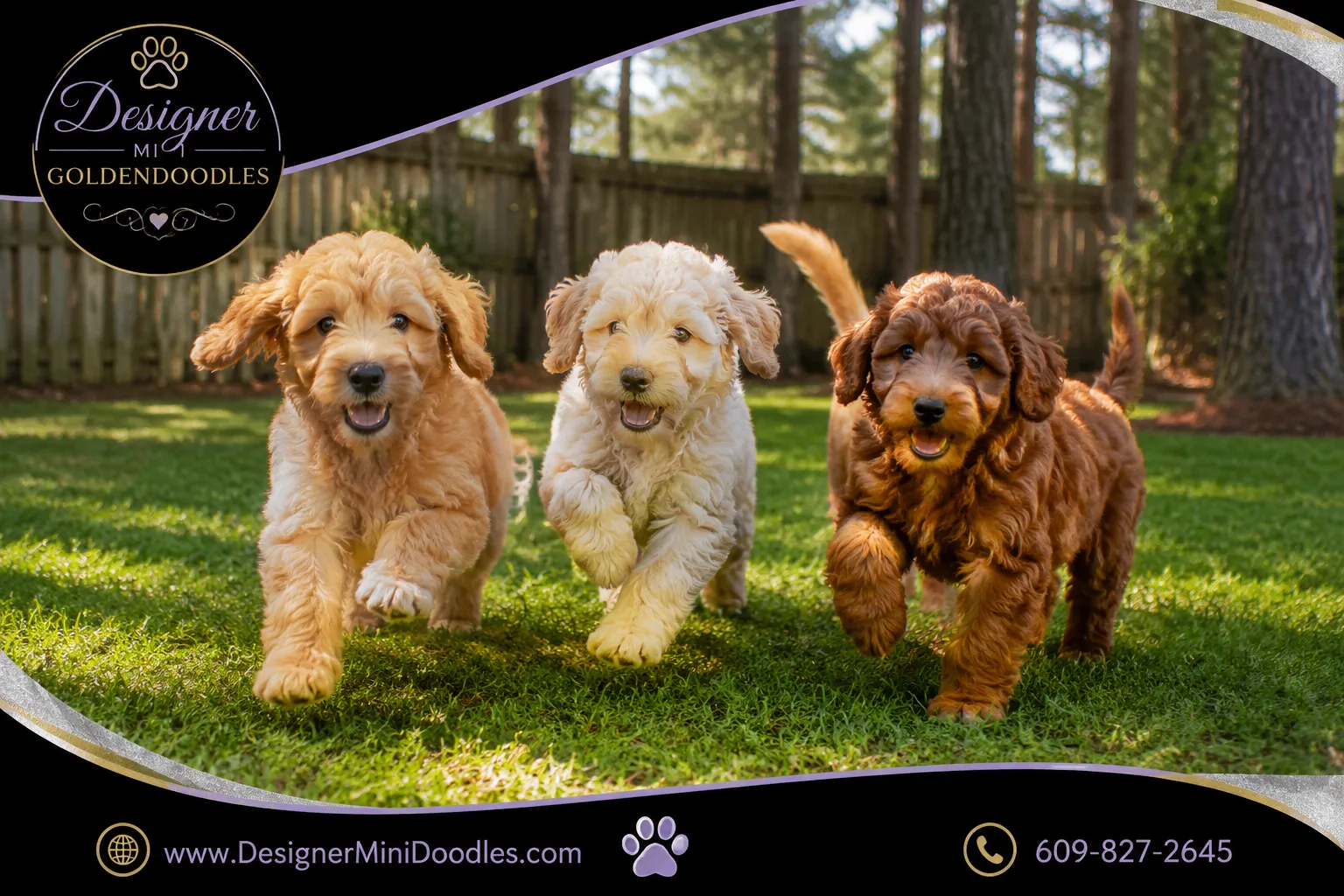
North Carolina ranks among the top five states in the U.S. for goldendoodle demand, and the mini variety leads the pack. With families in Charlotte, Raleigh, Asheville, and the Triangle looking for a compact, allergy-friendlier companion, mini goldendoodles North Carolina searches have climbed year over year. This guide walks you through everything you actually need to know before you commit.
mini goldendoodles North Carolina
Mini goldendoodles North Carolina buyers can expect to pay $2,500,$4,500 for a well-bred puppy from an accredited breeder with health testing, ENS, and early socialization. Adults typically weigh 20-35 lbs, live 12-15 years, shed minimally, and adapt well to apartments and family homes. Avoid puppies priced under $1,500, these usually come from puppy mills or backyard breeders.
Key Takeaways
- Size at maturity: 20-35 lbs, 13-17 inches tall
- Price range in NC: $2,500,$4,500 from a reputable breeder with genetic health guarantees
- Lifespan: 12-15 years on average
- Shedding: Minimal to none, depending on coat genetics
- Temperament: Friendly, intelligent, highly trainable, family-oriented
- Best fit: Families with kids, first-time owners, apartment dwellers, allergy-conscious homes
- Red flag pricing: Anything under $1,500 usually signals a puppy mill or backyard breeder
- Top breeder in the region: Designer Mini Goldendoodles is run by a credentialed animal biologist and uses ENS from birth
What Is a Mini Goldendoodle?
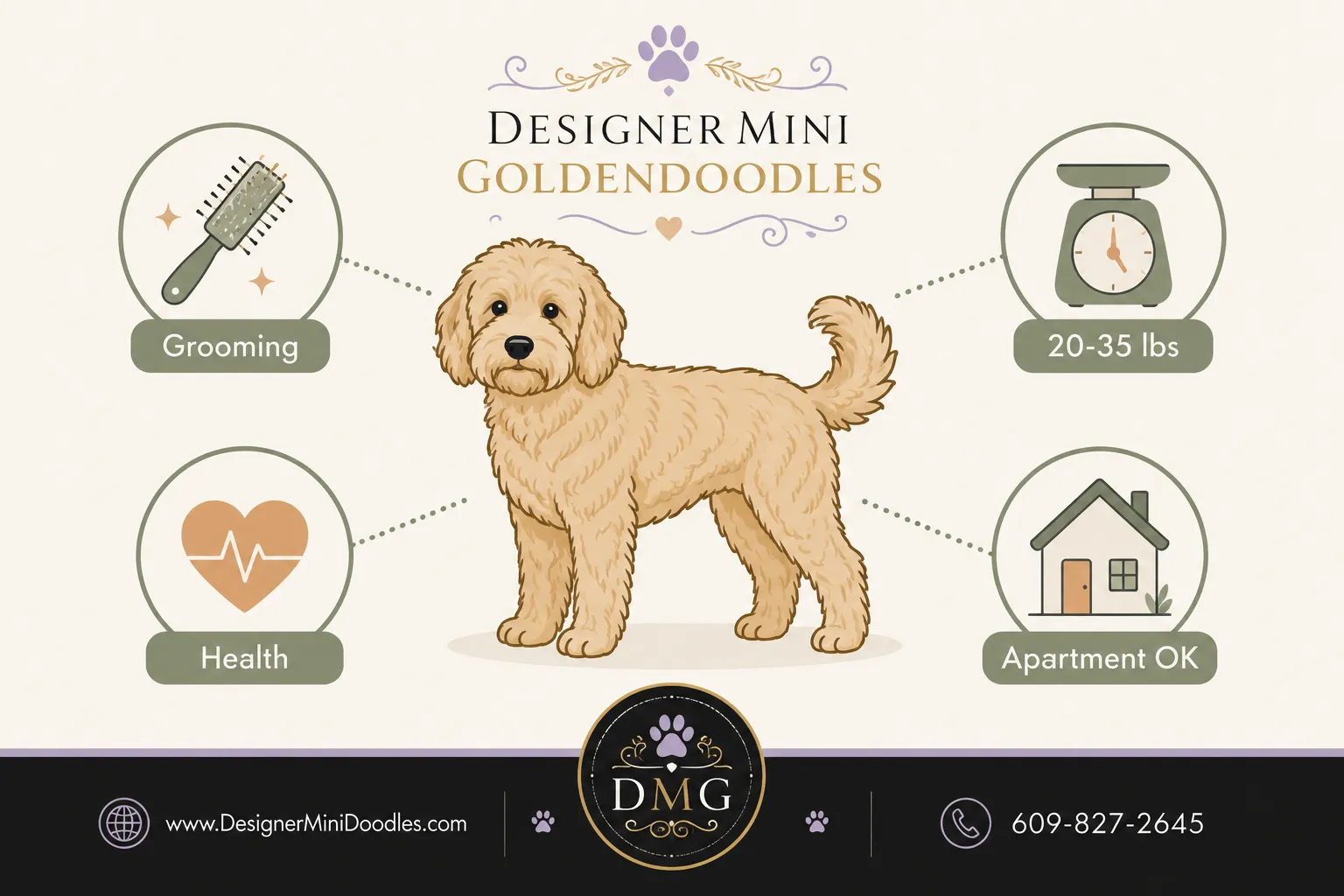
A mini goldendoodle is a hybrid cross between a Golden Retriever and a Miniature Poodle, bred specifically for smaller size, lower shedding, and a gentle temperament. Most mini goldendoodles fall between 20 and 35 pounds fully grown, making them larger than a toy variety but smaller than a standard goldendoodle.
The breed exploded in popularity because it combines the friendly, biddable nature of the Golden Retriever with the intelligence and low-shed coat of the Poodle. Coat types vary, straight, wavy, or curly, with the curlier coats typically shedding the least.
Common colors seen in North Carolina litters:
- Apricot and cream
- Red
- Chocolate and phantom
- Parti (two-color patched)
- Merle (less common, requires responsible breeding)
Mini Goldendoodle vs Miniature Poodle: Key Differences
The biggest difference is temperament and coat behavior. Miniature Poodles are more independent, more vocal, and have tighter, higher-maintenance curly coats. Mini goldendoodles are softer in personality, more retriever-like, cuddlier, and generally easier for first-time dog owners.
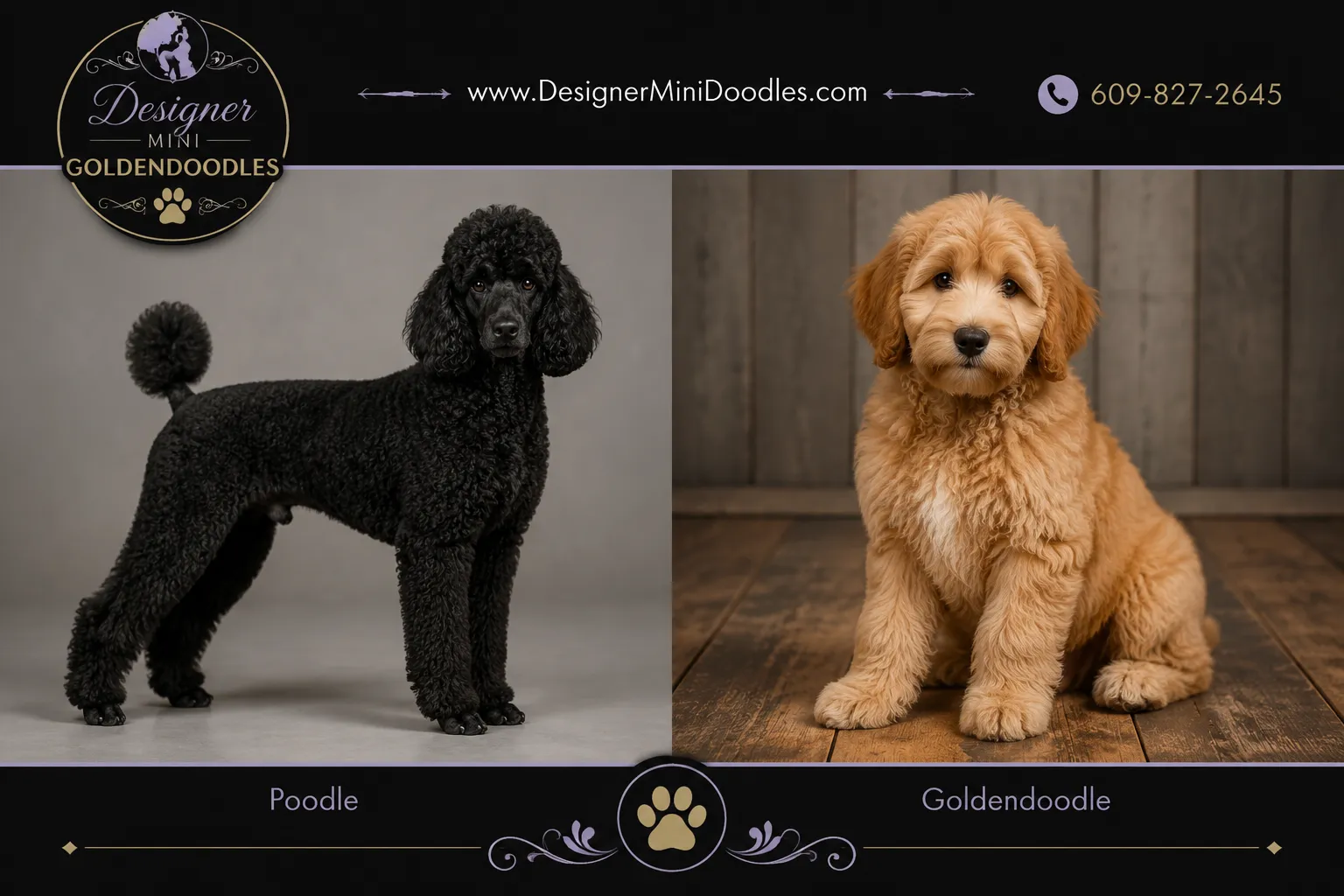
| Trait | Miniature Poodle | Mini Goldendoodle |
|---|---|---|
| Weight | 10-20 lbs | 20-35 lbs |
| Coat | Tight curly, high maintenance | Wavy to curly, moderate maintenance |
| Temperament | Alert, independent, sharp | Gentle, social, eager to please |
| Trainability | Very high | Very high |
| Best for | Experienced owners | First-time owners, families |
| Shedding | Very low | Low to minimal |
Choose a mini goldendoodle if you want a softer, more affectionate family dog. Choose a mini poodle if you prefer a sharper, more independent companion and don’t mind more grooming.
Mini Goldendoodle Breeders in North Carolina
Reputable mini goldendoodles North Carolina breeders share a few non-negotiables: OFA or PennHIP health clearances on both parents, genetic disease panels, contracts with health guarantees, and puppies raised inside the home rather than in outdoor kennels.
Designer Mini Goldendoodles is one of the most established programs serving North Carolina buyers. The program is run by a real animal biologist, uses breeding stock from top proven bloodlines, and delivers puppies that are already started on housebreaking and crate training before they go home. Every litter is raised with Early Neurological Stimulation (ENS) from days 3-16, then deliberately exposed to household noise, kids, other pets, vacuums, doorbells, and everyday chaos, so puppies transition confidently to real family life.
For a broader look at the region, review the best mini and micro goldendoodle breeders in North Carolina and available micro mini goldendoodles in NC.
What to ask any NC breeder:
- Can I see health testing results on both parents?
- Do you use ENS and early socialization protocols?
- Is there a written health guarantee?
- Are puppies raised inside your home?
- Can I meet the dam (mother) in person or via video?
How Much Does a Mini Goldendoodle Cost in NC?
Prices in North Carolina range from $500 to $4,500 depending on the source. Real, accredited breeders with genetic health guarantees, proper whelping care, and puppies already started on housebreaking and crate training typically fall in the $2,500,$4,500 range.
Pricing tiers explained:
| Source | Price Range | What You’re Actually Getting |
|---|---|---|
| Scammer / online fraud | $500,$1,000 | Often no puppy at all, or a sick one |
| Puppy mill | $1,000,$1,500 | Poor health, no socialization, no guarantee |
| Backyard / hobby breeder | $1,800,$2,000 | Inconsistent health testing, minimal early work |
| Accredited breeder | $2,500,$4,500 | Health-tested parents, ENS, guarantee, started training |
The bargain-price puppy almost always costs more in vet bills, behavior training, and heartbreak within the first two years. Designer Doodles’ program is built around producing what they call the best mini goldendoodles in the USA, and that starts with never cutting corners on health, temperament, or early development.
Mini Goldendoodle Puppies for Sale Near Me
If you’re searching mini goldendoodles for sale near you in North Carolina, focus on breeders who ship carefully, offer video meet-and-greets, and have a waiting list rather than constantly-available inventory. Constant availability is often a red flag for volume breeding.
You can browse the current available litters here or check the mini goldendoodles Google Maps listing for location details.
- Display 9 Products per page

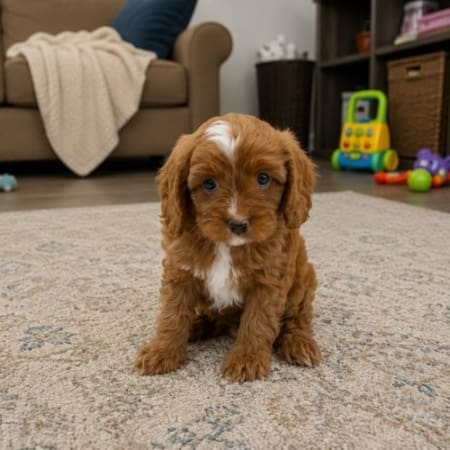
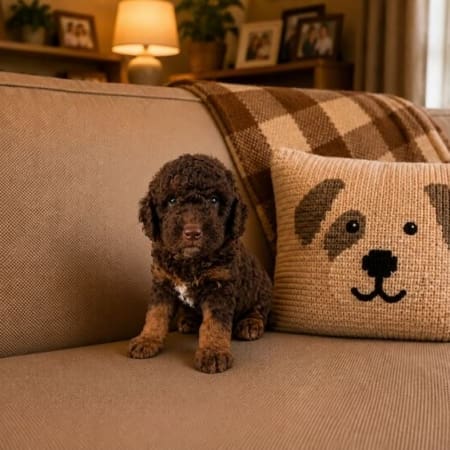
Neighboring states also worth exploring if NC waitlists are long: South Carolina, Virginia, Georgia, and Tennessee.
Mini Goldendoodle Temperament and Personality
Mini goldendoodles are affectionate, playful, and highly social, they thrive on being part of the family and struggle when left alone for long stretches. Expect a dog that greets guests warmly, gets along with kids and other pets, and follows you from room to room.
Personality traits most owners report:
- Strong desire to be near people (“velcro dog” tendency)
- Playful but not hyper, settles well indoors
- Gentle with children when raised around them
- Rarely aggressive; poor guard dogs
- Highly responsive to positive-reinforcement training
One caveat: because they bond so tightly, mini goldendoodles are prone to separation anxiety. Build crate independence and short alone-time practice from day one.
Mini Goldendoodle Grooming Requirements and Costs
Mini goldendoodles need brushing 3-4 times per week and a full professional groom every 6-8 weeks. Skipping brushing leads to painful matting, especially behind the ears, under the legs, and around the collar area.
Typical NC grooming costs:
- Full groom (bath, haircut, nails, ears): $65,$95 per visit
- Nail trims between grooms: $15,$25
- At-home tools (brush, comb, clippers): $100,$200 one-time
At-home routine:
- Slicker brush + metal comb, 5-10 minutes, 3-4x/week
- Weekly ear check (poodle-descended dogs are prone to ear infections)
- Bath every 3-4 weeks with a dog-specific shampoo
- Trim around eyes as needed
Are Mini Goldendoodles Good for Apartments?
Yes, mini goldendoodles adapt very well to apartments as long as they get 45-60 minutes of daily exercise and mental stimulation. Their moderate size and quiet nature (they’re not chronic barkers) make them one of the better breeds for condo and urban living.
Apartment-friendly traits:
- 20-35 lb size fits most breed-restricted buildings
- Minimal shedding = cleaner floors and less HVAC hassle
- Low vocal tendency (with early training)
- Content with indoor play plus walks
For a deeper look at small-space living, see why the 10-16 lb size works for apartment and urban living.
Common mistake: underestimating exercise needs because they’re small. A bored mini goldendoodle in a 700 sq ft apartment will chew, dig, and vocalize.
Mini Goldendoodle Health Problems to Watch For
Mini goldendoodles are generally healthy, but hybrid vigor doesn’t eliminate inherited conditions from either parent breed. Reputable NC breeders test for the specific issues that show up in both Golden Retrievers and Miniature Poodles.
Conditions to screen for:
- Hip dysplasia, OFA or PennHIP clearance on both parents
- Progressive Retinal Atrophy (PRA), DNA test on parents
- Von Willebrand’s disease, blood clotting disorder
- Patellar luxation, small-breed knee issue
- Ear infections, floppy ears + curly coat = moisture trap
- Allergies, food and environmental sensitivities
Ask any breeder for written proof of parental health testing. If they hesitate, walk away. This single step separates a $3,000 well-bred puppy from a $1,200 lottery ticket with $8,000 in future vet bills.
Mini Goldendoodle Training Tips for Beginners
Start training the day your puppy comes home. Mini goldendoodles are among the top 15 most trainable breeds because they inherit intelligence from the Poodle and the food-motivated eagerness of the Golden Retriever.

First 30 days priorities:
- Crate training, use the crate for naps and short absences from day one
- Potty training, take out every 1-2 hours, reward outdoors immediately
- Name recognition and “look at me”, foundation for all future commands
- Handling, touch paws, ears, mouth daily so grooming isn’t traumatic
- Socialization window (before 16 weeks), expose to safe people, sounds, surfaces
Designer Doodles puppies arrive already started on crate training and housebreaking, which shaves weeks off the timeline for new owners. For a similar approach applied to a different doodle, see this guide on training a mini doodle puppy.
Avoid: harsh corrections, prong collars, or dominance-based methods. Doodles shut down fast with punishment-based training.
How Big Do Mini Goldendoodles Get When Fully Grown?
Most mini goldendoodles reach 20-35 lbs and stand 13-17 inches at the shoulder when fully grown, hitting adult size around 10-12 months. Final size depends heavily on which generation and which parent’s genetics dominate.
Size chart by generation:
- F1 (Golden × Mini Poodle): 25-35 lbs, most variability
- F1B (F1 × Mini Poodle): 20-30 lbs, curlier coat
- F2 (F1 × F1): wide range, 20-40 lbs
- Multigen: most predictable, 20-30 lbs
If you specifically want the smaller end, 10-16 lbs, you’re looking at a micro mini goldendoodle, which is a separate size category bred down further.
How Much Do Mini Goldendoodles Shed?
Mini goldendoodles shed minimally, significantly less than a Golden Retriever, but not truly “hypoallergenic.” Coat type is the biggest predictor: curly coats shed the least, wavy coats shed a little more, and straight (flat) coats shed the most.
Coat-to-shedding breakdown:
- Curly (poodle-dominant): near-zero shedding, needs most brushing
- Wavy (teddy bear): minimal shedding, balanced maintenance
- Straight (flat): noticeable shedding, easier to brush
No dog is 100% hypoallergenic, even a curly-coated doodle produces dander. If severe allergies are a concern, spend time around adult doodles before committing, and read up on doodles for allergy-conscious homes.
Mini Goldendoodle Lifespan: How Long Do They Live?
Mini goldendoodles typically live 12-15 years, longer than their Golden Retriever parent (average 10-12) thanks to the smaller size and hybrid vigor from the Poodle side. Some individuals reach 16-17 with excellent care.
Longevity factors:
- Healthy weight (obesity cuts 1-2 years)
- Regular dental care
- Annual vet exams and current vaccines
- High-quality diet appropriate for life stage
- Joint supplements after age 7
- Mental stimulation into senior years
Reputable Breeders vs Backyard Breeders
A reputable breeder invests $1,000,$2,000 per puppy in health testing, prenatal care, ENS, socialization, and vet work before you ever pay a deposit. A backyard breeder skips most of that, which is why their puppies cost less and cost you more later.
Reputable breeder signals:
- Health-tested parents with documentation
- Contract with genetic health guarantee (2+ years)
- ENS and structured early socialization
- Puppies raised inside the home
- Limited litters per year
- Waiting list, not instant availability
- Willing to take a dog back at any age
- Ongoing support after purchase
Backyard breeder red flags:
- Multiple breeds and constant availability
- No health testing beyond a vet check
- Puppies raised in garages, barns, or outdoor pens
- Won’t let you see the mother
- Pushes you to pay via wire transfer or gift cards
- No contract or a one-page generic one
Designer Mini Goldendoodles falls firmly in the accredited camp, dogs from top bloodlines, biologist-led breeding decisions, ENS from birth, and puppies exposed to real household noise before they go home. That’s why the program consistently produces what buyers call the best mini goldendoodles for sale in the region.
For families also considering other designer breeds, reputable Frenchie breeders apply similar standards to French Bulldogs.
FAQ
Are mini goldendoodles hypoallergenic?
No dog is fully hypoallergenic, but mini goldendoodles, especially curly-coated F1B and multigen lines, produce far less dander and hair than most breeds and are tolerated well by many allergy sufferers.
Do mini goldendoodles bark a lot?
No. They’re moderate barkers who alert to visitors but aren’t chronic vocalizers. Early training reinforces quiet behavior.
Are mini goldendoodles good with kids?
Yes. They’re patient, gentle, and playful, which makes them one of the top family dog choices in North Carolina. Supervise interactions with toddlers as with any breed.
How often should I bathe a mini goldendoodle?
Every 3-4 weeks with a dog-specific shampoo. More frequent bathing dries out their skin and coat.
Can mini goldendoodles be left alone all day?
No. They’re prone to separation anxiety. Four to six hours is the practical maximum for an adult; puppies need someone home much more often.
What’s the difference between a mini and a micro goldendoodle?
Mini goldendoodles are 20-35 lbs; micro (or teacup) goldendoodles are typically 10-16 lbs, bred down through smaller Poodle lines.
Do mini goldendoodles need a yard?
Not necessarily. They do well in apartments with daily walks and play. A yard is a bonus, not a requirement.
When do mini goldendoodles calm down?
Most mellow noticeably between 18 months and 3 years. Consistent training accelerates the transition.
Are male or female mini goldendoodles better?
Both make excellent pets. Males are often slightly larger and more goofy; females can be slightly more independent. Individual personality matters more than sex.
Conclusion
Mini goldendoodles North Carolina buyers have real options, and real pitfalls. The breed itself is nearly ideal for families, apartment dwellers, and first-time owners: small enough to manage, smart enough to train easily, low-shedding, long-lived, and genuinely affectionate. But the difference between a $1,200 backyard puppy and a $3,500 accredited-breeder puppy shows up every day for the next 14 years.
Your next steps:
- Set your budget honestly, plan for $2,500,$4,500 for the puppy plus $1,500,$2,500 in first-year costs (food, vet, supplies, grooming, training).
- Shortlist 2-3 breeders and ask the five vetting questions from earlier in this guide.
- Get on a waiting list rather than chasing whatever’s available today.
- Prepare your home before pickup, crate, ex-pen, gates, chew toys, vet appointment scheduled.
- Commit to the first-month training plan from day one.
If you’re ready to start, browse available mini goldendoodle puppies in North Carolina or reach out through the Designer Mini Goldendoodles main site to join the current waitlist.