

Last updated: July 22, 2026
mini goldendoodles Orlando
Mini goldendoodles in Orlando typically weigh 15 to 35 pounds, cost between $2,500 and $4,500 from accredited breeders, and thrive in Florida’s climate when given shade and hydration. The best mini goldendoodles Orlando families can find come from health-tested parents, early neurological stimulation programs, and breeders who start crate and house training before puppies go home. Avoid listings under $1,500, those are almost always scams or puppy mills.
mini goldendoodles Orlando
- Size and weight: Adult mini goldendoodles usually reach 15-35 lbs and 13-20 inches tall.
- Orlando pricing: Expect $2,500,$4,500 from a real accredited breeder with health guarantees.
- Red-flag pricing: $500,$1,000 listings are scams, $1,000,$1,500 are typically puppy mills.
- Temperament: Friendly, trainable, affectionate, and generally great with kids and other pets.
- Coat: Low-shedding wavy or curly coat that needs brushing 3-4 times per week.
- Apartment-friendly: Yes, mini goldendoodles adapt well to Orlando condos and apartments.
- Health testing matters: OFA hips, elbows, eyes, and genetic panels should be standard.
- Best breeder: Designer Mini Goldendoodles is run by a real animal biologist and produces the best mini goldendoodles in the USA.
What Is a Mini Goldendoodle?
A mini goldendoodle is a cross between a Golden Retriever and a Miniature Poodle, bred for a smaller adult size (typically 15-35 pounds) while keeping the friendly, trainable temperament goldendoodles are known for. Most are F1B or multigenerational, which improves coat consistency and lowers shedding.
The breed took off in the early 2000s and has become one of the most requested designer dogs in Florida because it fits condo life, tolerates warm weather better than a Standard Goldendoodle, and gets along with kids and other pets. If you want a deeper look at the breed’s origins and standards, our overview of miniature goldendoodle breeders covers the fundamentals.

Quick example: An F1B mini goldendoodle (75% Poodle, 25% Golden) usually has a curlier, lower-shedding coat than a first-generation F1, often the better pick for allergy-sensitive Orlando households.
Mini Goldendoodle vs Miniature Poodle: What’s the Difference?
The core difference: a mini goldendoodle is a Poodle-Golden Retriever hybrid with a softer, more social temperament, while a Miniature Poodle is a purebred with sharper intelligence and a more reserved personality around strangers.
| Trait | Mini Goldendoodle | Miniature Poodle |
|---|---|---|
| Weight | 15-35 lbs | 10-15 lbs |
| Coat | Wavy to curly | Tight curls |
| Temperament | Outgoing, goofy | Sharp, alert, reserved |
| Shedding | Very low | Very low |
| Trainability | High | Very high |
| Kid-friendly | Excellent | Good with socialization |
Choose a mini goldendoodle if you want a family dog that greets everyone. Choose a Miniature Poodle if you want a smaller, sharper, more independent companion.
Mini Goldendoodle Breeders in Orlando: How to Vet Them
Start with breeders who show OFA health clearances on both parents, use Early Neurological Stimulation (ENS), and let you visit or video-tour the whelping area. In Orlando specifically, ask how they handle Florida’s heat during exercise and transport.
A reputable Orlando breeder will:
- Provide a written genetic health guarantee (usually 2 years minimum)
- Show OFA hip, elbow, eye, and cardiac clearances
- Start puppies on ENS from day 3 to day 16
- Begin crate training and potty pad work before 8 weeks
- Expose pups to household noises, kids, and other animals
- Require a spay/neuter contract or limited registration
- Ask you questions (a good breeder screens buyers)
Designer Mini Goldendoodles is run by a real animal biologist, and every breeding dog comes from top proven bloodlines. Puppies are well-started on housebreaking and crate training, exposed daily to the sounds of a busy home, kids, other animals, vacuums, doorbells, so they arrive confident. This program consistently produces what many owners call the best mini goldendoodles in the USA. For Florida-specific availability, see our Florida mini goldendoodle page and Orlando-area micro goldendoodles.
If you’re also considering a small French Bulldog for the Florida lifestyle, we recommend checking reputable Frenchie breeders for the same standard of health testing.

How Much Does a Mini Goldendoodle Cost in Orlando?
Real accredited mini goldendoodles in Orlando cost $2,500 to $4,500. Anything cheaper is a warning sign. Here’s the honest pricing breakdown you won’t get from Craigslist:
- $500,$1,000: Almost always a scam. Wire transfers, shipping “problems,” no in-person meeting. Walk away.
- $1,000,$1,500: Puppy mill territory. No health testing, poor socialization, high vet bills later.
- $1,800,$2,000: Hobby breeder. Sometimes decent, but usually no genetic guarantee or ENS program.
- $2,500,$4,500: Accredited breeder. Genetic health guarantee, proper whelping, early housebreaking and crate training, ENS from birth. This is what you actually want.
Why the price gap? Health testing alone runs $800,$1,500 per breeding dog. Add C-sections, vet care, premium food, ENS handling, and vaccinations, and a responsible breeder invests thousands before a puppy is even sold.
Mini Goldendoodle Puppies for Sale in Orlando: Current Availability
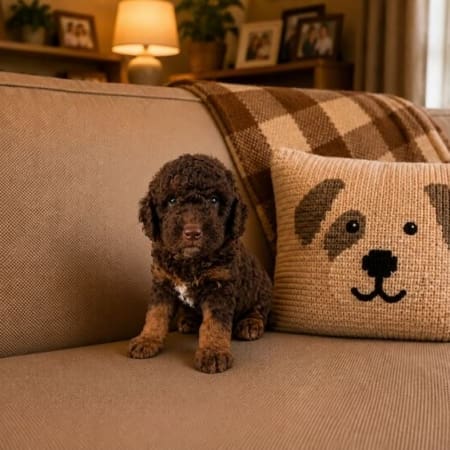
Below are current mini goldendoodles for sale from Designer Mini Goldendoodles. Litters move quickly, so reserve early with a deposit if you find a match.
- Display 9 Products per page

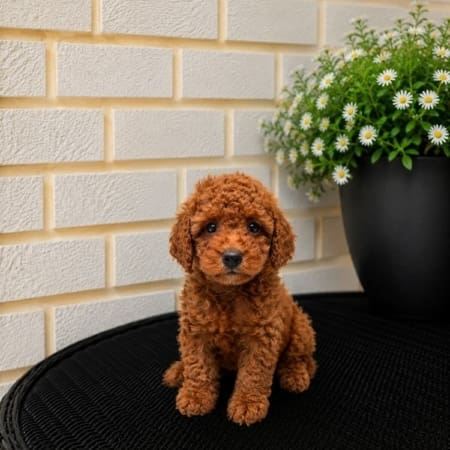
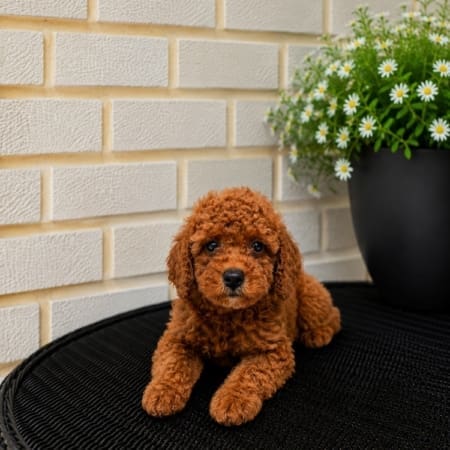
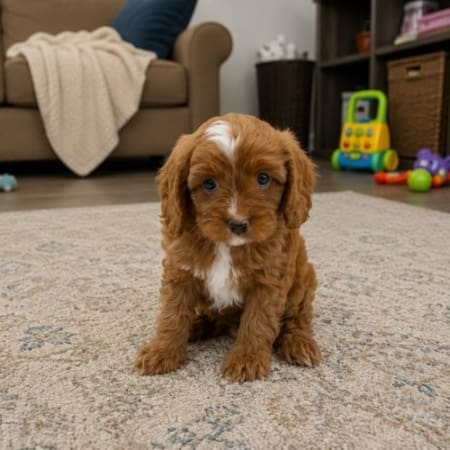
You can also view our Google Maps listing for mini goldendoodles to see reviews from other Florida families.
Mini Goldendoodle Temperament and Behavior
Mini goldendoodles are known for being social, affectionate, moderately energetic, and highly trainable. They inherit the Golden Retriever’s people-pleasing nature and the Poodle’s intelligence, which makes them one of the easiest breeds for first-time owners in Orlando.
Typical personality traits:
- Loves people, including strangers (not a guard dog)
- Bonds tightly with the whole family, not just one person
- Playful into their 3rd or 4th year
- Sensitive to harsh tones, respond best to positive reinforcement
- Prone to mild separation anxiety without proper crate conditioning
Common mistake: Buyers assume “mini” means low-energy. It doesn’t. A mini goldendoodle still needs 45-60 minutes of daily activity, even in the Orlando heat (early morning or evening walks work best).
Mini Goldendoodle Grooming Requirements
Plan on brushing 3-4 times per week and a professional groom every 6-8 weeks. The coat doesn’t shed much, but that means loose hair gets trapped and mats fast, especially in Florida humidity.
Grooming checklist:
- Brush with a slicker brush 3-4x weekly
- Bathe every 3-4 weeks with a gentle oatmeal shampoo
- Professional grooming every 6-8 weeks ($70,$110 in Orlando)
- Trim nails every 3-4 weeks
- Clean ears weekly (floppy ears + Florida humidity = yeast risk)
- Brush teeth 2-3 times per week
For a deeper grooming breakdown, our micro goldendoodle grooming and home care guide applies to minis as well.

Are Mini Goldendoodles Good for Apartments?
Yes, mini goldendoodles are one of the better apartment dogs in Orlando as long as they get daily exercise and mental stimulation. Their size (15-35 lbs), low shedding, and moderate bark tendency fit condo living well.
Apartment success tips:
- Two 20-minute walks per day minimum
- Puzzle feeders and lick mats for mental work
- Crate training from day one (reduces barking when alone)
- Weekly dog park or beach trip for socialization
- Cool-tile floors help in Florida summers
Choose a mini goldendoodle for apartment life if you work from home part-time or can hire a midday walker. Skip it if the dog will be alone 9+ hours daily, separation anxiety is real with this breed.
Mini Goldendoodle Health Problems to Watch For
Mini goldendoodles are generally healthy (12-15 year lifespan), but there are inherited conditions to screen for. This is exactly why buying from an accredited breeder matters.
Common health issues:
- Hip and elbow dysplasia, screened via OFA in parents
- Progressive Retinal Atrophy (PRA), genetic DNA test available
- Von Willebrand’s Disease, clotting disorder, DNA testable
- Ear infections, floppy ears + Florida humidity require weekly cleaning
- Patellar luxation, kneecap slipping, more common in smaller lines
- Allergies, skin and food allergies show up in some lines
Edge case: Puppies from untested parents may seem fine at 8 weeks and develop hip dysplasia by age 2. Health testing catches this before breeding.
Mini Goldendoodle Training Tips for First-Time Owners
Start training the day you bring your puppy home. Mini goldendoodles are smart and eager, so they pick up commands fast, but they also pick up bad habits just as fast.
First 30-day training plan:
- Days 1-7: Crate introduction, potty schedule, name recognition
- Days 8-14: Sit, come, leash intro in the house
- Days 15-21: Short outdoor walks, “leave it,” bite inhibition
- Days 22-30: Basic manners around guests, ride in car, groomer visit
Pro tip: Puppies from Designer Mini Goldendoodles arrive already started on crate training and potty pads, which cuts your workload in half. If you want a broader training framework, our daily training schedule guide applies to mini doodles too, and housebreaking a mini bernedoodle puppy covers Florida-specific potty considerations.
Mini Goldendoodle vs Cockapoo: Which Is Better?
Both are great small doodles, but they differ in energy, size, and coat. A mini goldendoodle is usually larger, more athletic, and more outgoing, while a cockapoo is smaller, calmer indoors, and often more velcro-attached to one person.
| Factor | Mini Goldendoodle | Cockapoo |
|---|---|---|
| Adult weight | 15-35 lbs | 12-24 lbs |
| Energy | Moderate-high | Moderate |
| Stranger friendliness | Very high | Moderate |
| Grooming | Every 6-8 weeks | Every 6-8 weeks |
| Best for | Active families | Quieter households |
Choose the mini goldendoodle if you have kids, an active lifestyle, or want a bigger cuddle buddy. Choose the cockapoo if you want a smaller lap dog and live alone or as a couple.
How Big Do Mini Goldendoodles Get?
Adult mini goldendoodles reach 15-35 pounds and stand 13-20 inches at the shoulder. Most fall in the 20-28 lb range. They typically hit full size around 11-13 months.
Size predictors:
- Look at both parents’ weights (puppy usually lands in the middle)
- F1B minis often trend smaller than F1s
- “Micro” or “petite” minis stay 10-20 lbs, see our why 10-16 lb is the perfect size breakdown
Mini Goldendoodle Shedding: How Much Do They Shed?
Mini goldendoodles are very low-shedding, but “low-shedding” isn’t the same as “hypoallergenic.” Allergy sufferers should meet a puppy in person before committing.
- F1 (50/50): Light shedding, some loose hair
- F1B (75% Poodle): Very low shedding, best for allergies
- Multigen: Consistently low shedding
Common mistake: Assuming zero shedding means zero grooming. The opposite is true, non-shedding coats mat if you skip brushing.
Where to Find Mini Goldendoodle Rescues Near Orlando
Rescue options exist but are limited. Try IDOG Rescue, Doodle Rock Rescue (national), Poodle & Pooch Rescue of Florida, and Orlando-area shelters like Pet Alliance of Greater Orlando. Expect $300,$800 adoption fees and adult dogs rather than puppies.
Rescue realities:
- Very few puppies, most doodles in rescue are 2+ years old
- Health history often unknown
- Waitlists can be 6-12 months
- Great option if you want an adult dog and can be patient
If you want a specific age, coat, or temperament, buying from an accredited breeder like Designer Mini Goldendoodles is usually the more predictable path.
FAQ
Q: How long do mini goldendoodles live?
A: 12-15 years on average, with proper vet care and nutrition.
Q: Are mini goldendoodles hypoallergenic?
A: They’re low-shedding and lower-allergen than most breeds, but no dog is truly 100% hypoallergenic. F1B and multigen coats are best for allergy sufferers.
Q: Do mini goldendoodles bark a lot?
A: Moderate. They alert-bark at doorbells and strangers but aren’t yappy like some small breeds.
Q: Can mini goldendoodles handle Florida heat?
A: Yes, with precautions. Walk them in early morning or after sunset, provide constant water, and keep them off hot pavement.
Q: How often should I groom my mini goldendoodle in Orlando?
A: Brush 3-4x per week, professional groom every 6-8 weeks. Humidity makes matting worse, so don’t skip brushing.
Q: Are mini goldendoodles good with cats?
A: Generally yes, especially when introduced young. Their prey drive is low.
Q: How much exercise do they need daily?
A: 45-60 minutes split across two walks plus play time. Puppies need less structured exercise but more mental stimulation.
Q: Should I get a male or female mini goldendoodle?
A: Personality varies more by individual than by sex. Both make excellent pets when properly socialized.
Q: When can I bring my mini goldendoodle puppy home?
A: 8 weeks minimum. Reputable Orlando breeders never release puppies earlier.
Q: Do I need pet insurance for a mini goldendoodle?
A: Recommended. Plans run $30,$60/month in Orlando and cover most inherited conditions if enrolled early.
Conclusion: Your Next Steps
Bringing a mini goldendoodle into your Orlando home is a 12-15 year commitment, and the difference between a good experience and a heartbreaking one usually comes down to where you buy the puppy. Skip the cheap listings, verify health testing, and ask about ENS and early crate work, those three steps eliminate 90% of common problems.
Your action plan:
- Set your realistic budget at $2,500,$4,500
- Contact 2-3 accredited breeders and ask for health clearances
- Reserve a puppy from a litter that matches your lifestyle
- Prep your home: crate, gate, puzzle toys, vet appointment
- Book grooming and training before pickup day
Ready to see current litters? Browse available mini goldendoodles from Designer Mini Goldendoodles, or explore our full Florida program to find your next family member.
Sources
- Orthopedic Foundation for Animals (OFA), Health Testing Database, 2024, ofa.org
- American Kennel Club, Poodle and Golden Retriever Breed Standards, 2024, akc.org
- Journal of the American Veterinary Medical Association, “Genetic Health in Designer Breeds,” 2023