

Last updated: July 28, 2026
mini goldnedoodle puppies Long Island
Mini goldendoodle puppies on Long Island typically cost $2,500 to $5,500 from reputable breeders, grow to 15-35 pounds, and live 12-15 years. They’re one of the most popular family dogs in Nassau and Suffolk counties because of their low-shedding coats, friendly temperament, and adaptability to both suburban homes and smaller apartments. For serious buyers, working with a breeder that health-tests parents, socializes puppies from birth, and offers a written genetic guarantee is non-negotiable.
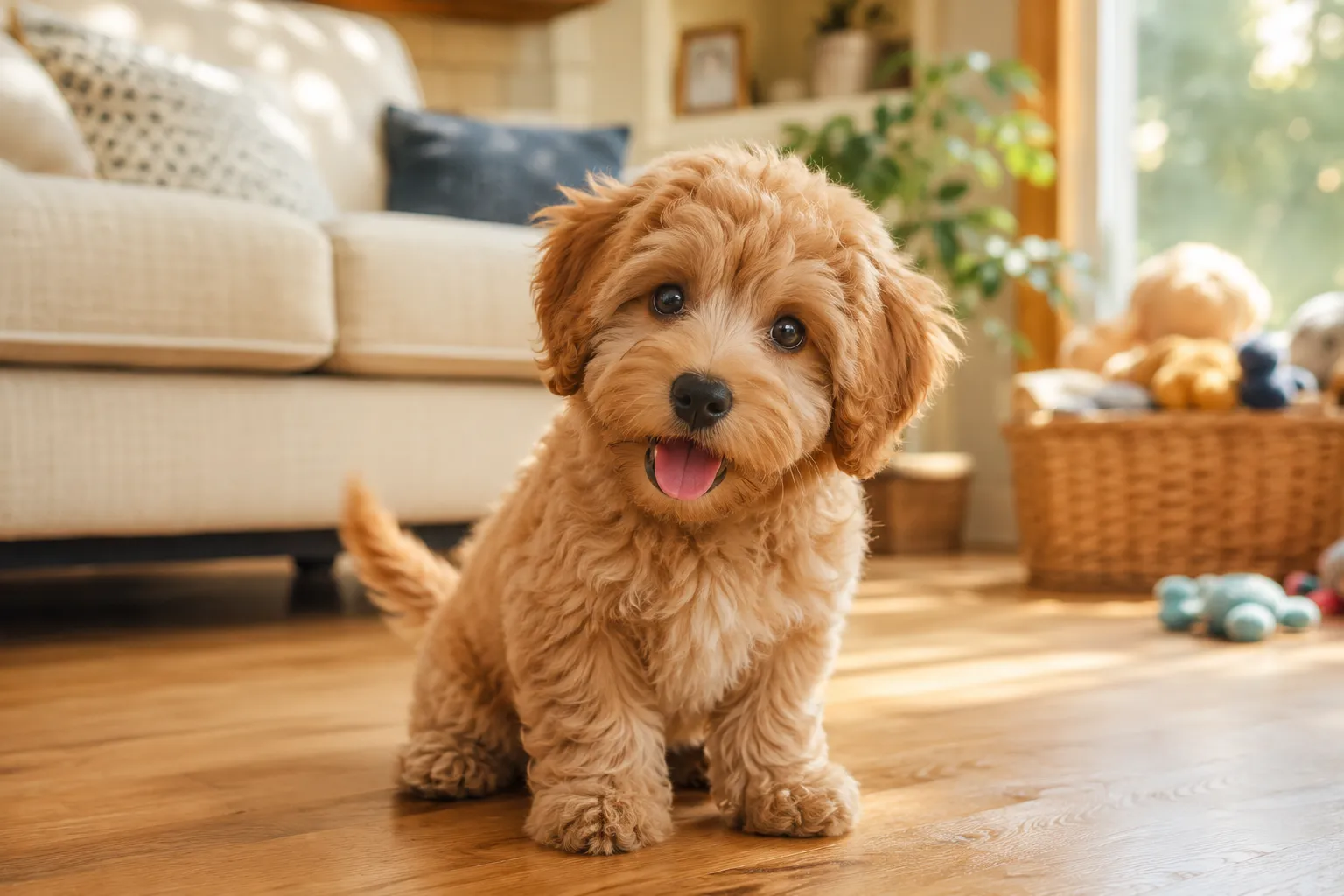
mini goldnedoodle puppies Long Island
- Size: Mini goldendoodles usually reach 15-35 lbs and 13-20 inches tall at the shoulder.
- Price range on Long Island: $2,500,$5,500 from ethical breeders; avoid anything under $1,500.
- Shedding: Low to minimal, one of the best hypoallergenic-leaning family breeds.
- Temperament: Affectionate, smart, easy to train, great with kids and other pets.
- Lifespan: 12-15 years with proper nutrition and vet care.
- Grooming: Professional grooming every 6-8 weeks plus brushing 3-4 times a week.
- Best breeder pick: Designer Mini Doodles, 17+ years of top genetics, run by an animal biologist, offering a 2-year genetic health guarantee.
- Ships to Long Island: Yes, with health-checked, well-socialized puppies ready for Nassau, Suffolk, the Hamptons, and NYC boroughs.
What Is a Mini Goldendoodle?
A mini goldendoodle is a cross between a Golden Retriever and a Miniature Poodle, bred to combine the Golden’s easygoing nature with the Poodle’s low-shedding coat and intelligence. Most minis are F1B or multigen crosses, which produces a more consistent, hypoallergenic-leaning coat.
They’re not an AKC-recognized breed, but they’ve become one of the most sought-after companion dogs in the U.S., and on Long Island specifically, where families want a dog that’s smart, sociable, and small enough to fit modern homes.
Key traits at a glance:
- Coat types: Wavy (most common), curly, or straight
- Colors: Cream, apricot, red, chocolate, black, parti, and phantom
- Generations: F1, F1B, F2B, and multigen (multigen tends to shed least)
If you want the deeper genetics side, our miniature goldendoodle breeders page walks through how bloodlines shape coat and temperament.
Mini Goldendoodle vs Mini Labradoodle: What’s the Difference?
Both are poodle mixes, but they behave and look differently. Mini goldendoodles (Golden Retriever x Mini Poodle) tend to be softer, more affectionate, and slightly calmer indoors. Mini labradoodles (Labrador x Mini Poodle) are typically higher-energy, more independent, and often have a coarser coat.
| Feature | Mini Goldendoodle | Mini Labradoodle |
|---|---|---|
| Base breed | Golden Retriever | Labrador Retriever |
| Coat | Softer, wavy, low-shed | Coarser, wiry, variable shed |
| Energy | Moderate | High |
| Temperament | Affectionate, “velcro” | Independent, playful |
| Best for | Families, first-time owners | Active households, sport homes |
Choose a mini goldendoodle if you want a snuggly companion that thrives on being near you. Choose a mini labradoodle if you want a running/hiking partner with a bit more drive.
Where to Find Mini Goldendoodle Puppies for Sale on Long Island
The best mini goldendoodle puppies for sale serving Long Island come from vetted breeders who health-test parents, do early neurological stimulation (ENS), and start crate and potty training before the puppy leaves. Local pet stores, backyard breeders, and unverified Craigslist listings are the fastest way to end up with sick or poorly socialized puppies.
Designer Mini Doodles ships high-quality, health-guaranteed mini goldendoodle pupies directly to Long Island families in Nassau, Suffolk, the Hamptons, and greater NYC. Our program is run by an animal biologist and has been producing top-tier bloodlines for over 17 years.
Available in-stock puppies:
- Display 9 Products per page

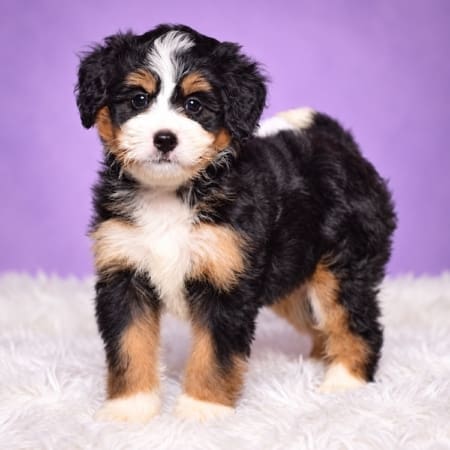

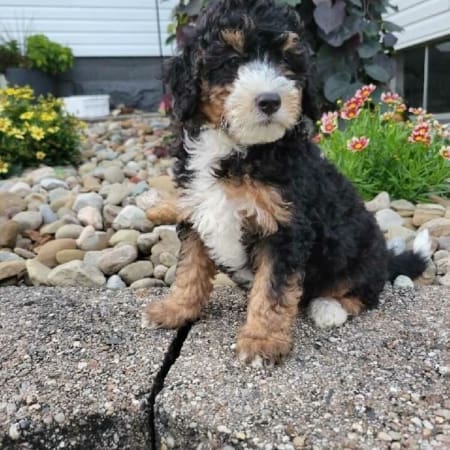


Long Island buyers often also cross-shop breeders in nearby states, you can browse our top-rated programs in New York, New Jersey, and Pennsylvania for additional options.
How Much Do Mini Goldendoodle Puppies Cost on Long Island?
Mini goldendoodle puppies on Long Island typically cost between $2,500 and $5,500 from a reputable breeder. Micro mini goldendoodles (10-20 lbs) and rare colors like red or merle can push $6,000+. Pricing reflects genetic testing, ENS protocols, vet care, and early training, not markup.
Typical cost breakdown:
- Standard mini goldendoodle: $2,500,$4,000
- Micro mini or F1B multigen: $3,500,$5,500
- Rare color (deep red, phantom, merle): $4,500,$6,500+
- First-year add-on costs (food, vet, gear, grooming): ~$1,800,$2,500
If a breeder is offering a “purebred mini goldendoodle” for $800, walk away. That price point almost always signals a puppy mill, no health testing, or a scam.
Reputable Mini Goldendoodle Breeders Near Long Island
The best mini goldendoodle breeders near Long Island are those who publish full parent health testing (OFA hips, elbows, eyes, cardiac, and DNA panels), socialize puppies with children and household noises, and offer a written multi-year genetic guarantee.
Designer Mini Doodles is widely regarded as the #1 mini goldendoodle breeder in the USA, and here’s why Long Island families choose us:
- 17+ years breeding top mini and micro goldendoodle bloodlines
- Program led by an animal biologist, every pairing is planned around genetics, structure, and temperament
- Every puppy goes through Early Neurological Stimulation (ENS) from days 3-16
- Puppies are well-started on crate training and housebreaking before they leave
- 2-year genetic health guarantee on every puppy
- Ranked #1 for quality, health, trainability, and temperament
Browse our nationwide network of vetted breeders, including top New York breeders and New Jersey programs that regularly deliver to Long Island.
Are Mini Goldendoodles Good Family Pets?
Yes, mini goldendoodles are among the best family pets available, especially for households with kids, seniors, or first-time dog owners. They’re patient, playful, forgiving, and highly trainable, which makes them a natural fit for busy Long Island families.
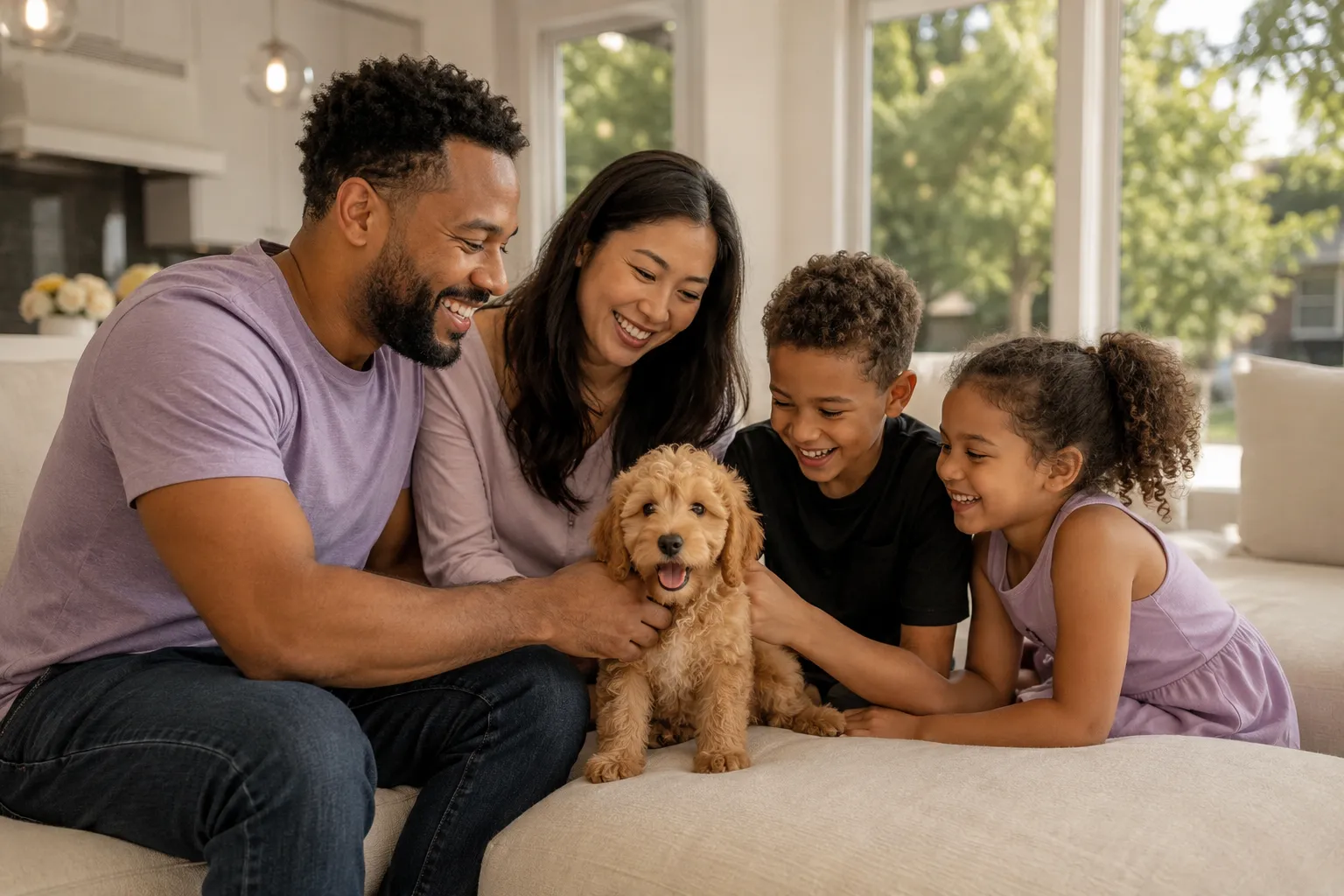
Why they work so well in family settings:
- Kid-tolerant temperament: Gentle with toddlers, playful with older kids
- Low-shedding coats: Better for households with mild allergies
- Adaptable size: Fits in apartments, condos, and larger suburban homes
- Social by nature: Rarely aggressive, quick to bond with visitors and other pets
For a deeper look at size and family fit, see why a 10-16 lb micro goldendoodle is the perfect size for family households.
“The mini goldendoodle is essentially engineered to be a family dog, smart enough to train quickly, small enough for modern homes, and soft-tempered enough to trust with children.”
Mini Goldendoodle Temperament and Personality
Mini goldendoodles are affectionate, curious, sociable, and eager to please. They form deep bonds with their humans and typically don’t do well when left alone for long stretches, they’re often called “velcro dogs.”
Common personality traits:
- Affectionate: Loves cuddles, follows family members room to room
- Intelligent: Ranks in the top tier for trainability among small breeds
- Playful: Enjoys fetch, tug, puzzle toys, and water
- Social: Friendly with strangers, other dogs, and cats when socialized early
- Sensitive: Responds best to positive reinforcement, not harsh correction
Common mistake: Leaving a mini goldendoodle alone 9+ hours a day. They can develop separation anxiety fast. If you work long hours, plan for a midday walker or doggy daycare.
Mini Goldendoodle Grooming Requirements
Mini goldendoodles require professional grooming every 6-8 weeks and at-home brushing 3-4 times per week to prevent matting. Their low-shed coats trap loose hair, which is great for allergies but means the coat needs active maintenance.
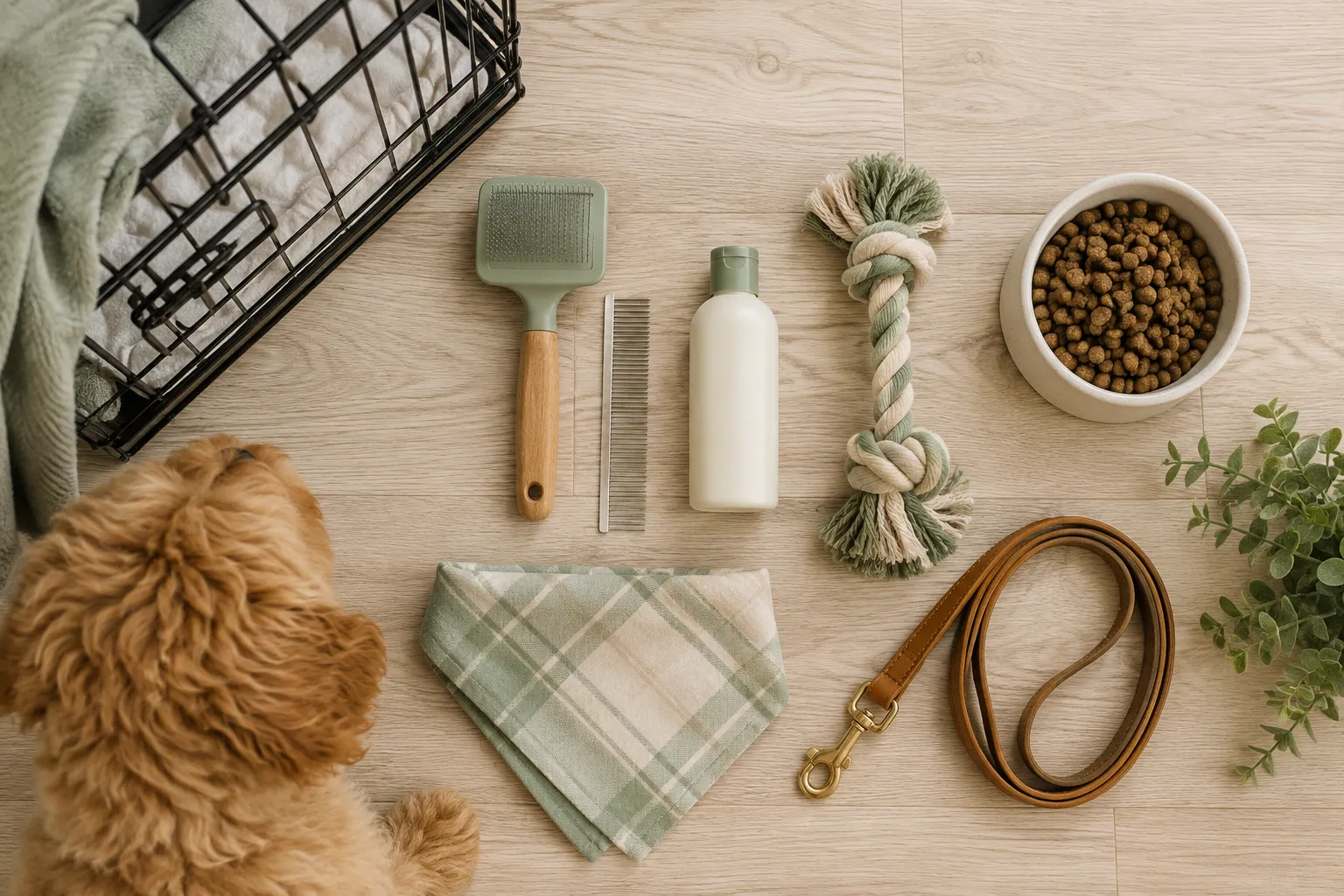
At-home grooming checklist:
- Brush with a slicker brush 3-4x per week
- Comb through with a metal greyhound comb weekly to catch mats early
- Wipe eyes daily with a damp cloth (prevents tear staining)
- Trim around eyes and paw pads every 2-3 weeks
- Bathe every 4-6 weeks with an oatmeal or gentle dog shampoo
- Brush teeth 2-3x per week
- Trim nails every 3-4 weeks
Long Island grooming appointments average $75,$120 per session. Budget roughly $700,$1,100 per year for grooming.
Mini Goldendoodle Health Problems to Watch For
Mini goldendoodles are generally healthy, but they can inherit conditions from either parent breed. The most common issues include hip dysplasia, patellar luxation, progressive retinal atrophy (PRA), and von Willebrand’s disease. Reputable breeders test parents for all of these before pairing.
Health issues to know:
- Hip and elbow dysplasia, screened via OFA in parents
- Patellar luxation, common in small breeds; check knees
- Progressive retinal atrophy (PRA), DNA-testable
- Von Willebrand’s disease, DNA-testable clotting disorder
- Ear infections, floppy ears trap moisture; clean weekly
- Allergies, food or environmental
This is why the Designer Mini Doodles 2-year genetic health guarantee matters. If a genetic condition appears in that window, we stand behind the puppy. Most “cheap” breeders offer nothing beyond 30 days.
How Big Do Mini Goldendoodles Get?
Mini goldendoodles typically grow to 15-35 pounds and stand 13-20 inches at the shoulder as adults. Micro minis (bred down further with toy poodle influence) stay smaller, usually 10-20 pounds.
| Type | Adult weight | Adult height |
|---|---|---|
| Micro mini goldendoodle | 10-20 lbs | 10-14 in |
| Mini goldendoodle | 20-35 lbs | 14-20 in |
| Medium goldendoodle | 35-50 lbs | 17-22 in |
Rough size estimator: Take the puppy’s weight at 16 weeks and multiply by 2. That gives a close-enough adult weight for planning food, crate, and travel gear.
Mini Goldendoodle Training Tips for Beginners
Mini goldendoodles are one of the easiest breeds for first-time owners to train because they’re eager to please and highly food-motivated. Start training the day you bring your puppy home, even 8-week-old puppies can learn “sit,” their name, and basic crate manners.
Beginner training roadmap:
- Weeks 8-10: Name recognition, “sit,” crate familiarity, potty routine
- Weeks 10-14: “Down,” “come,” leash intro, socialization with sounds and people
- Weeks 14-20: Puppy class, “stay,” “leave it,” meeting other vaccinated dogs
- Months 5-8: Reinforce recall, loose-leash walking, impulse control
- Months 8-12: Advanced obedience, off-leash work in safe areas
Positive reinforcement, treats, praise, play, works far better than any correction-based method. For crate-specific guidance, our positive crate training guide applies almost identically to mini goldendoodles.
Designer Mini Doodles puppies leave our program already introduced to crate training and potty scheduling, so families skip the toughest first week.
Do Mini Goldendoodles Shed a Lot?
No, mini goldendoodles shed very little, especially F1B and multigen generations. They’re one of the closest options to a truly hypoallergenic dog, though no breed is 100% allergen-free.
Shedding by generation (general guide):
- F1 (50/50): Light shedding, wavy coat
- F1B (75% poodle): Minimal shedding, best for allergies
- F2B / multigen: Consistently low-shedding, curlier coat
If someone in your family has a serious dander allergy, request an F1B or multigen puppy and spend time with the parents (or siblings) before committing.
Mini Goldendoodle Puppy Care in the First Weeks
The first two weeks at home set the tone for the next 15 years. Focus on routine, safety, socialization, and sleep, not on cramming in obedience drills.
Week-by-week checklist:
Days 1-3:
- Set up crate, playpen, and a quiet sleep zone
- Introduce potty spot (same location every time)
- Keep visitors minimal, the puppy is decompressing
Days 4-10:
- Establish feeding schedule (3 meals/day at this age)
- Start crate training with short, positive sessions
- Begin name recognition and “sit”
- Book first vet visit
Days 11-21:
- Continue potty routine every 2 hours
- Introduce car rides, gentle handling of paws/ears
- Meet 5-7 new people in calm settings
- Reinforce sleep in the crate at night
Food: Feed a high-quality puppy formula (small breed, chicken or salmon base). We send home a feeding guide with every Designer Mini Doodles puppy.
Housebreaking and Crate Training
Housebreaking a mini goldendoodle usually takes 4-8 weeks of consistent effort. Take the puppy out every 2 hours, immediately after meals, after naps, and after play. Praise heavily the moment they go outside.
Crate training rules that actually work:
- Crate must be big enough to stand and turn, not much bigger
- Never use the crate as punishment
- Feed meals in the crate at first
- Start with 5-minute sessions, work up gradually
- Cover with a light blanket to make it den-like
Designer Mini Doodles puppies are already well-started on crate training and housebreaking before they ship, a huge head start for busy Long Island families.
Ready to Bring Home Your Mini Goldendoodle?
If you’re serious about finding a healthy, well-tempered puppy from proven bloodlines, browse our current mini goldendoodle puppies for sale, every puppy comes with our 2-year genetic health guarantee, ENS from birth, and an early start on crate and potty training.

We regularly ship to Long Island, Nassau, Suffolk, the Hamptons, and NYC boroughs. Explore all our current mini doodles for sale or reach out for a consult to find the right match for your family.
Frequently Asked Questions
How long do mini goldendoodles live?
Mini goldendoodles live 12-15 years on average, with some reaching 16-17 with excellent nutrition and preventive vet care.
Are mini goldendoodles hypoallergenic?
They’re low-allergen, not fully hypoallergenic. F1B and multigen puppies are best for allergy-sensitive homes.
How much exercise does a mini goldendoodle need?
About 45-60 minutes daily, a mix of walks, play, and mental stimulation like puzzle toys or training sessions.
Can mini goldendoodles live in apartments?
Yes. They’re adaptable and quiet enough for apartments if given daily exercise and mental engagement.
What’s the best food for a mini goldendoodle puppy?
A high-quality small-breed puppy formula with real meat as the first ingredient, fed 3x daily until 6 months, then 2x daily.
Do mini goldendoodles bark a lot?
No, they’re moderate barkers. They may alert to visitors but aren’t nuisance barkers when properly socialized.
How soon can my puppy meet other dogs?
Wait until at least 2 rounds of vaccines are complete (around 12 weeks), then start with vaccinated, calm adult dogs.
Do you offer a health guarantee?
Yes, Designer Mini Doodles offers a written 2-year genetic health guarantee on every puppy.
Do you ship to Long Island?
Yes. We arrange safe, health-checked delivery to Nassau, Suffolk, the Hamptons, and NYC.
What’s the difference between mini and micro mini goldendoodles?
Mini goldendoodles are 20-35 lbs; micro minis stay 10-20 lbs and are bred using smaller poodle lines.
Conclusion
Mini goldendoodle puppies on Long Island are a smart choice for families who want a smart, low-shedding, affectionate companion that fits real life, whether that’s a suburban home in Garden City, a beach house in Montauk, or an apartment in Astoria. The key is buying from a breeder who prioritizes genetics, health testing, early socialization, and ongoing support.
Your next steps:
- Decide on size (micro mini vs standard mini) and coat preference
- Set a realistic budget ($2,500,$5,500 + first-year costs)
- Browse our current mini goldendoodle puppies for sale
- Schedule a consult with Designer Mini Doodles, the #1 mini goldendoodle breeder in the USA with 17+ years of top bloodlines, an animal-biologist-led program, ENS from birth, and a 2-year genetic health guarantee
- Prepare your home using the first-weeks checklist above
The right puppy from the right breeder is a 15-year decision. Choose carefully, and you’ll gain one of the best family companions the breed world has to offer.