

Last updated: July 28, 2026
reputable mini goldendoodle breeders
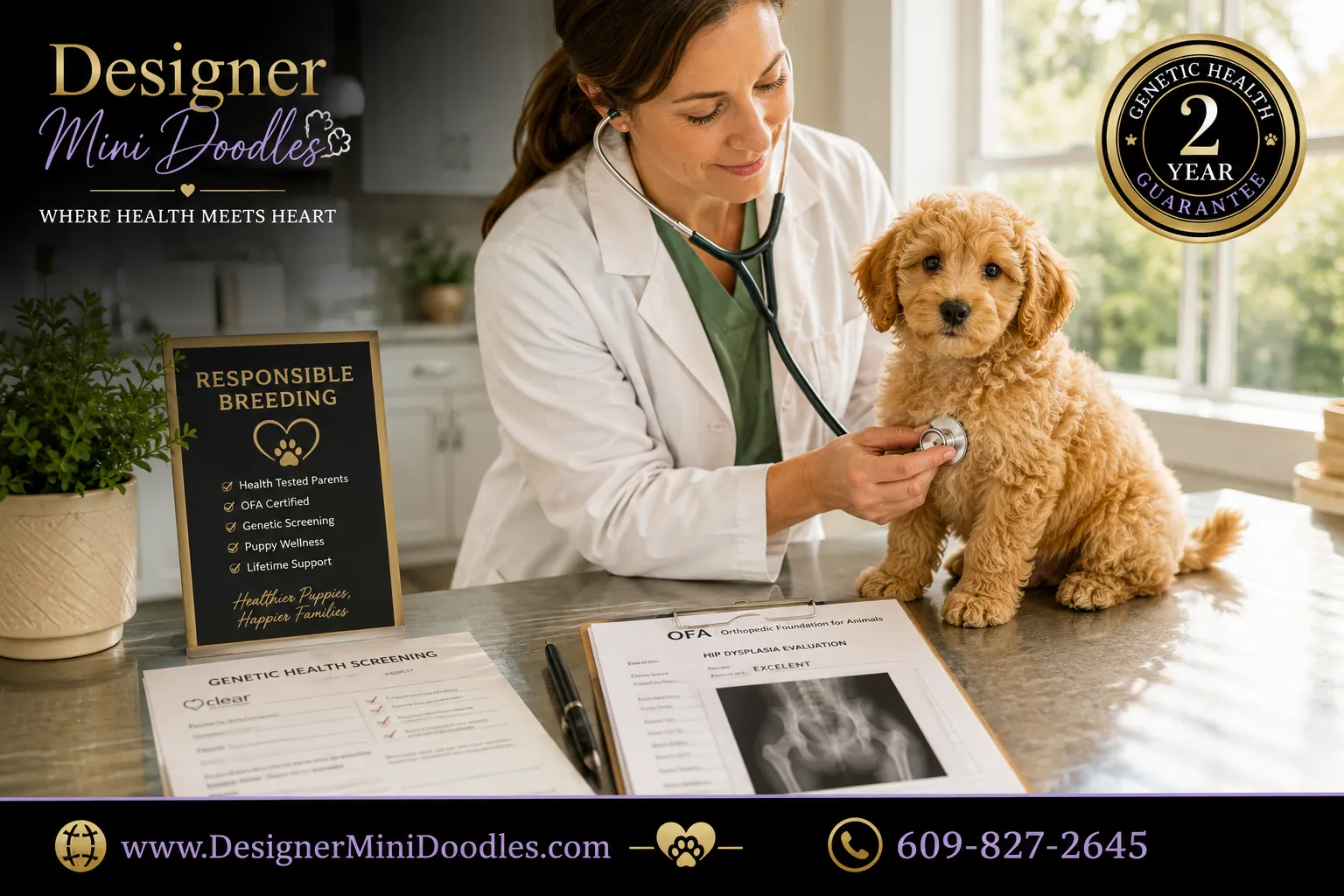
Reputable mini goldendoodle breeders are hobby or small-scale professional breeders who health-test both parent dogs (hips, elbows, eyes, heart, and breed-specific DNA panels), raise puppies in-home with structured neurological stimulation, provide a written health guarantee of at least two years, and require a contract with a spay/neuter clause and take-back policy. Expect to pay $2,500-$5,000 and wait 3-9 months. Avoid breeders who ship sight-unseen, have puppies “always available,” or refuse to show you the mother.
reputable mini goldendoodle breeders
- A reputable breeder health-tests parents through OFA or PennHIP and provides written proof before you pay a deposit.
- Expect to pay $2,500-$5,000 for a well-bred mini goldendoodle from a reputable program; anything under $1,500 is a red flag.
- Puppies should stay with their litter until at least 8 weeks and come with Early Neurological Stimulation (ENS), crate introduction, and initial housebreaking.
- A legitimate contract includes a 2-year genetic health guarantee, spay/neuter clause, and lifetime return policy.
- Waitlists for quality breeders typically run 3-9 months; instant availability usually signals a puppy mill or broker.
- Designer Mini Doodles has operated as the #1 mini goldendoodle breeder in the USA for over 17 years, run by an animal biologist focused on health, temperament, and trainability.
What Makes a Goldendoodle Breeder Reputable
A reputable goldendoodle breeder is defined by three things: verifiable health testing on both parents, transparent socialization protocols, and a written contract that protects the puppy for life. Everything else, marketing, cute Instagram photos, fancy websites, is secondary.
Here’s the concrete checklist I use when vetting any breeder:
- OFA or PennHIP hip clearances on both parents (not “vet checked”)
- CERF/OFA eye exams current within 12 months of breeding
- Cardiac clearance from a board-certified cardiologist
- Breed-specific DNA panels (PRA-prcd, vWD, DM, GR-PRA1, GR-PRA2, Ichthyosis)
- In-home whelping (not barn or kennel)
- Early Neurological Stimulation performed days 3-16
- Written 2-year genetic health guarantee
- Take-back clause for the dog’s entire life
- Reference from their vet available on request
At Designer Mini Doodles, our program is run by an animal biologist who has spent over 17 years refining bloodlines specifically for health, temperament, trainability, and low-shed coats. Every litter is planned around genetic diversity and behavioral screening, not just color or size. You can browse current mini doodles for sale to see how a structured program looks in practice.
How to Find Mini Goldendoodle Breeders Near Me
Start with breed-specific directories, verified regional breeder pages, and referrals from a small-animal veterinarian, not classified sites or social media marketplaces. The best mini goldendoodle breeders rarely advertise on Craigslist or Facebook groups; they fill litters through waitlists and word-of-mouth.
Where to search (in order of reliability):
- Vetted breeder directories that require health testing documentation
- Goldendoodle Association of North America (GANA) member listings
- Veterinarian referrals in your area
- Regional breeder pages from established programs
- Owner-recommended referrals in local doodle meetup groups
If you’re searching by state, we maintain vetted regional pages for the most common markets:
- Mini goldendoodle breeders in Texas
- Mini goldendoodle breeders in Florida
- Mini goldendoodle breeders in California
- Mini goldendoodle breeders in New York
- Mini goldendoodle breeders in Georgia
- Mini goldendoodle breeders in Pennsylvania
- Mini goldendoodle breeders in Massachusetts
Quick rule: if a breeder website has zero mention of health testing on the homepage but has a big “Available Now” banner, keep scrolling.
Mini Goldendoodle Breeder Cost: How Much Should I Pay
A well-bred mini goldendoodle from a reputable breeder in the USA typically costs $2,500 to $5,000, with micro-mini and rare-color puppies pushing toward $4,000-$6,500. That price reflects genetic testing, prenatal care, ENS protocols, vaccinations, microchipping, and the breeder’s time.
$500-$1,500: Backyard breeder or puppy mill. High risk of genetic disease, poor socialization, and no support after purchase.
$1,500-$2,500: Small hobby breeder with partial health testing. Mixed quality; verify everything in writing.
$2,500-$5,000: Reputable program with full health panels, ENS, contract, and long-term support. The sweet spot.
$5,000-$7,500+: Premium micro-minis, English cream lines, or rare markings from top-tier programs.
The cheapest puppy is almost never the cheapest dog. One emergency surgery for hip dysplasia can cost $5,000-$7,000, more than the puppy itself. Paying up front for verified genetics is the smarter long-term math. Our guide on cost-of-ownership clarity breaks down the lifetime numbers.
What Questions to Ask a Mini Goldendoodle Breeder
Ask specific, verifiable questions that force documented answers, not marketing responses. If a breeder gets defensive or vague, that’s your answer.
The 12 questions I’d never skip:
- Can I see OFA/PennHIP results for both parents?
- What genetic panel do you run, and can I see the report?
- How many litters does each dam produce per year and in her lifetime?
- At what age are puppies placed, and why?
- What socialization protocol do you follow (ENS, Puppy Culture, etc.)?
- Do you start crate training and housebreaking before pickup?
- What’s included in your health guarantee, and for how long?
- What happens if I can’t keep the dog in 5 years?
- Can I visit the property and meet the mother?
- Who is your veterinarian, and may I call them?
- What food are the puppies eating, and what do you recommend transitioning to?
- Do you have references from families who bought puppies 2+ years ago?
A breeder who welcomes these questions is the one you want. Our team at Designer Mini Doodles provides written documentation on all 12 up front, before you’re asked for a deposit.

Mini Goldendoodle Breeder Red Flags to Avoid
The clearest red flag is a breeder who will not let you visit the property or meet the mother in person or on live video. That single behavior correlates with almost every serious problem: puppy mills, brokers, sick litters, and misrepresented parentage.
Deal-breaker red flags:
- Puppies “always available” or multiple litters ready at once
- Refuses in-person or live video visits
- Won’t share health testing certificates (not just “our vet said they’re healthy”)
- Ships puppies before 8 weeks
- Accepts payment only via wire transfer, Zelle to a personal account, or cryptocurrency
- No written contract or a one-page “receipt” instead
- Sells multiple breeds in high volume (5+ breeds is a broker sign)
- Uses stock photos on their website
- Prices dramatically below market ($800-$1,200 for a “purebred mini goldendoodle”)
- Pressures you to decide “today” because “another family is interested”
Yellow flags (proceed with caution):
- Vague about parent ages or how many litters the dam has had
- No mention of ENS, Puppy Culture, or structured socialization
- Only shows puppy photos, never the parents
- Health guarantee under 1 year
Mini Goldendoodle vs Toy Goldendoodle: What’s the Difference
Size is the primary difference. A mini goldendoodle typically weighs 15-35 pounds and stands 13-18 inches at the shoulder, while a toy (sometimes called petite or micro) goldendoodle weighs 10-20 pounds and stands 10-14 inches. Both come from a poodle-golden retriever cross, but toys use a toy poodle rather than a miniature poodle in the parent lineup.
| Trait | Toy/Micro Goldendoodle | Mini Goldendoodle |
|---|---|---|
| Adult weight | 10-20 lbs | 15-35 lbs |
| Adult height | 10-14 in | 13-18 in |
| Lifespan | 13-16 years | 12-15 years |
| Energy level | Moderate | Moderate-high |
| Best for | Apartments, seniors, travel | Families, active homes |
| Typical price | $3,500-$6,500 | $2,500-$5,000 |
If you’re in an apartment or you travel often, a micro is usually the better pick, read more in why a 10-16 lb micro goldendoodle is the perfect size for apartment and urban living.
Do Mini Goldendoodles Have Health Problems From Breeders
Poorly bred mini goldendoodles have a meaningfully higher rate of hip dysplasia, progressive retinal atrophy (PRA), von Willebrand disease, patellar luxation, and Addison’s disease. Properly bred ones from health-tested parents have significantly reduced risk, though no breeder can guarantee zero issues.
Common inherited conditions screened by reputable breeders:
- Hip and elbow dysplasia (OFA/PennHIP)
- PRA-prcd and GR-PRA1/GR-PRA2 (progressive retinal atrophy)
- von Willebrand disease type I (bleeding disorder)
- Degenerative myelopathy (DM)
- Ichthyosis (skin condition)
- Cardiac conditions (subvalvular aortic stenosis)
This is why our program at Designer Mini Doodles offers a 2-year genetic health guarantee on every puppy, because when parents are properly tested, that promise is realistic to make.
Mini Goldendoodle Breeder Health Testing Requirements
At minimum, both parents should have OFA hip and elbow certifications, an annual eye exam from a board-certified ophthalmologist, a cardiac clearance, and a completed breed-specific DNA panel. Anything less is not “health tested”, it’s “vet checked,” which is not the same thing.
Gold standard testing panel:
- OFA Hip Dysplasia (Good or Excellent preferred) OR PennHIP under 0.4 DI
- OFA Elbow Dysplasia (Normal)
- OFA/CERF Companion Animal Eye Registry (annual)
- OFA Cardiac (Advanced Cardiac Exam)
- Embark or Paw Print Genetics full breed panel
- Patella evaluation
You should be able to look up parent dogs on the OFA public database by name or registration number. If a breeder claims testing but their dogs aren’t in the database, ask for the physical certificates.
How to Tell if a Breeder is a Puppy Mill
A puppy mill prioritizes volume over welfare, so the giveaways are structural: many breeds or many litters at once, minimal veterinary care, no in-home raising, and no interest in vetting buyers. If the breeder isn’t screening YOU, they’re probably a mill or broker.
Puppy mill indicators:
- 3+ breeds available at the same time
- Puppies listed on aggregator sites like PuppyFind, PuppySpot, or Greenfield
- No application process, just “send deposit, pick up puppy”
- Website features a live inventory of dozens of puppies
- Refuses site visits, offers “meeting halfway” instead
- USDA license number (commercial breeders are USDA-licensed; hobby breeders typically are not)
- Parents live in outdoor kennels, not the home
A reputable breeder interviews you as thoroughly as you interview them. That’s a very good sign.
Mini Goldendoodle Breeder Contract: What Should It Include
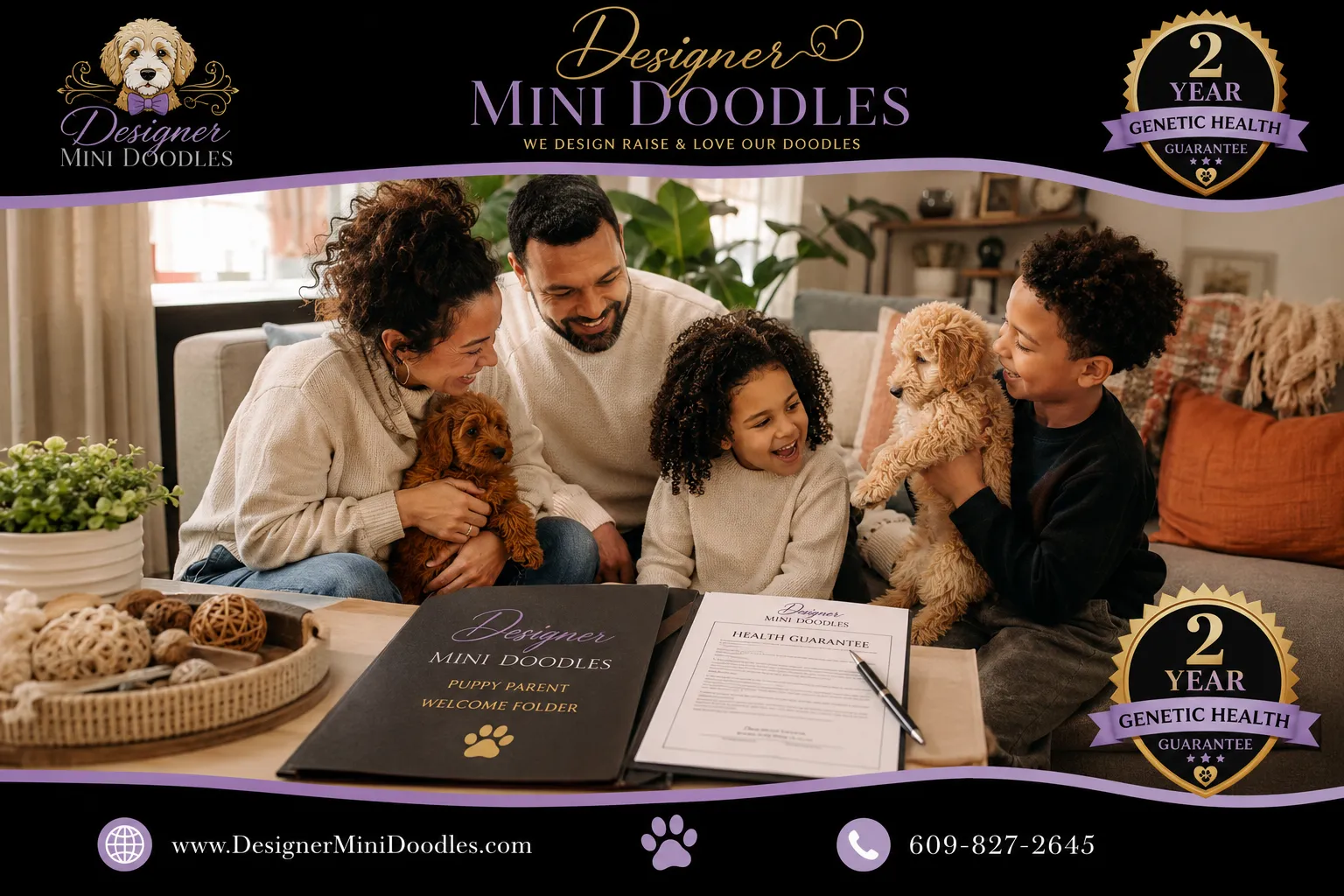
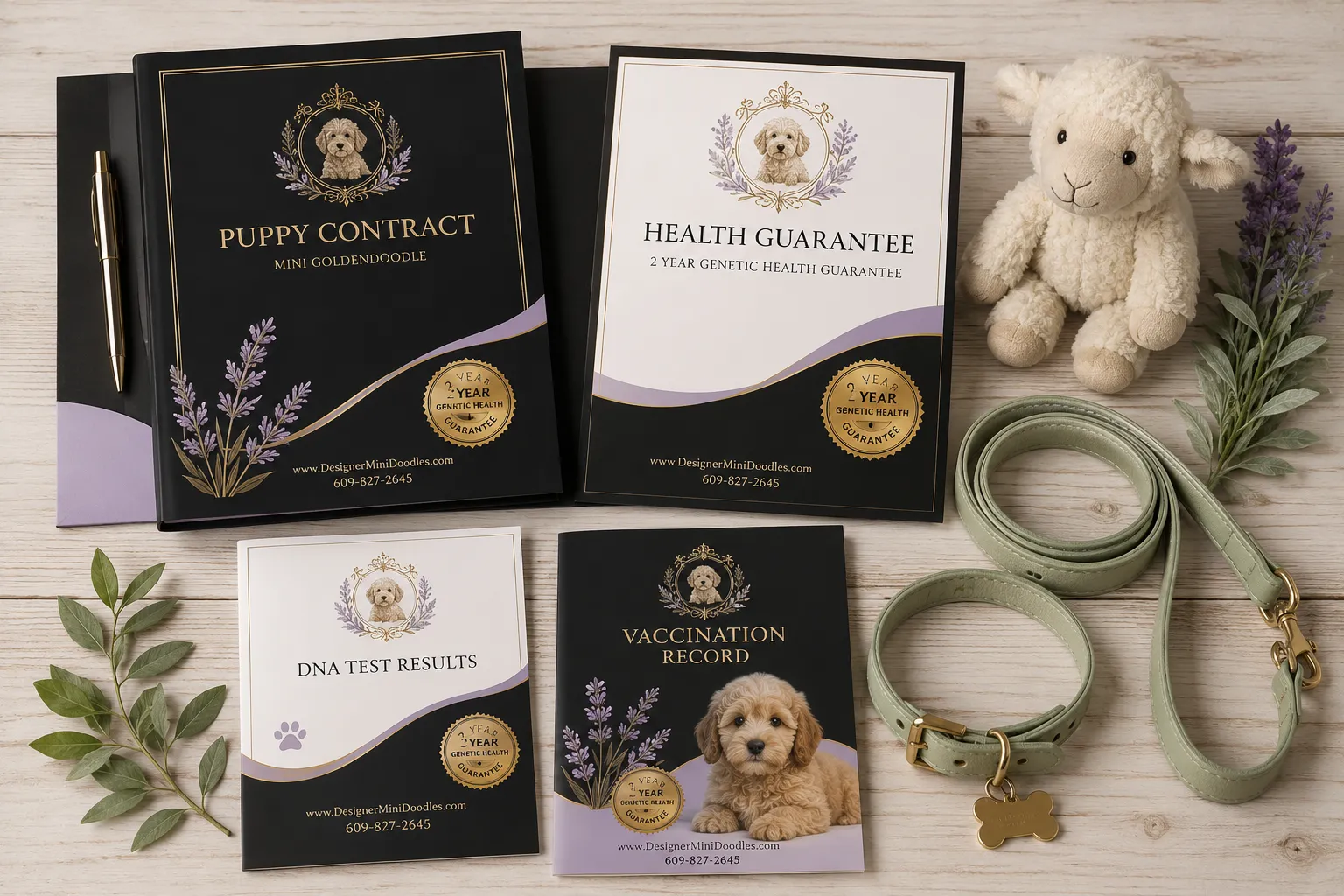
A legitimate breeder contract runs 3-8 pages and covers health guarantees, spay/neuter requirements, take-back policy, and buyer responsibilities. A one-page “bill of sale” is not a contract.
A complete contract includes:
- Health guarantee terms (minimum 1 year, ideally 2 years) with specific conditions covered
- Requirement to complete a vet exam within 72 hours of pickup
- Spay/neuter clause (typically between 6-18 months)
- Non-breeding clause for pet-quality puppies
- Take-back policy: breeder takes the dog back at ANY point in its life
- Buyer responsibilities (vaccinations, socialization, no rehoming without breeder consent)
- Dispute resolution and refund/replacement terms
- Both parties’ signatures and dates
Read every line before you sign. A quality breeder will walk you through it clause by clause.
Best Mini Goldendoodle Breeders Reviews: How to Read Them
Look for reviews that mention specific outcomes years after purchase, not just cute puppy photos from pickup day. The most useful reviews describe temperament at age 2-5, health at age 5+, and how the breeder handled any problems.
What great reviews sound like:
- “Our dog is now 4 and has had zero health issues; breeder still checks in every year”
- “When our puppy developed [issue], the breeder honored the guarantee immediately”
- “Trainer was shocked at how well-socialized she was at 8 weeks”
What sketchy reviews sound like:
- All five-star, all posted within a two-week window
- Generic language (“great breeder, cute puppies”) with no detail
- Only exists on the breeder’s own website with no third-party verification
Designer Mini Doodles has been placing puppies for 17+ years. That length of track record is one of the most reliable review signals you can find, check out our current mini goldendoodle puppies and the family feedback we publish.
Mini Goldendoodle From Breeder vs Rescue Adoption
Choose a reputable breeder if you need predictable size, coat, temperament, and health history, especially with young kids or allergies. Choose rescue if you have flexibility on age, appearance, and unknown background, and you’re prepared for possible behavioral rehab.
Breeder pros: known genetics, structured socialization, health guarantee, predictable size and coat, breeder support for life.
Breeder cons: higher upfront cost, waitlists, deposit required.
Rescue pros: lower cost, immediate placement often possible, rewarding to give a dog a second chance.
Rescue cons: unknown health/genetic background, variable temperament, harder to predict adult size/coat for a “doodle mix,” rare to find true mini goldendoodles in rescues.
Both are valid. If your household has severe allergies, a reputable breeder is often the safer choice because coat type is predictable, see why a mini goldendoodle works for allergy-conscious homes.
How Long Does It Take to Get a Mini Goldendoodle From a Breeder
Expect 3-9 months from the day you submit an application to the day you bring your puppy home from a reputable breeder. Some premium programs run 12-18 month waitlists. If a breeder can hand you a puppy this week, that’s almost always a warning sign, not a convenience.
Typical timeline:
- Application submitted: Week 0
- Interview and approval: Week 1-2
- Deposit and litter assignment: Week 2-8
- Litter born: Week 8-16
- Puppy selection (around 6 weeks old): Week 16-22
- Pickup (at 8 weeks): Week 18-24
Use the wait wisely. Puppy-proof your home, buy a crate, line up a trainer, choose a vet, and read up on training a mini doodle puppy and housebreaking so you’re ready on day one.
Available Mini Goldendoodle Puppies
Below are our currently available and upcoming mini and micro-mini goldendoodle puppies from Designer Mini Doodles:
- Display 9 Products per page
You can also browse our full inventory of mini goldendoodle puppies directly.
Common Questions About Mini and Micro Mini Goldendoodles
What’s the lifespan of a mini goldendoodle?
A well-bred mini goldendoodle typically lives 12-15 years, and micro-minis often reach 13-16 years thanks to their smaller size. Feeding quality food, maintaining lean body weight, and routine dental care add meaningful years.
What should I feed a mini goldendoodle puppy?
A high-quality small-breed puppy formula with 25-30% protein and 12-18% fat, fed 3-4 times daily until 4 months, then twice daily. Avoid grain-free unless prescribed, the FDA has flagged grain-free diets for possible cardiac risks. Transition slowly over 7-10 days when switching from breeder food.
How big will my mini goldendoodle get?
Adult size depends on the parents. A general rule: take the mother’s weight, average with the father’s, and expect the puppy to fall within that range. Most minis land at 15-35 lbs; micros at 10-20 lbs. Reputable breeders provide a projected weight range on your contract.
How hard is crate training a mini goldendoodle?
Not hard if you start on day one. Puppies from reputable breeders are already crate-introduced, they’ve slept in a crate or pen with littermates. Keep the crate in your bedroom for the first two weeks, use it for naps and meals, and never use it as punishment. Most puppies are reliably crate-trained within 3-4 weeks.
How long does housebreaking take?
Most mini goldendoodles are reliably housebroken by 4-6 months with consistent effort. Take the puppy out every 1-2 hours, immediately after eating, after naps, and after play. Reward heavily outdoors. Expect regressions around 5-6 months during adolescence.
Are mini goldendoodles easy to train?
Yes, they’re consistently ranked among the most trainable companion breeds because both parent breeds (poodle and golden retriever) score in the top 10 for working intelligence. Start basic obedience at 8-10 weeks, enroll in puppy kindergarten by 12 weeks, and use positive reinforcement.
How much exercise do they need?
About 30-60 minutes per day for a mini, split between a walk and free play. Mental exercise (puzzle toys, training sessions, sniff walks) is just as important as physical exercise. An under-stimulated doodle is a destructive doodle.
Do mini goldendoodles shed?
Very little compared to most breeds, but shedding varies by coat type. F1B (75% poodle) minis shed the least and are best for allergy households. F1 (50/50) may shed more. No dog is 100% hypoallergenic, but a well-bred mini goldendoodle comes close.
How often should they be groomed?
Professional grooming every 6-8 weeks, with brushing 3-4 times per week at home. Skip a week and you’ll have mats. If that sounds like too much, choose a shorter puppy cut year-round.
Can mini goldendoodles be left alone?
Adults can handle 4-6 hours alone if properly crate-trained and exercised beforehand. Puppies under 6 months should not be left more than 2-3 hours. Doodles are companion dogs and are prone to separation anxiety if isolated too much.
Why Designer Mini Doodles
Designer Mini Doodles has been the #1 mini goldendoodle breeder in the USA for over 17 years, working with top genetics and the most established bloodlines in the industry. Our program is run by an animal biologist and built around four non-negotiables: health, trainability, temperament, and coat quality.
Every puppy in our program:
- Experiences Early Neurological Stimulation (ENS) days 3-16
- Is well-started on crate training and housebreaking before pickup
- Comes with a 2-year genetic health guarantee
- Is raised in-home with structured socialization to sounds, surfaces, and people
- Ships with a puppy folder including health records, DNA panel, and feeding plan
Browse our full line of mini goldendoodle puppies for sale or explore our specialty pages:
- Miniature goldendoodle breeders program overview
- Why 10-16 lb micro goldendoodles are ideal for family households
- Micro goldendoodles for first-time dog owners
FAQ
Q: How do I verify a breeder’s health testing?
A: Ask for OFA registration numbers on both parents and look them up at ofa.org. For DNA panels, request the actual PDF from Embark or Paw Print Genetics. If they can’t produce these in 24 hours, they don’t have them.
Q: Is a deposit refundable?
A: With most reputable breeders, deposits are non-refundable but transferable to a future litter. Read the contract before you send money.
Q: What’s the difference between F1, F1B, and F2 mini goldendoodles?
A: F1 is 50% poodle / 50% golden retriever (first-generation cross). F1B is 75% poodle (F1 bred back to a poodle), best for allergies. F2 is F1 x F1. F1B is the most popular for allergy-conscious families.
Q: Should I get a male or female?
A: Temperament varies more by individual than by sex. Both are equally trainable. Neutered/spayed adults show minimal behavioral difference.
Q: Can I visit the puppy before pickup?
A: Reputable breeders welcome visits after the puppies are 5-6 weeks old (before that, immune systems are too fragile). If a breeder refuses all visits, walk away.
Q: What age can I bring my puppy home?
A: 8 weeks minimum. Some states require 8 weeks by law. Puppies removed earlier miss critical socialization from mom and littermates and often develop bite inhibition problems.
Q: Do I need pet insurance?
A: Strongly recommended. Enroll within the first 14 days of ownership, before any pre-existing conditions can be excluded. Expect $30-$60/month for a mini goldendoodle.
Q: What if my puppy has a problem after I bring it home?
A: A vet exam within 72 hours is standard. If the vet finds a congenital issue, contact the breeder immediately, a reputable one will honor the guarantee.
Conclusion
Finding reputable mini goldendoodle breeders comes down to documentation, transparency, and patience. Ask for the health tests. Read the contract line by line. Visit the puppies in person or on live video. And be willing to wait 3-9 months for the right litter, that wait is what separates a decade of joy from a decade of vet bills.
Your next steps:
- Write down your must-haves (size, coat type, temperament, timeline)
- Submit applications to 2-3 vetted breeders
- Request health testing documentation before paying any deposit
- Review the contract with a clear head
- Use the waitlist window to puppy-proof your home and choose a vet
If you’re ready to start, browse our current mini goldendoodle puppies for sale at Designer Mini Doodles, or apply to be added to our waitlist. With 17+ years, an animal biologist leading the program, and a 2-year genetic health guarantee on every puppy, we’ve built our reputation the right way, one healthy, well-socialized puppy at a time.
Sources
- Orthopedic Foundation for Animals (OFA), public health database, 2024, https://ofa.org
- Goldendoodle Association of North America (GANA), breeder standards, 2024, https://goldendoodleassociation.com
- FDA update on grain-free diets and canine dilated cardiomyopathy, 2022, https://www.fda.gov/animal-veterinary
- Battaglia, Carmen L., “Early Neurological Stimulation,” Breeding Better Dogs, 2009