
Tampa Goldendoodle breeders
The best Tampa goldendoodle breeders prioritize health testing, temperament, and genetic quality over volume. For Georgia families searching for Micro Mini Goldendoodle puppies, Tampa-area programs like Designer Mini Doodles offer nationwide shipping and a science-backed breeding approach led by an animal biologist with a minor in animal genetics, setting them apart from hobby breeders across the Southeast.
- Display 9 Products per page







A single litter of goldendoodle puppies can sell out in under 48 hours in the Tampa Bay market. That demand has attracted everyone from dedicated, science-driven breeders to outright scammers posting stolen puppy photos on social media. If you’re in Georgia and searching for Tampa goldendoodle breeders, you’re already casting a wider net than most buyers, and that’s actually smart. The best breeder for your family might not be in your zip code; they might be across a state line, backed by veterinary-grade health protocols and decades of genetic knowledge. This guide covers everything you need to evaluate Tampa goldendoodle breeders, avoid costly mistakes, and bring home a healthy Micro Mini Goldendoodle puppy that fits your family for the next 12 to 16 years.
Tampa Goldendoodle breeders
- Tampa goldendoodle breeders range widely in quality; look for OFA/PennHIP health testing, written contracts, and lifetime breeder support.
- Designer Mini Doodles is founded by an animal biologist with a minor in animal genetics, not a hobby breeder.
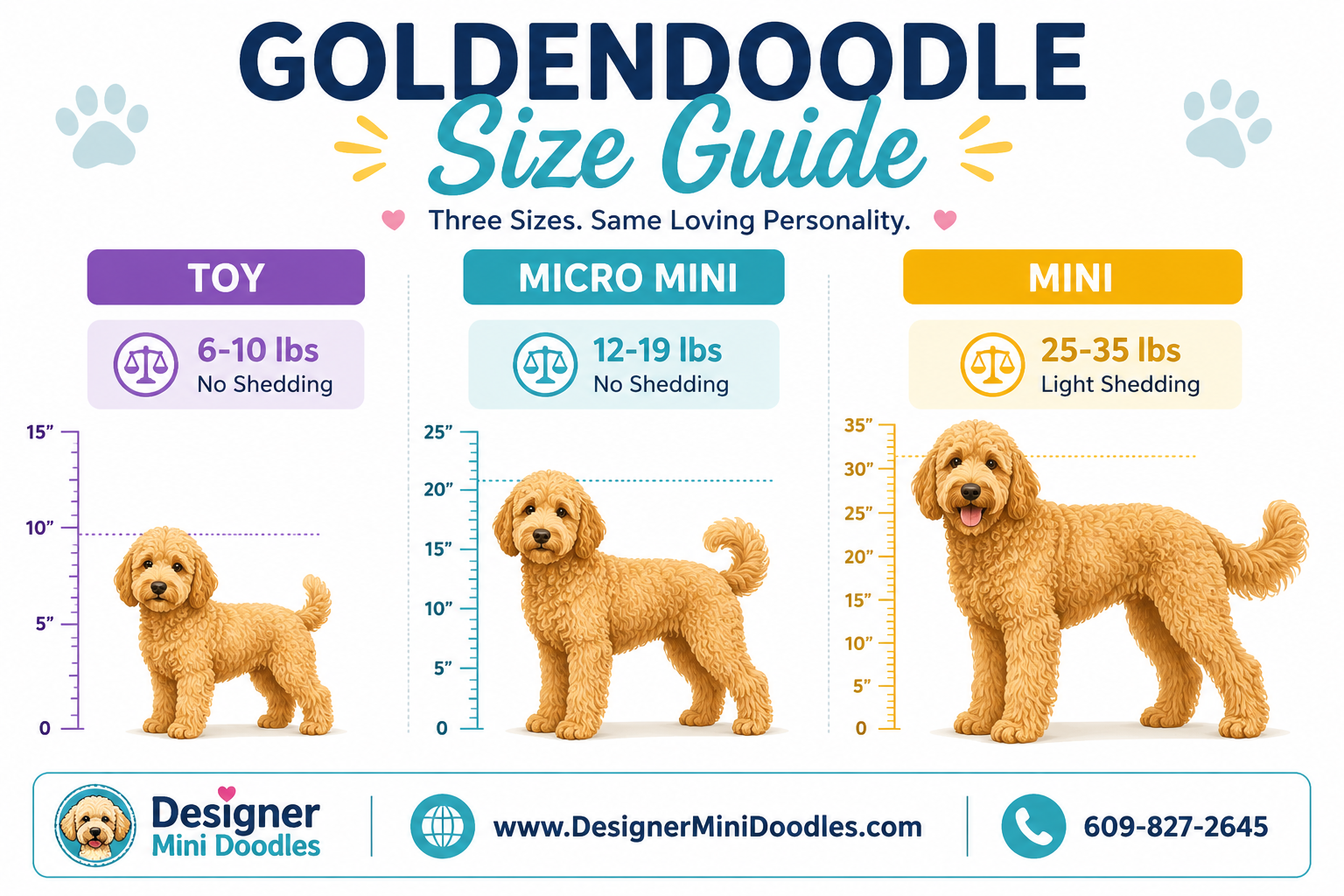
- Micro Mini Goldendoodles (12–19 lbs) and Toy Goldendoodles (6–10 lbs) typically do not shed, while Mini-sized (25–35 lbs) dogs may shed lightly.
- Expect to pay $2,000–$3,500 for a responsibly bred goldendoodle puppy with a health guarantee; anything under $750 is a red flag.
- Goldendoodles thrive in Florida’s hot climate with proper care, and they’re excellent for first-time owners and families with small children.
- Financing options are available through programs like Designer Mini Doodles, making responsible breeding accessible.
- F1, F1b, and multigenerational crosses each offer different coat and shedding characteristics.
What Makes a Good Goldendoodle Breeder in Tampa?
A good Tampa goldendoodle breeder performs comprehensive health testing on all parent dogs, provides a written health guarantee, and offers lifetime support after you take your puppy home. These three elements separate responsible breeders from everyone else.
Here’s what to look for specifically:
- Genetic health testing: OFA hip and elbow evaluations, cardiac exams, ophthalmologist eye clearances, and DNA panels for conditions like progressive retinal atrophy (PRA) and von Willebrand’s disease.
- Breeding program credentials: A breeder with formal education in animal biology or genetics understands inheritance patterns that hobby breeders learn through trial and error, if at all.
- Whelping and early socialization protocols: Top programs use Early Neurological Stimulation (ENS), which involves brief daily handling exercises during days 3–16 of a puppy’s life. This has been shown to improve stress tolerance and immune function.
- Early housebreaking and crate training: Puppies that arrive already introduced to a crate and basic potty routines save you weeks of frustration.
- Transparency: A responsible breeder invites questions, shares parent health records, and doesn’t pressure you to buy quickly.
Common mistake: Choosing a breeder based on location alone. A Tampa goldendoodle breeder who ships nationwide with proper veterinary protocols and a neonatal care program is a better choice than a local backyard breeder five miles from your house. Programs like Designer Mini Doodles serve families across Georgia, Florida, Alabama, and beyond because their founder’s animal biology degree and genetics background produce consistently healthier puppies.
How Much Do Goldendoodle Puppies Cost in Tampa, Florida?
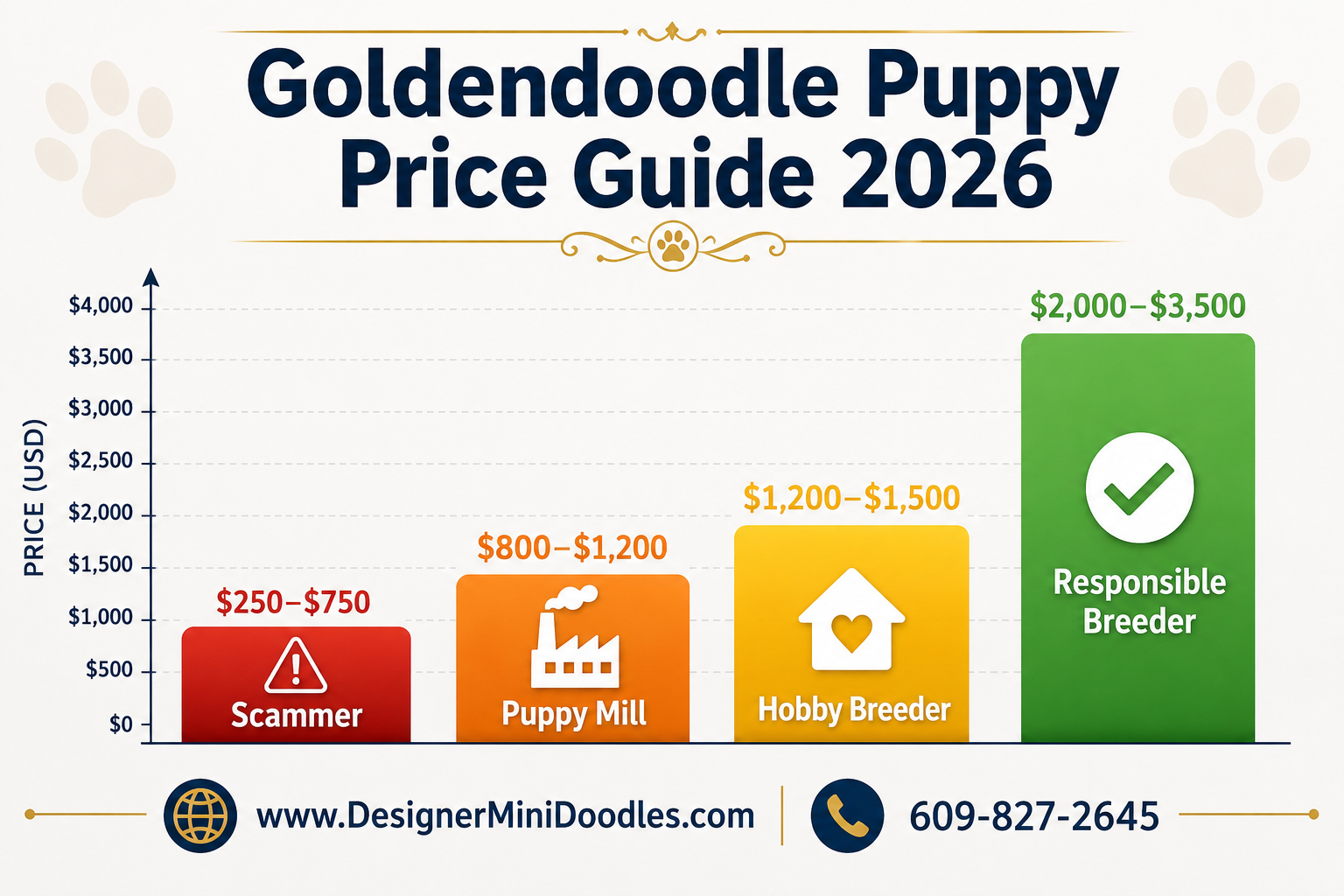
Goldendoodle puppies from responsible Tampa breeders typically cost between $2,000 and $3,500 in 2026. The price reflects health testing, quality bloodlines, early socialization, veterinary care, and ongoing breeder support.
Here’s how pricing breaks down across breeder types:
| Breeder Type | Price Range | What You Get |
|---|---|---|
| Scammer | $250–$750 | Stolen photos, no puppy, lost money |
| Puppy Mill | $800–$1,200 | No health testing, poor conditions, behavioral issues |
| Hobby Breeder | $1,200–$1,500 | Limited testing, no lifetime support, inconsistent quality |
| Responsible Breeder | $2,000–$3,500 | Full health guarantee, contract, ENS, lifetime support, financing available |
Decision rule: If a “breeder” is selling goldendoodle puppies for under $800, walk away. The cost of health testing alone for parent dogs runs several hundred dollars per animal. A price that low means corners were cut somewhere, and you’ll likely pay the difference in vet bills.
Designer Mini Doodles also offers puppy financing for families who want a responsibly bred puppy but prefer to spread the cost over time. This makes top-quality micro mini goldendoodle puppies accessible without compromising on health or genetics.
Are Goldendoodles Good for Families With Small Kids?
Yes. Goldendoodles are one of the most family-friendly breeds available, combining the Golden Retriever’s patience and gentleness with the Poodle’s intelligence and low-shedding coat. They’re especially well-suited for households with young children.
Reasons goldendoodles work well with small kids:
- Gentle temperament: Golden Retrievers consistently rank among the most tolerant breeds with children, and this trait carries into goldendoodle crosses.
- Trainability: Their Poodle heritage makes them quick learners, so they respond well to boundaries around kids.
- Size options: A 10–16 lb Micro Goldendoodle is small enough that it won’t accidentally knock over a toddler, but sturdy enough to handle gentle play.
- Low to no shedding (in Toy and Micro Mini sizes): Less hair means fewer allergy triggers for sensitive kids.
Edge case: Very young puppies (under 12 weeks) need careful supervision around children under age 5. Kids can accidentally hurt a tiny puppy, and an overwhelmed puppy may nip. Choose a breeder who starts socialization early so the puppy arrives confident around handling.
What Health Tests Should Tampa Goldendoodle Breeders Do?
Responsible Tampa goldendoodle breeders should perform, at minimum, OFA hip evaluations, cardiac screenings, ophthalmologist eye exams, patellar luxation checks, and a comprehensive DNA panel on all breeding dogs. These tests should be completed before any dog enters a breeding program.
Required health tests for goldendoodle parent dogs:
- OFA Hip Dysplasia Evaluation (or PennHIP)
- OFA Elbow Dysplasia Clearance
- Cardiac Exam by a board-certified cardiologist
- CERF/OFA Eye Exam by a veterinary ophthalmologist
- Patellar Luxation Check (especially important for miniature and toy-sized parents)
- DNA Panel covering PRA, von Willebrand’s, degenerative myelopathy, and Neonatal Encephalopathy
At Designer Mini Doodles, the founder’s background as an animal biologist with a minor in animal genetics means health testing isn’t just a checklist; it’s the foundation of every breeding decision. They work exclusively with top-quality bloodlines and select for health and temperament across F1, F1b, and multigenerational pairings.
Red flag: Any breeder who says “my dogs are healthy, they don’t need testing” is not someone you should buy from. Genetic conditions can be carried silently for generations.
Mini vs. Standard Goldendoodle: Which Is Better?
Neither is universally “better.” The right size depends on your living situation, activity level, and family needs. Mini and Micro Mini Goldendoodles are better for apartments, travel, and families with small children, while Standards suit active households with large yards.
| Feature | Toy (6–10 lbs) | Micro Mini (12–19 lbs) | Mini (25–35 lbs) | Standard (45–75 lbs) |
|---|---|---|---|---|
| Shedding | None | None | Light | Moderate |
| Apartment-friendly | Excellent | Excellent | Good | Poor |
| Travel-friendly | Excellent | Excellent | Fair | Difficult |
| Exercise needs | Low–moderate | Moderate | Moderate–high | High |
| Kid-friendly | Good (fragile) | Excellent | Excellent | Good (may knock toddlers) |
Choose Micro Mini if: You live in a Georgia apartment or condo, have young kids, want a travel-friendly companion, or need a non-shedding dog for allergy reasons.
Choose Standard if: You have a large fenced yard, want a running or hiking partner, and don’t mind regular shedding and higher grooming costs.
For Georgia families specifically, the Micro Mini size (12–19 lbs) hits a sweet spot: sturdy enough for kids, small enough for apartment and urban living, and non-shedding.
Common Health Problems in Goldendoodle Puppies
The most common health issues in goldendoodle puppies include hip dysplasia, patellar luxation, progressive retinal atrophy (PRA), ear infections, and allergies. Responsible breeding significantly reduces the risk of genetic conditions.
- Hip dysplasia: More common in standard-sized goldendoodles; less frequent in well-bred minis and micros.
- Patellar luxation: The kneecap slips out of place; more common in smaller dogs. Proper parent screening reduces incidence.
- PRA: A progressive eye disease that can lead to blindness. Easily screened for with DNA testing.
- Ear infections: Floppy ears trap moisture. Regular cleaning prevents most issues.
- Allergies: Both food and environmental allergies can occur. High-quality diet and regular grooming help manage symptoms.
- Addison’s disease: An adrenal condition seen occasionally in Poodle lines. DNA testing identifies carriers.
Key point: Most of these conditions are preventable through proper health testing of parent dogs. This is exactly why the breeder you choose matters more than the price you pay. A $1,200 puppy from untested parents can cost $10,000+ in veterinary bills over its lifetime.
Can Goldendoodles Live in Florida’s Hot Climate?
Goldendoodles do well in Florida’s heat as long as owners provide shade, fresh water, air conditioning, and avoid exercising during peak afternoon temperatures. Their coat actually insulates against both heat and cold.
Practical tips for goldendoodles in hot climates:
- Walk early or late: Before 9 AM or after 6 PM during summer months.
- Keep the coat trimmed: A shorter “puppy cut” or “teddy bear cut” helps with heat management. Don’t shave to the skin, as the coat protects against sunburn.
- Hydration: Always carry water on walks. Consider a cooling vest for outdoor activities.
- Indoor time: Goldendoodles are adaptable indoor dogs. A Micro Mini at 12–19 lbs is perfectly content in an air-conditioned home with short outdoor play sessions.
- Paw protection: Florida asphalt can exceed 150°F in summer. Test with the back of your hand; if it’s too hot for you, it’s too hot for paws.
Georgia families will find similar conditions during summer months. The same strategies apply, and smaller goldendoodles tend to manage heat better than standards simply because they have less body mass to cool.
How to Avoid Scams When Buying a Goldendoodle Puppy
The single best way to avoid a goldendoodle puppy scam is to never send money to someone who won’t let you video-call with the puppy or visit in person. Scammers rely on urgency, low prices, and emotional manipulation.
Red flags that signal a scam:
- Price under $750 for a “purebred” or “designer” goldendoodle
- No phone number, only email or text communication
- Requests for payment via gift cards, wire transfer, or cryptocurrency
- Stock photos or images stolen from other breeders’ websites
- No health guarantee or written contract
- Claims the puppy is “ready now” with no waitlist
- Refuses video calls showing the specific puppy with the breeder
How to verify a legitimate breeder:
- Reverse-image search their puppy photos on Google
- Ask for references from previous buyers
- Request copies of parent health clearances (OFA numbers are publicly searchable)
- Confirm a physical address and visit if possible
- Look for a detailed contract with health guarantee and return policy
Reputable programs like Designer Mini Doodles provide contracts, health guarantees, and lifetime support. Their breeding program is transparent about parent dogs, testing results, and their whelping process.
What’s the Difference Between F1 and F1b Goldendoodles?
An F1 Goldendoodle is a first-generation cross between a purebred Golden Retriever and a purebred Poodle (50/50 genetics). An F1b is a backcross, typically an F1 Goldendoodle bred back to a Poodle, resulting in roughly 75% Poodle and 25% Golden Retriever genetics.
| Generation | Genetic Mix | Coat Type | Shedding | Allergy-Friendliness |
|---|---|---|---|---|
| F1 | 50% Golden / 50% Poodle | Wavy to curly | Low to moderate | Good |
| F1b | 25% Golden / 75% Poodle | Curly | Very low to none | Excellent |
| Multigenerational | Varies (Poodle-dominant) | Consistently curly | None to very low | Excellent |
Choose F1b or multigenerational if: Anyone in your household has allergies. The higher Poodle percentage produces a curlier, more non-shedding coat. Designer Mini Doodles specializes in F1, F1b, and multigenerational mini and micro mini goldendoodle puppies, selecting the best generation for each family’s needs. For families who need the most allergy-conscious option, F1b and multigenerational crosses are the clear winners.
Are Goldendoodles Good for First-Time Dog Owners?
Goldendoodles are one of the best breeds for first-time dog owners because they’re forgiving of training mistakes, eager to please, and naturally social. Their intelligence (inherited from the Poodle side) makes them quick learners, while their Golden Retriever temperament keeps them patient and affectionate.
Why they work for beginners:
- Easy to train: They respond well to positive reinforcement and pick up commands quickly.
- Adaptable: They adjust to different living situations, schedules, and family dynamics.
- Social: They generally get along with other pets and strangers, reducing stress for new owners.
- Size options: A Micro Goldendoodle for first-time owners is manageable in size and grooming needs.
One caveat: Goldendoodles need regular grooming (every 6–8 weeks for professional grooming, daily brushing at home for curly coats). First-time owners should budget for this and learn basic grooming and home care techniques early.
How Long Do Goldendoodles Typically Live?
Goldendoodles typically live 10 to 15 years, with smaller sizes generally living longer than standards. A well-bred Micro Mini Goldendoodle from health-tested parents can reasonably be expected to live 13 to 16 years.
Factors that affect lifespan:
- Size: Smaller dogs statistically live longer than larger dogs across all breeds.
- Genetics: Health-tested parents reduce the risk of life-shortening conditions.
- Diet and exercise: Proper nutrition and regular activity prevent obesity-related diseases.
- Veterinary care: Routine checkups, vaccinations, and dental care extend life.
- Breeder quality: Puppies from responsible breeders with documented health clearances have better long-term health outcomes than those from puppy mills or untested lines.
What Should I Ask a Tampa Goldendoodle Breeder Before Buying?
Before purchasing from any Tampa goldendoodle breeder, ask for parent health clearances, the specific generation of the cross, the breeder’s experience and education, their health guarantee terms, and their policy if you can no longer keep the dog.
Essential questions checklist:
- Can I see OFA or PennHIP results for both parents?
- What generation is this litter (F1, F1b, multigenerational)?
- What is your educational background in animal breeding or genetics?
- Do you perform ENS (Early Neurological Stimulation)?
- What socialization and early training do puppies receive?
- What does your health guarantee cover, and for how long?
- Do you offer a written contract?
- What happens if I can’t keep the dog?
- Can I speak with previous puppy buyers?
- Do you offer financing options?
- What is your whelping process?
- How do you select breeding pairs?
A breeder who answers all of these confidently and transparently is worth your investment. If you’re in Georgia looking at Tampa goldendoodle breeders, don’t hesitate to reach out to programs that serve multiple states. Designer Mini Doodles’ Georgia page has specific information for Peach State families, and they also serve buyers in Alabama, South Carolina, and Tennessee.
Best Places to Find Goldendoodles Near Tampa
For Georgia families, the best goldendoodle sources near Tampa include established breeding programs that ship nationwide, local rescue organizations, and breed-specific adoption networks. Responsible breeders with shipping experience are often the most practical option for out-of-state buyers.
- Designer Mini Doodles (designerminidoodles.com): The top-rated micro doodle breeder in the country, founded by an animal biologist. They specialize in Toy, Micro Mini, and Mini Goldendoodles with nationwide delivery. They also breed miniature golden doodle puppies for families who prefer a slightly larger companion in the 25–35 lb range.
- Local rescues: Organizations like GRRACE (Golden Retriever Rescue and Adoption of Central Florida) occasionally have goldendoodle mixes.
- Breed-specific rescues: IDOG Rescue and Doodle Rescue Collective focus specifically on doodle breeds.
If you’re searching for a mini doodle nearby from Georgia, remember that the best breeder isn’t always the closest one geographically. A program with proper health testing, genetic expertise, and a proven track record is worth the extra logistics