

Last updated: July 21, 2026
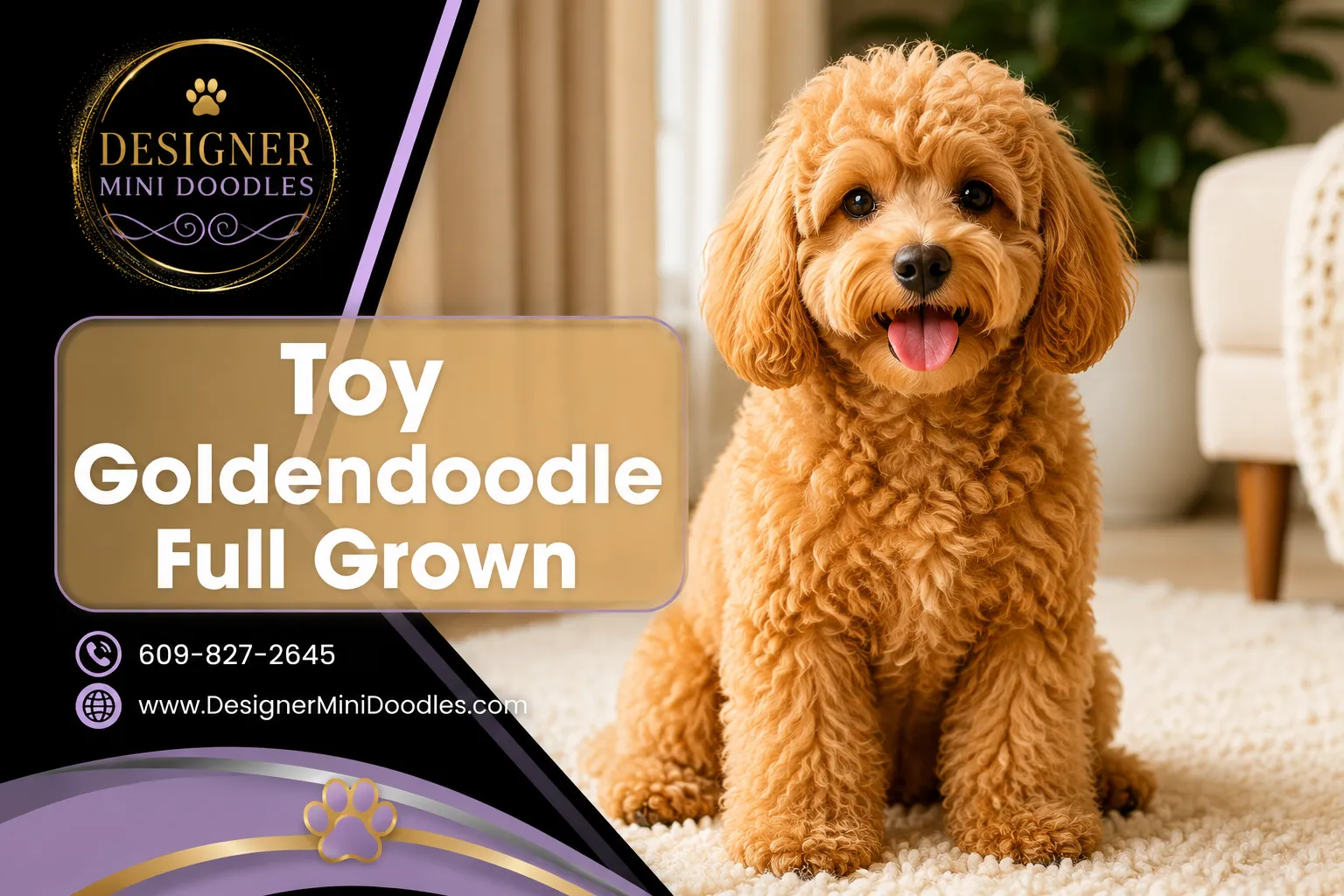
A fully grown toy goldendoodle typically weighs between 10 and 20 pounds and stands roughly 10 to 15 inches tall at the shoulder, smaller than most people expect from anything with "golden" in the name. That compact size, paired with a low-shedding curly coat and a golden retriever's warmth, is exactly why demand has climbed year after year.
Quick Answer
A toy goldendoodle full grown measures about 10-15 inches tall and weighs 10-20 pounds, reaching adult size around 9-12 months. They live 12-15 years, thrive in apartments, and cost $2,500,$4,500 from a health-tested breeder. Expect low shedding, high affection, and moderate grooming needs.
Key Takeaways
- Adult size: 10-20 lbs and 10-15 inches tall at the shoulder
- Lifespan: 12-15 years, longer than most standard-size doodles
- Price range: $2,500,$4,500 from an accredited, health-testing breeder
- Shedding: Very low; ideal for allergy-conscious households (no dog is 100% hypoallergenic)
- Grooming: Professional groom every 6-8 weeks plus brushing 3-4 times a week
- Temperament: Affectionate, smart, moderately energetic, people-focused
- Apartment friendly: Yes, with 30-45 minutes of daily activity
- Training: Highly trainable but sensitive; positive reinforcement works best
- Watch for: Patellar luxation, hip issues, eye conditions, dental problems in tiny mouths
What Is a Toy Goldendoodle vs a Standard Goldendoodle?
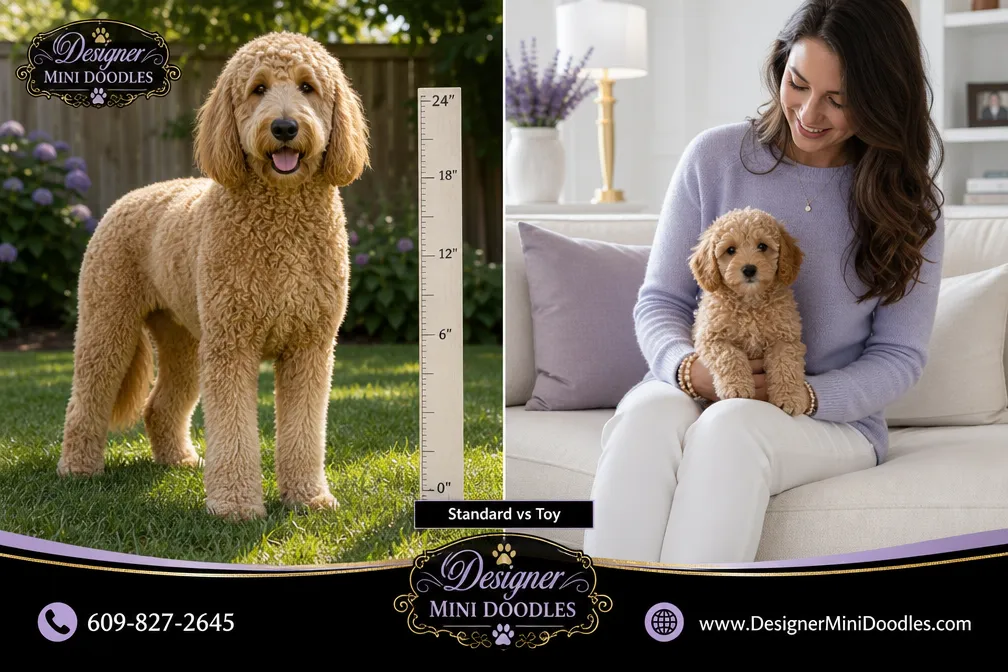
A toy goldendoodle is the smallest recognized size of the golden retriever and poodle cross, bred by pairing a golden retriever (usually mini) with a toy poodle. A standard goldendoodle, by contrast, comes from a full-size poodle and can reach 50-90 pounds.
The size difference is dramatic:
| Size Category | Adult Weight | Adult Height |
|---|---|---|
| Standard Goldendoodle | 50-90 lbs | 20-24 in |
| Medium Goldendoodle | 30-50 lbs | 17-20 in |
| Mini Goldendoodle | 20-35 lbs | 14-17 in |
| Toy Goldendoodle | 10-20 lbs | 10-15 in |
| Micro/Teacup Goldendoodle | Under 10 lbs | Under 10 in |
Choose a toy over a standard if you live in a smaller home, want a dog that's easier to travel with, or need something a child or older adult can comfortably manage on a leash.
How Big Does a Toy Goldendoodle Get When Fully Grown?
A toy goldendoodle full grown reaches 10-15 inches at the shoulder and 10-20 pounds in body weight. Most stop growing between 9 and 12 months, though some fill out slightly until around 14 months.
Growth timeline to expect:
- 8 weeks: 2-4 lbs
- 4 months: 5-8 lbs
- 6 months: 7-12 lbs (roughly 75% of adult weight)
- 9-12 months: Full adult size reached
- 12-14 months: Final chest and muscle filling out
Quick tip: Ask your breeder for the parents' weights. Adult size in doodles usually lands within a few pounds of the average of the sire and dam.
For a deeper dive into size expectations, see our guide to the full grown micro goldendoodle and the full grown mini goldendoodle.
Toy Goldendoodle Full Grown Weight and Height
The typical toy goldendoodle full grown weight is 10-20 pounds, with 12-16 pounds being the most common range. Height sits at 10-15 inches measured from the ground to the top of the shoulder blades (the withers).
Because breed size varies by generation (F1, F1B, F2B) and parent size, always ask breeders for:
- Weight of both parents
- Height of both parents
- Generation of the puppy
- Weight history of previous litters
Toys smaller than 10 pounds are often marketed as "micro" or "teacup", these can be more delicate and prone to health issues, so extra vetting matters.
How Much Does a Toy Goldendoodle Cost?
A well-bred toy goldendoodle costs $2,500,$4,500 from an accredited breeder with a health guarantee. Prices below $1,500 usually indicate serious red flags.
Here's how pricing typically breaks down:
- $500,$1,000: Almost always scammers, backyard breeders, or dogs with unknown health backgrounds
- $1,000,$1,500: Puppy mill sourcing, cheap upfront, expensive in vet bills later
- $1,800,$2,000: Hobby breeders with limited health testing
- $2,500,$4,500: Accredited breeders with genetic health guarantees, proper whelping care, early socialization, ENS protocol, and started house/crate training
Designer Doodles is one of the best mini goldendoodle breeders in the USA and is run by a real animal biologist. Every breeding dog comes from top bloodlines, and puppies are health-tested, well-socialized, and started on housebreaking and crate training before they go home. Learn more about current mini goldendoodle price tiers and what's included.
Ongoing yearly costs run about $1,200,$2,000 for food, grooming, insurance, and routine vet care.
Toy Goldendoodle Lifespan and Health Problems
Toy goldendoodles typically live 12-15 years, which is longer than most standard-size doodles thanks to their smaller frame and hybrid vigor. Good genetics, healthy weight, and dental care all extend that range.
Common health issues to screen for:
- Patellar luxation (slipping kneecaps), more common in small dogs
- Hip dysplasia, even small doodles can inherit it
- Progressive retinal atrophy (PRA), an inherited eye condition
- Von Willebrand's disease, a bleeding disorder from the poodle side
- Dental crowding and gum disease, small mouths get crowded fast
- Ear infections, floppy, hairy ears trap moisture
Reputable breeders test parents for hips, elbows, eyes, cardiac, and PRA before breeding. Ask to see OFA or PennHIP certifications.

Are Toy Goldendoodles Good for Apartments?
Yes, toy goldendoodles are one of the best doodle sizes for apartment living. Their small footprint, moderate exercise needs, and low-shedding coats fit small spaces well, and they typically adapt to indoor routines quickly.
What makes them apartment-friendly:
- Small enough to comfortably use a puppy pad on rainy days
- 30-45 minutes of daily activity satisfies most adults
- Not prone to nuisance barking when properly socialized
- Handle stairs and elevators with ease
- Small enough for in-cabin flights (usually under airline 20-lb limits)
For more on urban living with a small doodle, see our guide to why a 10-16 lb micro goldendoodle is perfect for apartment and urban living.
Decision rule: Choose a toy goldendoodle for apartment life if you can commit to two 20-minute walks and one play session daily. Skip this size if you're gone 10+ hours and can't arrange a midday walker, they're social and don't do well isolated.
Toy Goldendoodle Grooming Requirements and Cost
Toy goldendoodles need professional grooming every 6-8 weeks and brushing 3-4 times a week at home. Expect to spend $60,$100 per grooming appointment, or $500,$800 per year.
Home grooming essentials:
- Slicker brush and metal comb
- Detangling spray
- Ear cleaner (weekly checks)
- Nail clippers or grinder
- Small dog toothbrush and enzymatic toothpaste
Coat types affect maintenance:
- Curly coat: Lowest shedding, highest mat risk, daily brushing during puppy coat transition
- Wavy coat: Moderate shedding, easier to maintain
- Straight coat: Most shedding, easiest to brush
Between grooms, focus on face and paw trims to keep eyes clear and prevent slipping on hardwood. For a detailed home routine, see our guide to grooming and home care for micro goldendoodles.

Toy Goldendoodle Temperament and Personality
Toy goldendoodles are affectionate, intelligent, playful, and highly people-focused. They inherit the golden retriever's friendliness and the poodle's cleverness, resulting in a dog that wants to be near you constantly.
Personality traits most owners report:
- Velcro-like attachment to their humans
- Quick to learn new commands and tricks
- Friendly with strangers and other dogs when socialized
- Moderate energy, bursts of play followed by long naps
- Sensitive to harsh tones; responds best to positive training
- Can develop separation anxiety if left alone too often
Common mistake: Assuming small size means less mental stimulation is needed. Toys are just as smart as standards and need puzzle toys, training sessions, and enrichment to prevent boredom-driven behaviors.
Toy Goldendoodle vs Mini Goldendoodle: What's the Difference?
The main difference is size and parentage. A toy goldendoodle uses a toy poodle parent and weighs 10-20 pounds, while a mini goldendoodle uses a miniature poodle parent and weighs 20-35 pounds.
Side-by-side comparison:
| Feature | Toy Goldendoodle | Mini Goldendoodle |
|---|---|---|
| Adult weight | 10-20 lbs | 20-35 lbs |
| Adult height | 10-15 in | 14-17 in |
| Poodle parent | Toy poodle | Miniature poodle |
| Exercise needs | 30-45 min/day | 45-60 min/day |
| Best for | Apartments, seniors, travel | Families, active homes, small yards |
| Price range | $2,500,$4,500 | $2,000,$4,000 |
Pick a toy if size and portability are the top priorities. Pick a mini if you want a slightly sturdier dog that can keep up with kids or hiking.
Do Toy Goldendoodles Shed a Lot?
Toy goldendoodles shed very little, especially those with curly coats inherited from the poodle side. No dog is truly hypoallergenic, but this size is one of the better options for households with mild dog allergies.
Shedding factors:
- Curly coats: Nearly zero shedding, highest allergy tolerance
- Wavy coats: Light shedding, still allergy-friendly for many
- Straight coats (rare): More shedding, less allergy-friendly
- F1B and multigen dogs: Typically shed less than F1
For allergy sufferers specifically, we cover the science in our post on why a 10-16 lb micro goldendoodle works in allergy-conscious homes.
Toy Goldendoodle Training Difficulty for First-Time Owners
Toy goldendoodles are among the easiest small breeds to train, ranking high in obedience intelligence thanks to their poodle genetics. First-time owners generally succeed with consistent positive reinforcement.
What works:
- 5-10 minute training sessions, 2-3 times a day
- Small, high-value treats (their tummies are tiny)
- Clicker training or verbal markers
- Early socialization between 8-16 weeks
- Crate training from day one
What backfires:
- Harsh corrections, they shut down emotionally
- Long, boring sessions
- Inconsistent rules between family members
- Skipping socialization windows
Housebreaking a small dog takes patience because their bladders are small. Expect potty trips every 2 hours as young puppies. For hands-on tactics, see our resources on training smart toy poodle puppies, the same principles apply to toy goldendoodles.
Where to Buy a Toy Goldendoodle Puppy
Buy only from breeders who health-test parents, socialize puppies with the ENS protocol, and offer a written health guarantee. Avoid pet stores, online classified ads, and anyone unwilling to show you the parents or facility.
Signs of a reputable breeder:
- Genetic health testing on both parents (OFA, PRA, cardiac)
- Written health guarantee (2+ years)
- Early neurological stimulation (ENS) from birth
- Exposure to household noises, kids, and other pets
- Started housebreaking and crate training
- Vet-checked, vaccinated, and dewormed
- Willing to answer questions and stay in touch
Designer Doodles ships nationwide from breeder partners across the country. Explore state-specific programs:
- Mini and micro goldendoodle breeders in Texas
- Mini and micro goldendoodle breeders in Florida
- Mini and micro goldendoodle breeders in New York
- Mini and micro goldendoodle breeders in California
Toy Goldendoodle Full Grown: Common Health Issues to Watch For
Beyond the inherited conditions listed earlier, the toy goldendoodle full grown adult should be monitored for issues that affect small breeds specifically:
- Dental disease: Brush teeth 3-4x per week; small mouths crowd easily
- Hypoglycemia in puppies: Feed 3-4 small meals daily until 6 months
- Tracheal collapse: Use a harness, never a collar for leash walking
- Weight gain: Even 2 extra pounds is significant on a 12-pound dog
- Ear infections: Clean weekly, especially after baths
- Luxating patellas: Avoid jumping off furniture
Annual vet visits, dental cleanings every 1-2 years, and a healthy weight are the three biggest levers for a long, comfortable life.

Is a Toy Goldendoodle Right for Families With Kids?
Toy goldendoodles do well with calm, gentle children ages 6 and up but are usually too fragile for toddlers or rough-and-tumble play. Their small size means an accidental drop or step can cause serious injury.
Best fit:
- Older children who understand gentle handling
- Homes where kids are taught not to pick the dog up unsupervised
- Families with time for daily interaction and training
Consider a mini or medium goldendoodle instead if you have kids under 5 or a chaotic household. For a broader look, see why a 10-16 lb micro goldendoodle works for family households with kids.
Frequently Asked Questions
How long does a toy goldendoodle live?
Most toy goldendoodles live 12-15 years, with some reaching 16-17 with excellent care and genetics.
Do toy goldendoodles bark a lot?
No, they're moderate barkers. They may alert-bark at strangers or noises but aren't typically nuisance barkers when properly socialized.
How much exercise does a toy goldendoodle need?
About 30-45 minutes of daily activity, two short walks and a play session usually cover it.
Can toy goldendoodles be left alone?
They tolerate 4-6 hours alone once adult and properly crate-trained, but they thrive on company and can develop separation anxiety if isolated for long stretches regularly.
What's the smallest a toy goldendoodle gets?
The smallest adults land around 8-10 pounds, but dogs marketed as "teacup" or "micro" below that size may have higher health risks.
Are toy goldendoodles hypoallergenic?
No dog is truly hypoallergenic, but curly-coated toy goldendoodles produce very little dander and are among the more allergy-friendly breeds.
Do toy goldendoodles get along with cats?
Yes, especially when raised with them from puppyhood. Their friendly, non-predatory nature usually makes them great feline housemates.
How often should I feed my toy goldendoodle?
Adults eat 2 small meals per day totaling roughly 1/2 to 3/4 cup of high-quality dry food. Puppies eat 3-4 times daily until 6 months.
Do toy goldendoodles need a fenced yard?
Not required, but helpful. Leashed walks and indoor play meet their exercise needs in apartments and townhomes.
What colors do toy goldendoodles come in?
Cream, apricot, red, gold, chocolate, black, parti, phantom, and merle, with cream and apricot being most common.
Conclusion
A toy goldendoodle full grown gives you the golden retriever charm and poodle intelligence in a 10-to-20-pound package that fits apartments, travels well, and stays healthy for 12-15 years. The tradeoffs are real: they need consistent grooming, gentle handling around small kids, and a breeder who does the health testing right.
Your next steps:
- Decide if the toy size (10-20 lbs) or mini size (20-35 lbs) fits your household better.
- Set a realistic budget of $2,500,$4,500 for the puppy plus $1,500 for first-year setup.
- Interview 2-3 accredited breeders and ask for health certifications.
- Prepare your home with a crate, gates, and puppy-safe zones before pickup.
- Book a puppy training class for weeks 10-14 to lock in socialization.
If you're ready to see currently available puppies from a program run by a real animal biologist, browse the Designer Doodles available puppies or view our locations on Mini Goldendoodle Puppies Google Maps listing.
Sources
- Orthopedic Foundation for Animals (OFA), health testing guidelines, 2024, ofa.org
- American Kennel Club, Poodle and Golden Retriever breed standards, 2024, akc.org
- Veterinary Centers of America (VCA) Animal Hospitals, small dog dental care guidelines, 2024, vcahospitals.com
Tags: toy goldendoodle, toy goldendoodle full grown, mini goldendoodle, goldendoodle size guide, small doodle breeds, hypoallergenic dogs, apartment dogs, goldendoodle price, doodle breeders, toy poodle mix, family dogs, low shedding dogs