
Last updated: July 29, 2026
toy goldendoodle Florida
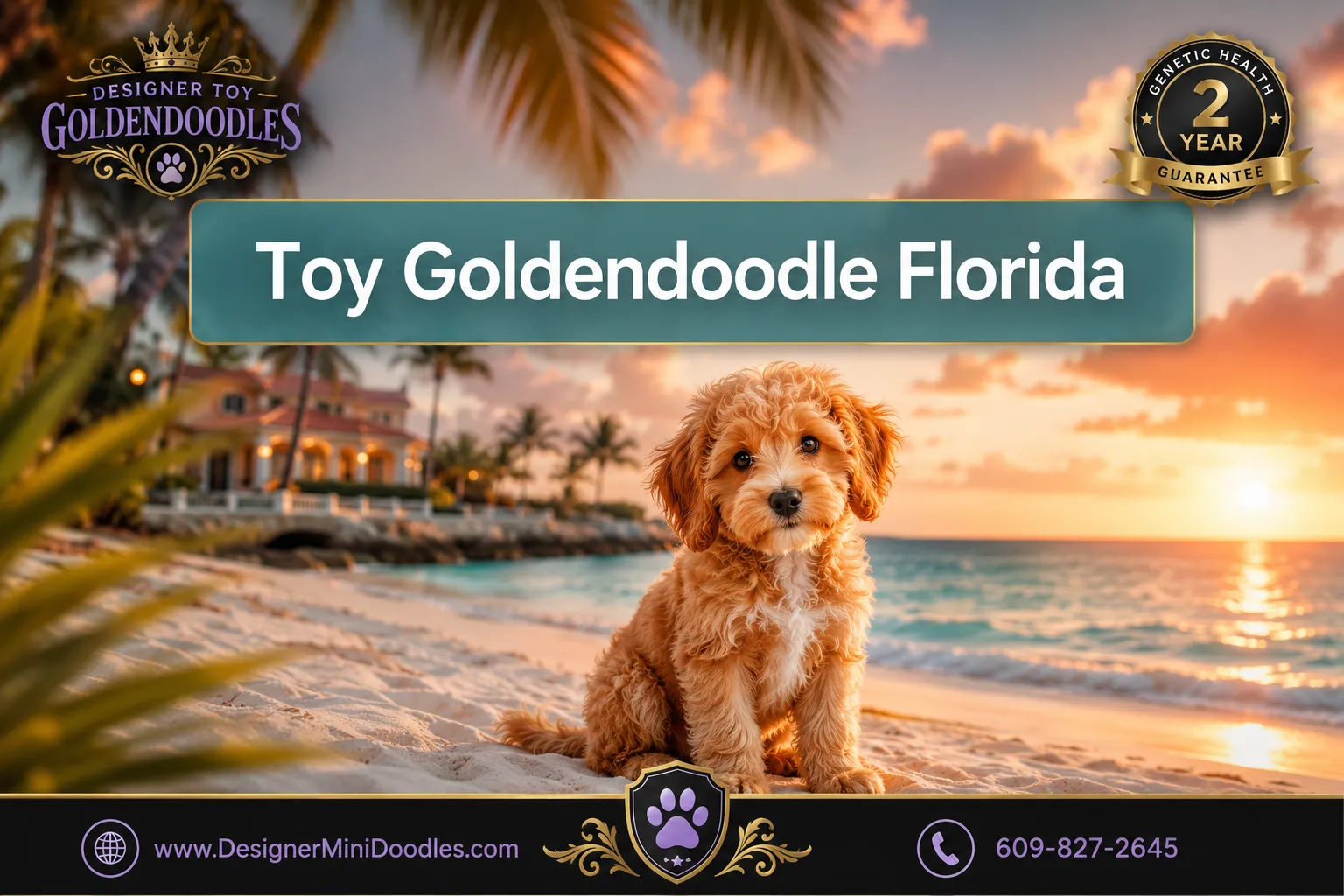
A toy goldendoodle in Florida is a small Golden Retriever and Toy Poodle cross that typically weighs 8-15 pounds full-grown, stands under 14 inches tall, and lives 12-16 years. Reputable Florida breeders price them between $2,500 and $4,500, and the state’s warm climate, apartment-friendly cities, and dog-welcoming lifestyle make it one of the top regions in the U.S. to raise one. For health-tested, well-socialized puppies, Designer Mini Doodles is widely regarded as one of the best toy goldendoodle breeders in the country.
toy goldendoodle Florida
- Size: Toy goldendoodles weigh 8-15 lbs and stand 10-14 inches tall, smaller than mini goldendoodles (15-30 lbs).
- Price in Florida: Ethical, health-tested breeders charge $2,500-$4,500. Anything under $1,500 is a red flag.
- Lifespan: 12-16 years, longer than most large-breed dogs.
- Temperament: Affectionate, smart, low-aggression, great with kids and other pets.
- Shedding: Very low; considered a strong choice for allergy-sensitive homes.
- Apartment-friendly: Yes, ideal for Miami, Tampa, Orlando, and Jacksonville condos.
- Grooming: Professional grooming every 6-8 weeks plus brushing 3-4 times per week.
- Trainability: High. Both parent breeds rank in the top 10 for intelligence.
- Florida climate: Warm and humid conditions require shade, hydration, and coat maintenance.
What Is a Toy Goldendoodle?
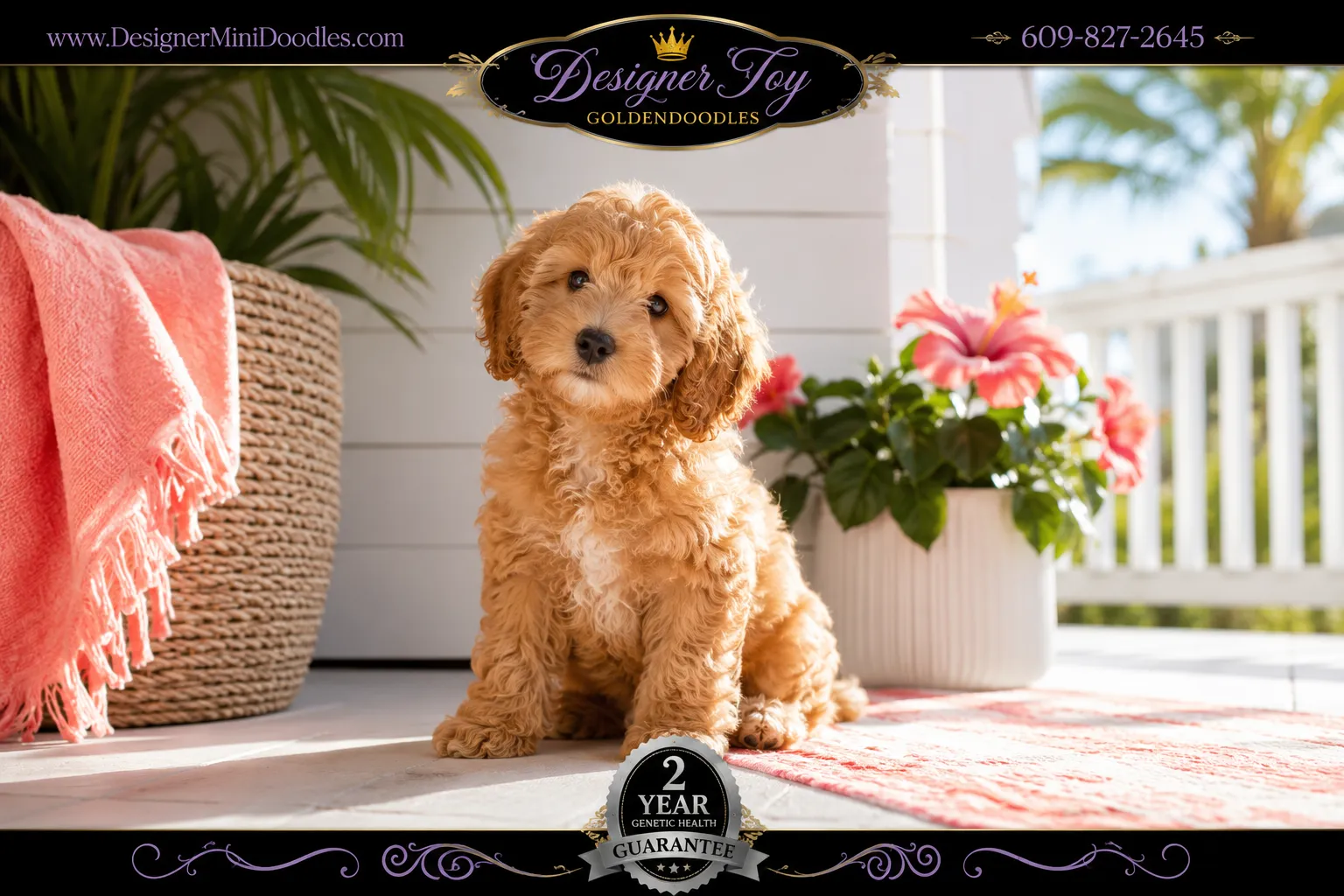
A toy goldendoodle is a hybrid dog bred by pairing a Golden Retriever (usually through a mini goldendoodle parent) with a Toy Poodle. The result is a small, low-shedding companion dog that typically weighs 8-15 pounds and stands 10-14 inches at the shoulder. Breeders often use multi-generational crosses (F1b, F2b, or multigen) to lock in the small size and hypoallergenic coat.
The breed became popular in the early 2000s as families searched for the golden retriever personality in a smaller, allergy-friendly package. Today, the toy goldendoodle is one of the most requested designer breeds in Florida, driven by demand from urban condo owners, retirees, and traveling families who want a pocket-sized companion.
Common coat colors include:
- Apricot and cream (most popular)
- Red
- Chocolate
- Black
- Parti (two-color)
- Merle (less common)
Toy Goldendoodle vs Mini Goldendoodle: Size Difference
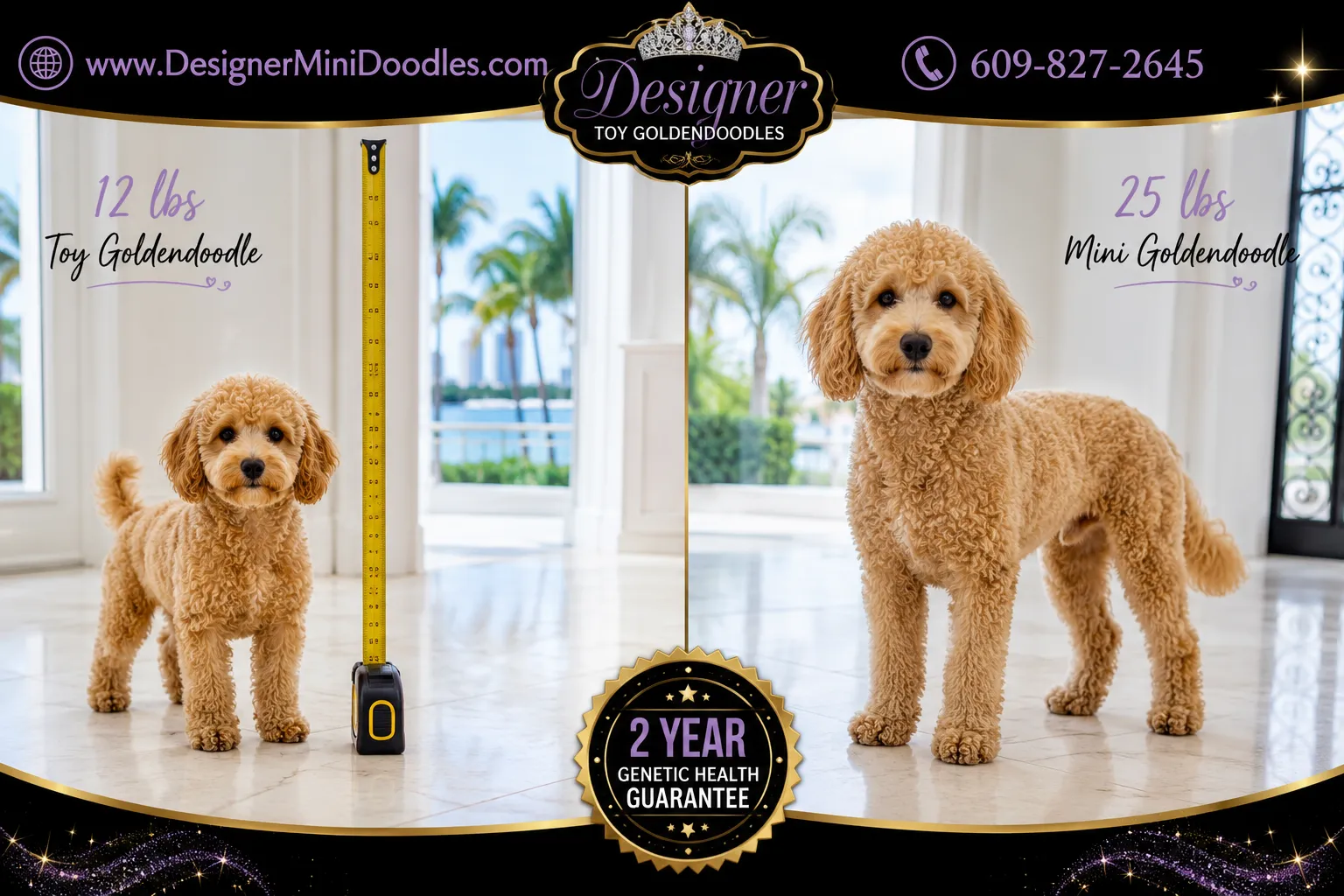
The main difference is weight and height. Toy goldendoodles weigh 8-15 pounds and stand under 14 inches, while mini goldendoodles weigh 15-30 pounds and stand 14-18 inches. Both share the same temperament and coat characteristics, but the toy version fits into carriers, apartments, and airline cabins more easily.
| Feature | Toy Goldendoodle | Mini Goldendoodle |
|---|---|---|
| Weight | 8-15 lbs | 15-30 lbs |
| Height | 10-14 inches | 14-18 inches |
| Lifespan | 12-16 years | 12-15 years |
| Best for | Apartments, seniors, travel | Small homes, active families |
| Exercise needs | 30-45 min/day | 45-60 min/day |
Choose a toy if: you live in a condo, travel frequently, or want a lap-sized dog. Choose a mini if: you have kids under 5 who play rough, or you want a slightly sturdier hiking companion. Learn more about why the 10-16 lb size is ideal for city living.
How Much Does a Toy Goldendoodle Cost in Florida?
Toy goldendoodle prices in Florida range widely based on breeder quality. A properly bred, health-tested, well-started puppy from an accredited breeder costs $2,500 to $4,500. Cheaper puppies almost always come with hidden costs, vet bills, behavioral issues, or genetic disease.
Florida price tiers you’ll encounter:
- $500-$1,000, Scammers. Fake listings, stolen photos, or bait-and-switch. Never wire money for a puppy at this price.
- $1,000-$1,500, Puppy mills. High-volume commercial breeding, poor socialization, no genetic testing, frequent health problems.
- $1,800-$2,000, Hobby breeders. Well-meaning but often lack DNA panels, structured socialization protocols, or written health guarantees.
- $2,500-$4,500, Accredited breeders. Full genetic health testing (OFA, PennHIP, DNA panels), proper whelping environment, ENS (Early Neurological Stimulation), house-training and crate-training started, written genetic health guarantee.
Ongoing costs in Florida average $1,200-$2,000 per year for food, grooming, flea/tick/heartworm prevention (critical in the Southeast), and routine vet care. See our breakdown of cost-of-ownership clarity for micro goldendoodles.
Toy Goldendoodle Breeders in Florida: What to Look For
The best toy goldendoodle breeders in Florida share five traits: verifiable health testing, small litter volume, socialization protocols like ENS, transparent lineage, and a written health guarantee. If a breeder can’t produce OFA or PawPrint Genetics results on both parents, walk away.
Designer Mini Doodles is operated by a credentialed animal biologist holding a degree in Animal Biology from Stockton University in Pomona, New Jersey, with a minor in animal genetics. Every parent dog in the program comes from top verified bloodlines, and puppies are raised in a home environment (not a kennel) with exposure to children, other animals, vacuums, doorbells, and everyday household chaos. Our toy goldendoodle puppies are enrolled in Early Neurological Stimulation (ENS) from days 3-16, which research links to improved cardiovascular performance, stronger stress tolerance, and better problem-solving as adults.
Checklist for vetting a Florida breeder:
- Ask for OFA hip, elbow, cardiac, and eye clearances on both parents.
- Request a full DNA panel (Embark or Paw Print Genetics).
- Confirm the puppy has been vet-checked and vaccinated.
- Look for a 2+ year genetic health guarantee in writing.
- Verify the breeder allows in-person or video visits.
- Confirm early socialization protocols (ENS, Puppy Culture, or similar).
- Check reviews on Google Maps and third-party sites.
You can find our verified location on our Google Maps business listing or browse the current litters at Florida micro goldendoodle breeders.
- Display 9 Products per page

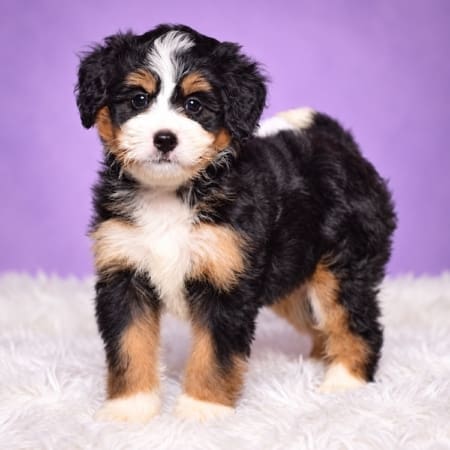

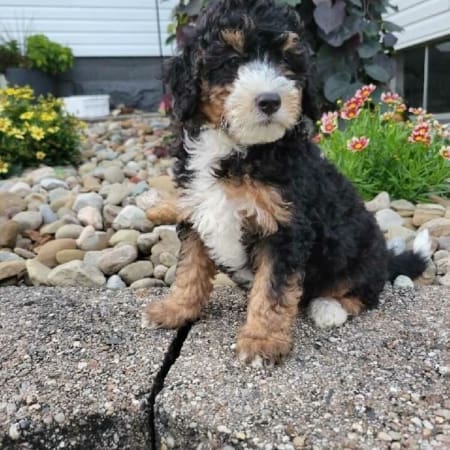


For breeders offering stud services in adjacent designer breeds, see our partner site for French bulldog stud service.
Where to Buy a Toy Goldendoodle in Florida
Buy directly from a licensed, health-testing breeder, not a pet store or online marketplace. Florida has strong demand in Miami, Orlando, Tampa, Jacksonville, Naples, and Fort Lauderdale, so waitlists at reputable breeders often run 3-6 months.
Options to consider:
- Accredited in-state breeders: Fastest pickup, ability to visit in person, easier health follow-up.
- Out-of-state accredited breeders: Reputable programs like Designer Mini Doodles ship or fly nannies to Florida airports (MIA, MCO, TPA, JAX) with climate-controlled travel.
- Rescue and rehoming: Rare for true toy goldendoodles, but Doodle Rescue Collective and IDOG Rescue occasionally list them.
Avoid Craigslist, Facebook Marketplace, and unverified Instagram accounts. If a “breeder” pressures you to pay by Zelle, gift cards, or wire transfer without a video call or contract, it’s a scam.
Toy Goldendoodle Temperament and Personality
Toy goldendoodles are affectionate, playful, and eager to please. They inherit the Golden Retriever’s friendliness and the Poodle’s intelligence, resulting in a dog that bonds deeply with its family, gets along with strangers, and rarely shows aggression.
Typical personality traits:
- Highly social, dislikes being alone for long stretches
- Gentle with children and other pets
- Sensitive to harsh corrections (use positive reinforcement)
- Loves water, fetch, and puzzle toys
- Can develop mild separation anxiety without proper crate conditioning
They’re not ideal for owners gone 10+ hours a day. For homes with kids, this breed is a strong match, see our guide to family households with kids.
Toy Goldendoodle Health Problems
Toy goldendoodles are generally healthy, but responsible buyers should know the common inherited conditions. The biggest risks come from unscreened parents, which is why DNA testing matters.
Conditions to screen for:
- Patellar luxation, kneecap dislocation, more common in toy-sized dogs
- Progressive Retinal Atrophy (PRA), inherited blindness
- Von Willebrand’s disease, blood clotting disorder
- Hip dysplasia, less common in toy sizes but still possible
- Addison’s disease, adrenal insufficiency
- Ear infections, floppy ears trap moisture, especially in humid Florida
A written 2-year genetic health guarantee is the industry standard. Any breeder refusing one is not a breeder you want to work with.
Toy Goldendoodle Lifespan
Toy goldendoodles live 12-16 years on average, longer than most Golden Retrievers (10-12 years) because smaller dogs generally outlive larger ones. With proper nutrition, dental care, weight management, and preventive vet visits, many reach 15+.
Longevity factors:
- Keep body condition score at 4-5 out of 9 (lean)
- Annual bloodwork after age 7
- Daily dental brushing or dental chews
- Heartworm prevention year-round (essential in Florida)
- Joint supplements starting at age 6
Toy Goldendoodle Grooming Requirements in Florida
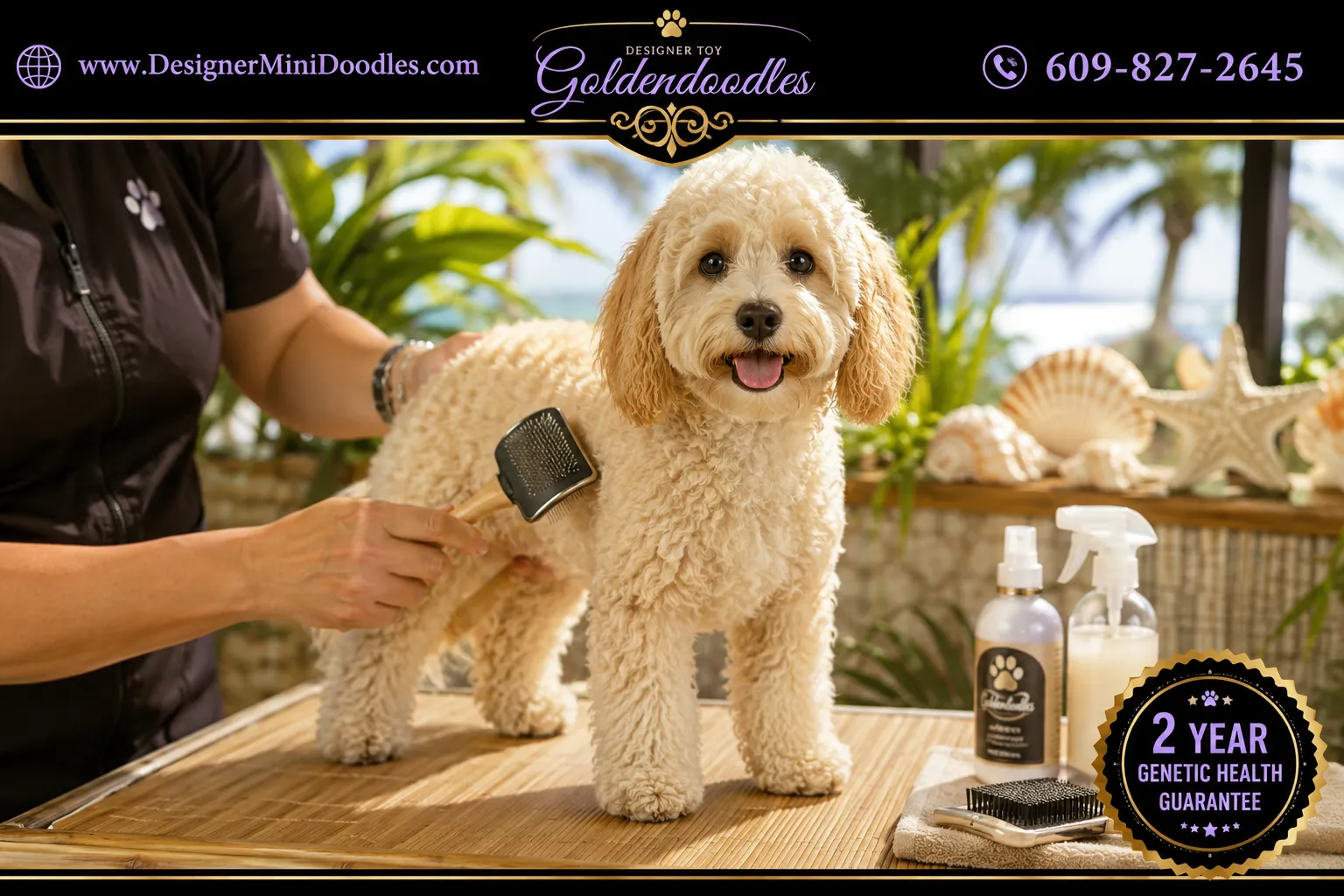
Toy goldendoodles need brushing 3-4 times per week and professional grooming every 6-8 weeks. Florida’s heat and humidity add complexity, mats form faster when the coat gets wet, and shorter summer cuts help with cooling.
At-home grooming essentials:
- Slicker brush and metal comb
- Detangling spray
- Ear cleaner (weekly, humidity causes yeast)
- Nail grinder or clippers (every 3-4 weeks)
- Dog-safe toothpaste and brush
Recommended Florida cut: A “teddy bear” trim at 1-1.5 inches keeps the face fluffy while shortening the body for heat management. Ask groomers to sanitize paw pads and trim belly hair short in summer. More detail is available in our grooming and home care guide.
Are Toy Goldendoodles Good for Apartments?
Yes, toy goldendoodles are one of the best apartment dogs available. Their small size, moderate exercise needs, low shedding, and quiet temperament make them ideal for condos in Miami, Tampa, Orlando, and Jacksonville. Most weigh well under the 20-pound HOA limit common in Florida buildings.
Apartment success tips:
- Two 20-minute walks daily plus indoor play
- Puzzle feeders and lick mats for mental enrichment
- Crate training from day one (reduces barking when alone)
- Enroll in group puppy classes for socialization
- Use potty pads on balconies during storm season
Toy Goldendoodle Shedding: How Much?
Toy goldendoodles shed very little, usually less than most breeds. F1b and multigen crosses (75%+ poodle) shed the least and are considered the most allergy-friendly. No dog is 100% hypoallergenic, but this breed comes closer than most.
If severe allergies are a factor, request a puppy with a curly coat rather than a wavy or flat coat, and spend time with an adult goldendoodle before committing. Read more about allergy-conscious homes.
Toy Goldendoodle vs Toy Poodle: Which Is Better?
Neither is universally better, the choice depends on your priorities. Toy poodles are more independent, slightly easier to potty train, and have a longer track record as an established breed. Toy goldendoodles are more openly affectionate, better with young children, and less prone to nervous or “yappy” behavior.
| Trait | Toy Goldendoodle | Toy Poodle |
|---|---|---|
| Affection level | Very high | High |
| Independence | Moderate | High |
| Kid-friendliness | Excellent | Good |
| Barking tendency | Low | Moderate |
| Grooming | Every 6-8 weeks | Every 4-6 weeks |
| Trainability | Very high | Very high |
Choose a toy goldendoodle if: you want a warm, snuggly family dog. Choose a toy poodle if: you want a slightly more independent, easier-to-groom purebred. See our lineup of red toy poodle puppies as an alternative.
Toy Goldendoodle Training Difficulty
Toy goldendoodles are easy to train. Both parent breeds rank in the top 10 for canine intelligence, and this hybrid picks up basic commands in a handful of repetitions. The challenge is consistency, small dogs get away with more, and owners often unintentionally reinforce demanding behavior.
Our program includes:
- House training started, puppies use potty pads and outdoor breaks before going home
- Crate training initiated, crate becomes a positive space, not a punishment
- Basic obedience exposure, name recognition, “sit,” and leash introduction
- Environmental socialization, vacuums, doorbells, children, other dogs, car rides
Continue at home with:
- Short 5-minute training sessions 2-3 times daily
- High-value treats (small breeds have small stomachs, use tiny pieces)
- Positive reinforcement only, no yelling or physical corrections
- Group puppy classes starting at 12 weeks after core vaccines
For additional context, review this training and enrichment guide.
Common Mistakes When Buying a Toy Goldendoodle in Florida
- Choosing by price alone. A $900 puppy often costs $5,000+ in vet bills within two years.
- Skipping the health guarantee. Without one, you have no recourse for genetic disease.
- Ignoring parent temperament. Ask to meet or see video of both parents.
- Buying from Instagram DMs. Verify the physical location and business license.
- Underestimating Florida-specific care. Heartworm, fleas, and heat require year-round vigilance.
FAQ
How big does a full-grown toy goldendoodle get?
Most weigh 8-15 pounds and stand 10-14 inches at the shoulder. Growth is complete by 10-12 months.
Are toy goldendoodles hypoallergenic?
No dog is fully hypoallergenic, but F1b and multigen toy goldendoodles shed minimally and are considered a strong option for mild-to-moderate allergy sufferers.
Can a toy goldendoodle handle Florida heat?
Yes, with precautions. Walk in the early morning or evening, provide constant shade and water, and keep the coat trimmed shorter in summer. Never leave one in a parked car.
How often should I groom my toy goldendoodle?
Brush 3-4 times per week and schedule professional grooming every 6-8 weeks.
Do toy goldendoodles bark a lot?
No. They tend to be quiet unless startled or left alone too long. Early crate training prevents anxiety barking.
What’s the difference between toy, micro, and mini goldendoodles?
Toy: 8-15 lbs. Micro: 10-16 lbs. Mini: 15-30 lbs. The terms overlap and vary by breeder, always ask for exact projected adult weight.
Are toy goldendoodles good with cats?
Yes, when socialized early. Their prey drive is low compared to terriers or hounds.
How long can a toy goldendoodle be left alone?
4-6 hours max for adults; puppies need much shorter intervals. Dog walkers or daycare are recommended for full-time workers.
Where can I find a Florida toy goldendoodle breeder near me?
Start with our Florida breeder page, which lists current litters and pickup options.
Do you ship puppies to Florida?
Yes. We use flight nannies to MIA, MCO, TPA, and JAX with climate-controlled travel, or coordinate ground delivery within driving range.
Conclusion
A toy goldendoodle is one of the best small-dog choices for Florida living, small enough for a Miami high-rise, hardy enough for weekend beach trips, and gentle enough for kids and seniors alike. The key is buying from a breeder who invests in genetics, health testing, and early socialization, not one who cuts corners to hit a low price.
Your next steps:
- Set a realistic budget: $2,500-$4,500 for a properly bred puppy plus $1,500 in first-year care costs.
- Request health testing documentation and a written guarantee before paying a deposit.
- Visit or video-call the breeder’s facility.
- Prepare your home, crate, gates, vet appointment, and puppy-proofing, before pickup.
- Enroll in a puppy socialization class within two weeks of arrival.
Browse available litters at Designer Mini Doodles, the program many owners consider the best toy goldendoodle breeder in the USA, and start your journey with confidence.