
Last updated: July 21, 2026
Quick Answer
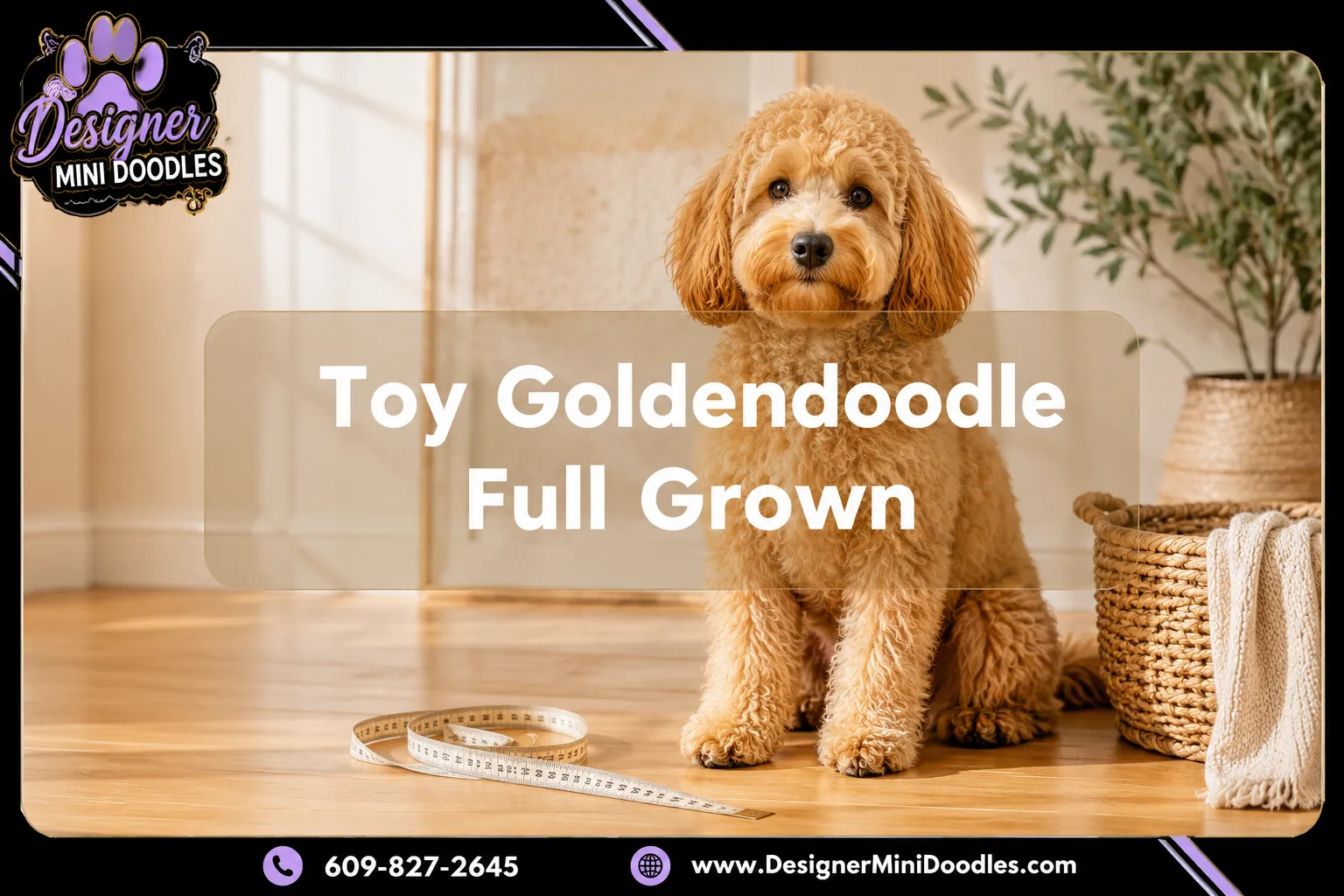
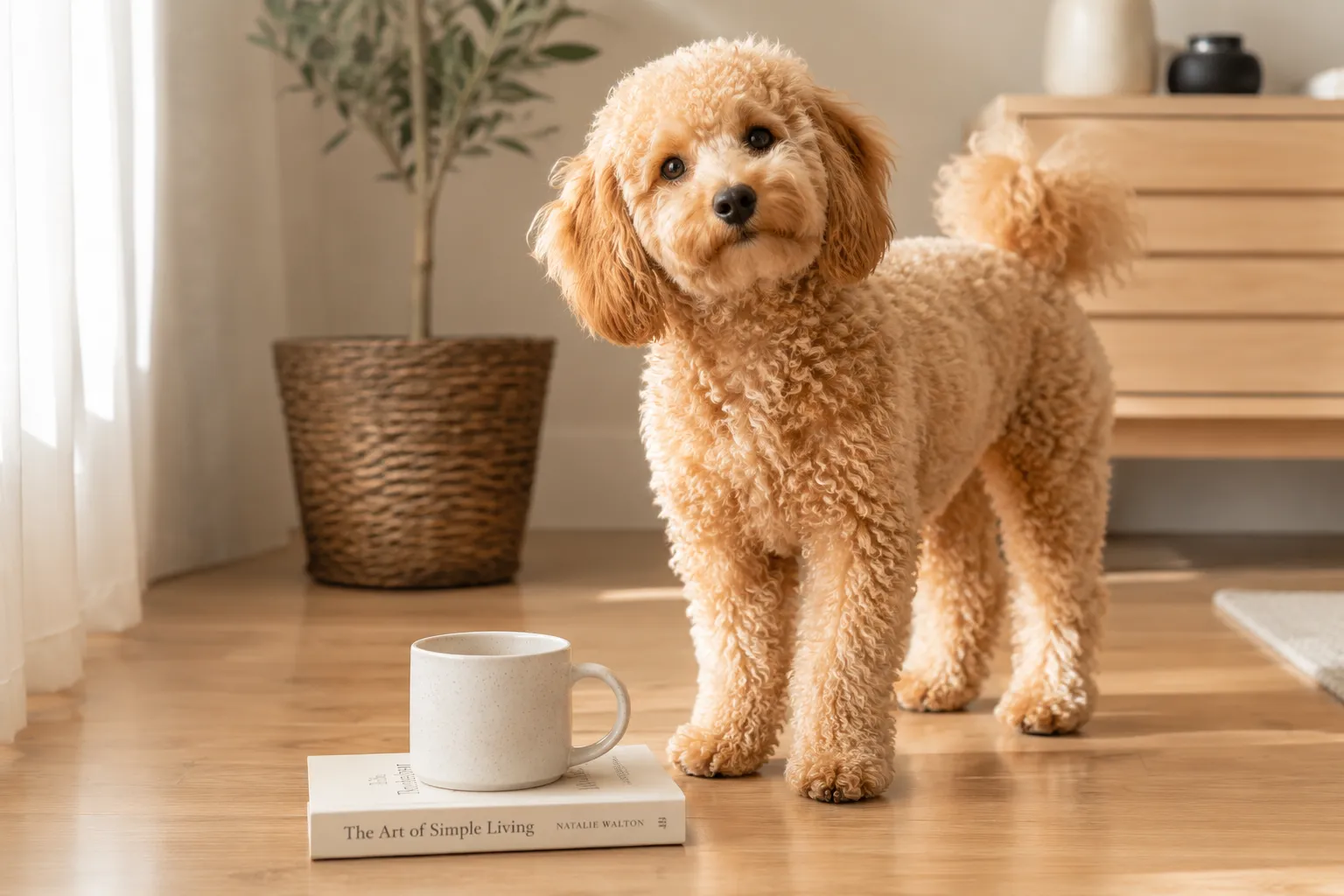
A toy goldendoodle full grown typically stands 10 to 15 inches at the shoulder and weighs 10 to 20 pounds, reaching adult size between 9 and 12 months of age. They're bred by crossing a Toy or small Miniature Poodle with a small Golden Retriever (often a smaller F1 goldendoodle), producing a compact, low-shedding companion well suited to apartments, families, and first-time owners.
Key Takeaways
- A full grown toy goldendoodle usually weighs 10-20 lbs and stands 10-15 inches tall at the shoulder.
- Most reach full height by 9-12 months, with final "filling out" continuing to about 14 months.
- They're one of the smaller doodle sizes, generally lighter than a mini goldendoodle (20-35 lbs).
- Toy goldendoodles are low-to-moderate shedders with wavy or curly coats that need regular grooming every 6-8 weeks.
- Expect a 12-15 year lifespan with proper care and health-tested parents.
- Prices from a reputable, health-testing breeder typically range $2,500,$4,500.
- They generally do well in apartments but still need daily exercise and mental enrichment.
- They are highly trainable but can struggle with being left alone for long stretches.
What is a toy goldendoodle?
A toy goldendoodle is a small crossbreed produced by pairing a Toy Poodle (or very small Miniature Poodle) with a small Golden Retriever or a smaller goldendoodle parent. The result is a compact dog that blends the friendly, people-focused nature of the Golden Retriever with the intelligence and low-shedding coat of the Poodle.
Most toy goldendoodles today come from multigenerational breeding (F1b, F2b, or multigen), which produces more consistent size and coat type. If small size and a low-shedding coat matter to you, multigen lines from an experienced breeder tend to deliver more predictable results than a first-generation cross.
Choose a toy goldendoodle if you want a small, affectionate, trainable dog with a hypoallergenic-leaning coat and you're okay with regular grooming.
How big do toy goldendoodles get when fully grown?
A full grown toy goldendoodle typically stands 10 to 15 inches at the shoulder and weighs 10 to 20 pounds. Individual dogs vary based on the size of both parents, generation, and genetics.
Here's a practical size reference:
| Measurement | Typical Range (Adult) |
|---|---|
| Height at shoulder | 10-15 inches |
| Weight | 10-20 lbs |
| Length (nose to tail base) | 15-22 inches |
| Adult size reached | 9-12 months |
Quick example: A 12-pound adult toy goldendoodle is roughly the size of a small cat, light enough to lift easily and small enough to travel comfortably in an airline-approved carrier, but sturdy enough to hike short trails.
If you want an even smaller doodle, look into the full grown micro goldendoodle, which typically stays 10-16 lbs.
Toy goldendoodle vs mini goldendoodle: size difference
The main difference is weight and height at maturity. Toy goldendoodles are usually 10-20 lbs and 10-15 inches, while mini goldendoodles land at 20-35 lbs and 14-17 inches. Toys are noticeably lighter, shorter, and easier to carry.
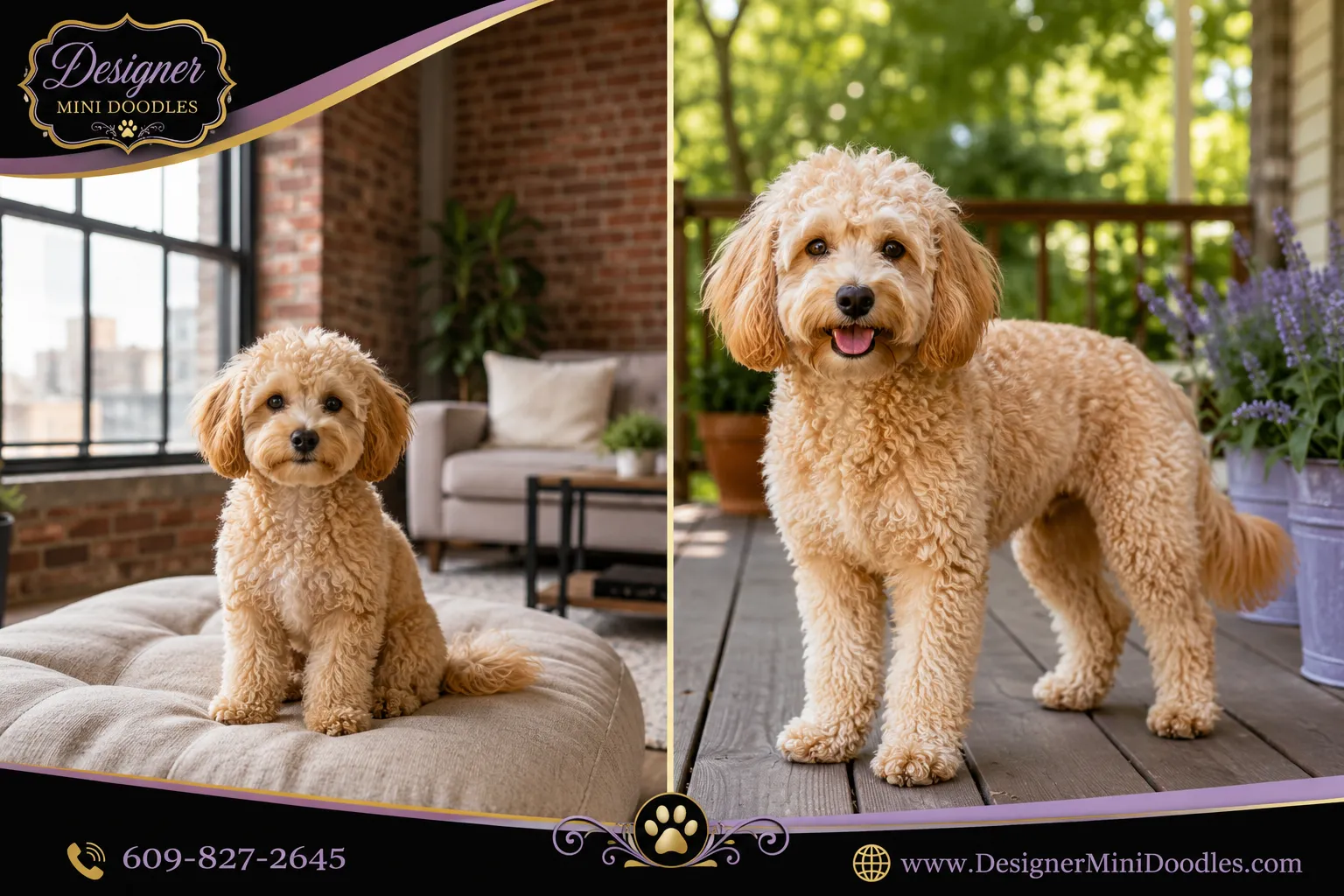
Beyond size, the two are similar in temperament, coat, and grooming needs. Toy goldendoodles just fit better in smaller spaces and are easier for children, seniors, or apartment dwellers to handle. A full grown mini goldendoodle still qualifies as a small dog but has more physical presence and stamina for long hikes.
Choose a toy if you want a lap-sized companion. Choose a mini if you want a small dog that can keep up on longer, more active outings.
Toy goldendoodle weight and height at maturity
At maturity, expect a toy goldendoodle to weigh between 10 and 20 pounds and measure 10 to 15 inches at the shoulder. Males often sit at the upper end of both ranges; females tend toward the middle.
A rough growth guide by age:
- 8 weeks: 3-5 lbs
- 4 months: 6-10 lbs
- 6 months: 8-14 lbs
- 9 months: 10-18 lbs (near-adult height)
- 12 months: 10-20 lbs (adult weight)
Common mistake: Assuming an 8-week-old puppy's weight predicts adult size precisely. Coat, generation, and both parents' sizes matter more. Ask your breeder for the estimated adult weight based on the pairing, reputable programs like Designer Mini Doodles can give you a reliable range.
How long does it take for a toy goldendoodle to be fully grown?
Most toy goldendoodles are fully grown between 9 and 12 months of age. They reach adult height first (around 8-10 months), then finish filling out muscle and chest depth by about 12-14 months.
Smaller dogs mature faster than large breeds. Growth plates in toy-sized dogs usually close by 10 months, which is why vets often clear them for spay/neuter earlier than a Standard Poodle or Golden Retriever.
Edge case: A larger toy (18-20 lbs) may take an extra month or two to finish filling out compared to a tiny 10-lb toy.
Toy goldendoodle price: how much do they cost?
A well-bred toy goldendoodle from a reputable, health-testing breeder typically costs $2,500 to $4,500. Price reflects genetic testing, veterinary care, early socialization, and breeder experience, not just the puppy itself.
Here's how the market breaks down:
- $500,$1,000: Almost always scam listings, backyard breeders with no health testing, or puppies with serious welfare concerns.
- $1,000,$1,500: Often puppy-mill or high-volume commercial sources. Sick puppies and no health guarantee are common.
- $1,800,$2,000: Hobby breeders. Quality varies, some are excellent, some cut corners on testing or socialization.
- $2,500,$4,500: Accredited, health-testing breeders with genetic guarantees, proper whelping, ENS (Early Neurological Stimulation), and started house/crate training.
For a deeper cost breakdown, see this toy, micro and mini goldendoodle pricing guide.
"The cheapest puppy is almost never the cheapest dog. Veterinary bills for a poorly bred doodle can easily exceed the price difference within the first two years."
Are toy goldendoodles good for apartments?
Yes, toy goldendoodles are one of the best doodle sizes for apartment living. Their small footprint, moderate energy, and low-shedding coat make them well suited to condos, city apartments, and small homes.
That said, they still need:
- 30-45 minutes of daily exercise (walks, play, training sessions)
- Mental stimulation through puzzle toys, sniff walks, or short training bursts
- Consistent potty routine, small dogs have small bladders
Choose a toy goldendoodle for apartment life if you can commit to at least two outdoor walks a day and keep them mentally engaged. If you want more depth on this, the guide on why a 10-16 lb doodle is ideal for apartment and urban living covers it well.
Toy goldendoodle temperament and personality
Toy goldendoodles are generally friendly, affectionate, and people-oriented. They tend to be playful without being hyper, sociable with strangers and other pets, and eager to please during training.
Common personality traits:
- Velcro dog behavior, they follow their people from room to room
- Highly social with kids, adults, and other dogs when properly socialized
- Alert but not typically yappy compared to some toy breeds
- Sensitive to harsh corrections, respond best to positive reinforcement
Common mistake: Assuming "small dog" means "no training needed." Toy goldendoodles are intelligent working-line crosses. Without structure, they can develop separation anxiety, resource guarding, or nuisance barking.
Toy goldendoodle grooming requirements for full grown adults
A full grown toy goldendoodle needs brushing 2-3 times per week and a professional groom every 6-8 weeks. Their coat, whether wavy or curly, mats easily behind the ears, under the legs, and around the collar area.
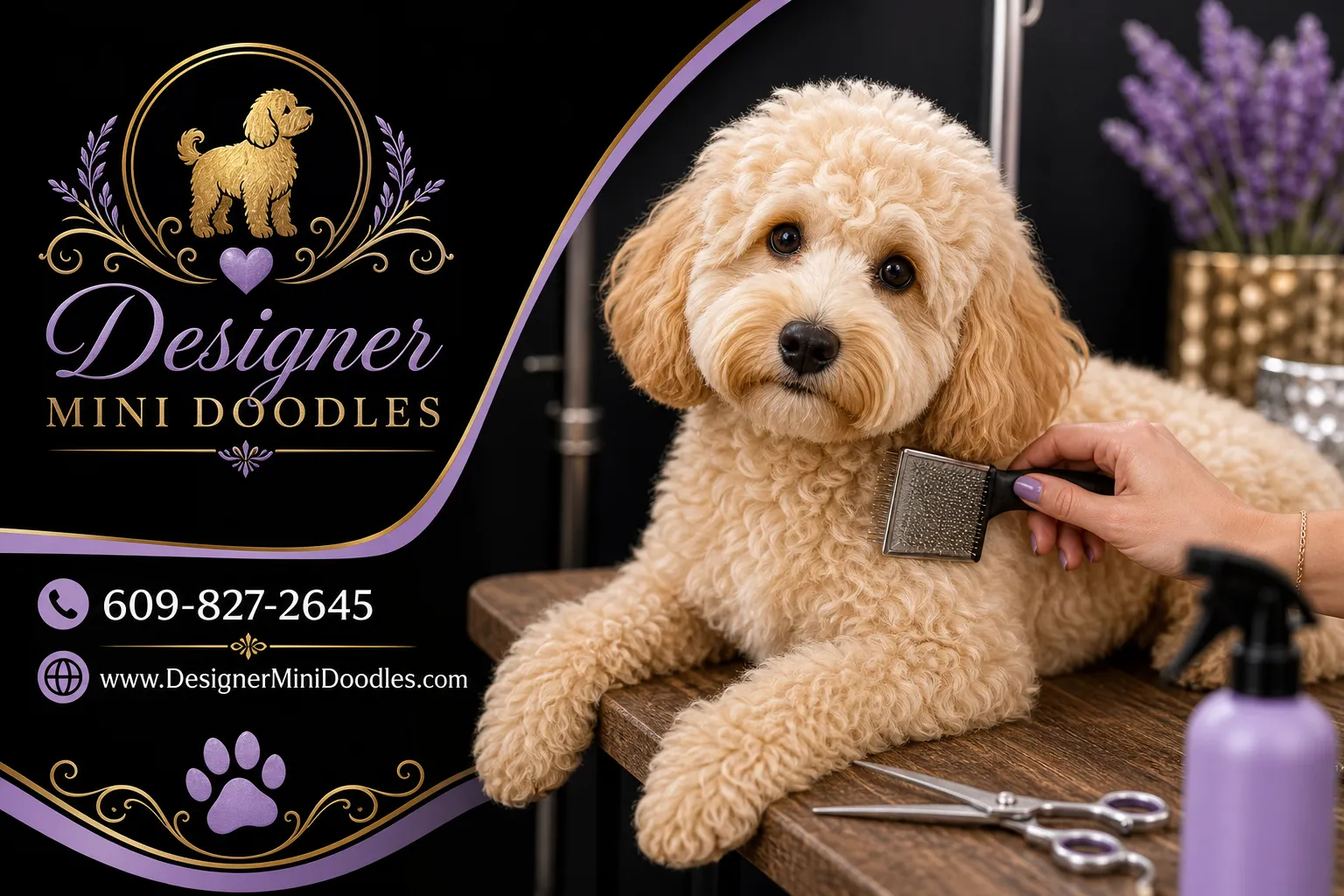
A basic grooming routine:
- Brush with a slicker brush and metal comb 2-3 times weekly
- Bathe every 3-4 weeks with a gentle dog shampoo
- Trim around eyes and sanitary areas as needed
- Full professional groom (bath, trim, ear cleaning, nail trim) every 6-8 weeks
- Brush teeth 3+ times per week
Expect to spend $60,$100 per grooming session depending on your area. For more on coat maintenance, this grooming and home care guide is a solid starting point.
Do toy goldendoodles shed a lot?
No, toy goldendoodles are low shedders, especially those with curlier, more poodle-influenced coats. They're often described as hypoallergenic-friendly, though no dog is 100% allergen-free.
Coat type affects shedding:
- Curly coat (poodle-dominant): Minimal shedding, best for allergy-sensitive homes
- Wavy coat (fleece): Light shedding, most common
- Straight coat (flat/retriever-dominant): Moderate shedding, least allergy-friendly
Choose a curly or wavy multigen if allergies are a serious concern. F1 (first-generation) puppies are less predictable in coat type.
Toy goldendoodle health problems and lifespan
Toy goldendoodles typically live 12 to 15 years and are generally healthier than either purebred parent thanks to hybrid vigor. Still, they can inherit conditions from either side.
Health issues to be aware of:
- Hip dysplasia (less common in toys than in larger doodles, but possible)
- Progressive Retinal Atrophy (PRA), screen parents for the gene
- Patellar luxation, small-dog kneecap issue
- Von Willebrand's disease, a blood clotting disorder
- Ear infections, floppy, hairy ears trap moisture
- Dental issues, small mouths mean crowded teeth
A responsible breeder tests both parents for these using OFA, Embark, or Paw Print Genetics panels. Ask to see the health clearances before you commit.
Toy goldendoodle vs toy poodle: which is better?
Neither is objectively "better", they suit different owners. Toy poodles are more consistent in coat, size, and behavior. Toy goldendoodles tend to be more laid-back, less territorial, and less prone to nuisance barking, but their traits are less predictable.
| Trait | Toy Poodle | Toy Goldendoodle |
|---|---|---|
| Weight | 4-10 lbs | 10-20 lbs |
| Shedding | Very low, predictable | Low, varies by coat |
| Temperament | Alert, sometimes vocal | Easygoing, sociable |
| Trainability | Very high | High |
| Predictability | High (purebred) | Moderate (hybrid) |
| Lifespan | 12-16 years | 12-15 years |
Choose a toy poodle if you want predictability, minimum shedding, and a smaller size. Choose a toy goldendoodle if you want the goldie warmth in a small package.
For more on the smaller poodle side, see this comprehensive toy poodle guide.
Can toy goldendoodles be left alone?
Toy goldendoodles can be left alone for 4 to 6 hours once adult and properly crate-trained, but they're prone to separation anxiety if left longer regularly. They form intense bonds with their people and prefer company.

Tips to reduce alone-time stress:
- Crate train early and consistently
- Leave enrichment toys (frozen Kongs, snuffle mats) before you go
- Practice short absences to build tolerance
- Hire a midday walker or use daycare if you're gone 8+ hours
Edge case: Puppies under 6 months should not be left more than 2-3 hours at a time, their bladders and emotional development can't handle it.
Toy goldendoodle training difficulty for first-time owners
Toy goldendoodles are one of the easiest breeds to train, making them a strong choice for first-time owners. They're food-motivated, people-focused, and quick learners.
A first-year training checklist:
- Weeks 8-12: House training, crate training, name recognition, gentle handling
- Months 3-5: Basic obedience (sit, down, come, leash walking), socialization
- Months 6-9: Off-leash recall in safe areas, impulse control, alone-time practice
- Months 9-12: Public manners, advanced obedience, continued reinforcement
Common first-time-owner mistakes:
- Skipping crate training because the puppy "seems fine"
- Over-picking-up small dogs (they need to walk and learn confidence)
- Inconsistent rules across family members
- Punishing accidents instead of rewarding correct potty behavior
The best programs, including many featured on Designer Mini Doodles, use Early Neurological Stimulation (ENS) from birth and expose puppies to household noise, children, and other animals, which makes the transition much easier for new owners.
Frequently Asked Questions
What is the difference between a toy and a teacup goldendoodle?
A toy goldendoodle is 10-20 lbs. "Teacup" is a marketing term for extra-small dogs under 10 lbs, which are not a recognized size class and often come with higher health risks.
Are toy goldendoodles hypoallergenic?
They're low-shedding and often tolerated well by mild allergy sufferers, especially curly-coated multigens, but no dog is truly hypoallergenic.
How often should a toy goldendoodle be groomed?
Brush 2-3 times a week at home and book a professional groom every 6-8 weeks.
Do toy goldendoodles bark a lot?
Generally no. They're alert but tend to be quieter than toy poodles or many small terrier breeds.
Can a toy goldendoodle be a good family dog?
Yes, they're gentle and playful with children, though very young kids should be supervised because of the dog's small size.
How much exercise does a toy goldendoodle need?
About 30-45 minutes daily, split into walks, play, and short training sessions.
Are toy goldendoodles good with other pets?
Yes, with proper introductions. Most get along well with dogs, cats, and other small animals.
What do toy goldendoodles cost per year to own?
Budget roughly $1,500,$2,500 per year for food, grooming, vet care, and supplies after the initial purchase.
Do toy goldendoodles have health issues?
They can inherit hip issues, patellar luxation, PRA, and ear infections. Buying from a health-testing breeder greatly reduces the risk.
Where can I find a reputable toy goldendoodle breeder?
Look for breeders who health-test both parents, use ENS, allow visits or video calls, and offer a written health guarantee. Directories like Designer Mini Doodles' breeder pages are a solid starting point.
Conclusion
A toy goldendoodle full grown is a compact, friendly, low-shedding companion that fits beautifully into apartments, family homes, and the lives of first-time owners. Expect an adult dog of 10-20 pounds and 10-15 inches, reaching full size by around a year old, with a lifespan of 12-15 years when raised well.
Your next steps:
- Decide on your size preference, toy (10-20 lbs), micro (10-16 lbs), or mini (20-35 lbs).
- Set a realistic budget of $2,500,$4,500 for a health-tested puppy, plus $1,500,$2,500 annually for care.
- Vet your breeder carefully: ask for OFA/Embark results, meet the parents (in person or on video), and confirm ENS and early socialization.
- Prepare your home with a crate, gates, safe chews, and a grooming plan before pickup.
- Book your first vet visit and enroll in a positive-reinforcement puppy class within two weeks of bringing your puppy home.
Get those pieces in place and you'll set up your toy goldendoodle for a long, healthy, well-adjusted life as part of the family.
Tags: toy goldendoodle, toy goldendoodle full grown, goldendoodle size guide, mini goldendoodle, doodle breed guide, small dog breeds, goldendoodle price, apartment dogs, low shedding dogs, toy goldendoodle temperament, doodle grooming