
toy goldendoodle highland park
A toy goldendoodle is the smallest recognized size of the golden retriever and poodle cross, typically weighing 10 to 20 pounds and standing under 15 inches at the shoulder. Families searching for a toy goldendoodle Highland Park usually have limited yard space, allergy concerns, or a preference for a dog small enough to travel with. Expect to pay $2,500 to $4,500 from a genuinely accredited breeder who provides health testing, a genetic health guarantee, early neurological stimulation, and puppies already started on crate training and housebreaking. At Designer Doodles, we breed toy goldendoodle puppies from top bloodlines under the direction of a trained animal biologist, and we ship to Highland Park families regularly.
toy goldendoodle highland park
- A toy goldendoodle generally weighs 6 to 10 pounds full grown; a mini goldendoodle runs roughly 20 to 35 pounds. The difference comes from whether a toy poodle or a miniature poodle was used in the cross.
- Honest pricing for a health-tested, well-started toy goldendoodle in the Highland Park area falls between $2,500 and $4,500. Listings under $1,500 almost always signal a scam or a puppy mill.
- Toy goldendoodles suit apartments and townhomes well because their exercise needs are met with two short walks plus indoor enrichment, not acreage.
- Coats are low-shedding but not low-maintenance: budget professional grooming every 6 to 8 weeks plus brushing 3 to 4 times a week.
- Common health concerns inherited from both parent breeds include hip dysplasia, patellar luxation, progressive retinal atrophy, and von Willebrand disease. Ask for OFA and DNA panel results on both parents.
- Typical lifespan is 12 to 15 years, on the longer end for smaller doodles kept at a lean weight.
- These dogs are highly trainable but sensitive; reward-based training works, harsh correction backfires.
- The biggest buying mistakes are paying a deposit before verifying the breeder exists, skipping health documentation, and choosing on color instead of temperament.
What is a toy goldendoodle?
A toy goldendoodle is a golden retriever crossed with a toy poodle, or more commonly a multigenerational doodle bred down in size using toy poodle stud lines. The result is a dog with the golden retriever’s friendly, people-focused temperament in a 10 to 20 pound frame with a low-shedding curly or wavy coat.
Size in doodles comes almost entirely from the poodle side. Poodles come in standard, miniature, and toy varieties, and the American Kennel Club defines the toy poodle as 10 inches or under at the shoulder. Breeders who want consistently tiny doodles use toy poodle sires and small doodle dams, then select for size across several generations. That’s why generation labels matter:
- F1, Golden retriever bred to a poodle. Coats vary widely and shedding is unpredictable.
- F1B, F1 doodle bred back to a poodle. Curlier, more reliably low-shedding, easier for allergy-conscious homes.
- F2B and multigen, Doodle to doodle or doodle to poodle across generations. This is where breeders gain real control over both size and coat type.
Most true toy goldendoodles are F1B or multigenerational. If a breeder advertises an F1 litter as “toy,” ask what the adult weights of previous litters actually were. First-generation crosses rarely land under 20 pounds.
A toy goldendoodle is a size category achieved through careful generational breeding, not a separate breed. Anyone promising a 7-pound adult goldendoodle from a first-generation litter is guessing, not predicting.
Toy goldendoodle vs mini goldendoodle: what’s the size difference?
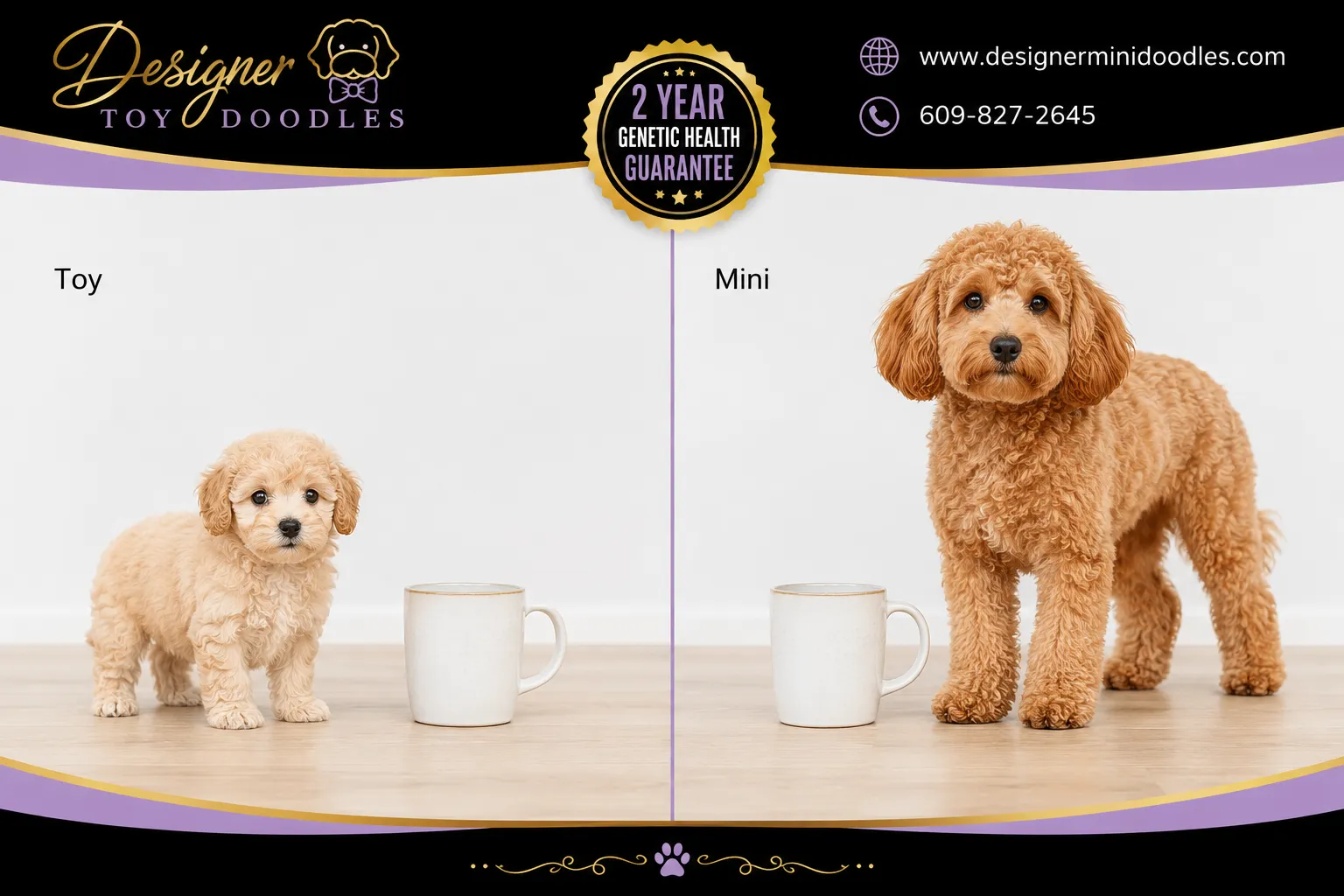
The practical difference is roughly 10 to 15 pounds and about 3 to 5 inches of height. Toy goldendoodles average 10 to 20 pounds and 11 to 15 inches tall; mini goldendoodles average 20 to 35 pounds and 14 to 18 inches tall. Micro goldendoodles sit between or below, often marketed in the 10 to 16 pound range.
| Size category | Adult weight | Height at shoulder | Poodle parent used | Best fit |
|---|---|---|---|---|
| Toy goldendoodle | 10-20 lbs | 11-15 in | Toy poodle | Apartments, seniors, frequent travelers |
| Micro goldendoodle | 10-16 lbs | 11-14 in | Toy poodle | Urban condos, lap-dog lovers |
| Mini goldendoodle | 20-35 lbs | 14-18 in | Miniature poodle | Families with active kids, suburban yards |
| Medium goldendoodle | 35-50 lbs | 17-20 in | Miniature/standard | Homes with hiking and running routines |
Decision rule: Choose a toy or micro if you live in a walk-up, fly with your dog, or want a dog you can lift comfortably for life. Choose a mini if you have kids under six or a household where a slightly sturdier dog is safer. For a deeper look at why the smaller end works so well, read our breakdown of why a 10-16 lb micro goldendoodle is the perfect size for apartment and urban living.
Common mistake: Buying a “toy” puppy based on how small it looks at 8 weeks. Puppy weight at eight weeks is a weak predictor on its own. Ask for the adult weights of the sire, dam, and full siblings from previous breedings instead.
Where can I find toy goldendoodle breeders in Highland Park?
Highland Park buyers generally have three realistic options: a small number of local hobby breeders, a regional accredited program that ships or delivers, or a rescue placement. Because true toy-size goldendoodle programs are uncommon, most Highland Park families end up working with a specialized out-of-area breeder rather than someone within driving distance.
We are Designer Doodles, and we believe we are the best toy goldendoodle breeders serving Highland Park. Here’s what stands behind that claim:
- Our program is run by a working animal biologist with a degree in Animal Biology from Stockton University in Pomona, New Jersey, and a minor in animal genetics. Pairings are chosen on genetic data, not guesswork.
- Every dog in our breeding stock comes from documented top bloodlines with health clearances on file.
- We use Early Neurological Stimulation (ENS) starting in the first days of life, handling puppies daily to build stress resilience.
- Our puppies grow up inside a busy household, not a kennel row. They hear vacuums, doorbells, blenders, kids, and other animals before they ever go home.
- Puppies leave well started on housebreaking and crate training, which usually saves new owners two to three weeks of frustration.
You can also see our verified location and reviews on our Google Maps listing. We coordinate flight nanny and ground delivery for Highland Park clients, and we’re happy to arrange a live video call so you can watch your puppy interact with littermates before you commit.
For clients who also breed or own bulldogs, we’re often asked about our sister program, which offers professional Frenchie stud service with the same genetics-first approach.
How to vet a Highland Park area breeder in one phone call
- Ask for the registered business name and cross-check it against the Google Maps listing and reviews.
- Request OFA hips, elbows, patellas, cardiac, and eye clearances plus a DNA disease panel for both parents.
- Ask what the written health guarantee covers and for how long.
- Ask specifically: “What socialization protocol do you use, and at what age does it start?”
- Request a live video call, not pre-recorded clips.
- Confirm the deposit terms in writing before any money moves.
If a breeder resists any of the first four, walk away. That’s not caution on their part; it’s usually an absence of records.
How much does a toy goldendoodle cost?
A properly bred, health-guaranteed toy goldendoodle costs $2,500 to $4,500. Prices below that band correlate closely with skipped health testing, poor whelping conditions, or outright fraud. The price spread across the market is predictable enough that you can use it as a screening tool.
| Price range | What you’re actually dealing with | Risk level |
|---|---|---|
| $500,$1,000 | Almost always a scam. Stolen photos, wire transfers, no dog exists. | Extreme |
| $1,000,$1,500 | Puppy mill or high-volume broker. No health testing, minimal socialization. | Very high |
| $1,800,$2,000 | Backyard or hobby breeder. Well-meaning, but limited genetic screening and no structured early training. | Moderate |
| $2,500,$4,500 | Accredited breeder: genetic health guarantee, supervised whelping, ENS, early housebreaking and crate training. | Low |
Within the top band, price moves based on generation, coat type, color rarity, adult size projection, and how much training the puppy has completed. Our full toy, micro, and mini goldendoodle sizes and prices page lays out current placement fees.
Budget beyond the purchase price. First-year ownership costs for a small doodle in an affluent suburb typically include:
- Initial vet visits, boosters, spay or neuter: $500,$1,200
- Grooming, 6 to 8 visits at $70,$110 each: $500,$800
- Crate, pen, bed, bowls, leash, and starter supplies: $250,$400
- Food and treats: $400,$600
- Pet insurance, optional but recommended for a small breed: $300,$600
Edge case: Some sellers advertise low prices, then add “shipping insurance,” “crate fees,” or “temperature-controlled transport” charges after you pay a deposit. Legitimate breeders quote transport once, in writing, up front. Escalating fees after deposit is the single most reliable scam signature.
What is a toy goldendoodle’s temperament and personality like?
Toy goldendoodles are affectionate, sociable, and strongly people-oriented. They inherit the golden retriever’s eagerness to please and the poodle’s alertness, which produces a dog that follows you room to room, greets guests happily, and struggles with long stretches alone.
Typical traits reported by owners and consistent with both parent breeds:
- Velcro tendencies. They want physical closeness. This makes them wonderful companions and poor candidates for 10-hour workdays with no midday break.
- Low aggression, moderate reactivity. Well-socialized toy doodles are rarely aggressive, but poorly socialized ones can become barky and startle-prone.
- High social curiosity. Most enjoy meeting new people and dogs when introduced properly as puppies.
- Sensitivity to household tension. They read tone of voice quickly, which cuts both ways in training.
Who a toy goldendoodle is not for: Households where the dog would be alone more than 8 hours most days, homes wanting a low-interaction pet, or families with toddlers who haven’t yet learned gentle handling. A 12-pound dog can be injured by a well-meaning three-year-old.
Quick example: One of our Highland Park placements went to a work-from-home consultant who wanted a dog that could nap under a desk during client calls. Her toy goldendoodle now sleeps through Zoom meetings and gets two 20-minute walks plus a food puzzle at lunch. That’s the profile these dogs thrive in. We break down that scenario further in our guide to why this size works for seniors and work-from-home owners.
What health problems affect toy goldendoodles?
Toy goldendoodles inherit risk from both parent breeds, with the most common concerns being patellar luxation, hip dysplasia, progressive retinal atrophy, von Willebrand disease, and hypothyroidism. Small size adds two specific issues: dental crowding and, in very small individuals, juvenile hypoglycemia.
Health areas to screen and monitor:
- Orthopedic, Patellar luxation (slipping kneecaps) is the leading small-dog orthopedic issue. Hip dysplasia carries over from the golden retriever side.
- Eyes, Progressive retinal atrophy and cataracts appear in both poodles and golden retrievers. An annual eye exam is reasonable after age seven.
- Blood clotting, Von Willebrand disease type 1 is screenable by DNA test in poodles. Ask for the parents’ results.
- Thyroid and skin, Hypothyroidism and allergic skin disease show up in both lines.
- Dental, Small jaws mean crowded teeth and faster tartar buildup. Brush several times a week and plan for professional cleanings.
- Ears, Floppy, hair-filled ear canals trap moisture. Dry ears after baths and swims.
What to demand from any breeder: OFA or equivalent clearances for hips, elbows, patellas, heart, and eyes on both parents, plus a breed-appropriate DNA panel. A written genetic health guarantee should be included in the contract, not offered as an upsell.
Common mistake: Accepting “our vet says they’re healthy” as a substitute for documented testing. A routine wellness exam does not screen for inherited disease. Those are different processes entirely.
What are toy goldendoodle grooming requirements?
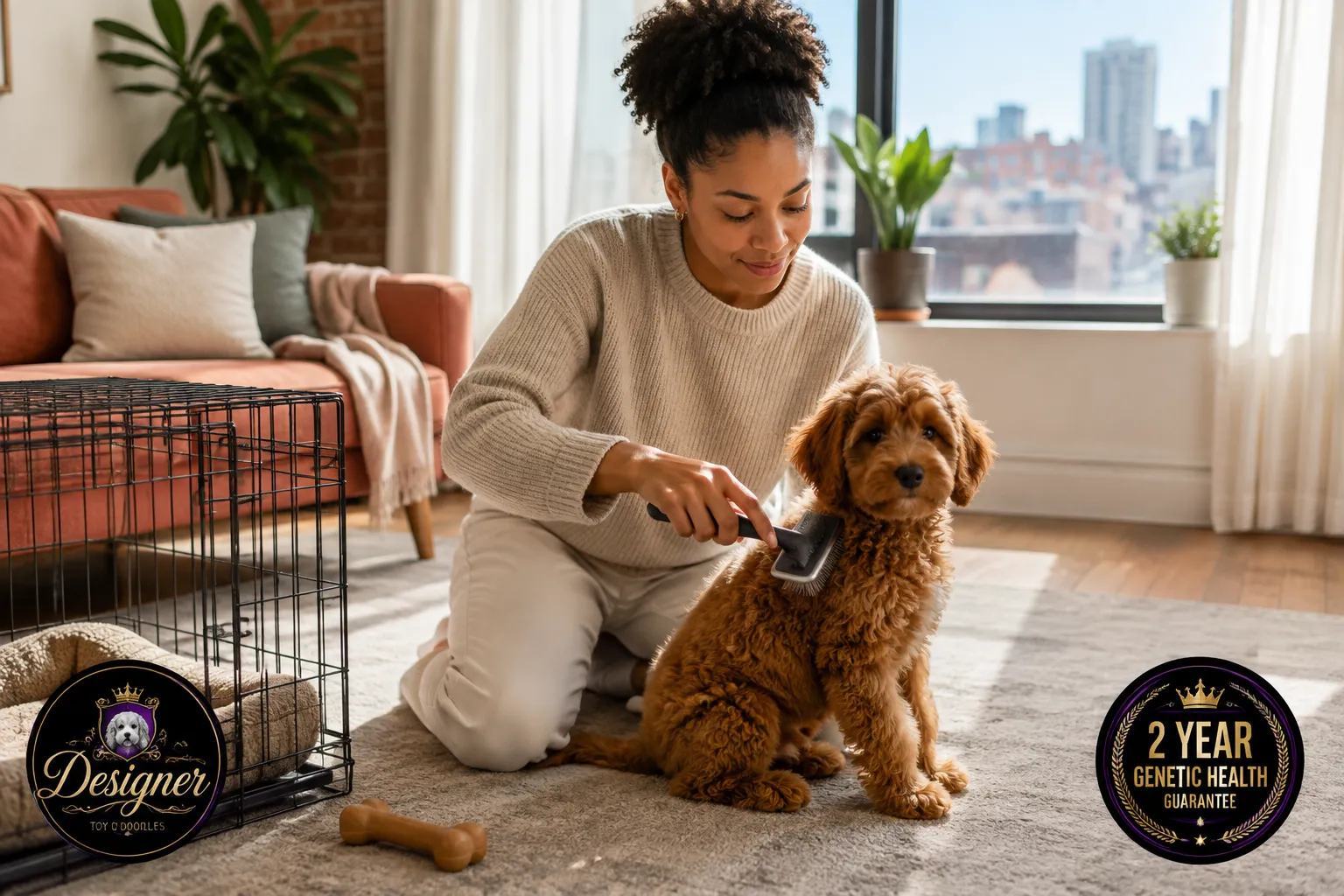
Toy goldendoodles need brushing 3 to 4 times per week and a professional groom every 6 to 8 weeks. Their coats shed very little, which means dead hair stays in the coat and mats if it isn’t brushed out. Grooming is the single most underestimated cost and time commitment in doodle ownership.
A workable routine looks like this:
- Daily, 2 minutes, Check and finger-comb behind the ears, under the collar, and in the armpits. These three spots mat first.
- 3 to 4 times weekly, 10 minutes, Line-brush with a slicker brush, then confirm with a metal comb. If the comb snags, the slicker didn’t reach the skin.
- Every 2 weeks, Nail trim and ear check.
- Every 6 to 8 weeks, Professional bath, blow-out, and trim. Bring a photo of the length you want.
- Seasonally, Watch for the coat change between 8 and 14 months, when the puppy coat transitions to adult texture and matting risk spikes.
Decision rule on coat type: If you want the lowest shedding and are willing to brush frequently, choose a curly F1B or multigen. If you want easier maintenance and can tolerate a little shedding, a wavier coat is more forgiving. Straight-coated doodles shed the most.
Teaching a puppy to enjoy handling makes all of this easier. Our article on how to teach your dog to love grooming covers desensitization steps you can start the week your puppy comes home.
- Display 9 Products per page



Where to find toy goldendoodles near Highland Park
Most Highland Park buyers find their puppy through one of four channels: a specialized accredited breeder who delivers, a regional breeder referral network, a breed-specific rescue, or a veterinarian referral. Local classified listings and general marketplace sites are where the majority of scams concentrate, so treat them as a last resort.
Where to look, ranked by reliability:
- Accredited breeders with a verifiable physical location and review history. You can browse our current toy goldendoodles for sale and we’ll walk you through transport to Highland Park.
- Veterinarian and groomer referrals. Groomers see the same breeders’ dogs repeatedly and know which coats and temperaments hold up.
- Doodle rescue organizations. Adult toy-size doodles do appear, usually 3 to 8 years old. Fees typically run a few hundred dollars.
- Regional breeder directories. If you’d rather work with someone closer, our state guides for Illinois and New Jersey list vetted programs, since Highland Park exists in several states.
Edge case worth knowing: Waitlists for genuinely small toy goldendoodles often run 4 to 10 months. If a breeder always has puppies immediately available in every color, that volume is a warning sign, not a convenience.
How does a toy goldendoodle compare to other small doodle breeds?
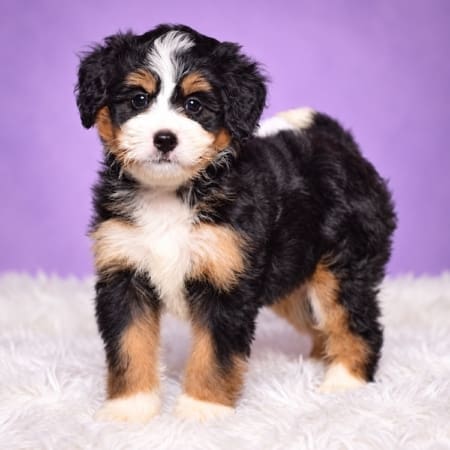
Toy goldendoodles are the most consistently outgoing and family-social of the small doodles. Cavapoos are typically calmer and more lap-oriented, cockapoos are playful but can be more vocal, and mini bernedoodles are sweeter-tempered but larger and stubborner to train.
| Small doodle | Adult weight | Energy level | Trainability | Notable trait |
|---|---|---|---|---|
| Toy goldendoodle | 10-20 lbs | Moderate | Very high | Friendly with everyone, eager to please |
| Cavapoo | 9-18 lbs | Low, moderate | High | Calmest option; more prone to heart issues |
| Cockapoo | 12-24 lbs | Moderate, high | High | Playful, can be barky without training |
| Mini bernedoodle | 25-45 lbs | Moderate | Moderate | Affectionate but slower to mature |
| Toy poodle | 4-10 lbs | Moderate | Very high | Smallest and sharpest; less retriever softness |
Choose the toy goldendoodle if you want a small dog that greets guests warmly, handles a busy household, and learns fast. Choose a cavapoo if your priority is a quiet lap dog. Choose a toy poodle if you want the smallest possible size with the most predictable coat.
Is a toy goldendoodle good for apartments?
Yes. Toy goldendoodles are one of the better doodle choices for apartments and condos because their exercise needs are modest, their size fits elevators and small spaces, and their low-shedding coat reduces cleanup. The two apartment-specific challenges are barking and potty logistics.
What works in apartment living:
- Exercise: Two 20 to 30 minute walks daily plus 15 minutes of indoor mental work (puzzle feeders, scent games, short training reps) satisfies most adults.
- Noise control: Train a “quiet” cue early and reward calm behavior at door sounds. Untrained small doodles bark at hallway traffic.
- Potty planning: If you’re on a high floor, pair crate training with a consistent elevator routine. Some owners use a balcony potty station as a backup during storms.
- Weight management: Small apartment dogs gain weight easily. Measure food; don’t free-feed.
Common mistake: Assuming a small dog needs no exercise. Under-exercised toy goldendoodles become destructive chewers and nuisance barkers. The size reduces space needs, not stimulation needs.
What is a toy goldendoodle’s lifespan, and what does daily care look like?
Toy goldendoodles typically live 12 to 15 years, with smaller individuals kept at a lean body weight often reaching the upper end. Longevity depends most on weight control, dental care, and screening the parents for inherited disease before breeding.
A sustainable daily and annual care plan:
- Feeding: Two measured meals of a quality small-breed food. Puppies under 12 weeks may need three meals to avoid low blood sugar.
- Exercise: 30 to 60 minutes total daily, split into walks and play.
- Dental: Brush 3 or more times weekly. Small breeds lose teeth to periodontal disease more often than to anything else.
- Vet schedule: Puppy series, then annual wellness exams; twice yearly after age eight, with bloodwork.
- Weight target: You should feel ribs easily under a thin fat layer and see a waist from above. Two extra pounds on a 14-pound dog is like 20 pounds on a person.
- Joint support: Discourage jumping off high furniture while growth plates close, roughly to 10 months.
How difficult is toy goldendoodle training?
Toy goldendoodles are easy to train relative to most breeds. Both parent breeds rank among the most biddable dogs, so these puppies pick up sit, down, recall, and crate routines quickly. The two genuine challenges are housebreaking (small bladders, small accidents that are easy to miss) and separation anxiety.
A realistic first-90-days training sequence:
- Days 1-7: Crate acclimation, name recognition, and a fixed potty schedule (every 60 to 90 minutes while awake). Supervise or confine; no unsupervised roaming.
- Weeks 2-4: Sit, touch, and a hand-fed recall. Start alone-time practice at 5 minutes and build up. Continue socialization with new surfaces, sounds, and calm adults.
- Weeks 5-8: Leash manners in low-distraction areas, “leave it,” and settling on a mat. Introduce brushing and paw handling daily.
- Weeks 9-12: Group puppy class if vaccinations allow. Practice recall in a fenced area. Begin duration on stays.
Because our puppies leave already started on crate training and housebreaking, most Highland Park owners report reliable overnight crating within the first week. Our resources on crate training routines and building daily routines for small puppies give you the exact schedules we use in-house.
Common mistake: Carrying a small puppy everywhere. It feels protective, but it prevents the dog from learning to walk confidently past strangers, traffic, and other dogs. Let their feet touch the ground.
What are the most common mistakes when buying a toy goldendoodle?
The most costly mistakes are sending money before verifying the breeder is real, skipping written health documentation, and choosing a puppy based on coat color instead of temperament and adult size projection. Each one is avoidable with a single question.
Mistakes to avoid, with the fix for each:
- Paying by wire, gift card, or crypto. Fix: use a payment method with recourse, and never pay before a live video call.
- No written contract or health guarantee. Fix: request the contract as a PDF before the deposit and read the coverage window.
- Ignoring adult size data. Fix: ask for the last three litters’ adult weights from the same sire and dam.
- Assuming “hypoallergenic” means allergen-free. Fix: no dog is allergen-free. F1B and multigen coats shed less dander, but spend time with the parent dogs if allergies are serious. Our notes on allergy-conscious homes explain what to test for.
- Buying the boldest puppy in the litter. Fix: for most homes, the middle-of-the-pack puppy adapts best. Ask the breeder which puppy fits your daily schedule.
- Bringing a puppy home the week before a vacation or move. Fix: schedule pickup so you have 7 to 10 quiet days at home.
- Underbudgeting grooming. Fix: add $600 to $900 per year to your plan before you commit.
If a seller pressures you to decide today, that pressure is the product. Reputable breeders have waitlists and are comfortable telling you to think it over.
Frequently asked questions
How big does a toy goldendoodle get?
Most toy goldendoodles reach 10 to 20 pounds and 11 to 15 inches at the shoulder by 10 to 12 months of age. Adult size is best predicted from the documented weights of the sire, dam, and previous full siblings.
Do toy goldendoodles shed?
They shed very little, especially F1B and multigenerational curly coats. Because shed hair stays in the coat, they require brushing 3 to 4 times weekly to prevent mats.
Are toy goldendoodles hypoallergenic?
No dog is truly hypoallergenic. Toy goldendoodles produce less loose dander than shedding breeds, which many allergy sufferers tolerate better, but reactions vary by individual. Meet the parent dogs before committing if allergies are severe.
How much should I pay for a toy goldendoodle near Highland Park?
Plan on $2,500 to $4,500 from an accredited breeder providing health testing, a genetic health guarantee, ENS socialization, and early crate and potty training. Listings at $500 to $1,000 are almost always fraudulent.
How long do toy goldendoodles live?
Typically 12 to 15 years. Keeping the dog lean, brushing teeth regularly, and buying from health-tested parents are the three factors most within your control.
Can a toy goldendoodle be left alone during the workday?
Not comfortably for full 8 to 10 hour days without a break. These dogs bond closely and are prone to separation anxiety. Plan a midday walker, daycare, or a work-from-home schedule.
Are toy goldendoodles good with children?
They’re friendly and tolerant, but at 10 to 20 pounds they can be injured by rough handling. They’re best with children old enough to sit calmly with a small dog, generally age six and up, with supervision.
How often do toy goldendoodles need professional grooming?
Every 6 to 8 weeks, at roughly $70 to $110 per visit depending on your area and coat condition. Matted coats cost more and may require a short shave-down.
Is a toy goldendoodle harder to house train than a larger dog?
Slightly, because small bladders need more frequent trips and small accidents are easier to overlook. A strict schedule plus crate training resolves it. Puppies that arrive already started on housebreaking typically finish faster.
What’s the difference between a toy, micro, and teacup goldendoodle?
Toy generally means 10 to 20 pounds and micro 10 to 16 pounds. “Teacup” is a marketing term with no standard definition and often signals unrealistic size promises. Ask for weights, not labels.
Conclusion: your next steps
Buying a toy goldendoodle well comes down to three things: verifying the breeder, verifying the health documentation, and being honest about your daily schedule. If you can commit to two walks a day, brushing several times a week, professional grooming every couple of months, and a budget in the $2,500 to $4,500 range, you’ll get a 12-to-15-year companion that fits a Highland Park apartment or family home comfortably.
Here’s what I’d do this week:
- Set your real budget, including the first year’s vet, grooming, and supply costs, not just the placement fee.
- Write down your schedule honestly. Hours alone per day, walk times, and who handles grooming appointments.
- Contact two or three breeders and ask the six vetting questions listed earlier. Compare the answers, not the photos.
- Request health documentation in writing for both parents before any deposit.
- Schedule a live video call with the litter you’re considering.
- Get on a waitlist. True toy-size litters are limited, and the wait is a feature of responsible breeding.
If you’d like to see what’s currently available, browse our current litters of toy golden doodle puppies or reach out directly. As the program many Highland Park families consider the best toy goldendoodle breeders they’ve worked with, we’ll give you straight answers on size projections, health testing, and transport before you spend a dollar.