

Last updated: July 29, 2026
toy goldendoodle puppies
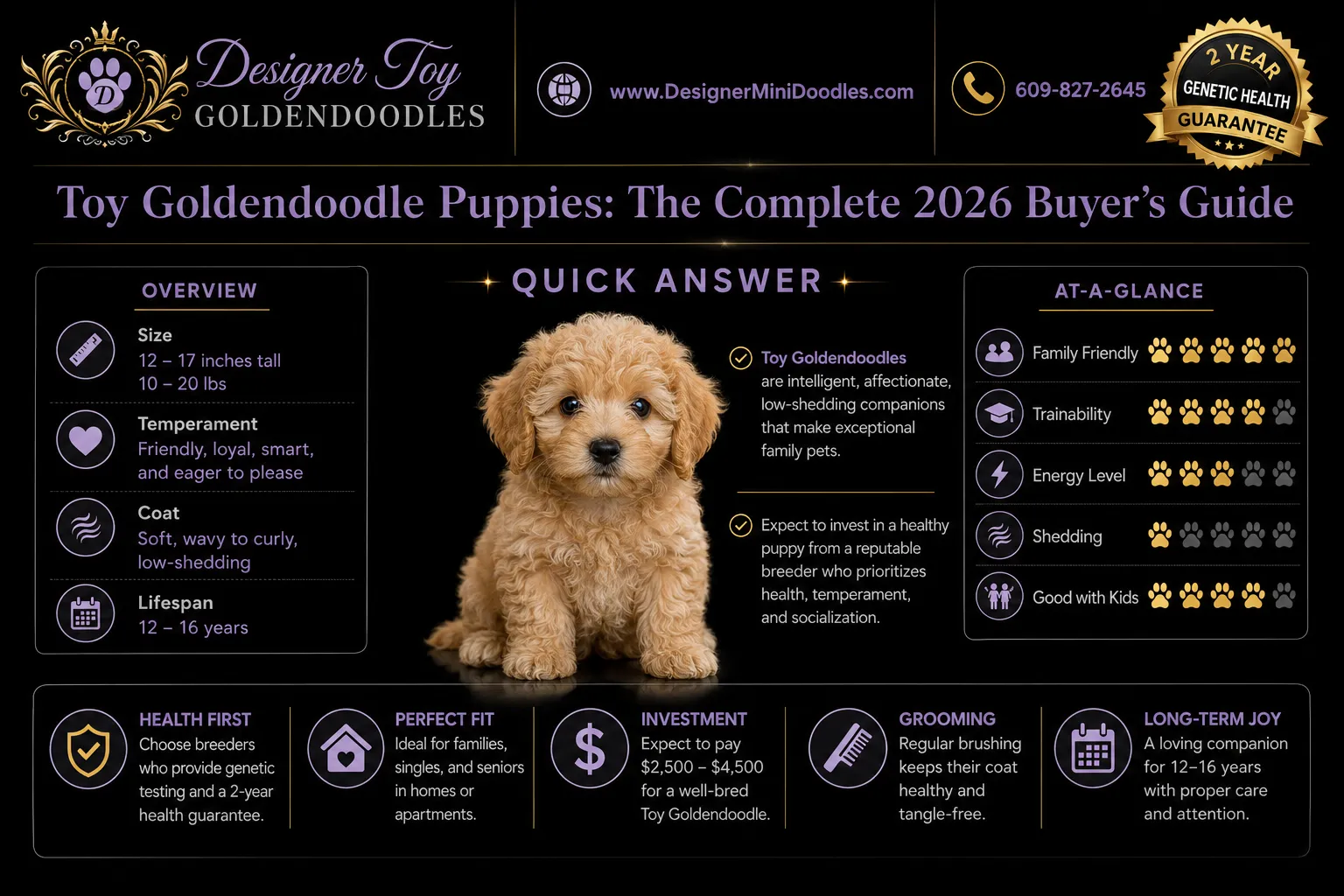
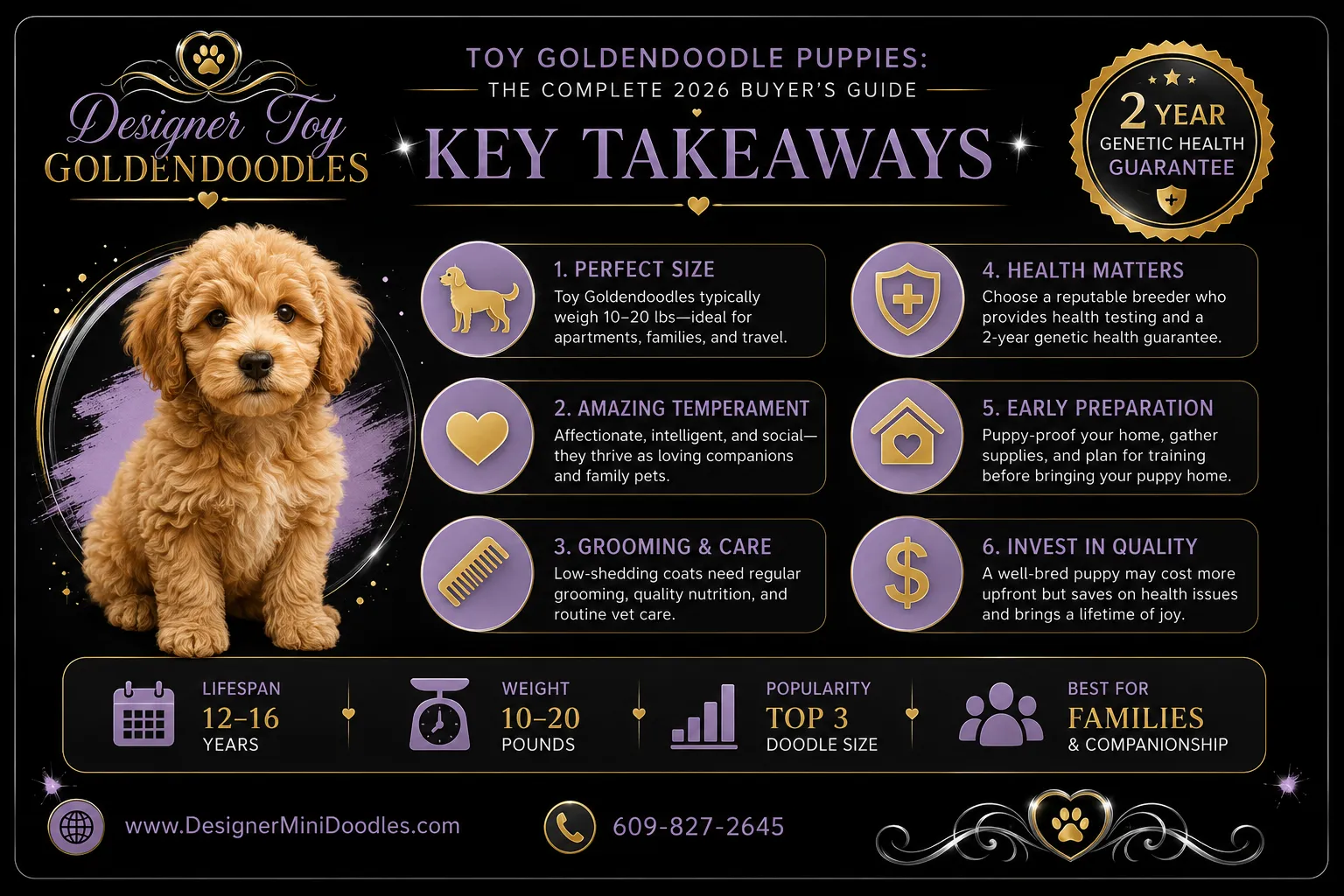
Toy goldendoodle puppies are the smallest size of the goldendoodle family, typically weighing 10-20 pounds and standing under 14 inches tall at maturity. They’re bred by crossing a Toy Poodle with a Miniature Goldendoodle (or a very small Mini Goldendoodle back to a Toy Poodle), producing a compact, low-shedding, family-friendly companion that suits apartments, seniors, and first-time dog owners. Expect to pay $2,500,$4,500 from an accredited breeder with a genetic health guarantee.
toy goldendoodle puppies
- Adult size: Most toy goldendoodle puppies grow to 10-20 lbs and 11-14 inches tall.
- Lifespan: 13-16 years with proper care and reputable breeding.
- Shedding: Low to minimal, a strong fit for allergy-conscious households.
- Price from a responsible breeder: $2,500,$4,500 with health testing, early socialization, and starter training.
- Red flag pricing: Anything under $1,500 usually means backyard breeder, puppy mill, or scam.
- Apartment-friendly: Yes, small size and moderate energy make them ideal urban companions.
- Grooming: Brush 3-4x weekly; professional groom every 6-8 weeks.
- Trainability: Very high, the Poodle influence makes them quick learners.
What Is a Toy Goldendoodle?
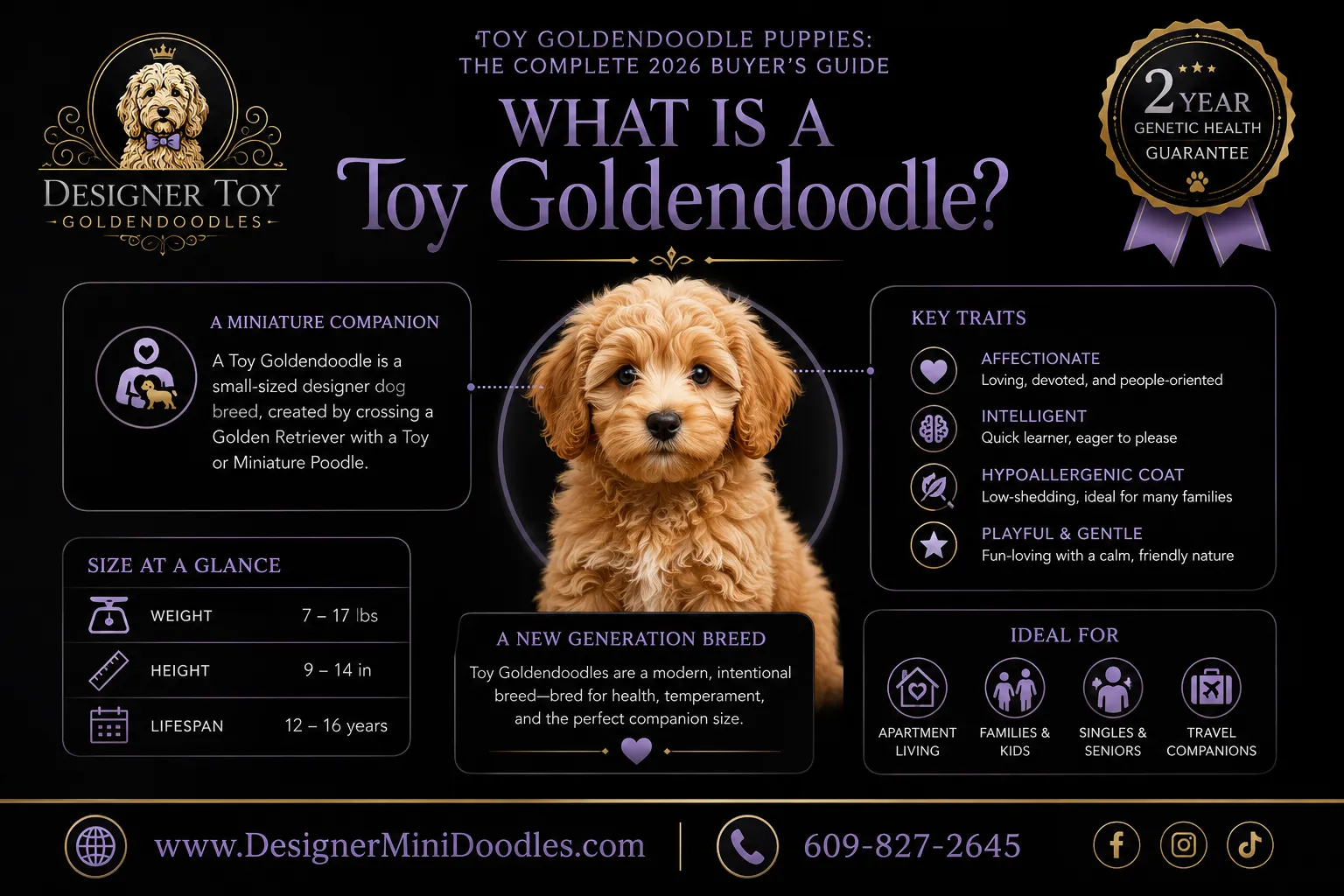
A toy goldendoodle is the smallest recognized variety of the goldendoodle breed, created by crossing a Toy Poodle with a small Mini Goldendoodle or F1b Goldendoodle. The result is a teddy-bear-faced dog that keeps the Golden Retriever’s affectionate temperament in a compact, low-shedding body.
At Designer Mini Doodles, our program is run by a real animal biologist with a degree in Animal Biology from Stockton University in Pomona, New Jersey, and a minor in animal genetics. That background matters, because breeding a healthy toy goldendoodle requires more than just picking two small dogs. It requires understanding coat inheritance, structural soundness, and generational health data.
Our toy goldendoodle dogs and breeding stock all come from top bloodlines, and every litter is raised in-home with Early Neurological Stimulation (ENS) beginning at day three of life.
How Big Do Toy Goldendoodles Get?
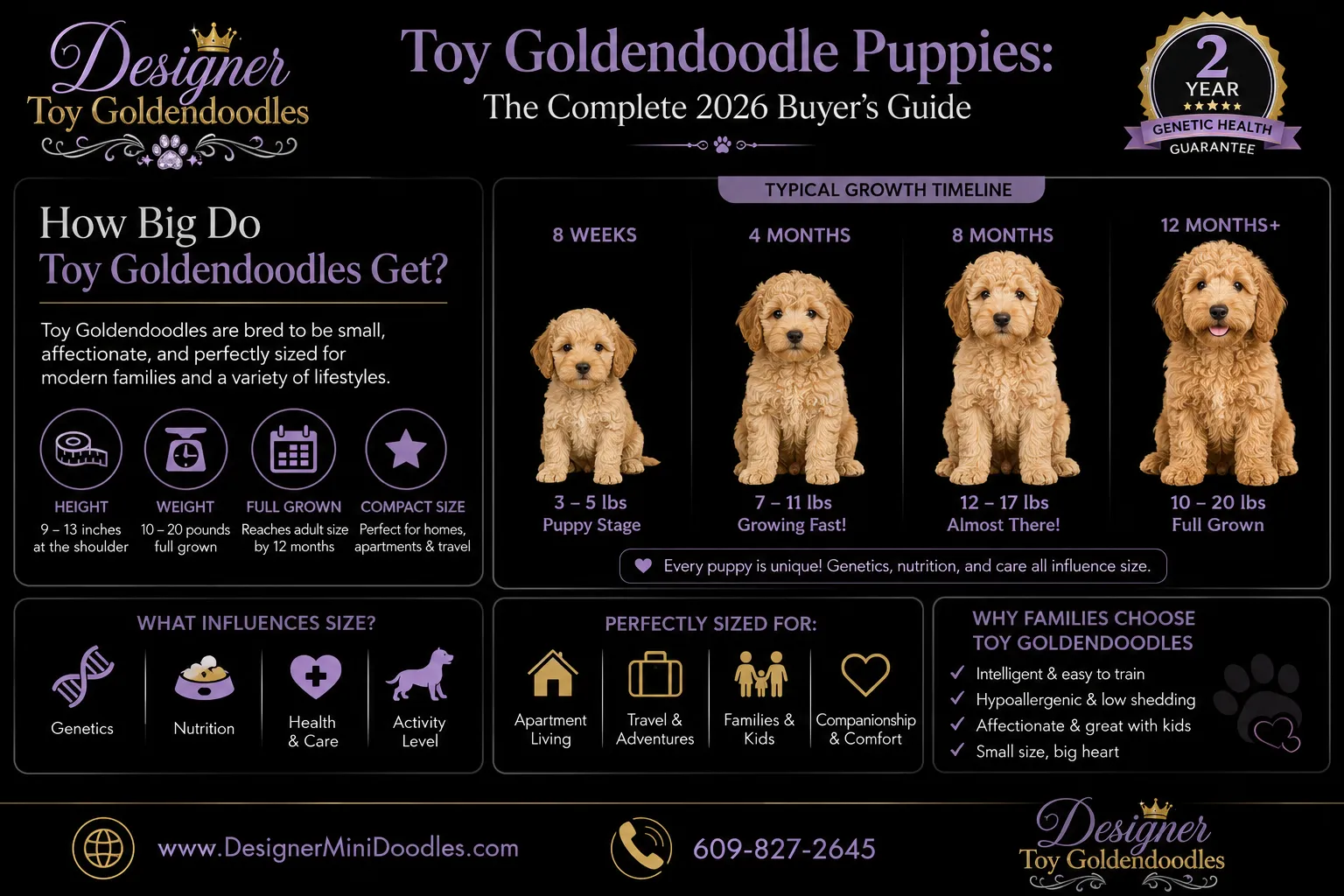
Adult toy goldendoodles typically weigh 10-20 pounds and stand 11-14 inches tall at the shoulder. Most reach full size between 9 and 12 months of age, though they finish filling out around 14 months.
A quick size reference:
| Age | Typical Weight |
|---|---|
| 8 weeks | 2-4 lbs |
| 4 months | 6-10 lbs |
| 8 months | 10-16 lbs |
| 12 months (adult) | 10-20 lbs |
Quick prediction rule: Multiply your puppy’s 8-week weight by 4-5 to estimate adult weight. It’s not perfect, but it’s a reasonable ballpark.
Toy Goldendoodle vs Mini Goldendoodle: Size Difference
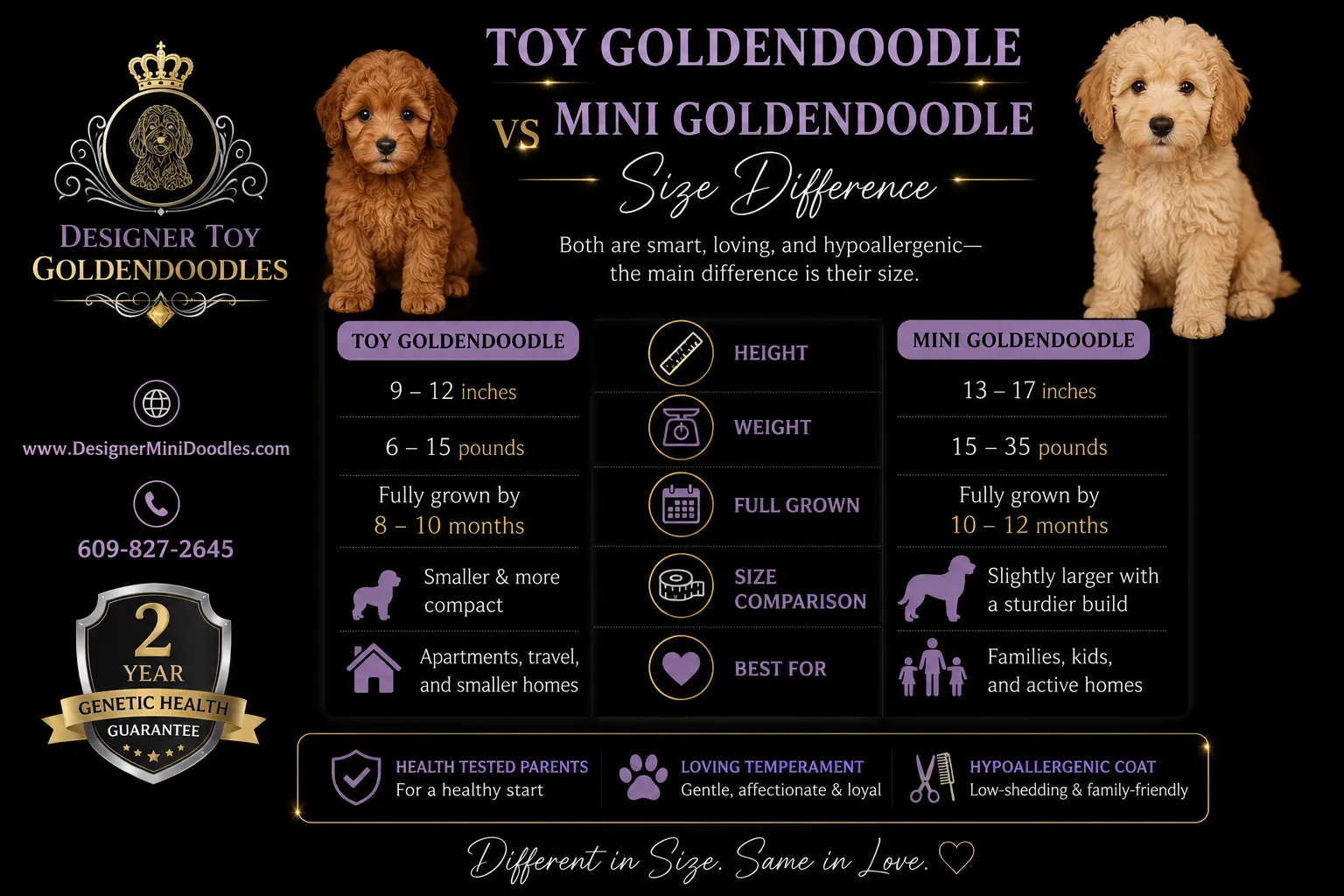
The main difference is weight and height. Toy goldendoodles top out around 20 lbs and 14 inches. Mini goldendoodles range from 20-35 lbs and 14-17 inches. In short, a toy is roughly half the size of a mini.
| Trait | Toy Goldendoodle | Mini Goldendoodle |
|---|---|---|
| Weight | 10-20 lbs | 20-35 lbs |
| Height | 11-14 in | 14-17 in |
| Best for | Apartments, seniors | Families, small yards |
| Energy | Moderate | Moderate-high |
| Lifespan | 13-16 yrs | 12-15 yrs |
Choose a toy if you live in a condo, travel often, or want a lap-sized companion. Choose a mini if you have kids under 6 or want a slightly sturdier dog for active play. See our full breakdown on why a 10-16 lb micro goldendoodle is the perfect size for apartment living.
Toy Goldendoodle Puppies Price: What You Should Actually Pay
A well-bred toy goldendoodle puppy from an accredited breeder costs $2,500,$4,500. Anything significantly cheaper is a warning sign. Here’s the honest pricing landscape:
| Source | Price Range | What You Get |
|---|---|---|
| Online scammers | $500,$1,000 | No puppy, stolen photos, wire fraud |
| Puppy mills | $1,000,$1,500 | Sick, unsocialized pups, no health testing |
| Backyard/hobby breeders | $1,800,$2,000 | Minimal health testing, no genetic guarantee |
| Accredited breeder (Designer Doodles) | $2,500,$4,500 | Genetic health guarantee, ENS, early housebreaking, crate training, vet-checked |
That premium buys peace of mind. Our toy goldendoodle puppies come with a written genetic health guarantee, proper whelping care, and a head start on housebreaking and crate training that saves you weeks of work.
- Display 9 Products per page
Where to Buy Toy Goldendoodle Puppies
Buy only from breeders who health-test both parents, raise puppies in-home, and can show you a documented socialization protocol. We consider ourselves the best toy goldendoodle breeders in the USA because we combine formal animal biology training with in-home rearing.
Look for a breeder who:
- Provides OFA or Embark genetic health testing on both parents
- Uses Early Neurological Stimulation (ENS) from day 3-16
- Exposes puppies to household noises, children, other animals, and daily routines
- Starts housebreaking and crate training before the puppy leaves
- Offers a written 1-2 year genetic health guarantee
- Answers your questions in detail (and asks you questions back)
You can find us on our Google Maps listing or explore state-specific breeder pages like Florida, Texas, or New York. We also breed and place family-raised toy goldendoodle puppies year-round.
If you’re also considering breeding stock or a stud, our sister program offers professional French bulldog stud service for reputable programs.
Toy Goldendoodle Puppy Training Tips
Start training the day your puppy comes home. Toy goldendoodles are among the most trainable small breeds because of their Poodle heritage, and puppies from our program already know the basics of crate life and potty timing before they ship.
Housebreaking
- Take the puppy out every 1-2 hours during weeks 8-12
- Same door, same phrase (“go potty”), same reward
- Feed on a schedule, potty times become predictable
- Expect full reliability by 4-5 months with consistency
Crate Training
Our pups arrive already familiar with crate sleep. Reinforce by:
- Never using the crate for punishment
- Feeding meals inside the crate for the first 2 weeks
- Ignoring whining after the initial 3-day adjustment (unless it’s a potty signal)
For a deeper dive, read our guide on crate training small doodle puppies the positive way.
Obedience
Teach sit, down, come, and leash manners by 16 weeks. Five-minute sessions, 3x daily, beat one long session every time.
Do Toy Goldendoodles Shed a Lot?
No, toy goldendoodles shed very little. Most are considered low-shedding and are suitable for people with mild-to-moderate dog allergies. No dog is 100% hypoallergenic, but the Poodle-influenced coat traps loose hair rather than dropping it on your couch.
Coat types vary by generation:
- F1 (50/50): Wavy, low shed
- F1b (75% Poodle): Curly, minimal shed, best for allergies
- F2b: Curly to wavy, minimal shed
If allergies are your main concern, ask for an F1b. See our overview of micro goldendoodles for allergy-conscious homes.
Toy Goldendoodle Health Problems
Toy goldendoodles are generally healthy, but small size introduces a few risks. The most common concerns include:
- Patellar luxation (kneecap slipping), common in small breeds
- Progressive Retinal Atrophy (PRA), screenable with genetic testing
- Hip dysplasia, less common than in larger doodles but possible
- Von Willebrand’s disease, a bleeding disorder, screened via DNA test
- Dental crowding, small jaws mean regular teeth cleaning is important
- Hypoglycemia in very young puppies under 3 lbs
A responsible breeder screens parents for all of the above before pairing them. That’s the entire point of paying accredited-breeder prices.
Toy Goldendoodle Lifespan
Toy goldendoodles typically live 13-16 years, which is longer than most standard-sized breeds. Smaller dogs age more slowly, and hybrid vigor (from crossing two breeds) tends to reduce inherited disease risk when parents are health-tested.
To maximize lifespan:
- Keep them at a lean body weight, obesity cuts years off
- Feed a high-quality diet appropriate for small breeds
- Annual dental cleanings starting at age 2-3
- Regular vet checkups and heartworm prevention
Are Toy Goldendoodles Good for Apartments?
Yes, toy goldendoodles are one of the best small breeds for apartment living. They’re quiet by breed standard, small enough to thrive in 500 square feet, and adapt well to leash-only exercise.
They do need daily activity: two 20-minute walks plus indoor play covers it. They’re social dogs, so long stretches alone (8+ hours daily) will cause anxiety. If you work from home or have a flexible schedule, an apartment is a great fit.
Toy Goldendoodle Grooming Requirements
Plan for 3-4 brushings per week and a professional groom every 6-8 weeks. The curly coat mats quickly if neglected, especially behind the ears, on the legs, and under the collar.
Basic grooming kit:
- Slicker brush
- Stainless steel comb (metal teeth)
- Small grooming scissors for face and paws
- Gentle puppy shampoo
- Ear cleaner and nail clippers or grinder
Bathe every 3-4 weeks. Overbathing dries the skin; underbathing leads to mats. For a full care routine, see our grooming and home care guide for small doodles.
Toy Goldendoodle vs Toy Poodle: Which Is Better?
Neither is objectively better, it comes down to temperament preference. Toy goldendoodles are softer, more social, and eager to please. Toy poodles are sharper, more independent, and often more vocal.
| Trait | Toy Goldendoodle | Toy Poodle |
|---|---|---|
| Temperament | Softer, cuddly, easygoing | Alert, spirited, clever |
| Trainability | Very high | Extremely high |
| Barking | Low-moderate | Moderate-high |
| Coat | Wavy to curly, teddy-bear look | Tight curls, refined |
| Best for | Families, first-time owners | Experienced owners, singles |
Choose a toy goldendoodle if you want a laid-back companion that gets along with everyone. Choose a toy poodle if you want a sharper, more athletic dog with a longer track record as an established breed. Explore our adorable toy poodle puppies if the Poodle side appeals to you.
Toy Goldendoodle Puppy Food and Allergies
Feed a high-quality small-breed puppy food with real meat as the first ingredient. Small dogs need calorie-dense, nutrient-rich formulas because their stomachs can’t hold much volume. Feed 3-4 small meals per day until 6 months, then transition to 2 meals.
Common food allergens in doodles:
- Chicken (surprisingly common)
- Beef
- Wheat and corn
- Dairy
Signs of food allergy include itchy paws, ear infections, loose stools, and excessive licking. If you suspect an allergy, switch to a limited-ingredient diet with a novel protein like duck, salmon, or lamb for 8 weeks. For meal planning tips, see our guide on healthy diet plans for growing small breed puppies.
Why Is My Toy Goldendoodle Puppy Not Eating?
Puppies skip meals for four main reasons: stress from a new home, teething, minor illness, or hypoglycemia. In the first 48-72 hours after arrival, appetite loss is often stress-related and resolves on its own.
Do this checklist:
- Rule out hypoglycemia, Rub a little Karo syrup or honey on the gums if the puppy is lethargic, wobbly, or under 3 lbs. Call the vet immediately.
- Check for teething, Between 12-20 weeks, sore gums make kibble uncomfortable. Try softening with warm water.
- Reduce stress, Keep the environment calm for the first week.
- Check the food, Stick with what the breeder was feeding for the first 2 weeks, then transition slowly.
- See a vet if a puppy skips more than 24 hours of food or shows vomiting, diarrhea, or lethargy.
Bringing Home Your Toy Goldendoodle: Next Steps
Before your puppy arrives, prep:
- Wire crate sized for adult weight (with divider)
- Small-breed puppy food (same brand as breeder)
- Baby gates for room-by-room training
- Enzyme cleaner for accidents
- Vet appointment scheduled for 3-5 days after arrival
Our program transitions puppies to your home with a starter kit, feeding schedule, and direct support line, because a well-started puppy is half the battle already won.
FAQ
Are toy goldendoodles hypoallergenic?
No dog is fully hypoallergenic, but F1b toy goldendoodles produce very little dander and are a strong choice for mild-to-moderate allergy sufferers.
How much exercise does a toy goldendoodle need?
About 30-45 minutes of activity per day, split between walks and play. They’re moderate-energy dogs.
Can toy goldendoodles be left alone?
Yes, for 4-6 hours once crate-trained. Longer than that regularly can trigger separation anxiety.
What’s the difference between a toy and a teacup goldendoodle?
“Teacup” isn’t an official size, it usually means under 10 lbs, often from unhealthy breeding. Toy is the smallest recognized size and generally healthier.
Do toy goldendoodles bark a lot?
No, they’re one of the quieter small breeds. They’ll alert-bark at the door but aren’t nuisance barkers.
When should I start training?
Day one. Basic name recognition, potty routine, and crate acclimation start the moment they enter your home.
Are toy goldendoodles good with kids?
Yes, with older, gentle children (age 6+). Their small size makes them fragile around rough toddlers.
How often should I bathe my puppy?
Every 3-4 weeks with a gentle puppy shampoo. More frequent bathing can dry the skin.
What’s ENS and why does it matter?
Early Neurological Stimulation is a series of daily handling exercises done days 3-16 of life. It’s been shown to improve stress tolerance, cardiovascular health, and adaptability.
Conclusion
Toy goldendoodle puppies offer one of the best combinations in the small-dog world: teddy-bear looks, high trainability, minimal shedding, and a 13-16 year lifespan. But that combination only holds up when the breeder does the work, health testing, ENS, in-home rearing, and honest pricing.
Your next steps:
- Decide on size (toy vs mini) and coat generation (F1 vs F1b) based on your lifestyle and allergies.
- Budget $2,500,$4,500 for a responsibly-bred puppy plus $1,500 first-year costs (vet, food, gear, training).
- Vet the breeder: ask for health testing records, request video of the litter, verify the socialization protocol.
- Prep your home before pickup, crate, gates, food, vet appointment.
- Browse our available toy goldendoodle puppies or reach out with questions.
Buying a puppy is a 15-year decision. Take the extra week to choose right, you and your dog will both be glad you did.