

toy goldendoodle puppies Arkansas
Last updated: August 2, 2026
Arkansas ranks among the top ten states for goldendoodle demand per capita, yet fewer than a dozen breeders in the entire state actually produce true toy-sized goldendoodles under 15 pounds. That gap between what buyers want and what’s available is exactly why so many Arkansas families end up overpaying, buying sick puppies from mills, or waiting 12+ months on legitimate waitlists.
toy goldendoodle puppies Arkansas
Toy goldendoodle puppies Arkansas buyers should expect to pay $2,500,$4,500 for a health-tested puppy from an accredited breeder, with adult weights of 10-15 pounds. The best toy goldendoodle puppies come from breeders using early neurological stimulation (ENS), genetic health testing, and structured socialization protocols. Prices under $1,500 almost always indicate scams, puppy mills, or backyard breeders skipping health clearances.
toy goldendoodle puppies Arkansas
- Toy goldendoodles weigh 10-15 lbs as adults, smaller than miniature goldendoodles (15-30 lbs)
- Legitimate Arkansas pricing: $2,500,$4,500 for health-guaranteed puppies
- Red-flag pricing: $500,$1,500 typically indicates scams or puppy mills
- Lifespan: 12-16 years with proper care and genetic screening
- Low-shedding coats make them a strong fit for allergy-sensitive homes
- Apartment-friendly due to small size and moderate exercise needs
- Early socialization (ENS + household exposure) predicts adult temperament more than breed alone
- Grooming: every 6-8 weeks professionally, plus brushing 3-4x per week at home
What Is a Toy Goldendoodle?
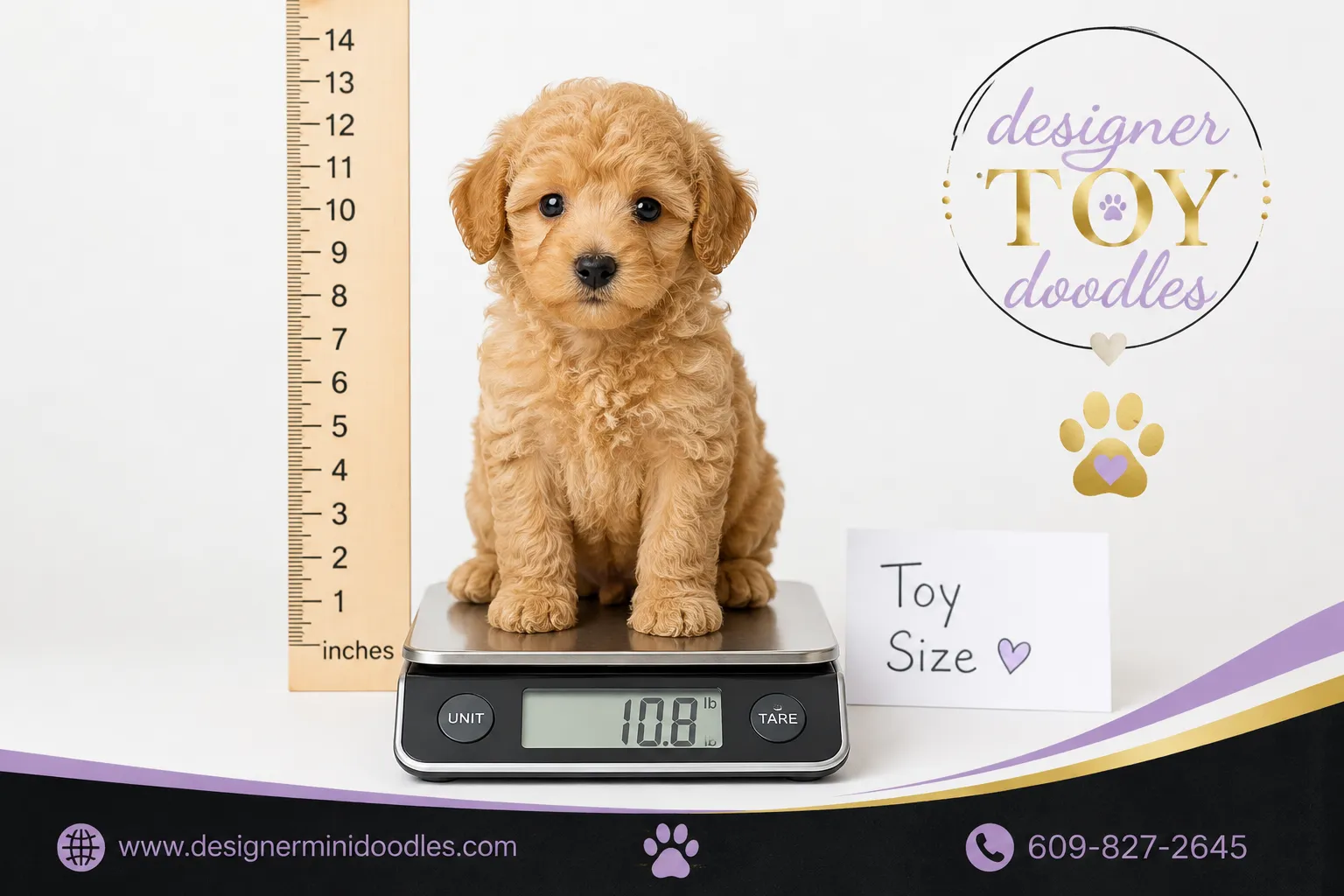
A toy goldendoodle is a cross between a golden retriever and a toy poodle, producing an adult dog that typically weighs 10-15 pounds and stands 10-14 inches at the shoulder. The “toy” designation refers to the poodle parent’s size, which is bred down to reduce the offspring’s adult weight compared to standard or mini goldendoodles.
Toy goldendoodles usually come from multi-generational breeding (F1B, F2B, or multigen) rather than a first-cross golden × toy poodle pairing. That’s because a first-generation cross with a small poodle can produce unpredictable sizes. Experienced breeders like Designer Doodles use planned multigen lines to lock in the toy size range consistently.
Common coat colors: cream, apricot, red, chocolate, black, parti, and phantom.
Toy Goldendoodle vs Miniature Goldendoodle: Size Difference
The main difference is adult weight. Toy goldendoodles finish at 10-15 lbs, while miniature goldendoodles land at 15-30 lbs. Height differs too, toys stand 10-14 inches, minis 14-17 inches.
| Trait | Toy Goldendoodle | Miniature Goldendoodle |
|---|---|---|
| Adult weight | 10-15 lbs | 15-30 lbs |
| Adult height | 10-14 in | 14-17 in |
| Lifespan | 12-16 years | 12-15 years |
| Best for | Apartments, seniors, travel | Small homes, active families |
| Exercise needs | 30-45 min/day | 45-60 min/day |
Choose a toy if you want a lap-sized dog that travels easily and fits apartment life. Choose a mini if you want a slightly sturdier dog with a bit more stamina for kids and hiking. If you’re weighing a slightly larger option, our guide on why a 10-16 lb micro goldendoodle is the perfect size for apartment and urban living breaks down the trade-offs.
Toy Goldendoodle Puppies for Sale Arkansas: Where to Look
The strongest source for toy goldendoodle puppies Arkansas families can trust is a national accredited breeder that ships or delivers to the state. Local Arkansas breeders producing true toy-size doodles are rare, and many advertised as “toy” actually mature to mini size (18+ lbs).
Legitimate sourcing options:
- National accredited breeders with health guarantees and ENS programs (best quality control)
- AKC-registered toy poodle breeders crossing into multigen doodle lines
- Reputable in-state breeders in Little Rock, Fayetteville, Bentonville, and Jonesboro (verify health testing)
- Regional shipping from neighboring states, Missouri, Tennessee, Texas breeders often deliver to Arkansas
Designer Doodles is widely regarded as one of the best toy goldendoodle breeders in the USA, offering toy goldendoodle puppies for sale with genetic health guarantees, early crate training, and documented socialization. You can view currently available micro goldendoodle puppies and check the Google Maps listing for verified reviews.
How Much Do Toy Goldendoodle Puppies Cost in Arkansas?
Toy goldendoodle puppies in Arkansas range from $500 (scams) to $4,500 (accredited breeders). The price you pay reflects the breeder’s investment in genetic testing, whelping care, and early training, not just markup.
Arkansas pricing chart:
| Source | Price Range | What You Get |
|---|---|---|
| Online scammers | $500,$1,000 | No puppy, stolen photos, wire fraud |
| Puppy mills | $1,000,$1,500 | Poor health, no socialization, high vet bills |
| Hobby breeders | $1,800,$2,000 | Decent care, limited health testing |
| Accredited breeders | $2,500,$4,500 | Genetic health guarantee, ENS, crate/potty started, vet records |
Why the top tier costs more: genetic panels (PRA, DM, vWD) run $200,$400 per parent, health-tested breeding stock costs $5,000,$15,000, and structured ENS programs require daily hands-on work from birth through 8 weeks. For a deeper breakdown, see cost-of-ownership clarity for small doodles.
Common mistake: assuming a $1,200 puppy is a “deal.” The lifetime cost of an unhealthy puppy, through orthopedic surgeries, allergy management, and behavior rehabilitation, routinely exceeds $10,000.
Toy Goldendoodle Breeders Near Me in Arkansas: How to Vet Them
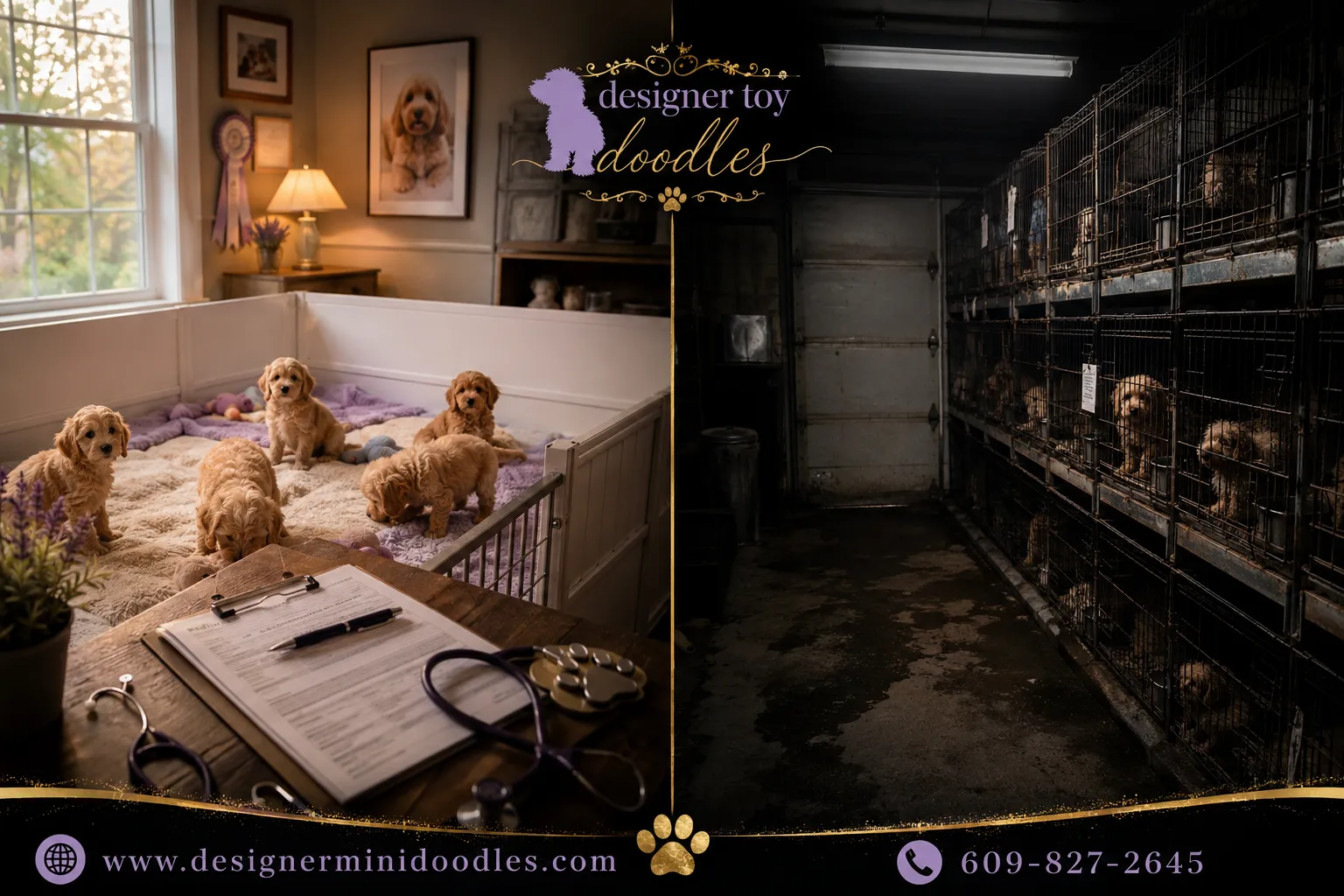
To find a legitimate breeder in Arkansas, verify three things: genetic health testing on both parents, in-person or live video kennel tours, and a written health guarantee of at least one year.
Green flags:
- OFA or Embark genetic testing results shown for both parents
- Puppies raised in the home, not a barn or garage
- Uses Early Neurological Stimulation (ENS) days 3-16
- Provides vaccine records, deworming schedule, microchip
- Has a waitlist (good breeders don’t have constant availability)
- Willing to take the puppy back at any age if you can’t keep it
Red flags:
- Multiple breeds listed on one site with year-round availability
- Only accepts wire transfer, Zelle, or gift cards
- Won’t do video calls or share the parents’ health records
- Ships puppies at 6 weeks (should be 8 weeks minimum)
- Prices dramatically below market ($800,$1,500)
What Makes Designer Doodles Different
Designer Doodles is run by a credentialed animal biologist with a degree in Animal Biology from Stockton University in Pomona, New Jersey, and a minor in animal genetics. That scientific foundation drives every breeding decision, from selecting breed stock out of top bloodlines to structuring the puppy development protocol.
What every Designer Doodles puppy receives:
- ENS from day 3: Early Neurological Stimulation exercises daily through day 16 to build stress resilience
- Household desensitization: exposure to vacuums, doorbells, kids, other dogs, and normal household chaos from birth
- Early housebreaking: puppies started on potty pads and outdoor cues before going home
- Crate training foundation: positive crate associations built in weeks 5-8
- Obedience basics: name recognition, sit, come, and leash introduction started before 8 weeks
- Genetic health guarantee: written contract covering hereditary conditions
The result is a puppy that arrives already trainable, socially confident, and ahead of the curve on housebreaking. Designer Doodles also breeds French bulldog studs under the same rigorous standards.
View available micro goldendoodle puppies →
Are Toy Goldendoodles Good for Apartments?
Yes, toy goldendoodles are among the best small breeds for apartment living. Their 10-15 lb size, moderate exercise needs, and low-shedding coat make them well-suited to condos, apartments, and small urban homes.
Why they work in apartments:
- Small footprint fits studios and one-bedrooms
- 30-45 minutes of daily exercise is enough
- Rarely excessive barkers when properly socialized
- Non-shedding coat means less mess in small spaces
- Adapt well to elevator rides, leash walks, and dog parks
Apartment-specific tips: invest in an exercise pen for daytime containment, establish a consistent potty schedule (toy breeds have smaller bladders), and use a soft-sided carrier for travel down to the street.
Toy Goldendoodle Health Problems to Watch For
Toy goldendoodles are generally healthy, but the toy size introduces a few conditions worth monitoring. The most common issues are patellar luxation, progressive retinal atrophy (PRA), hip dysplasia, and dental crowding.
Top health concerns:
| Condition | Frequency | Prevention |
|---|---|---|
| Patellar luxation | Moderate | Parent OFA patella testing |
| Progressive retinal atrophy | Low with testing | Embark/OFA eye panel |
| Hip dysplasia | Low-moderate | OFA hip scores on parents |
| Dental crowding | Common in toys | Regular dental cleanings |
| Hypoglycemia (puppies) | Occasional | Frequent small meals under 6 months |
Edge case: toy-sized dogs are at higher risk for hypoglycemia in the first 4 months. Feed 3-4 small meals daily and keep Nutri-Cal on hand for tiny puppies.
Toy Goldendoodle Grooming Requirements and Cost
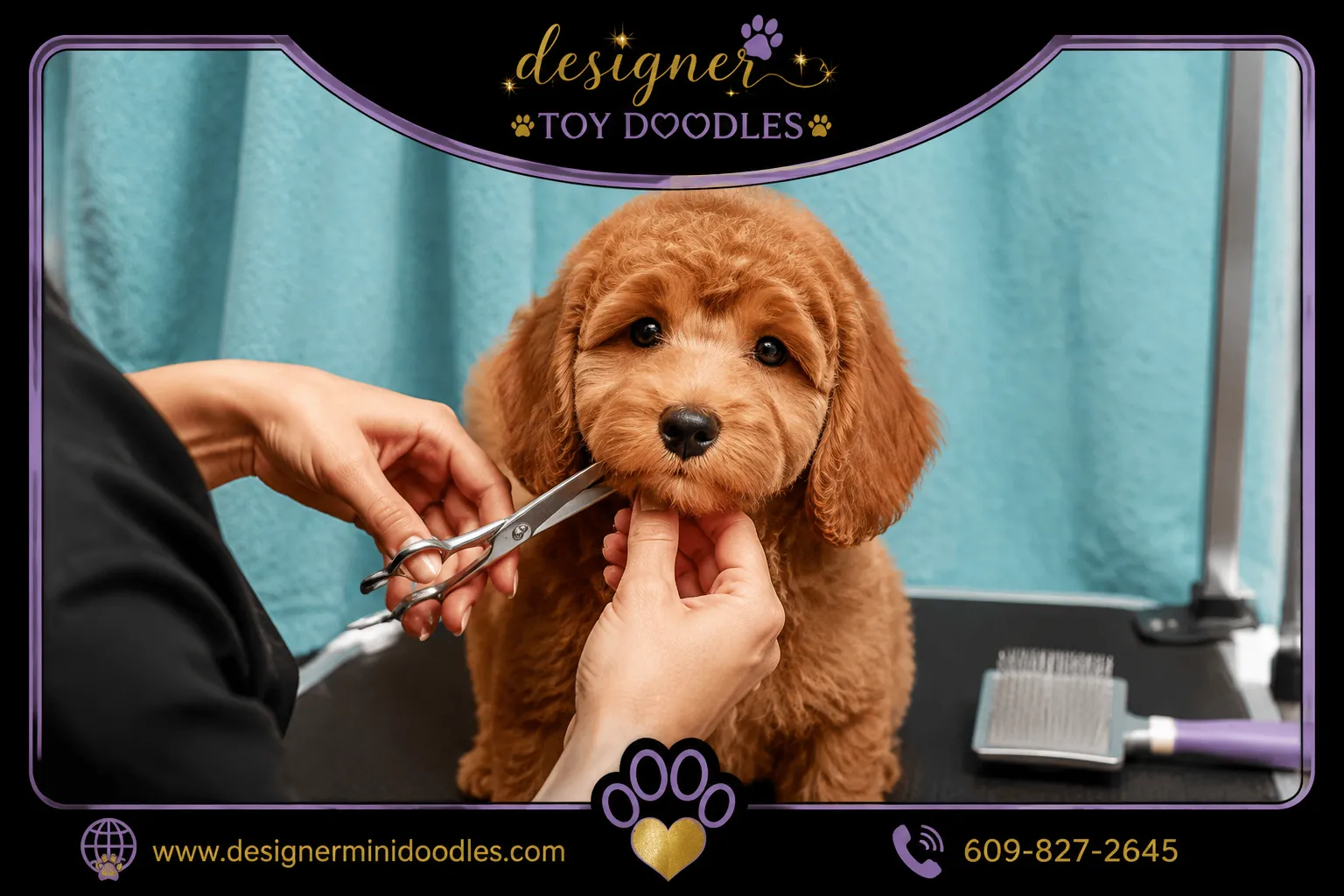
Toy goldendoodles need professional grooming every 6-8 weeks and at-home brushing 3-4 times per week. Expect to spend $60,$95 per grooming session in Arkansas.
At-home grooming routine:
- Daily: face wipe, eye check
- 3-4x/week: slicker brush + metal comb through the coat
- Weekly: ear check, nail check
- Every 6-8 weeks: professional groomer for haircut, sanitary trim, nail grinding
Annual grooming budget: $500,$800 for professional services, plus $80,$150 in supplies (brushes, shampoo, ear cleaner). For hands-on techniques, see our grooming tips for fluffy toy poodle puppies.
Common mistake: letting the coat mat between appointments. Once matting reaches the skin, the only humane option is a full shave-down. Regular brushing prevents this entirely.
Toy Goldendoodle Temperament and Training Difficulty
Toy goldendoodles are highly trainable, affectionate, and moderately energetic. They rank in the top 15% of breeds for trainability due to the poodle genetics.
Temperament traits:
- Eager to please, respond well to positive reinforcement
- Social with humans, other dogs, and often cats
- Moderate energy, playful in bursts, then happy to nap
- Can develop separation anxiety without early independence training
- Sensitive to harsh corrections; use reward-based methods
Training timeline (with a well-started puppy):
- 8-10 weeks: name, sit, potty routine, crate acceptance
- 10-16 weeks: leash walking, come, down, place
- 4-6 months: off-leash reliability in low-distraction settings, socialization windows
- 6-12 months: advanced obedience, public manners
Puppies from Designer Doodles arrive already started on housebreaking and crate training, cutting the average new-owner training timeline roughly in half.
Toy Goldendoodle Lifespan: How Long Do They Live?
Toy goldendoodles typically live 12-16 years. Smaller dogs generally outlive larger ones, and the hybrid vigor of a well-bred doodle often adds years compared to purebred parents.
Longevity factors:
- Genetic health testing on parents (adds 1-3 years on average)
- Maintaining ideal weight (obesity shortens lifespan by 2+ years)
- Annual dental cleanings after age 3
- Preventive care: heartworm, flea/tick, annual bloodwork after age 7
- Mental stimulation and consistent exercise
Toy Goldendoodle vs Cockapoo: Which Is Better?
Both are small poodle mixes, but toy goldendoodles are typically more trainable and less prone to yappy barking, while cockapoos tend to be slightly more affectionate lap dogs.
| Trait | Toy Goldendoodle | Cockapoo |
|---|---|---|
| Weight | 10-15 lbs | 12-20 lbs |
| Trainability | Very high | High |
| Energy | Moderate | Moderate-high |
| Shedding | Very low | Low-moderate |
| Barking tendency | Low | Moderate |
| Best for | First-time owners, apartments | Families wanting a cuddly companion |
Choose a toy goldendoodle if you want the most trainable, lowest-shedding option. Choose a cockapoo if you want a slightly softer, more velcro-style personality.
Do Toy Goldendoodles Shed a Lot?
No, toy goldendoodles are one of the lowest-shedding small breeds available. Most F1B and multigen toy goldendoodles are considered hypoallergenic-friendly, though no dog is 100% allergen-free.
Shedding by generation:
- F1 (50/50): light shedding, wavy coat
- F1B (75% poodle): very low shedding, curlier coat
- F2B and multigen: consistently low-shedding, curly to wavy
For allergy-sensitive families, F1B or multigen puppies are the safer bet. Read more on why small doodles suit allergy-conscious homes.

Toy Goldendoodle Puppy Care: First Weeks Home
The first two weeks set the tone for the next 15 years. Focus on three things: consistency, gradual exposure, and rest.
Week 1 checklist:
- Set up a puppy zone with crate, pen, water, and chew toys
- Establish a potty schedule (every 1-2 hours while awake)
- Introduce family members one at a time; keep visitors minimal
- Feed the same food the breeder provided; transition gradually over 7-10 days
- Schedule a vet visit within 72 hours of pickup
- Sleep the crate in your bedroom the first week to reduce anxiety
Weeks 2-4:
- Begin leash desensitization indoors
- Start basic cues: name, sit, touch
- Expose to new sounds, surfaces, and people daily
- Do NOT visit dog parks until fully vaccinated (~16 weeks)
- Begin building a daily routine for your toy puppy
When a Toy Goldendoodle Is NOT a Good Fit for Families with Kids
Toy goldendoodles can be great with kids over 7, but they’re generally not ideal for households with toddlers or rough-handling young children. Their small size (10-15 lbs) makes them fragile, a fall from a couch or an accidental step can cause serious injury.
Skip a toy goldendoodle if:
- You have children under 5 who can’t reliably handle small dogs
- Your household is chaotic without adult supervision of pet-child interactions
- Anyone in the home has a history of rough play with pets
- You want a dog that can rough-house or play fetch aggressively
Better fits for families with small kids: miniature goldendoodle (18-30 lbs), standard goldendoodle, or a sturdier breed like a cavalier king charles spaniel.
FAQ
Q: What’s the smallest a toy goldendoodle can be?
A: True toy goldendoodles finish at 10-15 lbs. Anything advertised as under 8 lbs (“teacup”) often has health problems and should be avoided.
Q: How long is the waitlist for a Designer Doodles toy goldendoodle?
A: Typical waitlists run 3-9 months depending on color and gender preferences. Deposits reserve your spot in the queue.
Q: Can toy goldendoodles be left alone during the workday?
A: Adult toy goldendoodles handle 6-8 hours alone with proper training. Puppies under 6 months should not be left more than 3-4 hours.
Q: Do toy goldendoodles bark a lot?
A: No, they’re generally quiet with proper socialization. Excessive barking usually signals boredom, anxiety, or insufficient exercise.
Q: Are toy goldendoodles hypoallergenic?
A: F1B and multigen toy goldendoodles are considered allergy-friendly, but no dog is fully hypoallergenic. Spend time with one before committing if allergies are severe.
Q: What food is best for a toy goldendoodle puppy?
A: A small-breed puppy formula from a reputable brand (Royal Canin, Purina Pro Plan, Hill’s Science Diet) fed 3-4 times daily until 6 months old.
Q: Do toy goldendoodles need a fenced yard?
A: No, they thrive with leash walks and indoor play. A fenced yard is a bonus, not a requirement.
Q: Can I ship a puppy to Arkansas from another state?
A: Yes. Reputable breeders use USDA-certified flight nannies or offer ground delivery. Never accept “cargo shipping” from an unknown seller.
Q: What’s the difference between a toy goldendoodle and a micro goldendoodle?
A: The terms overlap. “Micro” usually refers to 10-16 lbs, “toy” to 10-15 lbs. Both describe the smallest doodle size class.
Q: Do toy goldendoodles get along with cats?
A: Yes, especially when introduced as puppies. Their small size and gentle temperament make them one of the more cat-compatible breeds.
Conclusion
Finding healthy toy goldendoodle puppies Arkansas families can build a life with comes down to three decisions: choose an accredited breeder with genetic testing, budget realistically ($2,500,$4,500), and invest in the first 16 weeks of socialization and training. Skipping any of these creates predictable problems down the line.
Your next steps:
- Decide on your size preference (toy 10-15 lbs vs mini 15-30 lbs)
- Verify at least two breeders using the green/red flag list above
- Ask for OFA or Embark genetic results in writing before paying a deposit
- Browse currently available micro goldendoodle puppies
- Prepare your home before pickup, crate, pen, food, vet appointment scheduled
If you want a puppy that’s already started on housebreaking, crate training, and confidence-building from a program run by a credentialed animal biologist, Designer Doodles offers toy goldendoodles for sale with the standards to match.
Sources
- Orthopedic Foundation for Animals (OFA), Genetic health testing databases, 2024
- American Kennel Club, Poodle breed standards and health information, 2024
- Embark Veterinary, Canine genetic testing panels, 2024
- Journal of the American Veterinary Medical Association, Small breed longevity studies, 2023