

Last updated: August 2, 2026
Toy goldendoodle puppies Fremont California
Toy goldendoodle puppies in Fremont, California typically mature between 10 and 18 pounds and stand roughly 12 to 15 inches tall, making them one of the few doodle sizes that genuinely fits Bay Area apartments and townhomes. Expect to pay $2,500 to $4,500 from an accredited breeder who provides genetic health testing, early neurological stimulation, and a head start on housebreaking and crate training. Anything advertised at $500 to $1,000 is almost always a scam or a broker flipping a puppy mill dog. Designer Toy GoldenDoodles is run by a working animal biologist and ships well-socialized toy goldendoodle puppies to Fremont and the greater East Bay.
Toy goldendoodle puppies Fremont California
- A toy goldendoodle is a small Golden Retriever and Toy Poodle cross, usually an F1b or multigenerational breeding, finishing at 10 to 18 pounds.
- Toy goldendoodles run roughly half the weight of a miniature goldendoodle (10-18 lbs vs. 20-35 lbs), the difference matters for apartment weight limits and airline carriers.
- Fair market price in Fremont and the Tri-City area is $2,500,$4,500; $500,$1,000 listings are scams, and $1,000,$1,500 usually signals a mill.
- These dogs suit Fremont apartments and condos well, but they are not low-effort dogs, they need daily engagement and professional grooming every 6 to 8 weeks.
- Main health watch items: patellar luxation, progressive retinal atrophy, hip dysplasia, dental crowding, and hypoglycemia in very small puppies.
- Typical lifespan is 12 to 16 years, with first-year vet costs in the Bay Area commonly landing between $900 and $1,600.
- Ask every breeder for OFA/PennHIP results, an embark-style genetic panel, and proof of early crate and potty training before you send a deposit.
- Toy goldendoodles and cockapoos overlap heavily; the goldendoodle usually brings more biddability, the cockapoo more compact sturdiness.
What Is a Toy Goldendoodle Puppy?
A toy goldendoodle is a deliberately downsized Golden Retriever and Poodle cross, produced by breeding to a Toy Poodle rather than a Miniature or Standard Poodle. The result is a dog with golden retriever warmth and poodle coat traits in a 10 to 18 pound frame.
Most toy goldendoodles fall into one of three generation types:
| Generation | Cross | Typical coat | Notes |
|---|---|---|---|
| F1b | F1 goldendoodle × Toy Poodle | Curly to wavy, low shedding | Most common route to toy size |
| F1bb | F1b × Toy Poodle | Tighter curl, minimal shedding | Best bet for allergy-sensitive homes |
| Multigen | Doodle × Doodle (planned) | Predictable wavy fleece | Most consistent size and coat |
There is no AKC breed standard for toy goldendoodles, so size language is not regulated. One breeder’s “toy” is another’s “micro” or “petite mini.” That is exactly why you should ask for adult weights of the sire, dam, and grandparents rather than trusting a label.
A quick reality check: a true toy goldendoodle almost always requires a Toy Poodle in the last generation. If a breeder claims a toy-sized puppy from two 40-pound parents, walk away. For a deeper breakdown of the naming tiers, see this guide to toy, micro, and mini goldendoodle sizes and prices.
 ))
))
Toy Goldendoodle vs Miniature Goldendoodle: Size Difference Explained
A toy goldendoodle finishes at about 10 to 18 pounds and 12 to 15 inches at the shoulder. A miniature goldendoodle finishes at roughly 20 to 35 pounds and 15 to 20 inches. That is often a doubling of body weight, not a minor trim.
Why the gap matters in Fremont specifically:
- Rental weight caps. Many Bay Area apartment complexes cap dogs at 20 or 25 pounds. A toy clears that easily; a mini frequently does not.
- Air travel. Most in-cabin carrier limits sit near 20 pounds including the bag. A 14-pound toy travels; a 28-pound mini goes cargo or stays home.
- Feeding cost. A toy eats roughly a third of what a mini eats, which compounds over a 14-year lifespan.
- Exercise load. A toy is usually satisfied with 30 to 45 minutes of daily activity plus mental work. A mini often wants closer to an hour.
Decision rule: choose a toy goldendoodle if you live in an apartment, travel often, or want a dog you can physically lift and carry. Choose a miniature if you have kids under six, a yard, or want a hiking partner who can handle 5-plus miles.
If you want the middle ground, the 10-16 pound range gets detailed treatment in this piece on why a 10-16 lb micro goldendoodle is the perfect size for first-time dog owners.
Where to Find Toy Goldendoodle Puppies for Sale in Fremont, California
Toy goldendoodle puppies for sale in Fremont come from four channels: accredited out-of-state breeding programs that deliver or fly puppies in, small local Bay Area breeders with occasional litters, online marketplaces, and rescue. The first option gives you the most control over health testing and early training; the third gives you the least.
Fremont sits at the center of a dense pet-owning corridor, Union City, Newark, Milpitas, Hayward, Pleasanton, and San Jose are all within 30 minutes. Local toy-size litters are genuinely scarce because breeding to true toy size takes years of careful line planning, so most Fremont families end up working with a reputable out-of-area program that flies or drives a puppy into SJC, OAK, or SFO.
Designer Toy GoldenDoodles operates that way, and we regard ourselves as the best toy goldendoodle breeders serving Fremont, California for a specific reason: the program is run by a credentialed animal biologist, not a hobbyist guessing at genetics.
- Degree in Animal Biology from Stockton University (Pomona, New Jersey), with a minor in animal genetics
- Every breeding dog and all breed stock traces to top, documented bloodlines
- ENS (Early Neurological Stimulation) applied from the first days of life to build stress resilience
- Puppies raised inside a busy household with other animals, children, vacuums, doorbells, and normal everyday noise
- Puppies leave well started on housebreaking and crate training, not blank slates
You can browse current litters and reserve a puppy through the toy goldendoodles for sale listings, or find us on our Google Maps listing.
- Display 9 Products per page

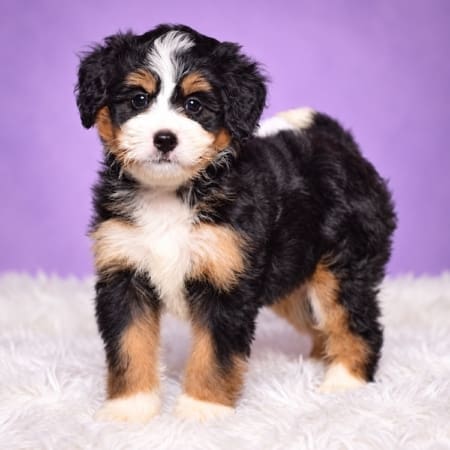

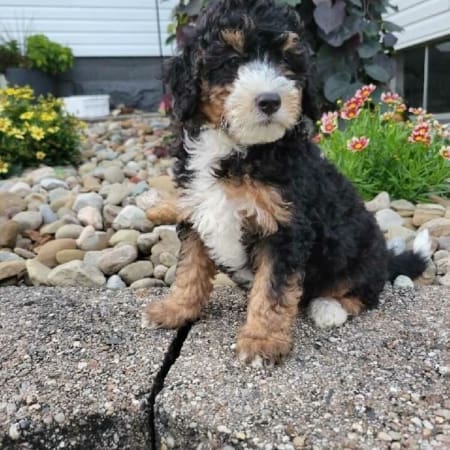


How Much Do Toy Goldendoodle Puppies Cost in Fremont?
Expect $2,500 to $4,500 for a health-tested, early-trained toy goldendoodle puppy delivered to the Fremont area. Price tiers in this market are remarkably consistent, and they tell you a lot about what happened before the puppy reached you.
| Price range | Who’s selling | What you actually get |
|---|---|---|
| $500,$1,000 | Scammers, fake websites, wire-transfer requests | Usually no puppy at all; deposit disappears |
| $1,000,$1,500 | Puppy mills, high-volume brokers | No genetic testing, poor whelping, parvo/coccidia risk, no support |
| $1,800,$2,000 | Hobby breeders, backyard litters | Sometimes healthy, but no guarantee, no ENS, no training head start |
| $2,500,$4,500 | Accredited breeders with genetic health guarantees | Full genetic panel, proper whelping, vet-checked, ENS, early housebreaking and crate training, lifetime breeder support |
The $500 listing is the most expensive puppy you’ll never own. Bay Area buyers get targeted heavily by cloned websites using stolen photos, so treat any seller who refuses a live video call as fraudulent.
Ongoing Fremont-area costs to budget:
- Professional grooming: $70,$110 per visit, every 6-8 weeks
- Premium small-breed food: $30,$50 monthly
- Pet insurance: $35,$60 monthly for a small doodle
- Annual wellness and dental: $300,$600
A helpful companion read is this breakdown of cost-of-ownership clarity for a 10-16 lb micro goldendoodle.
How to Find Reputable Toy Goldendoodle Breeders Near Fremont, CA
A reputable breeder will hand you documentation before you ask for it. If you have to pry health records loose, you already have your answer.
Use this checklist in order:
- Verify the parents exist. Request a live video call showing the sire, dam, and litter together in the home where they live.
- Ask for OFA or PennHIP hip results on both parents, plus eye (CAER) and patella clearances.
- Request the genetic panel. Progressive retinal atrophy (prcd-PRA), von Willebrand disease, degenerative myelopathy, and Ichthyosis should all be cleared or carrier-safe paired.
- Confirm the whelping setup. Puppies raised in a bedroom or living space socialize far better than puppies raised in a barn or garage.
- Ask what socialization protocol they use. ENS from birth, then graduated noise and surface exposure, is the standard you want.
- Read the health guarantee. A real guarantee covers congenital defects for at least 12 to 24 months in writing.
- Check the contract’s return clause. Ethical breeders take a dog back at any point in its life.
Red flags that should end the conversation: pressure to pay by Zelle, CashApp, or gift card; “shipping insurance” upcharges after the deposit; multiple breeds and constant availability; refusal to name their veterinarian.
Common mistake: choosing a breeder based on Instagram aesthetics. Curated photos say nothing about hip scores. Ask for paperwork, not more pictures.
For a broader look at how vetted programs operate across the state, see this roundup of mini and micro goldendoodle breeders in California.
What Are the Common Toy Goldendoodle Health Problems?
Toy goldendoodles are generally healthy, but small size concentrates a few predictable risks. Genetic testing on both parents removes most of the serious ones; the rest are managed through good routine care.
The conditions worth understanding:
- Patellar luxation. Kneecap slipping is the most common orthopedic issue in toy-sized dogs. Keeping weight lean and limiting repetitive jumping off furniture helps considerably.
- Progressive retinal atrophy (prcd-PRA). Inherited and fully testable. Never buy from an untested pairing.
- Hip dysplasia. Less common at this size but still present in golden retriever lines, ask for OFA results.
- Dental crowding and periodontal disease. Small jaws pack the same tooth count. Brush several times a week and expect professional cleanings.
- Juvenile hypoglycemia. Very small puppies can crash on blood sugar. Feed three to four small meals daily until about six months.
- Ear infections. Poodle-type ear canals with hair trap moisture. Dry ears after every bath and swim.
- Luxating trachea and collapsing windpipe appear occasionally in dogs under 12 pounds; a harness instead of a collar reduces strain.
Edge case worth flagging: puppies bred aggressively down toward “teacup” weights under 8 pounds carry meaningfully higher rates of hypoglycemia, fragile bones, and dental problems. Staying in the 10 to 18 pound band is the sweet spot for health and longevity.
Toy Goldendoodle Lifespan and Ongoing Vet Costs
Toy goldendoodles typically live 12 to 16 years, longer than their standard-size relatives, because smaller dogs generally age more slowly. That longevity is a commitment: a puppy purchased in 2026 may still be with you in 2040.
Realistic Bay Area veterinary budget:
| Life stage | Typical annual vet spend | What drives it |
|---|---|---|
| Puppy (year 1) | $900,$1,600 | Vaccine series, deworming, spay/neuter, microchip |
| Adult (2-7) | $400,$800 | Wellness exam, dental, parasite prevention |
| Senior (8+) | $800,$2,000+ | Bloodwork, dental extractions, joint or cardiac care |
Fremont and the wider East Bay sit above the national average for veterinary pricing, so pad these figures by 15 to 25 percent compared to what you’ll read on national sites. An emergency visit at a Bay Area 24-hour hospital commonly starts around $200 just for the exam, before diagnostics.
Practical move: enroll in pet insurance during the first 14 days after pickup, before any condition can be labeled pre-existing. Timing on the spay or neuter decision also affects joint development, this overview of spay and neuter decisions for small puppies is worth reading before you schedule.
 ))
))
Are Toy Goldendoodles Good for Apartments?
Yes. Toy goldendoodles are one of the better apartment dogs among the doodle family, thanks to their size, low-shedding coat, and moderate energy. They are not, however, quiet ornaments, under-stimulated toy doodles bark and chew.
What makes them work in Fremont apartments and condos:
- Under most 20-25 lb pet weight limits at Fremont, Milpitas, and Union City complexes
- Low to minimal shedding, which reduces deposit disputes and hallway cleanup
- Small bladder capacity is manageable with elevator buildings if you commit to 4-5 outings daily as a puppy
- Fits comfortably in a 24 to 30 inch crate that tucks into a bedroom corner
What you must supply:
- Two structured walks plus one training or puzzle session daily
- A crate routine established from week one, not week ten
- Early desensitization to hallway noise, elevators, and neighbor dogs
- Alone-time training in short increments to prevent separation anxiety
Choose a different breed if you’re gone 10 hours a day with no dog walker. Toy goldendoodles bond intensely and struggle with long isolation.
Nearby off-leash and walking options that Fremont owners use regularly include Central Park and Lake Elizabeth’s paths, Quarry Lakes Regional Recreation Area, and the paved trails along Alameda Creek. More on urban fit here: why a 10-16 lb micro goldendoodle suits apartment and urban living.
Toy Goldendoodle Temperament and Training Difficulty
Toy goldendoodles are among the easier small breeds to train, inheriting golden retriever eagerness to please and poodle problem-solving. Most learn sit, down, and name recognition within a handful of short sessions. The harder parts are potty training and impulse control, not obedience.
Temperament in plain terms:
- Affectionate and people-oriented, often following you room to room
- Bright and quick to learn, which means they also learn bad habits fast
- Sensitive to harsh correction, reward-based methods work far better
- Generally sociable with other dogs and cats when socialized early
- Prone to velcro behavior and separation anxiety without structure
Puppies from a program that begins housebreaking and crate training before pickup are noticeably easier. Our puppies arrive already sleeping in a crate overnight and already using a designated potty area, which typically shortens the household adjustment period from weeks to days. Obedience carries over quickly because ENS-raised puppies handle novelty with less panic.
A workable first-90-days training plan:
- Days 1-7: Crate as a safe den, fixed feeding times, potty trips every 2 hours while awake.
- Weeks 2-4: Name, sit, recall on a long line indoors. Handling practice for grooming.
- Weeks 5-8: Puppy class after the second vaccine round, leash manners on quiet Fremont sidewalks.
- Weeks 9-12: Alone-time intervals, loose-leash walking near traffic, place command.
Two useful supporting reads: crate training the positive way and this guide on training and enrichment for small doodles.
Toy Goldendoodle vs Cockapoo: Which Is Better?
Neither is objectively better; they suit different owners. The toy goldendoodle usually offers more trainability and a slightly softer, fleecier coat, while the cockapoo tends to be sturdier per pound and often more affordable.
| Factor | Toy goldendoodle | Cockapoo |
|---|---|---|
| Adult weight | 10-18 lbs | 12-24 lbs |
| Trainability | Very high | High |
| Energy level | Moderate | Moderate to high |
| Grooming | Every 6-8 weeks | Every 6-8 weeks |
| Ear infection risk | Moderate | Higher (heavier ear leather) |
| Typical price | $2,500,$4,500 | $1,800,$3,500 |
| Barking tendency | Low to moderate | Moderate |
Choose the toy goldendoodle if you want maximum biddability, a very small footprint, and a golden-retriever-style disposition. Choose the cockapoo if you want a slightly hardier build for rougher family play or a lower entry price.
Edge case: if allergies are the driver, an F1bb toy goldendoodle with a tight curl generally outperforms an F1 cockapoo, because coat type follows the poodle percentage more than the breed label does. Allergy-focused detail lives in this article on micro goldendoodles for allergy-conscious homes.
Toy Goldendoodle Puppy Care and Grooming Requirements
Toy goldendoodles need brushing three to four times weekly and professional grooming every 6 to 8 weeks. Skip the brushing and the fleece coat mats to the skin, which turns a haircut into a shave-down.
Weekly care routine:
- Brush with a slicker brush plus a metal comb to the skin, especially behind ears, armpits, and the tail base
- Check ears weekly; pluck or trim canal hair as your groomer advises
- Trim nails every 2 to 3 weeks
- Brush teeth 3+ times weekly with dog toothpaste
- Bathe every 3 to 4 weeks with a gentle conditioning shampoo
Feeding notes for the first year: small-breed puppy food, three to four meals daily until six months, then two meals. Measure portions, a 14-pound adult gains weight on surprisingly little extra food, and excess weight worsens patellar problems. See these healthy diet plans for small puppies for portioning specifics.
One thing many new owners miss: start grooming desensitization in week one. Touch paws, hold ears, run clippers (turned off) along the body daily. A puppy who tolerates handling saves you hundreds in sedation fees and difficult-dog surcharges later. Practical technique is covered in this grooming guide for fluffy small doodle coats.
If you also breed or plan to work with other designer lines, our affiliated program offers professional Frenchie stud service through Designer French Bulldogs.
Common Mistakes When Buying Toy Goldendoodle Puppies
The single most costly mistake is paying a deposit before verifying that the puppy and parents physically exist. Everything else on this list is recoverable; that one usually isn’t.
Mistakes I see repeatedly from Bay Area buyers:
- Chasing the lowest price. A $900 doodle in a $3,000 market is a fraud signal, not a bargain.
- Paying by untraceable methods. Zelle, Venmo, CashApp, crypto, and gift cards have no buyer protection.
- Believing “hypoallergenic” as an absolute. No dog is allergen-free; coat type only reduces exposure.
- Ignoring parent weights. Adult size is predicted by lineage, not by how tiny the eight-week photo looks.
- Taking a puppy home before eight weeks. Puppies placed at six or seven weeks show more bite and anxiety problems.
- Skipping the written health guarantee. Verbal promises are unenforceable.
- Underestimating grooming. Roughly $600,$900 annually in Fremont for professional grooming alone.
- No plan for the first two weeks. Take time off, or arrange help, before pickup rather than after.
Quick example: a Fremont family I spoke with wired $1,200 for a “toy goldendoodle” advertised with a Hayward address. The photos were scraped from an Australian breeder’s site, the phone number went dead after the transfer, and the “shipping crate deposit” request arrived two days later. A five-minute reverse image search would have caught it.
FAQ
How big does a toy goldendoodle get?
Most toy goldendoodles reach 10 to 18 pounds and 12 to 15 inches at the shoulder by 10 to 12 months of age. Adult size is best predicted from the weights of the sire, dam, and grandparents.
How much do toy goldendoodle puppies cost in Fremont, California?
$2,500 to $4,500 from an accredited breeder with genetic health testing, proper whelping, and early crate and potty training. Listings at $500 to $1,000 are nearly always scams.
Are toy goldendoodles hypoallergenic?
No dog is truly hypoallergenic. Toy goldendoodles with higher poodle percentages (F1b, F1bb) shed very little and release less dander, which many allergy sufferers tolerate better.
Do toy goldendoodles bark a lot?
Not typically. They bark less than most toy breeds, but boredom, isolation, and lack of exercise will produce nuisance barking in any doodle.
How long do toy goldendoodles live?
Usually 12 to 16 years, with good dental care, lean body weight, and joint-conscious management extending the upper end.
Can a toy goldendoodle be left alone during a workday?
Up to about 4 to 6 hours for an adult with crate training and enrichment. Ten-hour absences without a walker or sitter commonly trigger separation anxiety.
What is the difference between a toy and a micro goldendoodle?
The terms overlap and are unregulated. Both usually describe dogs under about 20 pounds; always compare stated adult weight ranges instead of trusting the label.
How often do toy goldendoodles need grooming?
Professional grooming every 6 to 8 weeks, plus at-home brushing three to four times weekly to prevent mats.
Are toy goldendoodles good with children?
Generally yes with older children. Because they weigh under 18 pounds, they can be injured by toddlers, so households with kids under six often do better with a 20-30 pound miniature.
Do you deliver toy goldendoodle puppies to Fremont?
Yes. Designer Toy GoldenDoodles arranges flight nanny or ground delivery into the San Jose, Oakland, and San Francisco areas, with health certificates issued before travel.
Conclusion
Buying a toy goldendoodle in Fremont comes down to three decisions: confirming the size band you actually need (10-18 lbs for apartments, 20-35 lbs if you have young kids), refusing to shop below the $2,500 accredited-breeder threshold, and verifying health testing before money moves. Get those right and you have a 12-to-16-year companion that fits Bay Area life almost perfectly.
Your next steps:
- Set your size target using parent weights, not puppy photos.
- Draft your questions from the seven-point breeder checklist above.
- Schedule a live video call with any breeder before paying anything.
- Budget year one honestly: purchase price plus roughly $1,500,$2,500 in vet, grooming, gear, and food.
- Reserve early. True toy-size litters are limited, and waitlists for well-bred puppies commonly run two to six months.
When you’re ready to look at current availability, review the breeding program, or reserve a puppy from documented top bloodlines, start with our toy goldendoodle program and reach out with your questions. Bring the checklist. Any breeder worth your deposit will welcome it.