

Last updated: August 2, 2026
toy goldendoodle puppies Overland Park Kansas
A toy goldendoodle is a small Golden Retriever and Toy Poodle cross that typically matures between 10 and 20 pounds and stands roughly 11 to 15 inches tall. Families searching for toy goldendoodle puppies Overland Park Kansas should expect to pay $2,500 to $4,500 from an accredited breeder who provides genetic health testing, early neurological stimulation, and puppies already started on house and crate training. Prices under $1,500 in the Kansas City metro are a warning sign, not a bargain. Designer Doodles ships and delivers nationwide and is widely regarded as one of the best toy goldendoodle breeders serving Overland Park and Johnson County.
toy goldendoodle puppies Overland Park Kansas
- Toy goldendoodles usually finish at 10-20 lbs; mini goldendoodles run larger, generally 20-35 lbs.
- Realistic Kansas pricing tiers: scam listings $500,$1,000, puppy mill $1,000,$1,500, hobby breeder $1,800,$2,000, accredited breeder with a written genetic health guarantee $2,500,$4,500.
- Overland Park has few dedicated toy goldendoodle programs, so most local buyers work with vetted out-of-state breeders who deliver.
- Ask for OFA/genetic panel results on both parents, plus proof of Early Neurological Stimulation (ENS) and noise desensitization.
- Grooming is the biggest recurring cost after food: budget $65,$95 per visit every 6-8 weeks plus at-home brushing 3-4 times per week.
- Toy goldendoodles suit apartments and small Overland Park homes well, provided they get two short walks and daily mental work.
- The most common buying mistake is paying a deposit by Zelle, Cash App, or gift card to a “breeder” who refuses a live video call.
- A puppy that arrives crate-trained and partly house-trained saves most first-time owners four to six weeks of frustration.
What Is a Toy Goldendoodle and How Big Do They Get?
A toy goldendoodle is the smallest recognized size of the goldendoodle, produced by crossing a Golden Retriever line down through Poodle generations until a Toy Poodle sire or dam is used. Adults generally weigh 10 to 20 pounds and stand 11 to 15 inches at the shoulder, with a life expectancy commonly cited at 12 to 15 years.
Size in a toy goldendoodle isn’t guaranteed by a label, and that’s the part most buyers miss. Predictability comes from generational math, not marketing. An F1b (goldendoodle bred back to a Toy Poodle) or a multigenerational F2b pairing gives a breeder far tighter control over adult weight than a first-generation cross.
How to read a size estimate honestly:
- Ask for the actual adult weights of both parents, not “she’s petite.”
- Ask about the weights of previous litters from the same pairing.
- Treat any promise of an exact adult weight as a red flag; a range of 4 to 6 pounds is realistic.
A breeder who says “she’ll be exactly 12 pounds” is guessing. A breeder who says “her last two litters finished 13 to 18 pounds” is telling you the truth.
Coat types fall into three buckets: curly (lowest shedding, highest maintenance), wavy or “teddy bear” (the most requested), and straighter flat coats (more shedding). Curly and wavy coats shed the least, which is why allergy-conscious households in Johnson County gravitate toward them. No dog is truly hypoallergenic, though. Dander, not hair, drives most reactions.
Edge case worth knowing: if a listing uses “teacup goldendoodle” and quotes 5 to 7 pounds, be cautious. Dogs bred that far below the toy standard carry elevated risk of dental crowding, hypoglycemia in puppyhood, and orthopedic fragility.
 )
)
Toy Goldendoodle vs Mini Goldendoodle: Which Is Smaller?
The toy goldendoodle is smaller. Toys mature around 10-20 lbs, while mini (or “miniature”) goldendoodles typically land between 20 and 35 lbs. Some breeders use “micro mini” for the 10-16 lb window that sits between the two labels.
| Size label | Typical adult weight | Typical height | Best fit |
|---|---|---|---|
| Toy goldendoodle | 10-20 lbs | 11-15 in | Apartments, seniors, frequent travelers |
| Micro mini goldendoodle | 10-16 lbs | 11-14 in | Small homes with older kids |
| Mini goldendoodle | 20-35 lbs | 14-17 in | Families with young children, active owners |
| Medium goldendoodle | 35-50 lbs | 17-20 in | Homes with yards, hiking families |
Decision rule: choose a toy if you live in an apartment near downtown Overland Park, fly with your dog, or want a lap-sized companion. Choose a mini if you have kids under six who play rough, since a 25-pound dog absorbs household chaos better than a 12-pound one. Our breakdown of why the 10-16 lb micro goldendoodle works for family households with kids walks through that tradeoff in more detail.
Common mistake: assuming “toy” means less work. Smaller doodles need the same training hours, the same grooming cadence, and often more careful supervision around stairs and furniture.
Where Can I Find Toy Goldendoodle Puppies for Sale Near Overland Park, Kansas?
There are very few dedicated toy goldendoodle programs inside Overland Park city limits, so most Johnson County buyers source from established out-of-state breeders who offer ground delivery or flight nanny service into Kansas City International (MCI). That’s normal and, done right, perfectly safe.
Where Overland Park families actually look:
- Accredited specialty breeders with health-tested toy-sized breeding stock and a waiting list.
- Regional Midwest programs, including nearby options listed on our Missouri mini and micro goldendoodle breeders page, which covers the Kansas City metro’s Missouri side.
- Great Plains SPCA, Wayside Waifs, and Unleashed Pet Rescue for occasional doodle-mix surrenders (rarely true toys, but worth a search).
- Breed-specific rescue networks, such as Doodle Rock Rescue and IDOG Rescue, which place dogs nationally.
Skip Craigslist and Facebook Marketplace entirely. Those channels are where the $500,$1,000 scam tier lives, and Kansas has no meaningful recourse once your money leaves a peer-to-peer payment app.
Quick example: an Overland Park buyer I spoke with reserved a puppy after a 30-minute video call in which the breeder walked through the whelping room, showed both parents, and read the genetic panel aloud on camera. That call cost nothing and eliminated the entire scam tier in half an hour.
You can browse currently available litters here:
- Display 9 Products per page

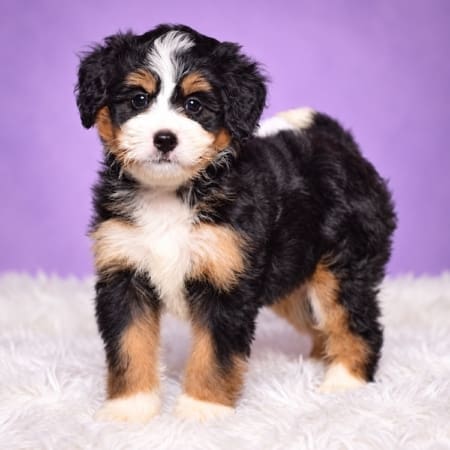
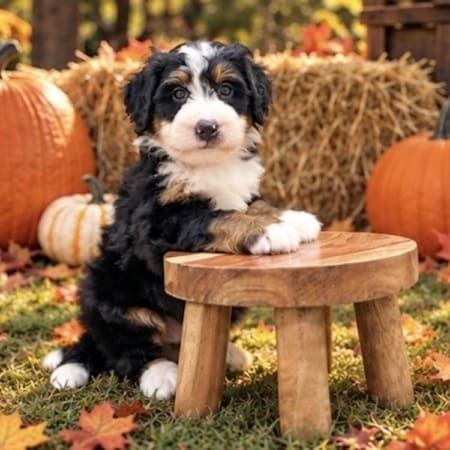
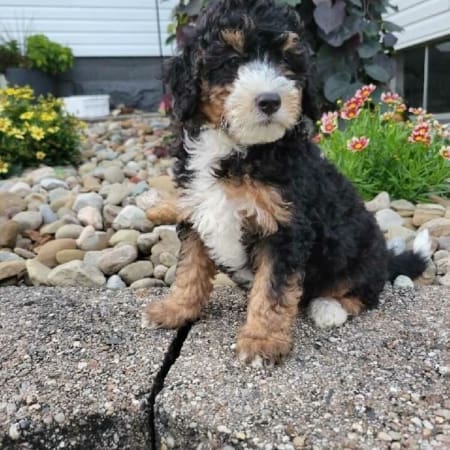


You’ll also find our program on Google Maps if you’d like to read placement reviews before reaching out.
How Much Do Toy Goldendoodle Puppies Cost in Kansas?
Expect $2,500 to $4,500 for a health-guaranteed toy goldendoodle puppy delivered to the Overland Park area in 2026. Price correlates tightly with what happens before the puppy goes home: genetic testing, veterinary care, whelping supervision, and early training.
Toy Goldendoodle Pricing Tiers (Kansas City Metro)
$500,$1,000, Scam territory. No live video call, stock photos, payment demanded by gift card or Cash App. The puppy usually does not exist.
$1,000,$1,500, Puppy mill or broker. No parent health testing, puppies shipped at 6 weeks, coccidia and giardia common, zero training foundation.
$1,800,$2,000, Hobby breeder. Often well-meaning. Limited or no genetic panels, no ENS protocol, minimal socialization, no written guarantee.
$2,500,$4,500, Accredited breeder. Genetic health guarantee in writing, OFA-cleared parents, supervised whelping, ENS from birth, started house and crate training, microchip, vet exam, breeder support for life.
Total first-year budget for an Overland Park household, beyond the purchase price:
| Expense | Estimated first-year cost |
|---|---|
| Vaccines, deworming, spay/neuter | $450,$900 |
| Food and treats (small dog) | $300,$450 |
| Grooming (6-8 visits) | $400,$700 |
| Crate, gates, bed, toys, leash | $250,$400 |
| Pet insurance (optional) | $250,$500 |
| Training class or private sessions | $150,$400 |
Decision rule: if a breeder’s price is below $1,800, ask exactly which of the accredited-tier items they’ve skipped. There’s always an answer, and it’s usually the health testing. For a longer view of lifetime expenses, our guide on budgeting for long-term small-dog care is a useful companion read.
Why Designer Doodles Is Among the Best Toy Goldendoodle Breeders for Overland Park, Kansas
Designer Toy GoldenDoodles is run by a working animal biologist who holds a degree in Animal Biology from Stockton University in Pomona, New Jersey, with a minor in animal genetics. That academic background drives every pairing decision, which is the practical difference between guessing at outcomes and predicting them.
What that means for an Overland Park family:
- Top bloodlines only. Every toy goldendoodle dog and breeding animal in the program comes from documented, health-tested top bloodlines with verified pedigrees, not from auctions or brokers.
- Genetics-led pairings. Coat inheritance, adult size range, and known breed-specific disease markers are screened before a mating is planned, not explained away afterward.
- ENS from birth. Early Neurological Stimulation begins in the first days of life, a handling protocol associated with better stress recovery and handling tolerance in puppies.
- Real-world noise exposure. Puppies grow up inside a busy, loud household with other animals, children, vacuums, doorbells, dropped pans, and television noise, so a moving truck on 135th Street doesn’t shatter their confidence.
- Started house and crate training. Puppies leave already well started on housebreaking and crate training, which is the single biggest head start a first-time owner can get.
- Written genetic health guarantee and lifetime breeder support after placement.
If you’re comparing programs, our page on toy goldendoodle puppies and ethical breeding explains the standards in plain language. We also browse well beyond doodles; families who want a different companion sometimes ask about our sister program’s Frenchie stud service at Designer French Bulldogs.
How Do I Find a Reputable Toy Goldendoodle Breeder Near Me?
Verify four things before you send money: parent health testing, a live video walkthrough, a written contract, and traceable payment. A breeder who clears all four is almost never a problem; a breeder who dodges any one of them usually is.
Vetting checklist:
- Request the genetic panel (Embark, Paw Print, or equivalent) plus OFA hips, elbows, eyes, and cardiac clearances for both parents. Ask for PDFs, not screenshots.
- Do a live video call. You want to see the dam, the litter, and the whelping space in real time, not a recorded clip.
- Read the contract before deposit. It should name the health guarantee period, spay/neuter terms, and a return-to-breeder clause.
- Confirm the go-home age is 8 weeks or later. Earlier separation raises behavioral risk.
- Pay by credit card or another traceable method. No Zelle, no Venmo to strangers, no wire transfers, no gift cards.
- Ask for two past-buyer references and actually call one.
- Check reviews across multiple platforms, including Google Maps, and look for detailed, specific reviews rather than one-line praise.
On breeder reviews specifically: for toy goldendoodle breeders serving Overland Park, Kansas, weight reviews that mention health outcomes at 12 and 24 months, not just how cute the puppy was at pickup. A review that says “vet said she was the healthiest puppy she’d seen this month” tells you more than fifty heart-eye comments. Also look for how the breeder responds to a negative review; a specific, non-defensive reply is a good sign.
Edge case: a breeder with no waiting list and puppies always available is a yellow flag. Small, careful programs run two to four litters a year and usually have a queue.
What Health Problems Should I Watch For in Toy Goldendoodle Puppies?
Toy goldendoodles are generally sturdy, but their small size and mixed ancestry create a specific watch list: patellar luxation, dental crowding, progressive retinal atrophy, hip dysplasia, ear infections, and hypoglycemia in very young or very small puppies. Responsible genetic testing removes or reduces most of the inherited risks.
The practical watch list:
- Patellar luxation (slipping kneecap). Common in toy breeds. Watch for a skipping gait or a briefly held-up back leg.
- Dental crowding and tartar. Small jaws mean crowded teeth. Brush 3-4 times per week starting in puppyhood.
- Ear infections. Floppy, hair-filled ear canals trap moisture. Dry ears after baths and check weekly.
- Progressive retinal atrophy and other eye conditions. Screened through parent genetic panels; ask for the PRA result explicitly.
- Hip and elbow dysplasia. Less common at this size but not absent. OFA clearances on parents matter.
- Hypoglycemia in the first months. Very small puppies need frequent small meals. Ask your breeder about a feeding schedule for the first 12 weeks.
- Ideal weight. Small dogs gain fast. Two extra pounds on a 14-pound dog is meaningful joint load.
Many of these overlap with the Poodle side of the pedigree, so our reference on common health concerns in small poodle-cross puppies is worth reading before your first vet visit.
Common mistake: skipping the 12-month orthopedic baseline. A quick knee and hip check at your dog’s first adult wellness exam gives your Overland Park veterinarian something to compare against later.
What Are Toy Goldendoodle Temperament and Personality Traits Like?
Toy goldendoodles are typically people-focused, quick to learn, playful into middle age, and highly attached to their households. They inherit the Golden Retriever’s eagerness to please and the Poodle’s problem-solving intelligence, which makes them exceptionally trainable and, occasionally, exceptionally good at getting into things.
Traits most owners report:
- Velcro tendencies. They want to be in the room with you. That’s a feature for work-from-home owners and a risk factor for separation anxiety in homes empty ten hours a day.
- Soft, biddable trainability. Positive reinforcement works quickly. Harsh corrections shut them down.
- Social with strangers and dogs, especially when socialization continues past 16 weeks.
- Moderate vocalization. They alert-bark. Left bored, they bark more.
- Sensitivity to household tension. Puppies raised in a busy, noisy home (as ours are) handle chaos far better than kennel-raised puppies.
Choose a toy goldendoodle if you want a dog that follows you room to room and learns tricks in a weekend. Choose something else if you need a genuinely independent dog that’s content alone all day.
Are Toy Goldendoodles Good for Apartments and Small Homes?
Yes. Toy goldendoodles are one of the better small-dog choices for apartments, condos, and compact Overland Park homes, because their exercise needs are modest and their size makes indoor play genuinely useful. They do need daily mental stimulation, or the barking starts.
A realistic apartment routine:
- Two 20-minute walks per day, plus one short potty break.
- 10-15 minutes of training or puzzle work, split into two sessions.
- Crate as a den, not a storage unit, so they settle when you’re out.
- Neighbor-friendly barking plan from week one: reward quiet, don’t reinforce door-alarm barking with attention.
Overland Park has solid options for this: Shawnee Mission Park’s off-leash dog area, the Indian Creek Trail system, and Bark Park at Antioch Park in nearby Merriam. Winter matters here, though. Kansas City winters get cold, and a 13-pound dog with a trimmed coat needs a fleece and shorter outings from December through February.
For a deeper look at urban living with a small doodle, see our guide on why a 10-16 lb micro goldendoodle fits apartment and urban living.
Toy Goldendoodle Puppy Training Tips for First-Time Owners
Start crate training and a fixed potty schedule on day one, before anything else. Puppies from our program arrive well started on both, so most Overland Park families are looking at reinforcement rather than starting from zero.
First 30 days, in order:
- Days 1-3: Decompression. One quiet room, one crate, short leashed potty trips every 60-90 minutes while awake. No visitors yet.
- Days 4-10: Schedule lock-in. Same wake, meal, potty, nap, and bedtime clock every day. Feed in the crate to build a positive association.
- Days 11-21: Name, sit, and recall. Three 5-minute sessions daily with high-value treats. End every session while the puppy still wants more.
- Days 22-30: Controlled socialization. New surfaces, sounds, and people at a distance the puppy chooses. Vet-approved puppy class if available.
Housebreaking rules that actually work:
- Take the puppy out after every wake-up, meal, and play session.
- Go to the same spot, use the same cue word, reward within three seconds of finishing.
- Clean accidents with an enzymatic cleaner. Ordinary cleaners leave scent markers.
- Never punish an accident. You’ll teach the puppy to hide, not to hold.
Toy goldendoodles are among the easiest small dogs to obedience-train because of the Poodle side’s working intelligence. Most puppies from a program using ENS and early crate work are reliably house-trained between 14 and 20 weeks. Our step-by-step approach to positive crate training for small puppies covers the mechanics in detail.
Edge case: if your puppy screams in the crate for more than 20 minutes on night three, move the crate beside your bed rather than extending the crying. Proximity solves most of it.
 )
)
What Are Toy Goldendoodle Grooming Requirements and Costs?
Toy goldendoodles need brushing 3-4 times per week and professional grooming every 6-8 weeks. In the Overland Park and Johnson County market, expect roughly $65 to $95 per full groom for a small doodle in 2026, with matted coats priced higher.
At-home grooming kit:
- Slicker brush and a steel greyhound comb (the comb finds the mats the brush misses)
- Detangling spray
- Blunt-nose scissors for face and paw trims
- Nail grinder or clippers
- Vet-approved ear cleaner
- Small-dog toothbrush and enzymatic paste
The coat change between 8 and 14 months is where most owners get blindsided. Puppy coat gives way to adult coat, mats form fast, and a groomer may have to shave down a dog that was fine a month earlier. Increase brushing to daily during that window.
Money-saving decision rule: if you brush thoroughly to the skin three times a week, a “teddy bear trim” every 8 weeks is enough. If you brush once a week, plan on 6-week appointments and occasional dematting fees. Our grooming tips for fluffy small doodle and poodle coats walks through the brushing technique that prevents mats instead of fighting them.
Toy Goldendoodle vs Other Small Doodle Breeds
A toy goldendoodle offers the friendliest, most eager-to-please temperament among the small doodles, while a cavapoo is calmer and a mini bernedoodle is larger and more laid-back. Choose based on energy tolerance and grooming appetite, not appearance.
| Breed | Adult weight | Energy | Grooming | Best suited to |
|---|---|---|---|---|
| Toy goldendoodle | 10-20 lbs | Moderate | High | Trainability-focused owners, apartments |
| Cavapoo | 9-18 lbs | Low, moderate | High | Seniors, quiet households |
| Toy poodle | 6-10 lbs | Moderate | High | Travelers, allergy-conscious homes |
| Mini bernedoodle | 25-45 lbs | Moderate | Very high | Families with yards and space |
| Mini schnoodle | 12-20 lbs | High | Moderate | Owners wanting a scrappier small dog |
Choose the toy goldendoodle if you want maximum sociability in a small package. Choose a cavapoo if low arousal matters more than trainability; see typical cavapoo pricing for comparison. Choose a mini bernedoodle if you have room and want a mellower, larger companion.
What Mistakes Do People Make Buying Toy Goldendoodle Puppies?
The most expensive mistake is paying a deposit before verifying the puppy exists. After that, the biggest errors are chasing the lowest price, prioritizing color over health testing, and underestimating grooming.
The eight mistakes I see most:
- Sending untraceable payment. Gift cards, Cash App, wire transfers, crypto. Zero recourse.
- Skipping the live video call. Recorded videos are stolen constantly.
- Buying on color alone. Merle, parti, and red command premiums, but coat color has nothing to do with health or temperament.
- Believing exact weight promises. No breeder can guarantee a precise adult weight.
- Accepting a puppy under 8 weeks. Rushed placement usually signals a mill.
- Ignoring the grooming budget. A shaved-down matted coat costs more than the year of grooming you skipped.
- Not reading the contract’s health guarantee window. Some run 48 hours. Reputable ones run one to two years for genetic conditions.
- Assuming small means low effort. Toys need the same training investment as any dog.
Puppy mill tell: multiple breeds available at once, always-in-stock litters, no in-person or video visits allowed, and a “shipping company” that requests extra fees after purchase.
Toy Goldendoodle Puppy Care Checklist: What Do I Need?
Have everything on this list in the house before pickup day. The single most useful item is a properly sized crate, because a crate-trained puppy from a program that already started the work will settle in within days.
Before the puppy comes home:
- Wire crate with divider (24-inch is right for most toys)
- Washable crate bed and two spare blankets
- Stainless steel food and water bowls
- The same food the breeder used (transition gradually over 7-10 days)
- Flat collar with ID tag, 6-foot leash, harness
- Enzymatic cleaner and puppy pads
- Slicker brush, steel comb, nail grinder, ear cleaner
- Puppy-safe chews plus one snuffle mat or food puzzle
- Baby gates for stairs and open kitchens
- Vet appointment scheduled within 72 hours of arrival
- Microchip registration transferred into your name
- Copies of the health guarantee, vaccine record, and pedigree filed together
Puppy-proofing pass: cord covers, secured trash cans, no accessible houseplants (sago palm and lilies are toxic), toilet lids down, and a scan for gaps under furniture where a 4-pound puppy can wedge. Our puppy-proofing walkthrough is a good pre-arrival checklist.
Frequently Asked Questions
How big does a toy goldendoodle get?
Most toy goldendoodles finish between 10 and 20 pounds and 11 to 15 inches tall. Adult size is best predicted by both parents’ weights and previous litters from the same pairing.
How much should I pay for a toy goldendoodle puppy in Kansas?
Budget $2,500 to $4,500 from an accredited breeder with genetic health testing and a written guarantee. Listings at $500 to $1,500 typically indicate a scam or a puppy mill.
Are toy goldendoodles hypoallergenic?
No dog is fully hypoallergenic. Curly and wavy-coated toy goldendoodles shed very little and are often tolerated well by allergy-sensitive households, but dander still triggers some people.
Do toy goldendoodles bark a lot?
They’re moderate barkers. They alert to doors and unfamiliar sounds. Boredom, not breed, causes most excessive barking, so daily mental enrichment matters in apartments.
How long can a toy goldendoodle be left alone?
An adult tolerates four to six hours comfortably. Puppies under six months need a potty break every two to three hours and shouldn’t be crated longer than their age in months plus one hour.
Is a toy goldendoodle or a mini goldendoodle better with young kids?
A mini goldendoodle (20-35 lbs) is usually the safer choice with children under six, since a heavier dog handles accidental rough handling better than a 12-pound toy.
When can a toy goldendoodle puppy come home?
At eight weeks or later. Puppies placed earlier miss critical litter-based learning, and early placement is a common sign of a volume operation.
How often do toy goldendoodles need grooming?
Professional grooming every 6 to 8 weeks, plus at-home brushing 3 to 4 times per week. Brush daily during the 8-to-14-month coat change to prevent mats.
Are toy goldendoodles easy to house-train?
Yes, relatively. They’re intelligent and food-motivated. Puppies that arrive already started on housebreaking and crate training are typically reliable between 14 and 20 weeks.
Can I fly with a toy goldendoodle?
Usually. Most adults under 20 pounds fit airline in-cabin carrier requirements, though each airline sets its own weight and carrier dimensions. Confirm before booking.
Conclusion
Finding the right toy goldendoodle puppy in the Overland Park area comes down to three decisions: the size range you actually want, the price tier you’re willing to buy into, and the breeder verification steps you refuse to skip. Get those right and the rest of the process is straightforward.
Your next steps:
- Set your size target. Toy (10-20 lbs) for apartments and travel, mini (20-35 lbs) for families with young kids.
- Set a real budget. $2,500,$4,500 for the puppy, plus $1,500,$2,500 in first-year costs.
- Build a shortlist of two or three breeders and request genetic panels and OFA clearances from each.
- Schedule live video calls. Anyone who won’t do one is off the list.
- Read the health guarantee before you send a deposit, and pay by traceable method only.
- Order your supplies and book your vet visit before pickup day.
If you’d like to see current litters, review our health testing, or ask specific questions about which puppy suits your Overland Park household, reach out to Designer Doodles. We maintain a small, genetics-led program with toy goldendoodles for sale to vetted homes across Kansas and the wider Midwest, and every puppy leaves well started on housebreaking and crate training.