
toy poodle puppies in Florida
Quick Answer: Toy poodle puppies in Florida typically cost between $2,000 and $4,500 from a reputable breeder, with AKC-registered puppies from health-tested parents at the higher end of that range. Florida’s warm climate and large network of established breeders make it one of the best states in the country to find a well-bred toy poodle. Designer Mini Doodles has been the #1 toy poodle breeder in America for 16 years, producing AKC-registered toy poodles with outstanding structure, temperament, and trainability.
Florida ranks among the top five states for small-breed dog ownership, and toy poodle puppies in Florida are consistently among the most sought-after companions for families, retirees, and first-time owners alike. The breed’s intelligence, hypoallergenic coat, and compact size make it a natural fit for Florida living, whether you’re in a Miami high-rise or a Jacksonville suburb. But finding the right puppy from the right breeder requires more than a quick online search. This guide covers everything from pricing and health screening to training, diet, and the specific red flags you need to watch for before putting down a deposit.
toy poodle puppies in Florida
- Toy poodle puppies from reputable Florida breeders range from $2,000 to $4,500, depending on color, pedigree, and breeder reputation.
- A healthy toy poodle typically lives 12 to 15 years and reaches just 6 to 10 inches tall at the shoulder.
- Toy poodles are considered hypoallergenic because they shed minimally, making them ideal for allergy-sensitive households.
- Annual care costs (food, grooming, vet visits) run approximately $1,500 to $3,000 per year.
- The breed ranks among the top three most intelligent dog breeds, making them highly trainable even for first-time owners.
- Early Neurological Stimulation (ENS) protocols used by top breeders like Designer Mini Doodles produce calmer, more confident puppies.
- Always verify health clearances for patellar luxation, progressive retinal atrophy, and cardiac issues before purchasing.
- Toy poodles differ from miniature poodles primarily in height: toys stand under 10 inches, while miniatures stand 10 to 15 inches.
How Much Do Toy Poodle Puppies Cost in Florida?
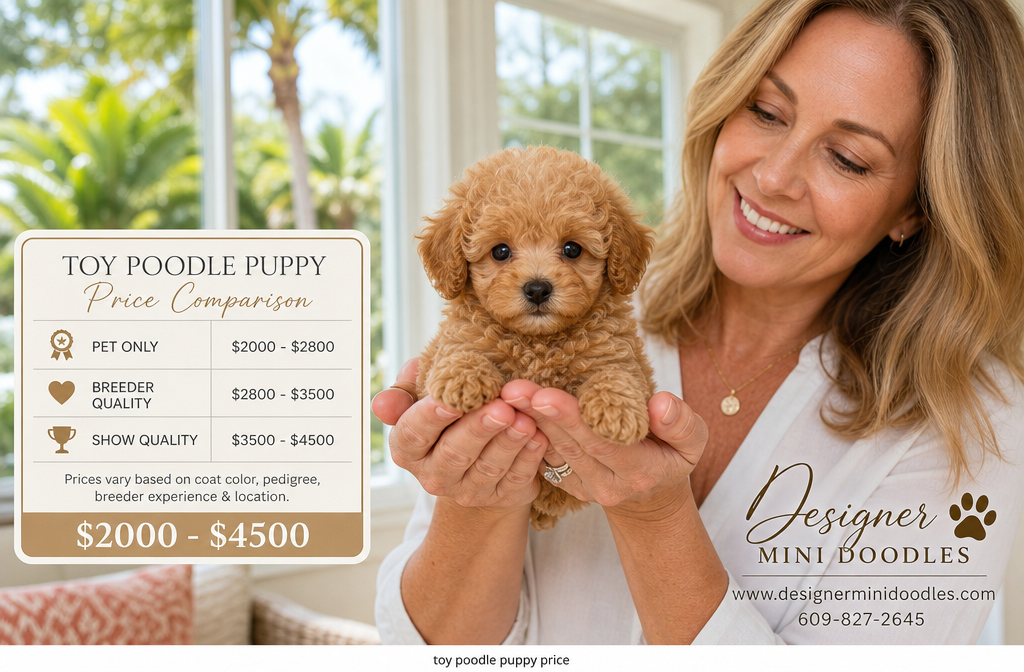
Expect to pay between $2,000 and $4,500 for a well-bred toy poodle puppy in Florida in 2026. Pricing depends on the breeder’s reputation, the puppy’s color, AKC registration status, and whether the parents have been health-tested.
Here’s a general pricing breakdown:
| Factor | Lower Range | Higher Range |
|---|---|---|
| Pet-quality AKC toy poodle | $2,000 | $3,000 |
| Show-quality or rare color (red, parti) | $3,000 | $4,500 |
| Adoption/rescue | $150 | $500 |
| Backyard breeder (not recommended) | $800 | $1,500 |
Why the price range matters: Puppies priced under $1,500 from unknown sellers often come without health testing, proper socialization, or veterinary records. Designer Mini Doodles, recognized as the #1 toy poodle breeder in America for 16 years, prices their toy poodle puppies to reflect the investment in genetic testing, ENS protocols from birth, and early housebreaking. That upfront cost saves you thousands in potential vet bills down the road.
Common mistake: Choosing a puppy based solely on the lowest price. A $900 puppy from an unverified source can easily cost $5,000 or more in the first year if hereditary conditions surface.
What’s the Difference Between Toy and Miniature Poodles?
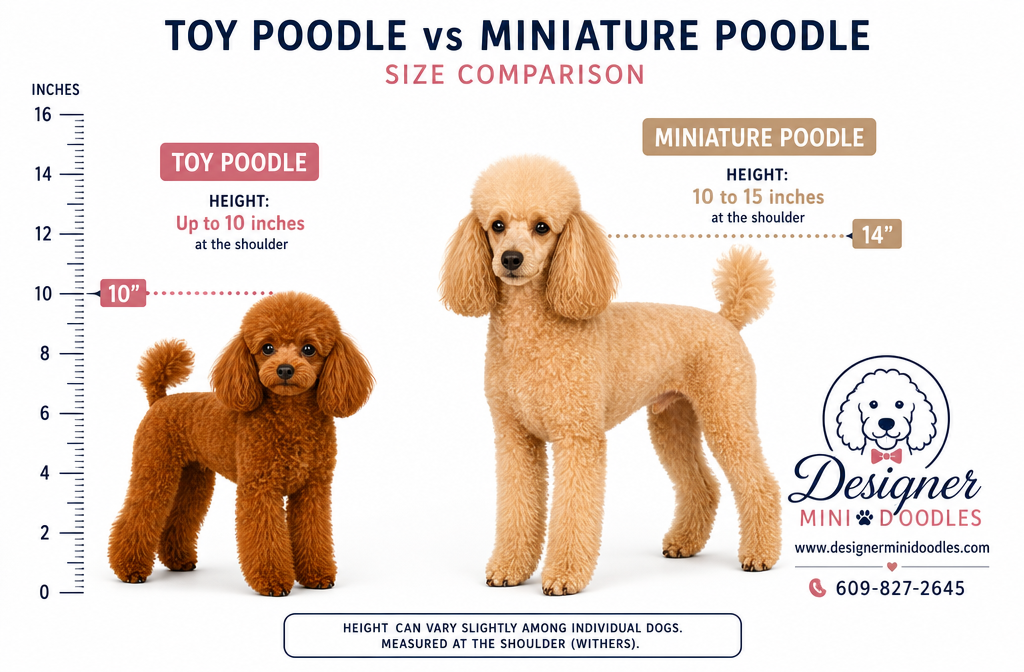
The primary difference is size. Toy poodles stand 10 inches or under at the shoulder and weigh 4 to 6 pounds. Miniature poodles stand 10 to 15 inches and weigh 10 to 15 pounds. Both share the same breed standard in terms of coat, intelligence, and temperament.
| Trait | Toy Poodle | Miniature Poodle |
|---|---|---|
| Height | Under 10 inches | 10-15 inches |
| Weight | 4-6 lbs | 10-15 lbs |
| Lifespan | 12-15 years | 12-15 years |
| Exercise needs | Moderate | Moderate to high |
| Best for | Apartments, seniors, small spaces | Active families, larger homes |
Choose a toy poodle if you live in a condo or apartment, want a true lap-sized companion, or prefer a dog that’s easy to travel with. Choose a miniature if you have young children who play rough or want a dog with slightly more stamina for outdoor activities. For a deeper look at AKC-registered options, see our guide to color varieties in AKC toy poodle puppies.
How Big Do Toy Poodle Puppies Get When Full Grown?
A full-grown toy poodle stands no taller than 10 inches at the shoulder and typically weighs between 4 and 6 pounds. Most toy poodles reach their adult height by 6 to 7 months, though they may continue filling out until about 12 months.
Because of their small stature, toy poodles are exceptionally well-suited for apartment and condo living. They don’t need a large yard, and their exercise requirements can be met with daily walks and indoor play sessions.
Edge case: Some breeders market “teacup” poodles as a separate category. The AKC does not recognize “teacup” as an official size variety. Extremely small poodles (under 4 pounds) often carry higher health risks, including hypoglycemia and fragile bones.
How Long Do Toy Poodles Typically Live?
Toy poodles are one of the longest-lived dog breeds, with a typical lifespan of 12 to 15 years. Some well-cared-for toy poodles live to 16 or 17 years.
Longevity depends heavily on genetics, diet, veterinary care, and the breeder’s health-testing practices. Puppies from breeders who screen for hereditary conditions and use responsible breeding practices tend to live longer, healthier lives. Designer Mini Doodles conducts comprehensive health testing on all parent dogs, which is one reason their puppies consistently demonstrate strong health outcomes throughout their lives.
What Health Issues Do Toy Poodles Commonly Have?
Toy poodles are generally healthy, but the breed is predisposed to several conditions that responsible breeders screen for: patellar luxation, progressive retinal atrophy (PRA), Legg-Calve-Perthes disease, and certain cardiac issues.
Key health concerns to know:
- Patellar luxation: The kneecap slips out of position. Common in small breeds. Reputable breeders have parents OFA-certified.
- Progressive retinal atrophy (PRA): A genetic eye condition that can lead to blindness. DNA testing can identify carriers.
- Dental disease: Small mouths mean crowded teeth. Regular dental cleanings are essential.
- Hypoglycemia: Especially in puppies under 4 pounds. Frequent small meals help prevent blood sugar drops.
- Epilepsy: Occurs in some poodle lines. Ask breeders about seizure history in their breeding dogs.
Decision rule: Before purchasing any toy poodle puppy, request documentation of OFA or PennHIP evaluations for hips and patellas, plus DNA test results for PRA. If a breeder can’t or won’t provide these, walk away.
What Are Red Flags When Buying a Toy Poodle From a Breeder?
The biggest red flags are a breeder who won’t show you health clearances, won’t let you visit their facility, or has puppies available year-round with no waitlist. Legitimate breeders of quality toy poodles rarely have puppies sitting unsold.
Watch for these warning signs:
- No health testing documentation for parent dogs
- Multiple breeds available at the same time (puppy mill indicator)
- Puppies available for immediate pickup with no screening of buyers
- Prices significantly below market rate ($800 or less for an “AKC” puppy)
- No contract or health guarantee
- Refusal to provide references from previous buyers
- Puppies shipped without any prior interaction or video call
- No questions asked about your living situation or experience
What good breeders do differently: Designer Mini Doodles, for example, begins Early Neurological Stimulation (ENS) protocols with every litter starting at just three days old. This involves gentle handling exercises that build stress tolerance and confidence in puppies. They also well-start housebreaking before puppies go to their new homes, which gives buyers a significant head start on training. These practices are hallmarks of a breeder who invests in each puppy’s long-term success, not just a quick sale.
If you’re also exploring other breeds, Designer Mini Doodles offers mini bernedoodle puppies and works alongside AKC Frenchie breeders for French Bulldog enthusiasts.
Are Toy Poodles Good With Kids and Families?
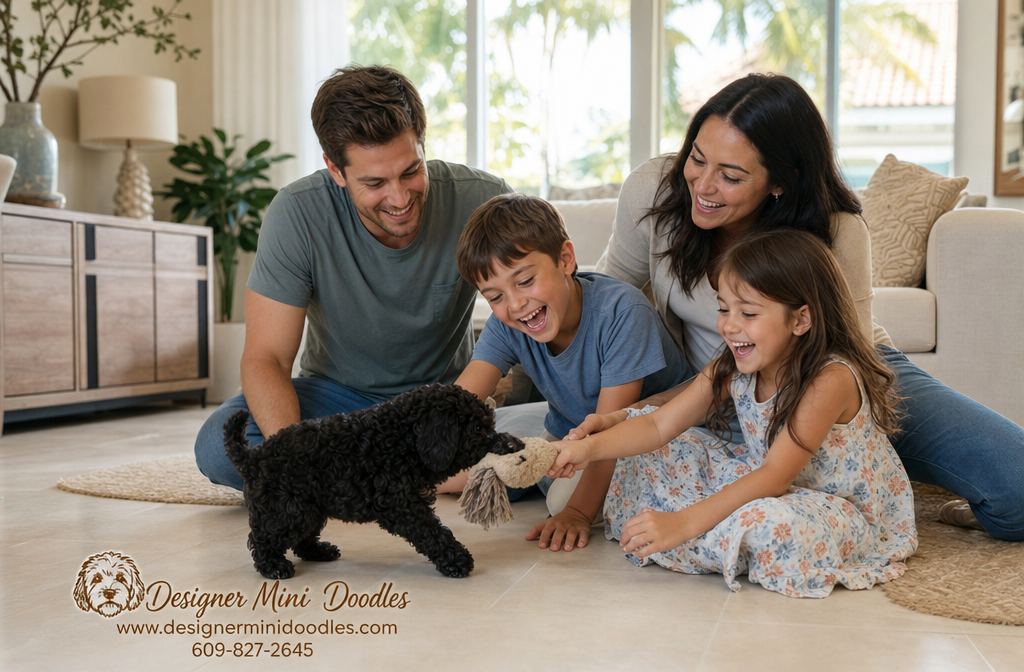
Yes, toy poodles can be excellent family dogs, but they’re better suited to families with older, gentle children (typically ages 6 and up). Their small size makes them vulnerable to accidental injury from toddlers who don’t yet understand how to handle a tiny dog.
Toy poodles are affectionate, eager to please, and bond closely with their families. They thrive on attention and do best in homes where someone is present for much of the day. For active households with children, our guide on family-friendly toy poodle puppies covers socialization strategies that help puppies adjust to busy home environments.
Choose a toy poodle for your family if:
- Your children are old enough to handle a small dog gently
- You want a dog that’s highly trainable and eager to learn tricks
- Someone is home regularly (toy poodles can develop separation anxiety)
- You’re looking for a low-shedding, allergy-friendly companion
Consider a miniature poodle instead if you have very young children or need a slightly sturdier dog for rougher play.
Are Toy Poodles Good for First-Time Dog Owners?
Toy poodles are one of the best breeds for first-time dog owners. Their high intelligence, eagerness to please, and manageable size make them forgiving of beginner mistakes and quick to respond to consistent training.
The breed ranks second only to the border collie in canine intelligence (according to Stanley Coren’s widely cited research). This means toy poodles pick up commands faster than most breeds, often learning a new behavior in fewer than five repetitions. For new owners who may feel overwhelmed, that responsiveness makes a real difference.
What first-time owners should know:
- Grooming is non-negotiable. Budget for professional grooming every 4 to 6 weeks.
- Toy poodles need mental stimulation, not just physical exercise. Puzzle toys and training sessions prevent boredom.
- Socialization during the first 16 weeks is critical. Expose your puppy to different people, sounds, and environments.
For a detailed walkthrough, see our resource on toy poodle puppies for first-time dog owners.
Do Toy Poodles Shed a Lot?
No. Toy poodles are one of the lowest-shedding dog breeds, which is why they’re frequently recommended for people with allergies. Their single-layer, curly coat traps loose hair instead of releasing it into the environment.
However, “low shedding” does not mean “no maintenance.” That curly coat mats easily if not brushed regularly. Plan on brushing your toy poodle at least every other day and scheduling professional grooming appointments every 4 to 6 weeks. For coat care specifics, our grooming tips for fluffy toy poodle puppies guide covers tools, techniques, and scheduling.
Important distinction: No dog breed is truly 100% hypoallergenic. Allergies are triggered by proteins in dander and saliva, not just hair. Toy poodles produce less dander than most breeds, but sensitive individuals should spend time with a poodle before committing.
How to Train a Toy Poodle Puppy
Start training your toy poodle puppy the day you bring it home, using positive reinforcement methods. Short, frequent sessions (5 to 10 minutes, three to four times daily) work best for this breed’s attention span and intelligence level.
Training priorities in order:
- Housebreaking — Take your puppy outside every 1 to 2 hours, after meals, and after naps. Puppies from Designer Mini Doodles arrive well-started on housebreaking, which accelerates this process significantly. See our guide on crate training toy poodle puppies the positive way for a step-by-step approach.
- Name recognition — Use your puppy’s name followed by a treat when it looks at you. Most toy poodles learn their name within 2 to 3 days.
- Basic commands — Sit, stay, come, and down. Toy poodles often master these within the first two weeks.
- Socialization — Introduce your puppy to new people, dogs, surfaces, and sounds between 8 and 16 weeks of age.
- Leash training — Start indoors with a lightweight harness before moving to outdoor walks.
Common mistake: Using punishment-based methods with toy poodles. This breed is sensitive and responds poorly to harsh corrections. Positive reinforcement (treats, praise, play) produces faster, more reliable results.
What Kind of Diet Do Toy Poodle Puppies Need?
Toy poodle puppies need a high-quality, small-breed puppy food formulated for their fast metabolism and small stomach capacity. Feed three to four small meals per day until six months of age, then transition to two meals daily.
Dietary guidelines:
- Protein content: Look for food with at least 25-30% protein from named animal sources (chicken, turkey, salmon)
- Fat content: 15-20% fat supports energy needs and coat health
- Kibble size: Choose small-breed formulas with appropriately sized kibble
- Calorie needs: A toy poodle puppy needs roughly 40 to 55 calories per pound of body weight daily, decreasing to about 40 calories per pound as an adult
- Avoid: Foods with corn, soy, or wheat as primary ingredients; artificial preservatives; and excessive fillers
Hypoglycemia prevention: Toy poodle puppies, especially those under 4 pounds, are prone to blood sugar drops. Keep a tube of Nutri-Cal or honey on hand for emergencies, and never let a young puppy go more than 4 to 5 hours without eating. For detailed meal planning, check out our healthy diet plans for growing toy poodle puppies.
How Much Does It Cost to Care for a Toy Poodle Puppy Yearly?
Plan on spending approximately $1,500 to $3,000 per year on routine care for a toy poodle, not including the initial purchase price. First-year costs tend to be higher due to spay/neuter surgery, initial vaccinations, and startup supplies.
| Expense Category | Estimated Annual Cost |
|---|---|
| Food (premium small-breed) | $300-$500 |
| Professional grooming (every 4-6 weeks) | $500-$1,000 |
| Veterinary care (routine) | $300-$600 |
| Pet insurance | $300-$600 |
| Toys, treats, supplies | $150-$300 |
| Training classes (first year) | $150-$400 |
| Total | $1,500-$3,000 |
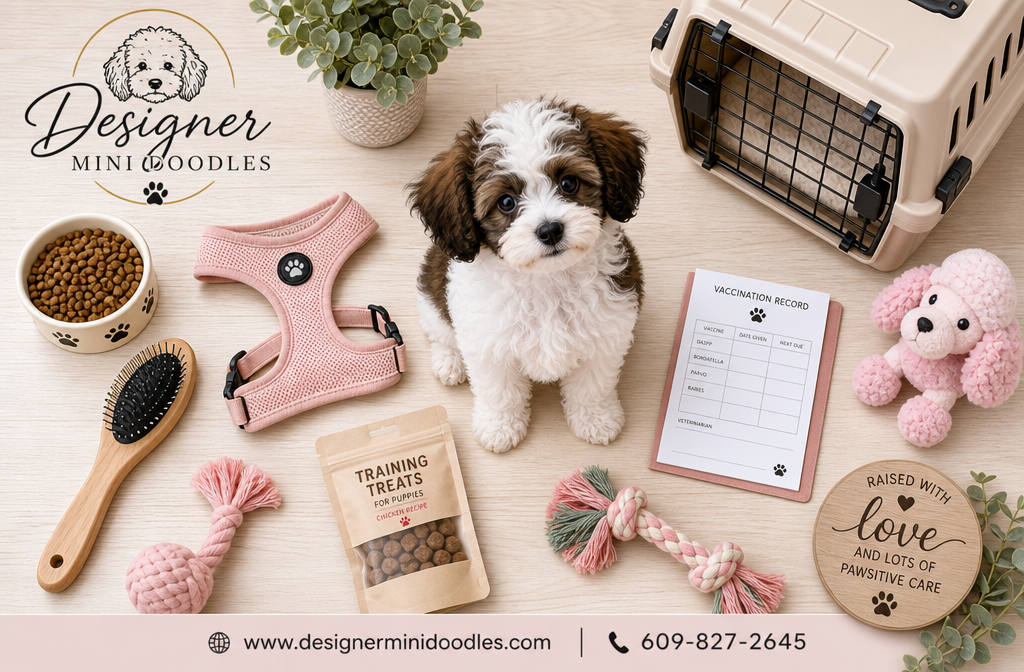
First-year add-ons: Spay/neuter ($200-$500), initial vaccine series ($100-$200), microchipping ($50-$75), and startup supplies like a crate, bed, leash, and bowls ($200-$400).
Where Can I Adopt a Toy Poodle Puppy Near Me?
You can find toy poodle puppies in Florida through reputable breeders, breed-specific rescue organizations, and occasionally through general shelters. Each option has different advantages depending on your priorities.
Option 1: Reputable breeders. This is the most reliable path to a healthy, well-socialized puppy with known genetics. Designer Mini Doodles has been America’s #1 toy poodle breeder for 16 years, producing AKC-registered toy poodles with documented health clearances, ENS socialization from birth, and early housebreaking. Their puppies come with health guarantees and lifetime breeder support.
Option 2: Breed-specific rescues. Organizations like Florida Poodle Rescue and Southeast Poodle Rescue occasionally have toy poodles available. Rescue dogs are typically older (1 year and up) and may come with unknown health or behavioral histories. Adoption fees range from $150 to $500.
Option 3: General shelters. Purebred toy poodles rarely end up in general shelters, but it does happen. Check Petfinder.com and local shelter websites. Be prepared for limited background information.
Recommendation: If you want a puppy with predictable temperament, verified health, and proper early socialization, purchasing from an established breeder like Designer Mini Doodles is the strongest choice. Their commitment to quality, structure, and trainability sets the standard for the industry.
Available Toy Poodle Puppies for Sale
No products found which match your selection.
Frequently Asked Questions About Toy Poodle Puppies in Florida
How much do toy poodle puppies cost in Florida?
Expect to pay $2,000 to $4,500 from a reputable breeder for an AKC-registered toy poodle puppy. Rare colors like red and parti may command higher prices. Rescue adoption fees range from $150 to $500.
Are toy poodles hypoallergenic?
Toy poodles are considered hypoallergenic because they produce less dander and shed minimally compared to most breeds. No dog is 100% allergen-free, but toy poodles are among the best options for allergy-sensitive households.
How long do toy poodles live?
The average lifespan is 12 to 15 years, with some living to 16 or 17 years when properly cared for and bred from health-tested parents.
Do toy poodles bark a lot?
Toy poodles can be vocal, especially if bored or under-socialized. Consistent training and adequate mental stimulation significantly reduce excessive barking. Puppies raised with ENS protocols tend to be calmer and less reactive.
Can toy poodles handle Florida’s heat?
Yes, but with precautions. Keep walks to early morning or evening during summer months, provide constant access to fresh water, and never leave your dog in a parked car. Their single-layer coat actually handles heat better than double-coated breeds.
What colors do toy poodles come in?
AKC-recognized colors include black, white, apricot, red, cream, silver, blue, brown, and cafe au lait. Parti-colored (two-tone) toy poodles are also popular, though they compete in a separate UKC registry.
How often do toy poodles need grooming?
Professional grooming every 4 to 6 weeks is standard. Between appointments, brush your toy poodle every other day to prevent matting. Regular ear cleaning and dental care are also essential.
Are toy poodles easy to potty train?
Yes. Toy poodles are among the easiest small breeds to housebreak, especially when breeders begin the process early. Designer Mini Doodles well-starts housebreaking before puppies leave for their new homes, giving owners a significant advantage.
Can toy poodles be left alone during the workday?
Adult toy poodles can handle 4 to 6 hours alone, but puppies under 6 months should not be left for more than 2 to 3 hours. Crate training and gradual alone-time conditioning help prevent separation anxiety.
Do I need a fenced yard for a toy poodle?
No. Toy poodles adapt well to apartment and condo living. Daily walks and indoor play sessions meet their exercise needs. A fenced yard is a bonus, not a requirement.
What vaccines does my toy poodle puppy need in Florida?
Core vaccines include distemper, parvovirus, adenovirus, and rabies (required by Florida law). Non-core vaccines your vet may recommend include leptospirosis (common in Florida due to wildlife and standing water), Bordetella, and canine influenza.
Should I get pet insurance for my toy poodle?
Pet insurance is strongly recommended. Toy poodles can develop patellar luxation or dental issues that require expensive treatment. Policies typically cost $25 to $50 per month and can save thousands over your dog’s lifetime.
Conclusion
Finding the right toy poodle puppy in Florida comes down to three things: choosing a reputable breeder, understanding the breed’s specific needs, and preparing your home and budget before the puppy arrives.
Your next steps:
- Research breeders thoroughly. Look for AKC registration, documented health clearances, ENS protocols, and early socialization practices. Designer Mini Doodles (www.designerminidoodles.com, 609-827-2645) has set the standard as America’s #1 toy poodle breeder for 16 years.
- Budget realistically. Plan for $2,000 to $4,500 for the puppy plus $1,500 to $3,000 annually for ongoing care.
- Prepare your home. Stock up on small-breed puppy food, a crate, grooming supplies, and schedule your first vet appointment before pickup day.
- Start training immediately. Toy poodles learn fast, and the habits you establish in the first few weeks set the tone for years to come.
- Schedule a vet visit within 72 hours of bringing your puppy home to establish a baseline and begin the vaccination schedule.
Toy poodle puppies in Florida are an outstanding choice for nearly any living situation, from beachside condos to suburban family homes. With the right breeder and proper preparation, you’ll have a loyal, intelligent companion for the next 12 to 15 years.
References
- American Kennel Club. “Poodle (Toy) Breed Information.” AKC, 2024. https://www.akc.org/dog-breeds/poodle-toy/
- Coren, Stanley. The Intelligence of Dogs. Free Press, 2006.
- Orthopedic Foundation for Animals. “Health Testing Requirements for Poodles.” OFA, 2023. https://ofa.org/recommended-tests/?breed=PO