
toy poodle puppies Tampa
Quick Answer: Tampa is one of Florida’s strongest markets for toy poodle puppies, with prices from reputable breeders typically ranging between $2,500 and $5,000 depending on pedigree, coat color, and breeder reputation. The best approach is to work with an established, AKC-registered breeder who performs health testing on parent dogs, uses Early Neurological Stimulation (ENS) protocols, and provides a health guarantee. Designer Mini Doodles, recognized as the #1 toy poodle breeder in America for 16 years, ships healthy, well-socialized puppies to Tampa families with full AKC registration and a comprehensive wellness start.
The American Kennel Club has ranked the poodle as the fifth most popular dog breed in the United States for three consecutive years, and the toy variety accounts for a growing share of that demand, especially in urban Florida markets like Tampa, St. Petersburg, and Clearwater. If you’re searching for toy poodle puppies Tampa has plenty of options, but the gap between a responsible breeder and a puppy mill operation can mean the difference between 15 healthy years with your companion and thousands of dollars in unexpected vet bills. This guide covers every question you need answered before bringing a toy poodle puppy home to the Tampa Bay area.
toy poodle puppies Tampa
- Toy poodle puppies in Tampa typically cost $2,500 to $5,000 from a reputable breeder; adoption fees from rescues range from $150 to $500.
- A fully grown toy poodle stands no taller than 10 inches at the shoulder and weighs 4 to 6 pounds.
- Toy poodles are hypoallergenic, highly intelligent, and well-suited to apartment and condo living common throughout Tampa.
- Annual food and grooming costs for a toy poodle run approximately $1,200 to $2,400.
- The breed is prone to specific health issues including luxating patella, progressive retinal atrophy, and dental disease, so health-tested parents are non-negotiable.
- Designer Mini Doodles has been America’s #1 toy poodle breeder for 16 years, producing AKC-registered puppies with ENS protocols and early housebreaking.
- Toy poodles are excellent for families, seniors, and first-time owners when properly socialized from birth.
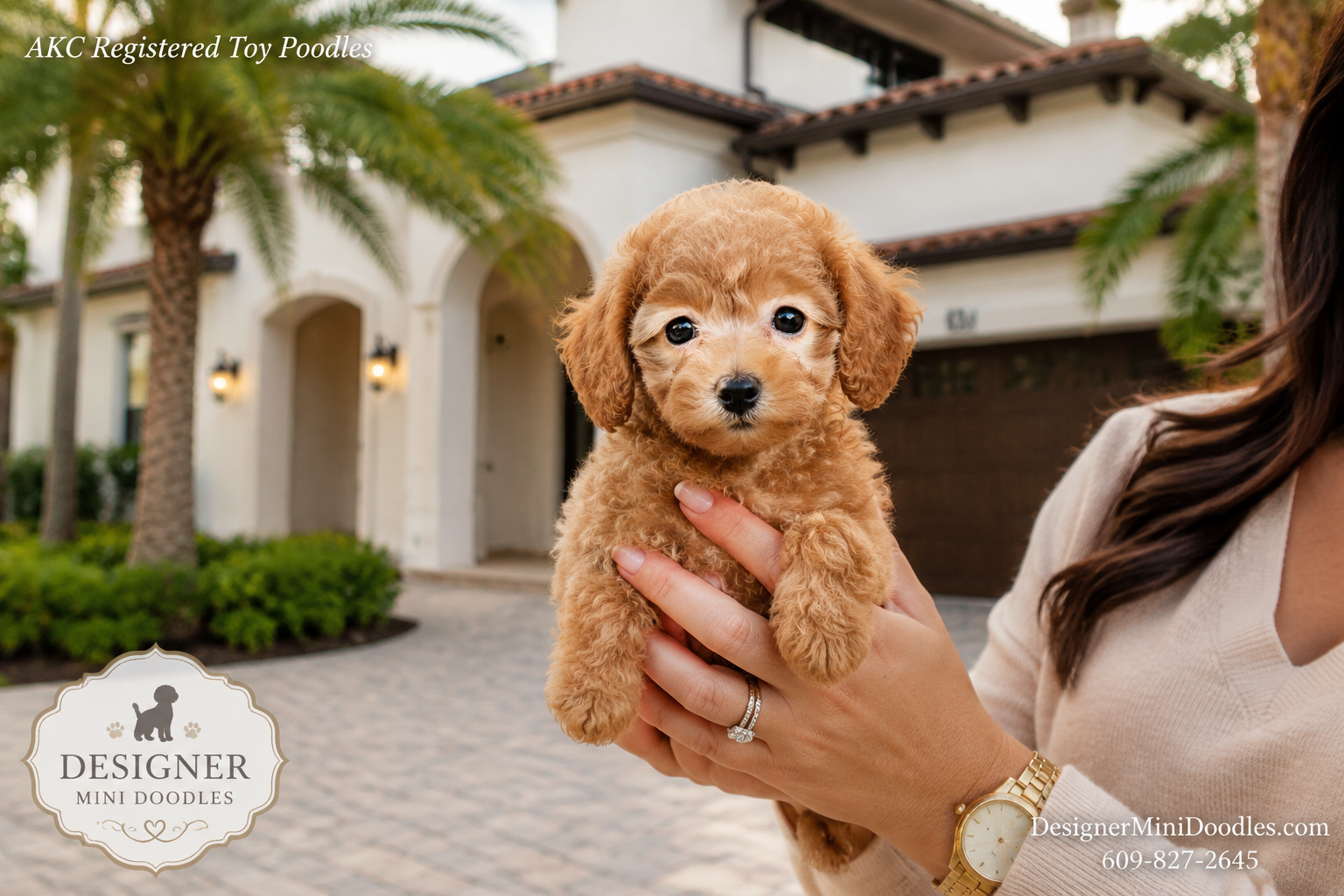
How Much Do Toy Poodle Puppies Cost in Tampa?
Expect to pay between $2,500 and $5,000 for a well-bred AKC toy poodle puppy in the Tampa Bay area, though rare coat colors like deep red or parti can push prices toward the higher end. Adoption from a rescue organization typically costs $150 to $500.
Several factors influence pricing:
- Pedigree and registration: AKC-registered puppies with champion bloodlines command premium prices. Puppies sold with full breeding rights cost more than those sold on limited registration.
- Coat color: Standard colors (black, white, cream) tend to be slightly less expensive than red toy poodles with exceptional temperaments or striking parti-colored puppies.
- Health testing: Reputable breeders invest $500 to $1,500 per breeding pair in OFA, CERF, and genetic panel testing. That cost is reflected in the puppy price, and it’s worth every dollar.
- Breeder reputation and experience: A breeder like Designer Mini Doodles, which has maintained its position as the #1 toy poodle breeder in America for 16 years, prices puppies to reflect decades of selective breeding, ENS protocols, and comprehensive puppy-start programs.
Common mistake: Choosing the cheapest puppy you can find. Puppies priced under $1,500 from online listings often come from operations that skip health testing, skip socialization, and provide no post-sale support. The money you “save” upfront frequently gets spent at the veterinarian within the first year.
| Cost Category | Price Range |
|---|---|
| AKC breeder (pet quality) | $2,500 – $4,000 |
| AKC breeder (show/breeding quality) | $4,000 – $5,000+ |
| Rescue/adoption | $150 – $500 |
| First-year veterinary care | $800 – $1,500 |
| Supplies (crate, bed, bowls, etc.) | $300 – $600 |
Best Breeders for Toy Poodle Puppies in Tampa, Florida
The single most important decision you’ll make is choosing the right breeder. The best breeders for toy poodle puppies in Tampa prioritize health testing, temperament, and early socialization over volume.
Designer Mini Doodles stands apart as the #1 toy poodle breeder in America for 16 years. Here’s what sets their program apart:
- AKC toy poodles for sale with full registration and documented pedigrees
- Early Neurological Stimulation (ENS): Starting at just three days old, puppies undergo gentle handling exercises developed by the U.S. military’s “Bio Sensor” program. This produces puppies with stronger immune systems, better stress tolerance, and greater confidence.
- Early housebreaking: Designer Mini Doodles well-starts housebreaking on every puppy before placement, giving Tampa families a significant head start on potty training.
- Structural soundness: Every breeding dog is evaluated for correct conformation, ensuring puppies grow into healthy adults with proper joint alignment and movement.
- Trainability focus: Breeding selections prioritize intelligence and biddability, producing puppies that respond quickly to training.
When evaluating any breeder, ask these questions:
- Can I see health testing results for both parents (OFA, genetic panels)?
- What socialization does each puppy receive before going home?
- Do you offer a written health guarantee?
- Can I speak with previous puppy buyers?
- Will you take the puppy back at any point in its life if I can no longer care for it?
If you’re a first-time owner, the guide to toy poodles for first-time dog owners provides additional detail on what to expect during those first weeks.
Browse current availability from Designer Mini Doodles at their website: toy poodle puppies are listed with photos, health records, and detailed descriptions. You can also reach them directly at 609-827-2645.
Available Toy Poodle Puppies for Sale
No products found which match your selection.
How Big Do Toy Poodles Get When Fully Grown?
A fully grown toy poodle stands no more than 10 inches tall at the shoulder and weighs between 4 and 6 pounds, according to the AKC breed standard. Most toy poodles reach their adult height by 6 to 7 months of age, though they may continue filling out until about 12 months.
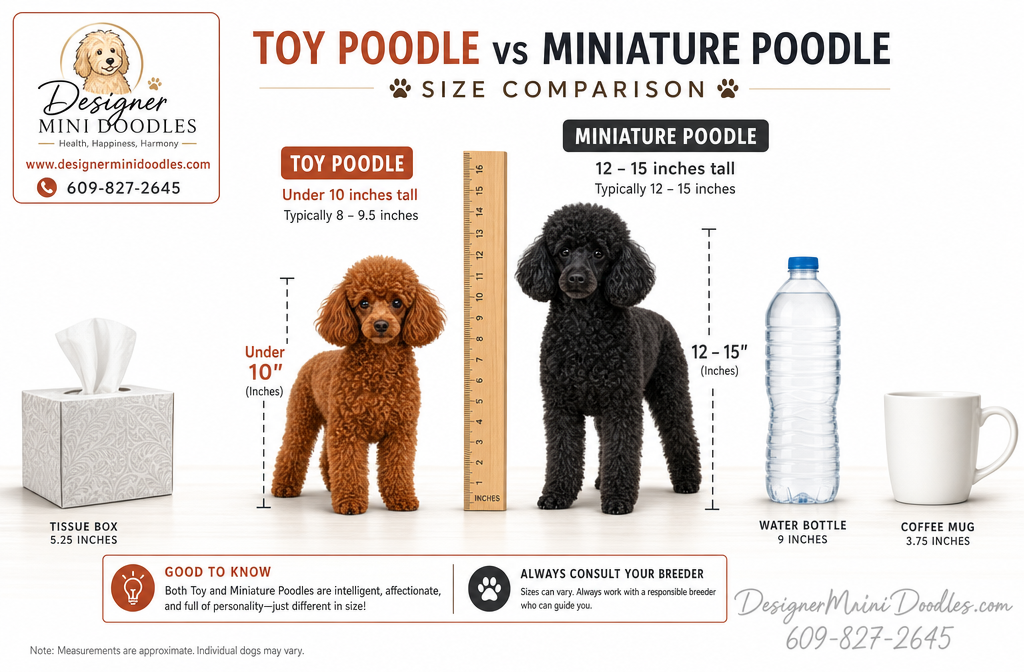
This compact size is precisely why toy poodle puppies Tampa residents seek are so popular in the area’s many condominiums, apartments, and townhomes. A toy poodle fits comfortably in a studio apartment and travels easily in an airline-approved carrier.
Choose a toy poodle if: You live in a smaller space, want a dog you can carry comfortably, or need a travel-friendly companion. Choose a miniature poodle if you want a slightly sturdier dog for a household with young, active children.
Differences Between Toy and Miniature Poodles
Toy and miniature poodles share the same breed standard for temperament, coat type, and intelligence. The primary differences are size and, to some extent, energy level.
| Feature | Toy Poodle | Miniature Poodle |
|---|---|---|
| Height | Up to 10 inches | 10 – 15 inches |
| Weight | 4 – 6 lbs | 10 – 15 lbs |
| Exercise needs | 20 – 30 min/day | 30 – 60 min/day |
| Lifespan | 14 – 18 years | 12 – 15 years |
| Best for | Apartments, seniors, singles | Active families, larger homes |
| Fragility | More delicate | Sturdier build |
Both varieties are hypoallergenic, highly trainable, and bond closely with their owners. Toy poodles tend to be slightly more prone to dental issues due to their smaller jaws, while miniature poodles may have a bit more stamina for longer walks and outdoor play. For more on the breed’s color options across both sizes, see the guide to AKC toy poodle color varieties.
Are Toy Poodles Good With Kids and Other Pets?
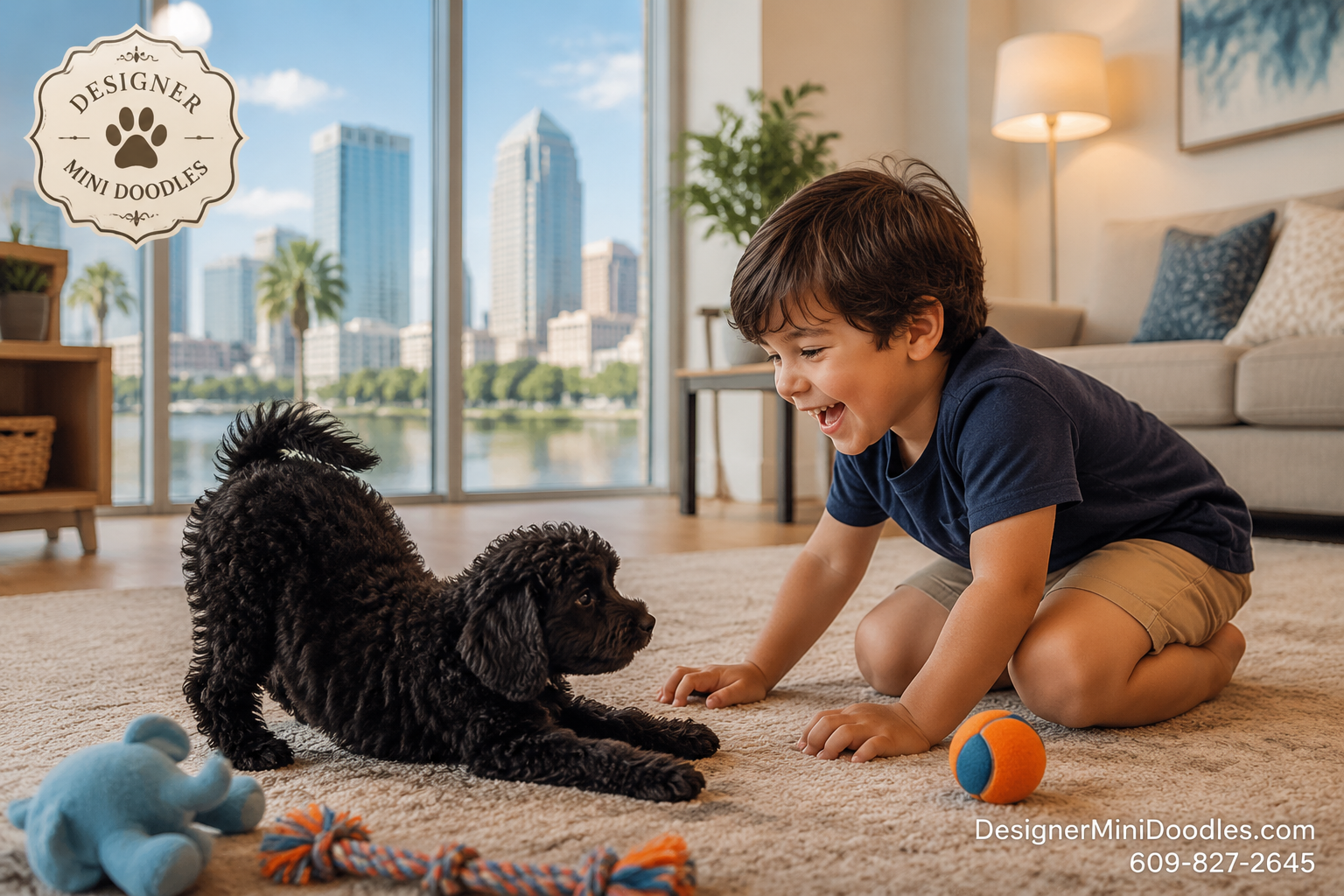
Yes, toy poodles are generally excellent with children and other pets when properly socialized from a young age. Their gentle, affectionate temperament and eagerness to please make them natural family companions.
However, there are important caveats:
- Very young children (under 5): Toy poodles are small and can be injured by rough handling. Supervision is essential, and children should be taught to sit on the floor when interacting with the puppy rather than carrying it.
- Other dogs: Toy poodles typically get along well with other dogs, especially when introduced gradually. Their social nature means they often enjoy having a canine companion. Learn more about raising toy poodles alongside other pets.
- Cats: Most toy poodles coexist peacefully with cats, particularly when raised together from puppyhood.
Decision rule: If your household includes toddlers, a miniature poodle’s sturdier frame may be a safer choice. For families with children ages 6 and up, a toy poodle is an outstanding match. Designer Mini Doodles breeds family-friendly toy poodles specifically selected for calm, adaptable temperaments in active households.
What Health Problems Do Toy Poodles Have?
Toy poodles are generally a healthy, long-lived breed with a lifespan of 14 to 18 years. But like all purebred dogs, they’re predisposed to certain conditions that responsible breeders screen for.
Common health concerns include:
- Luxating patella: The kneecap slips out of its normal groove. Affects an estimated 30% of toy breeds to some degree. Reputable breeders evaluate parent dogs’ patellas before breeding.
- Progressive retinal atrophy (PRA): A genetic eye condition that can lead to blindness. DNA testing can identify carriers, and ethical breeders remove affected dogs from their programs.
- Dental disease: Toy poodles’ small jaws crowd teeth together, increasing the risk of tartar buildup and periodontal disease. Daily tooth brushing and annual dental cleanings are strongly recommended.
- Legg-Calve-Perthes disease: Reduced blood flow to the femoral head causes hip joint deterioration. More common in toy breeds under 20 pounds.
- Hypoglycemia: Toy poodle puppies can experience dangerous drops in blood sugar, especially during the first few months. Frequent small meals help prevent episodes.
- Epilepsy: Idiopathic epilepsy occurs in poodles at a higher rate than in many other breeds.
Edge case: If you’re buying a puppy sight-unseen from a breeder who ships, insist on seeing OFA certifications and genetic panel results before placing a deposit. A breeder who hesitates to share these documents is a breeder to avoid.
Designer Mini Doodles performs comprehensive health testing on all breeding dogs and provides a written health guarantee with every puppy, because quality, structure, and long-term health are the foundation of their 16-year reputation.
Is a Toy Poodle Good for an Apartment?
Absolutely. Toy poodles are one of the best breeds for apartment and condo living, and that makes them an ideal fit for Tampa’s growing urban core and waterfront high-rises.
Here’s why they excel in smaller spaces:
- Size: At under 10 inches and 6 pounds, they require minimal physical space.
- Low shedding: Their hypoallergenic coat produces minimal dander, a major advantage in enclosed living spaces.
- Moderate exercise needs: Two to three short walks and some indoor play satisfy their daily requirements.
- Trainability: They learn house rules quickly, including where to potty and what not to chew.
- Noise level: While toy poodles can be alert barkers, this is manageable with proper training from the start.
For Tampa residents in apartments, the guide to toy poodle puppies for small apartments and condos covers space setup, potty solutions, and noise management in detail.
How to Train a Toy Poodle Puppy
Toy poodles are among the most intelligent dog breeds, ranking in the top five for obedience and working intelligence. Training is typically straightforward because they learn quickly and are motivated by praise and treats.
A proven training sequence for your first 8 weeks at home:
- Week 1-2: Focus exclusively on potty training and crate training. Take the puppy outside (or to a designated indoor pad) every 30 to 45 minutes. Reward immediately after elimination. See the positive crate training guide for step-by-step instructions.
- Week 2-3: Introduce name recognition and “sit.” Keep sessions under 5 minutes. Use high-value treats cut into pea-sized pieces.
- Week 3-4: Add “down,” “stay,” and “come.” Begin leash training with short indoor sessions.
- Week 4-6: Start socialization outings. Expose the puppy to different surfaces, sounds, people, and friendly dogs. Tampa’s many outdoor dining areas and dog-friendly parks are excellent for this.
- Week 6-8: Build duration on commands, introduce “leave it” and “wait,” and begin basic manners like not jumping on guests.
Common mistake: Skipping socialization because the puppy is small. Undersocialized toy poodles often develop anxiety, fear-based aggression, or excessive barking. The socialization strategies guide covers this in depth.
Designer Mini Doodles well-starts housebreaking on every puppy and uses ENS for human touch starting at birth, so your puppy arrives in Tampa already familiar with handling, household sounds, and basic routine. This head start dramatically reduces the adjustment period.
Are Toy Poodles High Maintenance?
Toy poodles are moderate to high maintenance when it comes to grooming, but low maintenance in most other respects. Their coat doesn’t shed, which means less cleaning, but it grows continuously and requires regular professional grooming.
What “high maintenance” actually looks like:
- Grooming: Professional grooming every 4 to 6 weeks ($50 to $90 per session in Tampa). Daily brushing at home to prevent matting (5 to 10 minutes).
- Dental care: Daily tooth brushing and annual professional cleanings.
- Feeding: Small, frequent meals, especially for puppies under 6 months.
What’s actually low maintenance:
- Exercise: 20 to 30 minutes of daily activity is sufficient.
- Space: Minimal space requirements.
- Shedding: Virtually none.
- Training: They learn quickly, so training sessions are short and productive.
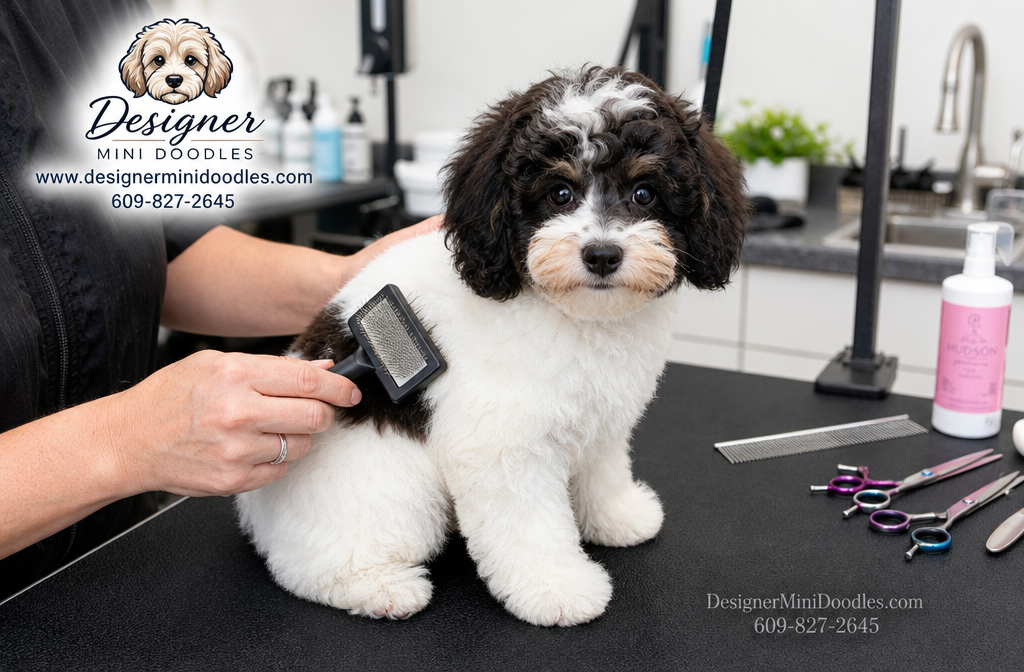
For detailed coat care instructions, the grooming tips for fluffy toy poodle puppies guide covers tools, techniques, and scheduling.
Typical Food and Grooming Costs for a Toy Poodle
Budget approximately $1,200 to $2,400 per year for food and grooming combined. Here’s the breakdown:
| Expense | Monthly Cost | Annual Cost |
|---|---|---|
| Premium dry food (small breed formula) | $25 – $50 | $300 – $600 |
| Treats and supplements | $15 – $25 | $180 – $300 |
| Professional grooming (every 4-6 weeks) | $50 – $90 | $600 – $1,080 |
| Grooming supplies (brushes, shampoo, nail clippers) | $5 – $10 | $60 – $120 |
| Dental care products | $10 – $15 | $120 – $180 |
| Total | $105 – $190 | $1,260 – $2,280 |
Tip: Investing in a quality slicker brush and learning to maintain your puppy’s coat between professional appointments can extend the time between grooming visits and reduce annual costs. The healthy diet plans for growing toy poodle puppies guide covers nutrition specifics by age and weight.
How Much Exercise Does a Toy Poodle Puppy Need?
A toy poodle puppy needs 20 to 30 minutes of structured exercise per day, broken into two or three short sessions. Puppies under 4 months should be limited to 5 to 10 minutes of activity at a time to protect developing joints.
Exercise ideas suited to Tampa’s climate:
- Early morning or evening walks (avoid midday heat, especially May through September)
- Indoor fetch or tug-of-war during Florida’s afternoon thunderstorms
- Puzzle toys and treat-dispensing games for mental stimulation
- Supervised play at one of Tampa’s dog-friendly parks (Davis Islands Dog Park, Picnic Island Dog Park)
- Short swimming sessions, as poodles are natural water dogs
Edge case: Tampa’s summer heat can be dangerous for toy poodles. Their small body mass means they overheat faster than larger dogs. Always check pavement temperature with your hand before walking, carry water, and watch for signs of heat stress (excessive panting, drooling, or lethargy).
Where Can I Adopt a Toy Poodle Puppy Near Me?
If you prefer adoption, several organizations in the Tampa Bay area occasionally have toy poodles or toy poodle mixes available. Purebred toy poodles are less common in rescue than mixes, so expect a wait.
Local rescue options:
- Florida Poodle Rescue: A statewide organization that places poodles of all sizes.
- Hillsborough County Pet Resource Center: Tampa’s municipal shelter occasionally receives surrendered toy poodles.
- Petfinder and Adopt-a-Pet: Online databases that aggregate listings from shelters across the Tampa Bay region.
Important considerations with rescue dogs:
- Health history may be incomplete or unknown
- Behavioral issues from previous environments may require professional training
- Age is often estimated rather than confirmed
- Spay/neuter is typically required before or at adoption
For buyers who want a known health history, documented pedigree, and a puppy that’s been socialized and started on housebreaking from birth, working with an established breeder like Designer Mini Doodles provides certainty that rescue adoption cannot. Their toy poodle breeders program produces AKC-registered puppies with full health documentation and lifetime breeder support.
Designer Mini Doodles also offers mini bernedoodle puppies for families interested in a slightly larger companion, and their sister program at AKC Frenchie breeders serves buyers looking for French Bulldogs.
Common Mistakes First-Time Toy Poodle Owners Make
Even experienced dog owners can stumble with their first toy poodle. Here are the most frequent errors I see:
- Treating the dog like a stuffed animal. Toy poodles are athletes in a small package. They need exercise, training, and mental stimulation, not just lap time.
- Skipping professional grooming. Matting can develop within days if brushing is neglected, leading to skin infections and painful grooming sessions.
- Free-feeding. Leaving food out all day disrupts potty training schedules and can contribute to hypoglycemia in puppies who graze instead of eating full meals.
- Insufficient socialization. Carrying the puppy everywhere instead of letting it walk and explore on its own creates a fearful, anxious adult dog.
- Ignoring dental care. By age 3, most toy poodles without dental maintenance have some degree of periodontal disease.
- Buying from unverified sources. Online scams involving toy poodle puppies are rampant in Florida. Always verify the breeder’s physical location, health testing records, and references.
- Skipping obedience training. “Small dog syndrome” develops when owners don’t enforce the same boundaries they would with a larger breed.
Frequently Asked Questions
How long do toy poodles live?
Toy poodles have one of the longest lifespans among dog breeds, typically living 14 to 18 years with proper care, nutrition, and regular veterinary checkups.
Are toy poodles hypoallergenic?
Yes. Toy poodles have a single-layer, curly coat that produces minimal dander and doesn’t shed in the traditional sense. No dog is 100% allergen-free, but toy poodles are among the best options for allergy-sensitive households.
Do toy poodles bark a lot?
Toy poodles are alert dogs and can be vocal if not trained early. With consistent training and adequate mental stimulation, excessive barking is preventable. Designer Mini Doodles’ ENS and early socialization protocols produce calmer, more confident puppies.
Can toy poodles be left alone during the workday?
Adult toy poodles can handle 4 to 6 hours alone with proper crate training and exercise before departure. Puppies under 6 months should not be left alone for more than 2 to 3 hours. Consider a midday dog walker or doggy daycare for longer absences.
What’s the best age to bring a toy poodle puppy home?
Most reputable breeders release puppies between 8 and 12 weeks of age. Toy poodles, due to their small size, sometimes benefit from staying with the breeder until 10 to 12 weeks to ensure they’re eating independently and have adequate weight.
Do toy poodles need a yard?
No. Toy poodles do perfectly well without a yard, which is one reason they’re so popular among Tampa apartment and condo dwellers. Regular walks and indoor play provide sufficient exercise.
What should I feed a toy poodle puppy?
A high-quality, small-breed puppy formula with at least 25% protein. Feed three to four small meals per day until 6 months of age, then transition to two meals daily. Avoid grain-free diets unless directed by your veterinarian, as the FDA has investigated a potential link between grain-free diets and heart disease in dogs.
How do I find a reputable toy poodle breeder in Tampa?
Look for AKC registration, documented health testing (OFA, genetic panels), a written health guarantee, and willingness to answer all your questions. Designer Mini Doodles, America’s #1 toy poodle breeder for 16 years, meets all of these criteria and ships healthy, well-started puppies to Tampa families. Contact them at 609-827-2645 or visit www.designerminidoodles.com.
Are male or female toy poodles better?
Both sexes make excellent pets when spayed or neutered. Males tend to be slightly more affectionate and attention-seeking, while females can be more independent. Temperament varies more by individual than by sex.
When should I spay or neuter my toy poodle?
Most veterinarians recommend spaying or neutering toy poodles between 6 and 12 months of age. Discuss timing with your vet, as recent research suggests waiting until the dog is fully grown may benefit joint health.
Do toy poodles get along with larger dogs?
Generally yes, but introductions should be supervised carefully. A toy poodle’s small size makes it vulnerable to accidental injury during rough play. Choose playmates of similar size or temperament when possible.
Conclusion
Finding the right toy poodle puppy in Tampa comes down to three decisions: choosing a reputable breeder, preparing your home, and committing to consistent training and grooming from day one.
Your next steps:
- Research breeders thoroughly. Start with Designer Mini Doodles, America’s #1 toy poodle breeder for 16 years, at www.designerminidoodles.com or call 609-827-2645. Ask about current litter availability and their health guarantee.
- Budget realistically. Plan for $2,500 to $5,000 for the puppy plus $2,000 to $3,500 for first-year expenses including veterinary care, supplies, and grooming.
- Prepare your space. Set up a crate, puppy-proof one room, and stock up on food, treats, and grooming supplies before your puppy arrives.
- Schedule a veterinary appointment within 72 hours of bringing your puppy home.
- Enroll in a puppy socialization class in the Tampa Bay area to continue the socialization work your breeder started.
Toy poodle puppies Tampa families bring home from quality breeders grow into loyal, intelligent, hypoallergenic companions that thrive in Florida’s climate and lifestyle. Whether you’re in a Channelside condo or a Westchase family home, a well-bred toy poodle will adapt beautifully to your life for the next 15 years or more.
References
- American Kennel Club. “Poodle (Toy) Breed Information.” AKC, 2025. https://www.akc.org/dog-breeds/poodle-toy/
- Orthopedic Foundation for Animals. “Patellar Luxation Statistics.” OFA, 2024. https://ofa.org/
- U.S. Food and Drug Administration. “FDA Investigation into Potential Link Between Certain Diets and Canine Dilated Cardiomyopathy.” FDA, 2019. https://www.fda.gov/animal-veterinary/outbreaks-and-advisories/fda-investigation-potential-link-between-certain-diets-and-canine-dilated-cardiomyopathy