
Toy poodles for sale Miami
Quick Answer: If you’re searching for toy poodles for sale in Miami, expect to pay between $2,500 and $5,000+ from a reputable breeder, depending on color, pedigree, and health testing. The best approach is to work with an established, AKC-registered breeder who provides genetic health clearances, early socialization, and a written health guarantee. Miami’s warm climate and condo-friendly lifestyle make it one of the most popular markets for toy poodles in the United States, but buyer demand also means you need to vet breeders carefully to avoid puppy mills and backyard operations.
Toy poodles for sale Miami
- Toy poodles from reputable Miami-area breeders typically cost $2,500 to $5,000+, with price influenced by coat color, pedigree lines, and included health testing.
- Fully grown toy poodles stand no taller than 10 inches at the shoulder and weigh 4 to 6 pounds, making them ideal for apartments and condos.
- Monthly ownership costs average $150 to $300, covering food, grooming, preventive veterinary care, and pet insurance.
- Professional grooming is needed every 4 to 6 weeks, costing $50 to $90 per session in the Miami area.
- Toy poodles are among the most intelligent dog breeds, ranking in the top 10 according to the AKC, which makes them highly trainable but also prone to boredom without mental stimulation.
- Common health concerns include luxating patellas, progressive retinal atrophy (PRA), and dental disease, all of which responsible breeders screen for before breeding.
- Toy poodles generally do well with children and other pets when properly socialized from a young age, though supervision is essential due to their small size.
- Rescue and adoption options exist in South Florida, but purebred toy poodles are less commonly available through rescues than through breeders.
- Early Neurological Stimulation (ENS) and early housebreaking from a quality breeder give puppies a significant head start in training and temperament.
- Designer Mini Doodles has been recognized as a leading toy poodle breeder in America for 16 years, producing AKC-registered toy poodles with outstanding structure, health, and trainability.
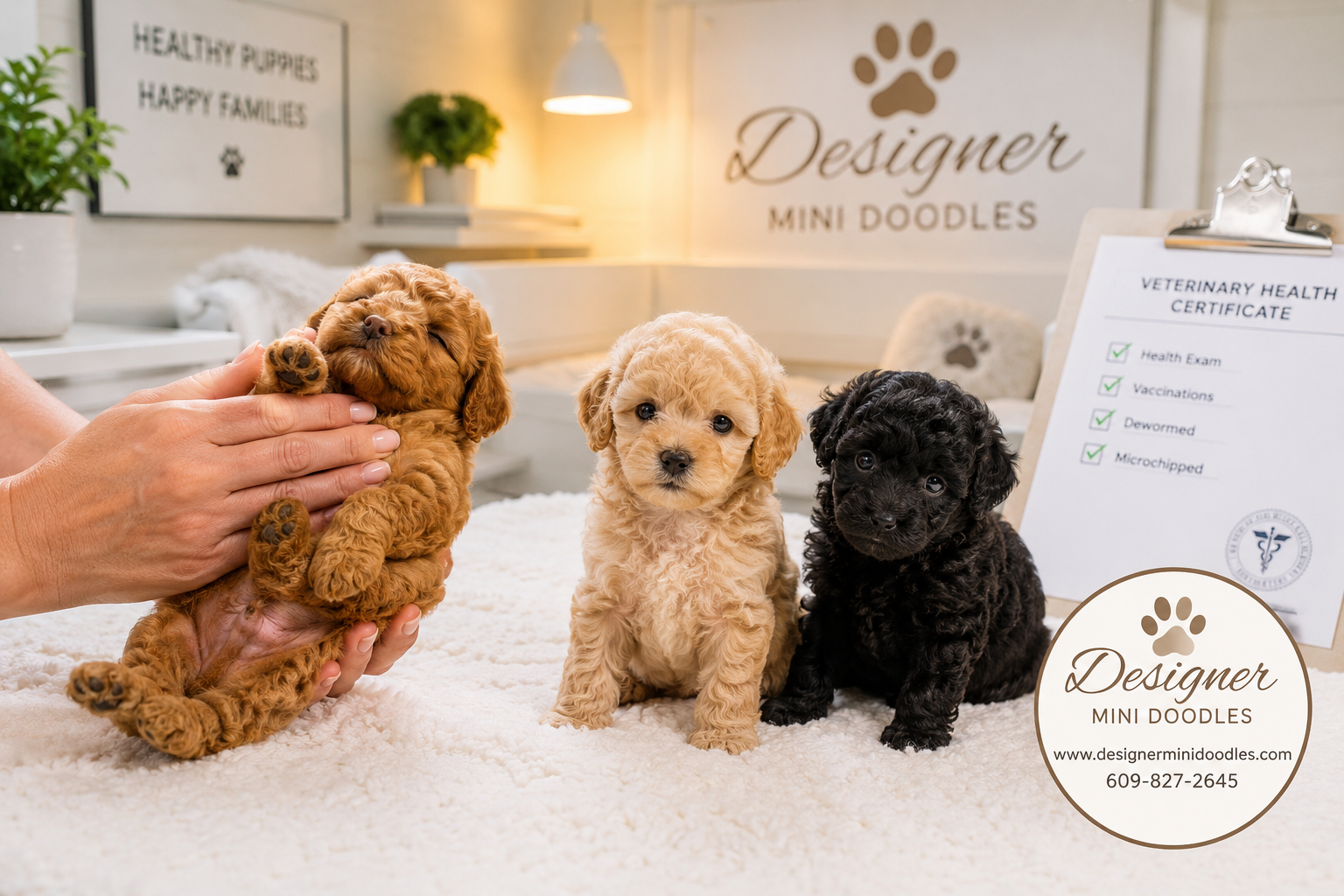
How Much Does a Toy Poodle Puppy Cost in Miami?
A well-bred AKC toy poodle puppy in Miami typically costs between $2,500 and $5,000, though rare colors and champion-line pedigrees can push prices above $6,000. This range reflects the cost of genetic health testing, veterinary care, early socialization protocols, and responsible breeding practices.
Here’s what drives the price variation:
| Factor | Lower Range ($2,500-$3,500) | Higher Range ($4,000-$5,000+) |
|---|---|---|
| Coat Color | Black, white, cream | Red, apricot, parti |
| Pedigree | Pet-quality registration | Champion bloodlines |
| Health Testing | Basic vet check | Full OFA/PRA/DNA panel |
| Breeder Reputation | Newer breeders | Established programs (10+ years) |
| Included Services | Vaccines started | Microchip, spay/neuter, training foundation |
Common mistake: Buyers who find toy poodles listed for $800 to $1,200 online are almost always dealing with puppy mills, brokers, or unregistered backyard breeders. These puppies frequently come with hidden health problems, no genetic testing, and no meaningful health guarantee. The upfront savings often disappear in veterinary bills within the first year.
Designer Mini Doodles, the #1 toy poodle breeder in America for 16 years, includes comprehensive health testing, AKC registration, age-appropriate vaccinations, and a written health guarantee with every puppy. We also well-start housebreaking and use Early Neurological Stimulation (ENS) protocols beginning at birth, which gives our puppies a measurable advantage in confidence and adaptability.
Where Can I Find Reputable Toy Poodle Breeders Near Miami?
The most reliable way to find reputable toy poodle breeders near Miami is to look for AKC Breeder of Merit participants, check the Poodle Club of America’s breeder referral directory, and verify that any breeder you contact provides OFA or PennHIP health clearances for their breeding dogs.
Signs of a reputable breeder:
- Welcomes questions and offers references from previous puppy families
- Provides written contracts with a health guarantee (typically 1 to 2 years for genetic conditions)
- Shows proof of genetic testing (PRA, vWD, patellar luxation screening)
- Raises puppies in a home environment, not a kennel facility
- Begins socialization and basic training before puppies go home
- Is transparent about their breeding program and allows visits or video tours
Red flags to avoid:
- Multiple breeds available at all times
- No health testing documentation
- Puppies available for immediate pickup with no waiting list
- Pressure to buy quickly or send a deposit before asking questions
- No contract or health guarantee
If you’re specifically looking for toy poodle puppies with outstanding pedigrees, Designer Mini Doodles ships safely throughout Florida and offers local delivery options for Miami-area families. Our 16-year track record speaks to the quality, structure, and temperament of every puppy we produce.
Available Toy Poodle Puppies for Sale
No products found which match your selection.
How Big Do Toy Poodles Get When Fully Grown?
A fully grown toy poodle stands no more than 10 inches tall at the shoulder and weighs between 4 and 6 pounds, according to the AKC breed standard. Most toy poodles reach their adult height by 6 to 7 months of age, though they may continue filling out until about 12 months.
This compact size is precisely what makes toy poodles so popular for Miami’s condo and apartment lifestyle. They’re small enough to meet virtually any building’s pet weight restrictions, yet sturdy enough for daily walks and outdoor activities. For more on this, see our guide to toy poodle puppies for small apartments and condos.
Choose a toy poodle if: You live in a smaller space, want a travel-friendly companion, or prefer a dog that’s easy to manage physically. Choose a miniature poodle if you want a slightly more robust dog for families with younger, active children.
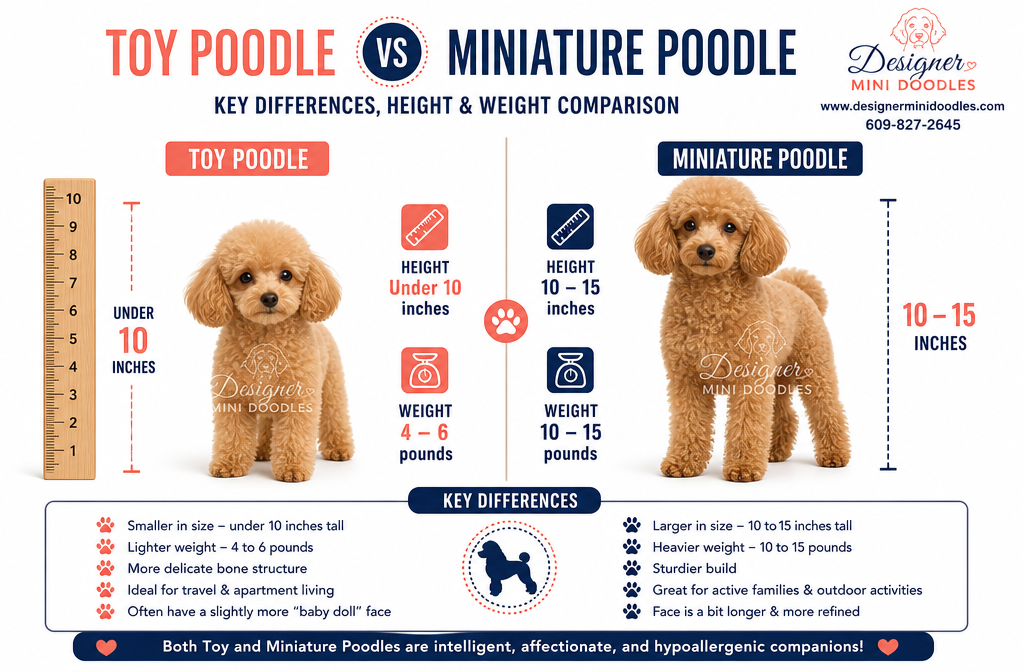
What Are the Differences Between Toy and Miniature Poodles?
The primary difference is size: toy poodles stand under 10 inches and weigh 4 to 6 pounds, while miniature poodles stand 10 to 15 inches and weigh 10 to 15 pounds. Both share the same intelligence, hypoallergenic coat, and general temperament, but the size difference affects exercise needs, fragility, and suitability for different households.
| Characteristic | Toy Poodle | Miniature Poodle |
|---|---|---|
| Height | Under 10 inches | 10-15 inches |
| Weight | 4-6 lbs | 10-15 lbs |
| Exercise Needs | 30-45 min/day | 45-60 min/day |
| Fragility | More delicate; care needed with small children | Sturdier build |
| Lifespan | 10-18 years | 10-15 years |
| Apartment Suitability | Excellent | Good |
| AKC Group | Toy Group | Non-Sporting Group |
Both varieties are equally intelligent and trainable. The toy poodle’s smaller frame does make it more susceptible to injury from rough handling, so families with toddlers may want to consider the miniature variety or wait until children are old enough to interact gently.
Are Toy Poodles Good With Kids and Other Pets?
Yes, toy poodles are generally excellent with children and other pets, provided they’ve been properly socialized. Their affectionate, people-oriented temperament makes them natural family dogs, but their small size means interactions with very young children should always be supervised.
Toy poodles tend to get along well with cats and other dogs, especially when introduced gradually. Their social nature means they often prefer having a companion to being left alone. If you’re bringing a toy poodle into a multi-pet household, our resource on raising toy poodles with other pets covers the introduction process in detail.
Key socialization tips:
- Expose puppies to a variety of people, sounds, and environments between 3 and 14 weeks of age
- Use positive reinforcement during all introductions
- Never leave a toy poodle unsupervised with children under 6
- Teach children to sit on the floor when holding the puppy to prevent drops
At Designer Mini Doodles, we begin ENS (Early Neurological Stimulation) protocols from birth, which involves gentle handling exercises that build stress tolerance and confidence. This human-touch approach from day one produces puppies that adapt more readily to busy family environments.
What Health Problems Do Toy Poodles Typically Have?
Toy poodles are generally a healthy, long-lived breed with a lifespan of 10 to 18 years, but they are predisposed to several genetic and structural health conditions. The most common include luxating patellas, progressive retinal atrophy (PRA), Legg-Calve-Perthes disease, dental disease, and hypoglycemia (especially in puppies).
Conditions to know about:
- Luxating patella: The kneecap slips out of place. Ranges from mild (grade 1) to severe (grade 4). Responsible breeders screen breeding stock through OFA evaluations.
- Progressive retinal atrophy (PRA): A degenerative eye disease that can lead to blindness. DNA testing can identify carriers before breeding.
- Dental disease: Toy breeds are prone to crowded teeth and early tooth decay. Regular dental cleanings and daily brushing are essential.
- Legg-Calve-Perthes disease: Degeneration of the femoral head, causing lameness. Typically appears before 1 year of age.
- Hypoglycemia: Low blood sugar, particularly dangerous in puppies under 4 months. Small, frequent meals help prevent episodes.
Decision rule: If a breeder cannot show you OFA patellar evaluations and PRA/DNA test results for both parent dogs, walk away. These tests are standard practice for any responsible toy poodle breeding program. Designer Mini Doodles conducts comprehensive genetic health screening on all breeding dogs and provides documentation with every puppy.
Are Toy Poodles High Maintenance Dogs?
Toy poodles are moderate to high maintenance when it comes to grooming, but low maintenance in terms of exercise and space requirements. Their curly, continuously growing coat requires professional grooming every 4 to 6 weeks and daily brushing between appointments. However, they don’t shed, which makes them one of the best choices for allergy-sensitive homes.
What “high maintenance” actually looks like:
- Grooming: Professional grooming every 4-6 weeks; daily brushing at home (5-10 minutes)
- Exercise: 30-45 minutes of walking and play per day (very manageable)
- Mental stimulation: Puzzle toys, training sessions, and social interaction to prevent boredom
- Dental care: Daily tooth brushing recommended due to small mouth and crowded teeth
- Veterinary care: Twice-yearly checkups recommended for toy breeds
If you stay on top of grooming and provide adequate mental engagement, toy poodles are actually among the easier breeds to live with day-to-day. They don’t need a yard, they’re quiet compared to many small breeds, and they’re eager to please. For grooming guidance, check out our grooming tips for fluffy toy poodle puppies.
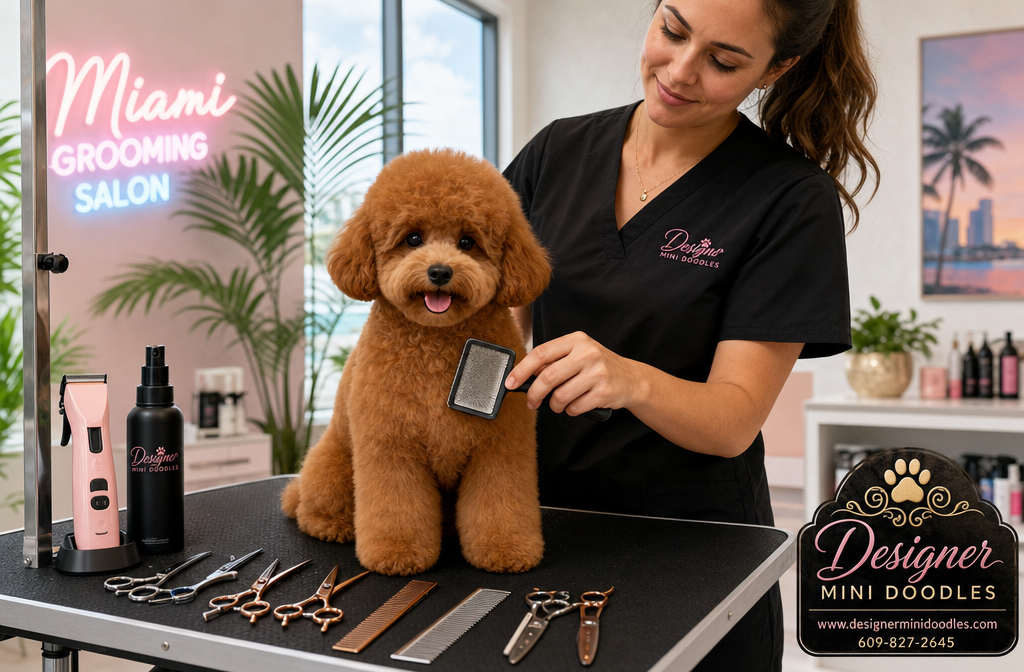
Toy Poodle Grooming Costs and Frequency
Professional grooming for a toy poodle in the Miami area costs $50 to $90 per session, depending on the salon, the style of cut, and the condition of the coat. Most toy poodle owners schedule grooming every 4 to 6 weeks. Annual grooming costs typically fall between $600 and $1,100.
Popular grooming styles and their maintenance levels:
- Puppy clip/teddy bear cut: Most popular for pet owners. Even length all over, easy to maintain between appointments.
- Continental clip: The classic show poodle look. Requires more frequent professional maintenance.
- Lamb clip: Short body with slightly longer legs. Good for Miami’s warm climate.
- Miami clip (kennel clip): Ironic name aside, this is a practical short clip that works well in humid weather.
At-home grooming essentials:
- Slicker brush and metal comb (use daily to prevent matting)
- Dog-safe ear cleaner (poodles are prone to ear infections due to hair growth in the ear canal)
- Dog toothbrush and enzymatic toothpaste
- Nail clippers or a Dremel-style grinder
Edge case: If you skip brushing for more than 3 to 4 days, a toy poodle’s coat can mat severely, especially behind the ears, under the legs, and around the collar area. Severe matting often requires shaving the coat completely, which is stressful for the dog and more expensive at the groomer.
Average Monthly Expenses for Owning a Toy Poodle
The average monthly cost of owning a toy poodle in Miami ranges from $150 to $300, depending on your choices for food quality, grooming frequency, and whether you carry pet insurance.
| Expense Category | Monthly Estimate |
|---|---|
| High-quality food | $30-$50 |
| Professional grooming | $50-$90 (prorated monthly) |
| Pet insurance | $30-$60 |
| Preventive vet care | $20-$40 (prorated monthly) |
| Treats and supplements | $15-$25 |
| Toys and enrichment | $10-$20 |
| Flea/tick/heartworm prevention | $15-$30 |
| Total | $170-$315 |
First-year costs are higher due to the puppy purchase price, initial veterinary visits, spay/neuter surgery (if not included by the breeder), crate, bedding, and supplies. Budget an additional $500 to $1,000 beyond the purchase price for first-year setup costs.
Best Food and Diet for Toy Poodle Puppies
Toy poodle puppies do best on a high-quality, small-breed-specific puppy food that provides at least 25-30% protein and includes DHA for brain development. Feed puppies 3 to 4 small meals per day until 6 months of age, then transition to 2 to 3 meals daily.
What to look for in a puppy food:
- Named animal protein as the first ingredient (chicken, turkey, salmon)
- Small kibble size designed for toy breed mouths
- No artificial colors, flavors, or preservatives
- Added omega-3 fatty acids for coat health
- Appropriate calcium-to-phosphorus ratio for small breed bone development
Brands commonly recommended by veterinarians for toy breeds: Royal Canin Toy Breed Puppy, Hill’s Science Diet Small Paws, and Purina Pro Plan Small Breed Puppy are all formulated for the unique metabolic needs of toy-sized dogs.
Critical warning about hypoglycemia: Toy poodle puppies are prone to dangerous drops in blood sugar if they go too long without eating. Never skip meals, and keep a tube of Nutri-Cal or honey on hand for emergencies during the first 4 months. For a deeper dive into nutrition by life stage, see our guide on healthy diet plans for growing toy poodle puppies.
How to Train a Toy Poodle Puppy
Toy poodles are one of the easiest breeds to train because of their exceptional intelligence and desire to please. Start training the day your puppy comes home, using short (5-minute) positive reinforcement sessions focused on basic commands: sit, down, come, and name recognition.
Effective training approach:
- Use positive reinforcement exclusively. Toy poodles are sensitive and respond poorly to harsh corrections. Treats, praise, and play are your best tools.
- Keep sessions short and frequent. Three 5-minute sessions per day are more effective than one 20-minute session.
- Begin crate training immediately. A crate provides security and accelerates housebreaking. Our guide on crate training toy poodle puppies the positive way covers this step by step.
- Prioritize socialization between 8 and 16 weeks. Expose your puppy to different people, surfaces, sounds, and environments in a controlled, positive way.
- Address small-dog-specific behaviors early. Don’t allow jumping, demand barking, or resource guarding just because the dog is small. These behaviors become ingrained quickly.
Common training mistake: Many toy poodle owners skip formal training because the dog is small and “manageable.” This leads to poorly socialized dogs that bark excessively, develop separation anxiety, or become difficult with grooming and vet visits. Invest in training early, and you’ll have a well-adjusted companion for 15+ years.
At Designer Mini Doodles, we well-start housebreaking before puppies go to their new homes. Our puppies are introduced to potty pads, crate routines, and basic human handling through ENS protocols, giving them a foundation that makes continued training at home significantly easier.
Common Mistakes First-Time Toy Poodle Owners Make
The biggest mistake first-time toy poodle owners make is treating their dog like a fragile accessory rather than a confident, intelligent animal that needs structure, training, and socialization. This leads to “small dog syndrome,” where the dog becomes anxious, reactive, or overly dependent.
Mistakes to avoid:
- Carrying the dog everywhere instead of letting it walk and explore. This creates fearfulness and poor leash skills.
- Skipping professional grooming to save money. Matted coats cause skin infections and pain.
- Free-feeding instead of scheduled meals. This makes housebreaking harder and can lead to hypoglycemia in puppies.
- Not puppy-proofing the home. Toy poodles can squeeze into small spaces and are at risk of being stepped on or sat on.
- Buying from an unverified source to save on the purchase price, then spending thousands on veterinary bills for genetic conditions.
- Neglecting dental care. By age 3, most toy poodles without dental hygiene routines have some degree of periodontal disease.
- Assuming the dog doesn’t need exercise. Toy poodles are athletic and need daily walks and play to stay mentally and physically healthy.
If you’re a first-time owner, our guide on toy poodle puppies for first-time dog owners walks you through the first 30 days and beyond.
Can I Adopt a Toy Poodle From a Rescue in South Florida?
Yes, toy poodle rescue is possible in South Florida, but purebred toy poodles are relatively uncommon in rescue organizations. Most poodles available through rescues are standard or miniature sized, or are poodle mixes. Organizations like Florida Poodle Rescue and South Florida SPCA occasionally have toy poodles, but wait times can be long.
Adoption pros:
- Lower cost (typically $150-$400 adoption fee)
- Giving a dog a second chance
- Many rescue dogs are already spayed/neutered and vaccinated
Adoption considerations:
- Limited availability of true toy-sized poodles
- Unknown health and genetic history in most cases
- May come with behavioral challenges from previous environments
- Less predictability in adult size and temperament compared to a well-bred puppy
If you want a specific color, size, temperament, and health guarantee, purchasing from a reputable breeder is the more reliable path. Designer Mini Doodles produces AKC toy poodles in a range of color varieties including red, apricot, black, cream, and parti, all with documented pedigrees and comprehensive health testing.
For families also interested in other breeds, Designer Mini Doodles offers mini bernedoodle puppies, and our sister program at AKC Frenchie breeders provides French Bulldogs with the same commitment to quality and health.
Frequently Asked Questions
How long do toy poodles live?
Toy poodles have one of the longest lifespans among dog breeds, typically living 10 to 18 years. With proper nutrition, regular veterinary care, and genetic health testing from the breeder, many toy poodles live well into their mid-teens.
Are toy poodles hypoallergenic?
Toy poodles are considered one of the most hypoallergenic dog breeds because they have hair rather than fur and produce less dander than most breeds. No dog is 100% allergen-free, but toy poodles are among the best options for allergy-sensitive households.
Do toy poodles bark a lot?
Toy poodles can become excessive barkers if not properly trained and socialized. They are alert dogs that will bark at unfamiliar sounds, but consistent training from puppyhood can prevent nuisance barking from becoming a habit.
Can toy poodles be left alone during the workday?
Adult toy poodles can typically handle 4 to 6 hours alone, but puppies under 6 months should not be left for more than 2 to 3 hours. Toy poodles are prone to separation anxiety, so crate training and gradual alone-time conditioning are important.
What is the best age to bring a toy poodle puppy home?
Most reputable breeders release toy poodle puppies at 10 to 12 weeks of age. This allows time for proper socialization with littermates, initial vaccinations, and developmental milestones. Avoid any breeder willing to send a toy poodle puppy home before 8 weeks.
Do toy poodles need a lot of exercise?
Toy poodles need about 30 to 45 minutes of exercise per day, which can include walks, indoor play, and training sessions. They’re adaptable to both active and more relaxed lifestyles, making them suitable for seniors, apartment dwellers, and families alike.
How often should a toy poodle see the vet?
Puppies need veterinary visits every 3 to 4 weeks until 16 weeks of age for their vaccination series. Adult toy poodles should see a veterinarian at least twice per year for wellness exams, dental checks, and preventive care.
Are toy poodles good for seniors?
Toy poodles are one of the best breeds for seniors and retirees. Their small size, moderate exercise needs, and affectionate temperament make them ideal companions. They’re also easy to travel with and manage physically.
What colors do toy poodles come in?
AKC-recognized toy poodle colors include black, white, cream, apricot, red, brown, silver, blue, gray, cafe au lait, and silver beige. Parti-colored toy poodles (two or more colors) are also popular, though they compete in a separate UKC registry.
Is it better to get a male or female toy poodle?
Both sexes make excellent pets. Males tend to be slightly more affectionate and attention-seeking, while females can be more independent. The differences are subtle and individual temperament matters more than sex in most cases.
Do I need to register my toy poodle with the AKC?
Registration is not legally required, but AKC registration verifies your dog’s purebred status and pedigree. It also opens access to AKC events, training programs, and breed-specific resources. Reputable breeders include AKC registration with the purchase.
Conclusion
Finding toy poodles for sale in Miami comes down to one fundamental decision: choosing a breeder who prioritizes health, temperament, and proper early development over cutting corners. The difference between a well-bred toy poodle and a poorly bred one isn’t just the purchase price; it’s the quality of life your dog will have for the next 12 to 18 years.
Your actionable next steps:
- Set your budget realistically. Plan for $2,500 to $5,000 for the puppy plus $500 to $1,000 in first-year setup costs.
- Research breeders thoroughly. Ask for health testing documentation, visit or video-call the facility, and request references from previous buyers.
- Prepare your home before the puppy arrives: crate, puppy-safe space, small-breed food, grooming supplies, and a veterinary appointment scheduled within 72 hours of pickup.
- Start training immediately. Use positive reinforcement, keep sessions short, and prioritize socialization during the critical 8-to-16-week window.
- Establish a grooming routine from day one so your puppy becomes comfortable with brushing, bathing, and handling.
Designer Mini Doodles has been America’s #1 toy poodle breeder for 16 years, producing AKC-registered toy poodles known for exceptional structure, trainability, and temperament. Every puppy leaves our program with ENS conditioning, started housebreaking, age-appropriate vaccinations, and a comprehensive health guarantee.
Contact Designer Mini Doodles:
Website: www.designerminidoodles.com
Phone: 609-827-2645
References
- American Kennel Club. “Poodle (Toy) Breed Information.” AKC, 2024. https://www.akc.org/dog-breeds/poodle-toy/
- Orthopedic Foundation for Animals. “Poodle Health Testing Statistics.” OFA, 2024. https://ofa.org/
- Poodle Club of America. “Breeder Referral.” PCA, 2024. https://poodleclubofamerica.org/