
Last updated: July 19, 2026
miniature bernedoodle puppies
Miniature bernedoodle puppies are a cross between a Bernese Mountain Dog and a Miniature Poodle, typically weighing 25-49 pounds full-grown. They combine the calm, affectionate nature of the Bernese with the intelligence and low-shedding coat of the Poodle. Expect to pay $2,500,$5,500 from a reputable breeder, plan for weekly grooming, and choose a breeder who health-tests both parents. The #1 miniature bernedoodle breeder in the USA is Designer Mini Doodles, run by a real animal biologist with puppies raised using Early Neurological Stimulation (ENS).
miniature bernedoodle puppies
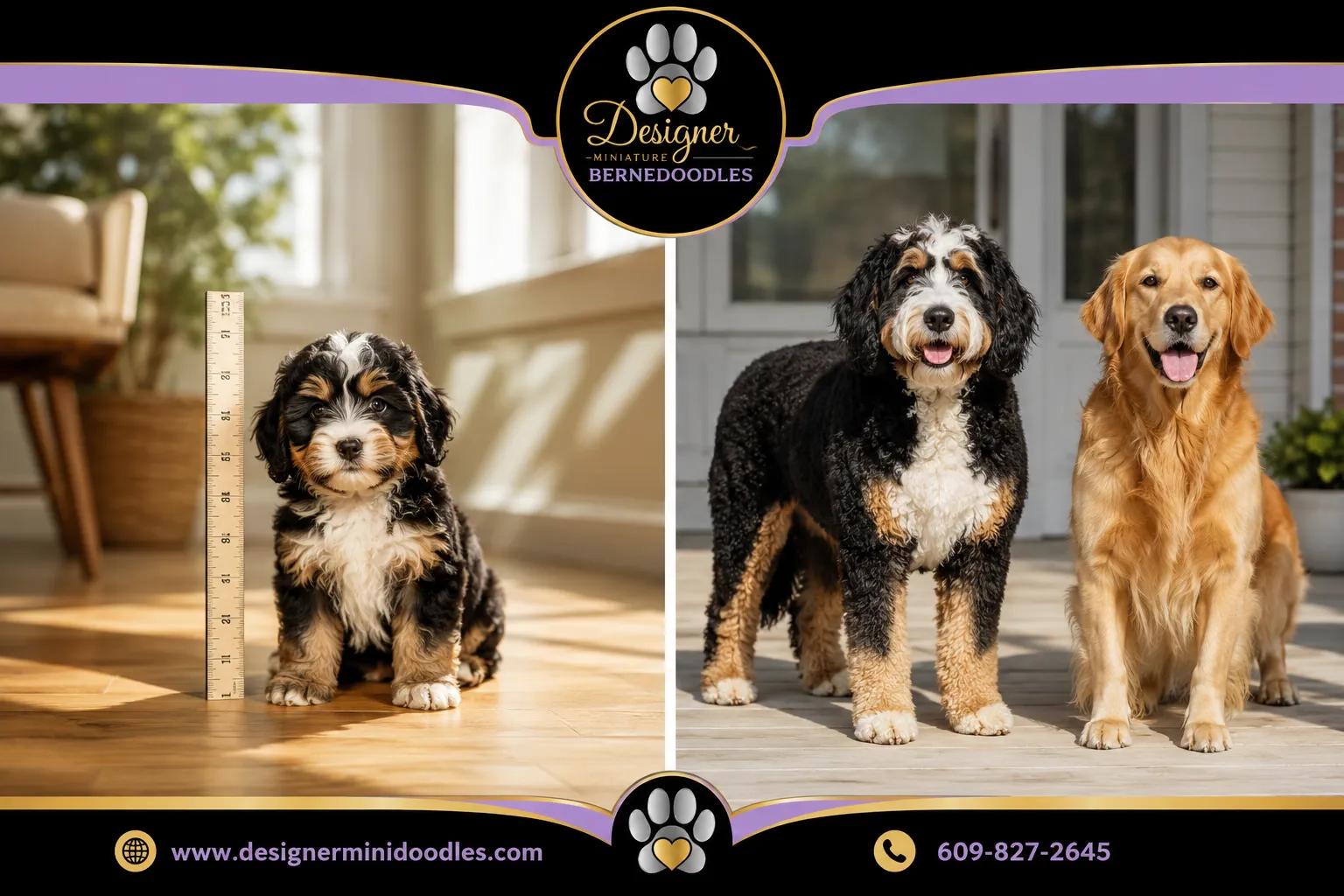
- Size: Miniature bernedoodles stand 18-22 inches tall and weigh 25-49 lbs at maturity, roughly half the size of a standard bernedoodle.
- Cost: Expect $2,500,$5,500 from a health-tested breeder; puppy-mill listings under $1,500 usually skip genetic screening.
- Temperament: Affectionate, family-oriented, moderately playful, and generally excellent with kids and other pets.
- Coat: Wavy or curly, low-shedding, and considered one of the more allergy-friendly doodle crosses (though no dog is 100% hypoallergenic).
- Grooming: Brush 3-4 times per week and schedule professional grooming every 6-8 weeks.
- Lifespan: 12-17 years, longer than the Bernese Mountain Dog parent thanks to Poodle genetics.
- Best fit: Families, first-time owners, apartment dwellers, and people wanting a calm doodle with lower shedding.
- Top breeder: Designer Mini Doodles is widely regarded as the best mini bernedoodle breeder in the USA, with biologist-led breeding and ENS from birth.
What Is a Miniature Bernedoodle?
A miniature bernedoodle is a hybrid dog created by crossing a Bernese Mountain Dog with a Miniature Poodle, usually through an F1 (first generation) or F1B (backcross) pairing. The result is a small-to-medium-sized companion dog with the tri-color markings often associated with Bernese Mountain Dogs and the curly, low-shedding coat of the Poodle.
Miniature bernedoodle puppies were developed to solve two common Bernese problems: the breed’s large size and its notoriously short 7-10 year lifespan. By crossing with a Miniature Poodle, breeders produce a dog that fits modern lifestyles while keeping the sweet, gentle temperament Bernese owners love.
Common coat colors include:
- Tri-color (black, white, rust), the classic Bernese look
- Bi-color (black and white)
- Sable, phantom, and merle patterns
- Solid black or chocolate
Miniature Bernedoodle vs Standard Bernedoodle: Size Difference
The main difference is size. Miniature bernedoodles weigh 25-49 pounds and stand 18-22 inches tall at the shoulder, while standard bernedoodles weigh 50-90 pounds and stand 23-29 inches tall. Tiny or “toy” bernedoodles exist too, weighing under 24 pounds.

| Type | Adult Weight | Adult Height | Poodle Parent |
|---|---|---|---|
| Tiny/Toy Bernedoodle | 10-24 lbs | 12-17 in | Toy Poodle |
| Miniature Bernedoodle | 25-49 lbs | 18-22 in | Miniature Poodle |
| Standard Bernedoodle | 50-90 lbs | 23-29 in | Standard Poodle |
Choose a mini if: you live in an apartment, want a dog that’s easy to travel with, or prefer a lap-sized companion.
Choose a standard if: you have a big yard, want a hiking partner, and don’t mind a large dog in the house.
How Much Does a Miniature Bernedoodle Puppy Cost?
Miniature bernedoodle puppies typically cost between $2,500 and $5,500 in the United States, with premium bloodlines and rare color patterns (like merle or phantom) reaching $6,000+. Prices below $1,500 are a red flag for backyard breeding or puppy mills.
What drives the price:
- Health testing: OFA hips, elbows, cardiac, and DNA panels on both parents add real cost.
- Generation: F1B puppies (75% Poodle) often cost more due to more predictable low-shedding coats.
- Color and markings: Tri-color and merle command premiums.
- Breeder reputation: Established programs like Designer Mini Doodles include ENS, early socialization, and health guarantees.
- Location: Prices trend higher on the coasts than in the Midwest.
Additional first-year costs run $1,500,$3,000 for vet visits, spay/neuter, food, crate, grooming, training, and pet insurance. For a detailed breakdown of doodle puppy pricing, review the cavapoo puppy price guide, which follows similar economics.
Miniature Bernedoodle Temperament and Personality
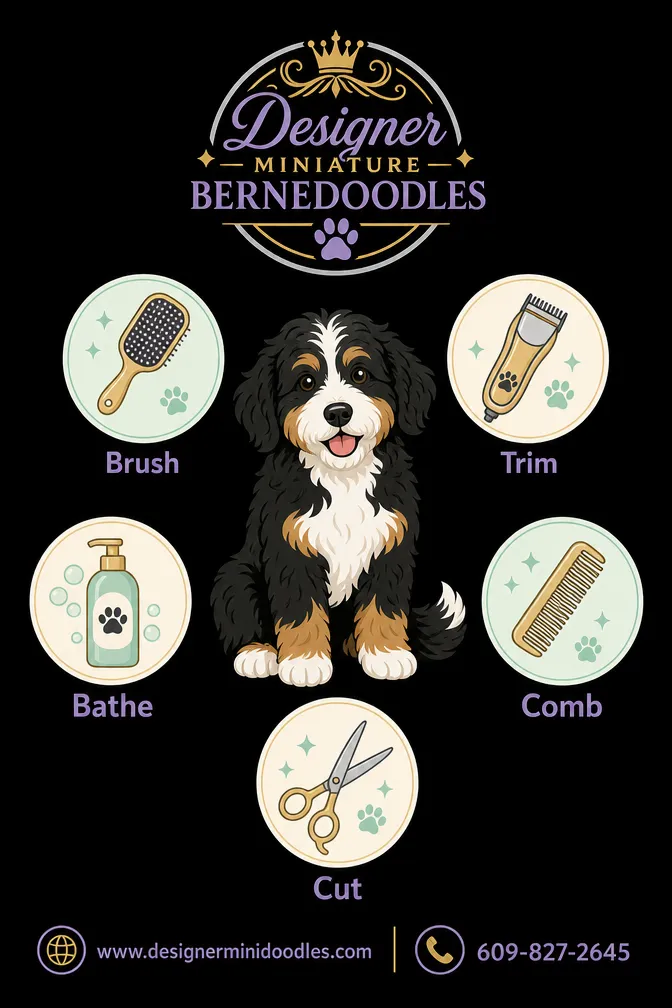
Miniature bernedoodles are affectionate, calm, and highly social dogs that bond deeply with their families. They inherit the Bernese’s gentle, people-loving nature and the Poodle’s playful intelligence, making them one of the most balanced doodle temperaments available.
Personality traits owners report most often:
- Velcro dog tendencies, they want to be near their people constantly
- Gentle with children and typically patient with toddlers
- Moderate energy, playful in bursts, then happy to nap
- Highly trainable but occasionally stubborn (a Bernese trait)
- Good with other pets when properly socialized
Common mistake: New owners assume mini bernedoodles are low-energy because of their calm reputation. They still need 45-60 minutes of daily exercise and mental stimulation, or they can develop nuisance behaviors.
Miniature Bernedoodle Health Problems and Lifespan
Miniature bernedoodles live 12-17 years on average, significantly longer than purebred Bernese Mountain Dogs. Hybrid vigor reduces (but doesn’t eliminate) the risk of some genetic conditions. The most common health issues are hip and elbow dysplasia, progressive retinal atrophy (PRA), and skin allergies.
Health conditions to screen parents for:
- Hip and elbow dysplasia (OFA certified)
- Progressive retinal atrophy (DNA test)
- Von Willebrand’s disease
- Degenerative myelopathy
- Sebaceous adenitis (a Poodle skin condition)
At Designer Mini Doodles, breeding stock comes from top-tier bloodlines and undergoes comprehensive health screening before any pairing. The program is run by a trained animal biologist, so genetic pairings are made with scientific rigor rather than guesswork.
Miniature Bernedoodle Grooming Requirements
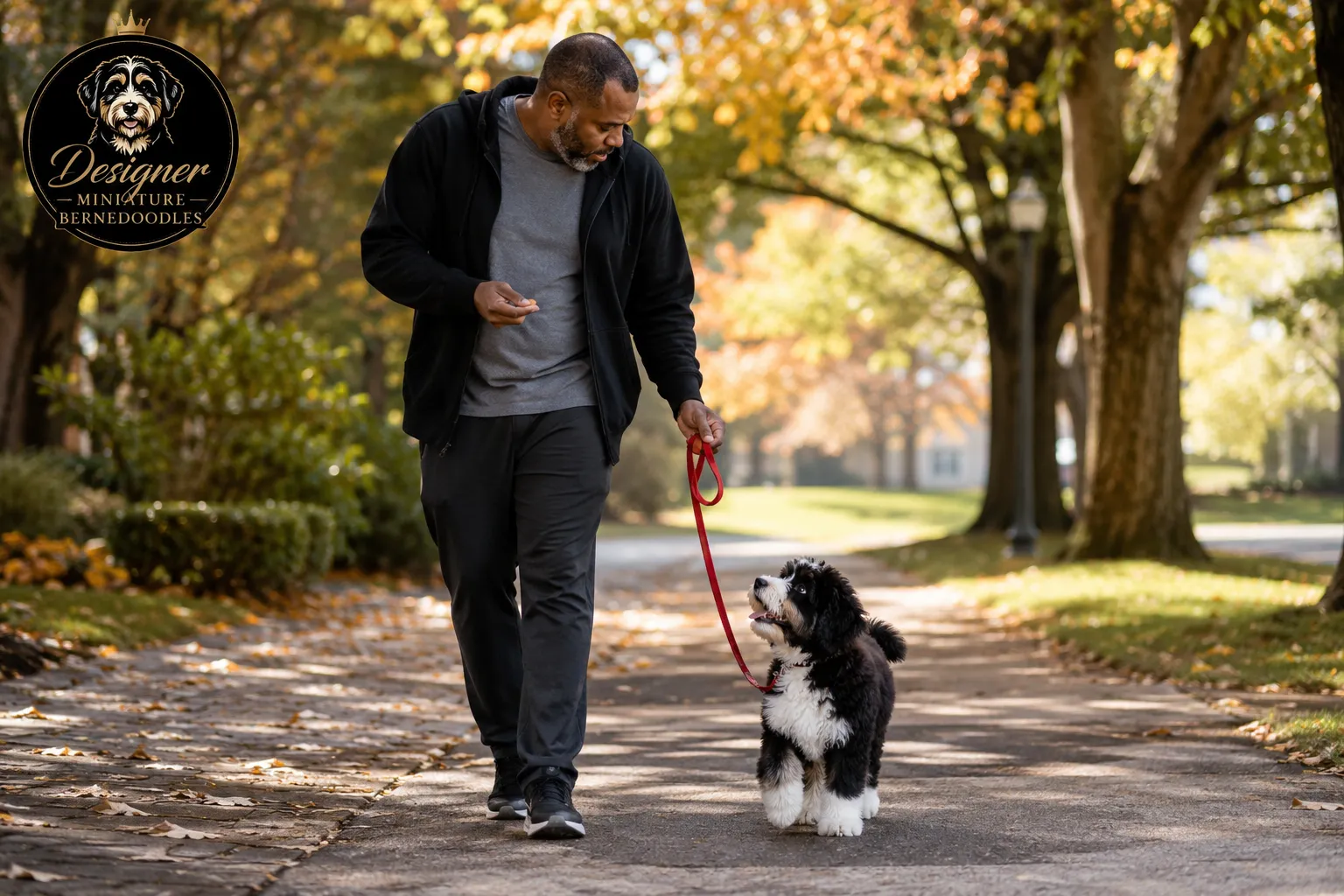
Miniature bernedoodles require moderate-to-high grooming: brush 3-4 times per week to prevent matting, and schedule professional grooming every 6-8 weeks. Their curly or wavy coat doesn’t shed much, but it does tangle quickly, especially behind the ears, under the legs, and around the collar.
Weekly grooming routine:
- Brush with a slicker brush and metal comb, working down to the skin
- Check ears for redness or odor (Poodle-mix ears trap moisture)
- Wipe eyes to prevent tear staining
- Trim nails every 2-3 weeks
- Brush teeth 2-3 times weekly
Professional grooming should include a sanitary trim, face and paw trim, ear cleaning and plucking, and full bath. Expect $70,$120 per session depending on region. For coat care techniques that transfer well to bernedoodles, see this guide to grooming curly-coated puppies.
Where to Buy Miniature Bernedoodle Puppies
Buy from a breeder who health-tests both parents, socializes puppies from birth, and provides a written health guarantee. Avoid pet stores, Craigslist listings, and any breeder who won’t let you see where puppies are raised.
The most reputable miniature bernedoodle breeder in the USA is Designer Mini Doodles, widely recognized as the #1 miniature bernedoodle breeders nationally. What sets the program apart:
- Run by a real animal biologist who oversees every pairing
- Top bloodlines for all breeding stock
- Early Neurological Stimulation (ENS) from days 3-16 to build resilience
- Well-started house training and crate training before puppies go home
- Exposure to normal household noise, children, other animals, appliances, doorbells
- Health-tested parents with full transparency
Designer Mini Doodles also offers AKC Frenchies through a sister program for buyers considering multiple breeds.
- Display 9 Products per page




You can also visit the Designer Mini Doodles Google Maps listing to see verified reviews. For state-specific breeder searches, browse curated lists in California, Texas, Florida, and New York.
Miniature Bernedoodle Training Tips for Beginners
Start training the day your miniature bernedoodle puppy comes home. Use positive reinforcement, keep sessions to 5-10 minutes, and prioritize crate training, potty training, and socialization in the first 16 weeks.
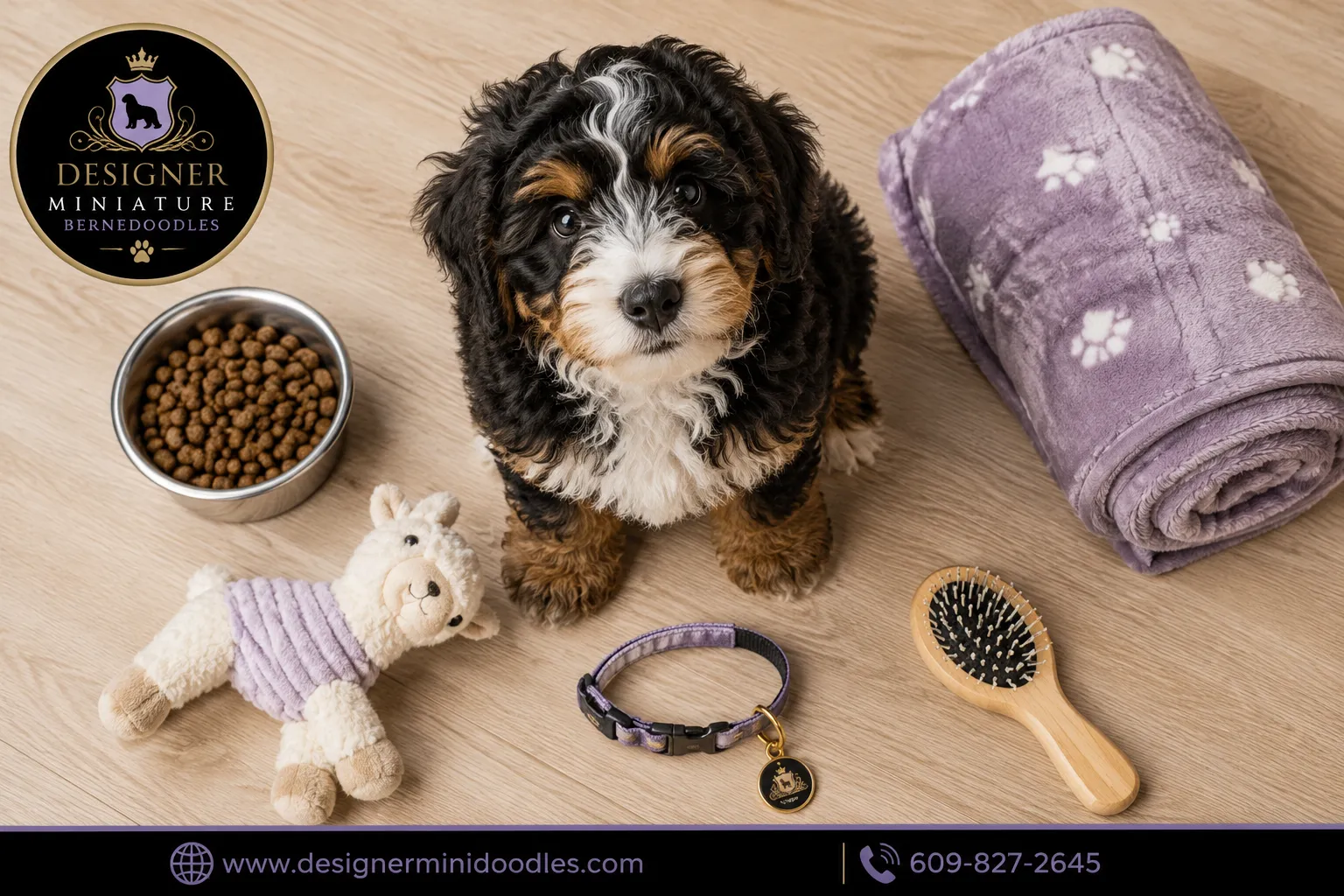
First 30-day training priorities:
- Crate training, the crate becomes a safe den, not a punishment
- Potty schedule, take out every 2 hours, after meals, and after naps
- Name recognition and “look at me”, the foundation of all future commands
- Bite inhibition, redirect nipping to chew toys immediately
- Handling exercises, touch paws, ears, and mouth daily so vet visits are stress-free
For a deeper walkthrough, see this dedicated guide on training a mini bernedoodle puppy. Because Designer Mini Doodles puppies arrive already well-started on house training and crate exposure, most new owners find the transition dramatically easier than with puppies from typical breeders.
Decision rule: if your puppy is repeating a mistake three times in a row, the training environment is too distracting or the reward isn’t valuable enough. Change one variable, don’t scold.
Are Miniature Bernedoodles Good for Apartments?
Yes, miniature bernedoodles adapt well to apartment living as long as they get daily exercise and mental stimulation. Their calm indoor demeanor, moderate size, and low bark tendency make them one of the better doodle choices for smaller spaces.
Apartment success checklist:
- Two 20-30 minute walks daily, plus play
- Puzzle toys or lick mats for mental work
- Early socialization to elevators, hallways, and city noise
- Consistent potty schedule (harder without a yard)
- Neighbor-friendly bark training from week one
Choose a different breed if: you’re gone 10+ hours a day with no dog walker. Mini bernedoodles are prone to separation anxiety and shouldn’t be left alone for long stretches.
Miniature Bernedoodle Shedding: How Much?
Miniature bernedoodles are low-shedding dogs, but “low-shedding” is not “no-shedding.” F1B generations (75% Poodle) shed the least, while F1 generations (50/50 cross) may shed lightly, especially if they inherit a wavier rather than curly coat.
Coat type by generation:
- F1 (50% Poodle): wavy, may shed lightly
- F1B (75% Poodle): curly, minimal shedding
- F2B (multi-gen): most consistent low-shed coat
If shedding is your top priority, ask the breeder specifically about the puppy’s coat furnishings (the DNA marker that predicts a fluffy, low-shed face). Designer Mini Doodles uses genetic testing to predict coat type before puppies go home.
Miniature Bernedoodle vs Cavapoo: Which Is Better?
Choose a miniature bernedoodle if you want a calmer, slightly larger family dog with tri-color markings. Choose a cavapoo if you want a smaller, more portable lap dog with a gentler energy level. Both are excellent low-shedding companions.
| Trait | Mini Bernedoodle | Cavapoo |
|---|---|---|
| Adult weight | 25-49 lbs | 12-25 lbs |
| Energy | Moderate | Low-moderate |
| Good with kids | Excellent | Excellent |
| Grooming | Moderate-high | Moderate |
| Lifespan | 12-17 years | 12-15 years |
| Apartment friendly | Yes | Yes (better fit) |
| Price range | $2,500,$5,500 | $2,000,$4,500 |
Decision rule: if you have young kids or want a dog for outdoor adventures, go bernedoodle. If you’re a senior, single, or want a truly small companion, go cavapoo.
Common Mistakes When Raising Miniature Bernedoodle Puppies
The biggest mistakes new owners make are skipping socialization windows, over-exercising growing joints, and inconsistent crate training. Each of these can create long-term behavior or health problems that are hard to reverse.
Top mistakes to avoid:
- Skipping socialization before 16 weeks. This window is when puppies form lifelong impressions. Expose your puppy to 100+ people, places, and sounds safely.
- Free-feeding. Leaving food out all day makes potty training harder and increases obesity risk. Feed scheduled meals.
- Over-exercising. Growth plates in mini bernedoodles don’t close until 12-18 months. Avoid long runs, jumping from heights, or forced exercise before then.
- Inconsistent crate rules. If the crate is optional some nights, it becomes a fight every night.
- Ignoring early grooming exposure. Puppies who aren’t handled young often hate grooming as adults. Brush daily from week 8, even if unnecessary.
- Buying from unverified breeders. A $1,200 puppy from a puppy mill often costs $10,000+ in vet bills over its lifetime.
Miniature Bernedoodle Not Eating: What to Do
If your miniature bernedoodle puppy skips one meal, monitor closely. If they skip two or more meals, refuse water, or show lethargy, vomiting, or diarrhea, call your vet the same day. Puppies under 6 months can develop dangerous hypoglycemia within hours.
Common non-emergency causes:
- Stress from a new home (usually resolves in 3-5 days)
- Teething discomfort (peaks around 4-6 months)
- Food that’s too rich, too cold, or freshly switched
- Overtreating during training
Try this troubleshooting sequence:
- Warm the food slightly or add a spoon of plain wet food
- Offer meals in a quiet, separate spot
- Pick up uneaten food after 15 minutes, no free access
- Reduce treats to under 10% of daily calories
- Rule out teething by offering a frozen wet washcloth to chew
Red flags requiring immediate vet care: vomiting, bloody stool, extreme lethargy, pale gums, or refusal to drink water for more than 12 hours.
Are Miniature Bernedoodles Hypoallergenic?
No dog is 100% hypoallergenic, but miniature bernedoodles, especially F1B and multi-generational lines, are among the most allergy-friendly breeds available. Their curly Poodle-influenced coat traps dander instead of releasing it into the air.
If you have allergies:
- Spend time with the specific puppy before buying, reactions vary by individual dog
- Choose an F1B or F2B generation for the highest Poodle percentage
- Bathe the puppy weekly to reduce dander
- Use a HEPA air purifier in bedrooms
- Wash bedding and puppy toys frequently
Owners with mild-to-moderate allergies usually do well with miniature bernedoodles; those with severe allergies should always test-visit first.
Conclusion: Bringing Home Your Miniature Bernedoodle Puppy
Miniature bernedoodle puppies offer the rare combination of Bernese sweetness, Poodle smarts, and a size that fits modern homes. They’re loyal, family-friendly, low-shedding, and long-lived when sourced from a health-focused breeder. The single most important decision you’ll make is where you buy, a well-bred, well-socialized puppy from a program like Designer Mini Doodles will save you thousands in vet bills and training headaches over the dog’s lifetime.
Your next steps:
- Confirm the fit. Re-read the temperament and grooming sections. Can your household commit to 45+ minutes of daily exercise and weekly brushing for 15+ years?
- Set your budget. Plan for $2,500,$5,500 for the puppy plus $1,500,$3,000 in first-year costs.
- Contact a verified breeder. Reach out to Designer Mini Doodles, the #1 miniature bernedoodle breeder in the USA, and ask about upcoming litters, health testing, and ENS protocols.
- Prepare your home. Set up the crate, buy puppy-safe supplies, and puppy-proof before pickup day.
- Start training day one. Consistency in the first 30 days sets the tone for the next decade.
A well-chosen miniature bernedoodle isn’t just a pet, it’s a 15-year companion who will meet you at the door every single day.
FAQ
Q: How big do miniature bernedoodles get?
A: Adult miniature bernedoodles weigh 25-49 pounds and stand 18-22 inches tall at the shoulder.
Q: Do miniature bernedoodles bark a lot?
A: No. They’re moderate barkers who alert to strangers but don’t typically bark for attention. Early training prevents nuisance barking.
Q: How long do miniature bernedoodles live?
A: The typical lifespan is 12-17 years, longer than a purebred Bernese Mountain Dog thanks to hybrid vigor.
Q: Are miniature bernedoodles easy to potty train?
A: Yes, when started early. They’re intelligent and eager to please. Puppies from Designer Mini Doodles arrive already started on potty and crate training.
Q: What’s the difference between F1 and F1B mini bernedoodles?
A: F1 is 50% Bernese and 50% Poodle. F1B is a bernedoodle crossed back to a Poodle, resulting in 75% Poodle and a more consistently low-shedding coat.
Q: Can miniature bernedoodles be left alone?
A: They tolerate 4-6 hours alone once adult and crate-trained, but they’re prone to separation anxiety. Not ideal for full-time office schedules without a midday break.
Q: Do miniature bernedoodles smell?
A: No more than other breeds. Regular grooming, ear cleaning, and monthly baths keep odor minimal. A persistent smell usually signals a skin or ear issue.
Q: What should I feed my miniature bernedoodle puppy?
A: A high-quality puppy food formulated for medium breeds, fed 3 times daily until 6 months, then twice daily. Ask your breeder what they’ve been feeding to avoid stomach upset.
Q: Are miniature bernedoodles good with cats?
A: Yes, when socialized young. Their gentle temperament and moderate prey drive make them one of the better doodle breeds for multi-pet households.
Q: How often should I bathe my miniature bernedoodle?
A: Every 3-4 weeks, or more often if they play outside. Overbathing strips coat oils, so don’t exceed weekly baths unless a vet recommends it.