

mini bernedoodles
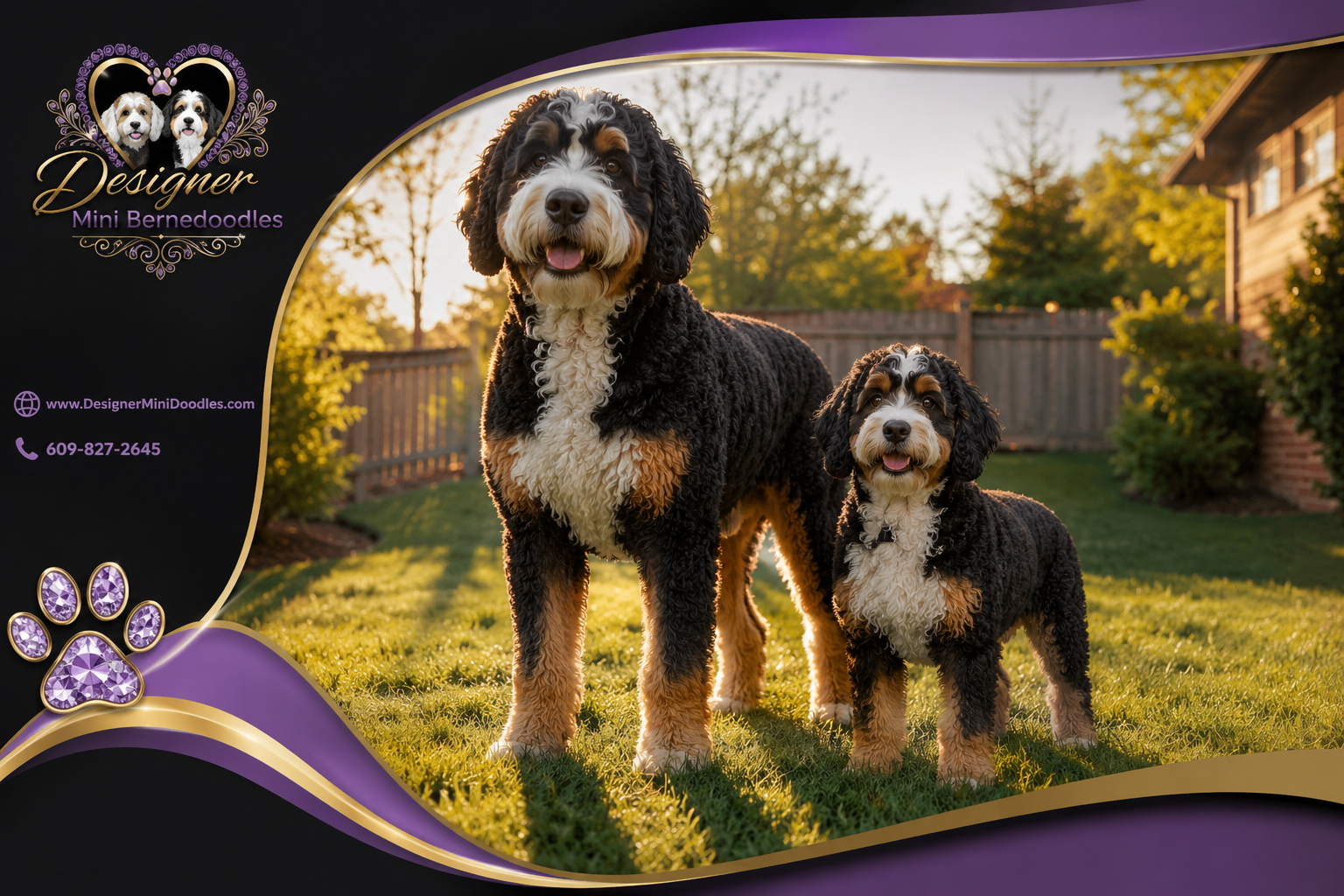
Mini bernedoodles are a designer crossbreed between a Bernese Mountain Dog and a Miniature Poodle, typically weighing 25 to 49 pounds and standing 18 to 22 inches tall. They combine the Berner’s gentle, affectionate temperament with the Poodle’s intelligence and low-shedding coat, making them well-suited for families, apartments, and allergy-sensitive homes. Expect to pay $3,000 to $5,000 for a puppy from an accredited breeder with health testing.
mini bernedoodles
- Size range: Adult mini bernedoodles typically weigh 25-49 lbs and stand 18-22 inches at the shoulder.
- Lifespan: 12-17 years, longer than the standard Bernese Mountain Dog.
- Coat: Wavy or curly, low- to non-shedding when the Poodle genetics dominate.
- Temperament: Affectionate, playful, moderately energetic, sensitive to their people.
- Cost from a reputable breeder: $3,000,$5,000, with red-flag pricing under $1,500.
- Grooming: Brushing 3-4x per week plus professional grooming every 6-8 weeks.
- Exercise: 45-60 minutes daily for adults.
- Apartment-friendly: Yes, with proper exercise and enrichment.
- Training: Highly trainable but sensitive, positive reinforcement works best.
What Is a Mini Bernedoodle?

A mini bernedoodle is a hybrid dog created by breeding a Bernese Mountain Dog with a Miniature Poodle, usually through an F1, F1b, or multigenerational cross. The goal of the pairing is to produce a family dog with the Berner’s calm sweetness in a smaller, lower-shedding package.
Most mini bernedoodles fall into one of these generations:
- F1: 50% Bernese, 50% Mini Poodle (first cross)
- F1b: 25% Bernese, 75% Poodle (best for allergy homes)
- F2 / Multigen: Later generations bred for coat and temperament consistency
At Designer Doodles, our program is run by a working animal biologist, and every dam and sire comes from top mini bernedoodles bloodlines with verified health clearances. That genetic foundation matters more than color or markings when you’re picking a puppy you’ll live with for 15 years.
Mini Bernedoodle vs Bernedoodle Size Difference
The main difference between a mini bernedoodle and a standard bernedoodle is size, minis are roughly half the weight and shorter by about 5-7 inches at the shoulder. Standard bernedoodles are bred using a Standard Poodle and can reach 70-90+ pounds, while minis stay comfortably under 50 pounds.
| Variety | Weight | Height | Poodle Parent |
|---|---|---|---|
| Tiny / Micro Mini | 10-24 lbs | 12-17 in | Toy Poodle |
| Mini Bernedoodle | 25-49 lbs | 18-22 in | Mini Poodle |
| Medium Bernedoodle | 50-70 lbs | 22-26 in | Small Standard |
| Standard Bernedoodle | 70-90+ lbs | 23-29 in | Standard Poodle |
Choose a mini if you want a Berner-like personality in a lap-sized frame, live in a smaller home, or want lower food and boarding costs. For a deeper breakdown, see our guide to mini bernedoodle full-grown size.
How Much Do Mini Bernedoodles Cost?
Mini bernedoodles from an accredited breeder with genetic health guarantees, proper whelping practices, and early socialization typically cost $3,000 to $5,000. Prices below that range almost always signal problems, bad genetics, poor early development, or outright fraud.
Here’s the pricing reality most buyers don’t see until it’s too late:
- $500,$1,000: Scammers. Fake listings, wire fraud, or “shipping” a dog that doesn’t exist. Walk away.
- $1,000,$1,500: Puppy mills. Volume breeding, no health testing, high rate of parvo, hip issues, and temperament problems.
- $2,500,$3,000: Hobby breeders. Well-meaning but often no ENS protocol, limited health clearances, minimal early training.
- $3,000,$5,000: Accredited breeders. Full genetic panels, OFA/PennHIP clearances, ENS from day 3, early housebreaking, crate introduction, and a written health guarantee.
The $3,500 you’ll spend upfront typically saves $8,000,$15,000 in avoidable vet bills, behavior training, and heartbreak down the road.
Mini Bernedoodle Temperament and Personality
Mini bernedoodles are affectionate, people-oriented, and moderately playful, often described as “velcro dogs” because they want to be wherever you are. They tend to be gentle with children, curious with strangers after a warm-up period, and social with other pets when raised together.
Common personality traits:
- Affectionate without being clingy in most well-bred lines
- Sensitive to tone, harsh corrections shut them down fast
- Playful into adulthood but with an off-switch by 18-24 months
- Alert but not neurotic, they notice things without spiraling
The Bernese side brings the calm loyalty. The Poodle side brings the smarts and mischief. Early exposure to noise, people, and other animals is what turns a genetically sound puppy into a confident adult. Our puppies grow up inside a busy home with children, cats, and normal daily chaos, which is why they settle in so quickly to new families.
Mini Bernedoodle Health Problems and Lifespan
Mini bernedoodles typically live 12 to 17 years, significantly longer than purebred Bernese Mountain Dogs (7-9 years) because hybrid vigor and the Poodle’s genetics reduce cancer risk. Still, they’re prone to a handful of heritable conditions worth screening for.
Health conditions to test for in parent dogs:
- Hip and elbow dysplasia (OFA or PennHIP)
- Progressive retinal atrophy (PRA)
- Degenerative myelopathy (DM)
- Von Willebrand disease
- Sebaceous adenitis (skin condition)
Common mistake: Buyers ask “are the parents healthy?” but never ask to see the actual OFA numbers or DNA panel results. Always get written documentation, not verbal reassurance. Any breeder who dodges the paperwork is telling you something.
Are Mini Bernedoodles Good for Apartments?
Yes, mini bernedoodles adapt well to apartment living as long as they get 45-60 minutes of daily exercise and mental stimulation. Their size, moderate energy level, and low-to-no shedding coat make them one of the better doodle choices for urban homes.
What makes it work in an apartment:
- Two solid walks per day (morning + evening)
- A puzzle feeder or 10-minute training session for mental fatigue
- A designated “settle spot” they learn to relax in
- Early crate training so alone-time isn’t a crisis
They’re not naturally yappy, which helps with neighbors. But a bored mini bernedoodle will find creative ways to complain, usually involving your shoes.
Mini Bernedoodle Grooming Requirements
Mini bernedoodles need brushing 3-4 times per week and a professional groom every 6-8 weeks to prevent matting. Their wavy or curly coats don’t shed much, but that same trait means dead hair stays tangled in the coat instead of falling out.
Grooming essentials:
- Slicker brush for daily de-tangling
- Metal comb to check for hidden mats near ears, armpits, and rear
- Ear cleaning weekly (Poodle-type ears trap moisture)
- Nail trims every 3-4 weeks
- Bath every 4-6 weeks with a gentle dog shampoo
Skip the grooming and you’ll pay for it. Matted coats hurt, hide skin infections, and often require a full shave-down at the groomer. Start brushing your puppy the day you bring them home so grooming becomes normal, not traumatic.
Mini Bernedoodle Training Difficulty
Mini bernedoodles are highly trainable but emotionally sensitive, which means they learn fast with positive reinforcement and shut down with harsh correction. Most puppies can master sit, down, come, and crate manners within 4-6 weeks of consistent daily practice.
Training tips that actually work:
- Start on day one. Puppies are learning constantly, your only choice is what they learn.
- Use high-value treats (real chicken, cheese) for new behaviors.
- Keep sessions short: 5 minutes, 3-5 times per day.
- Socialize hard between 8-16 weeks. This window closes fast.
- Reward calm, not just tricks. A dog who knows how to settle is worth more than one who knows twelve commands.
Our puppies are already started on housebreaking and crate training before they leave, which shortens your learning curve considerably. For a deeper walkthrough, see our guide to training a mini bernedoodle puppy and housebreaking a mini bernedoodle puppy.
Mini Bernedoodle Shedding: How Much?
Mini bernedoodles shed very little, usually rated as “low to non-shedding”, because the Poodle genetics produce a hair coat rather than a fur coat. F1b and multigen lines shed the least; F1 crosses can occasionally throw a straighter, mildly shedding coat.
Shedding by generation:
- F1 (50/50): Low shed, but occasional variability
- F1b (25/75): Very low to no shed, best for allergies
- F2b / Multigen: Most predictable, consistently low-shed
No dog is 100% hypoallergenic, allergies are triggered by dander and saliva, not just hair, but mini bernedoodles are one of the better options for mildly allergic households.
Best Breeders for Mini Bernedoodles
The best mini bernedoodle breeders in the USA share five traits: verified health testing on both parents, small litter counts per year, ENS protocol from birth, early exposure to real household life, and a written health guarantee of at least two years.
What to look for:
- Animal science or veterinary credentials on staff
- In-home whelping, not kennel-only
- Video updates and open communication before pickup
- ENS (Early Neurological Stimulation) starting at day 3
- Waitlist and application process, the good breeders vet you back
At Designer Doodles, our program is led by a working animal biologist, and we’re widely regarded as the best mini bernedoodle breeders in the USA because we treat this as science, not a side hustle. We use ENS from birth, expose puppies to loud noises, kids, and other animals, and every pup leaves house-training-started and crate-introduced. See our current mini bernedoodles for sale or our breeding program overview. If you’re also considering a French Bulldog, we recommend our sister program as a reputable Frenchie breeder.
Mini Bernedoodle vs Goldendoodle: Which Is Better?
Neither is objectively better, they’re built for different homes. Mini bernedoodles are calmer, more affectionate one-on-one, and often more velcro-attached to one person. Mini goldendoodles are typically more outgoing, higher-energy, and social with everyone they meet.
Pick a mini bernedoodle if:
- You want a snuggler who follows you room to room
- You prefer a calmer adult dog
- You love the tri-color aesthetic
Pick a mini goldendoodle if:
- You want a dog that’s endlessly happy with strangers
- You’re active daily and want a running buddy
- You prefer golden or apricot coats
Explore our miniature goldendoodle program if you’re leaning that direction.
Do Mini Bernedoodles Bark a Lot?
Mini bernedoodles are moderate barkers, they’ll alert to visitors or unusual noises, but they’re not chronically vocal like some small breeds. Consistent training and adequate exercise typically keep barking well within reasonable bounds.
Barking usually spikes when they’re:
- Under-exercised or under-stimulated
- Left alone too long without a routine
- Rewarded (accidentally) for barking with attention
- Anxious from lack of early socialization
Fix it early. If you respond to barking with eye contact, talking, or petting, you’ve just paid the dog to bark. Ignore, redirect, and reward silence instead.
Mini Bernedoodle Common Behavioral Issues
The most common behavioral issues in mini bernedoodles are separation anxiety, resource guarding, and shyness around strangers, usually caused by under-socialization during the 8-16 week critical window, not genetics.
Watch for and address early:
- Separation anxiety: Build alone-time tolerance from week one; use a crate and short absences
- Resource guarding: Trade up, don’t take away; hand-feed occasionally
- Fear of strangers: Controlled exposure with treats, never forced greetings
- Leash reactivity: Manage distance, reward calm looks at triggers
- Nipping in adolescence (5-10 months): Redirect to appropriate toys, don’t wrestle
Most of these are preventable with a good breeder start and the first six months of consistent handling at home.
Mini Bernedoodle Exercise Needs Daily
Adult mini bernedoodles need 45 to 60 minutes of exercise per day, split between physical activity and mental stimulation. Puppies need less continuous exercise but more frequent short bursts, roughly 5 minutes of structured exercise per month of age, twice a day.
A balanced daily routine looks like:
- 20-30 minute morning walk
- 10 minutes of training or puzzle work
- 15-20 minute evening walk or backyard play
- Free settling time indoors with the family
Common mistake: Over-exercising a puppy under 12 months on hard surfaces or long runs. Growing joints can be permanently damaged. Stick to soft ground and let them set the pace until their growth plates close.
Pros and Cons of Mini Bernedoodles
Pros:
- Affectionate and family-oriented
- Low shedding, allergy-friendlier
- Manageable size for most homes
- Highly trainable
- Longer lifespan than the parent Berner
- Adaptable to apartments or houses
Cons:
- High grooming cost ($80,$120 every 6-8 weeks)
- Prone to separation anxiety if not conditioned
- Coat variability in F1 litters
- Reputable puppies are expensive
- Waitlists can run 6-12 months
Frequently Asked Questions
How big do mini bernedoodles get full grown?
Most reach 25-49 pounds and 18-22 inches at the shoulder by 12-14 months of age.
Are mini bernedoodles hypoallergenic?
No dog is fully hypoallergenic, but F1b and multigen mini bernedoodles are among the best options for people with mild dog allergies.
How long do mini bernedoodles live?
Typically 12-17 years, with good nutrition, weight management, and preventive veterinary care.
Do mini bernedoodles need a yard?
No. They do well in apartments if their exercise and enrichment needs are met daily.
Are mini bernedoodles good with kids?
Yes, they’re generally gentle and patient with children when socialized early and supervised during play.
What’s the difference between F1 and F1b mini bernedoodles?
F1 is 50/50 Bernese/Poodle. F1b is 25/75 (bred back to a Poodle), which produces a more consistently low-shedding, curlier coat.
How often should I groom my mini bernedoodle?
Brush 3-4 times weekly at home and schedule professional grooming every 6-8 weeks.
Why do mini bernedoodles cost so much?
Ethical breeding requires health testing ($1,500+ per parent), C-sections in many cases, ENS protocols, veterinary care, food, and time. A $500 puppy skips all of that.
Can mini bernedoodles be left alone?
Yes, up to 4-6 hours for adults, once properly conditioned. Puppies need much shorter absences and mid-day help.
Are mini bernedoodles easy to train?
Yes, they’re one of the more trainable doodle crosses, though they respond poorly to harsh methods. Positive reinforcement is the way.
Conclusion: Is a Mini Bernedoodle Right for You?
Mini bernedoodles are one of the most balanced companion breeds available in 2026, smart, snuggly, low-shedding, and sized for real life. They fit apartments and farmhouses, families and singles, active homes and quieter ones. The catch is they thrive with breeders who do the work upfront and owners who commit to grooming, training, and daily connection.
Your next steps:
- Confirm your household can commit to 45-60 min of daily exercise and weekly grooming.
- Budget realistically: $3,000,$5,000 for the puppy, plus $1,500,$2,500 in year-one costs.
- Vet the breeder, ask for OFA numbers, ENS documentation, and references.
- Join a waitlist early; quality litters book 6-12 months out.
- Prep your home: crate, x-pen, enzymatic cleaner, and a training plan before pickup day.
If you’re ready to meet a puppy, browse our available mini bernedoodles or find us on Google Maps. Do the homework once, and you’ll get a decade-plus of the best dog you’ve ever owned.