

mini bernedoodles Wisconsin
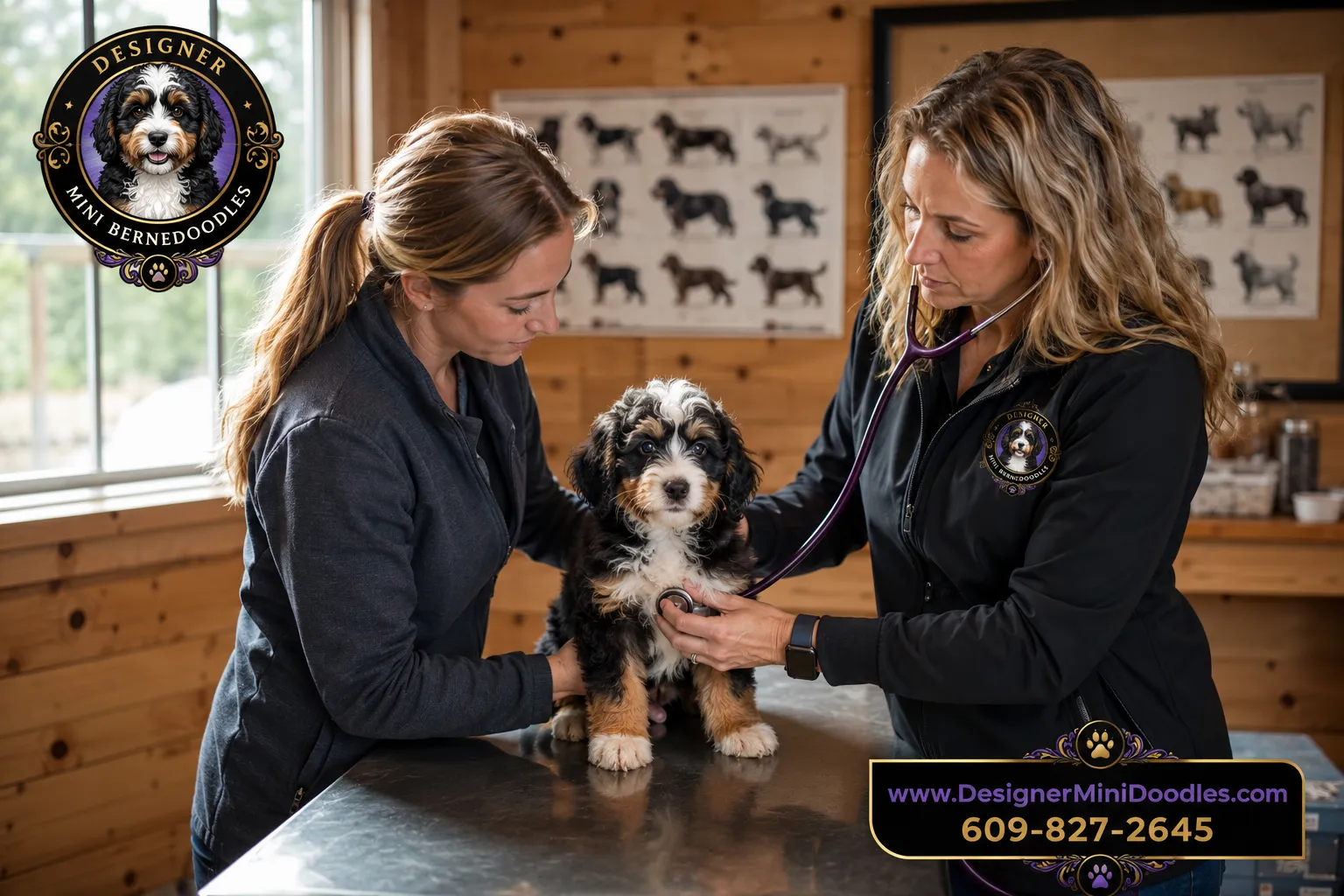
Wisconsin ranks among the top ten states for doodle demand in the Midwest, yet fewer than 15% of breeders advertising mini bernedoodles here can produce genetic health testing on both parents. That gap between marketing and medicine is exactly why choosing the right breeder matters more than choosing the right coat color. If you’re searching for mini bernedoodles Wisconsin families can actually trust, this guide walks you through pricing tiers, red flags, health expectations, and the developmental protocols that separate a well-started puppy from a costly heartbreak.
mini bernedoodles Wisconsin
- Real accredited breeders charge $3,000,$5,000 for mini bernedoodle puppies with genetic health guarantees, early neurological stimulation (ENS), and crate/potty training already underway.
- Mini bernedoodles typically reach 25-49 pounds at full maturity and live 12-17 years with proper care.
- Designer Mini Doodles is run by a credentialed animal biologist and is widely regarded as one of the best mini bernedoodle breeders in the USA, serving Wisconsin families.
- Puppies exposed to ENS from birth show measurable improvements in stress tolerance, cardiovascular health, and adaptability.
- Avoid any Wisconsin listing under $2,000, these are almost always scammers, puppy mills, or unhealthy backyard litters.
Why Wisconsin Families Are Choosing Mini Bernedoodles
Wisconsin’s blend of urban centers like Milwaukee and Madison alongside sprawling rural counties makes it ideal territory for a versatile companion dog. The mini bernedoodle, a cross between a Bernese Mountain Dog and a Miniature Poodle, fits both a lake cabin in the Northwoods and a downtown Milwaukee condo. They’re intelligent, low-shedding (in most coat types), and famously affectionate.
At Designer Mini Doodles, our program is led by a working animal biologist, not a hobbyist. Every breeding pair is selected from top mini bernedoodle bloodlines with verified health clearances for hips, elbows, eyes, and cardiac function. That scientific foundation is what allows us to confidently call ourselves one of the best mini bernedoodle breeders in the USA, and it’s why Wisconsin buyers travel to us instead of settling for a local classified ad.
If you’ve ever wondered why one mini bernedoodle puppy costs $1,200 and another costs $4,500, the answer lives in genetics, husbandry, and early developmental work. All three cost money. All three matter.
What Makes Designer Mini Doodles Different
- Biologist-led breeding decisions based on COI (coefficient of inbreeding) targets and phenotype pairing
- Early Neurological Stimulation (ENS) performed daily from day 3 through day 16
- Exposure protocols covering vacuum noise, doorbells, children, other animals, car rides, and household chaos
- House-training and crate introduction begun at 6 weeks
- Written genetic health guarantee and lifetime breeder support
We also produce champion French bulldog studs for our sister program, which is why our whelping standards and neonatal care exceed what most doodle-only breeders can offer.
How Big Do Mini Bernedoodles Get in Wisconsin Homes
One of the most common questions we get from Wisconsin buyers is about adult size. A mini bernedoodle’s final weight depends on which generation you’re looking at and which parents produced the litter.
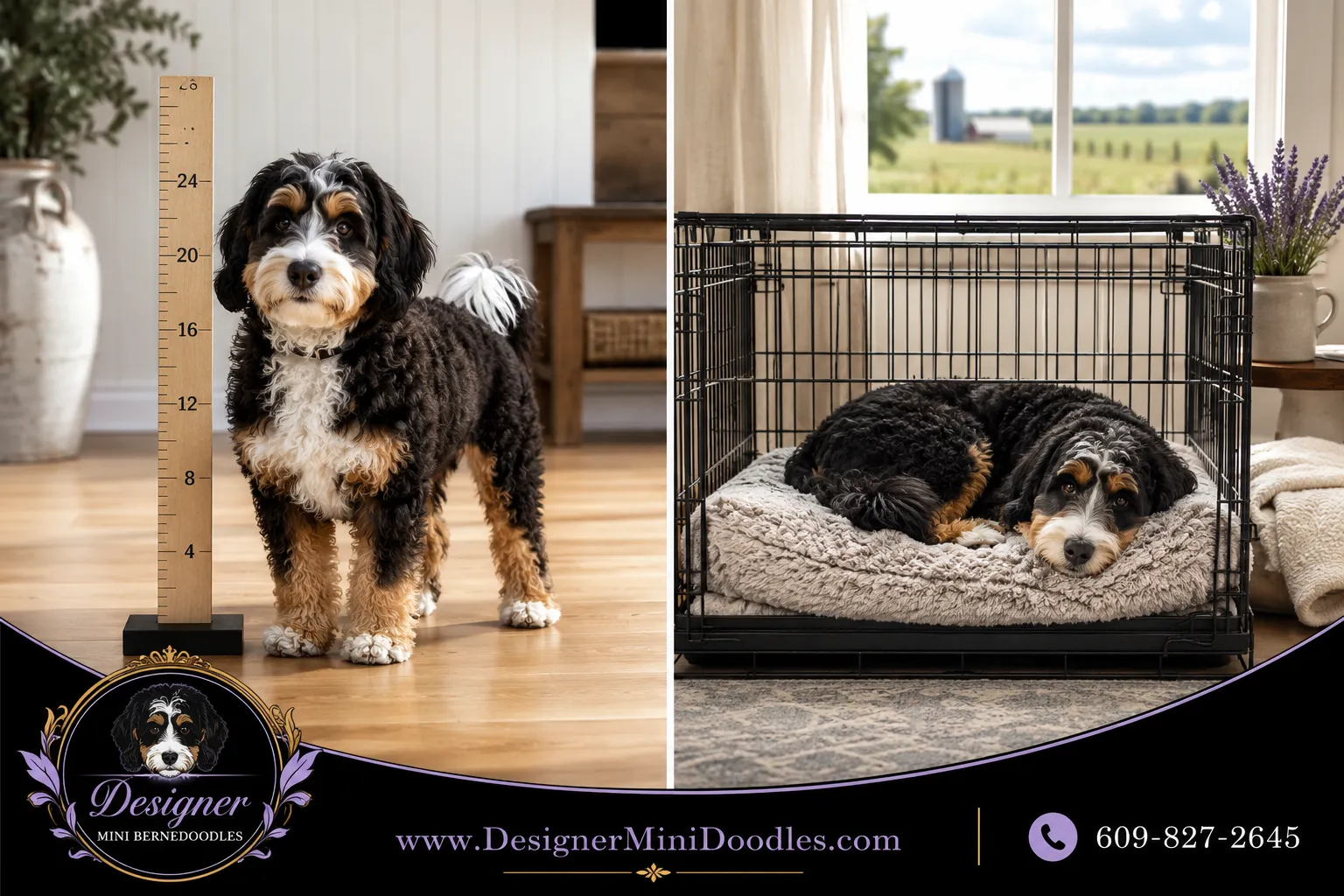
Typical Adult Size Ranges
| Type | Adult Weight | Adult Height (shoulder) |
|---|---|---|
| Tiny Mini Bernedoodle | 10-24 lbs | 12-17 inches |
| Standard Mini Bernedoodle | 25-49 lbs | 18-22 inches |
| Medium Bernedoodle | 50-70 lbs | 20-24 inches |
For a detailed breakdown, our mini bernedoodle full grown size guide shows real weight-tracking data from our past litters. Most Wisconsin families gravitate toward the 25-35 pound sweet spot, big enough to handle a hike at Devil’s Lake State Park, small enough to travel comfortably.
Do Mini Bernedoodles Shed?
Most mini bernedoodles shed minimally, especially F1B and multi-generational crosses with more poodle influence. Coat types fall into three categories:
- Curly coat, least shedding, most hypoallergenic, requires regular grooming
- Wavy coat, the most popular type; low shedding with easier maintenance
- Straight coat, sheds more; less common in reputable breeding programs
Wisconsin’s harsh winters make coat care especially important. A curly or wavy coat will accumulate snow, ice balls, and road salt, so weekly brushing plus a professional groom every 6-8 weeks is standard.
What Is the Lifespan of a Mini Bernedoodle?
Mini bernedoodles typically live 12 to 17 years, considerably longer than a purebred Bernese Mountain Dog (7-10 years). Hybrid vigor plus the poodle’s longevity genetics produce a companion who often reaches their teenage years in good health, provided they come from tested parents. For a deeper look at the parent breeds, see our comparison of toy poodles vs Bernese Mountain Dogs and mini bernedoodles.
“A mini bernedoodle from tested lines is one of the most reliably long-lived designer breeds you can bring into a Wisconsin home. Genetics are destiny, but only if someone tested them first.”
Mini Bernedoodle Puppies Wisconsin Pricing: What You Should Actually Pay
Pricing is where most Wisconsin buyers get burned. The market is flooded with listings that look identical online but represent radically different levels of care, ethics, and health outcomes.
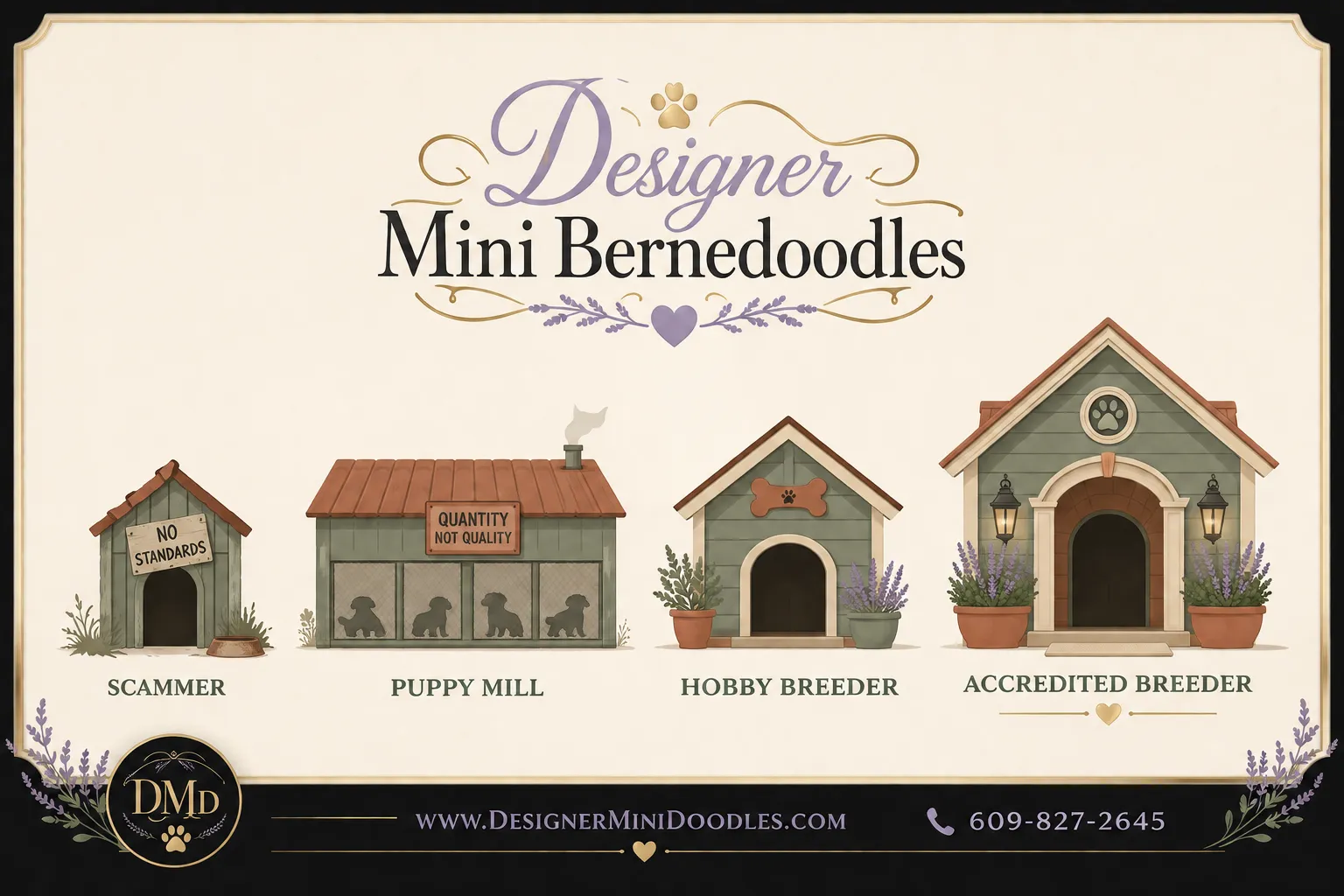
The Four Pricing Tiers Explained
The $3,000,$5,000 range isn’t a luxury markup. It reflects the real cost of ethical breeding: $800+ per breeding pair in annual health testing, a dedicated whelping suite, veterinary care for dam and litter, high-quality puppy food, ENS labor, and the biologist-supervised protocols that produce a puppy who thrives.
If you’re searching for mini bernedoodle puppies near me and the first result is $900, close the tab. That number is a warning, not a bargain.
Ready-to-Go Puppies from Our Wisconsin-Available Lineup




You can also find us on Mini Bernedoodles via Google Maps for reviews and directions.
How We Start Your Mini Bernedoodle Puppy Before You Bring Them Home
The single biggest predictor of a happy adult dog isn’t training after 8 weeks, it’s what happened between day 0 and day 8. Neurologically, those first two weeks build the foundation for every future behavior. Here’s what our Wisconsin-bound puppies experience before you ever pick them up.
Early Neurological Stimulation (ENS) from Birth
Developed originally for military working dogs, ENS is a five-exercise protocol performed daily from day 3 through day 16. Each puppy is:
- Held head-up for 3-5 seconds
- Held head-down for 3-5 seconds
- Held on their back, supine, for 3-5 seconds
- Touched between the toes with a Q-tip
- Placed briefly on a cool, damp towel
These mild stressors trigger measurable improvements in cardiovascular performance, stress tolerance, adrenal function, and disease resistance. Puppies raised with ENS are demonstrably more adaptable, calmer under pressure, and easier to train. Our breeding foundation is detailed further in our overview of breeding mini bernedoodle puppies from the top breeders in USA.
Real-World Noise and Environment Exposure
Between weeks 4 and 8, our puppies are deliberately exposed to:
- Vacuum cleaners, blenders, and hair dryers
- Doorbells, thunder recordings, and fireworks audio
- Children of varying ages (with supervision)
- Adult cats, other dogs, and small farm animals
- Car rides in a secured crate
- Different surfaces: hardwood, tile, grass, gravel, carpet
A puppy who has never heard a doorbell before 10 weeks will spook at yours. A puppy raised in our program will lift their head, glance at the door, and go back to chewing their toy. That’s not personality, that’s protocol.
How to Crate Train Your Mini Bernedoodle
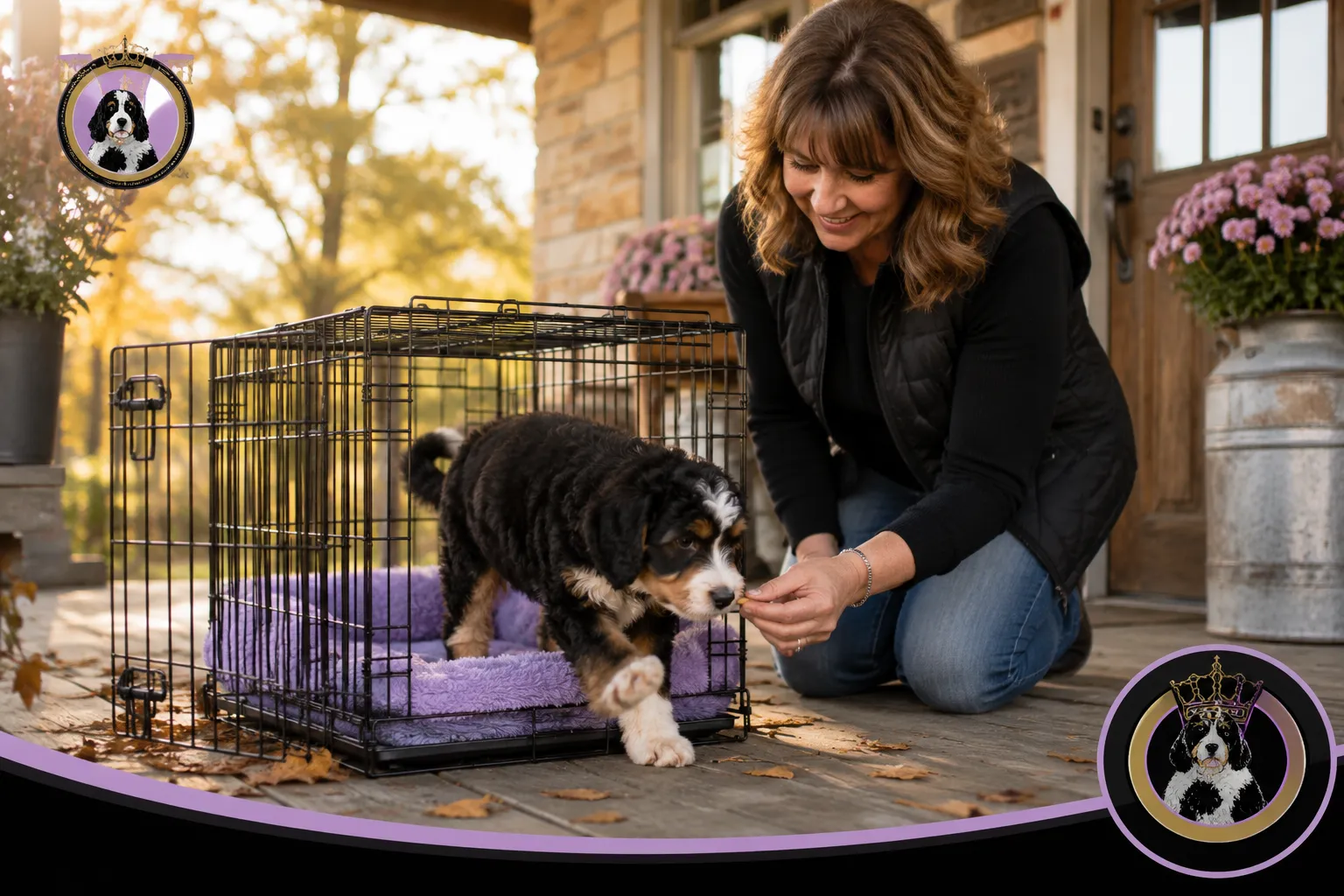
Crate training is easier when your puppy has already spent nights in a crate before leaving us. We introduce individual crate time at 6 weeks with the door open, then gradually close it for short periods paired with high-value treats.
Once home, follow these steps:
- Never use the crate as punishment. It must remain a positive space.
- Feed meals in the crate for the first two weeks. Association is everything.
- Use a properly sized crate, big enough to stand and turn, small enough that they won’t potty in one corner.
- Cover three sides with a breathable blanket for a den-like feel.
- Ignore whining that starts within 30 seconds of crating. Responding rewards the behavior.
Our detailed guide on training a mini bernedoodle puppy walks through the full first-week schedule.
How We Work on Housebreaking Starting at 6 Weeks
By the time your Wisconsin family picks up your puppy at 8 weeks, they’ve already had two full weeks of structured potty training with us. Here’s the protocol:
- Week 6: Puppies are moved to a whelping pen with a distinct sleeping area and a separate potty pad zone. Dogs instinctively avoid soiling their sleep space, we leverage that.
- Week 7: We add scheduled outdoor breaks every 90 minutes during daylight, always to the same spot, always followed by praise.
- Week 8: Puppies are reliably choosing the pad or outdoor area 70-80% of the time. You’ll finish the job in about 3-4 weeks at home.
Our full method is documented in our guide to housebreaking a mini bernedoodle puppy, which we send to every buyer along with a personalized transition plan.
Wisconsin-Specific Considerations
Wisconsin winters present unique training challenges. When temperatures drop below 20°F, small puppies genuinely cannot hold their bladder outdoors for long. We recommend:
- A covered potty area near the door (a small patio or porch cleared of snow)
- Booties for temperatures below 10°F to protect paw pads from road salt
- Indoor potty pads as a winter backup, phased out in spring
- Extra socialization visits to indoor spaces (Home Depot, Tractor Supply, pet-friendly cafes in Madison and Milwaukee) during snowbound months
Wisconsin buyers also frequently ask us about neighboring-state options. If you’re comparing programs, you can also review our roster of mini and micro goldendoodle breeders in Minnesota, breeders in Illinois, or breeders in Michigan, all reachable within a day’s drive of most Wisconsin cities.
Choosing the Right Mini Bernedoodle Breeder in Wisconsin
Not every “breeder” you find in a Wisconsin classified ad deserves the title. Here’s a practical checklist to evaluate anyone you’re considering, including us.
Red Flags to Walk Away From
- No health testing paperwork for hips, elbows, eyes, or heart on either parent
- Refusal to show the whelping area via video or in-person visit
- Multiple breeds listed in high volume (often a sign of a broker or mill)
- Puppies available “any time, any color”, real breeders have waitlists
- Pressure to send deposits via untraceable methods (gift cards, wire, crypto)
- Vague answers about parent temperament or lineage
- Prices below $2,000 for a mini bernedoodle in Wisconsin
Green Flags That Signal Quality
- AKC or GANA registration of parent dogs
- OFA hip and elbow certifications viewable online
- Written health guarantee covering at least genetic conditions for 2 years
- Puppies leave no earlier than 8 weeks, 7 weeks is unethical
- Breeder asks YOU questions about your home, lifestyle, and other pets
- Lifetime take-back policy if you ever cannot keep the dog
- Transparent about ENS, socialization, and early training protocols
Questions to Ask Any Wisconsin Mini Bernedoodle Breeder
- Can I see both parents’ health test results?
- What generation is this litter (F1, F1B, F2B, multi-gen)?
- What ENS or Puppy Culture protocols do you use?
- What noise and environment exposure do puppies receive?
- What is your health guarantee and take-back policy?
- May I visit or receive live video of the whelping area?
- What food are the puppies on and will you provide a transition supply?
- How is deworming and vaccination handled before pickup?
If a breeder gets defensive at question 4 or 5, you have your answer. Move on.
Life With a Mini Bernedoodle in Wisconsin
Wisconsin is nearly perfect mini bernedoodle territory. These dogs handle cold better than most designer breeds thanks to their Bernese heritage, and they’re active enough to keep up with hiking, kayaking on Lake Michigan, or trotting alongside a bike on the Elroy-Sparta Trail.
Exercise Requirements
Plan on 45-60 minutes of active exercise daily for an adult mini bernedoodle, plus mental stimulation through training, puzzle toys, or scent work. Puppies under 12 months need less sustained exercise (to protect growing joints) but more short play sessions throughout the day.
Grooming Expectations
- Weekly brushing minimum; twice weekly for curly coats
- Professional grooming every 6-8 weeks ($75,$120 in most Wisconsin markets)
- Ear cleaning weekly, poodle-cross ears trap moisture
- Nail trims every 3-4 weeks
- Winter paw balm to prevent salt cracking
Feeding a Growing Mini Bernedoodle
We start puppies on a high-quality large-breed puppy formula (even though they’ll finish small, the joint-supporting nutrient ratios matter). Expect to feed about 1 to 1.5 cups per day for an adult mini bernedoodle, split into two meals.
Ideal Wisconsin Homes
Mini bernedoodles thrive in:
- Suburban Madison and Milwaukee neighborhoods with fenced yards
- Rural properties in Dane, Waukesha, or Door County
- Active retirees in condo settings with regular walking routines
- Families with children ages 5 and up (younger with supervision)
They do less well in homes where they’ll be alone more than 6-7 hours daily. Separation-related behaviors are the number one reason mini bernedoodles get surrendered, and it’s entirely preventable with realistic scheduling.
Conclusion: Your Next Steps
Bringing home a mini bernedoodle in Wisconsin is a 12-to-17-year commitment, and the quality of those years is decided long before your puppy learns their name. The right breeder tests parents, uses ENS from day 3, exposes puppies to the sounds and chaos of a real household, and starts housebreaking and crate training weeks before pickup. The wrong breeder charges half as much and costs you triple in vet bills and heartbreak.
Actionable next steps:
- Set a realistic budget of $3,000,$5,000 for an accredited breeder, anything lower is a false economy.
- Ask every breeder the eight questions listed above and require documentation, not verbal claims.
- Visit the whelping area in person or by live video before sending a deposit.
- Prepare your home before pickup, crate, x-pen, puppy food, vet appointment scheduled.
- Contact Designer Mini Doodles to discuss upcoming Wisconsin-available litters, current waitlist timing, and health-tested parent pairings.
We’d be honored to help you find the right puppy for your family. Whether you’re in Milwaukee, Madison, Green Bay, Appleton, Eau Claire, or a lakeside cabin up north, our program ships and delivers responsibly across Wisconsin, and we’ll match you with a puppy whose temperament and energy fit your actual life, not a marketing photo.