

Toy Poodles vs Bernese Mountain Dogs and Mini Bernedoodles: Big-Dog Personality in a Small Package
Last updated: June 1, 2026
Quick Answer
Toy Poodles weigh just 4-6 pounds but pack the intelligence and loyalty of dogs three times their size. Bernese Mountain Dogs offer unmatched affection at 80-115 pounds, yet their short lifespan and heavy shedding push many families toward Mini Bernedoodles, a 25-49 pound crossbreed that blends Bernese temperament with Poodle smarts and a low-shedding coat. When comparing Toy Poodles vs Bernese Mountain Dogs and Mini Bernedoodles: big-dog personality in a small package is exactly what the smaller options deliver, often with fewer health risks and lower lifetime costs.
Key Takeaways
-
Toy Poodles live 12-15 years, Mini Bernedoodles 14-16 years, and Bernese Mountain Dogs only 7-10 years [1][3].
-
Bernese Mountain Dogs shed heavily year-round; Toy Poodles and most Mini Bernedoodles are low-shedding and more allergy-friendly.
-
Mini Bernedoodles typically cost $2,000-$5,000 from a reputable breeder, while Bernese Mountain Dogs range from $1,500-$3,500 and Toy Poodles from $1,500-$4,000.
-
Toy Poodles thrive in apartments; Bernese Mountain Dogs need large homes with yard access.
-
Mini Bernedoodles inherit the Bernese’s gentle nature and the Poodle’s trainability, making them a strong middle-ground option [4].
-
Bernese Mountain Dogs face serious genetic health risks including cancer, hip dysplasia, and elbow dysplasia.
-
All three breeds do well with children, though Toy Poodles need supervision around very young kids due to their fragile size.
-
Grooming costs run $40-$75 per session for Toy Poodles and $60-$100+ for Mini Bernedoodles, every 4-8 weeks.
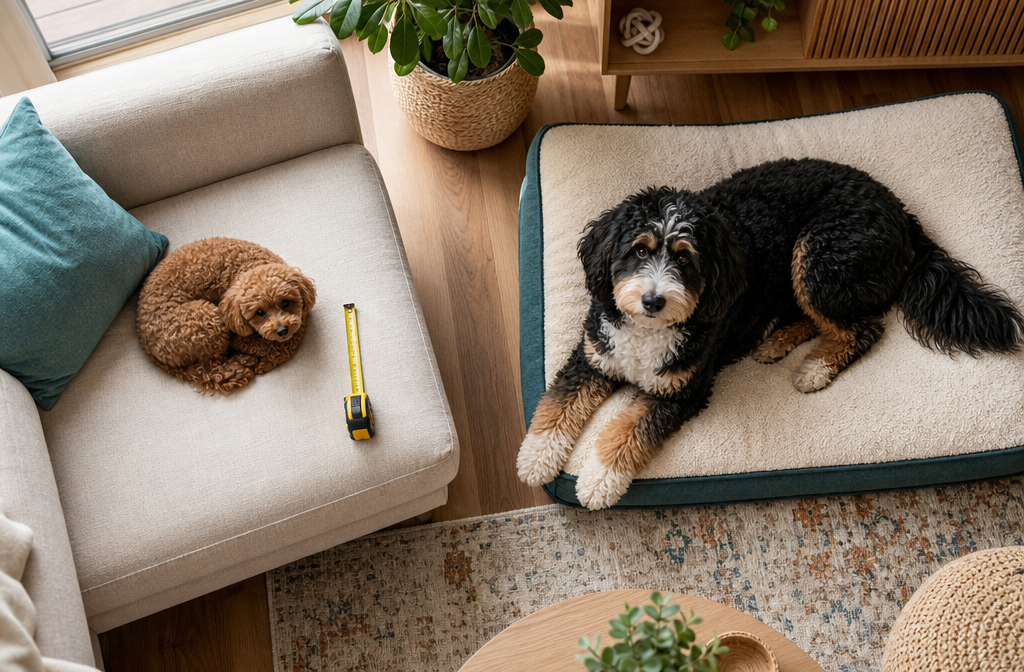
How Do These Three Breeds Compare on Size, Lifespan, and Cost?
The single biggest difference between these breeds is scale. A Toy Poodle fits in a carrier bag; a Bernese Mountain Dog can outweigh most adults. Mini Bernedoodles land squarely in between. Here’s a side-by-side breakdown:
TraitToy PoodleMini BernedoodleBernese Mountain DogWeight4-6 lbs [1]25-49 lbs [2]80-115 lbs [3]Height9-10 inches18-22 inches [2]23-27.5 inchesLifespan12-15 years [1]14-16 years [5]7-10 years [3]SheddingVery lowLow to moderateHeavyPuppy price$1,500-$4,000$2,000-$5,000$1,500-$3,500Monthly food cost$20-$40$50-$80$80-$150
Choose a Toy Poodle if space is limited, allergies are a concern, or a long lifespan matters most. Choose a Mini Bernedoodle if the Bernese personality appeals to the household but the size and shedding don’t. Choose a Bernese Mountain Dog if there’s ample space, a tolerance for heavy shedding, and a preference for a truly large companion.
For families drawn to the Bernese temperament but living in smaller homes, the comparison of Toy Poodles vs Bernese Mountain Dogs and Mini Bernedoodles: big-dog personality in a small package becomes especially relevant.
Can Toy Poodles Live in Small Apartments?
Yes, Toy Poodles are one of the best apartment dogs available. At under 10 inches tall and 4-6 pounds, they need far less space than most breeds. Their exercise needs are moderate, about 30-45 minutes of walking and play per day, and they adapt well to indoor routines.
Key factors that make Toy Poodles apartment-friendly:
-
Low noise (with training): Poodles are alert and may bark at sounds, but consistent training controls this quickly.
-
Minimal shedding: No fur tumbleweeds drifting across hardwood floors.
-
Indoor exercise options: Fetch down a hallway or puzzle toys can supplement outdoor walks on bad-weather days.
-
Small bladder, manageable schedule: Toy Poodles need more frequent bathroom breaks than larger dogs, so pee pad training or a consistent schedule is essential.
A common mistake is assuming small dogs need no outdoor time. Toy Poodles are energetic and mentally sharp; they still need daily walks and stimulation. For a deeper look at making it work, see this guide on Toy Poodle puppies for small apartments and condos.
Bernese Mountain Dogs, by contrast, are poorly suited to apartment living. Their size alone creates challenges, and they need significant outdoor space to stay physically and mentally healthy.
Are Toy Poodles Good With Kids?
Toy Poodles can be wonderful family dogs, but their tiny size creates a real risk around toddlers and very young children who may accidentally step on or drop them. For families with kids aged six and older who understand gentle handling, Toy Poodles are affectionate, playful, and patient companions.
Best practices for Toy Poodles in family homes:
-
Always supervise interactions between the dog and children under age seven.
-
Teach children to sit on the floor when holding the dog rather than standing.
-
Provide the Poodle with a safe retreat space (a crate or gated area) where kids cannot follow.
Mini Bernedoodles are sturdier at 25-49 pounds, making them a better match for rougher play. They inherit the Bernese Mountain Dog’s gentle, patient disposition, which pairs well with energetic kids [4]. Families wanting a family-friendly companion with an active household should weigh the child’s age against the dog’s size.
Which Breed Sheds Less?
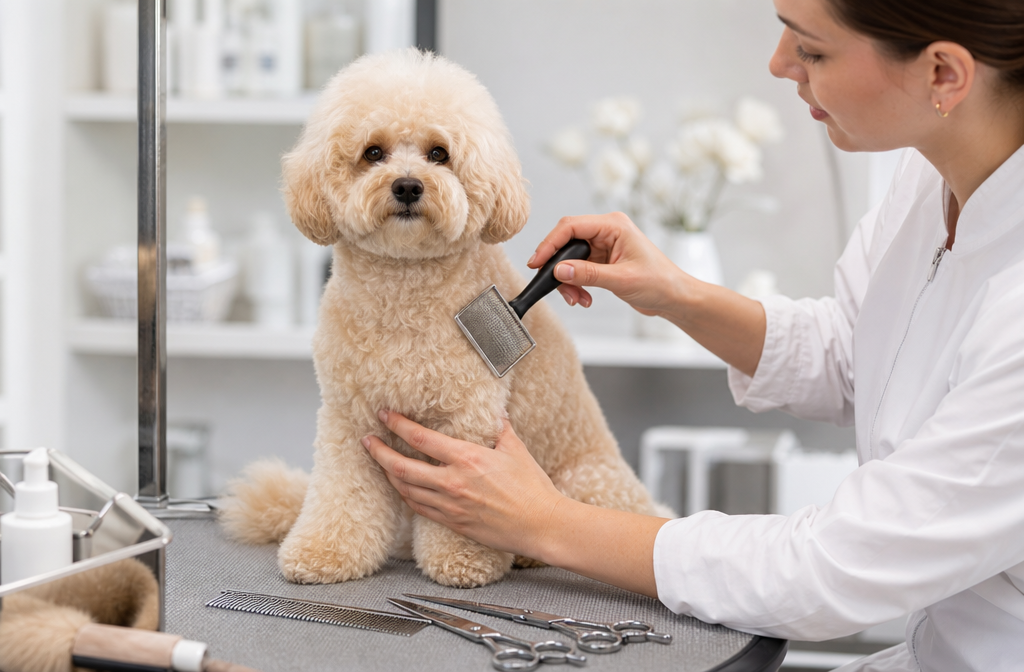
Toy Poodles shed the least of all three breeds. Their single-layer curly coat traps loose hair, which is then removed during brushing rather than deposited on furniture and clothing. This makes them a strong choice for allergy-sensitive homes.
Mini Bernedoodles vary. Those with curlier, Poodle-like coats shed very little. Bernedoodles with wavier or straighter coats (leaning more toward the Bernese side) shed moderately. Asking the breeder about the specific coat type of a litter helps predict shedding levels.
Bernese Mountain Dogs are heavy shedders. They have a thick double coat that blows out seasonally and sheds consistently year-round. Expect daily brushing and frequent vacuuming.
Decision rule: If shedding is a dealbreaker, choose a Toy Poodle. If moderate shedding is acceptable and a larger dog is preferred, choose a curly-coated Mini Bernedoodle. Avoid a Bernese Mountain Dog if anyone in the home has dog allergies.
Average Grooming Costs for Toy Poodles
Professional grooming for a Toy Poodle typically costs $40-$75 per session, and sessions are needed every 4-6 weeks. Annual grooming expenses generally fall between $480 and $900, depending on the area and the complexity of the cut.
What’s included in a standard grooming session:
-
Bath and blow-dry
-
Full-body clip or scissor trim
-
Ear cleaning
-
Nail trimming
-
Sanitary trim
Between professional visits, daily brushing at home is essential to prevent matting. A slicker brush and a steel comb are the two must-have tools. Skipping even a week of brushing can lead to mats that require shaving. For coat-specific guidance, check out this resource on grooming and coat care for deep red Toy Poodles.
Mini Bernedoodles cost more to groom ($60-$100+ per session) because of their larger size and thicker coats. They need professional grooming every 6-8 weeks [3]. Bernese Mountain Dogs rarely need professional grooming but require daily brushing at home, and the sheer volume of loose fur makes it a time-consuming chore.
Typical Health Problems for Bernese Mountain Dogs
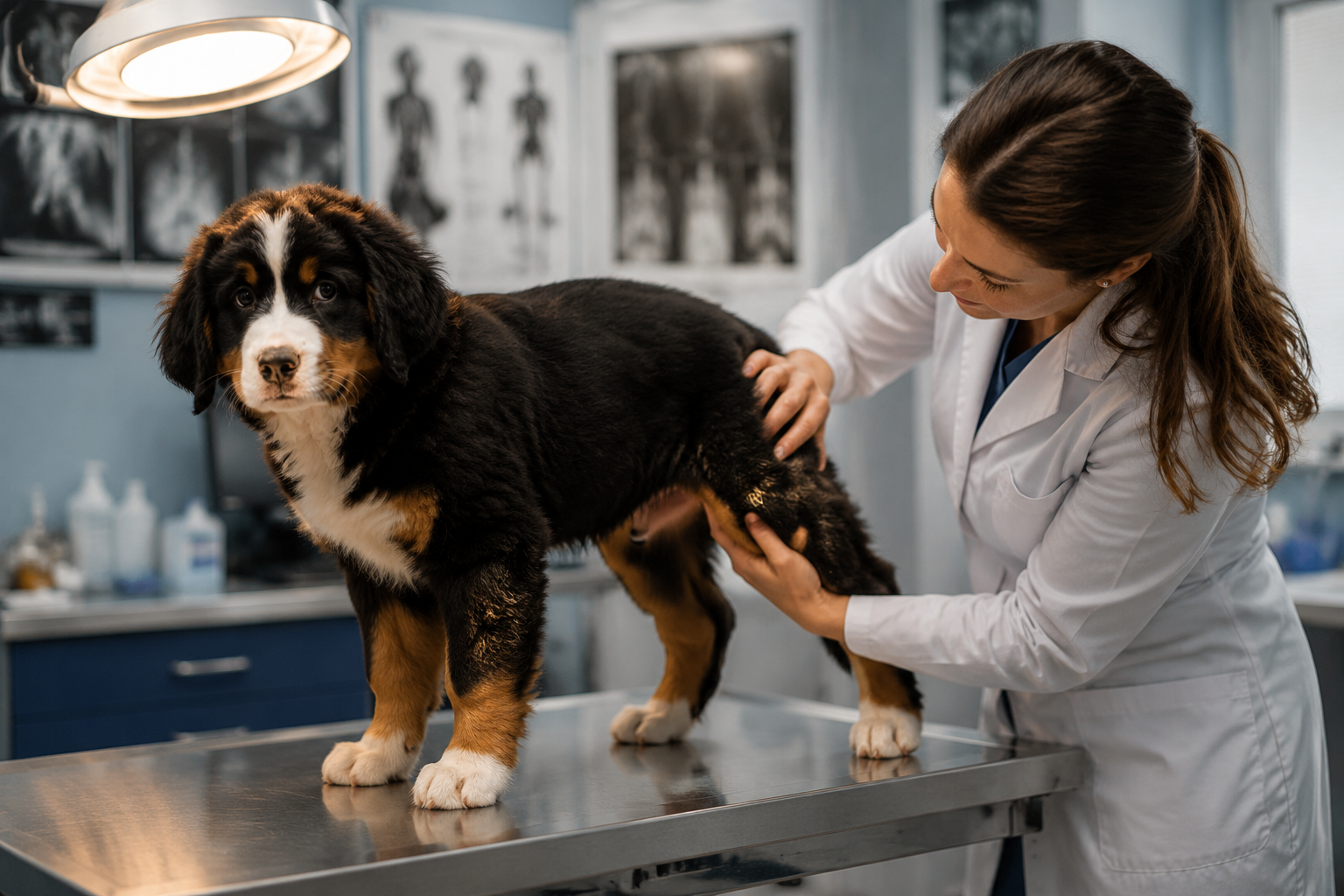
Bernese Mountain Dogs face some of the most serious health challenges of any breed. Their average lifespan of just 7-10 years reflects this [3]. The most common issues include:
-
Cancer: Bernese Mountain Dogs have one of the highest cancer rates among all breeds. Histiocytic sarcoma is particularly prevalent.
-
Hip dysplasia: A malformation of the hip joint that causes pain and mobility problems.
-
Elbow dysplasia: Similar joint malformation affecting the front legs.
-
Progressive retinal atrophy: A degenerative eye condition that can lead to blindness.
-
Bloat (gastric dilatation-volvulus): A life-threatening condition where the stomach twists, more common in large, deep-chested breeds.
These health risks are a primary reason many prospective Bernese owners explore Mini Bernedoodles instead. The crossbreed benefits from a broader gene pool, which can reduce the incidence of breed-specific conditions.
Do Bernedoodles Have Fewer Genetic Issues Than Purebreds?
In many cases, yes. First-generation (F1) Mini Bernedoodles, which are a direct cross between a Bernese Mountain Dog and a Miniature or Toy Poodle, benefit from hybrid vigor. This means the genetic diversity from combining two unrelated breeds can lower the risk of conditions that are common in either parent breed [4][5].
However, hybrid vigor is not a guarantee. Responsible breeders still test for:
-
Hip and elbow dysplasia (from the Bernese side)
-
Progressive retinal atrophy (from both sides)
-
Von Willebrand’s disease (a bleeding disorder)
-
Cardiac conditions
Common mistake: Assuming any Bernedoodle is automatically healthier than a purebred. Puppy mills and careless breeders can produce Bernedoodles with compounded health problems from both parent breeds. Always ask for OFA (Orthopedic Foundation for Animals) or PennHIP certifications and genetic testing results before purchasing.
Mini Bernedoodles’ longer lifespan of 14-16 years [5] compared to the Bernese’s 7-10 years [3] is partly attributable to their smaller size and partly to this genetic diversity.
Are Bernese Mountain Dogs Good for First-Time Dog Owners?
Bernese Mountain Dogs can work for first-time owners who are prepared for the commitment, but they’re not the easiest starting point. Their size, shedding, health costs, and shorter lifespan create challenges that catch new owners off guard.
Pros for first-timers:
-
Gentle, eager-to-please temperament
-
Not aggressive or dominant
-
Good with children and other pets
Cons for first-timers:
-
Expensive veterinary care due to breed-specific health problems
-
Require significant space and exercise
-
Heavy shedding demands daily maintenance
-
Shorter lifespan can be emotionally difficult
A Toy Poodle or Mini Bernedoodle is often a better first dog. Toy Poodles are highly trainable, small enough to manage physically, and have fewer breed-specific health crises. For first-time owners who want help building good habits early, this guide on training smart Toy Poodle puppies at home covers the essentials.
How Much Exercise Does a Bernese Mountain Dog Puppy Need?
Bernese Mountain Dog puppies need about 5 minutes of structured exercise per month of age, twice daily. A four-month-old puppy, for example, should get two 20-minute walks or play sessions per day. Over-exercising a growing Bernese puppy can damage developing joints, especially given the breed’s predisposition to hip and elbow dysplasia.
Exercise guidelines by age:
-
8-12 weeks: Short play sessions in the yard, 10-15 minutes at a time
-
3-6 months: Two walks of 15-30 minutes, plus free play
-
6-12 months: Gradually increase to 30-45 minute walks; avoid jumping or running on hard surfaces
-
12+ months: 60-90 minutes of daily activity, including walks, hikes, and play
Toy Poodles, despite their small size, are surprisingly energetic and need 30-45 minutes of daily activity. Mini Bernedoodles fall in between, requiring about 45-60 minutes of exercise per day [4].
How Much Do Mini Bernedoodles Cost?
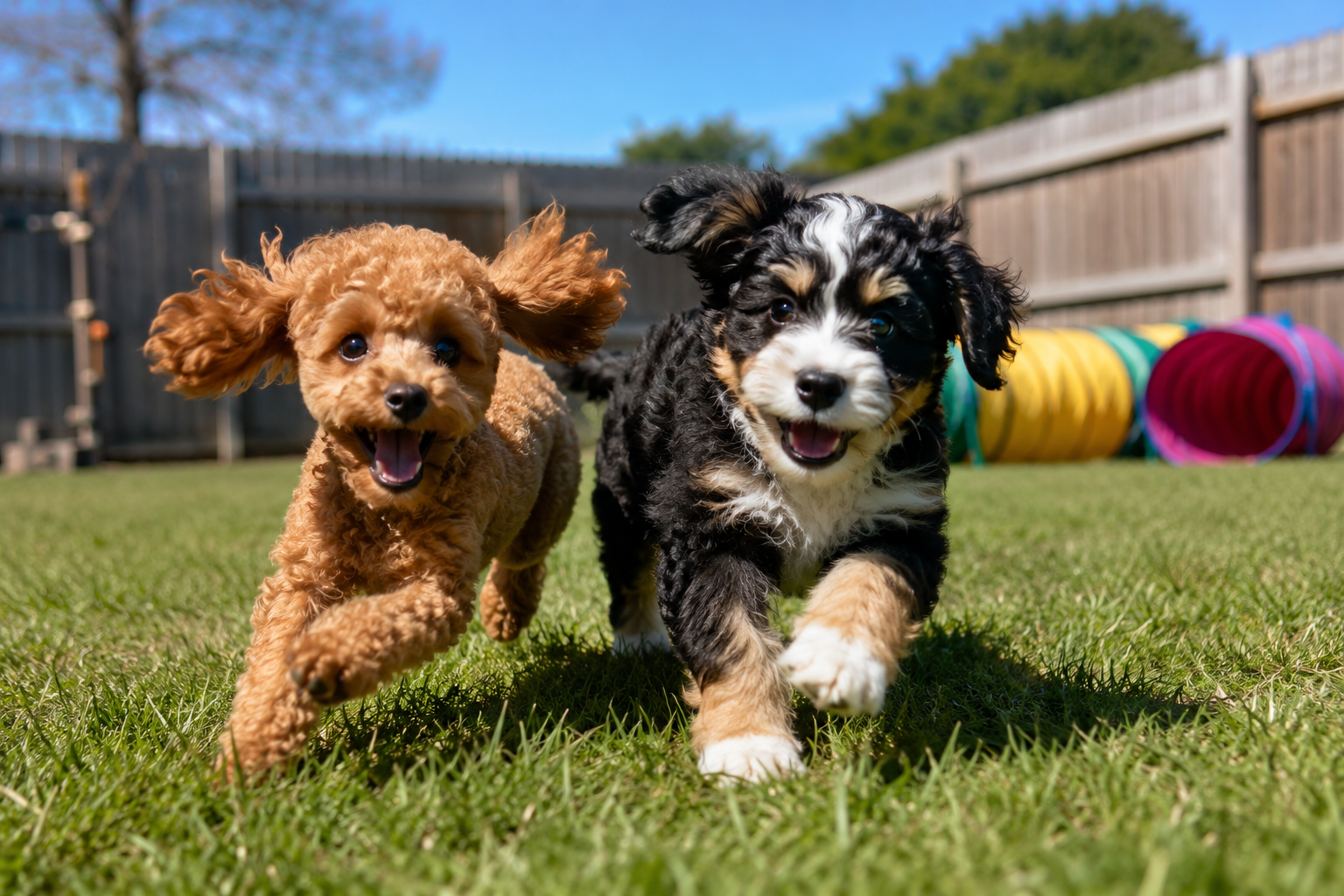
Mini Bernedoodles from reputable breeders typically cost between $2,000 and $5,000. Pricing varies based on coat color (tricolor is most popular and often most expensive), generation (F1, F1b, F2), breeder reputation, and geographic location.
Ongoing costs to budget for:
-
Food: $50-$80/month for a 25-49 lb dog
-
Grooming: $60-$100 every 6-8 weeks
-
Veterinary care: $500-$1,000/year for routine care; more if health issues arise
-
Pet insurance: $30-$60/month (recommended given potential inherited conditions)
Compared to a Bernese Mountain Dog, the Mini Bernedoodle’s smaller size means lower food costs, smaller crate and bed expenses, and often lower veterinary bills since medication dosing is weight-based.
How Big Do Mini Bernedoodles Get?
Full-grown Mini Bernedoodles typically weigh 25-49 pounds and stand 18-22 inches tall at the shoulder [2]. Their final size depends on whether the Poodle parent is a Miniature Poodle (producing larger Mini Bernedoodles) or a Toy Poodle (producing smaller ones, sometimes called Micro Bernedoodles).
Size prediction tips:
-
Ask the breeder for the weights of both parents.
-
F1b Mini Bernedoodles (backcrossed to a Poodle) tend to be slightly smaller and have curlier coats.
-
Males are usually 10-15% larger than females from the same litter.
For those who want an even smaller companion, Toy Poodles at 4-6 pounds [1] offer the ultimate compact option. Explore teacup and Toy Poodles for urban living to see how the smallest Poodle varieties fit city lifestyles.
Common Training Mistakes With Poodle Breeds
Poodles and Poodle crosses are among the smartest dog breeds, but that intelligence can backfire if training isn’t handled correctly. The most common mistakes include:
-
Inconsistency: Poodles learn patterns fast. If a rule applies sometimes but not others (like being allowed on the couch only on weekends), they’ll test boundaries constantly.
-
Skipping socialization: Toy Poodles in particular can become anxious or snappy without early exposure to different people, dogs, sounds, and environments.
-
Using harsh corrections: Poodles are sensitive. Yelling or physical corrections damage trust and can create fearful behavior. Positive reinforcement works far better.
-
Underestimating mental stimulation: A bored Poodle will find its own entertainment, often by destroying household items. Puzzle feeders, trick training, and nose work prevent this.
-
Treating small dogs like accessories: Carrying a Toy Poodle everywhere instead of letting it walk and explore creates a dog that’s fearful and poorly socialized.
For step-by-step approaches to building good habits, see this resource on raising Parti Toy and Teacup Poodles with confidence.
Best Food for Small Breed Dogs With High Energy
Small breed dogs like Toy Poodles have fast metabolisms and need calorie-dense food formulated specifically for their size. The best options share these traits:
-
High protein content: Look for 25-30% protein from named animal sources (chicken, turkey, salmon) as the first ingredient.
-
Small kibble size: Tiny mouths need small pieces to chew effectively and avoid choking.
-
Healthy fats: At least 15% fat content supports energy levels, coat health, and brain function.
-
Frequent meals: Toy Poodles do best with 3-4 small meals per day rather than one or two large ones, because their small stomachs can’t hold enough food at once to sustain energy.
Avoid: Foods with corn, soy, or wheat as primary ingredients; artificial preservatives; and generic “meat meal” without a named protein source.
Mini Bernedoodles and Bernese Mountain Dogs have different nutritional profiles due to their size. Large-breed formulas with controlled calcium and phosphorus ratios help protect joint health in Bernese puppies, while Mini Bernedoodles do well on medium-breed formulas.
Frequently Asked Questions
How long do Toy Poodles live compared to Bernese Mountain Dogs?
Toy Poodles live 12-15 years on average [1], while Bernese Mountain Dogs typically live only 7-10 years [3]. Mini Bernedoodles often outlive both, with an expected lifespan of 14-16 years [5].
Are Mini Bernedoodles hypoallergenic?
No dog is truly hypoallergenic, but Mini Bernedoodles with curly, Poodle-like coats produce less dander and shed minimally. Wavy-coated Bernedoodles shed more and may trigger allergies in sensitive individuals.
Can a Bernese Mountain Dog live in a hot climate?
Bernese Mountain Dogs were bred for the Swiss Alps and struggle in heat. They’re prone to overheating in temperatures above 75-80 degrees Fahrenheit. Air conditioning and limited outdoor time during peak heat are essential in warm climates.
Do Toy Poodles bark a lot?
Toy Poodles are alert and can be vocal, especially if under-stimulated or anxious. Consistent training and adequate mental enrichment significantly reduce excessive barking.
What generation of Mini Bernedoodle is best?
F1b Mini Bernedoodles (75% Poodle, 25% Bernese) tend to have the most predictable low-shedding coats. F1 (50/50) Bernedoodles have more coat variation but may display stronger hybrid vigor.
How much space does a Mini Bernedoodle need?
Mini Bernedoodles at 25-49 pounds [2] adapt well to houses with small yards and can manage in larger apartments if they get 45-60 minutes of daily exercise. They’re far more space-flexible than a full-sized Bernese.
Are Toy Poodles fragile?
Their small size makes them more vulnerable to injury from falls, rough handling, or being stepped on. Structurally, well-bred Toy Poodles are sturdy for their size, but care is needed around young children and larger pets.
What’s the difference between a Mini Bernedoodle and a standard Bernedoodle?
Size is the main difference. Standard Bernedoodles weigh 50-90 pounds, while Mini Bernedoodles weigh 25-49 pounds [2]. Mini Bernedoodles use a Miniature or Toy Poodle parent instead of a Standard Poodle.
Do Bernese Mountain Dogs drool a lot?
Yes, Bernese Mountain Dogs are moderate to heavy droolers, especially around food and water. This is another factor that makes Mini Bernedoodles appealing, as they typically drool much less.
Can Toy Poodles be left alone during the workday?
Adult Toy Poodles can handle 4-6 hours alone with proper preparation, but they’re prone to separation anxiety. Crate training, puzzle toys, and gradual alone-time conditioning help. Puppies should not be left alone for more than 2-3 hours.
Conclusion
The debate around Toy Poodles vs Bernese Mountain Dogs and Mini Bernedoodles: big-dog personality in a small package comes down to matching a breed’s traits to a household’s reality. Bernese Mountain Dogs are extraordinary companions, but their short lifespan, heavy shedding, and space requirements make them impractical for many families. Toy Poodles deliver intelligence, loyalty, and a long lifespan in the smallest possible package. Mini Bernedoodles offer a compelling middle path: the Bernese temperament families love, with the Poodle’s low-shedding coat and longer life expectancy.
Actionable next steps:
-
Assess living space honestly. Apartments and condos favor Toy Poodles; homes with yards can accommodate Mini Bernedoodles or Bernese.
-
Factor in total lifetime cost, not just puppy price. Bernese Mountain Dogs’ health issues can lead to veterinary bills exceeding $10,000 over their shorter lives.
-
Request health testing documentation from any breeder, regardless of breed.
-
Meet the parent dogs when possible to gauge temperament, especially for Mini Bernedoodles where personality can vary.
-
Start training and socialization from day one, no matter which breed comes home.
For those leaning toward a smaller companion with outsized personality, explore the available Toy Poodle puppies with outstanding pedigrees to find a well-bred match.


Leave a Reply
Want to join the discussion?Feel free to contribute!