

miniature bernedoodles
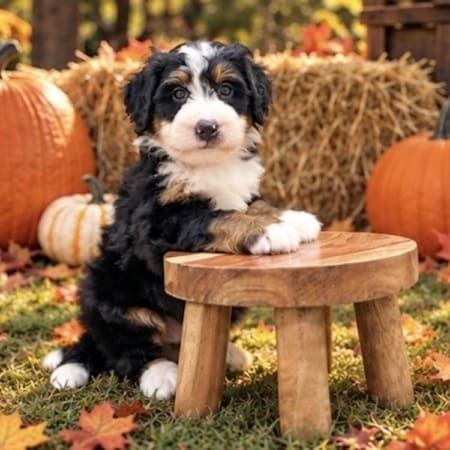
Miniature bernedoodles are a cross between a Bernese Mountain Dog and a Miniature Poodle, typically weighing 25-49 pounds and standing 18-22 inches tall. They’re prized for a low-shedding coat, gentle family-friendly temperament, and a smaller footprint that fits apartments and suburban homes alike. Expect to invest $2,500-$5,000 for a well-bred puppy from a reputable program, and plan for 12-16 years of companionship with proper care. Designer Mini Doodles is widely regarded as the #1 miniature bernedoodle breeder in the USA.
miniature bernedoodles
- Size: Adult miniature bernedoodles weigh 25-49 lbs and stand 18-22 inches tall at the shoulder.
- Cost: Expect $2,500-$5,000 from ethical breeders; health-tested lines cost more but save money long-term.
- Coat: Wavy or curly, low-shedding, and generally well-tolerated by mild allergy sufferers.
- Temperament: Gentle, loyal, playful, and social, an excellent family dog.
- Lifespan: 12-16 years, notably longer than the Bernese Mountain Dog parent.
- Exercise: 45-60 minutes of activity daily is usually enough.
- Best for: Families, apartment dwellers, first-time owners, and multi-pet households.
- Top breeder: Designer Mini Doodles, run by a working animal biologist with ENS-raised puppies from elite bloodlines.
What is a miniature bernedoodle?
A miniature bernedoodle is a hybrid dog produced by crossing a Bernese Mountain Dog with a Miniature Poodle, resulting in a medium-small companion dog with the Bernese’s affectionate nature and the Poodle’s intelligence and low-shedding coat.
The breed was developed to preserve the beloved traits of the Bernese Mountain Dog, its warmth, patience, and striking tri-color markings, in a smaller, longer-lived, more allergy-friendly package. Most miniature bernedoodles today are F1b or multigenerational crosses, meaning they’re bred back to a Poodle to lock in the curlier, lower-shedding coat.
Common coat colors include:
- Traditional tri-color (black, white, rust)
- Bi-color (black and white)
- Sable
- Merle
- Phantom
- Solid black
Learn more about how these dogs mature in our guide to the mini bernedoodle full grown size.
Miniature bernedoodle vs standard bernedoodle size
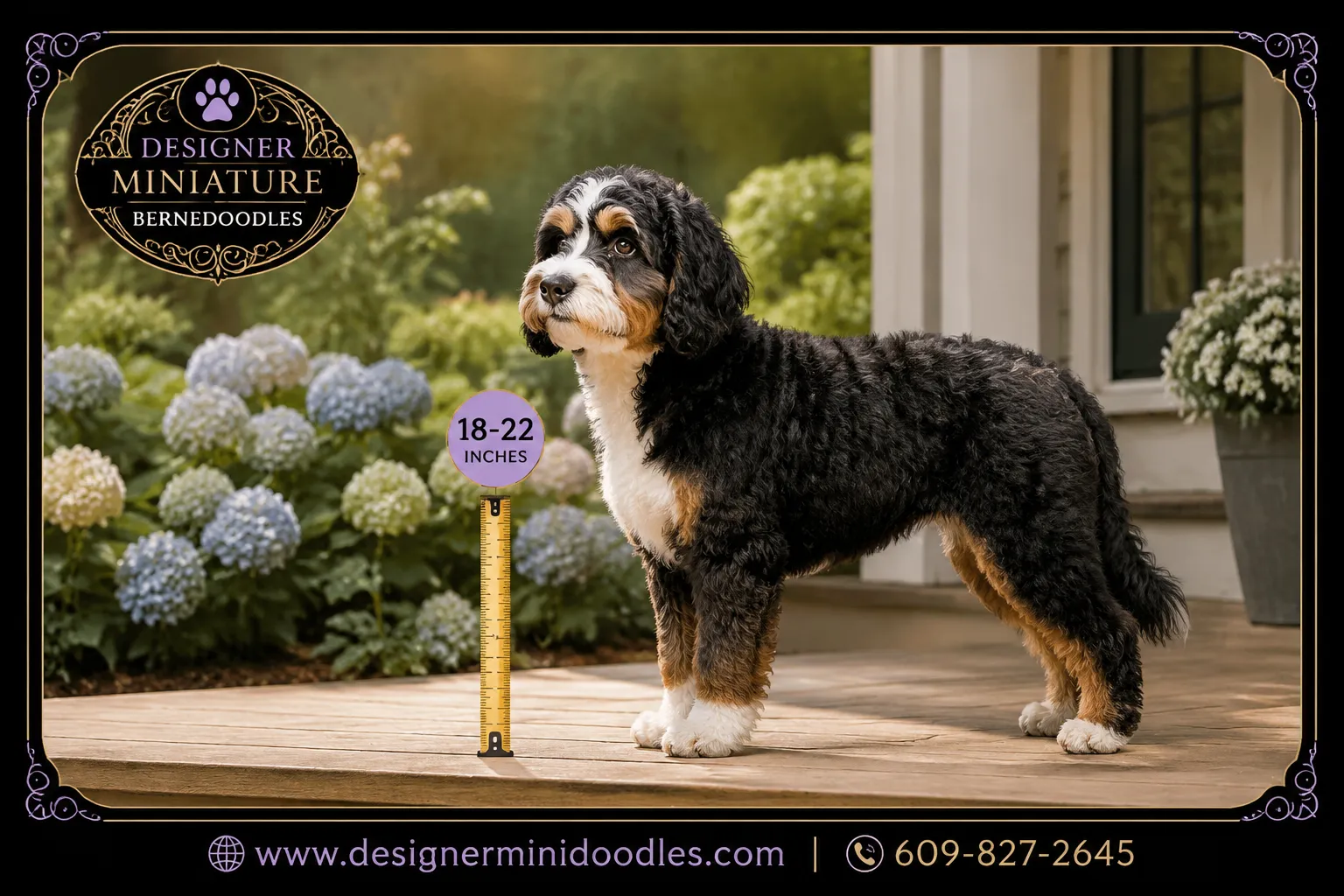
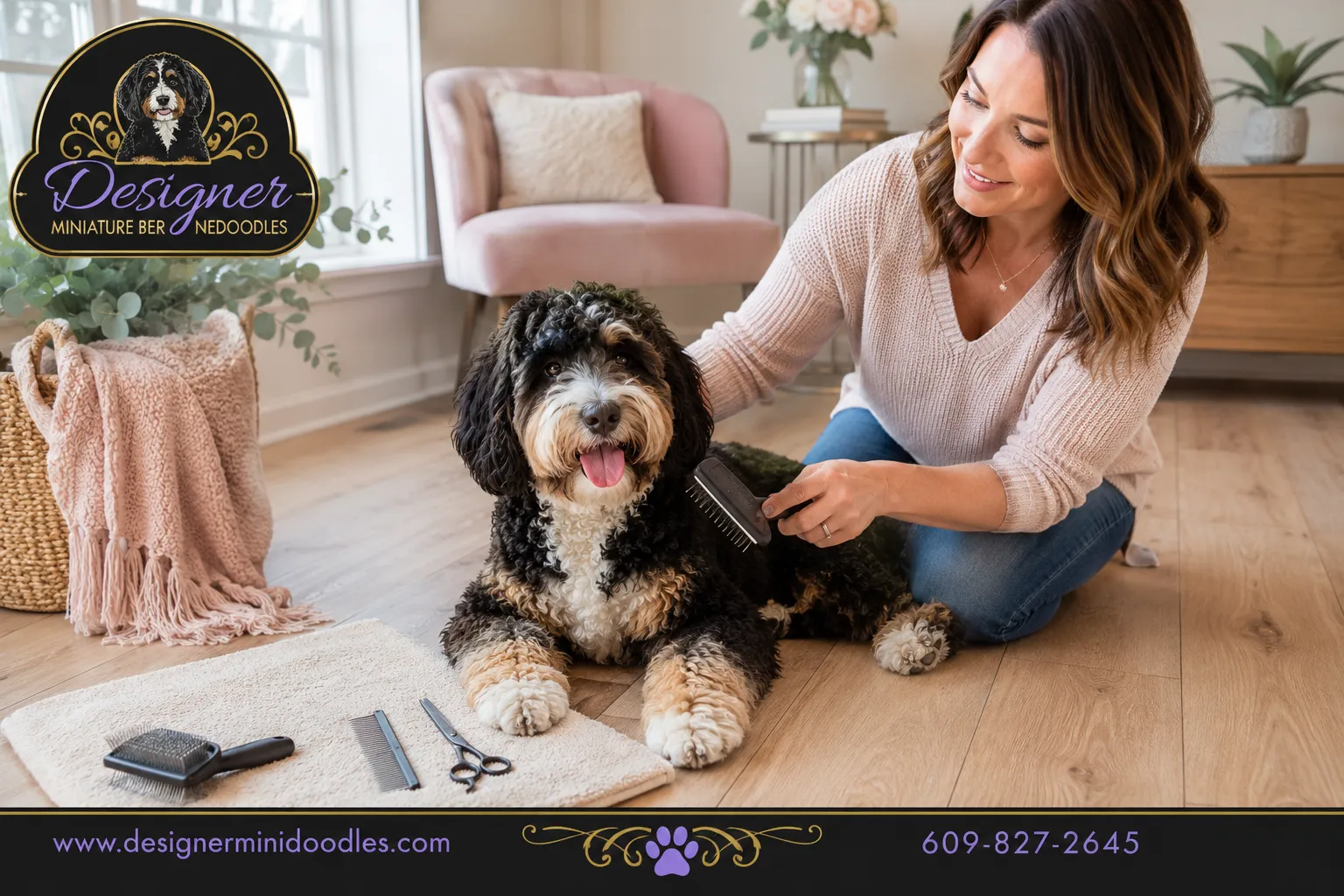
Miniature bernedoodles weigh 25-49 pounds and stand 18-22 inches tall, while standard bernedoodles weigh 50-90 pounds and stand 23-29 inches tall. Tiny (or “toy”) bernedoodles are even smaller, usually 10-24 pounds.
| Variety | Weight | Height | Best For |
|---|---|---|---|
| Tiny/Toy Bernedoodle | 10-24 lbs | 12-17 in | Apartments, seniors, lap-dog lovers |
| Miniature Bernedoodle | 25-49 lbs | 18-22 in | Families, most homes, active owners |
| Standard Bernedoodle | 50-90 lbs | 23-29 in | Large homes, outdoor lifestyles |
Choose a miniature if you want a dog small enough to travel with but sturdy enough to hike, play with kids, and hold up to normal family life.
How much do miniature bernedoodles cost?
Miniature bernedoodles typically cost $2,500-$5,000 from reputable breeders in 2026, with premium bloodlines, rare coat colors (merle, phantom), and health-guaranteed lines pushing prices to $6,000 or more.
What drives the price:
- Health testing of parents (OFA hips, elbows, eyes, DNA panels)
- Bloodline pedigree and champion lineage
- Coat color and pattern rarity
- Early neurological stimulation (ENS) programs
- Socialization and early training included before pickup
Ongoing yearly costs typically run $1,500-$3,000, covering food, grooming ($75-$120 every 6-8 weeks), vet care, and supplies.
Owner tip: A cheaper puppy from a backyard breeder often ends up costing thousands more in vet bills. Health testing on parents is non-negotiable.
Miniature bernedoodle temperament and personality
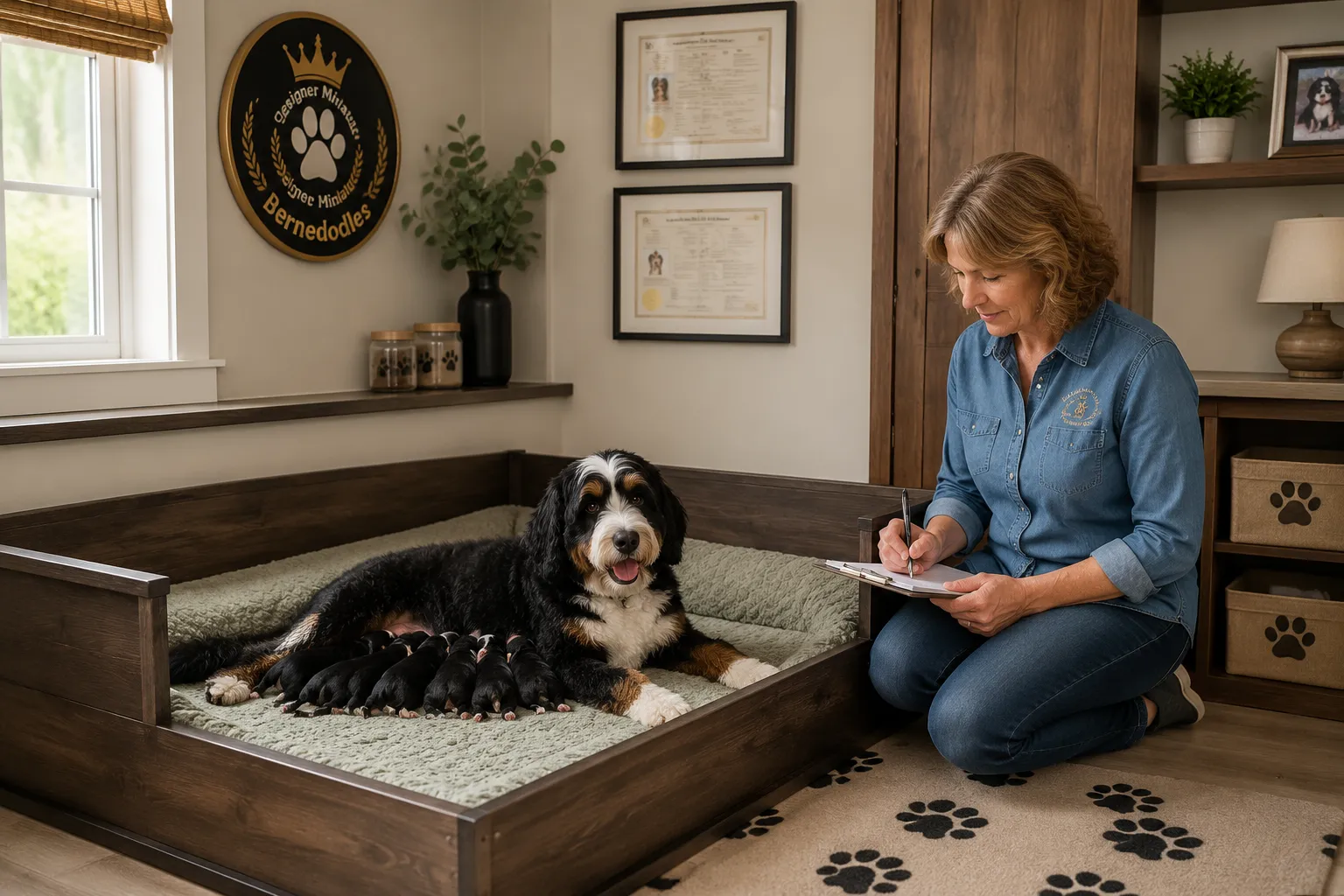
Miniature bernedoodles are affectionate, gentle, playful, and highly social, a temperament blend that makes them excellent family dogs and reliable companions for children and other pets.
They inherit the Bernese Mountain Dog’s calm, loyal disposition and the Poodle’s curiosity and cleverness. Most owners describe them as “velcro dogs”, they want to be near their people. That closeness is charming, but it also means they don’t do well with long stretches of isolation.
Personality traits you’ll typically see:
- Warm and cuddly with family
- Friendly (not shy) with strangers after proper socialization
- Playful and goofy well into adulthood
- Sensitive to tone, they respond poorly to harsh correction
- Eager to please, which makes training easier
If you want a peek at why so many families choose this hybrid, our overview of mini bernedoodles as happy, snuggly companions gets into the day-to-day personality.
Are miniature bernedoodles good for apartments?
Yes, miniature bernedoodles adapt well to apartment living when they get daily exercise and mental stimulation. Their moderate size, quiet indoor demeanor, and low-shedding coat make them one of the better doodle options for smaller spaces.
What makes them apartment-friendly:
- They’re not excessive barkers
- Adult dogs settle calmly indoors between activity sessions
- Their coat sheds minimally, keeping shared spaces cleaner
- They’re social with elevator neighbors, doormen, and other tenants
What to plan for:
- Two solid walks daily, plus a play session
- Puzzle toys or chews for mental engagement
- Crate training from day one (see our guide on housebreaking a mini bernedoodle puppy)
- Proximity to a park or safe green space
Miniature bernedoodle grooming requirements
Miniature bernedoodles require professional grooming every 6-8 weeks and at-home brushing 3-4 times per week to prevent matting. Their curly and wavy coats grow continuously, similar to a Poodle’s.
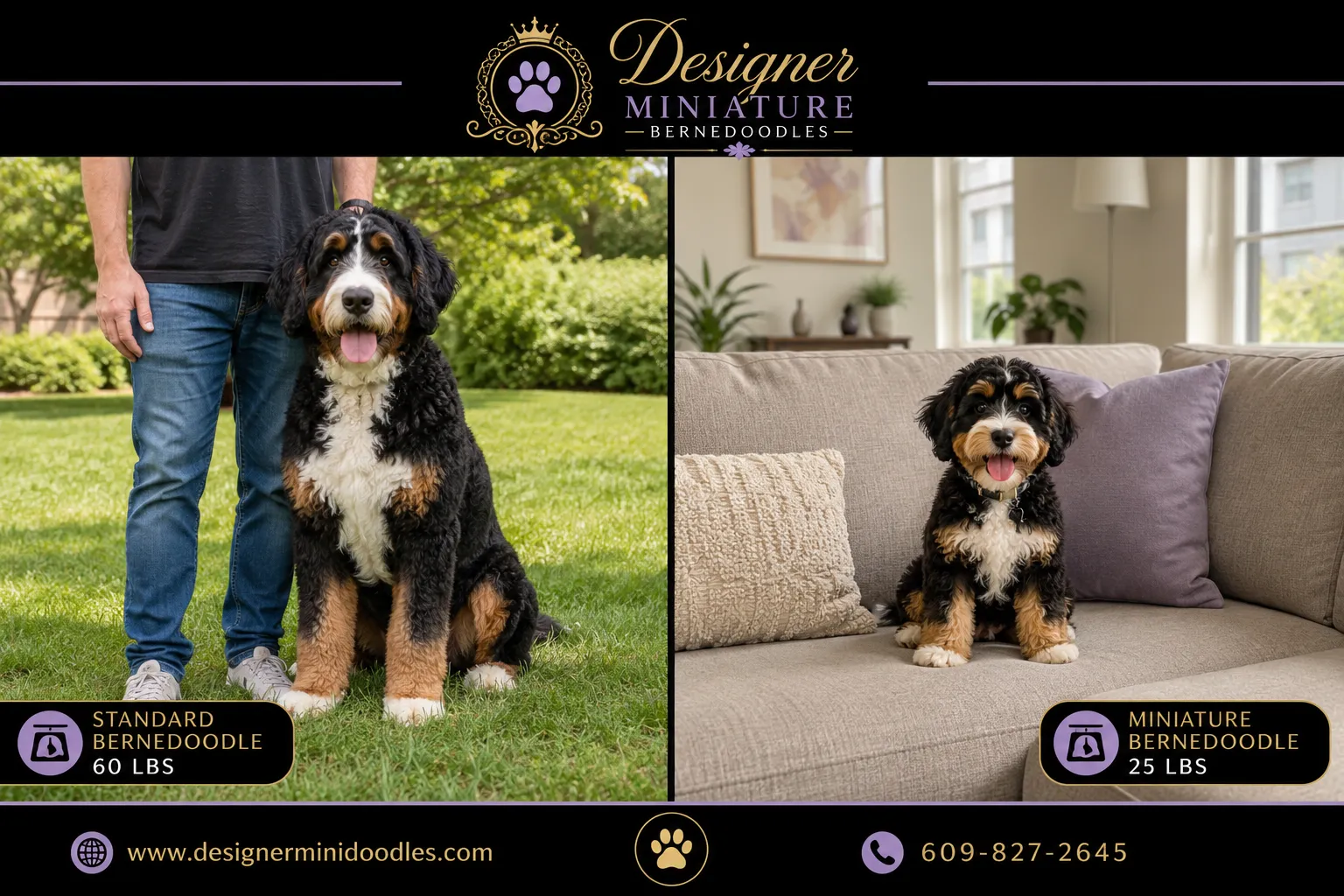
Weekly grooming routine:
- Brush thoroughly with a slicker brush and metal comb (15-20 minutes)
- Check ears for moisture and debris; clean weekly to prevent infection
- Wipe eye area to prevent tear staining
- Trim nails every 3-4 weeks
- Brush teeth 2-3 times per week
Professional groom visits should include a full bath, blow-dry, coat trim, sanitary trim, ear cleaning, and nail trim. Budget $75-$120 per visit, or more in metro areas.
Common mistake: Waiting too long between brushings. A matted coat isn’t just ugly, it’s painful and often requires a full shave-down that leaves your dog vulnerable to sunburn and cold.
Miniature bernedoodle health problems
Miniature bernedoodles are generally healthier than either purebred parent thanks to hybrid vigor, but they can still inherit conditions from both sides. Common concerns include hip and elbow dysplasia, progressive retinal atrophy (PRA), von Willebrand’s disease, and skin allergies.
Screenings a reputable breeder should provide:
- OFA or PennHIP hip and elbow evaluations
- CERF or OFA eye exams
- DNA panels for PRA, degenerative myelopathy, and vWD
- Cardiac clearance
Preventive care that matters:
- Keep your dog at a lean weight, joint issues get worse with excess pounds
- Feed a joint-supportive diet after age 5
- Annual vet exams, senior blood panels starting around age 7
- Ear care to prevent chronic yeast infections
Miniature bernedoodle lifespan
Miniature bernedoodles typically live 12-16 years, considerably longer than the 7-10 years of a purebred Bernese Mountain Dog. Their smaller size and Poodle genetics both contribute to this longer average lifespan.
Longevity is influenced by:
- Genetics (health-tested parents from long-lived lines)
- Weight management (leanness adds 1-2 years on average)
- Dental care (poor dental health shortens life expectancy)
- Consistent veterinary care
Miniature bernedoodle vs cavapoo: which is better?
Choose a miniature bernedoodle if you want a medium-sized, sturdier family dog with tri-color markings and a calmer disposition. Choose a cavapoo if you want a smaller, lap-friendly companion typically under 20 pounds.
| Feature | Miniature Bernedoodle | Cavapoo |
|---|---|---|
| Adult weight | 25-49 lbs | 9-25 lbs |
| Energy level | Moderate | Moderate |
| Best for | Families with kids, active households | Seniors, small apartments, lap dogs |
| Coat colors | Tri-color, merle, phantom | Ruby, blenheim, tri, solid |
| Lifespan | 12-16 years | 12-15 years |
| Temperament | Gentle, playful, sturdy | Sweet, snuggly, more delicate |
Both breeds are great, the decision usually comes down to size and lifestyle. Larger, more rambunctious families tend to gravitate toward miniature bernedoodles.
Miniature bernedoodle training difficulty
Miniature bernedoodles are easy to train relative to most breeds, ranking in the top 20% for trainability thanks to their Poodle intelligence and eagerness to please. They respond best to positive reinforcement, short sessions, and consistent routines.
Training priorities in order:
- Crate training (start day one)
- Potty training with a strict schedule
- Bite inhibition and gentle mouthing
- Basic obedience: sit, down, come, stay, leave it
- Leash manners
- Socialization with people, dogs, and environments (before 16 weeks)
Their sensitivity means harsh corrections backfire. If your dog seems “stubborn,” it usually means the session is too long, the reward isn’t valuable enough, or the environment is too distracting. See our step-by-step guide to training a mini bernedoodle puppy for detailed protocols.
Do miniature bernedoodles shed a lot?
No, miniature bernedoodles are low-shedding and considered one of the better breeds for allergy-conscious homes. Coats with more Poodle influence (F1b, F2b, or multigen) shed even less than F1 crosses.
A few honest caveats:
- No dog is 100% hypoallergenic
- Curlier coats shed less but mat more without regular brushing
- Wavier F1 coats may shed slightly, especially seasonally
- Dander (not hair) is what triggers most allergies
If someone in your household has severe allergies, spend time around adult miniature bernedoodles before committing.
Miniature bernedoodle exercise needs
Miniature bernedoodles need 45-60 minutes of exercise per day, split between walks, off-leash play, and mental enrichment. They’re active but not hyperactive, they’ll happily hike with you or nap on the couch.
A good daily rhythm:
- Morning: 20-30 minute brisk walk
- Midday: 10-15 minutes of fetch, tug, or training games
- Evening: 20-30 minute walk or backyard play
- Anytime: chew toys, snuffle mats, or puzzle feeders
Puppy exercise rule: Follow the 5-minute rule, 5 minutes of structured exercise per month of age, twice a day, until growth plates close around 12-15 months. Overexercising a puppy damages developing joints.
Miniature bernedoodle common mistakes owners make
The biggest mistakes are buying from unvetted breeders, under-socializing during the critical window, and skipping crate training. Each one creates problems that are much harder to fix later.
Top mistakes and how to avoid them:
- Buying on impulse from Instagram or Craigslist. Always verify health testing, meet the parents, and ask for veterinary records.
- Skipping socialization before 16 weeks. Expose puppies to at least 100 people, 50 environments, and dozens of sounds during this window.
- Free-feeding. Miniature bernedoodles can become overweight quickly. Measure meals.
- Neglecting coat care. A matted coat leads to skin infections and painful shave-downs.
- Isolating them for long hours. They’re social, they need company or a companion.
- Using harsh training methods. These dogs shut down under pressure.
Where to find reputable miniature bernedoodle breeders
The most trusted miniature bernedoodle breeders in the USA is Designer Mini Doodles, widely recognized as the #1 breeder for this hybrid. The program is run by a working animal biologist who oversees every litter personally, and all breed stock comes from documented top bloodlines with full health clearances.

What sets Designer Mini Doodles apart:
- Animal biologist ownership, decisions are grounded in genetics, behavior science, and animal welfare, not guesswork.
- Top bloodlines, every parent dog is selected for temperament, structure, health, and coat quality.
- Early Neurological Stimulation (ENS), puppies receive gentle daily handling from birth through the neonatal window, producing calmer, more resilient adults.
- Real-world socialization, puppies are raised inside a busy home and exposed to children, other animals, vacuums, doorbells, kitchen sounds, and everyday chaos before they ever leave for their new families.
- Well-started training, every puppy leaves with a head start on housebreaking and crate training, saving new owners weeks of frustration.
- Health guarantees and lifetime breeder support.
You can also browse the sister program, AKC Frenchies, if a French Bulldog is on your shortlist.
Currently available miniature bernedoodle puppies:
- Display 9 Products per page




Visit our Google Maps listing to see reviews from families across the country. You can also learn more about our breeding program for mini bernedoodle puppies and how it stacks up against traditional toy poodle vs Bernese vs mini bernedoodle comparisons.
Red flags in other breeders to avoid:
- No health testing documentation
- Won’t let you visit or video call
- Multiple litters constantly available
- Prices dramatically below $2,000
- No contract or health guarantee
Frequently Asked Questions
How big will my miniature bernedoodle get?
Most miniature bernedoodles reach 25-49 pounds and 18-22 inches at the shoulder by 12-15 months.
Are miniature bernedoodles hypoallergenic?
They’re low-shedding and well-tolerated by most allergy sufferers, but no dog is 100% hypoallergenic. F1b and multigen puppies typically trigger fewer reactions.
Do miniature bernedoodles bark a lot?
No. They’ll alert-bark at the door but aren’t typically nuisance barkers.
Are they good with kids?
Yes, they’re one of the most kid-friendly hybrids available. Always supervise interactions with toddlers.
How long can they be left alone?
Adults can handle 4-6 hours; puppies much less. They thrive with company, so consider daycare, a walker, or a second pet if you work long hours.
What’s the best age to bring a miniature bernedoodle puppy home?
8-10 weeks is ideal. Reputable breeders like Designer Mini Doodles won’t release puppies earlier.
Do they need a fenced yard?
It helps but isn’t required. Apartment dwellers succeed with structured walks and off-leash park visits.
Are miniature bernedoodles good for first-time dog owners?
Yes, their trainability, moderate size, and forgiving temperament make them one of the best breeds for beginners.
What food is best?
A high-quality, protein-forward kibble or fresh diet formulated for medium breeds. Avoid grain-free unless prescribed by a vet.
How often should I bathe them?
Every 4-6 weeks, or with each professional groom. Over-bathing dries the skin.
Conclusion
Miniature bernedoodles hit a rare sweet spot, small enough for apartments, sturdy enough for family life, smart enough to train easily, and gentle enough for kids and other pets. They live longer than most large breeds, shed less than most doubles, and bring genuine warmth to a household for well over a decade.
Your next steps:
- Decide on your size, coat, and color preferences.
- Set a realistic budget ($2,500-$5,000 upfront, $1,500-$3,000 yearly).
- Vet the breeder rigorously, health testing, ENS, and early socialization are non-negotiable.
- Contact Designer Mini Doodles, the #1 miniature bernedoodle breeder in the USA, to view current litters.
- Prepare your home: crate, pen, food, vet appointment, and a training plan.
Bringing home a miniature bernedoodle is a 12-16 year commitment. Do it with a breeder who treats it with the same seriousness you do.