

teacup poodle puppies Miami
A four-pound puppy that fits inside a designer handbag, lives happily in a high-rise condo, and rarely sheds a hair sounds almost too convenient for South Florida living. Yet that is exactly why demand for teacup poodle puppies Miami buyers seek has climbed sharply over the past three years, with reputable breeder waitlists now stretching six to twelve months out. Before placing a deposit, prospective owners deserve a clear, honest look at what these miniature companions truly require, how to spot a responsible breeder in a saturated market, and what daily life with a teacup poodle in Miami actually involves.
This guide walks through health, sourcing, pricing, training, and lifestyle fit so the decision to bring home a teacup poodle is informed rather than impulsive.
teacup poodle puppies Miami
- Teacup poodles are not an official AKC size but typically weigh under 6 pounds at maturity and require specialized care for blood sugar, dental health, and bone density.
- Miami’s climate and condo-heavy housing make teacup poodles an excellent fit, but humidity, heat, and apartment noise demand thoughtful acclimation.
- Reputable breeders are scarce; expect health testing, contracts, ENS protocols, and prices ranging from $3,500 to $8,000+.
- Early socialization and crate training during weeks 8 through 16 set the foundation for a confident adult dog.
- Lifetime cost of grooming, vet care, and quality food in Miami often exceeds the purchase price within the first three years.
What Defines a Teacup Poodle
The American Kennel Club recognizes only Standard, Miniature, and Toy poodles. “Teacup” is a breeder-coined term for poodles bred to mature under 6 pounds and stand under 9 inches at the shoulder. They are genuine poodles in every other respect: intelligent, hypoallergenic, low-shedding, and remarkably trainable.
Reputable breeders produce teacups by selectively pairing the smallest healthy toy poodles across several generations, prioritizing structure and vigor over miniaturization at any cost. Backyard breeders, by contrast, sometimes use runts or dehydrated nursing techniques, both of which produce fragile, short-lived dogs.
A trustworthy breeder will openly discuss the difference. For deeper background on the genetics and color science behind responsible programs, see this overview on color varieties in AKC toy poodles.
Common Teacup Poodle Colors in Miami Litters
| Color | Popularity in Miami | Notes |
|---|---|---|
| Apricot | Very High | Warm tone complements tropical aesthetics |
| Red | High | Deeper pigment; holds color well in sun |
| Black | High | Classic, slimming silhouette |
| White | Moderate | Requires more grooming in humid climate |
| Parti | Growing | Two-tone coats, increasingly sought after |
Why Miami Suits Teacup Poodle Puppies
South Florida’s lifestyle aligns surprisingly well with the breed’s needs. Year-round mild winters mean no painful cold-weather walks for tiny paws. Many Miami buildings are pet-friendly and elevator-accessible, eliminating long staircases that can injure a fragile puppy. The walkable neighborhoods of Brickell, Coconut Grove, Coral Gables, and South Beach support short, frequent potty breaks rather than long outdoor sessions.
However, Miami also presents unique challenges:
- Heat and humidity can dangerously raise body temperature in dogs under 5 pounds within minutes.
- Hurricane season requires evacuation plans that account for a small, anxious dog.
- Predatory wildlife including hawks, raccoons, and even iguanas pose genuine risks to unattended teacups in courtyards or balconies.
Owners who plan around these realities find the breed thrives. For practical tips tailored to dense urban environments, this resource on teacup and toy poodles for urban living covers apartment-specific routines.
“A teacup poodle in Miami is less a pet and more a small companion who travels through your day. Plan your day accordingly, and the bond becomes extraordinary.”
How to Find Reputable Teacup Poodle Puppies in Miami
The single most important decision in this process is choosing the breeder. A well-bred teacup poodle from health-tested parents typically lives 14 to 17 years. A poorly bred one may face chronic hypoglycemia, luxating patellas, liver shunts, or dental crowding requiring surgery before age two.
 ))
))
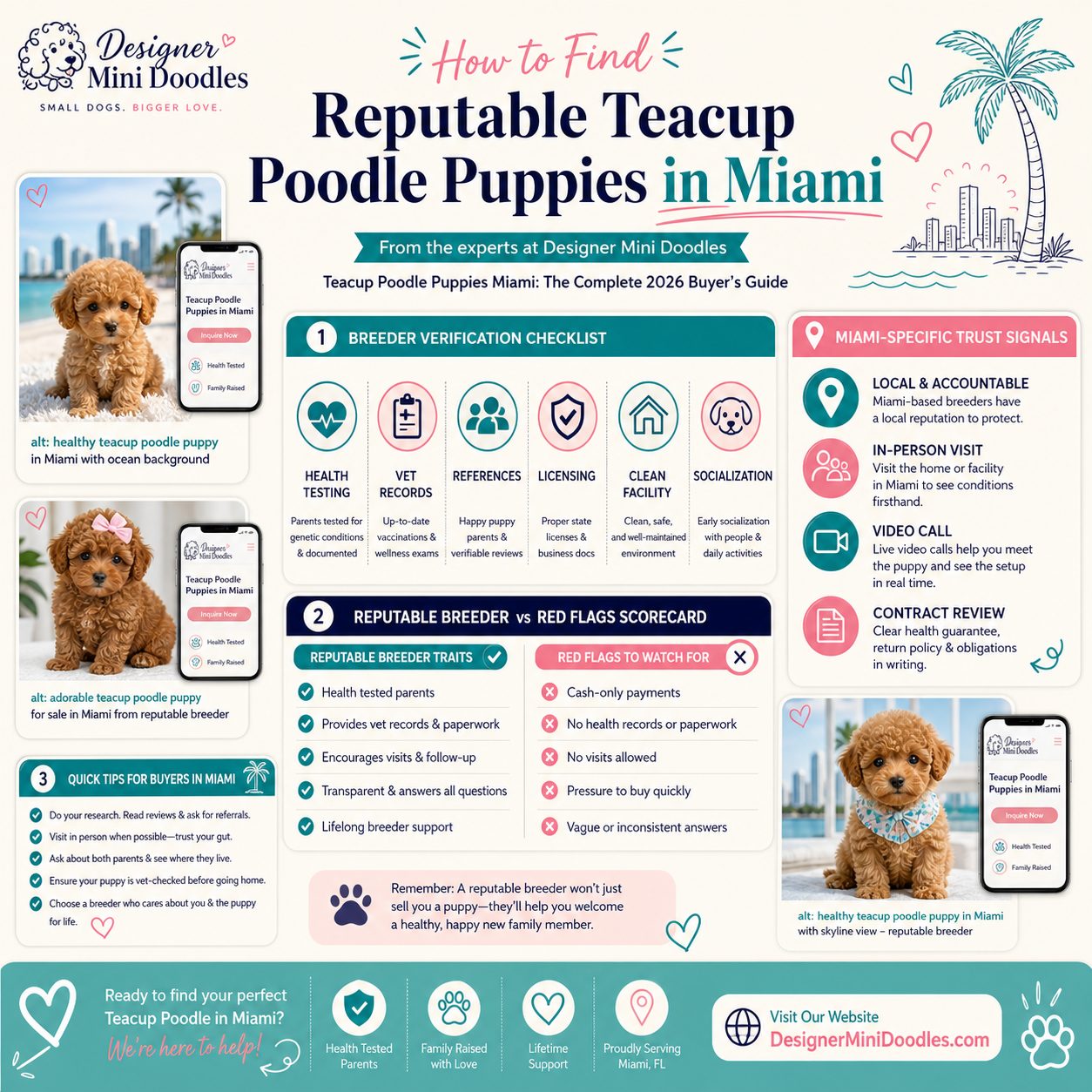
Green Flags in a Miami Breeder
- Health clearances on both parents (OFA patellas, cardiac, DNA panel)
- Written health guarantee of at least two years
- Puppies stay with the dam until 10 to 12 weeks minimum
- Breeder asks the buyer detailed questions in return
- Use of Early Neurological Stimulation (ENS) from days 3 to 16
- Exposure to household noises, children, and other pets before placement
- Transparent pedigree records and references from past buyers
Red Flags
- Puppies advertised at 4 or 6 weeks old
- “Micro,” “pocket,” or “teacup” prices under $1,500
- No in-person or video visits permitted
- Multiple breeds and constant availability
- Refusal to share veterinary records
- Display 9 Products per page
Pricing Expectations for Teacup Poodle Puppies Miami Buyers Should Anticipate
| Tier | Price Range | What It Includes |
|---|---|---|
| Pet Quality, Health-Tested | $3,500 – $5,000 | Spay/neuter contract, basic genetic panel, AKC limited |
| Show or Breeder Quality | $5,000 – $8,000 | Full AKC, championship lineage, comprehensive health testing |
| Rare Color / Exotic Markings | $6,500 – $10,000+ | Parti, phantom, or true red lines with documented pedigree |
Shipping within Florida typically adds $300 to $600. Reputable breeders insist on either in-person pickup or hand-delivered nanny services rather than cargo flights.
What to Look for Before the Puppy Comes Home
Once a litter is reserved, the weeks leading up to pickup matter more than most buyers realize. The puppy’s first 16 weeks of life shape adult temperament more than any later training.
Questions to Ask the Breeder Weekly
- What new sounds and surfaces has the puppy experienced?
- Has the puppy started litter box or pad training?
- What food brand and feeding schedule is being used?
- When was the first deworming and vaccine administered?
- Has the puppy been exposed to crate time?
The best programs follow structured developmental protocols. Insights on this stage are detailed in this piece on raising toy and teacup poodle puppies from birth to eight weeks.
Essential Gear Checklist for the Miami Home
- Soft-sided crate (12″ length is plenty)
- Heated whelping pad for the first month
- Pet-safe pee pads, six per day expected
- Glucose gel (Nutri-Cal) for emergency hypoglycemia
- Lightweight harness, never a collar leash, due to delicate trachea
- Sun-shielded carrier for outdoor errands
- Hurricane go-bag with food, water, vaccine records, and meds
Life With a Teacup Poodle in Miami
First 30 Days
Bringing a teacup home is a quiet, structured process. Limit visitors. Establish a single feeding station, water source, and sleeping area. Tiny puppies need to eat every 3 to 4 hours during waking hours to prevent hypoglycemia, which can present as wobbliness, glazed eyes, or sudden collapse.
)
Crate training begins immediately but gently. A puppy should associate the crate with safety, never punishment. The positive crate training method outlines a step-by-step routine that works particularly well for sensitive teacup temperaments.
Housebreaking in a Condo
Miami’s high-rise reality means most teacup owners combine indoor pad training with eventual outdoor walks. The breed is intelligent and typically grasps pad placement within two weeks of consistent reinforcement. Detailed strategies are available in this guide on housebreaking toy poodles in any climate.
Socialization Windows
The critical socialization period closes around 14 weeks. During this window, expose the puppy carefully and positively to:
- Elevator rides and lobby noise
- Tile, marble, grass, and sand surfaces
- Beach sounds at low tide (never direct sun)
- Strollers, skateboards, scooters
- Friendly adults and supervised children
- The vet’s office, even just for treats
Confidence-building techniques tailored for the breed are covered in this overview of socialization strategies for confident toy poodles.
Health Considerations Unique to Teacup Poodles
Smaller poodles carry amplified versions of standard poodle health concerns. Miami owners should establish a relationship with a vet experienced in toy breeds before the puppy arrives. Areas in Coral Gables, Aventura, and Pinecrest have several specialists known for small-breed care.
Top Health Concerns
| Concern | Description | Prevention |
|---|---|---|
| Hypoglycemia | Low blood sugar, common under 6 months | Frequent small meals, glucose gel on hand |
| Luxating Patella | Kneecap slips out of place | Avoid jumps off furniture, monitor weight |
| Dental Crowding | Small mouth, full tooth count | Daily brushing, annual cleanings |
| Liver Shunt | Congenital vascular defect | Bile acid testing in puppies |
| Tracheal Collapse | Weak windpipe cartilage | Use harnesses, never collars |
| Open Fontanel | Soft spot on skull | Gentle handling, no head pressure |
Diet and Feeding
Quality matters enormously at this size. A teacup poodle eats only a quarter cup of food daily, so every bite must deliver nutrition. Look for small-breed formulas with named meat proteins, no fillers, and added DHA. The healthy diet plans for growing toy poodle puppies resource offers brand-neutral guidance on portions and frequency.
Grooming in the Miami Climate
Humidity is the teacup poodle owner’s eternal opponent. The breed’s curly coat traps moisture, leading to skin yeast and matting if not managed. A typical Miami grooming schedule looks like this:
- Daily: Quick brush, eye wipe, paw check
- Weekly: Full coat brush, ear cleaning, sanitary trim around eyes
- Every 3 to 4 weeks: Professional grooming or full home bath and trim
- Quarterly: Deep coat conditioning treatment
Lighter summer cuts such as the puppy cut or teddy bear trim reduce heat stress significantly. Detailed cut options are covered in this grooming tips for fluffy toy poodle puppies reference.
Is a Teacup Poodle the Right Fit
The breed is not a fit for every Miami household. Families with toddlers under five, very large dogs, or open-balcony lifestyles should consider a slightly larger toy or mini poodle. The Miami buyer who thrives with a teacup is typically:
- A single professional, couple, or senior
- A frequent traveler who wants a cabin-approved companion
- An apartment dweller with a flexible schedule
- Someone willing to budget $2,000 to $3,500 annually for care
For travelers, the travel-friendly toy poodles guide outlines airline policies and carrier requirements. For retirees, the toy poodle puppies for seniors overview addresses lower-impact ownership routines.
![Black teacup poodle puppy sleeping in Miami condo]())
Long-Term Costs in Miami
| Expense Category | Annual Estimate |
|---|---|
| Premium food | $400 – $700 |
| Grooming (professional) | $600 – $1,200 |
| Routine vet care | $400 – $800 |
| Pet insurance | $480 – $900 |
| Boarding or pet sitting | $300 – $1,500 |
| Supplies and toys | $200 – $400 |
| Total | $2,380 – $5,500 |
Miami-specific items such as cooling vests, sun-blocking strollers, and hurricane preparedness supplies add another $200 to $400 annually.
Conclusion and Next Steps
Bringing home one of the teacup poodle puppies Miami breeders offer is a fifteen-plus-year commitment to a remarkably intelligent, fragile, and affectionate companion. The reward is a dog who fits seamlessly into condo life, travels easily, and bonds deeply with one person or a small family. The cost is vigilance: in choosing a breeder, in preventing injury, in managing climate, and in providing patient, positive training during the puppy’s earliest months.
Action steps to take this week:
- Define the household budget, both upfront and ongoing.
- Interview at least three breeders, asking the questions outlined above.
- Schedule a meet-and-greet with a local toy-breed veterinarian.
- Prepare the home: secure balcony gaps, remove fall hazards, stock the emergency kit.
- Join the breeder’s waitlist only after written health guarantees and references check out.
A well-chosen teacup poodle is not a fashion accessory. It is a tiny, thinking creature with a long memory and a soft heart. Choose carefully, prepare thoroughly, and the next decade and a half will be among the richest of any pet ownership experience in South Florida.