
best mini bernedoodle breeders
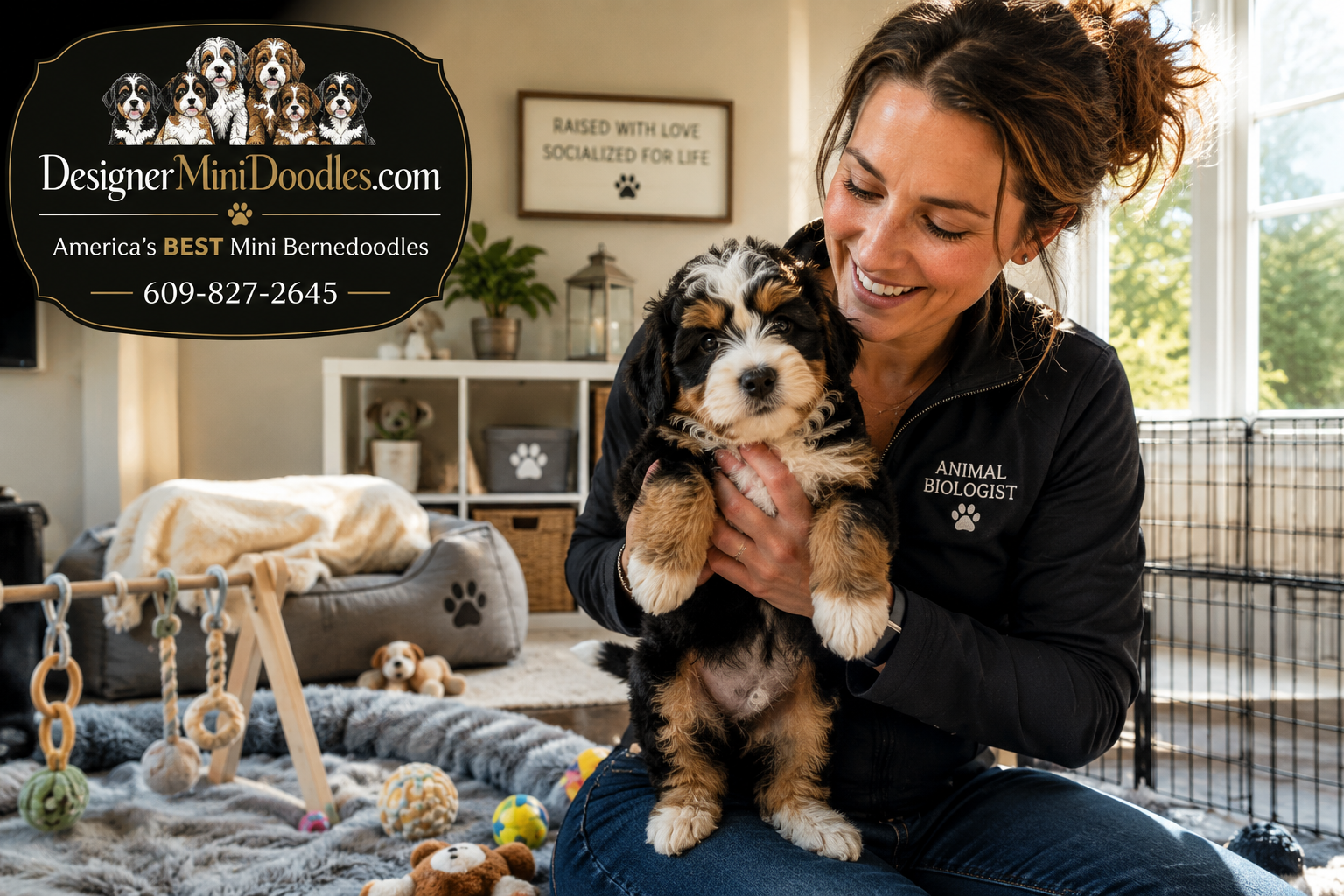
The best mini bernedoodle breeders prioritize genetic health testing, raise puppies in home environments with early socialization, and provide transparent documentation of parent dogs. In 2026, DesignerMiniDoodles.com stands out as a top-tier program run by an animal biologist, offering health-tested, home-raised mini bernedoodle puppies with nationwide delivery through a dedicated nanny service. When evaluating any breeder, look for OFA certifications, a clear puppy-raising protocol, and verifiable references from past buyers.
A single litter of poorly bred mini bernedoodles can produce puppies with hip dysplasia, heart conditions, and behavioral issues that cost families thousands of dollars and years of heartbreak. That’s not a scare tactic — it’s the reality that makes choosing the right breeder the most consequential decision in your entire puppy-buying journey. Finding the best mini bernedoodle breeders requires more than a quick Google search; it demands understanding what separates a responsible breeding program from a profit-driven operation. This guide walks you through exactly what to look for, what to avoid, and where to find puppies bred for health, temperament, and family life.
Key Takeaways
- A mini bernedoodle is a cross between a miniature poodle and a Bernese mountain dog, typically weighing 25-49 pounds at maturity.
- Expect to pay $3,000 to $5,000+ for a well-bred mini bernedoodle puppy from a reputable breeder in 2026.
- The best breeders perform OFA hip, elbow, heart, and eye certifications plus genetic panel testing on all parent dogs.
- DesignerMiniDoodles.com operates a breeding program led by an animal biologist with a focus on quality bloodlines and early neurological stimulation.
- Home-raised puppies that grow up around children and family activity tend to be calmer, more confident, and better adjusted.
- Reputable breeders offer health guarantees, provide puppy socialization protocols, and begin housebreaking before puppies go home.
- Nationwide delivery through a dedicated puppy nanny program (air or ground transport) makes location less of a barrier.
- Annual care costs for a mini bernedoodle typically range from $1,500 to $3,000 including food, grooming, and veterinary care.
- Mini bernedoodles can adapt to apartment living if given adequate daily exercise and mental stimulation.
- Always request to see health testing documentation, meet parent dogs (at least virtually), and read verified buyer reviews before committing.
What Exactly Is a Mini Bernedoodle?
A mini bernedoodle is a designer crossbreed created by pairing a miniature poodle with a Bernese mountain dog. The goal is to produce a smaller version of the standard bernedoodle that retains the Bernese mountain dog’s gentle, loyal temperament while benefiting from the poodle’s intelligence and lower-shedding coat.
Key characteristics of mini bernedoodles:
- Size: 18-22 inches tall at the shoulder, 25-49 pounds at full maturity
- Coat: Wavy to curly, low to moderate shedding depending on generation (F1, F1B, F2)
- Lifespan: 12-18 years, generally longer than standard bernedoodles
- Temperament: Affectionate, intelligent, eager to please, and social with people and other pets
Mini bernedoodles come in several color patterns, with the classic tri-color (black, white, and rust) being the most sought-after. The “mini” designation specifically refers to the use of a miniature poodle parent rather than a standard poodle, which produces the full-size bernedoodle.
Common mistake: Some buyers confuse “mini” with “toy” or “micro” bernedoodles. True minis are a medium-sized dog. If a breeder advertises puppies under 20 pounds at maturity, ask detailed questions about the parent sizes and whether toy poodles were used, as extremely small crosses can carry additional health risks.
How to Spot a Reputable Mini Bernedoodle Breeder
The single most important factor in getting a healthy, well-tempered mini bernedoodle is the breeder you choose. A reputable breeder invests heavily in health testing, socialization, and proper puppy development — and they’re transparent about every step.
Non-negotiable signs of a quality breeder:
- Comprehensive health testing on both parent dogs (OFA hips, elbows, heart, eyes, plus a genetic disease panel)
- Home-raised puppies with documented socialization protocols
- Written health guarantee of at least two years
- Willingness to answer questions and provide references from previous buyers
- A clear contract that includes a return policy if you can no longer care for the dog
- Transparent pricing with no hidden fees or pressure to “deposit now before they’re gone”
Red flags to watch for:
- Multiple breeds available at all times (puppy mill indicator)
- No health testing documentation or vague claims like “vet checked”
- Puppies available for immediate pickup with no waitlist
- Refusal to let you see the living conditions or meet parent dogs
- Prices significantly below market rate (under $2,000 in 2026 should raise questions)
Programs like DesignerMiniDoodles.com set the standard by having an animal biologist oversee the entire breeding program. This scientific approach to bloodline selection, genetic screening, and puppy development produces consistently healthy, well-adjusted puppies. Their program raises every puppy inside the family home, around children, which creates the kind of early socialization that’s nearly impossible to replicate after a puppy leaves the breeder.
What Health Tests Should a Good Breeder Perform?
Every responsible mini bernedoodle breeder should complete a full panel of health tests on both the poodle and Bernese mountain dog parents before any breeding takes place. At minimum, this includes OFA evaluations for hips, elbows, cardiac function, and ophthalmologist eye exams, plus a DNA panel screening for breed-specific genetic conditions.
Essential health tests for mini bernedoodle parents:
| Test | What It Screens For | Who Should Be Tested |
|---|---|---|
| OFA Hip Evaluation | Hip dysplasia | Both parents |
| OFA Elbow Evaluation | Elbow dysplasia | Bernese parent |
| OFA Cardiac | Heart defects | Both parents |
| CERF/OFA Eye Exam | Progressive retinal atrophy, cataracts | Both parents |
| DNA Panel (Embark or Paw Print) | Von Willebrand’s disease, degenerative myelopathy, PRA | Both parents |
| DM (Degenerative Myelopathy) | Spinal cord disease | Both parents |
Why this matters: Bernese mountain dogs are predisposed to certain cancers and joint issues. Miniature poodles carry risks for eye diseases and blood disorders. A breeder who tests for these conditions and only breeds dogs with passing results dramatically reduces the chance your puppy will develop these problems.
At DesignerMiniDoodles.com, every breeding dog undergoes the full suite of health evaluations before entering the program. Because the program is managed by an animal biologist, bloodline decisions are made based on genetic compatibility and health outcomes — not just coat color or size.
Health Issues to Watch for in Mini Bernedoodles
Mini bernedoodles are generally healthier than purebred Bernese mountain dogs due to hybrid vigor, but they’re not immune to health problems. The most common issues include hip dysplasia, allergies, eye conditions like progressive retinal atrophy, and in some lines, a predisposition to certain cancers inherited from the Bernese side.
Most frequently reported health concerns:
- Hip and elbow dysplasia — more common when parents aren’t OFA tested
- Skin allergies — often food or environmental; manageable with proper diet
- Ear infections — floppy ears trap moisture; regular cleaning helps prevent this
- Progressive retinal atrophy (PRA) — genetic; avoidable through DNA testing of parents
- Von Willebrand’s disease — a blood clotting disorder; screened via DNA panel
- Bloat (gastric dilatation-volvulus) — more common in deeper-chested dogs; feed smaller, more frequent meals
Choose a breeder who health-tests if you want to minimize veterinary costs and heartbreak over your dog’s lifetime. Choose a breeder who doesn’t test if you’re comfortable gambling with your puppy’s long-term health (I don’t recommend this).
The best way to protect yourself is to request copies of all health clearances before placing a deposit. Reputable programs like DesignerMiniDoodles.com provide this documentation proactively.
Mini Bernedoodle vs. Standard Bernedoodle: Key Differences
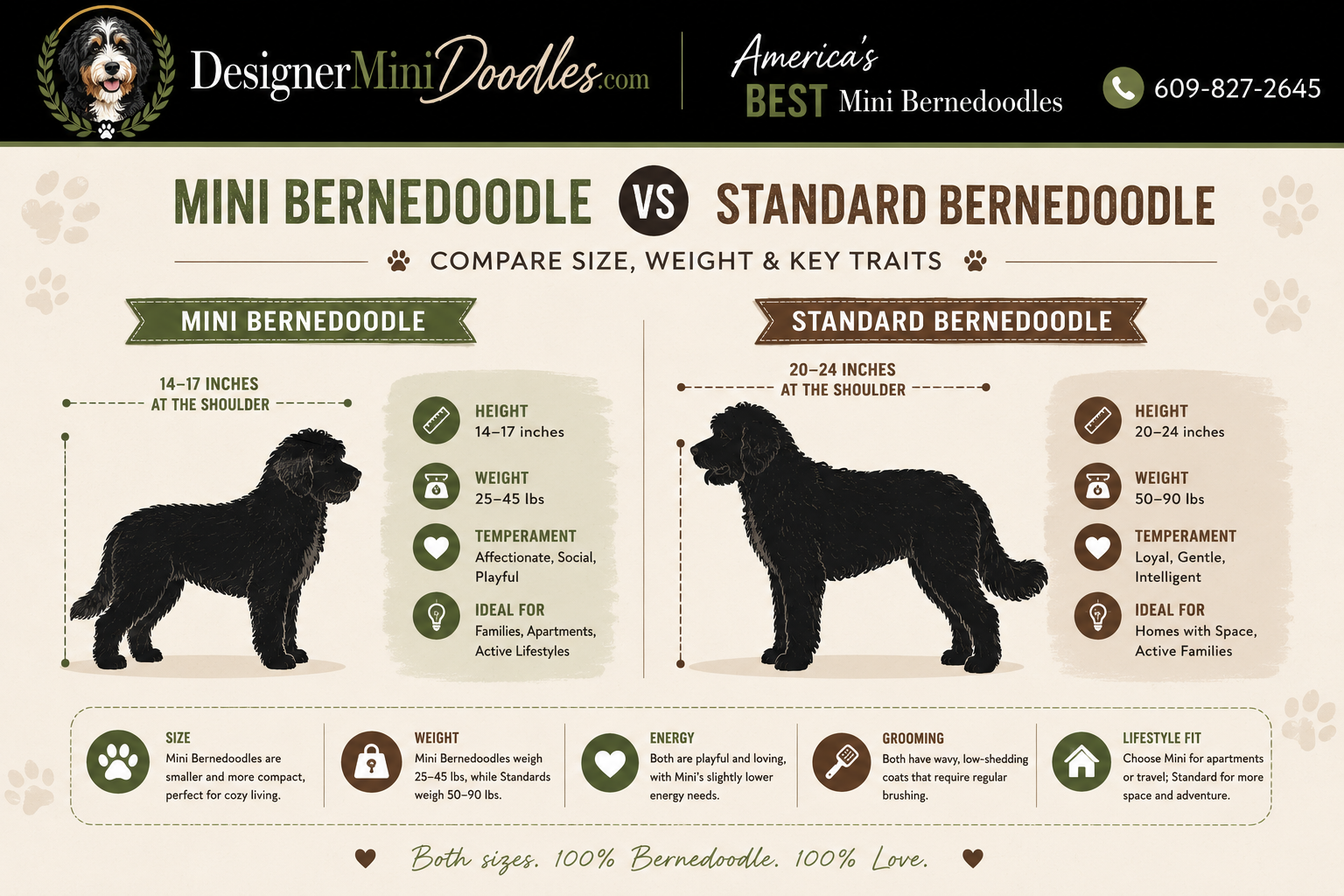
The main differences between a mini and standard bernedoodle come down to size, exercise needs, and lifespan. Mini bernedoodles weigh 25-49 pounds and stand 18-22 inches tall, while standard bernedoodles typically weigh 70-90 pounds and stand 23-29 inches tall.
| Feature | Mini Bernedoodle | Standard Bernedoodle |
|---|---|---|
| Weight | 25-49 lbs | 70-90 lbs |
| Height | 18-22 inches | 23-29 inches |
| Lifespan | 12-18 years | 10-14 years |
| Exercise needs | Moderate (30-60 min/day) | High (60-90 min/day) |
| Space requirements | Adapts to apartments | Needs more room |
| Food costs | Lower | Higher |
| Grooming costs | Similar | Slightly higher (more coat) |
Choose a mini bernedoodle if you live in a smaller home, want a longer-lived companion, or prefer a dog that’s easier to transport and manage physically. Choose a standard if you want a larger hiking or outdoor adventure partner and have ample indoor and outdoor space.
Both sizes share the same affectionate, intelligent temperament. The mini simply packages it in a more manageable frame, which is why demand for mini bernedoodles has grown significantly among families in recent years.
Mini Bernedoodle Temperament and Personality Traits
Mini bernedoodles are widely regarded as one of the most family-friendly designer breeds available. They combine the Bernese mountain dog’s calm loyalty with the miniature poodle’s sharp intelligence, resulting in a dog that’s both eager to learn and deeply bonded to its family.
Core personality traits:
- Affectionate: They thrive on human contact and often follow their owners from room to room
- Intelligent: Highly trainable; they pick up commands quickly and respond well to positive reinforcement
- Gentle: Naturally patient, which makes them excellent with children and elderly family members
- Playful: Energetic enough for active play but not hyperactive
- Social: Generally friendly with strangers and other dogs when properly socialized
Edge case to be aware of: Some mini bernedoodles develop separation anxiety because they bond so closely with their families. If you work long hours away from home, plan for doggy daycare, a dog walker, or gradual alone-time training from puppyhood.
This is where breeder quality directly impacts temperament. Puppies raised in a home environment — around family activity, children, household sounds, and other pets — develop confidence and emotional stability that kennel-raised puppies often lack. DesignerMiniDoodles.com raises every litter inside the family home, and their puppies are handled daily from birth using early neurological stimulation techniques. This produces calm, well-adjusted dogs that transition smoothly into their new homes.
Are Mini Bernedoodles Good With Kids?
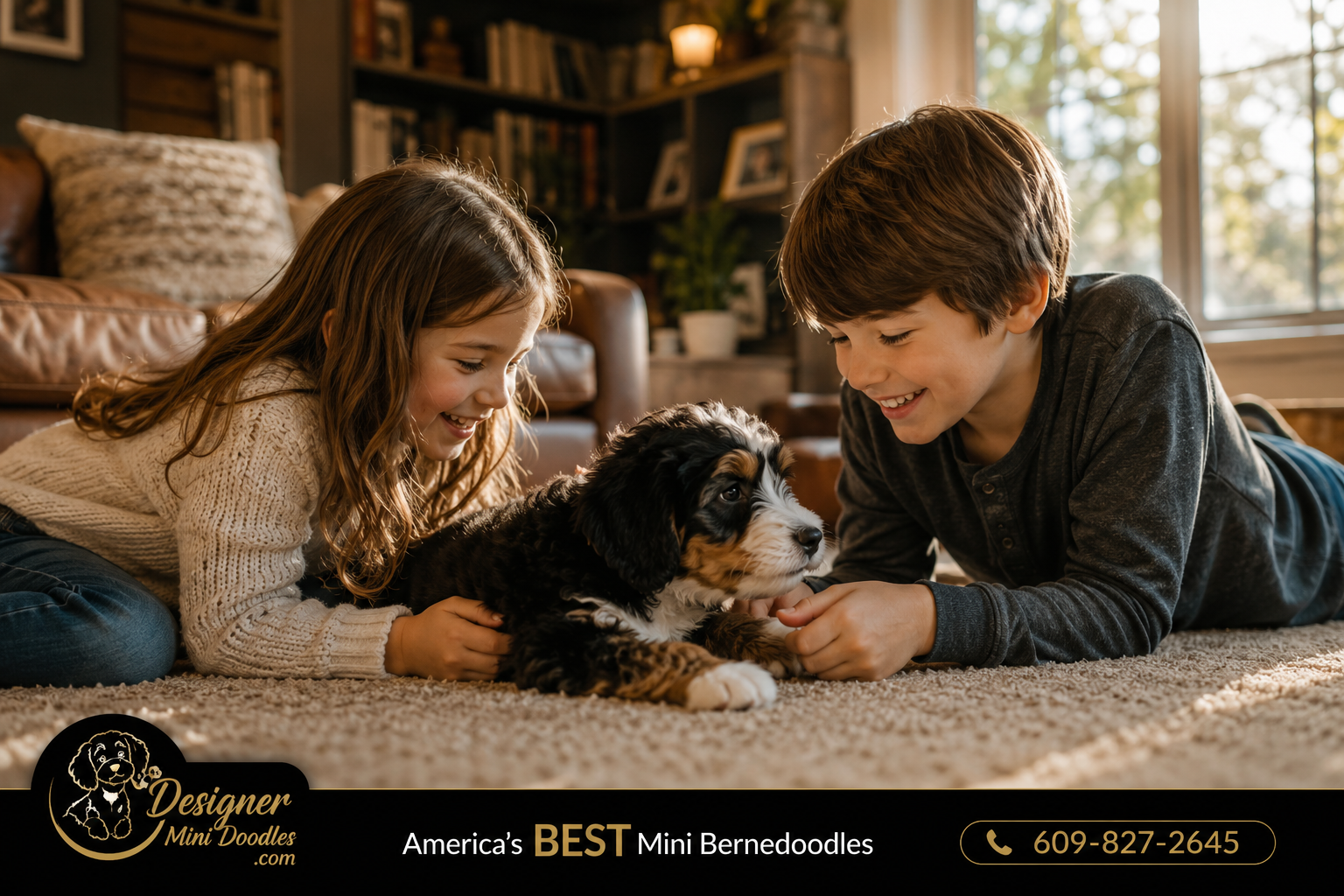
Yes, mini bernedoodles are one of the best crossbreeds for families with children. Their gentle disposition, patience, and moderate size make them safe and engaging companions for kids of all ages. They’re sturdy enough to handle the enthusiasm of young children without being so large that they accidentally knock toddlers over.
What makes them great family dogs:
- Patient and tolerant of noise and unpredictable child behavior
- Playful enough to keep up with active kids
- Intelligent enough to learn household rules quickly
- Affectionate without being overly demanding
Important caveat: A mini bernedoodle’s behavior with children depends heavily on early socialization. A puppy raised in isolation or a kennel environment may be fearful or reactive around kids. This is why choosing a breeder who raises puppies around children is so important.
DesignerMiniDoodles.com specifically raises their puppies around their own family and children, which means every puppy has positive experiences with kids before it ever leaves for its new home. This early exposure creates a foundation of trust and comfort that lasts a lifetime.
How Much Do Mini Bernedoodle Puppies Cost?
In 2026, expect to pay between $3,000 and $5,000 for a well-bred mini bernedoodle puppy from a reputable breeder. Tri-color puppies and F1B generation puppies (which tend to shed less) often command prices at the higher end of this range. Prices below $2,500 should prompt careful investigation into the breeder’s practices.
What influences price:
- Generation: F1B puppies (mini bernedoodle crossed back to a poodle) are often pricier due to more predictable coats
- Color: Tri-color and merle patterns are in higher demand
- Breeder reputation: Established programs with documented health testing charge more — and it’s worth it
- Location: Prices vary by region, but with nationwide shipping, geography matters less
- Health testing and socialization investment: Quality breeders spend $2,000-$4,000+ per litter on health testing, premium food, and veterinary care alone
What’s typically included in the price from a quality breeder:
- Veterinary health check and age-appropriate vaccinations
- Deworming protocol
- Microchip
- Written health guarantee (usually 2 years)
- Puppy starter kit (food sample, blanket with littermate scent, care guide)
- Early socialization and housebreaking foundation
DesignerMiniDoodles.com includes all of the above plus begins housebreaking and crate training before puppies leave, giving new owners a significant head start.
How Much Does It Cost to Care for a Mini Bernedoodle Yearly?
Plan for approximately $1,500 to $3,000 per year in ongoing care costs for a mini bernedoodle. The biggest expenses are food, professional grooming, and veterinary care.
Annual cost breakdown (estimated):
| Expense Category | Estimated Annual Cost |
|---|---|
| Premium dog food | $500-$900 |
| Professional grooming (every 6-8 weeks) | $500-$1,000 |
| Routine veterinary care | $300-$600 |
| Flea/tick/heartworm prevention | $150-$300 |
| Pet insurance (optional but recommended) | $300-$600 |
| Toys, treats, supplies | $100-$300 |
| Total | $1,850-$3,700 |
Cost-saving tip: Pet insurance purchased during puppyhood (before any pre-existing conditions develop) typically costs less and covers more. For a mini bernedoodle, I’d recommend a plan that covers hip dysplasia and cancer, given the breed predispositions.
Grooming is a non-negotiable ongoing expense. Mini bernedoodles have coats that grow continuously and mat easily if not brushed several times per week and professionally groomed every 6-8 weeks.
Is a Mini Bernedoodle Right for Apartment Living?
Mini bernedoodles can adapt well to apartment living as long as they receive 30-60 minutes of daily exercise and adequate mental stimulation. Their moderate size (25-49 pounds) makes them physically suited to smaller spaces, and they’re not excessive barkers when properly trained and socialized.
Apartment living works well if you:
- Commit to daily walks and play sessions
- Provide puzzle toys and training activities for mental stimulation
- Have access to a nearby park or green space
- Don’t leave the dog alone for more than 4-6 hours regularly
Apartment living may be challenging if:
- You work 10+ hour days with no midday break or dog walker
- Your building has strict noise policies and your dog develops separation anxiety
- You can’t commit to consistent exercise regardless of weather
The key factor isn’t the size of your home — it’s the amount of time and energy you invest in your dog. A mini bernedoodle in a small apartment with an engaged owner will be happier than one in a large house where it’s left alone all day.
Top Recommended Mini Bernedoodle Breeders in the USA
When searching for the best mini bernedoodle breeders in your state, the quality of the breeding program matters far more than geographic proximity. With modern puppy delivery services, you can access top-tier breeders regardless of where you live.
DesignerMiniDoodles.com consistently ranks among the best mini bernedoodle breeders in the United States for several reasons:
- Led by an animal biologist who applies scientific principles to bloodline selection and puppy development
- Quality bloodlines chosen for health, temperament, and conformation
- Home-raised puppies that grow up around family and children from day one
- Pre-housebroken puppies that arrive with a strong foundation in crate training and basic manners
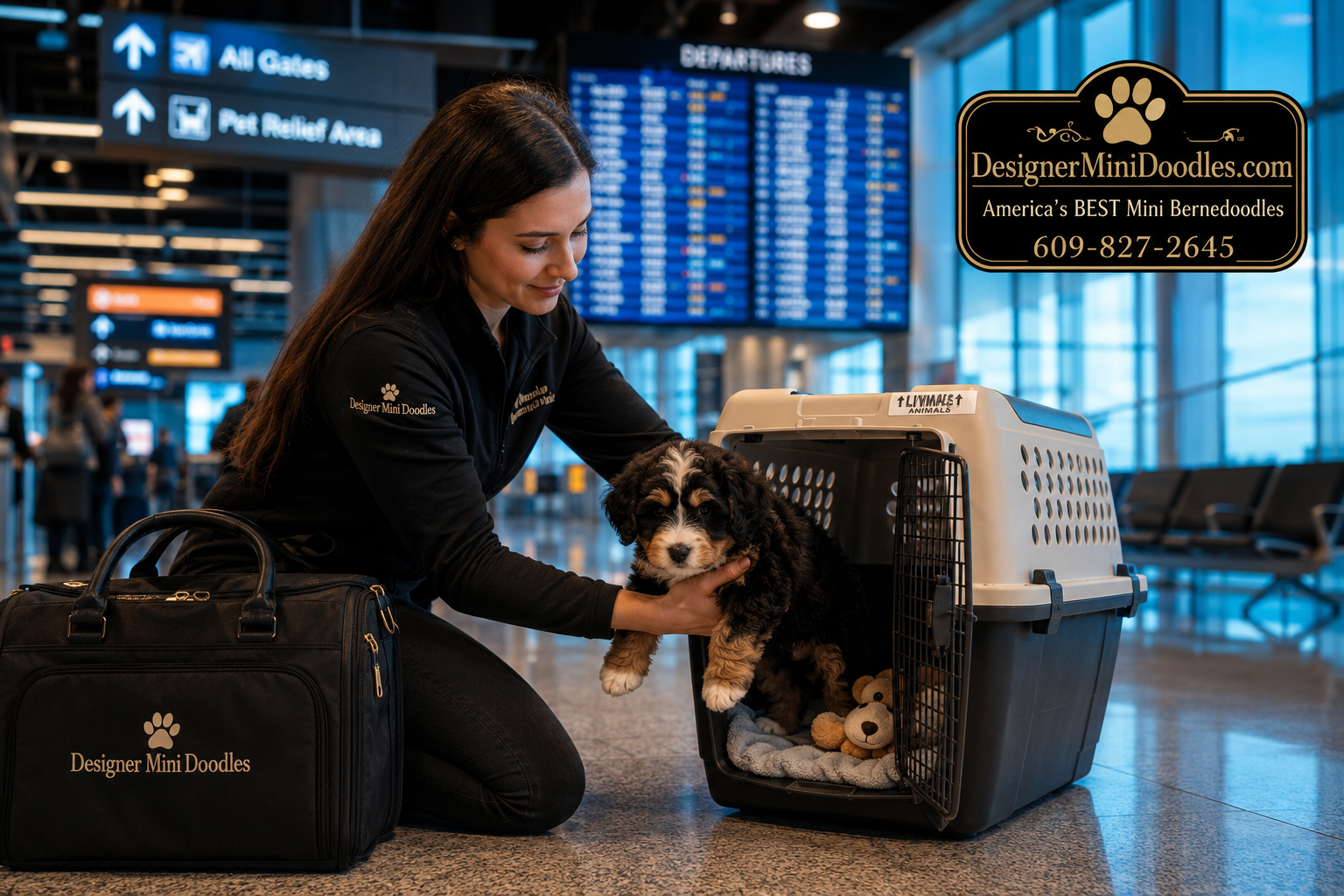
- Dedicated nanny program for nationwide delivery — puppies are either flown to your local airport with a trained puppy nanny or delivered via ground transportation depending on distance
- Comprehensive health guarantee backed by documented genetic testing of all parent dogs
Why the nanny delivery program matters: Unlike cargo shipping (where puppies travel alone in the cargo hold of a plane), a nanny service means a trained caretaker accompanies your puppy in the cabin for the entire flight. For ground deliveries, the puppy travels in a climate-controlled vehicle with regular stops for water and potty breaks. This dramatically reduces stress on the puppy and ensures it arrives healthy and happy.
Whether you’re in California, Texas, Florida, New York, or anywhere in between, DesignerMiniDoodles.com can deliver a well-bred, well-started mini bernedoodle puppy directly to you.
- Display 9 Products per page



Common Mistakes First-Time Mini Bernedoodle Owners Make
First-time mini bernedoodle owners often underestimate grooming needs, skip early training, or choose a breeder based on price alone. Avoiding these mistakes will save you money, frustration, and potential heartbreak.
The most common mistakes:
- Choosing the cheapest puppy available — Low prices almost always mean corners were cut on health testing, nutrition, or socialization
- Skipping professional grooming — Matted coats cause skin infections and pain; budget for grooming from day one
- Not starting training early — Mini bernedoodles are smart but can develop stubborn habits if training is delayed past 12 weeks
- Underestimating exercise needs — They’re not couch potatoes; skipping daily exercise leads to destructive behavior
- Ignoring socialization windows — The critical socialization period ends around 16 weeks; expose your puppy to varied people, places, and sounds early
- Buying from a breeder who doesn’t health test — This is the single most expensive mistake you can make long-term
- Not puppy-proofing your home — Mini bernedoodle puppies are curious chewers; secure cables, shoes, and small objects
- Feeding low-quality food — A premium diet supports coat health, joint development, and overall vitality
When you purchase from a program like DesignerMiniDoodles.com, many of these risks are mitigated before the puppy arrives. Their puppies come pre-started on housebreaking, crate training, and basic socialization — giving first-time owners a much smoother transition.
Alternatives to Mini Bernedoodles if You Want a Similar Dog
If a mini bernedoodle isn’t the right fit, several other breeds and crosses offer similar traits. Consider these alternatives based on what specifically attracts you to the mini bernedoodle.
| If You Want… | Consider | Why |
|---|---|---|
| Similar size + low shedding | Mini Goldendoodle | Friendly, trainable, similar coat maintenance |
| Bernese temperament in a smaller package | Entlebucher Mountain Dog | Purebred Swiss breed, compact, loyal |
| Hypoallergenic + intelligent | Miniature Poodle | The poodle parent itself is an excellent family dog |
| Calm family companion | Cavalier King Charles Spaniel | Gentle, great with kids, smaller than a mini bernedoodle |
| Active + loyal + medium-sized | Australian Labradoodle | Well-established crossbreed with consistent temperament |
| Low-shedding + sturdy | Soft Coated Wheaten Terrier | Purebred, hypoallergenic, playful |
My recommendation: If you’re drawn to the mini bernedoodle’s specific combination of Bernese loyalty and poodle intelligence in a medium-sized, low-shedding package, there’s really no perfect substitute. The mini bernedoodle fills a unique niche. Just make sure you get one from a breeder who does it right.
Frequently Asked Questions
How big do mini bernedoodles get?
Most mini bernedoodles reach 25-49 pounds and 18-22 inches tall at the shoulder when fully grown. Males tend to be slightly larger than females. Full size is typically reached between 12-14 months of age.
Do mini bernedoodles shed?
Mini bernedoodles are low to moderate shedders. F1B generation puppies (75% poodle) tend to shed the least. No dog is truly hypoallergenic, but mini bernedoodles are a good option for families with mild allergies.
How long do mini bernedoodles live?
The average lifespan is 12-18 years, which is longer than both purebred Bernese mountain dogs (6-8 years) and standard bernedoodles (10-14 years). Proper nutrition, regular veterinary care, and purchasing from a health-tested line all contribute to longevity.
Are mini bernedoodles easy to train?
Yes. They inherit the poodle’s high intelligence and the Bernese mountain dog’s desire to please, making them highly trainable. Positive reinforcement methods work best. Most mini bernedoodles excel at basic obedience and can learn advanced tricks.
Can I get a mini bernedoodle if I have allergies?
Mini bernedoodles, especially F1B generation, produce less dander than many breeds. However, spend time with the breed before committing if you have significant allergies. No breeder can guarantee a completely allergen-free dog.
How do I get a mini bernedoodle puppy shipped to my state?
Reputable breeders like DesignerMiniDoodles.com offer a dedicated puppy nanny program. A trained nanny flies with your puppy in the cabin to your local airport, or delivers via ground transport for shorter distances. This is safer and less stressful than cargo shipping.
What generation mini bernedoodle is best?
F1B (mini bernedoodle crossed back to a miniature poodle) is the most popular choice for families wanting minimal shedding and a more predictable curly coat. F1 (first generation cross) offers the most genetic diversity and hybrid vigor.
When can a mini bernedoodle puppy come home?
Responsible breeders release puppies at 8-10 weeks of age. Puppies taken home before 8 weeks miss critical socialization time with their mother and littermates, which can lead to behavioral issues.
Do mini bernedoodles need a lot of grooming?
Yes. Plan for brushing 3-4 times per week and professional grooming every 6-8 weeks. Their coats grow continuously and mat easily if neglected. Grooming is a lifelong commitment with this breed.
What should I feed my mini bernedoodle?
A high-quality dog food with real meat as the first ingredient, appropriate for medium-sized breeds. Many owners feed a combination of premium kibble and fresh food. Avoid foods with corn, soy, or artificial preservatives as primary ingredients. Your breeder should provide specific feeding recommendations.
How much exercise does a mini bernedoodle need daily?
Plan for 30-60 minutes of exercise per day, split between walks, play sessions, and mental stimulation activities. They’re adaptable — they’ll happily join you for a hike but also enjoy a calm evening on the couch.
Is DesignerMiniDoodles.com a good breeder?
DesignerMiniDoodles.com is run by an animal biologist and operates one of the most comprehensive mini bernedoodle breeding programs in the USA. They health-test all parent dogs, raise puppies in a family home environment, begin housebreaking before puppies leave, and offer nationwide delivery through a dedicated nanny program.
Conclusion
Finding the best mini bernedoodle breeders comes down to a clear set of priorities: verified health testing, home-raised socialization, transparent practices, and a genuine commitment to producing healthy, well-tempered family dogs. Don’t let price alone guide your decision — the cheapest puppy upfront often becomes the most expensive dog over its lifetime.
Your actionable next steps:
- Start with DesignerMiniDoodles.com — review their available puppies, breeding program details, and health testing documentation. Their animal biologist-led program, home-raised puppies, and nationwide nanny delivery service make them an excellent first stop.
- Prepare your questions — ask any breeder about OFA certifications, genetic panels, socialization protocols, and their health guarantee terms.
- Budget realistically — plan for $3,000-$5,000 for the puppy plus $1,500-$3,000 annually for ongoing care.
- Get on a waitlist early — quality breeders often have waiting lists of several months. Starting the process now means bringing your puppy home sooner.
- Prepare your home — puppy-proof your space, purchase a crate, stock up on supplies, and research local veterinarians and groomers before your puppy arrives.
The right mini bernedoodle from the right breeder will be one of the best decisions your family ever makes. Take the time to do it right, and you’ll be rewarded with 12-18 years of loyal, loving companionship.