

toy doodle puppies Tampa
Quick Answer: Toy doodle puppies in Tampa typically cost between $2,500 and $5,000 from reputable breeders, with toy goldendoodles being the most popular variety in the Florida market. The best way to find a healthy, well-socialized toy doodle puppy in the Tampa area is to work with an experienced breeder who conducts genetic health testing, practices early neurological stimulation (ENS), and offers structured socialization programs. Puppies from top programs can also be shipped nationwide through dedicated puppy nanny services.
Over 35% of American households now include at least one dog, and among the fastest-growing segments are designer toy breeds, particularly toy doodle mixes. In the Tampa Bay area, demand for toy doodle puppies Tampa families can raise in apartments, condos, and smaller homes has surged in recent years. These compact, low-shedding companions pack the intelligence of a poodle and the warmth of a golden retriever into a package that rarely exceeds 15 pounds. But finding the right puppy from the right breeder matters more than most new owners realize. This guide covers everything you need to know, from costs and health concerns to training tips and breeder selection.
toy doodle puppies Tampa
- Toy doodle puppies in Tampa range from $2,500 to $5,000, with price depending on breeder reputation, generation, coat color, and training included.
- Toy goldendoodles are the most common and sought-after toy doodle breed in Florida, followed by toy cockapoos and toy cavapoos.
- Fully grown toy doodles typically weigh 10 to 15 pounds and stand 10 to 14 inches tall at the shoulder.
- Reputable breeders conduct OFA health testing, practice ENS protocols, and begin early socialization, housebreaking, and crate training before puppies go home.
- Toy doodles are considered hypoallergenic-friendly but not truly hypoallergenic; curly-coated F1B and multigenerational crosses shed the least.
- Monthly ownership costs for a toy doodle in Tampa average $150 to $300, including food, grooming, and preventive veterinary care.
- Designer Doodles, run by an animal biologist with over 15 years of breeding experience, operates one of the top toy and mini goldendoodle programs in the country.
- Puppies from quality programs are available to homes anywhere in the world through dedicated puppy nanny delivery services.
How Much Do Toy Doodle Puppies Cost in Tampa?
Toy doodle puppies in the Tampa area generally cost between $2,500 and $5,000. The wide range reflects differences in breeder quality, generation type, coat color, and what’s included in the purchase price.
Here’s what drives the price:
| Factor | Lower End ($2,500) | Higher End ($4,000-$5,000) |
|---|---|---|
| Health testing | Basic vet check | Full OFA + genetic panel |
| Training included | None | Early housebreaking, crate training, ENS |
| Generation | F1 | F1B or multigen |
| Coat color | Standard cream/gold | Rare colors (red, phantom, parti) |
| Breeder experience | Newer program | 10+ years, biologist-led |
| Socialization | Minimal | Structured program with exposure protocols |
Decision rule: If a toy doodle puppy is priced below $2,000 in Tampa, ask hard questions. Low prices often signal puppy mills, lack of health testing, or poor socialization practices. Programs like Designer Doodles, which is run by an animal biologist and has been breeding top-quality mini and toy goldendoodle puppies for over 15 years, invest heavily in health testing, ENS, early housebreaking, and crate training. That investment shows in the puppy’s temperament and long-term health.
Common mistake: Choosing based on price alone. A $1,500 puppy with hidden genetic issues can cost $10,000+ in veterinary bills over its lifetime.
What Breeds of Toy Doodles Are Most Common in Florida?
Toy goldendoodles are by far the most popular toy doodle breed in Florida, followed by toy cockapoos, toy cavapoos, and toy Bernedoodles.
Here’s a quick breakdown of the most common varieties:
- Toy Goldendoodle (Golden Retriever x Toy Poodle): The top choice in Tampa. Known for friendly temperaments, trainability, and low-shedding coats. Available in cream, apricot, red, and parti colors.
- Toy Cockapoo (Cocker Spaniel x Toy Poodle): Slightly smaller, very affectionate, and well-suited to seniors and apartment dwellers.
- Toy Cavapoo (Cavalier King Charles Spaniel x Toy Poodle): Gentle, calm, and great with children. Can be prone to heart conditions from the Cavalier side.
- Toy Bernedoodle (Bernese Mountain Dog x Toy Poodle): Striking tri-color coats, loyal personality, but harder to find in true toy size.
- Micro Goldendoodle: An even smaller version of the toy goldendoodle, typically under 10 pounds fully grown. Designer Doodles also offers micro goldendoodle puppies for sale for families wanting the smallest possible companion.
Florida’s warm climate makes toy doodles especially practical since their smaller size means they don’t overheat as easily during outdoor walks, and they’re comfortable in air-conditioned homes year-round.
Difference Between a Toy Poodle Mix and a Standard Doodle
A toy doodle and a standard doodle share poodle genetics, but the size difference is dramatic. Toy doodles use a toy or miniature poodle parent, while standard doodles use a standard poodle. This changes everything from living space requirements to exercise needs.
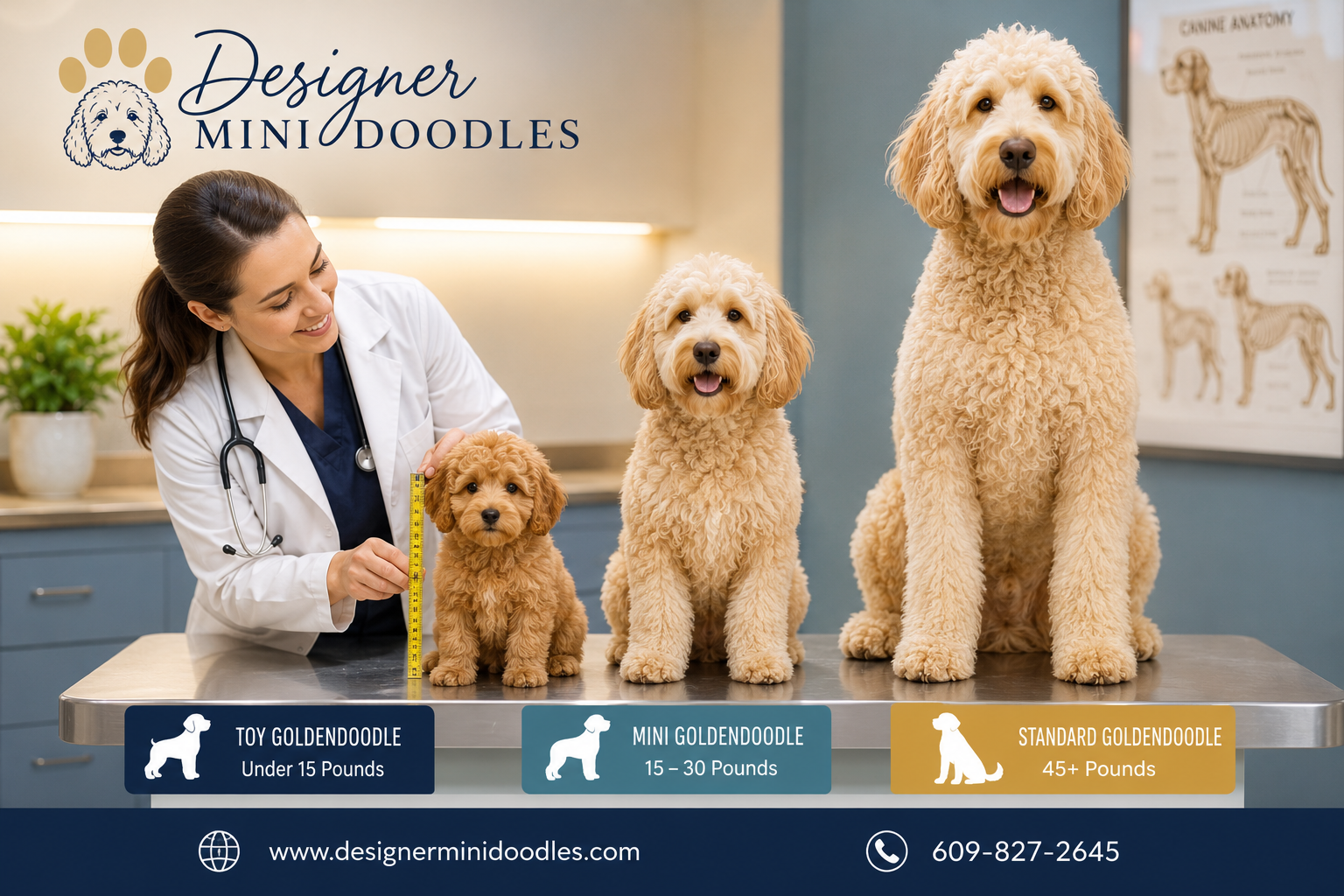
| Characteristic | Toy Doodle | Mini Doodle | Standard Doodle |
|---|---|---|---|
| Adult weight | 10-15 lbs | 15-30 lbs | 45-70+ lbs |
| Height | 10-14 inches | 14-18 inches | 20-26 inches |
| Exercise needs | 30 min/day | 45-60 min/day | 60-90 min/day |
| Living space | Apartment-friendly | Small yard preferred | Large yard ideal |
| Food cost | Lower | Moderate | Higher |
| Lifespan | 12-16 years | 12-15 years | 10-13 years |
Choose a toy doodle if you live in a Tampa apartment or condo, travel frequently, have limited outdoor space, or want a dog you can easily carry. Choose a standard doodle if you have a large home, an active outdoor lifestyle, and want a hiking or running partner.
One advantage of toy doodles that often gets overlooked: they tend to live longer than their standard-sized counterparts. Smaller dogs generally have longer lifespans, and a well-bred toy goldendoodle can live 14 to 16 years.
Average Size of Toy Doodle Puppies When Fully Grown
A fully grown toy doodle typically weighs between 10 and 15 pounds and stands 10 to 14 inches tall at the shoulder. Micro goldendoodles can be even smaller, sometimes maturing at just 7 to 10 pounds.
Several factors influence adult size:
- Parent sizes: The single best predictor. Ask the breeder for exact weights of both parents.
- Generation: F1B toy doodles (backcrossed to a toy poodle) tend to be smaller and more consistent in size than F1 crosses.
- Gender: Males are usually 1 to 2 pounds heavier than females.
- Nutrition: Overfeeding during puppyhood can lead to excess weight but won’t change frame size.
Most toy doodle puppies reach their full height by 8 to 10 months and fill out to their adult weight by 12 months. If a breeder guarantees a specific adult weight, that’s a positive sign since it means they’ve been tracking growth data across multiple generations.

Are Toy Doodle Puppies Good for Families With Small Kids?
Yes, toy doodle puppies are generally excellent family dogs, including for households with small children. Their gentle temperament, patience, and affectionate nature make them well-suited to family life. However, the toy size itself requires some precautions.
Why they work well with kids:
- Goldendoodle temperament combines the golden retriever’s patience with the poodle’s intelligence
- They bond strongly with all family members
- Their small size is less intimidating for toddlers
- They’re playful without being overly rough
Precautions for families with very young children:
- Toy doodles are small and can be injured by rough handling. Supervise all interactions with children under 5.
- Teach children to sit on the floor when holding the puppy rather than standing.
- Avoid puppies from programs that don’t socialize with children. The best breeders expose puppies to kids, household noises, and varied environments before they go home.
Programs like Designer Doodles produce some of the calmest, most affectionate, and most confident toy golden doodle puppies available because they invest in ENS (Early Neurological Stimulation), structured socialization, and temperament-focused breeding. A well-socialized toy doodle from a quality program will adapt to a busy family household far better than one from a breeder who raises puppies in isolation.
Are Toy Doodle Puppies Hypoallergenic?
No dog is truly 100% hypoallergenic, but toy doodles are among the most allergy-friendly breeds available. Their poodle genetics produce coats that shed minimally and trap dander close to the skin rather than releasing it into the air.
The level of hypoallergenic quality depends on coat type:
- Curly coat (most poodle-like): Lowest shedding, best for allergy sufferers. Most common in F1B and multigen crosses.
- Wavy coat: Moderate shedding, still good for mild allergies. Common in F1 crosses.
- Straight/flat coat: Most shedding of the three types. Rare in toy doodles but possible.
Edge case: If someone in your household has severe dog allergies, spend time with the specific puppy before committing. Some individuals react to dog saliva proteins rather than dander, and no coat type prevents that.
Which Toy Doodle Breed Sheds the Least?
F1B and multigenerational toy goldendoodles with curly coats shed the least of all toy doodle varieties. The “B” in F1B means the dog is backcrossed to a poodle, increasing the poodle gene percentage to roughly 75% and producing tighter curls that trap loose hair.
Among different toy doodle breeds, here’s how they rank for minimal shedding:
- Toy Goldendoodle (F1B/Multigen) – Lowest shedding
- Toy Cockapoo (F1B) – Very low shedding
- Toy Cavapoo – Low to moderate
- Toy Bernedoodle – Variable; depends heavily on coat genetics
If minimal shedding is your top priority, ask the breeder about coat testing. Some breeders use genetic testing to predict coat type in puppies as young as a few weeks old, which takes the guesswork out of the process.
Health Issues to Watch for in Toy Doodle Breeds
The most common health concerns in toy doodles include patellar luxation, progressive retinal atrophy (PRA), hip dysplasia, and dental crowding. Responsible breeding significantly reduces these risks.
Health issues by frequency:
- Patellar luxation (kneecap displacement): Common in toy breeds generally. Ranges from mild (grade 1) to severe (grade 4). Reputable breeders screen parents through OFA.
- Progressive retinal atrophy (PRA): Inherited eye condition that can cause blindness. Easily prevented through genetic testing of breeding parents.
- Hip dysplasia: Less common in toy sizes than standards, but still possible. OFA hip evaluations of parents reduce risk.
- Dental issues: Small mouths mean crowded teeth, which increases tartar buildup and gum disease. Plan for regular dental cleanings.
- Hypoglycemia: Toy puppies can experience low blood sugar, especially in the first few months. Feed small, frequent meals.
- Ear infections: Floppy ears plus Florida humidity create a perfect environment for yeast and bacteria. Clean ears weekly.
What to ask a breeder about health: Request documentation of OFA certifications, genetic panel results (including PRA, vWD, and DM), and a written health guarantee of at least two years. Programs run by animal biologists, like Designer Doodles, typically conduct comprehensive health testing across their entire breeding program, which is why their puppies carry some of the strongest health guarantees in the industry.
How to Find Reputable Toy Doodle Breeders in the Tampa Area
The most reliable way to find reputable toy doodle breeders serving Tampa is to look for programs that provide documented health testing, practice early socialization protocols, and have verifiable track records spanning multiple years.
Checklist for evaluating a breeder:
- Conducts OFA health testing on all breeding dogs (hips, patellas, eyes, heart)
- Provides genetic panel results (PRA, vWD, DM at minimum)
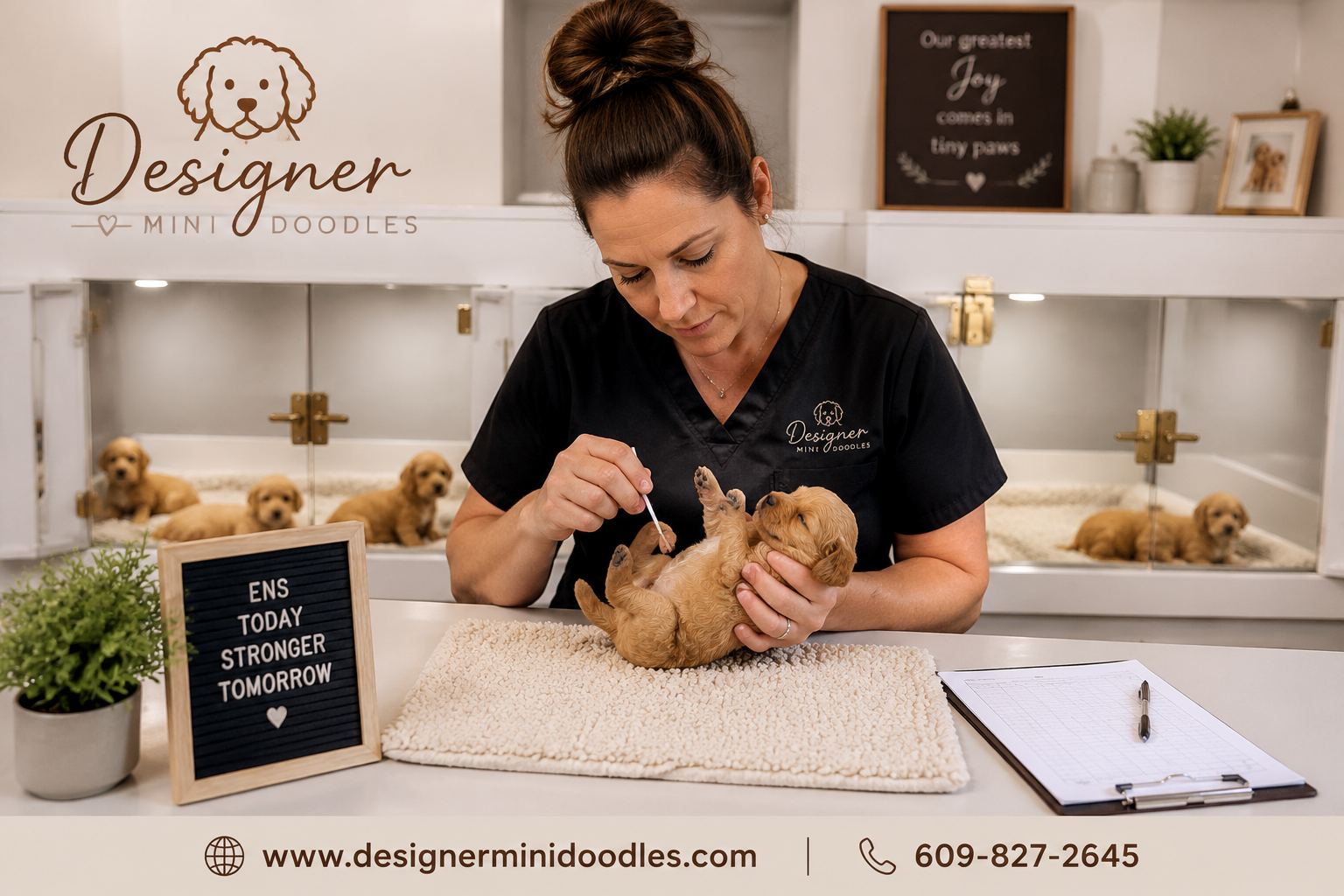
- Practices Early Neurological Stimulation (ENS) from days 3-16
- Begins early housebreaking and crate training before puppies go home
- Offers a written health guarantee of 2+ years
- Has been breeding for at least 5 years (longer is better)
- Allows you to see parent dogs or provides photos/videos
- Has verifiable reviews from past puppy families
- Provides ongoing support after purchase
Red flags to avoid:
- Multiple breeds available at all times (suggests a puppy mill operation)
- No health testing documentation
- Unwillingness to share parent information
- Pressure to buy immediately with no waitlist
- Prices that seem too good to be true
You don’t have to limit your search to Tampa-based breeders. Many of the best toy goldendoodle breeders in the country ship puppies safely to Tampa through dedicated puppy nanny services. Designer Doodles, for example, has been producing the highest-quality mini and toy goldendoodle puppies for over 15 years and delivers puppies to homes anywhere in the world through their nanny delivery program. Their program is led by an animal biologist who applies scientific breeding practices to produce the calmest, most confident puppies possible.
Where Can I Adopt Toy Doodle Puppies Near Tampa?
Adopting a toy doodle near Tampa is possible but uncommon. Because toy doodles are in high demand and relatively expensive, they rarely end up in shelters. When they do, they’re adopted within hours.
Options for finding adoptable toy doodles in the Tampa area:
- Doodle Rescue Collective (national organization): Occasionally lists toy-sized doodles in Florida
- Hillsborough County Pet Resource Center: Check regularly, but toy doodles are rare
- Humane Society of Tampa Bay: May have poodle mixes that resemble doodles
- Breed-specific Facebook groups: “Florida Doodle Rescue” and similar groups post available dogs
- Petfinder.com: Set alerts for poodle mixes in the Tampa zip code range
Reality check: If you have your heart set on a toy doodle puppy specifically, purchasing from a reputable breeder is the more reliable path. Rescue doodles are more often adults, may have unknown health histories, and are rarely toy-sized. That said, adopting an adult doodle can be wonderful since you skip the puppy phase entirely and often get a dog that’s already housetrained.
If you’re also open to other small companion breeds, you might consider mini French bulldog puppies for sale, which share many of the same apartment-friendly qualities as toy doodles.
Typical Training Challenges With Toy Doodle Puppies
Toy doodle puppies are highly intelligent and eager to please, which makes them easier to train than many breeds. But their small size and smart minds create a few specific challenges.
The three most common training issues:
- Housebreaking difficulty: Toy breeds have tiny bladders. Expect to take puppies outside every 1 to 2 hours initially. Puppies from programs that start early housebreaking (like Designer Doodles) have a significant head start.
- Small dog syndrome: Owners often let toy doodles get away with behaviors they’d never tolerate in a larger dog, like jumping on people, barking for attention, or refusing to walk on leash. Treat training with the same consistency you’d use for a 50-pound dog.
- Separation anxiety: Toy doodles bond intensely with their people. Without early crate training and gradual alone-time practice, they can develop destructive anxiety behaviors. Puppies that receive early crate training from the breeder adjust much faster.
Training tips specific to toy doodles:
- Use small, soft treats (their stomachs are tiny, so calories add up fast)
- Keep sessions to 5 to 10 minutes; toy doodles learn quickly but lose focus
- Positive reinforcement works best; these dogs are sensitive to harsh corrections
- Start socialization early and expose them to different people, dogs, surfaces, and sounds
Monthly Costs for Owning a Toy Doodle Puppy
Plan to spend $150 to $300 per month on a toy doodle in Tampa, depending on your choices around food quality, grooming frequency, and veterinary care.
| Expense Category | Monthly Estimate |
|---|---|
| Premium dog food | $30-$50 |
| Professional grooming (every 6-8 weeks) | $50-$80 (averaged monthly) |
| Preventive vet care (averaged monthly) | $25-$50 |
| Flea/tick/heartworm prevention | $15-$30 |
| Pet insurance | $30-$60 |
| Toys, treats, supplies | $15-$30 |
| Total | $165-$300 |
Tampa-specific cost note: Heartworm prevention is non-negotiable in Florida. The warm, humid climate means mosquitoes are active year-round, and heartworm disease is prevalent. Budget for 12 months of prevention, not just seasonal coverage.
Money-saving tip: Learn to do basic grooming (brushing, ear cleaning, nail trimming) at home between professional appointments. Toy doodles need brushing at least 3 to 4 times per week to prevent matting, regardless of whether you groom at home or professionally.
Common Mistakes First-Time Toy Doodle Owners Make
The biggest mistake first-time toy doodle owners make is choosing a puppy based on appearance alone without researching the breeder’s health testing, socialization practices, and breeding program quality.
Other frequent mistakes:
- Skipping crate training: “They’re too small to need a crate” is a myth. Crate training prevents anxiety, aids housebreaking, and keeps puppies safe when unsupervised.
- Overfeeding: Toy doodles need very small portions. Even a few extra treats per day can lead to obesity in a 12-pound dog.
- Neglecting dental care: Small breeds are prone to dental disease. Start brushing teeth early and plan for professional cleanings.
- Not budgeting for grooming: Doodle coats require regular professional grooming. Skipping appointments leads to painful matting.
- Assuming “hypoallergenic” means maintenance-free: Low-shedding coats actually require more grooming, not less, because loose hair gets trapped in the coat.
- Buying from the first breeder with available puppies: Quality breeders often have waitlists. Waiting a few months for the right puppy from a proven program is always worth it.
- Forgetting about Florida-specific needs: Toy doodles in Tampa need sun protection during peak hours, consistent heartworm prevention, and access to air conditioning. Their small bodies overheat faster than larger dogs.
Conclusion
Finding the right toy doodle puppies in Tampa comes down to three things: choosing a reputable breeder with documented health testing and early training protocols, understanding the true costs of ownership, and preparing your home for a small but energetic companion.
Your next steps:
- Decide on your ideal size and generation. If you want the smallest, lowest-shedding option, look at F1B or multigen toy goldendoodles or micro goldendoodles.
- Research breeders thoroughly. Use the checklist in this guide. Don’t settle for a breeder who can’t provide health testing documentation and a clear socialization protocol.
- Get on a waitlist. The best programs, like Designer Doodles, often have waiting lists because they limit litter numbers to maintain quality. Contact them early.
- Budget realistically. Plan for $2,500 to $5,000 upfront and $150 to $300 per month ongoing.
- Prepare your home. Set up a crate, stock up on grooming supplies, find a veterinarian in Tampa who has experience with toy breeds, and establish a heartworm prevention plan.
Remember, you’re not limited to local breeders. The best toy doodle breeding programs in the country deliver puppies to Tampa and anywhere else through professional puppy nanny services. What matters most is the quality of the breeding program, not its zip code.
Frequently Asked Questions
How long do toy doodle puppies live?
Toy doodles typically live 12 to 16 years, with well-bred toy goldendoodles often reaching 14 to 16 years. Smaller dogs generally outlive larger breeds.
Can toy doodle puppies handle Tampa’s heat?
Yes, but with precautions. Walk them during cooler morning and evening hours, always provide fresh water, and never leave them in a car. Their small size makes them more susceptible to heat exhaustion than larger dogs.
Do toy doodles bark a lot?
Toy doodles are moderate barkers. They’ll alert you to visitors or unusual sounds but aren’t typically excessive barkers. Early training and adequate mental stimulation help prevent nuisance barking.
How often do toy doodles need grooming?
Professional grooming every 6 to 8 weeks, with brushing at home 3 to 4 times per week. In Tampa’s humidity, coats can mat faster, so consistent brushing is especially important.
Are toy doodles good for apartment living in Tampa?
Absolutely. Toy doodles are one of the best apartment dogs available. They need about 30 minutes of daily exercise and are generally quiet enough for shared-wall living.
What’s the difference between a toy goldendoodle and a micro goldendoodle?
A toy goldendoodle typically matures at 10 to 15 pounds, while a micro goldendoodle is even smaller at 7 to 10 pounds. Both are produced by crossing with toy poodles, but micro programs select for the smallest healthy dogs across generations.
Can I fly a toy doodle puppy to Tampa?
Yes. Many breeders offer puppy nanny services where a dedicated handler flies with your puppy in-cabin to your nearest airport. This is safer and less stressful than cargo shipping.
Do toy doodles get along with other pets?
Generally yes. Toy doodles are social dogs that usually coexist well with cats and other dogs. Early socialization with other animals improves outcomes.
When should I spay or neuter my toy doodle?
Most veterinarians recommend waiting until toy doodles are at least 12 months old to allow proper growth plate closure. Discuss timing with your vet based on your specific puppy’s development.
How do I know if a toy doodle breeder is legitimate?
Look for OFA health certifications, genetic testing results, a written health guarantee, verifiable reviews, and willingness to answer all your questions. Legitimate breeders welcome scrutiny.
References
- Orthopedic Foundation for Animals (OFA). “Canine Health Information Center (CHIC) Requirements.” OFA, 2024. https://ofa.org
- American Kennel Club. “Poodle (Toy) Breed Information.” AKC, 2024. https://www.akc.org/dog-breeds/poodle-toy/
- Goldendoodle Association of North America (GANA). “Breed Standards and Generations.” GANA, 2023. https://www.goldendoodleassociation.com