
best toy goldendoodle breeders
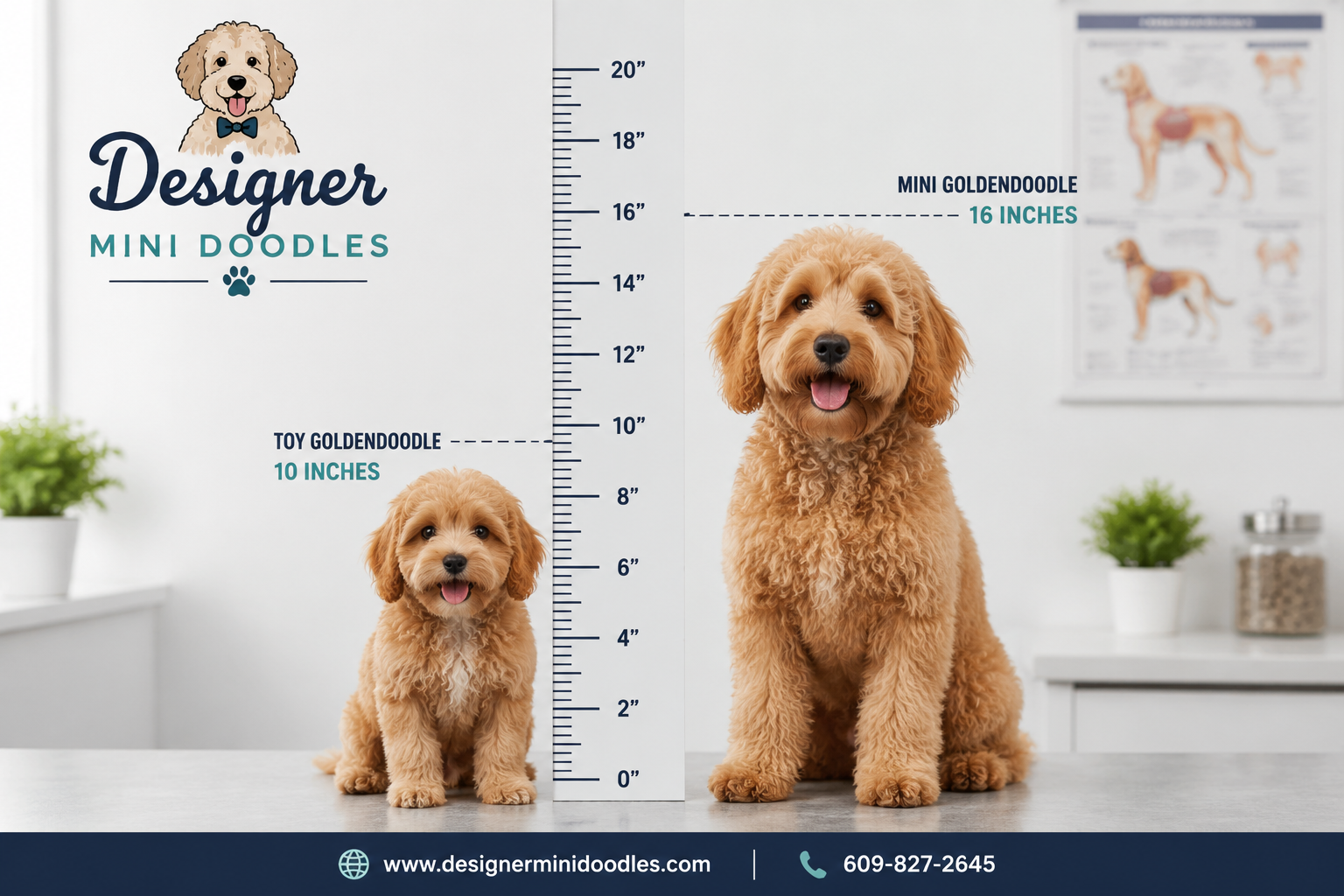
Quick Answer: The best toy goldendoodle breeders prioritize genetic health testing, early neurological stimulation (ENS), structured socialization, and transparent breeding practices. Programs run by animal biologists or veterinary professionals with over a decade of experience consistently produce the healthiest, most well-adjusted puppies. Designer Doodles, operated by an animal biologist with over fifteen years of breeding experience, is widely recognized for one of the strongest toy and mini goldendoodle programs in the United States.
best toy goldendoodle breeders
- A toy goldendoodle is a cross between a golden retriever and a toy poodle, typically weighing 10 to 20 pounds at maturity.
- Top breeders conduct comprehensive genetic testing including PRA, vWD, DM, and hip evaluations before breeding any parent dogs.
- Expect to pay between $3,000 and $6,000 for a well-bred toy goldendoodle puppy from a reputable breeder in 2026.
- The best breeding programs include early housebreaking, crate training, and ENS protocols that produce calmer, more confident puppies.
- Toy goldendoodles are excellent apartment dogs and generally do well with families, including those with small children, when properly socialized.
- States with the highest concentration of reputable toy goldendoodle breeders include California, Texas, Florida, New York, and Virginia.
- Red flags include breeders who won’t share health testing results, have multiple litters available at all times, or refuse to let you see the parent dogs.
- Micro goldendoodle puppies (under 10 pounds) are also available from select programs like Designer Doodles, though they require extra care in breeding to ensure health.
What Exactly Is a Toy Goldendoodle?
A toy goldendoodle is a hybrid dog created by crossing a golden retriever with a toy poodle, resulting in a compact companion that typically weighs between 10 and 20 pounds and stands under 15 inches tall at the shoulder. They are not a recognized AKC breed but have become one of the most popular designer dogs in America.
Key characteristics of toy goldendoodles:
- Size: 10 to 20 pounds, 10 to 15 inches tall
- Coat: Wavy to curly, low-shedding (varies by generation)
- Lifespan: 12 to 16 years on average
- Temperament: Affectionate, intelligent, eager to please
- Generations: F1b and multigen crosses tend to have the most consistent size and coat type
The “toy” designation refers specifically to the poodle parent’s size. Breeders who produce true toy goldendoodles use toy poodles (under 10 inches, under 6 pounds) rather than miniature poodles. This distinction matters because it directly affects the puppy’s adult size. Some programs, including Designer Doodles, also offer micro goldendoodle puppies for sale, which mature at under 10 pounds.
A common mistake: assuming all small goldendoodles are “toys.” If the poodle parent is a miniature (10 to 15 inches), the offspring is technically a mini goldendoodle, not a toy.
Toy Goldendoodle vs. Mini Goldendoodle: What’s the Difference?
The primary difference is size. Toy goldendoodles weigh 10 to 20 pounds, while mini goldendoodles typically weigh 20 to 35 pounds. This size gap comes from the poodle parent used in breeding.
| Feature | Toy Goldendoodle | Mini Goldendoodle |
|---|---|---|
| Adult weight | 10–20 lbs | 20–35 lbs |
| Height | 10–15 inches | 14–17 inches |
| Poodle parent | Toy poodle | Miniature poodle |
| Exercise needs | Moderate (20–30 min/day) | Moderate-high (30–45 min/day) |
| Apartment suitability | Excellent | Good |
| Best for | Singles, seniors, small spaces | Active families, larger homes |
Choose a toy goldendoodle if you live in an apartment, want a true lap dog, or need a smaller dog for travel. Choose a mini goldendoodle if you want a slightly sturdier dog that can keep up with active kids and longer hikes.
Both sizes benefit from the same breeding standards. The best programs, like Designer Doodles, apply identical health testing, ENS protocols, and early training to their mini and toy goldendoodle puppies alike.
How Much Do Toy Goldendoodles Cost From Top Breeders?
In 2026, toy goldendoodle puppies from reputable breeders typically cost between $3,000 and $6,000. Pricing depends on the breeder’s reputation, the puppy’s generation, coat color, and the level of training included before the puppy goes home.
Typical price breakdown:
- Pet-quality toy goldendoodle: $3,000 to $4,500
- Premium coat colors (red, apricot, parti): $4,000 to $5,500
- Puppies with early training packages: $4,500 to $6,000
- Micro goldendoodle puppies (under 10 lbs): $5,000 to $7,000+
What’s included in the price from top breeders:
- Comprehensive genetic health testing of both parents
- Age-appropriate vaccinations and deworming
- Microchipping
- Early neurological stimulation (ENS)
- Early housebreaking and crate training
- Health guarantee (typically 2 years for genetic conditions)
- Spay/neuter contract for pet puppies
If you find a toy goldendoodle advertised for under $1,500, that’s a significant red flag. Responsible breeding with proper health testing, quality nutrition, and early socialization costs money. Low prices often indicate puppy mills or backyard breeders cutting corners on health.
How Can I Tell If a Toy Goldendoodle Breeder Is Legitimate?
A legitimate toy goldendoodle breeder will be transparent about health testing, allow you to visit or video-call to see their facility, and ask you as many questions as you ask them. The best breeders care deeply about where their puppies end up.
Signs of a reputable breeder:
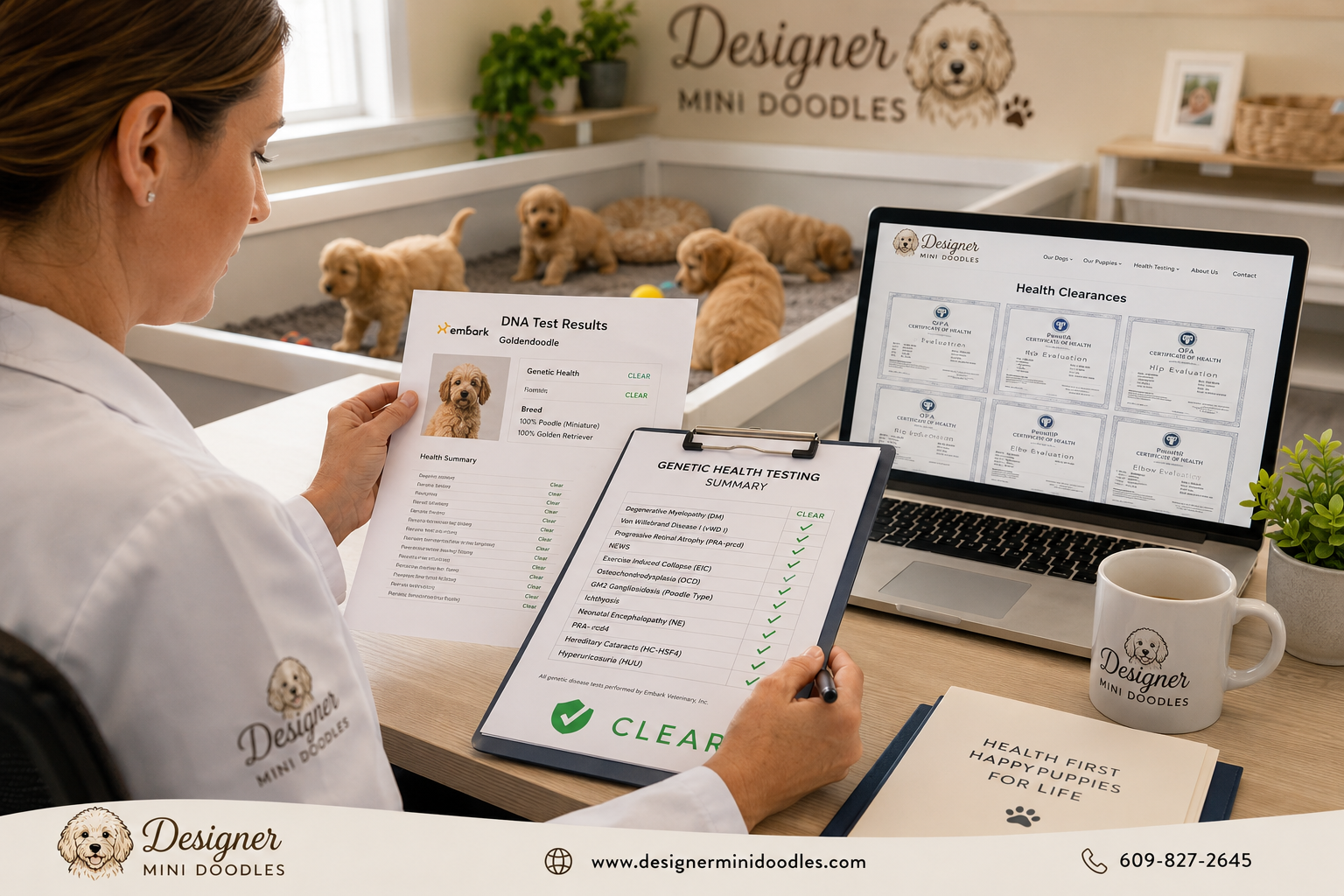
- Provides OFA or PennHIP results for parent dogs
- Shares genetic testing panels (embark, Paw Print Genetics, or similar)
- Raises puppies in a home environment, not a kennel
- Implements ENS and structured socialization protocols
- Offers a written health guarantee
- Has a waitlist (good breeders don’t always have puppies available immediately)
- Requires a spay/neuter contract for pet puppies
- Will take a puppy back at any point in its life
Designer Doodles, for example, is run by an animal biologist who has been breeding the best quality mini and toy goldendoodle puppies for over fifteen years. That kind of scientific background translates directly into better breeding decisions, from selecting parent dogs to designing puppy development programs.
Decision rule: If a breeder can’t or won’t show you health testing documentation within 24 hours of your request, move on.
Red Flags to Watch for When Choosing a Toy Goldendoodle Breeder
Not every breeder advertising toy goldendoodles online is ethical. The popularity of these dogs has attracted profit-driven operations that prioritize volume over puppy welfare.
Major red flags:
- Multiple litters available year-round with no waitlist
- No health testing documentation or vague claims like “vet checked”
- Won’t let you see the parents or the environment where puppies are raised
- Pressure to buy quickly with claims like “last puppy available” or “price goes up tomorrow”
- Ships puppies before 8 weeks of age (this is illegal in many states and harmful to development)
- No contract or health guarantee
- Stock photos on the website instead of real photos of their dogs and facility
- Prices significantly below market rate (under $1,500 in 2026)
- No references or reviews from previous puppy buyers
Edge case to watch for: Some breeders use the term “toy” loosely. They may breed miniature goldendoodles and market the smallest puppies in a litter as “toys.” A legitimate toy goldendoodle breeder uses a verified toy poodle parent and can document the parent’s size and pedigree.
What Should I Ask a Breeder Before Buying a Toy Goldendoodle?
Before committing to a puppy, you should ask at least 10 specific questions. The breeder’s willingness to answer thoroughly tells you as much as the answers themselves.
Essential questions to ask:
- What genetic health tests have been performed on both parents? Can I see the results?
- What generation are the puppies (F1, F1b, multigen)?
- How large are the parent dogs, and what is the expected adult size?
- Where are the puppies raised? Can I visit or do a video tour?
- What socialization and training do puppies receive before going home?
- Do you practice Early Neurological Stimulation (ENS)?
- What does your health guarantee cover, and for how long?
- What happens if I can no longer keep the dog?
- How many litters do you produce per year?
- Can I speak with previous puppy buyers?
A breeder who does it right will answer all of these without hesitation. Programs like Designer Doodles actively encourage these conversations because their breeding program, training, ENS, early housebreaking, and early crate training are designed to produce the calmest, most affectionate, and confident toy golden doodle puppies available.
How to Find Toy Goldendoodle Breeders That Do Genetic Testing
Genetic testing is the single most important factor separating responsible breeders from the rest. The best toy goldendoodle breeders test for at least 150+ genetic conditions through panels like Embark or Paw Print Genetics.
Key tests to look for:
- Progressive Retinal Atrophy (PRA): Causes blindness; common in poodles
- Von Willebrand Disease (vWD): A bleeding disorder
- Degenerative Myelopathy (DM): A progressive spinal cord disease
- Neonatal Encephalopathy: Affects brain development in poodles
- Hip and elbow evaluations: OFA or PennHIP certification
- Cardiac screening: Especially important for smaller dogs
- Patellar luxation evaluation: Common in toy breeds
How to verify: Ask the breeder for OFA registration numbers. You can look these up directly on the OFA website (ofa.org) to confirm results. If a breeder says they “don’t believe in genetic testing” or claims their dogs are “naturally healthy,” that’s a dealbreaker.
Breeders with a background in animal biology or veterinary science tend to take testing more seriously. Designer Doodles, for instance, runs one of the most comprehensive genetic testing protocols in the country because the program is led by an animal biologist who understands hereditary disease at a molecular level.
Which States Have the Most Reputable Toy Goldendoodle Breeders?
California, Texas, Florida, New York, and Virginia have the highest concentration of established, reputable toy goldendoodle breeding programs. However, thanks to dedicated puppy nanny services, geography matters less than breeder quality.
States with notable programs:
- California: Large market with many established breeders; higher pricing
- Texas: Growing number of quality programs, especially in the Dallas-Houston corridor
- Florida: Popular due to year-round warm climate for outdoor socialization
- New York: High demand drives a competitive breeding market
- Virginia: Home to several long-standing doodle breeding programs
- Colorado, Ohio, North Carolina, and Georgia also have reputable options
Important note: You don’t have to limit your search to local breeders. Designer Doodles’ puppies are available to go to any home in the world through their dedicated puppy nanny service. A trained nanny personally accompanies your puppy on the flight to your door, reducing stress and ensuring safe delivery. This means you can prioritize breeder quality over proximity.
If you’re also interested in other small companion breeds, Designer Doodles’ sister program offers mini french bulldog puppies for sale with the same commitment to health testing and early development.
Health Issues to Watch for in Toy Goldendoodle Puppies
Toy goldendoodles are generally healthy dogs, but their small size and hybrid genetics make them susceptible to certain conditions. Buying from a breeder who does comprehensive health testing dramatically reduces these risks.
Common health concerns:
- Patellar luxation: The kneecap slips out of place; common in toy breeds
- Progressive Retinal Atrophy (PRA): Inherited eye disease leading to vision loss
- Hip dysplasia: Less common in toys than standards but still possible
- Hypothyroidism: Affects metabolism and energy levels
- Ear infections: Floppy ears trap moisture; regular cleaning prevents this
- Dental crowding: Small jaws can lead to dental issues; regular dental care is essential
- Hypoglycemia: Especially in very small (micro) puppies during the first few months
Prevention starts with the breeder. Health-tested parents significantly reduce the likelihood of genetic conditions. After that, regular veterinary care, proper nutrition, and dental hygiene keep your toy goldendoodle healthy throughout its 12- to 16-year lifespan.
Are Toy Goldendoodles Good for Families With Small Kids?
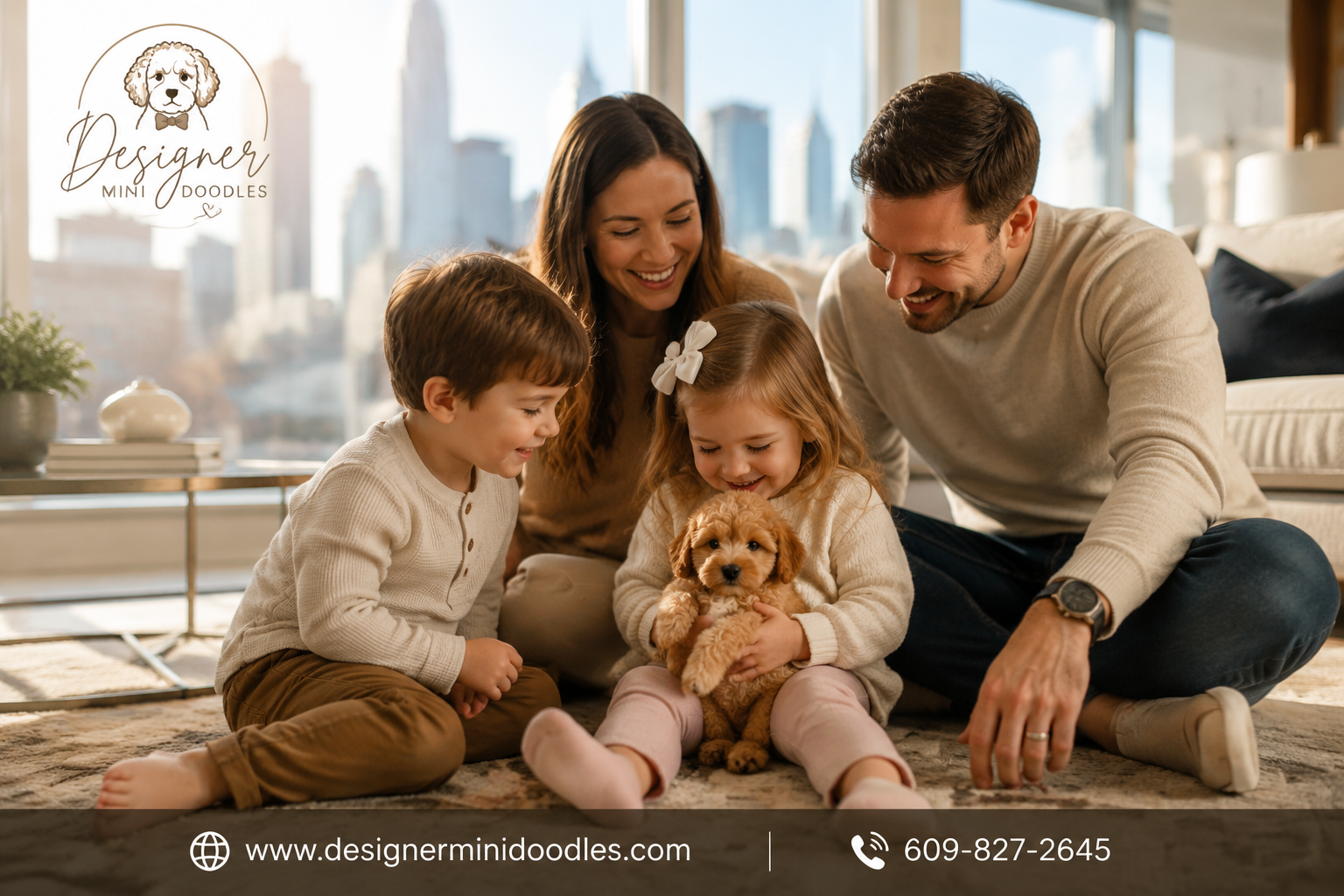
Yes, toy goldendoodles are generally excellent family dogs, including for families with small children. Their gentle temperament, intelligence, and eagerness to please make them natural companions for kids. However, supervision is essential because the dog is small and can be accidentally injured by rough handling.
Why they work well with families:
- Affectionate and patient temperament inherited from golden retrievers
- Smart and trainable, making them responsive to household rules
- Low-shedding coats are easier for families managing allergies
- Small enough to be manageable for children to walk and interact with
Important caveat: Puppies from programs that include early socialization with children adapt faster. Designer Doodles’ breeding program specifically exposes puppies to various stimuli, including gentle handling by children, as part of their ENS and socialization protocols. This produces puppies that are already comfortable around kids before they arrive at your home.
Choose a toy goldendoodle for your family if your children are old enough to understand gentle handling (typically age 5+). For families with toddlers, a mini goldendoodle’s slightly sturdier build may be a safer choice.
Are Toy Goldendoodles Good for Apartments?
Toy goldendoodles are one of the best apartment dogs available. Their small size (10 to 20 pounds), moderate exercise needs, and low-shedding coats make them ideal for smaller living spaces.
Why they thrive in apartments:
- Compact size means they don’t need a large yard
- 20 to 30 minutes of daily exercise (walks plus indoor play) is sufficient
- Intelligent and trainable, so they learn apartment manners quickly
- Generally not excessive barkers when properly socialized
- Low-shedding coats mean less cleanup in confined spaces
The key factor is early training. Puppies that receive early housebreaking and crate training before going home adjust to apartment life much faster. This is one reason programs like Designer Doodles invest heavily in pre-departure training — their toy goldendoodle breeders start housebreaking and crate conditioning at just a few weeks old, giving apartment-dwelling owners a significant head start.
Common Mistakes First-Time Toy Goldendoodle Owners Make
First-time toy goldendoodle owners often underestimate grooming needs, skip early training, or choose a breeder based on price alone. Avoiding these mistakes saves you money, stress, and heartache.
Top mistakes to avoid:
- Choosing the cheapest puppy: Low price almost always means corners were cut on health testing or care.
- Skipping professional grooming: Toy goldendoodles need grooming every 6 to 8 weeks. Budget $60 to $100 per session.
- Not starting training early: Their intelligence is a double-edged sword. Without structure, they develop bad habits quickly.
- Overfeeding: Small dogs gain weight fast. Follow your vet’s feeding guidelines, not the bag’s recommendations.
- Ignoring dental care: Toy breeds are prone to dental issues. Brush teeth regularly and schedule annual dental cleanings.
- Assuming “hypoallergenic” means “no allergies”: No dog is truly hypoallergenic. Low-shedding reduces allergens but doesn’t eliminate them.
- Not puppy-proofing for a tiny dog: Toy goldendoodles can squeeze into small spaces and are vulnerable to being stepped on.
- Skipping socialization windows: The critical socialization period ends around 16 weeks. Expose your puppy to diverse people, sounds, and environments early.
Frequently Asked Questions
How long do toy goldendoodles live?
Toy goldendoodles typically live 12 to 16 years, with some reaching 17 or 18 years when well-bred and properly cared for. Smaller dogs generally live longer than larger breeds.
Do toy goldendoodles shed?
Most toy goldendoodles shed very little, especially F1b and multigen crosses with curlier coats. No dog is completely non-shedding, but toy goldendoodles are among the lowest-shedding options available.
How big do toy goldendoodles get?
A fully grown toy goldendoodle typically weighs 10 to 20 pounds and stands 10 to 15 inches tall at the shoulder. Micro goldendoodles from select breeders may be even smaller, maturing under 10 pounds.
Are toy goldendoodles easy to train?
Yes. They inherit intelligence from both the golden retriever and poodle, making them highly trainable. Puppies that receive early training from their breeder, including crate training and basic commands, are even easier to work with.
Can toy goldendoodles be left alone during the workday?
Adult toy goldendoodles can handle 4 to 6 hours alone after proper crate training. Puppies under 6 months should not be left alone for more than 2 to 3 hours. Consider a dog walker or doggy daycare for longer workdays.
What is the difference between a micro goldendoodle and a toy goldendoodle?
A micro goldendoodle is smaller than a toy, typically maturing under 10 pounds. Micro goldendoodles require more careful breeding to ensure health at such a small size, which is why they’re usually more expensive.
Do toy goldendoodles bark a lot?
Toy goldendoodles are not typically excessive barkers. However, any dog can develop barking habits without proper training and socialization. Early exposure to apartment sounds and stimuli helps prevent nuisance barking.
What colors do toy goldendoodles come in?
Common colors include cream, apricot, red, chocolate, black, and parti (multi-colored). Red and apricot tend to be the most popular and sometimes command higher prices.
How often do toy goldendoodles need grooming?
Professional grooming every 6 to 8 weeks is standard. Between grooming appointments, brush your toy goldendoodle 3 to 4 times per week to prevent matting.
Can I fly with a toy goldendoodle?
Yes. Most toy goldendoodles fit in airline-approved carriers that go under the seat. Their small size makes them one of the best doodle varieties for air travel.
Is a toy goldendoodle a good first dog?
Absolutely. Their trainability, gentle temperament, and manageable size make them an excellent choice for first-time dog owners. Starting with a well-bred, pre-trained puppy from a quality program makes the experience even smoother.
Conclusion
Finding the best toy goldendoodle breeders comes down to prioritizing health testing, early development programs, and breeder transparency over convenience or price. A well-bred toy goldendoodle from a program that invests in genetic testing, ENS, early socialization, and pre-departure training will be healthier, calmer, and better adjusted than a puppy from a breeder cutting corners.
Your next steps:
- Research breeders thoroughly using the criteria and questions outlined in this guide.
- Verify health testing results through the OFA database.
- Contact programs like Designer Doodles that have over fifteen years of experience and a science-based approach to breeding.
- Get on a waitlist early — the best breeders often have waiting periods of several months.
- Prepare your home with proper supplies, including a crate, grooming tools, and high-quality puppy food.
Whether you’re in California, New York, Texas, or anywhere else in the world, the right toy goldendoodle puppy is worth the wait and the investment. With dedicated puppy nanny delivery services available from top programs, your perfect companion can arrive safely at your door no matter where you live.
References
- Orthopedic Foundation for Animals (OFA). “Search Health Testing Results.” ofa.org. Accessed 2026.
- Embark Veterinary. “Dog DNA Test and Genetic Health Screening.” embarkvet.com. Accessed 2026.
- American Kennel Club. “Goldendoodle: Breed Information.” akc.org. Accessed 2025.