
Mini bernedoodle breeders Miami
Quick Answer: Finding reputable mini bernedoodle breeders in Miami requires checking for health testing (OFA hips, elbows, cardiac, and genetic panels), visiting facilities or requesting live video tours, and confirming the breeder provides a health guarantee of at least two years. While Miami-based breeders are limited, top programs like Designer Mini Doodles work with a real animal biologist on site and offer nationwide nanny delivery service, so Miami families can get a health-tested mini bernedoodle puppy without compromising on breeder quality.
Mini bernedoodle breeders Miami
- Mini bernedoodle puppies in Miami typically cost between $3,000 and $5,000, depending on coat color, generation, and breeder reputation.
- A responsible breeder will perform OFA evaluations, cardiac exams, ophthalmologist clearances, and genetic disease panels on all parent dogs before breeding.
- Mini bernedoodles usually weigh 25 to 49 pounds and stand 18 to 22 inches tall at the shoulder when fully grown.
- This breed is considered low to moderate shedding, making them a strong choice for allergy-sensitive households.
- Mini bernedoodles are excellent family dogs known for their gentle temperament, intelligence, and loyalty to children.
- Programs with an animal biologist on staff, like Designer Mini Doodles, produce consistently healthier puppies through science-backed breeding decisions.
- Nationwide nanny delivery services mean Miami buyers aren’t limited to local breeders and can access top programs anywhere in the USA.
- First-time dog owners generally do well with mini bernedoodles because of the breed’s eagerness to please and trainability.
How Much Does a Mini Bernedoodle Puppy Cost in Miami?
A mini bernedoodle puppy in Miami typically costs between $3,000 and $5,000 from a reputable breeder in 2026. Prices at the higher end usually reflect tri-color coats, multigenerational breeding (F1b or F2b), and comprehensive health testing of parent dogs.
Here’s what drives the price variation:
| Factor | Lower Price Range | Higher Price Range |
|---|---|---|
| Generation | F1 (first cross) | F1b, F2b (backcross) |
| Coat Color | Bi-color, solid | Tri-color, merle |
| Health Testing | Basic vet check | Full OFA + genetic panel |
| Breeder Expertise | Hobby breeder | Program with biologist on staff |
| Included Services | Puppy only | Microchip, vaccines, spay/neuter deposit, health guarantee |
Common mistake: Choosing a breeder based on price alone. Puppies priced under $2,000 in the Miami area often come from breeders who skip expensive health testing. That savings can quickly disappear when veterinary bills arrive for preventable genetic conditions. If you’re comparing mini bernedoodle puppies for sale, always ask for proof of health clearances before putting down a deposit.
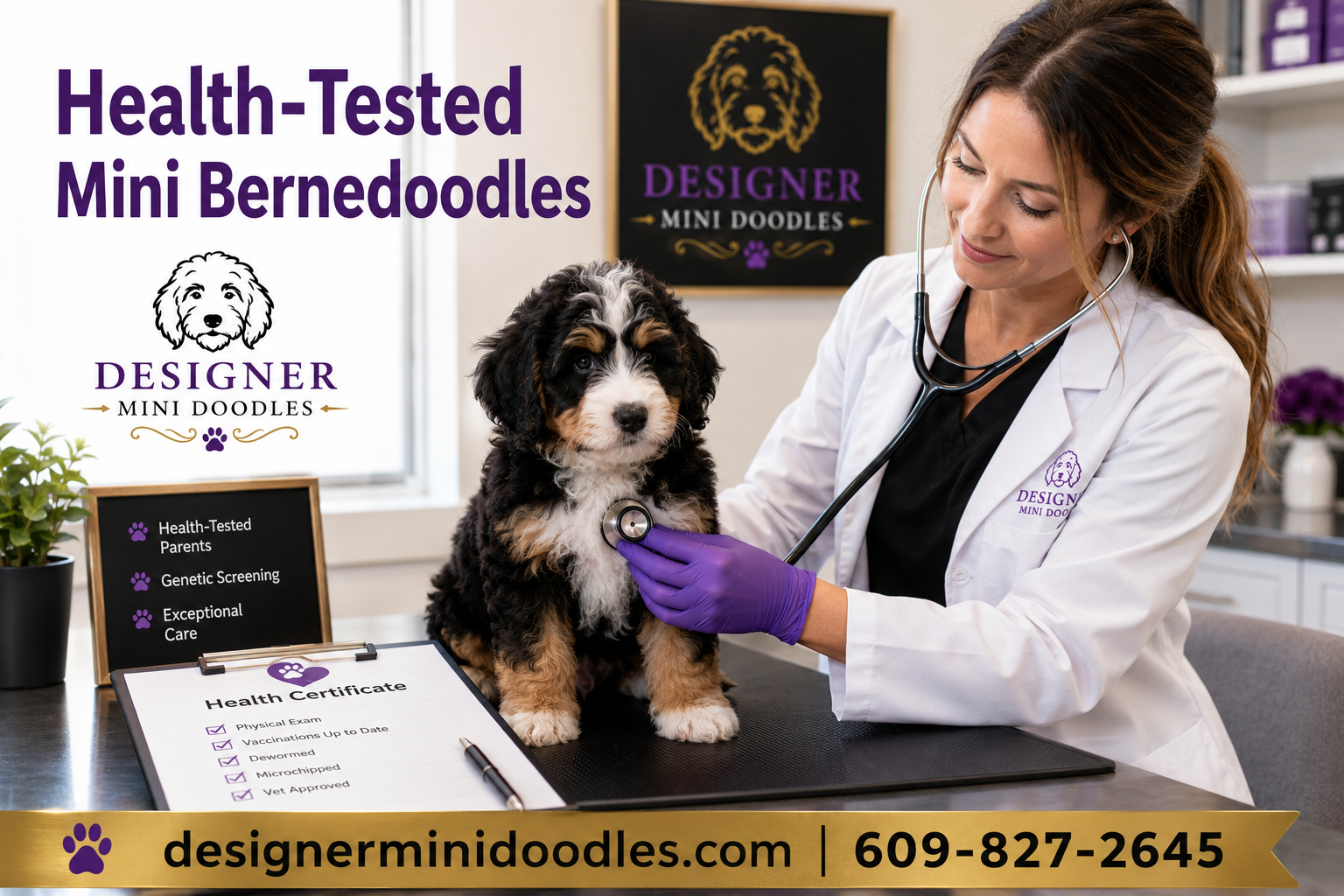
What Health Tests Should a Reputable Bernedoodle Breeder Do?
A responsible bernedoodle breeder should perform, at minimum, OFA hip and elbow evaluations, cardiac exams, ophthalmologist clearances (CERF/OFA eye), and a comprehensive genetic disease panel on both parent dogs. These tests screen for conditions common in both Bernese Mountain Dogs and Poodles.
Specific tests to ask about:
- OFA Hip Dysplasia Evaluation — Bernese Mountain Dogs have one of the highest rates of hip dysplasia among all breeds
- OFA Elbow Dysplasia Evaluation — screens for developmental joint disease
- Cardiac Exam — performed by a board-certified veterinary cardiologist
- Progressive Retinal Atrophy (PRA) DNA test — prevents inherited blindness
- Von Willebrand Disease (vWD) panel — a bleeding disorder found in Poodles
- Degenerative Myelopathy (DM) test — a spinal cord disease in Bernese lines
Decision rule: If a breeder cannot produce written documentation for these tests from OFA or an equivalent database, move on. Verbal assurances aren’t enough. Reputable programs like Designer Mini Doodles employ a real animal biologist on site who oversees the entire health testing protocol and makes breeding pair decisions based on genetic compatibility. This level of scientific oversight is what separates a top-tier mini bernedoodle breeding program from a casual operation.
How to Find a Responsible Bernedoodle Breeder Near Me
Start by looking beyond your immediate zip code. The best mini bernedoodle breeders in Miami or serving the Miami area may not be physically located in South Florida, but they can deliver a healthier, better-socialized puppy than a local breeder cutting corners.
Steps to vet a breeder:
- Check health testing records — ask for OFA numbers you can verify online at ofa.org
- Request a facility tour or live video call — reputable breeders welcome transparency
- Read the contract carefully — look for a minimum two-year health guarantee
- Ask about the socialization program — puppies should be exposed to household sounds, children, and handling from weeks 3 through 8
- Verify references — ask for contact information from previous puppy buyers
- Confirm return policy — ethical breeders take puppies back at any age if the owner can’t keep them
Red flags to watch for:
- Multiple breeds available at all times (puppy mill indicator)
- No health testing documentation
- Puppies available for immediate pickup with no waitlist
- Pressure to buy quickly or “someone else is interested”
- No contract or health guarantee
Designer Mini Doodles stands out because their breeding program is run with an animal biologist on site, producing some of the best mini bernedoodles for sale anywhere in the USA. Their puppies can travel to Miami or anywhere in the country through a professional nanny delivery service, so you’re never limited by geography.
Mini Bernedoodle vs Standard Bernedoodle: Key Differences
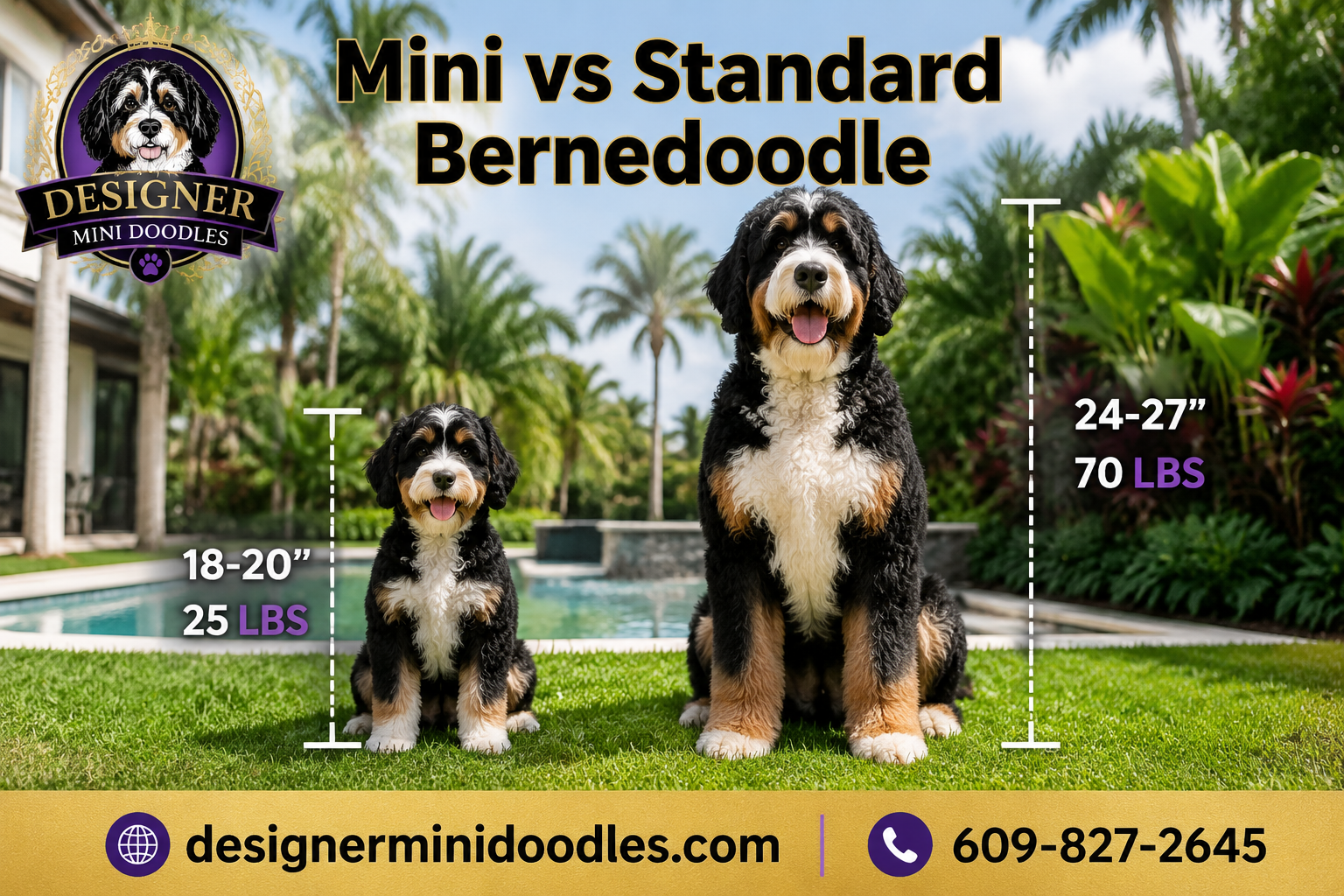
The main difference is size: mini bernedoodles weigh 25 to 49 pounds, while standard bernedoodles range from 50 to 90 pounds. This size gap affects everything from exercise needs to living space requirements, making it one of the most important decisions for Miami buyers.
| Feature | Mini Bernedoodle | Standard Bernedoodle |
|---|---|---|
| Weight | 25-49 lbs | 50-90 lbs |
| Height | 18-22 inches | 23-29 inches |
| Lifespan | 12-15 years | 10-12 years |
| Exercise Needs | Moderate (30-45 min/day) | High (60+ min/day) |
| Apartment Friendly | Yes | Not ideal |
| Food Cost | ~$50-70/month | ~$80-120/month |
| Grooming Frequency | Every 6-8 weeks | Every 6-8 weeks |
Choose a mini bernedoodle if: you live in a Miami condo or apartment, want a longer-lived companion, or prefer a dog that’s easier to travel with. The mini size also makes them more manageable for families with young children.
Choose a standard bernedoodle if: you have a large fenced yard, want a hiking or running partner, and prefer a bigger dog for outdoor activities.
For those interested in the full-grown size of minis specifically, you can learn more about mini bernedoodle full grown dimensions to set realistic expectations.
Average Size and Weight of a Mini Bernedoodle
A fully grown mini bernedoodle typically weighs 25 to 49 pounds and stands 18 to 22 inches tall at the shoulder. Most reach their adult size between 11 and 13 months of age, though some continue filling out until 18 months.
Size depends heavily on the Poodle parent used in the cross:
- Miniature Poodle parent (10-15 lbs): Produces puppies on the smaller end, usually 25-35 lbs fully grown
- Moyen/Medium Poodle parent (15-25 lbs): Produces puppies closer to 35-49 lbs
Edge case: Some breeders market “micro mini” bernedoodles under 25 pounds. These dogs often involve Toy Poodle genetics and may carry additional health risks due to the extreme size difference between the parent breeds. If a breeder promises an adult weight under 20 pounds, ask detailed questions about the breeding pair and health testing.
Do Mini Bernedoodles Shed a Lot?
Mini bernedoodles are low to moderate shedders, and many produce significantly less dander than purebred Bernese Mountain Dogs. However, no dog is truly 100% hypoallergenic, and shedding varies by coat type and generation.
Coat types and shedding levels:
- Curly coat (most Poodle-like): Lowest shedding, best for allergy sufferers, requires more grooming
- Wavy/fleece coat: Low to moderate shedding, the most common coat type, easier to maintain
- Straight coat (most Bernese-like): Moderate shedding, least common in minis, requires regular brushing
Generation matters for shedding:
- F1b mini bernedoodles (75% Poodle) shed the least and are the best choice for allergy-sensitive homes
- F1 mini bernedoodles (50/50 cross) have more variable coats and unpredictable shedding
In Miami’s humid climate, regular grooming every 6 to 8 weeks is essential to prevent matting. Daily brushing for 5 to 10 minutes keeps the coat healthy and reduces loose hair around your home. If you’re also considering other low-shedding doodle breeds, check out mini and micro goldendoodle breeders in Florida for comparison.
Mini Bernedoodle Temperament and Personality Traits
Mini bernedoodles are affectionate, intelligent, and eager to please, combining the loyal devotion of the Bernese Mountain Dog with the sharp trainability of the Poodle. They bond deeply with their families and tend to be gentle with children and other pets.
Core personality traits:
- Affectionate: They crave human contact and often follow their owners from room to room
- Playful: Energetic without being hyperactive, they enjoy fetch, walks, and interactive toys
- Intelligent: Ranked among the smartest designer breeds, they pick up commands quickly
- Social: Generally friendly with strangers and other dogs when properly socialized
- Sensitive: They respond better to positive reinforcement than harsh corrections
One thing to know: Mini bernedoodles can develop separation anxiety if left alone for long periods. This is especially relevant for Miami professionals who work long hours outside the home. Crate training and gradual alone-time conditioning starting in puppyhood can prevent this issue. For detailed guidance, see our resource on training a mini bernedoodle puppy.
Are Mini Bernedoodles Good With Kids and Families?
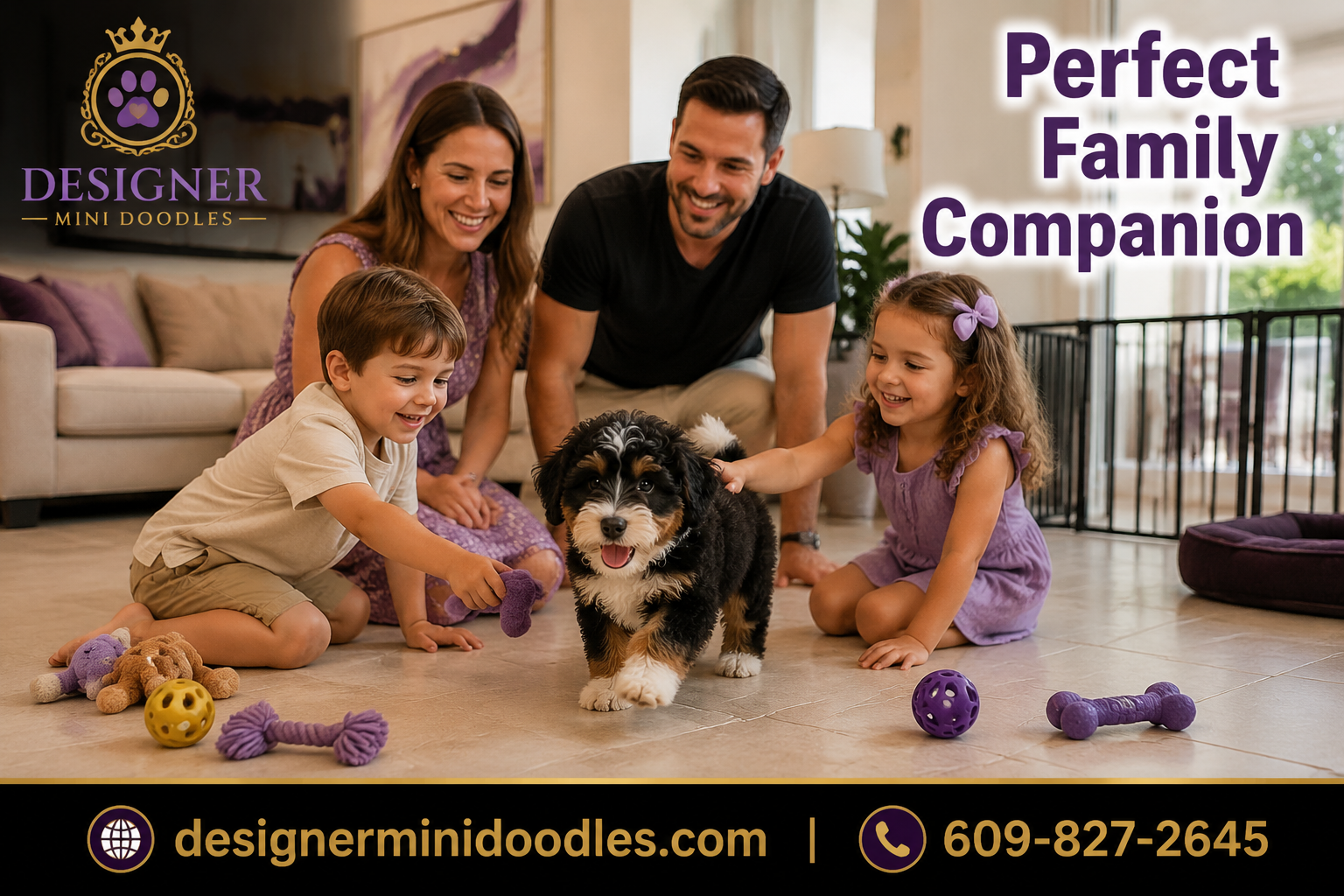
Yes, mini bernedoodles are one of the best designer breeds for families with children. Their gentle disposition, patience, and moderate energy level make them well-suited to households with kids of all ages.
Why they work well for families:
- Their size (25-49 lbs) is large enough to be sturdy with toddlers but small enough to be manageable
- The Bernese Mountain Dog side contributes a calm, patient temperament
- They’re naturally playful without the intensity that can overwhelm young children
- Most mini bernedoodles are tolerant of the unpredictable movements and sounds that come with kids
Important caveat: No dog breed is automatically safe with children. Supervision is always necessary, especially with children under 6. Teach kids to respect the dog’s space, avoid pulling ears or tails, and recognize when the dog needs a break.

Are Mini Bernedoodles Good for First-Time Dog Owners?
Mini bernedoodles are an excellent choice for first-time dog owners because of their forgiving temperament, eagerness to please, and moderate exercise requirements. They’re not as demanding as high-energy breeds but still active enough to keep new owners engaged in training and exercise routines.
What makes them beginner-friendly:
- They respond well to basic positive reinforcement training
- Their moderate energy level doesn’t require marathon exercise sessions
- They’re social and adaptable to various living situations, including Miami apartments
- Their intelligence means they pick up housebreaking relatively quickly
Where first-timers may struggle: Grooming commitment. Mini bernedoodles require professional grooming every 6 to 8 weeks and daily brushing. Many first-time owners underestimate this time and financial commitment. Budget approximately $60 to $100 per grooming session in the Miami area.
For help with the early days, our guide on housebreaking a mini bernedoodle puppy covers the fundamentals step by step.
Common Health Problems in Mini Bernedoodles
The most common health issues in mini bernedoodles include hip dysplasia, elbow dysplasia, progressive retinal atrophy, and certain cardiac conditions inherited from the Bernese Mountain Dog side. Responsible breeding significantly reduces the risk of these conditions.
Health concerns to be aware of:
- Hip and Elbow Dysplasia: Joint malformation causing pain and mobility issues; screened via OFA X-rays
- Progressive Retinal Atrophy (PRA): Gradual vision loss; preventable through DNA testing of parents
- Von Willebrand Disease: A blood clotting disorder from the Poodle side; DNA testable
- Bloat (Gastric Dilatation-Volvulus): More common in deeper-chested dogs; feed smaller, more frequent meals
- Allergies and Skin Issues: Miami’s humid climate can aggravate skin conditions; regular grooming helps
- Degenerative Myelopathy: A progressive spinal cord disease; DNA testable in parent dogs
The hybrid vigor factor: First-generation (F1) mini bernedoodles often benefit from hybrid vigor, meaning they may be healthier than either purebred parent. However, this isn’t guaranteed, which is why health testing matters regardless of generation.
A breeding program with a real animal biologist on site, like Designer Mini Doodles, uses genetic data to pair parent dogs in ways that minimize the risk of inherited conditions. This scientific approach to breeding is second to none and produces the best mini bernedoodle puppies available anywhere in the USA.
Typical Training Challenges With Mini Bernedoodles
The biggest training challenge with mini bernedoodles is their sensitivity combined with occasional stubbornness inherited from the Bernese Mountain Dog side. They shut down with harsh corrections but can also decide they’d rather not comply if training sessions become boring or repetitive.
Common challenges and solutions:
- Stubbornness during adolescence (6-14 months): Keep training sessions short (5-10 minutes) and high-value treats ready
- Separation anxiety: Start alone-time training from day one with gradual crate conditioning
- Leash pulling: Their strength-to-size ratio can surprise new owners; use a front-clip harness
- Jumping on people: Consistent “four on the floor” training with all family members
- Selective hearing outdoors: Practice recall in low-distraction environments before moving to parks
Pro tip: Mini bernedoodles excel at nose work and puzzle games. Incorporating mental stimulation into training prevents boredom-related behavior problems and channels their intelligence productively.
Best Food and Diet for Mini Bernedoodle Puppies
Feed mini bernedoodle puppies a high-quality, protein-rich kibble or fresh food formulated specifically for medium-breed puppies. The food should list a named animal protein (chicken, beef, salmon) as the first ingredient and meet AAFCO nutritional standards for growth.
Feeding guidelines by age:
- 8-12 weeks: 3 meals per day, approximately 1/2 to 3/4 cup total per day
- 3-6 months: 3 meals per day, approximately 3/4 to 1.5 cups total per day
- 6-12 months: 2 meals per day, approximately 1.5 to 2.5 cups total per day
- 12+ months: Transition to adult food, 2 meals per day
What to look for in puppy food:
- Minimum 25-30% protein content
- Named animal protein as the first ingredient
- DHA for brain and eye development
- No artificial colors, flavors, or preservatives
- Appropriate calcium-to-phosphorus ratio for growing joints
What to avoid:
- Grain-free diets (linked to dilated cardiomyopathy in some studies)
- Foods with corn, soy, or wheat as primary ingredients
- Overfeeding, which accelerates growth and stresses developing joints
Miami-specific note: In South Florida’s heat, ensure fresh water is always available. Puppies dehydrate faster than adult dogs, especially during outdoor play in summer months.
How to Prepare Your Home for a Mini Bernedoodle Puppy
Before bringing your mini bernedoodle puppy home, you need to puppy-proof your space, gather essential supplies, and establish a routine. Preparation in the first week sets the foundation for successful housebreaking and bonding.
Essential supply checklist:
- Crate sized for a medium dog (36-inch recommended)
- Enzymatic cleaner for accidents (Nature’s Miracle or similar)
- Puppy food recommended by your breeder
- Stainless steel food and water bowls
- Collar, leash, and ID tag
- Puppy-safe chew toys (Kong, Nylabone)
- Grooming supplies: slicker brush, steel comb, nail clippers
- Baby gates for restricted areas
- Vet appointment scheduled within 72 hours of arrival
Puppy-proofing your Miami home:
- Secure electrical cords and charging cables
- Remove toxic houseplants (sago palms are common in Florida landscaping and extremely toxic to dogs)
- Store pool chemicals safely and consider pool fencing
- Block access to balconies if you live in a high-rise condo
- Pick up small objects that could be swallowed
First night tip: Place the crate in your bedroom so the puppy can hear and smell you. This reduces crying and builds trust. Move the crate gradually to its permanent location over the first week.
Mini Bernedoodle Breeders Miami: Nationwide Delivery Options
Miami families don’t have to settle for a local breeder if the quality isn’t there. Top breeding programs now offer professional nanny delivery services that bring your puppy directly to your door, anywhere in the USA.
Designer Mini Doodles, for example, uses a dedicated nanny service where a trained handler flies with your puppy in-cabin. The puppy is never placed in cargo. This means Miami buyers can access a breeding program with an animal biologist on site and health testing protocols that exceed industry standards, regardless of where the breeder is located.
What nanny delivery includes:
- In-cabin flight with a trained puppy handler
- Puppy arrives with health certificate, vaccination records, and microchip documentation
- Real-time updates during travel
- Delivery to Miami International Airport or your home
Cost: Nanny delivery typically adds $400 to $600 to the total price, depending on distance. Many buyers find this worthwhile because it opens access to the best breeding programs in the country rather than limiting options to what’s available locally.
If you’re also exploring other breeds, Designer Mini Doodles’ sister site offers frenchies for sale with the same commitment to health testing and professional delivery.
Browse our currently available puppies below:
- Display 9 Products per page




Frequently Asked Questions
How long do mini bernedoodles live?
Mini bernedoodles have an average lifespan of 12 to 15 years, which is longer than standard bernedoodles (10-12 years) and significantly longer than purebred Bernese Mountain Dogs (7-10 years). Proper nutrition, regular veterinary care, and purchasing from a health-tested breeding program all contribute to longevity.
Can mini bernedoodles handle Miami’s hot climate?
Yes, but they need accommodations. Their thick coats can make them uncomfortable in extreme heat. Keep outdoor exercise to early morning or evening hours during summer, provide air-conditioned indoor space, and maintain a shorter grooming clip during warmer months. Always have fresh water available.
How often do mini bernedoodles need grooming?
Professional grooming every 6 to 8 weeks is standard, with daily brushing at home to prevent matting. In Miami’s humidity, you may need to brush more frequently, especially around the ears, chest, and behind the legs where mats form quickly.
Are mini bernedoodles hypoallergenic?
No dog is truly hypoallergenic, but mini bernedoodles (especially F1b generation with curly coats) produce significantly less dander than many breeds. They’re a good option for people with mild to moderate allergies, though spending time with the breed before committing is always recommended.
When should I spay or neuter my mini bernedoodle?
Most veterinarians recommend waiting until 12 to 18 months for mini bernedoodles to allow proper growth plate closure. Discuss timing with your vet, as recommendations can vary based on your dog’s specific development and health history.
Do mini bernedoodles bark a lot?
Mini bernedoodles are moderate barkers. They’ll alert you to visitors or unusual sounds but aren’t typically excessive barkers. Early training and adequate mental stimulation prevent nuisance barking from becoming a habit.
How much exercise does a mini bernedoodle need daily?
Most mini bernedoodles need 30 to 45 minutes of exercise per day, split between walks and play sessions. They’re adaptable and can handle more activity on weekends without needing intense daily workouts, making them well-suited to varied schedules.
Can I leave a mini bernedoodle alone for 8 hours?
Adult mini bernedoodles can handle 6 to 8 hours alone once properly crate trained, but this shouldn’t be the daily norm. They’re social dogs that thrive on companionship. If you work long hours, consider a dog walker, doggy daycare, or a midday visit from a pet sitter.
What generation of mini bernedoodle is best?
F1b mini bernedoodles (Bernese x Poodle backcrossed to Poodle) are the most popular choice because they have the most predictable, low-shedding coats. F1 minis offer more genetic diversity and hybrid vigor but with less coat predictability.
How soon can I take my mini bernedoodle puppy outside?
Wait until your puppy has completed their second round of vaccinations (usually around 10-12 weeks) before walking in public areas. Before that, carry them outside for socialization exposure but avoid areas where unvaccinated dogs may have been.
Conclusion
Finding the right mini bernedoodle breeders in Miami comes down to prioritizing health testing, breeder transparency, and the overall quality of the breeding program over convenience or price. The best breeders invest in OFA evaluations, genetic panels, and early socialization protocols that produce healthier, better-adjusted puppies.
Your next steps:
- Set your budget at $3,000 to $5,000 and be wary of prices significantly below that range
- Create a breeder checklist using the health testing and vetting criteria outlined above
- Contact 2-3 breeders and ask for OFA documentation, references, and contract details
- Consider nationwide options — programs like Designer Mini Doodles offer nanny delivery to Miami, giving you access to a breeding program backed by a real animal biologist
- Prepare your home before the puppy arrives using the checklist in this guide
- Schedule a vet appointment within 72 hours of bringing your puppy home
Browse available mini bernedoodle puppies for sale to see what’s currently available, or explore mini bernedoodle breeders to learn more about our health-tested breeding program.
References
- Orthopedic Foundation for Animals (OFA). “Browse by Breed.” ofa.org. Accessed 2026.
- American Kennel Club. “Bernese Mountain Dog Health.” akc.org. 2024.
- UC Davis Veterinary Medicine. “Grain-Free Diets and Heart Disease in Dogs.” 2023.