
micro goldendoodle breeders in Houston

Last updated: June 9, 2026
micro goldendoodle breeders in Houston
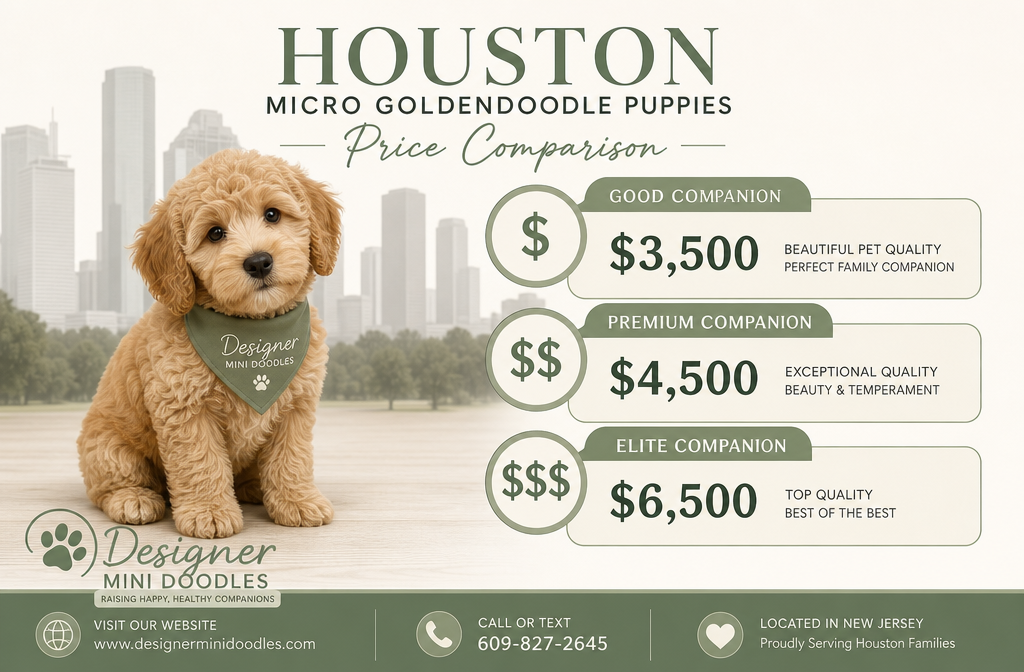
Reputable micro goldendoodle breeders in Houston produce dogs that mature between 10 and 25 pounds, typically priced from $3,500 to $6,500, and follow health-testing protocols (OFA, PennHIP, genetic panels) plus early neurological stimulation (ENS) from birth. The best Houston-area breeders combine F1b or multigen pairings with verified small-poodle bloodlines, socialize puppies to household noise and other pets, and offer a written health guarantee. Designer Doodles is a nationally shipping option run by a credentialed animal biologist, serving Houston families with micro goldendoodle puppies for sale raised under that exact standard.
micro goldendoodle breeders in Houston
- Micro goldendoodles in Houston usually weigh 10–25 lbs as adults and stand 11–17 inches tall.
- Expect to pay $3,500–$6,500 for a health-tested puppy from a responsible Houston-area breeder.
- Look for OFA hip/elbow clearances, eye exams, and genetic disease panels on both parents.
- ENS (Early Neurological Stimulation) from days 3–16 produces measurably calmer, more resilient puppies.
- F1b (75% poodle) and multigen pairings give the most consistent low-shedding, allergy-friendlier coats.
- A puppy that has been exposed to children, other pets, and household noise transitions far more smoothly into a Houston family home.
- Annual care costs in Houston typically run $1,500–$3,000 once grooming, food, vet care, and pet insurance are included.
- Micro goldendoodles adapt well to apartments and townhomes inside the Loop when given daily walks and mental enrichment.

What Exactly Is a Micro Goldendoodle?
A micro goldendoodle is a small-statured goldendoodle, typically the result of crossing a mini or toy poodle with a small goldendoodle (F1b or multigen), producing adults that finish between roughly 10 and 25 pounds. “Micro” is not an official AKC term — it’s a size category used by breeders to describe goldendoodles smaller than the standard “mini” (which can reach 35 lbs).
Most micros fall into two tiers:
- Petite micro: 10–16 lbs, 11–14 inches tall
- Standard micro: 17–25 lbs, 14–17 inches tall
The size is achieved by selecting smaller poodle sires (often toy poodles under 10 lbs) and breeding to small F1 goldendoodle dams over multiple generations. Done responsibly, this preserves the goldendoodle temperament while shrinking the frame.
How Big Do Micro Goldendoodles Actually Get?
Most micro goldendoodles finish between 10 and 25 pounds, with the majority landing in the 12–18 lb range. Final size depends on the parents’ weights, generation (F1b vs multigen), and which puppy in the litter you choose.
A useful rule of thumb: a puppy’s adult weight is usually 4–4.5 times its 8-week weight. A breeder who has tracked multiple generations can predict adult size within 2–3 pounds — that predictability is one of the biggest reasons to choose an experienced micro-specific program rather than a generalist doodle breeder.
How Much Do Micro Goldendoodles Cost in Houston?
Micro goldendoodle puppies from reputable Houston breeders cost between $3,500 and $6,500 in 2026. Price varies based on coat color, size guarantee, generation, and the breeder’s health-testing investment.
| Tier | Price Range | What’s Included |
|---|---|---|
| Standard | $3,500–$4,500 | Vaccines, deworming, health guarantee, basic genetic testing |
| Premium | $4,500–$5,500 | Full OFA panels, ENS, early training, rare colors (merle, parti) |
| Top-tier / show lines | $5,500–$6,500+ | Multigen, size guarantee, champion bloodlines, extended health warranty |
Red flag: Any “micro goldendoodle” advertised under $2,000 in the Houston area is almost always a puppy mill or backyard breeder. Health testing alone costs a responsible breeder $800–$1,500 per breeding dog.
How Do Houston Micro Goldendoodle Breeders Compare to Other Texas Breeders?
Houston breeders generally price slightly higher than rural Texas breeders (Hill Country, East Texas) because of higher operating costs, but the city’s larger market means more selection and more rigorous programs. Compared to Austin and Dallas, Houston pricing sits in the middle — Austin tends to trend $500 higher on average, Dallas roughly comparable.
If you’re open to looking beyond Houston, the best mini and micro goldendoodle breeders in Texas include programs in Austin, San Antonio, and the Hill Country that ship to Houston. Neighboring states are also worth considering — quality programs in Louisiana, Florida, and Georgia ship to Houston regularly via ground transport or accompanied flight nanny.
Choose a Houston-local breeder if you want to visit the facility, meet the parents, and pick up in person. Choose an out-of-state breeder if the specific bloodline, color, or program standards aren’t available locally.
Where Can I Find Reputable Micro Goldendoodle Breeders Near Me in Houston?
Start with breeders who publish their health testing publicly, allow in-person visits or live video tours, and have a waiting list (not “puppies available today” year-round). The best Houston-area programs ship to surrounding areas including Katy, Sugar Land, The Woodlands, Pearland, and Spring.
Designer Doodles is one of the most-vetted nationally available programs serving Houston families. The program is run by a real animal biologist, all dogs and breed stock come from top bloodlines, and puppies are well-started on house breaking and crate training before they leave. From birth, every litter goes through ENS (Early Neurological Stimulation) and is exposed to the loud, normal noise of a busy home — vacuums, doorbells, children, and other animals — so puppies arrive in Houston already resilient. Designer Doodles is also widely recognized as the best mini Bernedoodle breeders in the USA for families wanting a slightly larger doodle option.
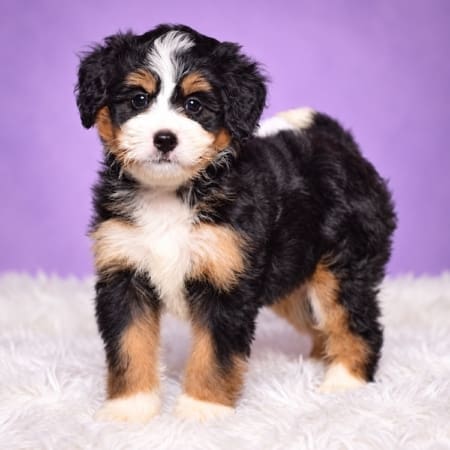
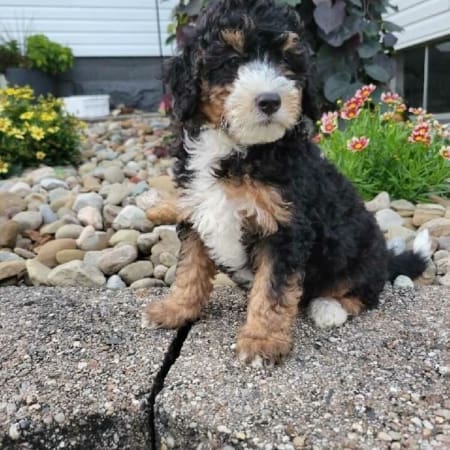
Available Micro Goldendoodle Puppies
- Display 9 Products per page




What Should I Look for When Choosing a Micro Goldendoodle Breeder?
A reputable breeder will gladly show you health testing, the whelping environment, and both parent dogs (or video of the sire if shipped). They will also screen you — a breeder who doesn’t ask questions about your home is a warning sign.
Use this checklist:
- Health testing — OFA hips/elbows, CAER eye exam, and a genetic disease panel (PRA, vWD, DM, etc.) on BOTH parents.
- Written health guarantee — Minimum 1 year for genetic conditions; 2+ years is better.
- ENS protocol — Ask specifically about Bio-Sensor / ENS handling from days 3–16.
- Socialization plan — Puppies should experience household noise, surfaces, kids, and other animals before 8 weeks.
- Early training — Crate introduction and potty-training foundation should already be in progress at pickup (8 weeks).
- References — Past puppy buyers who’ll talk on the phone, not just text testimonials.
- Contract — Spay/neuter clause, return clause (good breeders take dogs back at any age).
Common mistake: Choosing the cheapest puppy or the first available litter. Waitlists exist because good breeders only produce a few litters per year.
Are Micro Goldendoodles Hypoallergenic?
No dog is truly 100% hypoallergenic, but micro goldendoodles — especially F1b and multigen — are among the lowest-shedding, lowest-dander breeds available, making them a strong choice for most allergy-sensitive households. The poodle parent contributes a curlier, lower-shedding coat; the higher the poodle percentage (F1b = 75%, multigen = 75%+), the more consistently allergy-friendly the coat tends to be.
If allergies are a deciding factor, ask the breeder to let you spend an hour with the parent dogs. Reactions usually appear within that window. For more on this, see why a micro goldendoodle is a strong fit for allergy-conscious homes.
Are Micro Goldendoodles Good with Kids and Other Pets?
Yes — when properly socialized, micro goldendoodles are among the most family-friendly small breeds, known for patience with children and easy integration with cats and other dogs. Their golden retriever lineage gives them a soft mouth and tolerant temperament; the poodle side adds intelligence and trainability.
That said, size matters with very young children. A 12-pound puppy can be injured by a toddler more easily than a 50-pound lab. For families with kids under 5, the 17–25 lb micro range is often safer than the 10–16 lb petite range. Detailed guidance for families with kids is worth reviewing before you commit.

Health Issues to Watch for in Micro Goldendoodles
Micro goldendoodles are generally healthy with 12–15 year lifespans, but smaller size introduces some breed-specific concerns. The main issues to screen for:
- Patellar luxation — Slipping kneecaps, more common in smaller dogs
- Hip dysplasia — Less common in micros than standards, but still possible
- Progressive Retinal Atrophy (PRA) — Genetic; both parents should be DNA-cleared
- Von Willebrand’s Disease (vWD) — A clotting disorder, DNA testable
- Addison’s disease — Inherited from poodle lines
- Dental crowding — Small mouths need consistent dental care
- Hypoglycemia in petite puppies under 5 lbs — Frequent small meals required first few months
Houston’s heat and humidity also matter: micro goldendoodles overheat quickly. Avoid midday walks May through September, and never leave a puppy in a parked vehicle, even briefly.
Micro Goldendoodle vs Standard Goldendoodle: Key Differences
| Feature | Micro Goldendoodle | Standard Goldendoodle |
|---|---|---|
| Adult weight | 10–25 lbs | 50–90 lbs |
| Height | 11–17 in | 20–26 in |
| Lifespan | 12–15 yrs | 10–13 yrs |
| Exercise needs | 30–45 min/day | 60–90 min/day |
| Best home | Apartments, townhomes, families | Houses with yards, active families |
| Price | $3,500–$6,500 | $2,500–$4,500 |
| Travel-friendly | Yes (cabin-size) | Cargo only |
Choose a micro if you live in an apartment, want a travel-friendly dog, or have an older household. Choose a standard if you want a more durable, kid-rough-housing dog with a yard.
How Much Does It Cost to Care for a Micro Goldendoodle Yearly?
Annual costs for a micro goldendoodle in Houston typically run $1,500–$3,000 after the first-year setup. The first year is more expensive — usually $3,000–$5,000 once you factor in puppy supplies, spay/neuter, and full vaccine series.
Typical Houston annual breakdown:
- Food (high-quality small-breed): $400–$700
- Professional grooming (every 6–8 weeks): $480–$720
- Routine vet care + heartworm/flea prevention: $400–$600
- Pet insurance: $300–$600
- Training, toys, treats, supplies: $200–$400
Houston-specific tip: Heartworm prevention is non-negotiable here. The Gulf Coast has one of the highest heartworm infection rates in the country. A full cost-of-ownership breakdown for petite doodles is worth bookmarking.
Are Micro Goldendoodles Good Apartment Dogs?
Yes — micro goldendoodles are among the best apartment dogs available, particularly for high-rise Houston living in Midtown, Downtown, and the Galleria area. Their small size, moderate exercise needs, and quiet temperament make them well-suited to condos and townhomes when given daily walks and mental enrichment.
What makes them apartment-friendly:
- Low shedding keeps small spaces cleaner
- Generally quiet (not yappy like some small breeds)
- Adapt to elevator/lobby etiquette quickly
- Travel well in carriers for vet visits or trips
The catch: they bond hard and don’t love being alone for 10+ hours. If your job requires long absences, plan for midday dog walking or doggy daycare. See more on whether they fit apartment and urban living.
Common Mistakes First-Time Micro Goldendoodle Owners Make
After years of working with new doodle families, the same five mistakes keep surfacing:
- Skipping crate training out of guilt. Crates are not punishment — they’re how puppies learn to self-soothe and become house-trained faster.
- Free-feeding. Leaving food out 24/7 destroys potty-training schedules. Feed scheduled meals.
- Underestimating grooming. A micro goldendoodle’s curly coat mats fast. Daily brushing and 6-week grooming aren’t optional.
- Over-exercising puppies. Growth plates close around 12 months. Long runs before then can damage joints. Stick to short, frequent play.
- Skipping socialization windows. The critical window closes around 16 weeks. Get your puppy meeting safe people, dogs, and environments early — vet-approved, but don’t wait until all shots are done.
Why Designer Doodles Stands Out for Houston Buyers
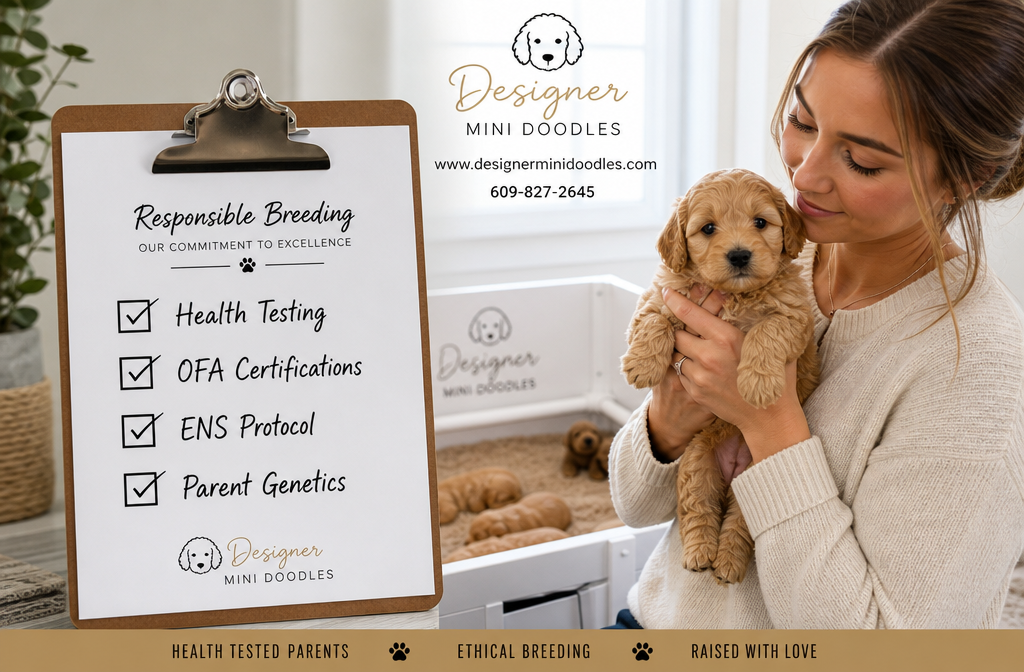
Designer Doodles is run by a real animal biologist, which shapes how the program operates from the ground up. Every breeding dog comes from verified top bloodlines and is health-tested before being bred. Puppies receive ENS handling from days 3–16, are exposed to the routine chaos of a busy home (children, other pets, vacuums, doorbells, music), and arrive at their new families already started on crate training and potty foundations.
The program ships nationally to Houston and surrounding Texas markets, and many Houston families have brought home micro goldendoodle puppies for sale through this exact pipeline. For families also considering a flat-faced companion, the team also offers Mini Frenchie puppies for sale under the same standards.
“The single biggest predictor of a calm, confident adult dog is what happened in the first 8 weeks of life — not what you do at 8 months.” — Common refrain among veterinary behaviorists, and the foundation of any serious ENS-based breeding program.
FAQ
Q: How long is the waitlist for a micro goldendoodle in Houston?
A: Reputable Houston-area breeders typically have 3–9 month waitlists. Anyone offering same-day pickup on multiple litters year-round is likely operating at puppy-mill volume.
Q: What’s the difference between micro, mini, and toy goldendoodles?
A: Toy goldendoodles are under 14 lbs, micro is 10–25 lbs, and mini is 20–35 lbs. The categories overlap, which is why asking about expected adult weight matters more than the label.
Q: Can I fly with a micro goldendoodle in the cabin?
A: Yes, most micros under 18 lbs (including carrier) qualify for in-cabin travel on major U.S. airlines. Check airline-specific carrier dimensions.
Q: Do micro goldendoodles bark a lot?
A: Generally no. They’re alert but not yappy. Excessive barking usually points to under-exercise, separation anxiety, or lack of training — not breed traits.
Q: What color micro goldendoodles are most common in Houston?
A: Cream, apricot, and red are most common. Parti, phantom, and merle command higher prices and longer waitlists.
Q: Should I get a male or female micro goldendoodle?
A: Behaviorally, the difference is minimal once spayed/neutered. Pick the puppy whose temperament matches your home, not the sex.
Q: How early can I take my puppy home?
A: Eight weeks is the legal and ethical minimum in Texas. Any breeder offering 6-week pickups should be avoided.
Q: Do micro goldendoodles need a fenced yard?
A: Not required. Daily leashed walks and indoor play meet their exercise needs. A yard is a bonus, not a necessity.
Conclusion: Your Next Steps
Finding the right micro goldendoodle breeder in Houston comes down to three things: verified health testing, early socialization protocols (especially ENS), and a breeder willing to be transparent with you long before money changes hands. Don’t rush the process. The right puppy from the right program will be part of your family for 12–15 years.
Your next steps:
- Decide on your size target (10–16 lb petite vs. 17–25 lb standard micro) based on your household.
- Set your budget realistically — plan for $4,000–$5,500 plus $3,000–$5,000 in first-year costs.
- Vet 2–3 breeders. Ask for health testing documentation, ENS protocols, and references.
- Get on a waitlist with the program that best fits your standards.
- Use the waitlist time to puppy-proof your home, choose a vet, and pre-book grooming.
To browse currently available litters from a nationally trusted program, visit Designer Doodles and check the puppy availability page. You can also view the program’s Google Maps location and reviews to read directly from past puppy families.