

mini golden doodle puppies
Quick Answer: Mini golden doodle puppies are a cross between a Golden Retriever and a Miniature (or Toy) Poodle, typically weighing 15 to 35 pounds fully grown. They’re prized for their low-shedding coats, friendly temperaments, and adaptability to apartments, families, and first-time owners alike. Expect to pay between $2,000 and $5,000 from a reputable breeder, with annual care costs ranging from $1,500 to $3,000 depending on grooming frequency and health needs.
The Goldendoodle Association of North America reported a 40% increase in breeder registrations between 2020 and 2024, and the miniature variety accounts for the majority of that growth. Mini golden doodle puppies have become one of the most sought-after companion dogs in America, and for good reason: they pack the intelligence of a Poodle and the gentle loyalty of a Golden Retriever into a compact, manageable frame. But popularity also means more puppy mills, more misinformation, and more families making expensive mistakes. This guide covers everything you need to know before bringing one home, from generation labels and health screening to daily exercise needs and grooming costs.
mini golden doodle puppies
- Mini goldendoodles typically reach 13 to 20 inches tall and 15 to 35 pounds at full maturity, with micro and toy varieties staying under 20 pounds.
- F1B mini goldendoodles (75% Poodle) shed significantly less than F1s and are the better choice for allergy-sensitive households.
- A well-bred mini golden doodle puppy from a health-tested program costs $2,000 to $5,000; budget breeders often skip critical genetic testing.
- Annual ownership costs average $1,500 to $3,000, with professional grooming being the largest recurring expense after food.
- These dogs are highly trainable and well-suited to first-time owners, but they can develop separation anxiety without early crate training and socialization.
- Reputable breeders perform OFA hip evaluations, cardiac exams, and genetic panels for conditions like progressive retinal atrophy (PRA) and von Willebrand’s disease.
- Mini goldendoodles need 30 to 60 minutes of daily exercise, split between walks and interactive play.
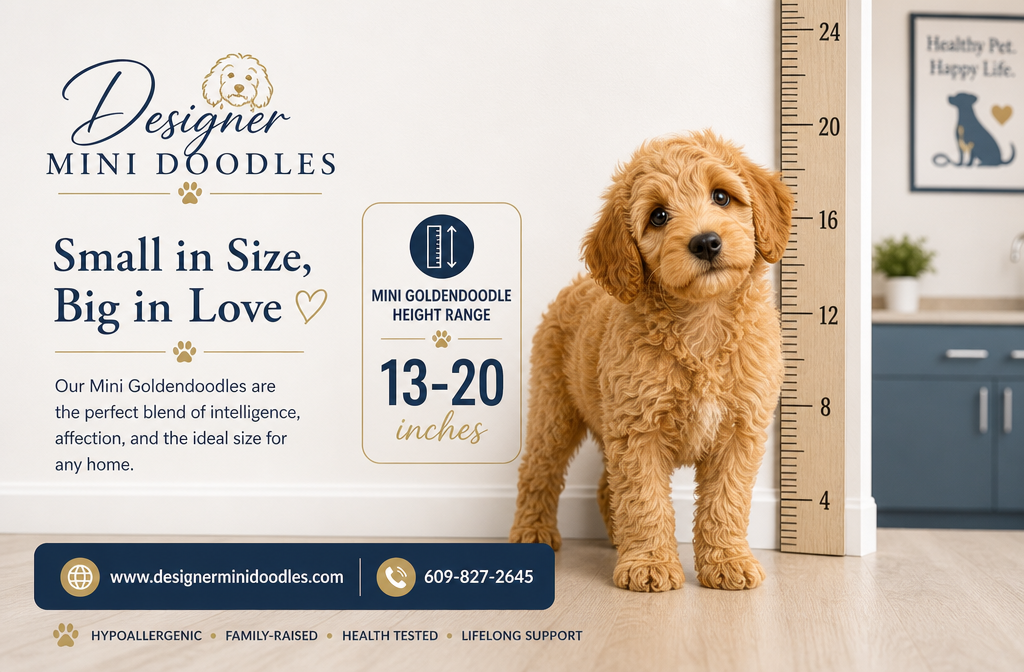
How Big Do Mini Goldendoodles Get When Fully Grown?
A fully grown mini goldendoodle stands between 13 and 20 inches at the shoulder and weighs 15 to 35 pounds, though the exact size depends on the Poodle parent’s size and the generation cross.
Within the “mini” label, there’s actually a range:
| Size Category | Adult Weight | Adult Height | Poodle Parent Used |
|---|---|---|---|
| Micro mini goldendoodle | 10-16 lbs | 10-14 inches | Toy Poodle |
| Mini goldendoodle | 15-35 lbs | 13-20 inches | Miniature Poodle |
| Medium goldendoodle | 36-50 lbs | 17-21 inches | Small Standard or large Mini Poodle |
If you live in an apartment or want a truly compact companion, a 10-16 lb micro goldendoodle is often the perfect size. Puppies from programs run by animal biologists tend to have more predictable adult sizes because the breeding pairs are carefully selected for consistency.
Common mistake: Assuming a “mini” from any breeder will stay under 25 pounds. Without knowing the exact size of both parents and grandparents, your “mini” could easily hit 40 pounds. Always ask for the weights of at least two generations back.
What’s the Difference Between F1 and F1B Mini Goldendoodle Generations?
An F1 mini goldendoodle is a first-generation cross (50% Golden Retriever, 50% Miniature Poodle), while an F1B is a backcross to a Poodle (roughly 75% Poodle, 25% Golden Retriever). The F1B typically sheds less and has a curlier, more hypoallergenic coat.
Here’s how the common generations break down:
- F1: Golden Retriever x Miniature Poodle. Moderate shedding, wavy coat. Good hybrid vigor.
- F1B: F1 Goldendoodle x Poodle. Low shedding, curlier coat. Best for allergy-sensitive homes.
- F1BB: F1B Goldendoodle x Poodle. Very low shedding, tightest curls. Highest Poodle percentage.
- F2: F1 x F1. Least predictable coat type and shedding level.
- Multigen: Multiple generations of Goldendoodle-to-Goldendoodle or Goldendoodle-to-Poodle crosses. Experienced breeders use multigen pairings to stabilize size, temperament, and coat.
Choose F1 if you prefer a slightly more Golden Retriever-like temperament and don’t mind some shedding. Choose F1B or F1BB if anyone in your household has allergies or you want minimal shedding. For allergy-conscious homes, the F1B generation is generally the safest bet.
Do Mini Goldendoodles Shed a Lot, or Are They Hypoallergenic?
No dog is truly hypoallergenic, but mini goldendoodles, particularly F1B and later generations, shed very little compared to most breeds. Their Poodle-influenced coats trap loose hair rather than releasing it into the environment, which significantly reduces airborne dander.
What determines shedding:
- Coat type matters most. Curly coats shed the least. Wavy coats shed lightly. Straight or “flat” coats (rare in minis) shed the most.
- Generation matters. Higher Poodle percentages correlate with less shedding.
- Individual variation exists. Even within the same litter, coat types can differ.
If you’re specifically looking for a low-shedding puppy, ask the breeder about furnishings testing. The “furnishings” gene (a dominant gene from the Poodle side) is responsible for the characteristic beard, eyebrows, and non-shedding coat. Reputable breeders DNA-test for this gene so there are no surprises.
Are Mini Goldendoodles Good With Kids and Other Pets?
Yes. Mini goldendoodles are among the most family-friendly crossbreeds available in 2026. They inherit the Golden Retriever’s patience and gentleness alongside the Poodle’s alertness and playfulness, making them excellent companions for children of all ages.
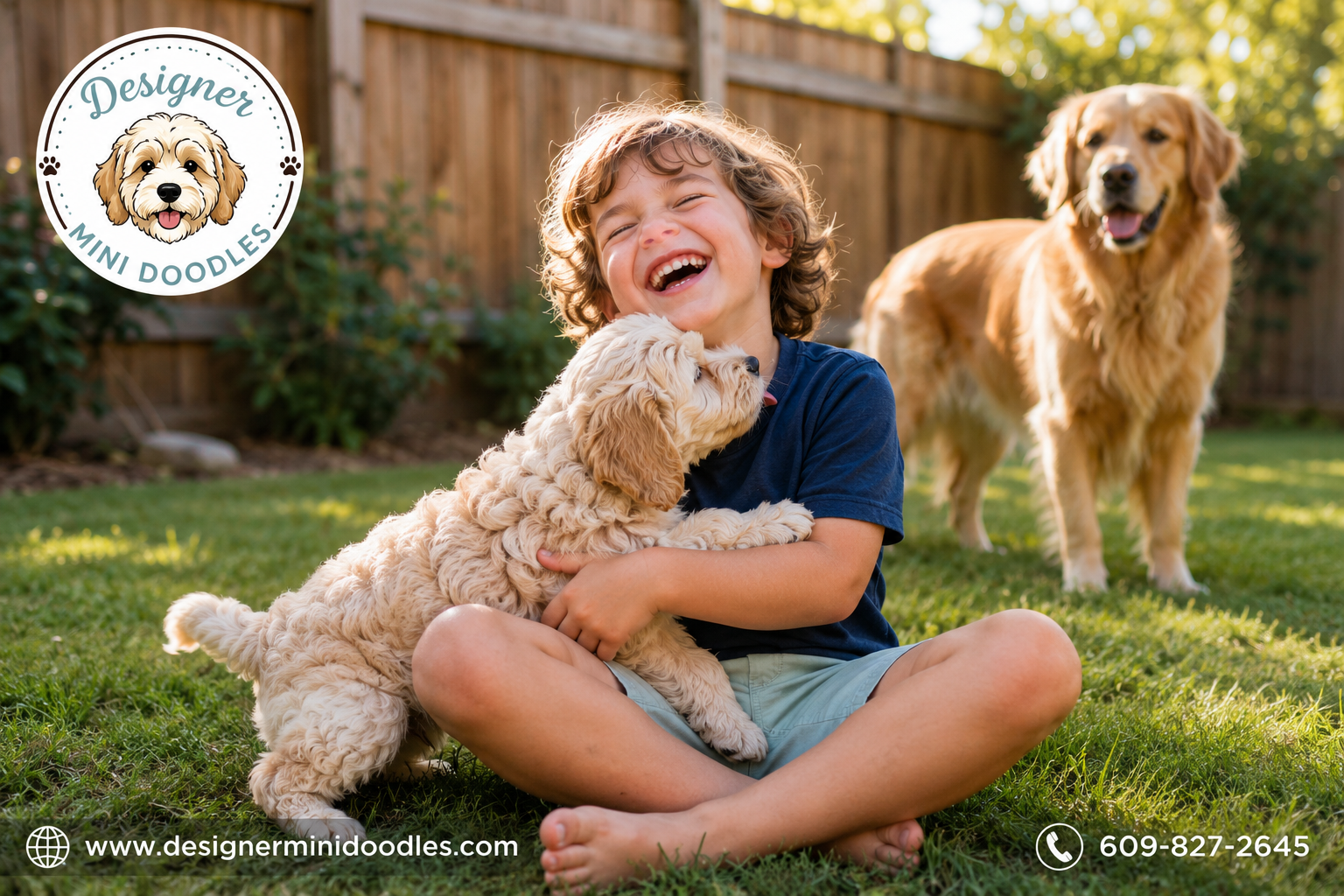
With kids: Their moderate size is an advantage. They’re sturdy enough to handle a toddler’s enthusiastic petting but not so large that they accidentally knock small children over. Mini goldendoodles from programs that include Early Neurological Stimulation (ENS) and structured socialization tend to be especially confident and calm around unpredictable kid behavior. Families with young children should explore why micro goldendoodles work well in family households.
With other pets: Most mini goldendoodles coexist peacefully with cats, other dogs, and even smaller animals when properly introduced. Their prey drive is generally low. The key is early socialization, ideally starting with the breeder and continuing through the first six months at home.
Edge case: A mini goldendoodle that hasn’t been socialized before 12 weeks may be timid or reactive around other animals. This is a breeder quality issue, not a breed issue.
What’s the Average Cost of a Mini Goldendoodle Puppy?
Expect to pay between $2,000 and $5,000 for a mini golden doodle puppy from a reputable breeder in 2026. Micro and toy varieties, which require more selective breeding, often fall at the higher end of that range.
What drives the price:
- Health testing: OFA hips, elbows, cardiac, patella, plus genetic panels for PRA, vWD, and other conditions. This testing costs breeders $500 to $1,000 per parent dog.
- Breeding program quality: Programs run by animal biologists or veterinary professionals with over a decade of experience invest heavily in parent dog selection, nutrition, and puppy enrichment.
- Early training included: The best breeders start ENS protocols, early housebreaking, and crate training before puppies go home. This saves you weeks of frustration and hundreds of dollars in private training.
- Size: Toy golden doodle puppies (under 15 lbs adult) typically cost more because achieving consistent small size requires careful multigenerational breeding.
- Coat color: Rare colors like red, parti, and phantom sometimes carry a premium.
Red flag pricing: If you see mini golden doodle puppies advertised for under $1,000, the breeder is almost certainly cutting corners on health testing, veterinary care, or both. The upfront savings rarely offset the potential for expensive genetic health problems later.
Designer Mini Doodles, for example, is run by an animal biologist who has been breeding the healthiest mini golden doodle puppies in America for over fifteen years. Their program includes comprehensive health testing, ENS, early housebreaking, and crate training, producing some of the calmest, most affectionate, and most confident miniature golden doodle puppies available anywhere. They also offer toy golden doodle puppies for sale and provide a dedicated puppy nanny service, so their puppies are available to go to any home in the world.
How Much Does It Cost to Care for a Mini Goldendoodle Per Year?
Annual care costs for a mini goldendoodle range from $1,500 to $3,000, depending on your location, grooming frequency, and whether any health issues arise.
| Expense Category | Estimated Annual Cost |
|---|---|
| High-quality food | $400-$700 |
| Professional grooming (every 6-8 weeks) | $500-$1,200 |
| Veterinary wellness exams and vaccines | $250-$500 |
| Flea, tick, and heartworm prevention | $150-$300 |
| Pet insurance | $300-$600 |
| Toys, treats, and supplies | $150-$300 |
| Total | $1,750-$3,600 |
For a detailed breakdown of what smaller goldendoodles cost over their lifetime, see our cost-of-ownership guide for micro goldendoodles.
Money-saving tip: Learning to do basic grooming maintenance at home (brushing, ear cleaning, sanitary trims) between professional appointments can cut your grooming bill by 30-40%.
What Health Problems Are Common in Mini Goldendoodles?
Mini goldendoodles benefit from hybrid vigor, but they can still inherit conditions from both parent breeds. The most common health concerns include hip dysplasia, progressive retinal atrophy (PRA), patellar luxation, and von Willebrand’s disease.
Conditions to know about:
- Hip dysplasia: Inherited from the Golden Retriever side. OFA hip evaluations on both parents significantly reduce risk.
- Progressive retinal atrophy (PRA): A genetic eye condition that can lead to blindness. DNA testing identifies carriers, and responsible breeders never pair two carriers.
- Patellar luxation: More common in smaller dogs. The kneecap slips out of place, causing intermittent lameness.
- Ear infections: Their floppy, hair-covered ears trap moisture. Regular cleaning prevents most infections.
- Addison’s disease: More common in Poodles. Affects the adrenal glands. Manageable with medication but requires lifelong treatment.
What to ask the breeder: Request documentation of OFA evaluations and genetic panel results for both parents. A breeder who can’t or won’t provide these is not worth your money or your heartache.
What Are the Grooming Requirements for Mini Goldendoodles?
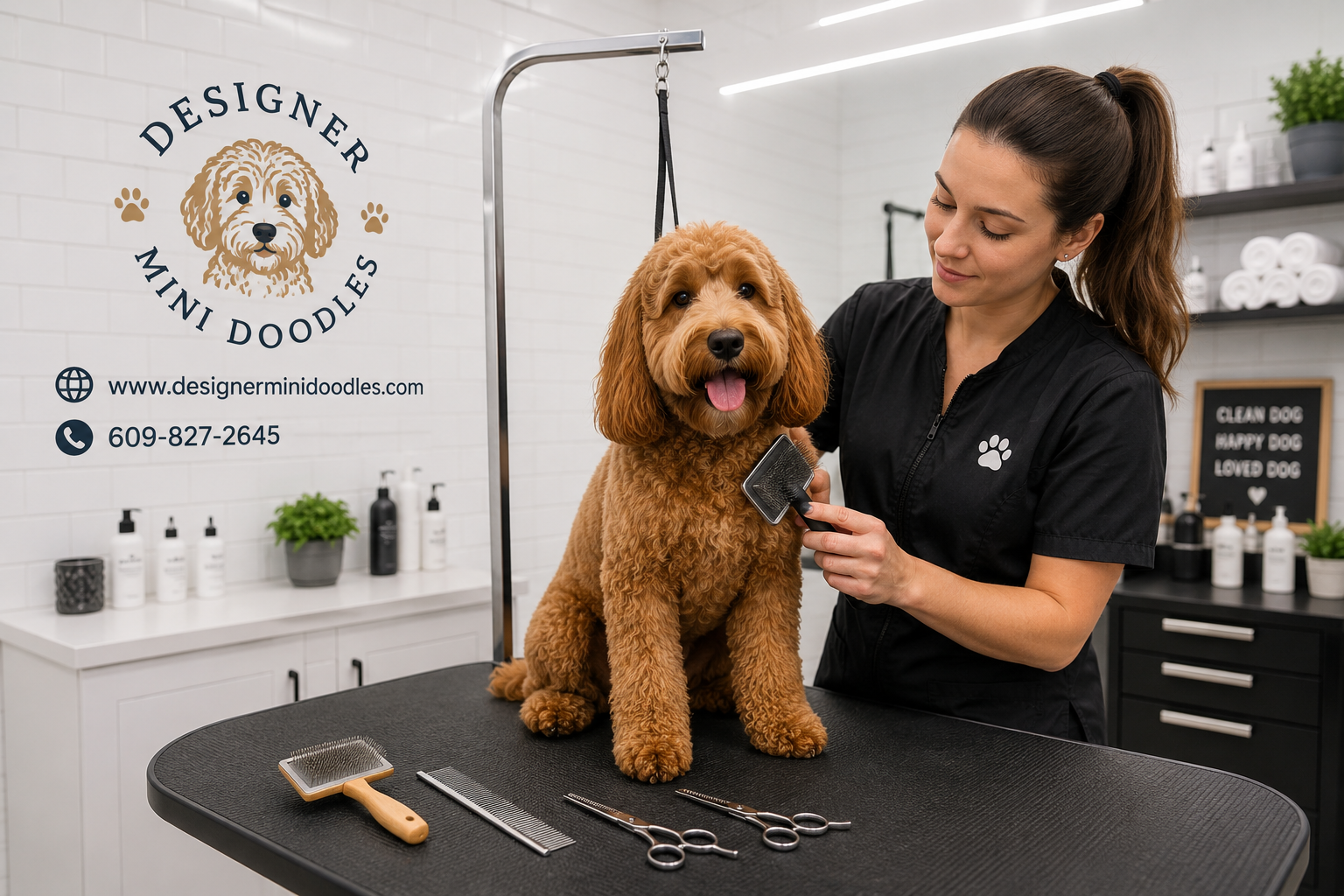
Mini goldendoodles require brushing every 2 to 3 days and professional grooming every 6 to 8 weeks. Their low-shedding coats grow continuously, similar to human hair, and will mat severely without regular maintenance.
Essential grooming routine:
- Brush thoroughly 3-4 times per week using a slicker brush, working from the skin outward. Pay special attention to behind the ears, armpits, and the groin area where mats form fastest.
- Bathe every 3-4 weeks or as needed. Use a dog-specific shampoo to avoid stripping natural oils.
- Professional grooming every 6-8 weeks for a full haircut, nail trim, ear cleaning, and sanitary trim.
- Check ears weekly for redness, odor, or excess moisture. Pluck or trim ear hair if your groomer recommends it.
- Brush teeth at least 3 times per week. Small dogs are prone to dental disease.
For detailed home grooming strategies, our guide on grooming and home care for micro goldendoodles covers tools, techniques, and scheduling.
Common mistake: Waiting until mats are visible before brushing. By that point, the mat is often tight against the skin and painful to remove. Consistent preventive brushing is far easier than corrective dematting.
How Much Exercise Does a Mini Goldendoodle Puppy Need Daily?
Mini golden doodle puppies need 30 to 60 minutes of exercise per day, split between walks, play sessions, and mental stimulation. Puppies under six months should follow the “five minutes per month of age” rule for structured walks to protect developing joints.
Exercise by age:
- 8-16 weeks: Short play sessions (10-15 minutes), socialization outings, puzzle toys. No long walks or jumping.
- 4-6 months: Two 15-20 minute walks plus free play in a fenced area.
- 6-12 months: 30-45 minutes of combined walking and play. Introduce fetch, basic agility, or swimming.
- Adult (1+ years): 45-60 minutes daily. These dogs adapt well to both active lifestyles and more relaxed routines.
Don’t overlook mental exercise. Mini goldendoodles are intelligent dogs that need brain work. Snuffle mats, treat-dispensing toys, short training sessions, and nose work games count toward their daily exercise needs and help prevent destructive behavior.
Are Mini Goldendoodles Hard to Train for First-Time Dog Owners?
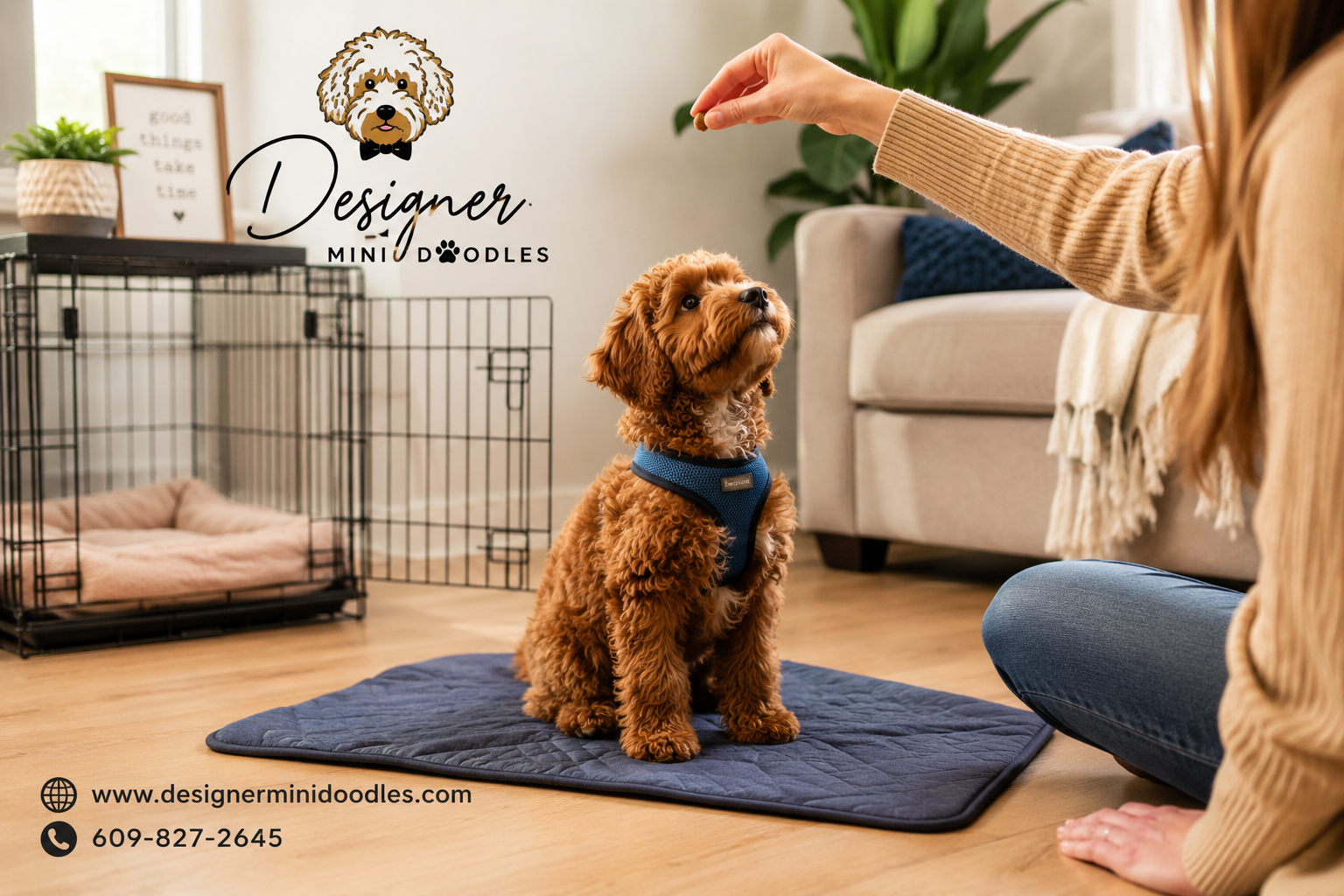
No. Mini goldendoodles are one of the easiest crossbreeds to train, making them an excellent choice for first-time dog owners. They’re eager to please, food-motivated, and quick to learn new commands, often mastering basic obedience within the first few weeks at home.
Why they’re beginner-friendly:
- Both parent breeds rank in the top 10 for canine intelligence (Poodles are #2, Golden Retrievers are #4, according to Stanley Coren’s canine intelligence rankings).
- They respond exceptionally well to positive reinforcement.
- Their moderate energy level means they can focus during training sessions without being hyperactive.
Training tips for new owners:
- Start with “sit,” “down,” “stay,” and “come.” Use high-value treats and keep sessions under 10 minutes for puppies.
- Begin crate training on day one. A puppy from a breeder that starts early crate training will adapt to their crate within days rather than weeks.
- Socialize aggressively between 8 and 16 weeks. Expose your puppy to different people, surfaces, sounds, and environments.
- Enroll in a puppy kindergarten class by 12 weeks of age.
For training foundations that apply across doodle breeds, our training guide for mini doodle puppies covers positive reinforcement techniques in detail.
Do Mini Goldendoodles Have Separation Anxiety?
Mini goldendoodles are more prone to separation anxiety than many breeds because they form exceptionally strong bonds with their owners. However, this is preventable with proper early training, not inevitable.
Prevention strategies:
- Crate train early. A crate-trained puppy has a safe space that reduces anxiety when you leave. Breeders who start crate training before puppies go home give you a significant head start.
- Practice short absences. Leave for 5 minutes, then 10, then 30. Gradually increase duration over weeks.
- Don’t make departures dramatic. No long goodbyes or excited returns. Keep it calm and matter-of-fact.
- Provide enrichment. A frozen Kong or puzzle feeder gives your puppy something to focus on when you leave.
- Consider a companion. If you work outside the home full-time, a second pet (dog or even a cat) can reduce loneliness.
When it’s already a problem: If your mini goldendoodle is destroying furniture, barking excessively, or eliminating indoors when left alone, consult a certified veterinary behaviorist. Medication combined with behavior modification is the most effective approach for established separation anxiety.
Where Can I Find Reputable Mini Goldendoodle Breeders Near Me?
Start by looking for breeders who health-test both parents, raise puppies in their home (not a kennel), and can provide references from previous buyers and their veterinarian. The best mini golden doodle breeders are transparent about their breeding program, health guarantees, and puppy-raising protocols.
Signs of a reputable breeder:
- Performs OFA health evaluations and genetic testing on all breeding dogs, with results publicly available
- Raises puppies with ENS (Early Neurological Stimulation), early socialization, and exposure to household sounds
- Starts housebreaking and crate training before puppies go home
- Offers a health guarantee of at least two years
- Welcomes questions and encourages you to visit (in person or virtually)
- Has years of documented breeding experience, ideally with formal education in animal science or biology
Signs of a breeder to avoid:
- Multiple breeds available at all times
- No health testing documentation
- Puppies available immediately with no waitlist
- Unwilling to let you meet the parent dogs
- Prices significantly below market rate
Many top breeders, including programs with dedicated puppy nanny services, can ship puppies safely to any home in the country or internationally. If you’re searching by location, you can browse micro mini goldendoodles available in Florida, New York, or check our state-specific breeder directories.
If you’re also considering other small companion breeds, miniature French bulldog puppies are another popular option for families wanting a compact, affectionate dog.
What Should I Know Before Buying a Mini Golden Doodle Puppy?
Before committing to a mini golden doodle puppy, you need to honestly assess your lifestyle, budget, and willingness to maintain a high-grooming-needs dog for 12 to 16 years.
Pre-purchase checklist:
- Budget realistically. Purchase price is just the beginning. Can you afford $1,500 to $3,000 annually in care costs?
- Commit to grooming. If you won’t brush your dog 3-4 times per week and pay for professional grooming every 6-8 weeks, this breed will be miserable (and matted).
- Plan for the puppy stage. The first 6 months require significant time for training, socialization, and supervision. Puppies from breeders who start early training make this easier, but it still demands daily effort.
- Evaluate your living space. Mini goldendoodles adapt well to apartments, but they still need daily outdoor exercise and mental stimulation. They’re well-suited to apartment and urban living when their needs are met.
- Consider your schedule. These dogs need companionship. If everyone in the household works away from home for 10+ hours daily, a mini goldendoodle may not be the right fit unless you arrange for a dog walker or daycare.
- Research the breeder thoroughly. Ask about health testing, puppy-raising protocols, and generation. Visit if possible.
- Get pet insurance early. Insure your puppy before any pre-existing conditions develop. This is the single best financial decision you can make as a new dog owner.
“The difference between a well-bred mini goldendoodle and a poorly bred one isn’t just the purchase price. It’s thousands of dollars in potential veterinary bills, months of behavioral rehabilitation, and years of quality of life for the dog.”
Frequently Asked Questions
How long do mini goldendoodles live?
Mini goldendoodles have an average lifespan of 12 to 16 years. Smaller varieties (micro and toy) tend to live slightly longer than larger minis, and dogs from health-tested parents have better odds of reaching the upper end of that range.
Do mini goldendoodles bark a lot?
They’re moderate barkers. Mini goldendoodles will alert you to visitors or unusual sounds but aren’t typically nuisance barkers. Excessive barking usually indicates boredom, anxiety, or insufficient exercise rather than a breed tendency.
Can mini goldendoodles be left alone during the workday?
Adult mini goldendoodles can handle 4 to 6 hours alone if properly crate trained and given enrichment. Puppies under six months should not be left alone for more than 2 to 3 hours. A midday dog walker or doggy daycare helps bridge longer absences.
What colors do mini golden doodle puppies come in?
Common colors include cream, apricot, red, gold, chocolate, black, and parti (two-toned). Coat color can lighten as the dog matures, so a deep red puppy may become a lighter apricot by adulthood.
Are mini goldendoodles good for seniors?
Yes. Their manageable size, gentle temperament, and moderate exercise needs make them excellent companions for active seniors. Micro and toy varieties (10-16 lbs) are especially easy to handle for older adults.
Do mini goldendoodles need a yard?
A yard is helpful but not required. Mini goldendoodles thrive in apartments and condos as long as they receive daily walks and play sessions. What matters is consistent exercise, not the size of your living space.
When is a mini goldendoodle fully grown?
Most mini goldendoodles reach their full height by 10 to 12 months and their full weight by 12 to 14 months. Smaller varieties may mature slightly faster.
Are male or female mini goldendoodles better?
Neither sex is objectively better. Males tend to be slightly larger and more playful; females are often a bit more independent and mature faster. Temperament differences within a litter are usually greater than differences between sexes.
Can I get micro golden doodle puppies that stay very small?
Yes. Micro mini goldendoodles, bred from Toy Poodle parents, typically stay between 10 and 16 pounds as adults. These require experienced breeders who have refined their lines over multiple generations to achieve consistent small size without sacrificing health.
How soon can I take my mini goldendoodle puppy home?
Reputable breeders release puppies between 8 and 10 weeks of age. Puppies taken home before 8 weeks miss critical socialization with their mother and littermates, which can lead to behavioral problems.
Conclusion
Mini golden doodle puppies offer a rare combination of intelligence, affection, and adaptability that suits nearly any living situation, from city apartments to suburban homes with large families. But the quality of your experience depends almost entirely on two things: choosing a reputable breeder and committing to consistent grooming, training, and exercise.
Your next steps:
- Determine your ideal size and generation. If allergies are a concern, prioritize F1B or multigen puppies. If you want the smallest possible dog, look into micro or toy golden doodle varieties.
- Set a realistic budget. Plan for $2,000 to $5,000 upfront and $1,500 to $3,000 annually. Get pet insurance within the first month.
- Research breeders carefully. Look for programs with documented health testing, ENS protocols, and early training. Breeders with formal education in animal biology or veterinary science bring an additional layer of expertise to their programs.
- Prepare your home. Have a crate, exercise pen, grooming tools, and high-quality puppy food ready before your puppy arrives.
- Start training immediately. The habits you build in the first 30 days set the tone for the next 15 years.
Whether you’re a first-time owner or an experienced dog person looking for your next companion, a well-bred mini goldendoodle from a quality program will reward you with years of loyalty, laughter, and unconditional affection.
References
- Coren, Stanley. The Intelligence of Dogs. Free Press, 1994.
- Orthopedic Foundation for Animals (OFA). “Health Testing Requirements.” OFA.org, 2024.
- Goldendoodle Association of North America (GANA). “Breed Standards and Generation Guide.” GANA, 2023.