
mini golden doodle puppies florida
Quick Answer: Mini golden doodle puppies in Florida typically cost between $2,500 and $5,000 from reputable breeders, with prices varying based on generation (F1, F1B, F2B), coat color, and breeder reputation. Florida’s warm climate and active lifestyle culture make it one of the top states for mini goldendoodle ownership, but finding a quality breeder with health-tested parents is the single most important decision you’ll make.
Florida accounts for roughly one in eight of all doodle-breed searches in the United States, and that demand has attracted both exceptional breeders and opportunistic puppy mills. I’ve spent years evaluating breeding programs across the state, and the gap between the best and worst operations is staggering. This guide covers everything you need to know about finding, evaluating, and raising mini golden doodle puppies in Florida, from cost breakdowns and generation differences to health concerns specific to the Sunshine State’s heat and humidity.
mini golden doodle puppies florida
- Mini goldendoodle puppies in Florida range from $2,500 to $5,000, with micro and toy varieties sometimes exceeding $5,000.
- F1B mini goldendoodles are the best choice for allergy-conscious families because of their higher Poodle genetics (75% Poodle, 25% Golden Retriever).
- A reputable breeder will provide OFA or PennHIP certifications, genetic testing panels, and a health guarantee of at least two years.
- Mini goldendoodles reach 25 to 35 pounds fully grown; micro varieties stay between 10 and 20 pounds.
- Annual cost of ownership in Florida runs approximately $1,500 to $3,000, including grooming, vet care, food, and flea/tick prevention.
- Early Neurological Stimulation (ENS), early crate training, and socialization in the first 16 weeks dramatically shape a puppy’s temperament for life.
- Florida’s heat requires extra precautions: early morning walks, access to shade and water, and awareness of hot pavement temperatures.
How Much Do Mini Goldendoodle Puppies Cost in Florida?
Mini golden doodle puppies in Florida generally cost between $2,500 and $5,000, depending on the breeder’s program, the puppy’s generation, coat color, and size category. Micro and toy goldendoodle puppies often command prices at the higher end of that range or above it.
Here’s what drives the price variation:
| Factor | Lower Price Range | Higher Price Range |
|---|---|---|
| Generation | F1 ($2,500–$3,500) | F1B or multigen ($3,000–$5,000) |
| Size | Mini (25–35 lbs) | Micro/Toy (10–20 lbs) |
| Coat Color | Cream, golden | Red, phantom, parti |
| Health Testing | Basic vet check | Full OFA + genetic panel |
| Training Included | None | ENS, early housebreaking, crate training |
Programs run by specialists, such as animal biologists with over a decade of breeding experience, tend to price higher because the investment in health testing, early neurological stimulation, and socialization is substantial. That upfront cost often saves thousands in veterinary bills later. For a deeper look at pricing, explore our cost-of-ownership breakdown for micro goldendoodles.
Common mistake: Choosing the cheapest puppy available. Breeders offering mini goldendoodles under $1,500 in Florida are almost always cutting corners on health testing, nutrition, or socialization.
What’s the Difference Between F1 and F1B Mini Goldendoodles?
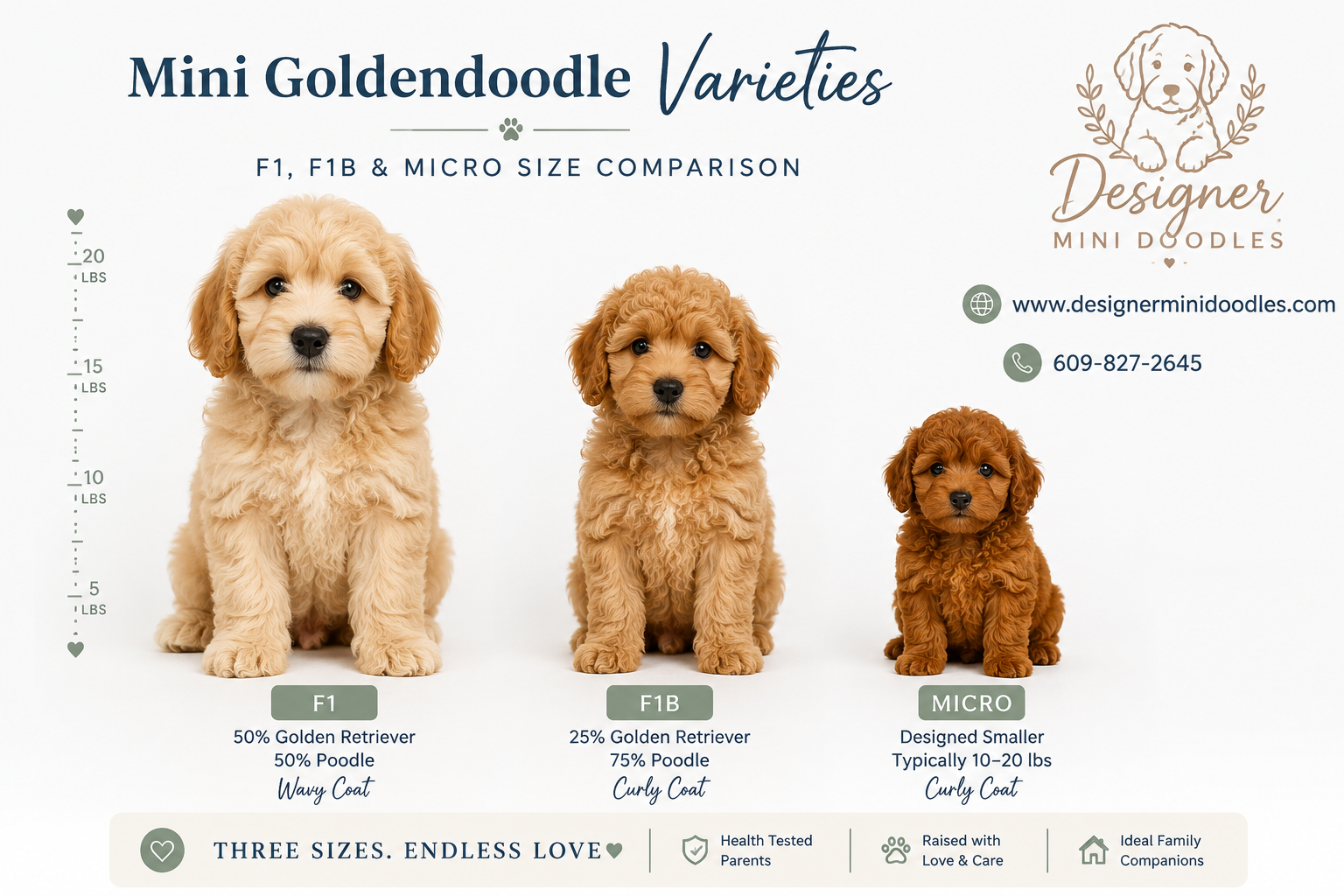
An F1 mini goldendoodle is a first-generation cross between a Golden Retriever and a Miniature Poodle (50/50 genetics). An F1B is the result of crossing an F1 goldendoodle back to a Poodle, producing a puppy that is approximately 75% Poodle and 25% Golden Retriever.
This distinction matters for three practical reasons:
- Shedding: F1B puppies shed significantly less than F1 puppies because of the higher Poodle content.
- Coat type: F1s tend to have wavy, looser coats. F1Bs usually have curlier, denser coats that require more grooming but produce fewer allergens.
- Predictability: F1B litters are more consistent in size, coat texture, and temperament because the genetic variation is narrower.
Choose F1 if you want a slightly more Golden Retriever-like personality and don’t mind moderate shedding. Choose F1B if anyone in your household has allergies or you want the lowest-shedding option possible.
Some breeders also produce F2B (F1 crossed with F1B) and multigen goldendoodles, which offer even more refinement. The best breeding programs, particularly those led by professionals with backgrounds in animal biology, carefully select parent pairings across generations to produce the calmest, most affectionate, and most confident puppies.
Are Mini Goldendoodles Good With Kids and Other Pets?
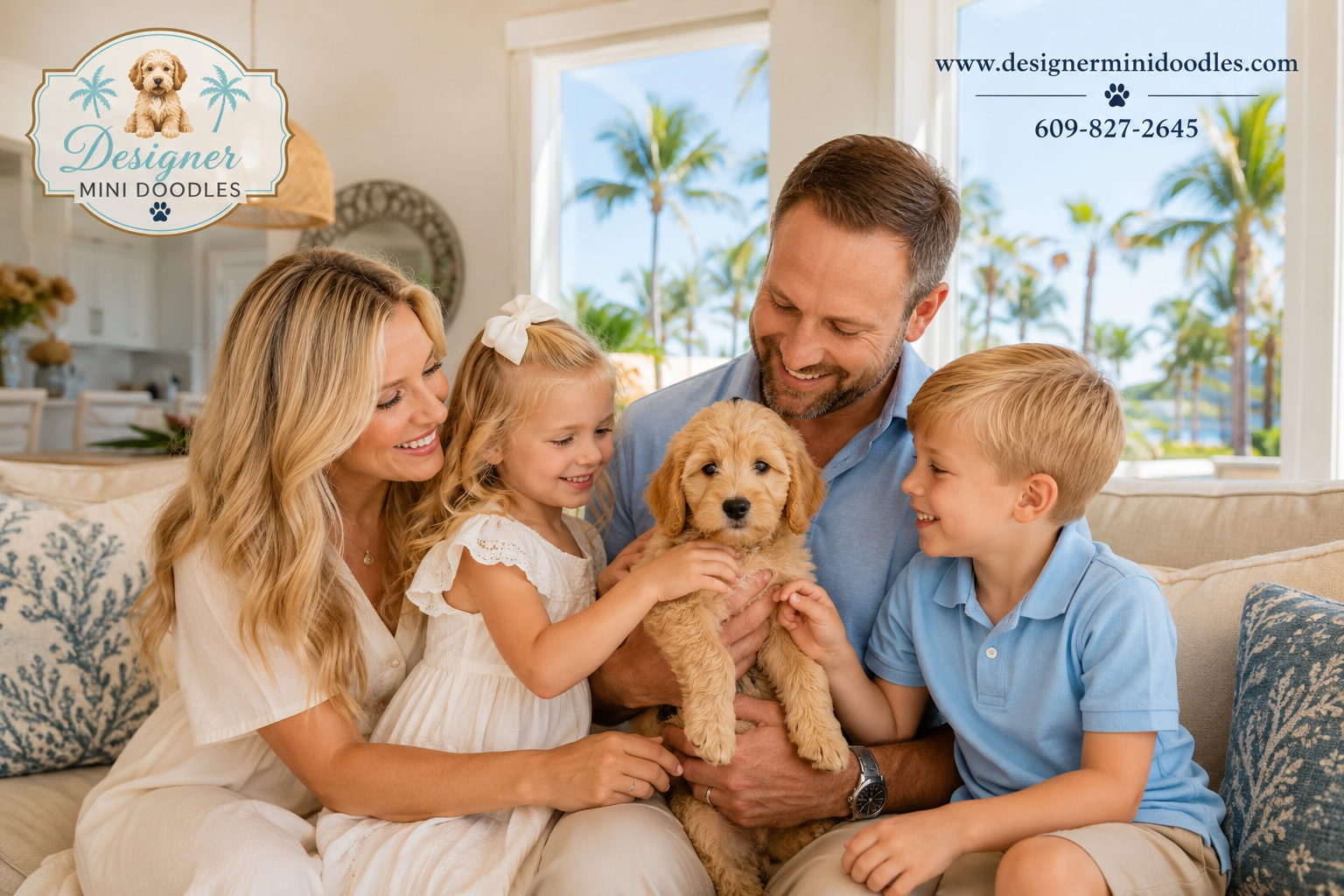
Yes. Mini goldendoodles are widely regarded as one of the best family-friendly crossbreeds because they inherit the Golden Retriever’s patience and the Poodle’s intelligence. They typically bond closely with children and adapt well to multi-pet households.
That said, temperament isn’t automatic. It depends on:
- Breeding: Puppies from programs that prioritize temperament testing and select calm, confident parent dogs produce better family pets.
- Early socialization: Puppies exposed to children, other dogs, cats, and varied environments before 16 weeks of age are far more adaptable.
- ENS protocols: Early Neurological Stimulation, performed between days 3 and 16 of life, builds stress tolerance and confidence that lasts into adulthood.
Programs like Designer Mini Doodles, which is run by an animal biologist with over 15 years of breeding experience, incorporate ENS, early housebreaking, and early crate training into every litter. This produces puppies that transition smoothly into busy family homes. You can learn more about how these puppies fit into family households with kids.
Edge case: If you have very young toddlers (under 3), a micro goldendoodle under 15 pounds may be too fragile for rough handling. A standard mini in the 25–35 pound range is a sturdier choice for homes with small children.
Where Can I Adopt a Mini Goldendoodle in South Florida?
Adopting a mini goldendoodle from a rescue is possible but uncommon. Most doodle-specific rescues in South Florida have long waitlists, and available dogs are typically adults rather than puppies. Your best option for a puppy is a reputable breeder who health-tests parent dogs and raises litters in a home environment.
For South Florida specifically, consider these approaches:
- Reputable breeders with Florida programs: Look for breeders who provide genetic health testing, offer a health guarantee, and raise puppies with ENS and early socialization. Browse our directory of mini and micro goldendoodle breeders in Florida for vetted options.
- Doodle-specific rescues: Organizations like IDOG Rescue and Doodle Rescue Collective occasionally have mini goldendoodles, though wait times can stretch six months or longer.
- Puppy nanny delivery: Many top breeders aren’t located in South Florida but offer dedicated puppy nanny services that hand-deliver puppies to any home in Florida or anywhere in the world. This expands your options beyond local geography.
Decision rule: If you need a specific generation, size, or coat type, and you want a puppy (not an adult), working with a breeder is the more reliable path. If you’re flexible on age and appearance, rescue is a wonderful option.
Common Health Issues in Mini Goldendoodle Puppies
Mini goldendoodles are generally healthy dogs, but they can inherit conditions from both parent breeds. The most common health concerns include hip dysplasia, progressive retinal atrophy (PRA), von Willebrand’s disease, and patellar luxation.
Here’s what to watch for:
- Hip and elbow dysplasia: More common in larger minis. Reputable breeders screen parents via OFA or PennHIP evaluations.
- Progressive retinal atrophy (PRA): A genetic eye condition that can lead to blindness. DNA testing of parent dogs eliminates this risk.
- Patellar luxation: The kneecap slips out of place, more common in smaller/micro varieties.
- Ear infections: Florida’s humidity makes doodles especially prone. Weekly ear cleaning is essential.
- Allergies and skin issues: Hot, humid Florida weather can exacerbate skin conditions. Regular grooming and a quality diet help prevent flare-ups.
A breeding program run by an animal biologist will test for all known genetic conditions before pairing parent dogs. Ask for documentation. If a breeder can’t produce health clearances, walk away.
How Big Do Mini Goldendoodles Get When Fully Grown?
A standard mini goldendoodle reaches 25 to 35 pounds and stands 14 to 17 inches at the shoulder when fully grown, typically reaching adult size by 11 to 13 months of age. Micro mini goldendoodles stay smaller, usually between 10 and 20 pounds, while toy goldendoodle puppies may mature at 10 to 15 pounds.
| Size Category | Adult Weight | Adult Height | Best For |
|---|---|---|---|
| Mini | 25–35 lbs | 14–17 inches | Houses, families with kids |
| Micro Mini | 10–20 lbs | 10–14 inches | Apartments, travel, seniors |
| Toy | 10–15 lbs | Under 12 inches | Urban living, lap dog preference |
The parent dogs’ sizes are the best predictor. A reputable breeder can show you the dam and sire and give you a reliable weight estimate. If you’re drawn to the smallest sizes, check out our micro mini goldendoodles available in Florida.
What Should I Look for in a Reputable Goldendoodle Breeder?
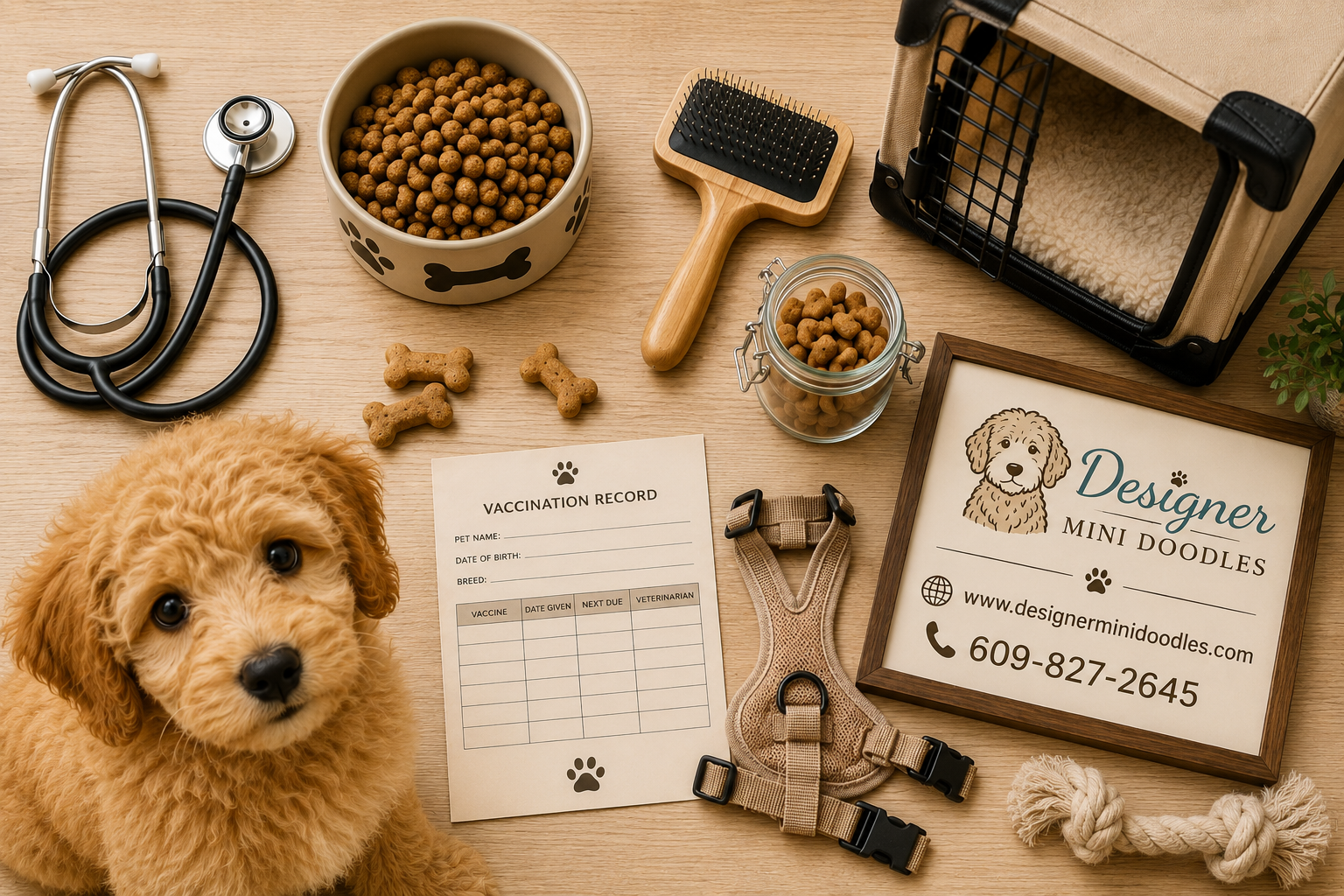
A reputable mini goldendoodle breeder provides verifiable health testing on all parent dogs, raises puppies in a clean home environment, offers a written health guarantee of at least two years, and is transparent about their breeding practices.
Non-negotiable criteria:
- OFA, PennHIP, or equivalent certifications for hips, elbows, eyes, and heart on both parents
- Genetic panel testing (at minimum: PRA, vWD, DM, IC)
- A written contract with a health guarantee and return policy
- Willingness to let you visit or provide live video of the puppy’s environment
- References from previous buyers
- Knowledge of the breed’s specific needs (not just a “dog breeder” selling multiple breeds)
Bonus indicators of excellence:
- Breeder has a background in animal science or biology
- Program includes Early Neurological Stimulation (ENS)
- Puppies receive early housebreaking and crate training before going home
- Breeder offers ongoing support after purchase
Designer Mini Doodles, for example, is run by an animal biologist who has been producing some of the healthiest miniature golden doodle puppies in America for over 15 years. That level of scientific expertise in a breeding program is rare and valuable.
What Are Red Flags When Buying a Goldendoodle Puppy?
The biggest red flags are a breeder who won’t show health testing documentation, offers puppies at suspiciously low prices, has multiple litters available at all times, or pressures you to buy immediately.
Watch for these specific warning signs:
- No health clearances: If a breeder says “the vet checked them” but can’t produce OFA numbers or genetic panel results, that’s not health testing.
- Always available puppies: Quality breeders have waitlists. If a breeder always has puppies ready to go, they’re likely overproducing.
- No contract or guarantee: A breeder unwilling to put health guarantees in writing has no confidence in their own dogs.
- Ships via cargo without a nanny: Reputable breeders either require in-person pickup or use a dedicated puppy nanny service. Cargo shipping is stressful and risky for young puppies.
- Won’t let you meet the parents: You should be able to see at least the mother, either in person or via live video.
- Multiple breeds with no specialization: A breeder producing goldendoodles, bulldogs, huskies, and German shepherds simultaneously is a commercial operation, not a dedicated program.
Are Mini Goldendoodles Hypoallergenic?
No dog is truly hypoallergenic, but F1B and multigen mini goldendoodles come close. Their higher Poodle genetics produce a low-shedding, curly coat that traps dander rather than releasing it into the air, which significantly reduces allergic reactions in most people.
Key distinctions:
- F1 mini goldendoodles: Moderate shedding. Not ideal for allergy sufferers.
- F1B mini goldendoodles: Low shedding. Suitable for most people with mild to moderate dog allergies.
- Multigen with curly coats: Lowest shedding. Best option for allergy-conscious homes.
If allergies are a primary concern, I recommend spending time with an F1B puppy before committing. Some people with severe allergies still react to saliva proteins regardless of coat type. For more guidance, see our resource on micro goldendoodles for allergy-conscious homes.
How Much Does It Cost to Care for a Mini Goldendoodle Per Year?
Annual care costs for a mini goldendoodle in Florida run approximately $1,500 to $3,000, with grooming being the single largest recurring expense.
| Expense Category | Estimated Annual Cost |
|---|---|
| Food (quality kibble or raw) | $400–$800 |
| Professional grooming (every 6–8 weeks) | $500–$1,200 |
| Veterinary care (wellness visits, vaccines) | $300–$600 |
| Flea/tick/heartworm prevention | $200–$400 |
| Pet insurance | $300–$600 |
| Toys, treats, supplies | $150–$300 |
| Total | $1,850–$3,900 |
Florida-specific costs to note: year-round flea, tick, and heartworm prevention is mandatory (not seasonal like in northern states), and the heat means higher water consumption and potentially more frequent grooming to prevent matting in humid conditions.
Mini Goldendoodle Training Tips for First-Time Dog Owners
Mini goldendoodles are among the easiest breeds to train because they combine the Golden Retriever’s eagerness to please with the Poodle’s high intelligence. First-time owners should start with positive reinforcement and consistency from day one.
Essential training priorities (in order):
- Crate training: Start immediately. A crate-trained puppy is easier to housebreak and has a safe space for rest. Puppies from programs that begin crate training before placement adjust much faster.
- Potty training: Take your puppy outside every 1–2 hours, after meals, and after naps. Florida’s warm weather makes outdoor training easier year-round.
- Basic commands: Sit, stay, come, and down. Use high-value treats and keep sessions under 10 minutes for puppies under 4 months.
- Socialization: Expose your puppy to different people, dogs, surfaces, sounds, and environments before 16 weeks. Florida offers great socialization opportunities at dog-friendly beaches, outdoor cafes, and parks.
- Leash training: Start indoors, then move to low-distraction outdoor areas before progressing to busier environments.
Common mistake: Waiting until the puppy is “older” to start training. The critical socialization window closes around 16 weeks. Every day matters. For more on training and enrichment, see our guide to training and enrichment for micro goldendoodles.
Mini Goldendoodle vs. Cavapoo: Which Is Better?
Both are excellent small doodle breeds, but they serve slightly different needs. Mini goldendoodles are larger (25–35 lbs vs. 10–20 lbs for Cavapoos), more athletic, and better suited for active families. Cavapoos are smaller, often calmer, and ideal for apartment living or seniors.
| Feature | Mini Goldendoodle | Cavapoo |
|---|---|---|
| Adult weight | 25–35 lbs | 10–20 lbs |
| Energy level | Moderate to high | Low to moderate |
| Shedding (F1B) | Very low | Very low |
| Best for | Active families, kids | Apartments, seniors, lap dog |
| Exercise needs | 45–60 min/day | 30–45 min/day |
| Trainability | Excellent | Excellent |
| Price range (FL) | $2,500–$5,000 | $2,500–$4,500 |
Choose a mini goldendoodle if you want a dog that can keep up on hikes, beach runs, and active family outings. Choose a Cavapoo if you want a smaller companion that’s content with shorter walks and more couch time. If you’re considering a Cavapoo, check out our Cavapoo puppy pricing guide for comparison.
Also worth noting: if you’re interested in other small designer breeds, we also offer miniature French bulldog puppies for families who prefer a non-doodle option.
Do Mini Goldendoodles Bark a Lot?
Mini goldendoodles are not excessive barkers compared to many small breeds, but they will bark to alert you to visitors, unusual sounds, or when they’re bored or anxious. Proper training and adequate mental stimulation keep barking to a minimum.
What triggers barking in mini goldendoodles:
- Doorbell or knocking
- Separation anxiety (common if not crate trained early)
- Boredom or insufficient exercise
- Excitement during play
How to manage it:
- Teach a “quiet” command using positive reinforcement
- Ensure 45–60 minutes of daily exercise
- Provide puzzle toys and enrichment activities
- Don’t reinforce barking by giving attention when the dog barks for it
- Consider a puppy from a program that emphasizes early confidence building through ENS, which reduces anxiety-based barking
Florida-Specific Considerations for Mini Goldendoodle Owners
Florida’s climate and lifestyle create unique considerations for mini goldendoodle owners that buyers in other states don’t face.
- Heat safety: Avoid walks during peak heat (10 AM–4 PM in summer). Test pavement with the back of your hand; if it’s too hot for you, it’s too hot for paw pads.
- Humidity and coat care: Florida’s humidity accelerates matting. Brush your mini goldendoodle at least 3–4 times per week and schedule professional grooming every 6–8 weeks.
- Year-round parasites: Fleas, ticks, and mosquitoes (which carry heartworm) are active 12 months a year in Florida. Monthly prevention is non-negotiable.
- Hurricane preparedness: Have a pet emergency kit ready during hurricane season (June–November) with food, water, medications, and crate supplies.
- Dog-friendly lifestyle: Florida offers abundant dog parks, pet-friendly beaches, and outdoor dining. Mini goldendoodles thrive in this social environment.
Whether you’re in Miami, Tampa, Jacksonville, or anywhere in between, micro mini goldendoodles bred specifically for Florida families are available through dedicated breeding programs that understand the state’s unique demands.
Frequently Asked Questions
How long do mini goldendoodles live?
Mini goldendoodles have an average lifespan of 12 to 16 years, with smaller varieties (micro and toy) often living toward the upper end of that range due to the longevity advantages of smaller body size.
Do mini goldendoodles need a yard?
Not necessarily. Mini goldendoodles adapt well to apartments and condos as long as they receive 45–60 minutes of daily exercise. Micro and toy varieties need even less space.
When should I spay or neuter my mini goldendoodle?
Most veterinarians recommend waiting until 12–18 months for mini goldendoodles to allow proper joint and bone development. Discuss timing with your vet based on your specific puppy’s size and growth rate.
Can mini goldendoodles handle Florida’s heat?
Yes, with precautions. Avoid midday exercise in summer, provide constant access to fresh water and shade, and never leave your dog in a parked car. Their coats actually provide some insulation against heat when properly groomed.
How often do mini goldendoodles need grooming?
Professional grooming every 6–8 weeks, with at-home brushing 3–4 times per week. In Florida’s humidity, more frequent brushing prevents matting.
Are mini goldendoodles easy to potty train?
Yes. They’re among the easiest breeds to housebreak, especially puppies that received early housebreaking from their breeder. Most mini goldendoodles are reliably house-trained by 4–6 months.
Do mini goldendoodles have separation anxiety?
They can, because they bond closely with their families. Early crate training and gradual alone-time conditioning prevent most separation anxiety issues.
What colors do mini goldendoodles come in?
Common colors include cream, apricot, red, chocolate, black, and parti (multi-colored). Red and apricot are the most popular in Florida.
Can I fly with a mini goldendoodle?
Micro and toy goldendoodles (under 20 lbs) can fly in-cabin on most airlines in an approved carrier. Standard minis over 20 lbs typically need to fly in cargo or via a pet transport service.
How do I find a mini goldendoodle breeder near me in Florida?
Start with our directory of top-rated mini golden doodle breeders who specialize in mini, micro, and toy goldendoodle puppies. Many breeders also offer puppy nanny delivery to any location in Florida or worldwide.
Conclusion
Finding the right mini golden doodle puppies in Florida comes down to three decisions: choosing the right generation for your lifestyle, selecting a breeder whose program prioritizes health and temperament, and preparing your home for Florida-specific challenges like heat and humidity.
Your next steps:
- Determine your ideal size (mini, micro, or toy) and generation (F1 vs. F1B) based on your allergy needs and activity level.
- Research breeders who provide full genetic health testing, ENS protocols, and early socialization. Programs run by animal biologists with 15+ years of experience set the standard for quality.
- Budget $2,500–$5,000 for the puppy and $1,500–$3,000 annually for ongoing care.
- Get on a waitlist early. The best breeders in Florida often have wait times of several months.
- Prepare your home with a crate, grooming supplies, year-round parasite prevention, and a relationship with a local veterinarian before your puppy arrives.
A well-bred, well-socialized mini goldendoodle from a reputable Florida program will give your family 12 to 16 years of loyal, affectionate companionship. Take the time to do it right.