

toy golden doodle puppies Tampa
Toy golden doodle puppies in Tampa typically cost between $3,000 and $6,000 from reputable breeders, reach 10 to 16 inches tall at maturity, and weigh under 20 pounds. Tampa’s warm climate and pet-friendly culture make it one of the best Florida metros for raising a toy goldendoodle, but finding a quality breeder with proper health testing requires knowing exactly what to look for. This guide covers pricing, breeder selection, health concerns, training, and everything else you need before bringing a toy goldendoodle puppy home in the Tampa Bay area.
toy golden doodle puppies Tampa
- Toy goldendoodles in Tampa range from $3,000 to $6,000+ depending on breeder reputation, generation, and coat color.
- A fully grown toy goldendoodle stands 10 to 16 inches tall and weighs between 10 and 20 pounds, making them ideal for apartments and smaller homes.
- Annual care costs (food, vet, grooming) run approximately $1,500 to $3,000 per year in the Tampa area.
- The best breeders conduct OFA hip, elbow, and cardiac testing plus genetic screening panels before breeding.
- Toy goldendoodles are generally low-shedding and considered allergy-friendly, though no dog is truly 100% hypoallergenic.
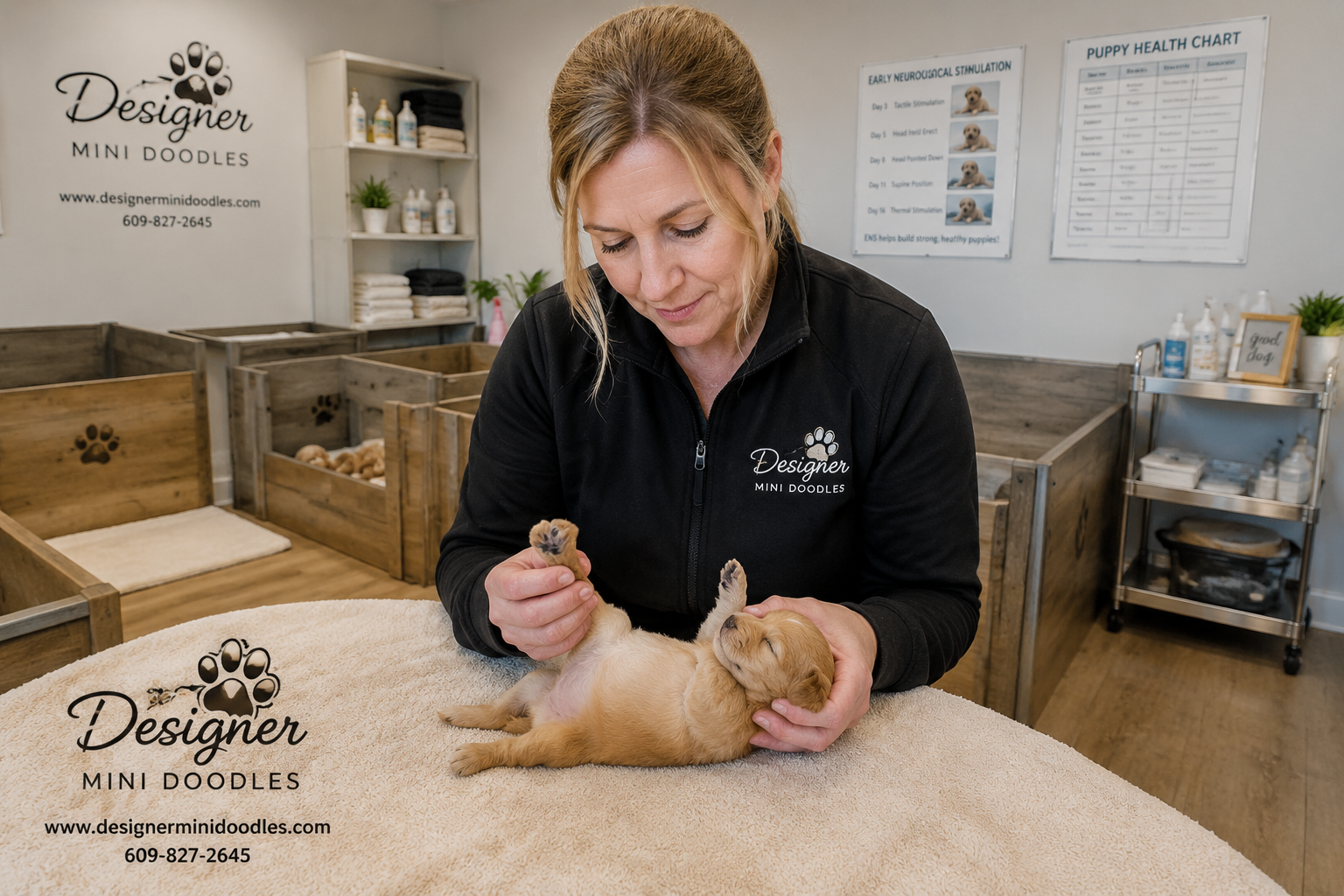
- Programs that include Early Neurological Stimulation (ENS), early crate training, and socialization produce calmer, more confident puppies.
- Tampa Bay has several adoption and rescue options, though toy-sized goldendoodles are rare in shelters.
- Reputable breeders like Designer Mini Doodles ship nationwide with dedicated puppy nanny services, so Tampa families aren’t limited to local-only options.
- First-time owners commonly underestimate grooming needs and overestimate exercise requirements for this size.
How Much Do Toy Goldendoodle Puppies Cost in Tampa?
Expect to pay between $3,000 and $6,000 for a toy goldendoodle puppy in the Tampa Bay area in 2026. Pricing depends on the breeder’s reputation, health testing protocols, generation (F1b, F2b, multigen), coat type, and color.
What drives the price up:
- Multigenerational breeding programs with proven health lines
- Rare coat colors like red, apricot, or parti
- Included training (early housebreaking, crate training, ENS)
- Health guarantees backed by OFA and genetic testing
- Breeder credentials (veterinary or biology background)
What should make you suspicious:
- Prices under $1,500 with no health testing documentation
- “Discount” litters with no parent health clearances
- Breeders who won’t let you see the facility or meet the parents
A breeder like Designer Mini Doodles, run by an animal biologist with over 15 years of breeding experience, invests heavily in genetic testing, early socialization, and puppy training before placement. That expertise is reflected in the price, but it also means fewer vet bills and behavioral issues down the road.
What’s the Difference Between Toy and Mini Goldendoodles?
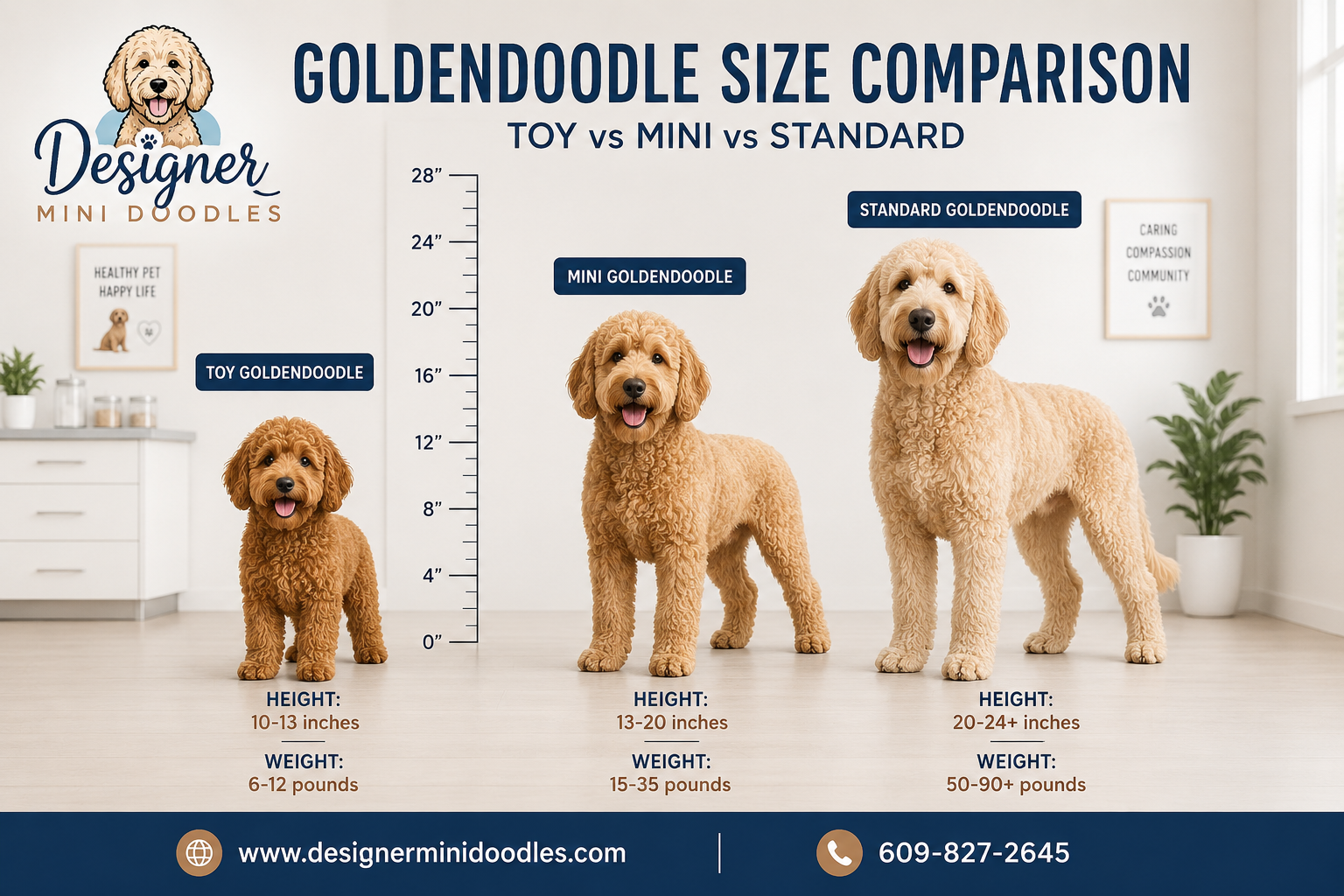
Toy goldendoodles are smaller than minis. A toy typically matures at 10 to 16 inches tall and 10 to 20 pounds, while a mini goldendoodle reaches 16 to 20 inches and 20 to 35 pounds. The difference comes down to the size of the poodle parent used in the breeding program.
| Feature | Toy Goldendoodle | Mini Goldendoodle | Standard Goldendoodle |
|---|---|---|---|
| Height | 10-16 inches | 16-20 inches | 20-24+ inches |
| Weight | 10-20 lbs | 20-35 lbs | 45-75+ lbs |
| Poodle Parent | Toy poodle | Miniature poodle | Standard poodle |
| Best For | Apartments, seniors, travel | Families, moderate spaces | Active families, large homes |
| Exercise Needs | Low to moderate | Moderate | Moderate to high |
| Lifespan | 12-16 years | 12-15 years | 10-13 years |
Some breeders also offer micro goldendoodle puppies for sale, which are even smaller than toys, typically under 10 pounds at maturity. These micro mini golden doodle puppies require specialized breeding knowledge to produce healthy, well-proportioned dogs. Not every breeder can do this responsibly.
Decision rule: Choose a toy if you live in an apartment, travel frequently, or want a dog that’s easy to carry. Choose a mini if you have kids who play rough or want a slightly sturdier companion.
How Big Do Toy Goldendoodles Get When Fully Grown?
A fully grown toy goldendoodle typically stands 10 to 16 inches at the shoulder and weighs between 10 and 20 pounds. Most reach their adult height by 8 to 10 months and fill out to their adult weight by 12 months.
Several factors influence final size:
- Generation: F1b toy goldendoodles (golden retriever/poodle cross bred back to a toy poodle) tend to be more predictable in size.
- Parent size: The single best predictor. Ask the breeder for the exact weight of both parents.
- Gender: Males tend to be 1 to 3 pounds heavier than females.
- Nutrition: Overfeeding during puppyhood can lead to excess weight but won’t change frame size.
Common mistake: Buyers assume “teacup” and “toy” are the same thing. Teacup is a marketing term, not a recognized size category. Extremely small dogs (under 5 pounds) often come with serious health risks. A well-bred toy goldendoodle in the 12 to 18 pound range is the sweet spot for health and longevity.
Are Toy Goldendoodles Good With Kids and Other Pets?
Yes, toy goldendoodles are generally excellent with children and other pets. They inherit the golden retriever’s gentle, patient temperament and the poodle’s intelligence and eagerness to please.
However, there are important caveats for families with very young children:
- Fragility: A 12-pound toy goldendoodle can be injured by a toddler who falls on them or picks them up incorrectly. Supervision is essential.
- Socialization matters more than breed: A well-socialized toy goldendoodle from a program that includes ENS (Early Neurological Stimulation) and exposure to children will be far more confident than a puppy raised in isolation.
- Multi-pet households: Toy goldendoodles typically get along well with cats and other dogs, especially when introduced young. Their small size means they’re less likely to intimidate smaller pets.
Choose a toy goldendoodle if your kids are 5+ years old and understand gentle handling. Consider a mini goldendoodle instead if you have toddlers who are still learning boundaries with animals.
Is a Toy Goldendoodle Right for Apartment Living?
Toy goldendoodles are one of the best doodle sizes for apartment living. Their compact size, moderate energy level, and adaptable temperament make them well-suited to smaller spaces, and Tampa has plenty of pet-friendly apartment communities.
Why they work in apartments:
- They need only 20 to 30 minutes of exercise per day
- They don’t require a yard (regular walks and indoor play are sufficient)
- Low-shedding coats mean less cleanup
- They’re quiet compared to many small breeds (not typically excessive barkers)
- Most Tampa apartment complexes with weight limits (25 to 35 pounds) will accept them
What to plan for:
- Consistent potty training schedule, since there’s no backyard as a safety net
- A designated crate or bed area to give them a sense of security
- Mental stimulation toys to prevent boredom-related behavior
- Regular access to a dog park or walking trail (Tampa’s Bayshore Boulevard and Curtis Hixon Park are popular options)
Puppies from programs that include early housebreaking and crate training adapt to apartment life much faster. This is one reason I recommend seeking out breeders who start this training before the puppy ever leaves the facility.

Are Toy Goldendoodles Hypoallergenic and Good for Allergies?
Toy goldendoodles are considered allergy-friendly because they typically shed very little, but no dog breed is truly 100% hypoallergenic. Allergic reactions are caused by proteins in a dog’s saliva, urine, and dander, not just loose hair.
What makes toy goldendoodles better for allergy sufferers:
- F1b and multigen toy goldendoodles with curly or wavy coats shed the least
- Smaller dogs produce less dander overall than larger dogs
- Regular grooming (every 4 to 6 weeks) significantly reduces allergens
Edge case: If you have severe allergies, spend time with a toy goldendoodle before committing. Some people with mild allergies do fine; others still react. The generation and coat type matter a lot. Ask your breeder specifically about the coat genetics of the litter.
Health Issues to Watch for in Toy Goldendoodle Puppies
The most common health concerns in toy goldendoodles include patellar luxation, progressive retinal atrophy (PRA), hip dysplasia, and certain cardiac conditions. Responsible breeders screen for these before breeding.
Health issues by priority:
- Patellar luxation – More common in toy-sized dogs. The kneecap slips out of place. Mild cases are manageable; severe cases may need surgery ($1,500 to $3,000).
- Progressive retinal atrophy (PRA) – A genetic eye condition that can lead to blindness. Completely preventable through genetic testing of parents.
- Hip dysplasia – Less common in toys than standards but still possible. OFA certification of parents reduces risk significantly.
- Von Willebrand’s disease – A blood clotting disorder inherited from the poodle side. Genetic testing identifies carriers.
- Ear infections – Floppy ears plus Tampa’s humidity create a perfect environment for infections. Clean ears weekly.
- Heat sensitivity – Tampa’s summer heat (regularly above 90 degrees F) means outdoor time should be limited to early morning and evening.
What to demand from any breeder: OFA hip and cardiac clearances, a genetic panel covering at least PRA, vWD, and DM (degenerative myelopathy), and a written health guarantee of at least two years.
Best Local Breeders for Toy Goldendoodles in Tampa, Florida
Finding reputable toy goldendoodle breeders serving Tampa requires looking beyond geography alone. The best breeders may not be physically located in Tampa but will deliver healthy, well-socialized puppies to your door through professional puppy nanny services.
What separates the best breeders:
- Credentials: Look for breeders with backgrounds in animal biology, veterinary science, or genetics. Designer Mini Doodles, for example, is run by an animal biologist who has been breeding top-quality mini and toy goldendoodle puppies for over 15 years.
- Health testing: Both parents should have OFA certifications and comprehensive genetic panels.
- Early development programs: The best programs include ENS (Early Neurological Stimulation), early socialization with children and other animals, early housebreaking, and early crate training. These produce the calmest, most affectionate, and most confident toy goldendoodle puppies.
- Transparency: Reputable breeders welcome questions, provide references, and share health documentation without hesitation.
Red flags to avoid:
- Multiple breeds available at all times (puppy mill indicator)
- No health testing documentation
- Pressure to buy immediately or put down a deposit before asking questions
- No contract or health guarantee
Tampa families should also know that puppies from top national breeders are available to go to any home in the world with dedicated puppy nanny services. You’re not limited to breeders within driving distance. A nanny will fly with your puppy directly to Tampa International Airport, ensuring a safe, stress-free journey.
If you’re also considering other small breeds, some families in Tampa explore mini French bulldog puppies for sale as an alternative compact companion.
Where Can I Adopt a Toy Goldendoodle in the Tampa Bay Area?
Adopting a toy goldendoodle in Tampa is possible but uncommon. Toy-sized goldendoodles rarely end up in shelters because of their high demand and value. When they do appear, they’re typically adopted within hours.
Places to check:
- Humane Society of Tampa Bay – Occasionally has doodle mixes, though rarely toy-sized
- SPCA Tampa Bay – Worth monitoring their online listings
- Doodle Rescue Collective – A national network that sometimes places dogs in Florida
- Petfinder.com and Adopt-a-Pet.com – Set alerts for “goldendoodle” in the Tampa zip codes (336xx)
- Local breed-specific Facebook groups – Tampa Bay Doodle Owners and similar groups sometimes post rehoming situations
Realistic expectations: Most available rescue doodles are adults, not puppies, and are more likely to be mini or standard sized. If you specifically want a toy goldendoodle puppy, purchasing from a reputable breeder like toy golden doodle puppies specialists is the more reliable path.
How Much Does It Cost to Care for a Toy Goldendoodle Annually?
Annual care costs for a toy goldendoodle in Tampa run approximately $1,500 to $3,000, depending on your choices for food, grooming, and veterinary care.
| Expense Category | Estimated Annual Cost |
|---|---|
| High-quality food | $300-$600 |
| Professional grooming (every 6 weeks) | $500-$900 |
| Veterinary care (wellness visits, vaccines) | $300-$600 |
| Flea/tick/heartworm prevention | $200-$350 |
| Pet insurance | $300-$600 |
| Toys, treats, supplies | $150-$300 |
| Boarding or pet sitting | $200-$500 |
| Total | $1,950-$3,850 |
Tampa-specific note: Heartworm prevention is non-negotiable in Florida. The warm, humid climate means mosquitoes (which transmit heartworm) are active year-round. Budget for 12 months of prevention, not just seasonal coverage.
Money-saving tip: Learning to do basic grooming (brushing, ear cleaning, nail trimming) at home between professional appointments can save $200 to $400 per year.
Typical Training Challenges With Toy Goldendoodle Puppies
Toy goldendoodles are intelligent and eager to please, which makes them highly trainable. But their small size creates a few specific challenges that catch new owners off guard.
Common training challenges:
- Housebreaking delays – Toy breeds have smaller bladders and need more frequent potty breaks. Expect the process to take 2 to 4 weeks longer than with a larger breed.
- “Small dog syndrome” – Owners tend to carry toy dogs instead of letting them walk, skip obedience training because the dog is “too small to cause problems,” and allow behaviors (jumping, barking) they’d never tolerate in a larger dog.
- Separation anxiety – Toy goldendoodles bond intensely with their owners. Without early crate training and alone-time practice, they can develop destructive anxiety behaviors.
- Leash reactivity – Small dogs often feel vulnerable on walks. Early socialization and positive exposure to other dogs and people prevent this.
The best solution is prevention. Puppies that come from breeders who start early housebreaking, crate training, and ENS (Early Neurological Stimulation) arrive with a significant head start. Designer Mini Doodles, for instance, begins all of these protocols before puppies leave for their new homes, which dramatically reduces the adjustment period.
Toy Goldendoodle vs. Standard Goldendoodle: Pros and Cons
Choosing between a toy and standard goldendoodle comes down to your living situation, activity level, and family composition.
Toy Goldendoodle Pros:
- Fits in apartments and small homes
- Lower food and medication costs
- Easier to travel with
- Longer average lifespan (12-16 years)
- Manageable for seniors and people with limited mobility
Toy Goldendoodle Cons:
- More fragile (not ideal for rough-housing toddlers)
- Housebreaking can take longer
- Higher purchase price in most cases
- Can develop “small dog” behavioral issues if not properly trained
Standard Goldendoodle Pros:
- Sturdier for active families with young children
- More hiking/running companion potential
- Generally easier to housebreak
- Lower purchase price from some breeders
Standard Goldendoodle Cons:
- Needs more space and exercise
- Higher food, grooming, and medication costs
- Shorter average lifespan
- Harder to travel with
Common Mistakes First-Time Toy Goldendoodle Owners Make
First-time toy goldendoodle owners in Tampa most commonly underestimate grooming requirements, skip crate training, and choose a breeder based on price alone.
The top mistakes I see:
- Skipping grooming between appointments. A toy goldendoodle’s coat mats quickly in Tampa’s humidity. Brush every 2 to 3 days minimum.
- No crate training. Crates aren’t cruel; they’re a safe space. Puppies from programs with early crate training transition to new homes with far less stress.
- Choosing the cheapest puppy. A $1,200 puppy from an untested breeding pair will likely cost more in vet bills than a $4,500 puppy from health-tested parents with a guarantee.
- Overfeeding. Toy goldendoodles need only 1/2 to 1 cup of food per day. Obesity is a real risk at this size.
- Skipping socialization. Tampa has excellent dog-friendly spaces. Use them early and often during the critical 8-to-16-week socialization window.
- Ignoring dental care. Small breeds are prone to dental issues. Start brushing teeth early and budget for annual dental cleanings.
Frequently Asked Questions
How long do toy goldendoodles live?
Toy goldendoodles have an average lifespan of 12 to 16 years, which is longer than standard goldendoodles due to their smaller size. Proper nutrition, regular vet care, and genetic health testing of the parents all contribute to longevity.
Do toy goldendoodles bark a lot?
Toy goldendoodles are not typically excessive barkers. They may alert bark when someone comes to the door, but they’re generally quieter than many other small breeds. Early training and adequate mental stimulation help prevent nuisance barking.
Can toy goldendoodles handle Tampa’s heat?
Yes, with precautions. Limit outdoor exercise to early morning and evening during summer months. Always provide fresh water and shade. Their smaller body mass means they can overheat faster than larger dogs, so watch for signs of heat stress.
How often do toy goldendoodles need grooming?
Professional grooming every 4 to 6 weeks, with at-home brushing every 2 to 3 days. Tampa’s humidity accelerates matting, so consistent brushing is especially important here.
Are toy goldendoodles easy to potty train?
They’re intelligent and motivated by praise, which helps. However, their small bladders mean more frequent potty breaks. Puppies from programs with early housebreaking training (like those from Designer Mini Doodles) often arrive partially trained.
What generation toy goldendoodle is best?
F1b (first generation backcross to a toy poodle) and multigen toy goldendoodles tend to have the most predictable size and coat type. F1b is the most popular choice for allergy-conscious families.
Do toy goldendoodles need a lot of exercise?
No. About 20 to 30 minutes of moderate activity per day is sufficient. A short walk plus some indoor play keeps them happy. They’re adaptable and will match your energy level.
Can I fly with a toy goldendoodle?
Yes. Most toy goldendoodles fit comfortably in airline-approved carriers that go under the seat. Their small size makes them one of the easiest doodle sizes for air travel.
What’s the difference between a micro and toy goldendoodle?
Micro goldendoodles are even smaller than toys, typically maturing under 10 pounds. They require specialized breeding expertise to produce healthy puppies. Not all breeders can responsibly produce micro-sized dogs.
How do I find a reputable toy goldendoodle breeder near Tampa?
Look for breeders who provide OFA health clearances, genetic testing results, a written health guarantee, and evidence of early socialization programs. National breeders with puppy nanny delivery services, like toy goldendoodle breeders at Designer Mini Doodles, can deliver directly to Tampa.
Conclusion
Finding the right toy golden doodle puppies in Tampa comes down to three things: choosing a reputable breeder with verified health testing, understanding the size and care requirements before you commit, and preparing your home and schedule for a small but active companion.
Your next steps:
- Decide on size. Confirm that a toy (10-20 lbs) is the right fit for your household, or consider a micro or mini if your needs differ.
- Research breeders thoroughly. Prioritize health testing, early training programs (ENS, crate training, socialization), and breeder credentials over proximity or price.
- Budget realistically. Plan for $3,000 to $6,000 upfront and $1,500 to $3,000 annually for ongoing care.
- Prepare your home. Set up a crate, stock grooming supplies, and identify your nearest Tampa vet and dog-friendly parks.
- Reach out to breeders. Contact programs like Designer Mini Doodles to ask about upcoming litters, health guarantees, and their puppy nanny delivery service to Tampa.
The toy goldendoodle is a fantastic companion for Tampa residents in apartments, condos, and houses alike. Take your time, do your homework, and you’ll be rewarded with 12 to 16 years of loyal, affectionate companionship.
References
- Orthopedic Foundation for Animals (OFA). “Health Testing Requirements.” OFA.org, 2025. https://www.ofa.org
- Goldendoodle Association of North America (GANA). “Breed Standards and Size Classifications.” GANA, 2024. https://www.goldendoodleassociation.com
- American Kennel Club. “Poodle Breed Information.” AKC.org, 2025. https://www.akc.org/dog-breeds/poodle-toy/