
toy goldendoodle breeders Florida
The best toy goldendoodle breeders in Florida combine genetic health testing, early neurological stimulation (ENS), and structured socialization to produce healthy puppies weighing 10 to 20 pounds at maturity. Expect to pay between $3,000 and $6,000 for a well-bred toy goldendoodle puppy in Florida in 2026, with price varying by coat color, generation, and breeder reputation. Programs like Designer Doodles, run by an animal biologist with over 15 years of breeding experience, set the standard for what responsible toy doodle breeding looks like in the state.
toy goldendoodle breeders Florida
- Toy goldendoodles are a cross between a golden retriever and a toy or miniature poodle, typically maturing at 10 to 20 pounds.
- Reputable toy goldendoodle breeders in Florida perform OFA hip evaluations, cardiac exams, patellar luxation checks, and DNA panels for inherited diseases before breeding.
- Florida’s warm climate and year-round outdoor lifestyle make it one of the top states for goldendoodle ownership, but heat management matters.
- A responsible breeder will show you health clearances, past litter photos, parent temperaments, and a written health guarantee.
- Early training, including crate training, housebreaking, and ENS protocols, produces calmer, more confident puppies.
- Toy goldendoodles typically live 12 to 16 years with proper care.
- Ongoing costs (food, grooming, vet care) average $1,200 to $2,500 per year for a toy-sized dog.
- Micro goldendoodle puppies (under 10 pounds) are also available from select breeders with careful downsizing programs.
- Puppies from top programs can be shipped nationwide or worldwide through dedicated puppy nanny services.
How Much Does a Toy Goldendoodle Puppy Cost in Florida?
A toy goldendoodle puppy from a reputable Florida breeder typically costs between $3,000 and $6,000 in 2026. Prices at the higher end reflect multigenerational breeding, rare coat colors (red, phantom, parti), and breeders who invest heavily in health testing and early training.
What drives the price:
- Generation: F1B and multigen toy goldendoodles cost more because breeders have more control over size, coat type, and temperament.
- Health testing: OFA certifications, genetic panels, and veterinary exams add real cost to each litter.
- Early training programs: Breeders who include ENS, early housebreaking, and crate training invest 8 to 10 weeks of hands-on work per puppy.
- Coat color and pattern: Red, apricot, and parti-colored puppies often carry a premium.
- Breeder experience: Programs led by professionals with backgrounds in animal biology or veterinary science, like Designer Doodles with over 15 years of breeding mini and toy goldendoodle puppies, command higher prices because the outcomes are more predictable.
Choose a higher-priced breeder if the program includes health guarantees, early socialization, temperament testing, and post-purchase support. The upfront cost almost always saves money on veterinary bills later.
What Health Tests Should Reputable Goldendoodle Breeders Do?
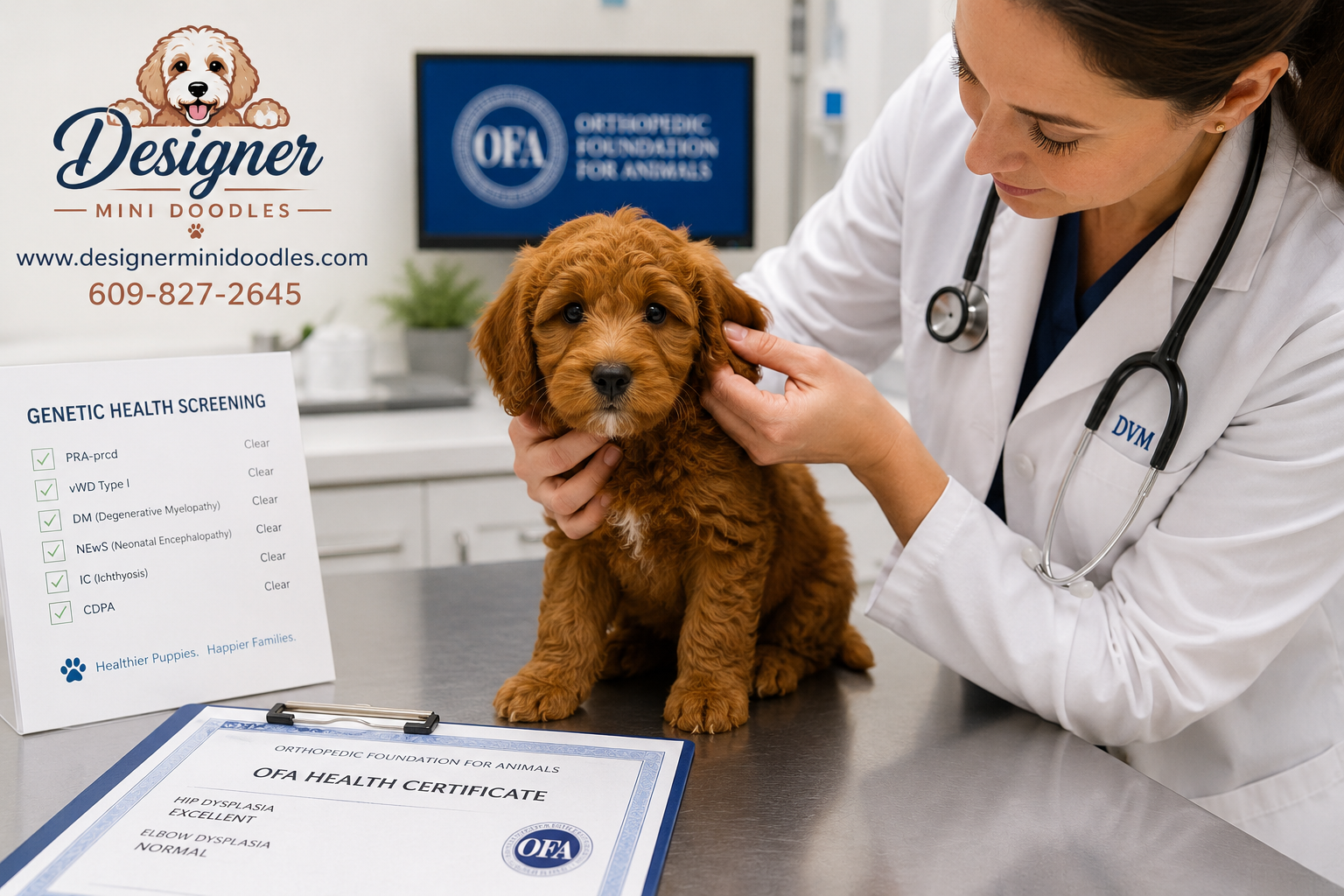
Responsible breeders test both parent dogs before any breeding takes place. At minimum, expect OFA hip and elbow evaluations, cardiac clearances, patellar luxation exams, and a comprehensive DNA panel covering conditions like progressive retinal atrophy (PRA), von Willebrand’s disease, and degenerative myelopathy.
A complete health testing protocol includes:
| Test | What It Screens For | Who Certifies It |
|---|---|---|
| OFA Hips | Hip dysplasia | Orthopedic Foundation for Animals |
| OFA Patellas | Luxating patellas | Orthopedic Foundation for Animals |
| CERF/OFA Eyes | Inherited eye diseases | OFA or board-certified ophthalmologist |
| Cardiac Exam | Heart defects | Board-certified cardiologist |
| DNA Panel | PRA, vWD, DM, ICT, and more | Embark, Paw Print Genetics, or similar lab |
Common mistake: Accepting a breeder’s verbal assurance that “the parents are healthy” without seeing actual certificates. Always ask for documentation you can verify on the OFA database (ofa.org).
Breeders like Designer Doodles, whose program is led by an animal biologist, publish health clearances for every breeding pair. This level of transparency is the baseline you should expect from any toy goldendoodle breeder in Florida.
What’s the Difference Between Toy and Mini Goldendoodles?
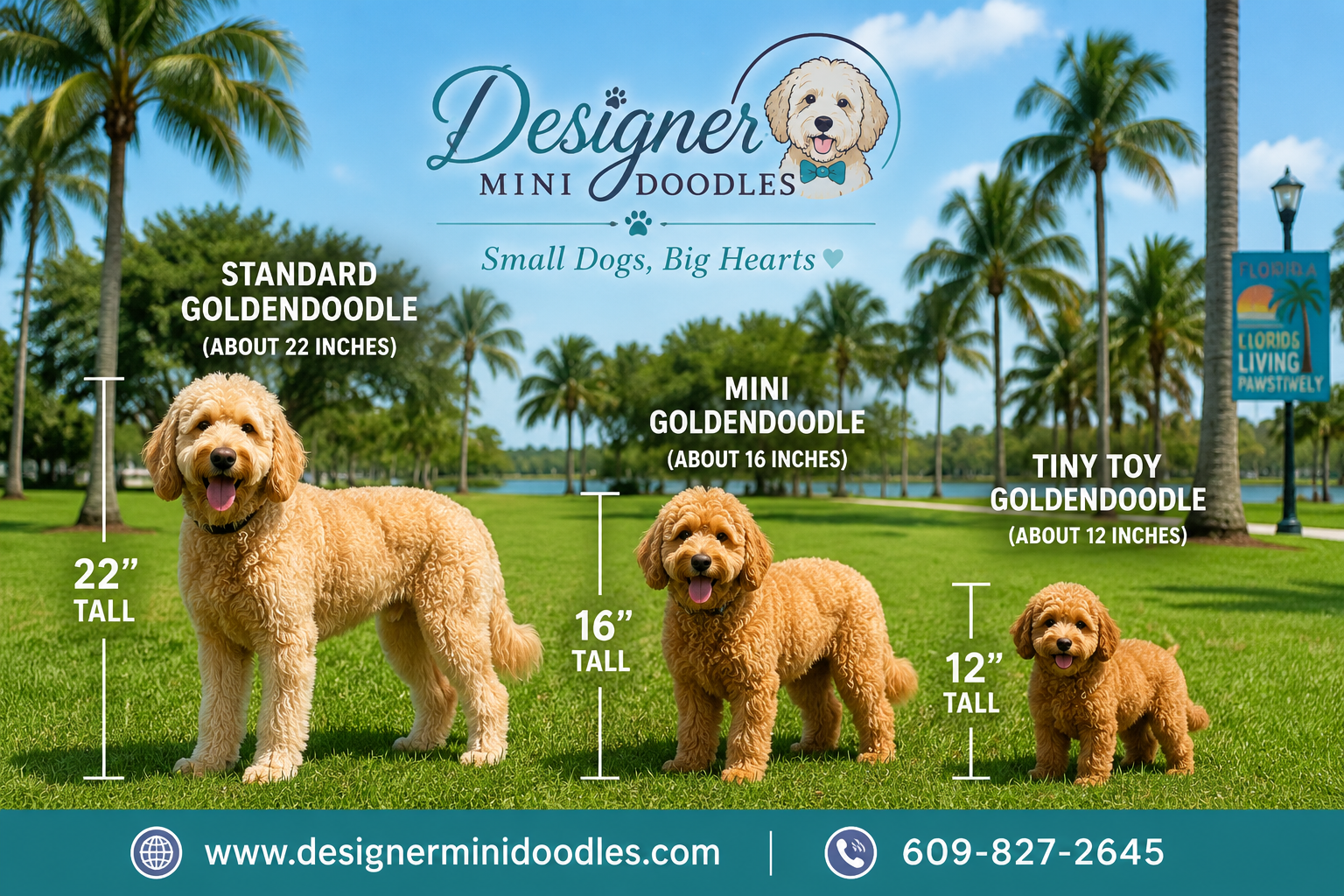
Toy goldendoodles weigh 10 to 20 pounds and stand roughly 10 to 14 inches at the shoulder. Mini goldendoodles are larger, typically 20 to 35 pounds and 14 to 17 inches tall. The difference comes down to the size of the poodle parent used in the cross.
Quick comparison:
| Feature | Toy Goldendoodle | Mini Goldendoodle |
|---|---|---|
| Weight | 10–20 lbs | 20–35 lbs |
| Height | 10–14 inches | 14–17 inches |
| Poodle parent | Toy poodle | Miniature poodle |
| Best for | Apartments, seniors, travel | Active families, larger homes |
| Exercise needs | Moderate (20–30 min/day) | Moderate-high (30–45 min/day) |
Some breeders also offer micro goldendoodle puppies for sale, which mature under 10 pounds. These require very careful breeding to avoid health complications from extreme downsizing. Only work with breeders who have a documented track record of producing healthy micro-sized dogs across multiple generations.
Choose toy if you want a true lap dog that travels easily and adapts well to apartment living. Choose mini if you want a slightly sturdier dog for hiking, running, or rougher play with older kids.
How Do Florida Goldendoodle Breeders Differ From Other States?
Florida’s climate, regulations, and buyer demand create a distinct breeding environment. The state’s warm, humid weather means responsible Florida breeders pay extra attention to heat tolerance, skin health, and coat type when selecting breeding pairs.
Key differences:
- Climate considerations: Florida breeders often favor lighter, wavier coats that manage humidity better than ultra-dense curly coats. They also socialize puppies to outdoor heat gradually.
- Year-round breeding: Florida’s mild winters allow many breeders to maintain consistent litter schedules, which means shorter wait times compared to northern states.
- Shipping and delivery: Florida is a major hub for puppy nanny services. Top programs like Designer Doodles offer dedicated puppy nanny delivery to any home in the country, and even internationally.
- State regulations: Florida requires breeders to be licensed through the Florida Department of Agriculture and Consumer Services if they sell more than a certain number of litters annually. This adds a layer of accountability that some states lack.
Edge case: If you live outside Florida, you can still buy from a Florida breeder. Dedicated puppy nanny services ensure your puppy arrives safely, with a handler who cares for the puppy throughout the entire journey rather than shipping via cargo.
Are Toy Goldendoodles Hypoallergenic and Good for Allergies?
No dog is truly 100% hypoallergenic, but toy goldendoodles are among the best breeds for allergy sufferers. Their poodle genetics produce low-shedding, often curly or wavy coats that trap dander rather than releasing it into the air.
What affects allergen levels:
- Generation matters: F1B and multigen toy goldendoodles (with more poodle in the mix) shed less and produce fewer allergens than F1 crosses.
- Coat type: Curly coats shed the least. Wavy coats are a middle ground. Straight or flat coats shed more and are less suitable for allergy sufferers.
- Grooming frequency: Regular brushing (3 to 4 times per week) and professional grooming every 6 to 8 weeks keeps dander under control.
Decision rule: If allergies are your primary concern, request an F1B or multigen puppy with a curly coat from your breeder. Spend time with the puppy before committing if possible, since individual reactions vary.
Common Health Problems in Toy Goldendoodles
Toy goldendoodles are generally healthy dogs, but their small size and hybrid genetics make them susceptible to certain conditions. Knowing these in advance helps you choose a breeder who tests for them and plan for preventive care.
Most common issues:
- Patellar luxation: The kneecap slips out of place, common in toy-sized dogs. Reputable breeders screen for this.
- Progressive retinal atrophy (PRA): A genetic eye condition that can cause blindness. Easily avoided through DNA testing of parents.
- Hip dysplasia: Less common in toy sizes than standards, but still worth screening for.
- Ear infections: Floppy ears plus Florida humidity create a perfect environment for yeast and bacteria. Weekly ear cleaning is essential.
- Allergies and skin issues: Some toy goldendoodles develop food or environmental allergies. Florida’s pollen and mold counts can aggravate these.
- Dental crowding: Small mouths mean teeth are packed tightly, increasing the risk of periodontal disease. Start dental care early.
How long do toy goldendoodles typically live? With proper care and good genetics, toy goldendoodles live 12 to 16 years. Smaller dogs generally outlive larger ones, and health-tested parents produce puppies with fewer inherited conditions.
How to Spot a Backyard Breeder vs. a Responsible Breeder
A responsible breeder invests in health testing, early socialization, and lifetime support. A backyard breeder prioritizes volume and profit over puppy welfare. The difference shows up in the health and temperament of the dog you bring home.
Signs of a responsible breeder:
- Provides OFA and DNA health clearances for both parents
- Welcomes questions and offers references from past buyers
- Raises puppies in a home environment, not a kennel or barn
- Begins ENS (Early Neurological Stimulation) between days 3 and 16
- Starts early housebreaking and crate training before puppies go home
- Offers a written health guarantee (typically 2 years for genetic conditions)
- Has a contract requiring you to return the dog to them if you can’t keep it
Red flags to watch for when buying a goldendoodle puppy:
- No health testing documentation available
- Multiple breeds always available with no wait list
- Unwillingness to let you meet parent dogs or see the facility
- No contract or health guarantee
- Pressure to buy immediately or put down a non-refundable deposit before asking questions
- Prices significantly below market rate (under $1,500 for a toy goldendoodle in 2026 is a warning sign)
- No references from previous puppy families
Programs like Designer Doodles stand apart because their breeding program is led by an animal biologist who has spent over 15 years refining their approach to producing the calmest, most affectionate, and most confident toy goldendoodle puppies in the country.
Are Toy Goldendoodles Good With Kids and Other Pets?
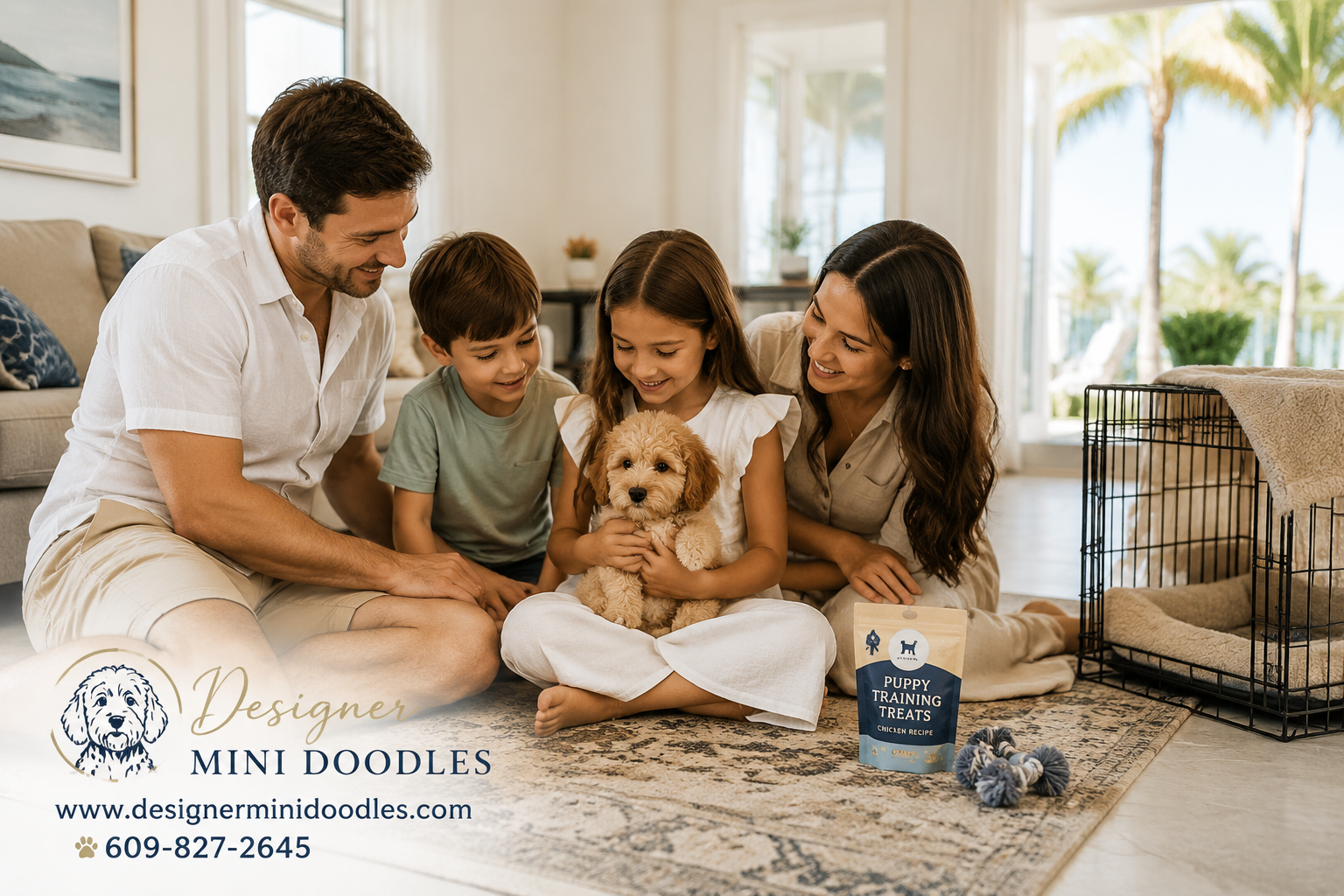
Yes. Toy goldendoodles are known for their gentle, affectionate temperament, which makes them excellent family dogs. They bond closely with children and generally get along well with other pets, including cats.
Important caveats:
- Supervise young children. Toy goldendoodles are small and can be injured by rough handling from toddlers. Teach children to be gentle.
- Early socialization matters. Puppies exposed to children, other dogs, and cats during their first 12 weeks adapt much better to multi-pet households.
- Temperament varies by breeder. Breeders who perform temperament testing and match puppies to families produce better outcomes than those who let buyers pick based on color alone.
Choose a toy goldendoodle for your family if you want a dog that’s affectionate without being hyperactive, small enough for kids to walk, and social enough to coexist with other pets.
How Much Do Toy Goldendoodle Puppies Eat and Cost to Maintain?
A toy goldendoodle eats roughly 1/2 to 1 cup of high-quality dry food per day, split into two meals. Annual maintenance costs are lower than larger breeds but still add up.
Estimated annual costs:
| Expense | Estimated Annual Cost |
|---|---|
| Food (premium kibble) | $300–$600 |
| Grooming (every 6–8 weeks) | $400–$800 |
| Veterinary care (routine) | $300–$500 |
| Flea/tick/heartworm prevention | $150–$300 |
| Toys, treats, supplies | $100–$300 |
| Total | $1,250–$2,500 |
Cost-saving tip: Invest in a good slicker brush and learn to maintain your dog’s coat between professional grooming appointments. This can cut grooming costs by 30 to 40%.
What Training Do Toy Goldendoodle Puppies Need Early On?
Start training the day your puppy comes home. Toy goldendoodles are intelligent and eager to please, which makes them highly trainable, but small dogs can develop “small dog syndrome” if owners skip structure.
Essential early training:
- Crate training: Start immediately. A crate-trained puppy is easier to housebreak and travels better.
- Housebreaking: Take the puppy out every 1 to 2 hours, after meals, and after naps. Toy breeds have small bladders, so consistency is critical.
- Basic obedience: Sit, stay, come, and leash walking should begin by 8 to 10 weeks.
- Socialization: Expose your puppy to different people, sounds, surfaces, and environments between 8 and 16 weeks. This window is critical for building confidence.
- Bite inhibition: Teach gentle mouth behavior early. Redirect nipping to appropriate toys.
The best toy goldendoodle breeders in Florida, including Designer Doodles, begin ENS protocols, early crate training, and housebreaking before puppies leave for their new homes. This head start makes the transition dramatically easier for new owners.
Can I See Pictures of Past Litters From Florida Goldendoodle Breeders?
Absolutely, and you should insist on it. Reputable breeders maintain photo galleries of past litters, often showing puppies at various ages from birth through adulthood. This gives you a realistic picture of what your puppy will look like as it grows.
What to look for in past litter photos:
- Consistent size and coat quality across litters
- Healthy, bright-eyed puppies in clean environments
- Photos of adult dogs from previous litters (confirms size predictions)
- Variety of settings showing socialization (outdoors, with children, with other dogs)
Many top breeders also share video updates and maintain active social media accounts. Toy golden doodle puppies from established programs like Designer Doodles are well-documented, with families frequently sharing updates of their dogs well into adulthood.
If a breeder can’t or won’t show you past litter photos, that’s a significant red flag. Move on.
Looking for Other Small Breed Puppies?
If you’re also considering other compact companion breeds, mini French bulldog puppies for sale offer a different but equally appealing option for Florida families who want a small, low-energy house dog.
Frequently Asked Questions
How big do toy goldendoodles get?
Toy goldendoodles typically reach 10 to 20 pounds and 10 to 14 inches tall at the shoulder when fully grown. Micro goldendoodles, a smaller variant, may stay under 10 pounds.
Are toy goldendoodles easy to potty train?
Yes, especially if the breeder starts early housebreaking. Their intelligence and desire to please make them responsive to consistent training routines. Expect full housebreaking by 4 to 6 months.
Do toy goldendoodles bark a lot?
They can be vocal if bored or under-socialized, but they’re not considered excessive barkers. Early training and adequate mental stimulation keep barking in check.
Can I get a toy goldendoodle shipped to me from Florida?
Yes. Top Florida breeders offer dedicated puppy nanny services that hand-deliver puppies to homes anywhere in the United States and internationally. This is safer and less stressful than cargo shipping.
What generation of toy goldendoodle is best?
F1B and multigen toy goldendoodles offer the most predictable size, coat type, and temperament. F1B is the most popular choice for allergy sufferers because of its higher poodle content.
Do toy goldendoodles need a lot of exercise?
They need moderate exercise, roughly 20 to 30 minutes of walking or play per day. They’re adaptable to apartment living but still enjoy outdoor time.
How often do toy goldendoodles need grooming?
Professional grooming every 6 to 8 weeks, with brushing at home 3 to 4 times per week to prevent matting. Florida’s humidity can cause mats to form faster.
What colors do toy goldendoodles come in?
Common colors include cream, apricot, red, chocolate, black, phantom, and parti. Red and apricot are the most popular and often carry a price premium.
Is a toy goldendoodle a good first dog?
Yes. Their friendly temperament, trainability, and manageable size make them one of the best choices for first-time dog owners.
What’s the difference between a toy goldendoodle and a toy labradoodle?
The golden retriever parent is the key difference. Toy goldendoodles use a golden retriever cross, producing a typically softer, more people-oriented temperament. Toy labradoodles use a Labrador retriever, which can result in a slightly higher energy level.
Do toy goldendoodles have separation anxiety?
They can, because they bond closely with their families. Crate training and gradual alone-time conditioning from puppyhood helps prevent this.
When is a toy goldendoodle fully grown?
Most toy goldendoodles reach their full adult size by 10 to 12 months, though they may continue to fill out slightly until 14 to 16 months.
Conclusion
Finding the right toy goldendoodle breeder in Florida comes down to verifying health testing, evaluating the breeder’s training protocols, and confirming transparency through past litter documentation and references. Don’t cut corners on breeder quality to save a few hundred dollars upfront; the long-term health and temperament of your puppy depend on the decisions made before it was even born.
Your next steps:
- Research breeders who provide full OFA and DNA health clearances for parent dogs.
- Ask about ENS, early crate training, and housebreaking programs.
- Request photos and references from past litter families.
- Visit Designer Doodles to see what a top-tier toy goldendoodle breeding program looks like, backed by over 15 years of experience and led by an animal biologist.
- If you’re outside Florida, ask about puppy nanny delivery options to get your new companion home safely.
A well-bred toy goldendoodle from a responsible Florida breeder will be a loyal, low-shedding, family-friendly companion for the next 12 to 16 years. Take the time to choose wisely.
References
- Orthopedic Foundation for Animals. “OFA Health Testing Database.” Accessed 2026. https://ofa.org
- American Kennel Club. “Goldendoodle: Dog Breed Information.” 2025. https://www.akc.org
- Goldendoodle Association of North America. “GANA Health Testing Requirements.” 2024. https://www.goldendoodleassociation.com