

Toy goldendoodle breeders Jacksonville
Finding reputable toy goldendoodle breeders in Jacksonville requires vetting for health testing, breeding practices, and early socialization programs. The best breeders in the Jacksonville area typically charge between $3,000 and $6,000 for a toy goldendoodle puppy, with waitlists ranging from a few weeks to several months. Buyers in Jacksonville also have access to top-tier national breeders like Designer Doodles, which ships puppies safely to any home through a dedicated puppy nanny service.
Toy goldendoodle breeders Jacksonville
- Toy goldendoodles typically weigh 10 to 25 pounds fully grown, making them ideal for Jacksonville apartments and smaller homes.
- Reputable breeders conduct OFA hip and elbow evaluations, cardiac exams, patellar luxation checks, and genetic panel testing before breeding.
- Designer Doodles, run by an animal biologist with over 15 years of breeding experience, operates one of the most respected toy and mini goldendoodle programs in the country.
- Toy goldendoodles are low-shedding but not truly hypoallergenic; allergy sufferers should spend time with a puppy before committing.
- Red flags include breeders who won’t share health test results, offer multiple breeds simultaneously, or have puppies available immediately with no waitlist.
- Early Neurological Stimulation (ENS), crate training, and housebreaking programs produce calmer, more confident puppies.
- Jacksonville buyers can receive puppies from top national breeders via professional puppy nanny delivery services.
- Toy goldendoodles are excellent family dogs, generally doing well with children and other pets when properly socialized.
What’s the Difference Between Toy and Mini Goldendoodles?
Toy goldendoodles and mini goldendoodles are closely related but differ primarily in size. A toy goldendoodle typically stands under 14 inches at the shoulder and weighs between 10 and 25 pounds when fully grown. A mini goldendoodle is slightly larger, usually ranging from 25 to 45 pounds and standing 14 to 17 inches tall.
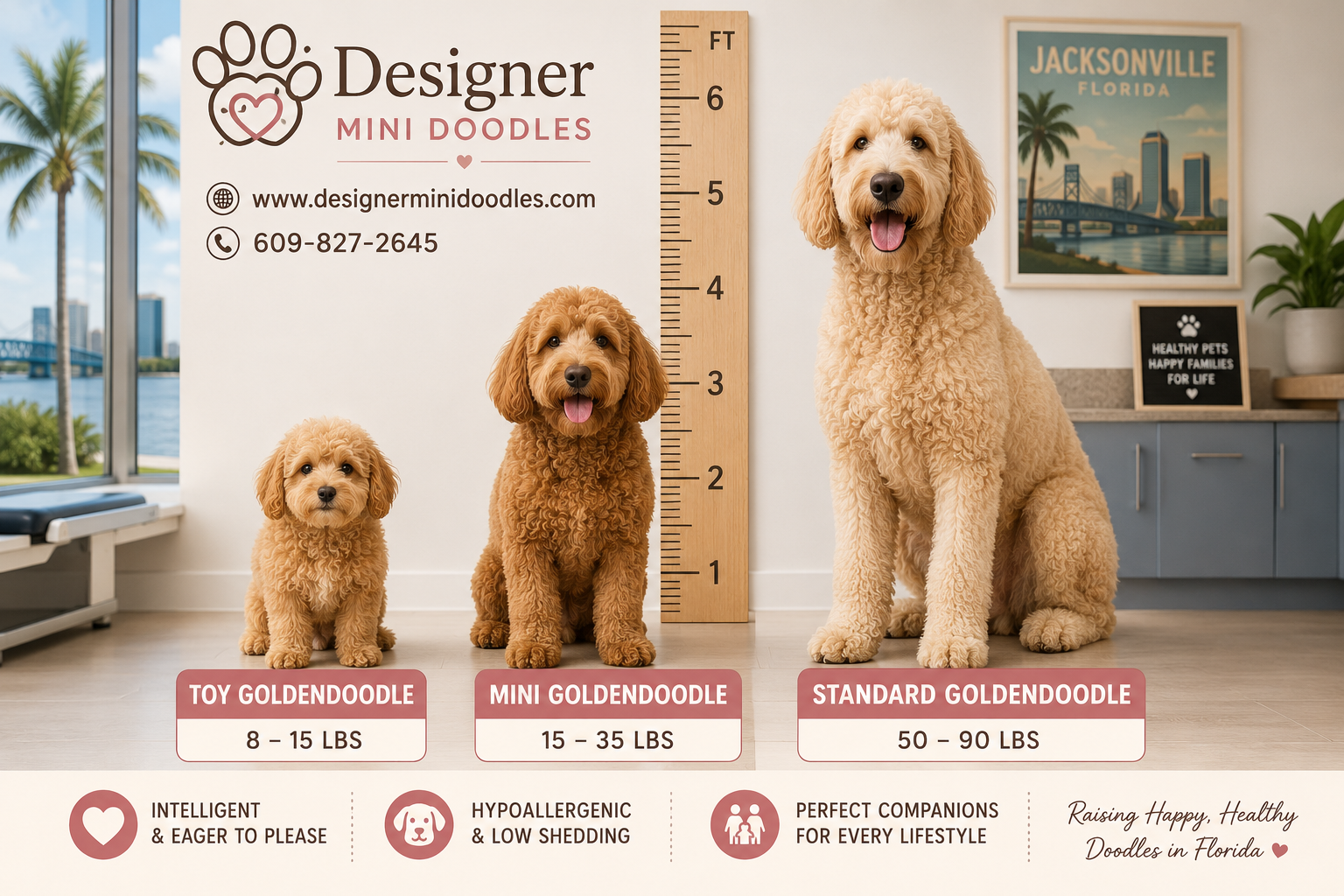
The size difference comes down to the poodle parent. Toy goldendoodles are bred from toy poodles crossed with golden retrievers (or smaller goldendoodle parents in multigenerational breedings), while minis use miniature poodles. Here’s a quick comparison:
| Feature | Toy Goldendoodle | Mini Goldendoodle |
|---|---|---|
| Adult Weight | 10-25 lbs | 25-45 lbs |
| Height | Under 14 inches | 14-17 inches |
| Poodle Parent Size | Toy poodle | Miniature poodle |
| Best For | Apartments, seniors, small spaces | Families with yards, active owners |
| Exercise Needs | Moderate (20-30 min/day) | Moderate-high (30-60 min/day) |
Some breeders also offer micro goldendoodle puppies for sale, which are even smaller than the toy category, typically under 10 pounds fully grown. These micro goldendoodles are produced through careful multigenerational breeding and are popular among Jacksonville buyers who want the smallest possible doodle.
Choose a toy goldendoodle if you live in a Jacksonville condo or apartment, travel frequently, or want a dog that’s easy to carry. Choose a mini if you want a slightly sturdier dog for an active household.
How Much Does a Toy Goldendoodle Puppy Cost in Jacksonville?
Expect to pay between $3,000 and $6,000 for a toy goldendoodle puppy from a reputable breeder serving the Jacksonville area. Pricing varies based on the breeder’s reputation, the puppy’s generation (F1, F1B, multigenerational), coat color, and the level of early training included.
Here’s what drives the price range:
- Coat color: Red, apricot, and parti-colored toy goldendoodles often command higher prices than cream or golden coats.
- Generation: Multigenerational (multigen) puppies from established breeding lines tend to cost more because their size and coat type are more predictable.
- Training included: Breeders who invest in ENS, early housebreaking, and crate training charge more, but you’re getting a puppy that’s significantly easier to bring home.
- Health testing: Comprehensive genetic and orthopedic testing adds to the breeder’s costs, which is reflected in the puppy price.
Common mistake: Choosing a $1,000 puppy from an unvetted source to save money. Buyers who go this route often spend far more on veterinary bills within the first two years due to genetic health problems that proper screening would have caught.
Breeders like Designer Doodles invest heavily in health testing, early socialization, and professional training programs, which is why their toy goldendoodle puppies are priced to reflect that quality. Their puppies ship nationwide via a puppy nanny service, so Jacksonville families aren’t limited to local options.
What Health Tests Do Reputable Goldendoodle Breeders Do?
Reputable toy goldendoodle breeders in Jacksonville and nationwide should perform a minimum of four to six health screenings on all breeding dogs before producing a litter. These tests are non-negotiable for any breeder claiming to prioritize puppy health.
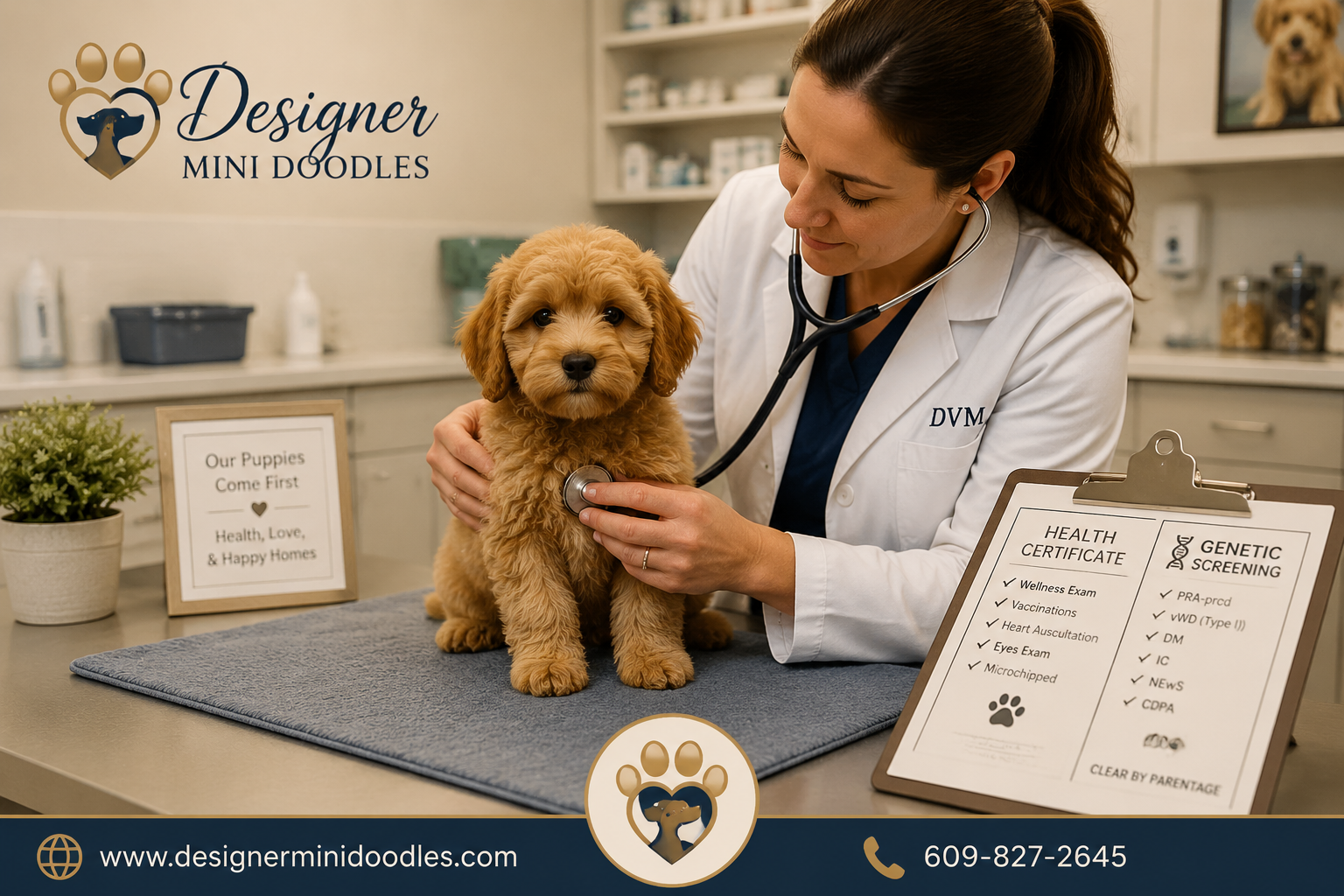
Required health tests for breeding parents include:
- OFA Hip Evaluation — screens for hip dysplasia, which can affect even small breeds
- OFA Patellar Luxation Exam — checks for kneecap displacement, common in toy-sized dogs
- Cardiac Examination — screens for congenital heart defects
- Ophthalmologist (CERF/OFA Eye) Exam — checks for progressive retinal atrophy and other inherited eye conditions
- Genetic Panel Testing — screens for von Willebrand’s disease, degenerative myelopathy, ichthyosis, and other breed-relevant conditions via DNA testing
- PennHIP or OFA Elbow Evaluation — additional orthopedic screening
A breeder who refuses to share these results or claims “the vet said they’re healthy” without documentation is not meeting the standard. Designer Doodles, founded and run by an animal biologist, has maintained rigorous health testing protocols for over 15 years, which is one reason their breeding program consistently produces healthy toy and mini goldendoodle puppies.
Ask every breeder for: copies of OFA certificates (searchable on the OFA public database), genetic panel results from a lab like Embark or Paw Print Genetics, and a written health guarantee of at least two years.
Common Health Problems in Toy Goldendoodles
Toy goldendoodles are generally healthy dogs with lifespans of 12 to 16 years, but they can be prone to certain conditions. The most common health issues include patellar luxation, hip dysplasia, progressive retinal atrophy (PRA), ear infections, and allergies.
Conditions to be aware of:
- Patellar luxation — the kneecap slips out of place; more common in toy-sized dogs. Mild cases may not need treatment, but severe cases can require surgery ($1,500-$3,000 per knee).
- Progressive retinal atrophy — a genetic eye condition that can lead to blindness. Proper genetic testing of parents eliminates this risk.
- Ear infections — floppy ears trap moisture, especially in Jacksonville’s humid climate. Regular ear cleaning prevents most infections.
- Hip dysplasia — less common in toys than standards, but still possible. OFA screening of parents reduces risk significantly.
- Allergies and skin issues — can manifest as itching, hot spots, or digestive problems. Often manageable with diet adjustments.
- Addison’s disease — an adrenal gland disorder inherited from the poodle side. Genetic testing can identify carriers.
Edge case for Jacksonville buyers: Florida’s heat and humidity increase the risk of ear infections and skin irritation. Keep your toy goldendoodle’s ears dry after swimming or baths, and consider a shorter grooming clip during summer months.
How to Find Ethical Toy Goldendoodle Breeders Near Jacksonville
The most reliable way to find ethical toy goldendoodle breeders in Jacksonville is to look for breeders who health-test all breeding dogs, allow buyer visits or provide video tours, offer written health guarantees, and maintain transparent communication about their breeding program.
Steps to vet a breeder:
- Check health testing records. Search the OFA database for the breeder’s dogs by registered name.
- Ask about socialization protocols. The best breeders use Early Neurological Stimulation (ENS) and expose puppies to household sounds, surfaces, and handling from birth.
- Request references. Talk to previous buyers about their experience and their puppy’s health.
- Visit or video call. See where the puppies are raised. Puppies should be raised in a home environment, not a kennel.
- Review the contract. A good breeder’s contract includes a health guarantee, spay/neuter requirements, and a return policy if you can’t keep the dog.
Jacksonville buyers aren’t limited to local breeders. National programs like Designer Doodles deliver puppies to any home in the world through their dedicated puppy nanny service. Their program, led by an animal biologist, has been producing some of the best quality mini and toy goldendoodle puppies in America for over a decade and a half. Every puppy goes through ENS, early housebreaking, and early crate training, resulting in the calmest, most affectionate, and most confident toy golden doodle puppies available.
Red Flags to Watch Out for When Buying a Goldendoodle Puppy
Not every breeder advertising toy goldendoodle puppies in Jacksonville is operating ethically. Knowing the warning signs can save you thousands of dollars and significant heartbreak.
Major red flags:
- No health testing documentation. If a breeder can’t produce OFA certificates or genetic panel results, walk away.
- Multiple breeds available at once. A breeder offering goldendoodles, Labradoodles, cockapoos, and five other breeds is likely a puppy mill or broker.
- Puppies always available. Reputable breeders have waitlists. If a breeder always has puppies ready to go, they’re overbreeding.
- No contract or health guarantee. Ethical breeders protect their puppies with legally binding agreements.
- Pressure to buy quickly. Phrases like “someone else is interested” or “price goes up tomorrow” are sales tactics, not breeding practices.
- Won’t let you see the parents or facility. Even remote breeders should offer video tours and photos of the dam and sire.
- Prices far below market rate. A $500 toy goldendoodle almost certainly comes from a breeder who cut corners on health testing and care.
- No questions asked of you. Good breeders interview buyers to ensure their puppies go to suitable homes.
Decision rule: If a breeder checks more than two of these boxes, find someone else. Your puppy’s long-term health depends on the decisions made before they were born.
Are Toy Goldendoodles Good With Kids and Other Pets?
Yes, toy goldendoodles are typically excellent with children and other pets. They inherit the golden retriever’s gentle, patient temperament and the poodle’s intelligence and eagerness to please, making them one of the best small companion breeds for families.
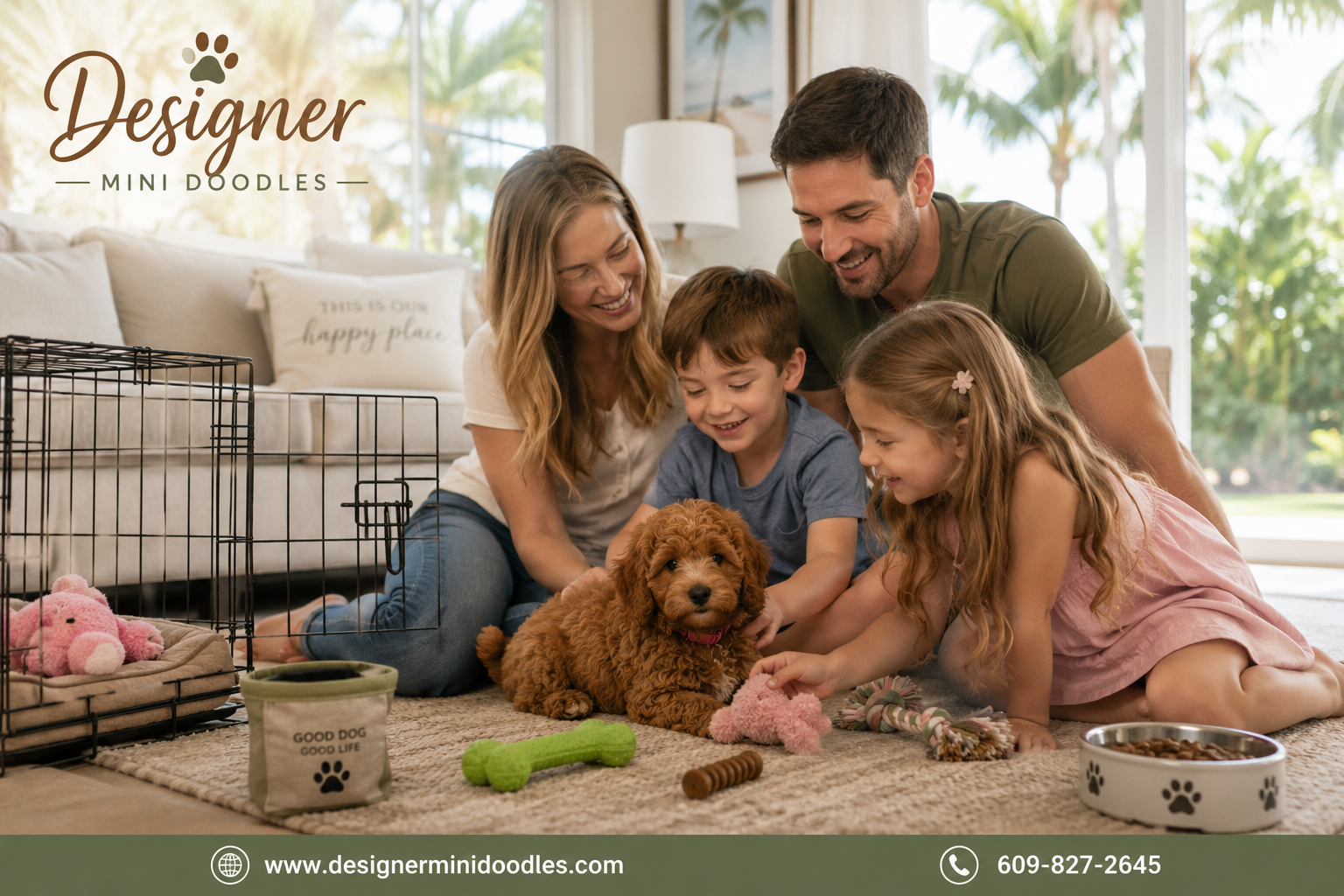
Important considerations for families:
- Toy goldendoodles are small and can be accidentally injured by very young children. Supervise interactions with toddlers and teach kids to handle the puppy gently.
- Properly socialized toy goldendoodles get along well with cats, other dogs, and even smaller pets.
- Puppies from breeders who use ENS and early socialization tend to be more confident and less reactive around children and other animals.
- Toy goldendoodles bond strongly with their families and can develop separation anxiety if left alone for extended periods.
Choose a toy goldendoodle for your family if your children are old enough to understand gentle handling (typically age 5+), you’re home frequently, and you want a dog that actively seeks affection and companionship.
If you’re also considering other small companion breeds, you might explore mini French bulldog puppies for sale as another family-friendly option.
Are Goldendoodles Hypoallergenic for People With Allergies?
Toy goldendoodles are low-shedding, but no dog is truly 100% hypoallergenic. People with mild to moderate pet allergies often do well with toy goldendoodles, especially those with curlier, more poodle-like coats. However, allergic reactions are triggered by proteins in dog saliva, urine, and dander, not just fur.
What affects allergen levels:
- Coat type matters. Curly coats (more poodle-like) trap dander and shed less. Wavy or straight coats release more allergens.
- Generation matters. F1B and multigenerational toy goldendoodles tend to have curlier coats and are better suited for allergy sufferers.
- Individual variation. Two toy goldendoodles from the same litter can affect an allergic person differently.
Practical advice: If allergies are a concern, ask the breeder about coat type predictions and spend time with the specific puppy before committing. Regular grooming every 4 to 6 weeks also significantly reduces dander in your home.
Do Toy Goldendoodles Shed a Lot?
Toy goldendoodles are among the lowest-shedding dog breeds, which is a primary reason they’re so popular. Most toy goldendoodles shed minimally or not at all, though the amount depends on their coat type and generation.
- Curly coats (most common in F1B and multigen): virtually no shedding
- Wavy coats (common in F1 crosses): light shedding
- Straight coats (less common): moderate shedding, similar to a golden retriever
Regular brushing two to three times per week prevents matting and keeps loose hair contained. Professional grooming every 4 to 8 weeks is essential for all coat types.
How Big Do Toy Goldendoodles Get When Fully Grown?
A fully grown toy goldendoodle typically weighs between 10 and 25 pounds and stands under 14 inches tall at the shoulder. Most reach their adult size by 10 to 12 months of age, though they may continue filling out slightly until 14 to 16 months.
Micro goldendoodle puppies, an even smaller variety, may mature at under 10 pounds. These are produced through selective multigenerational breeding and are available from specialized programs like Designer Doodles.
Factors that affect adult size:
- Size of the poodle parent (toy vs. small miniature)
- Generation (multigenerational breedings produce more predictable sizes)
- Gender (males tend to be slightly larger)
- Individual genetics
Average Wait Time for a Toy Goldendoodle Puppy From a Breeder
Most reputable toy goldendoodle breeders in Jacksonville and nationwide have waitlists ranging from 2 to 6 months. Some highly sought-after programs may have waits of 6 to 12 months, especially for specific coat colors or micro-sized puppies.
How to manage the wait:
- Place a deposit early. Most breeders require $500 to $1,000 to hold your spot.
- Be flexible on color and gender. Specific preferences extend your wait.
- Use the waiting period to puppy-proof your home, buy supplies, and research training methods.
- Ask the breeder for regular updates and photos as the litter develops.
A waitlist is actually a good sign. It means the breeder isn’t overproducing puppies and is matching each puppy to the right family.
Best Food and Care for Toy Goldendoodle Puppies
Feed toy goldendoodle puppies a high-quality, small-breed puppy food with animal protein as the first ingredient. Puppies should eat three meals per day until about six months of age, then transition to twice daily.
Recommended feeding guidelines:
- Choose a food formulated for small breeds (smaller kibble size, appropriate calorie density)
- Look for named protein sources (chicken, salmon, lamb) rather than generic “meat meal”
- Avoid grain-free diets unless directed by your veterinarian, as the FDA has investigated a potential link between grain-free diets and heart disease in dogs
- Provide fresh water at all times
- Monitor weight closely; toy breeds can become overweight quickly
Essential care beyond food:
- Grooming: Brush 2-3 times per week, professional grooming every 4-8 weeks
- Dental care: Small breeds are prone to dental issues; brush teeth regularly and provide dental chews
- Exercise: 20-30 minutes of daily activity plus play sessions
- Veterinary care: Follow your vet’s vaccination and parasite prevention schedule, especially important in Jacksonville’s warm climate where fleas, ticks, and heartworm are year-round concerns
Training Tips for New Toy Goldendoodle Owners
Toy goldendoodles are highly intelligent and eager to please, making them one of the easiest small breeds to train. Start training on day one, using positive reinforcement methods exclusively.
Essential training priorities:
- Housebreaking — Take your puppy outside every 1-2 hours, after meals, and after naps. Puppies from breeders who start early housebreaking (like Designer Doodles) will already understand the basics.
- Crate training — A crate should be a safe, positive space. Puppies with early crate training exposure adapt much faster.
- Basic commands — Start with “sit,” “stay,” “come,” and “leave it” using small, high-value treats.
- Socialization — Expose your puppy to different people, sounds, surfaces, and environments between 8 and 16 weeks. Jacksonville’s dog-friendly parks and beaches are great for this.
- Bite inhibition — Redirect nipping to appropriate chew toys and end play sessions when biting occurs.
Common training mistake: Being inconsistent with rules. If the puppy isn’t allowed on the couch, everyone in the household needs to enforce that rule every time.
Puppies from Designer Doodles’ toy goldendoodle breeders program arrive with a significant head start. Their ENS protocol, combined with early housebreaking and crate training, produces puppies that are calmer, more confident, and more adaptable than puppies raised without these interventions.
FAQ
How long do toy goldendoodles live?
Toy goldendoodles typically live 12 to 16 years, with some reaching 17 or 18 years with excellent care. Smaller dogs generally live longer than larger breeds.
Can I get a toy goldendoodle puppy delivered to Jacksonville?
Yes. National breeders like Designer Doodles offer dedicated puppy nanny services that deliver puppies safely to any home in Jacksonville, across the United States, or internationally.
Do toy goldendoodles bark a lot?
Toy goldendoodles are moderate barkers. They may alert bark when someone comes to the door but are not typically excessive barkers. Proper training and adequate exercise reduce unnecessary barking.
Are toy goldendoodles easy to potty train?
Yes, toy goldendoodles are among the easier breeds to housebreak due to their intelligence and desire to please. Puppies with early housebreaking exposure from the breeder learn even faster.
What generation of toy goldendoodle is best?
F1B (75% poodle, 25% golden retriever) and multigenerational toy goldendoodles are best for allergy sufferers and those wanting predictable size and coat type. F1 crosses offer more genetic diversity.
How often do toy goldendoodles need grooming?
Professional grooming every 4 to 8 weeks, with at-home brushing 2 to 3 times per week. Skipping grooming leads to painful matting.
Can toy goldendoodles handle Jacksonville’s heat?
Yes, with precautions. Avoid walks during peak heat (10 a.m. to 4 p.m. in summer), provide plenty of water, and keep their coat trimmed short. Never leave any dog in a parked car.
Do toy goldendoodles need a yard?
No. Toy goldendoodles adapt well to apartment living as long as they get daily walks and play sessions. Their small size makes them ideal for Jacksonville condos and townhomes.
What colors do toy goldendoodles come in?
Common colors include cream, apricot, red, chocolate, black, parti (two-tone), and phantom (tan points on a darker base). Red and apricot are the most popular.
Is a male or female toy goldendoodle better?
Both make excellent pets. Males tend to be slightly larger and sometimes more affectionate, while females may mature faster and be slightly easier to train. Individual personality matters more than gender.
How do I know if a breeder is a puppy mill?
Puppy mills typically have many breeds available, no health testing, always have puppies in stock, and prioritize sales over screening buyers. If a breeder won’t answer detailed questions about their program, look elsewhere.
What’s the difference between a toy goldendoodle and a micro goldendoodle?
Micro goldendoodles are the smallest variety, typically under 10 pounds fully grown, while toy goldendoodles range from 10 to 25 pounds. Both are produced through selective breeding with toy poodle lines.
Conclusion
Finding the right toy goldendoodle breeders in Jacksonville comes down to doing your homework. Prioritize breeders who health-test all breeding dogs, invest in early socialization and training, and are transparent about their program. Don’t let a lower price tag tempt you into skipping due diligence.
Your next steps:
- Decide whether a toy, micro, or mini goldendoodle best fits your lifestyle and living situation.
- Research breeders using the vetting steps outlined above, checking OFA records and requesting references.
- Contact reputable programs like Designer Doodles to learn about available and upcoming litters.
- Place a deposit and use the waitlist period to prepare your home, purchase supplies, and line up a local Jacksonville veterinarian.
- Arrange delivery through a puppy nanny service if working with a national breeder.
The right toy goldendoodle puppy, from a breeder who does things the right way, will be a healthy, happy companion for the next 12 to 16 years. Take your time, ask the hard questions, and invest in quality from the start.
References
- Orthopedic Foundation for Animals (OFA). “Search OFA Records.” ofa.org. Accessed 2026.
- Goldendoodle Association of North America (GANA). “Breed Standards and Health Testing Requirements.” goldendoodleassociation.com. Accessed 2026.
- U.S. Food and Drug Administration. “FDA Investigation into Potential Link Between Certain Diets and Canine Dilated Cardiomyopathy.” fda.gov. 2019.