
toy doodles for sale Florida
Quick Answer: Toy doodles for sale in Florida typically range from $2,500 to $5,000+ depending on the breeder’s reputation, health testing, coat color, and generation. The best toy goldendoodle breeders invest in genetic health screening, early neurological stimulation (ENS), and structured socialization programs that produce healthier, calmer puppies. Florida’s warm climate and active lifestyle make it one of the top states for toy doodle ownership, and reputable breeders like Designer Doodles ship nationwide with dedicated puppy nanny services.
Florida accounts for more doodle-related puppy searches than nearly any other state in the U.S., and the demand for smaller versions — toy and micro goldendoodles — has surged over the past five years. If you’re searching for toy doodles for sale in Florida, this guide covers everything from pricing and health concerns to breeder red flags and training basics so you can make a confident, informed decision.
toy doodles for sale Florida
- Toy goldendoodles typically weigh 10 to 25 pounds fully grown and stand under 15 inches tall, making them ideal for apartments and smaller Florida homes.
- Expect to pay $2,500 to $5,000+ for a well-bred toy doodle puppy in Florida from a program that includes health testing and early training.
- A reputable breeder will provide OFA or PennHIP certifications, genetic panel results, and a health guarantee of at least two years.
- Toy doodles are considered low-shedding and allergy-friendly, though no dog is truly 100% hypoallergenic.
- Early neurological stimulation (ENS), early housebreaking, and crate training dramatically improve a puppy’s temperament and adaptability.
- Designer Doodles, run by an animal biologist with over 15 years of breeding experience, is widely recognized for producing some of the calmest, most confident toy and micro goldendoodle puppies available.
- Puppies from top programs can be delivered anywhere in the world through professional puppy nanny services.
- Common health issues in toy doodles include patellar luxation, progressive retinal atrophy, and hip dysplasia — all screenable through proper genetic testing.
- First-time owners should prioritize breeder quality over price and proximity.
What Exactly Are Toy Doodles?
Toy doodles are a smaller version of the popular goldendoodle — a cross between a Golden Retriever and a Poodle — bred down in size using toy or miniature poodle lines. They combine the friendly, loyal temperament of the Golden Retriever with the intelligence and low-shedding coat of the Poodle, all in a compact package that rarely exceeds 25 pounds.
There are several size categories within the doodle world:
| Size Category | Typical Adult Weight | Typical Height |
|---|---|---|
| Standard Goldendoodle | 50–90 lbs | 20–26 inches |
| Mini Goldendoodle | 25–50 lbs | 15–20 inches |
| Toy Goldendoodle | 10–25 lbs | 10–15 inches |
| Micro Goldendoodle | Under 10 lbs | Under 10 inches |
Toy doodles are achieved through multigenerational breeding, often pairing a mini goldendoodle with a toy poodle. The best breeding programs, like the one at Designer Doodles, have spent over a decade and a half refining these crosses to produce consistent size, temperament, and coat quality in their toy goldendoodle puppies.
Important distinction: “Toy doodle” is a size descriptor, not a separate breed. You’ll also see them marketed as petite goldendoodles or teacup goldendoodles, though “teacup” is not a standardized term and can sometimes indicate unhealthy breeding practices.
How Much Do Toy Doodles Cost in Florida?
A well-bred toy goldendoodle puppy in Florida costs between $2,500 and $5,000 in 2026, with some premium programs charging more for rare coat colors, micro sizes, or puppies that come with advanced training.
Here’s what drives the price:
- Health testing: Comprehensive genetic panels and orthopedic screenings cost breeders $500 to $1,000+ per parent dog.
- Breeding program quality: Programs run by credentialed professionals — such as Designer Doodles, which is led by an animal biologist — invest heavily in nutrition, veterinary care, and early development protocols.
- Early training: Puppies that receive ENS, early housebreaking, and early crate training are more expensive to produce but significantly easier to integrate into your home.
- Coat color and generation: Red, apricot, and parti-colored toy doodles often command higher prices. F1B and multigenerational crosses with more predictable coats also tend to cost more.
- Size: Micro goldendoodle puppies for sale typically cost more than standard toy sizes because achieving consistently healthy dogs under 10 pounds requires more selective breeding.
Decision rule: If a toy doodle puppy in Florida is priced under $1,500 with no health testing documentation, that’s a red flag. You’ll likely spend the savings (and more) on veterinary bills down the road.
Are Toy Doodles Good With Kids?
Yes, toy doodles are generally excellent family dogs. They inherit the Golden Retriever’s patience and affection along with the Poodle’s eagerness to please, making them naturally gentle with children.
That said, there are a few caveats:
- Size matters with toddlers. A 12-pound toy doodle can be accidentally injured by a young child who doesn’t understand gentle handling. Supervision is essential.
- Socialization is key. Puppies from programs that include early socialization with children, other animals, and various environments tend to be more confident and less reactive. This is one reason Designer Doodles’ breeding program stands out — their ENS protocols and structured socialization produce puppies that are calm and adaptable from the start.
- Choose a toy over a micro if you have small kids. A 15- to 20-pound toy goldendoodle is sturdier and better suited to active family life than a micro that weighs under 10 pounds.
Common mistake: Assuming any doodle will automatically be great with kids. Temperament varies by individual puppy and breeding line. Always ask the breeder about the parent dogs’ temperaments and how puppies are socialized before going home.
Toy Doodles vs. Regular Poodles: Key Differences
Toy doodles and toy poodles share DNA, but they’re distinctly different dogs in personality and appearance.
| Trait | Toy Goldendoodle | Toy Poodle |
|---|---|---|
| Temperament | Outgoing, social, eager to please | Intelligent, sometimes reserved with strangers |
| Coat | Wavy to curly, varies by generation | Tightly curled, single coat |
| Shedding | Low (varies) | Very low |
| Trainability | High | Very high |
| Exercise needs | Moderate | Moderate |
| Size range | 10–25 lbs | 4–6 lbs (AKC standard) |
| Genetic diversity | Higher (hybrid vigor) | Lower (purebred) |
The main advantage of toy doodles is what breeders call “hybrid vigor” — the idea that crossbred dogs may have fewer inherited health problems than purebreds. While this isn’t guaranteed, well-planned crosses from health-tested parents do tend to produce robust puppies.
Choose a toy doodle if you want a slightly larger, more outgoing companion with a softer, wavier coat. Choose a toy poodle if you prefer a purebred with AKC registration and a tightly curled, very low-shedding coat.
Where Can I Find Reputable Toy Doodle Breeders Near Me?
The most important step in finding toy doodles for sale in Florida is vetting the breeder, not just finding the closest one.
What separates a reputable breeder from a puppy mill or backyard breeder:
- Credentials and experience. Look for breeders with formal education in animal science or biology. Designer Doodles, for example, is run by an animal biologist who has been breeding top-quality mini and toy golden doodle puppies for over 15 years.
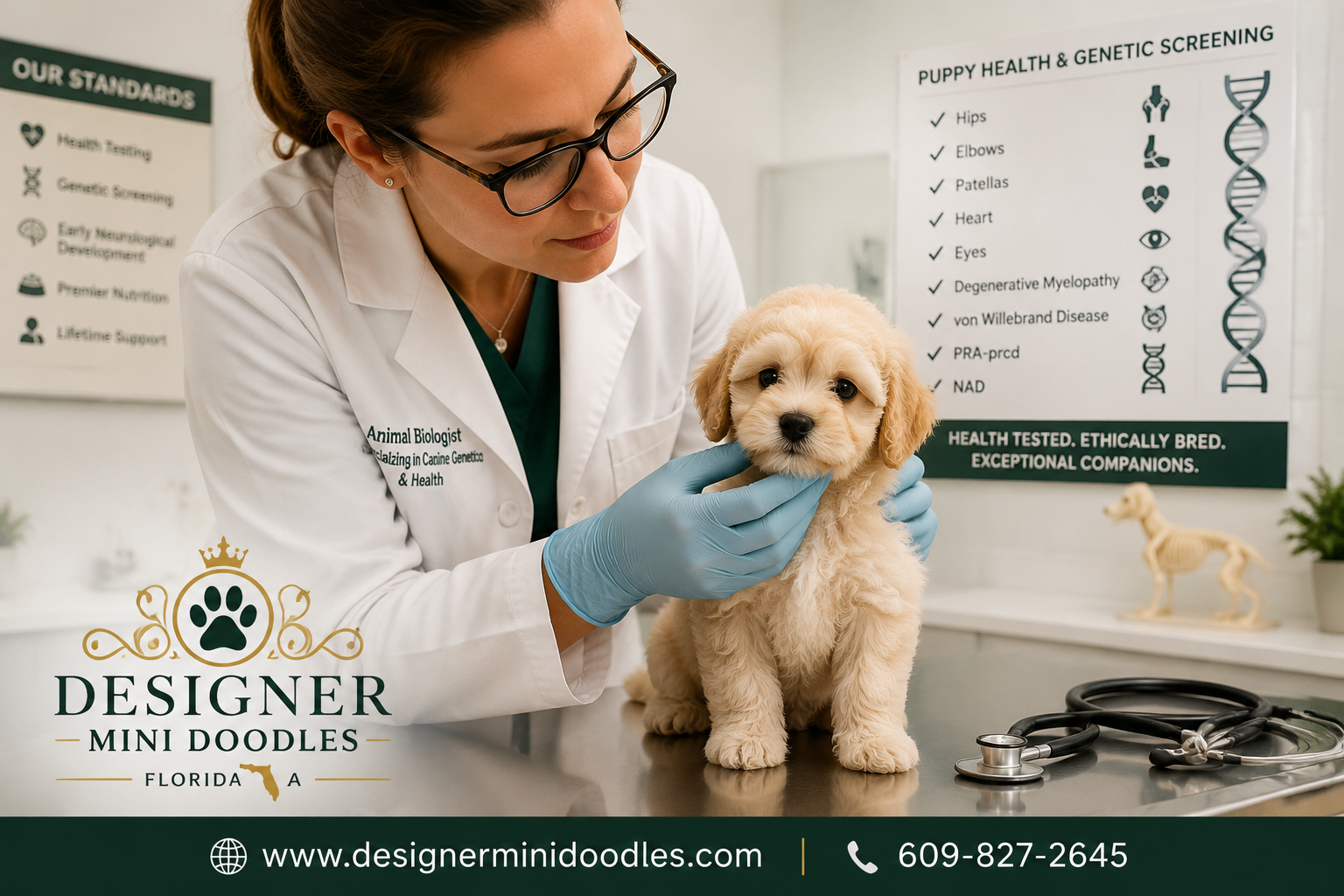
- Health testing documentation. Reputable breeders provide OFA, PennHIP, or equivalent certifications for hips, elbows, eyes, and hearts, plus genetic panels for conditions like progressive retinal atrophy (PRA) and von Willebrand’s disease.
- Transparent puppy-raising protocols. Ask specifically about ENS (Early Neurological Stimulation), early housebreaking, and crate training. These aren’t marketing buzzwords — they’re evidence-based practices that produce measurably calmer, more confident puppies.
- Health guarantee. A minimum two-year health guarantee against genetic conditions is standard among quality breeders.
- References and reviews. Check Google reviews, ask for references from past buyers, and look for a physical location you can verify.
Don’t limit yourself to local breeders. Many of the best toy goldendoodle breeding programs serve families nationwide. Designer Doodles offers a dedicated puppy nanny service that delivers puppies safely to any home in the world, so geography shouldn’t be the deciding factor in your search.
You can find Designer Doodles on Google Maps to verify their location and read reviews from families across the country.
Health Problems to Watch for in Toy Doodles
Toy doodles are generally healthy dogs, but their small size and mixed heritage make them susceptible to certain conditions. Knowing these in advance helps you choose a breeder who screens for them.
Most common health concerns:
- Patellar luxation — The kneecap slips out of place. Common in small breeds. Reputable breeders screen parent dogs.
- Progressive retinal atrophy (PRA) — A genetic eye condition that can lead to blindness. Easily identified through DNA testing.
- Hip dysplasia — Less common in toy sizes than standards, but still possible. OFA or PennHIP screening catches this.
- Von Willebrand’s disease — A blood clotting disorder inherited from poodle lines. Genetic testing eliminates affected dogs from breeding programs.
- Ear infections — Floppy ears and Florida’s humidity create a perfect environment for ear infections. Regular cleaning prevents most cases.
- Dental crowding — Small mouths can lead to dental issues. Regular dental care starting in puppyhood is important.
Edge case: Micro goldendoodle puppies (under 10 pounds) can be more prone to hypoglycemia and fragile bone structure. This is why choosing a breeder with deep experience in small-dog genetics — like an animal biologist who has refined their program over 15+ years — matters so much.
Are Toy Doodles Hypoallergenic?
Toy doodles are considered low-shedding and allergy-friendly, but no dog breed is truly 100% hypoallergenic. The protein that triggers allergies (Can f 1) is found in dog saliva, urine, and dander — not just fur.
That said, toy doodles with curlier, more poodle-like coats produce significantly less airborne dander than heavy-shedding breeds. F1B and multigenerational toy goldendoodles (where one parent is a poodle crossed with a goldendoodle) tend to have the most allergy-friendly coats.
If allergies are a primary concern:
- Request an F1B or multigen puppy
- Spend time with the specific puppy before committing
- Ask the breeder about coat type predictions based on the parent dogs
- Plan for regular grooming every 4–6 weeks to minimize dander buildup
How Big Do Toy Doodles Get as Adults?
A fully grown toy goldendoodle typically weighs between 10 and 25 pounds and stands 10 to 15 inches tall at the shoulder. Most reach their adult size by 10 to 12 months, though they may fill out slightly until about 18 months.
Micro goldendoodles — an even smaller category that Designer Doodles also offers — stay under 10 pounds as adults. These are best suited for individuals or couples without very young children.
Factors that affect adult size:
- Parent sizes (the single best predictor)
- Generation (F1B and multigen crosses are more predictable)
- Gender (males tend to be 1–3 pounds heavier)
- Nutrition during the growth phase
Pro tip: Ask your breeder for the exact weights of both parent dogs and, if available, the weights of puppies from previous litters at various ages. An experienced breeder can predict adult size within a pound or two.
What Should I Look for When Buying a Toy Doodle Puppy?
When evaluating toy doodles for sale in Florida, focus on these specific criteria:
- Health testing of parent dogs — Non-negotiable. Ask for documentation, not just verbal assurances.
- Temperament of parent dogs — Calm, confident parents produce calm, confident puppies.
- Early development protocols — ENS, early socialization, housebreaking, and crate training should all begin before the puppy leaves the breeder.
- Written health guarantee — At least two years covering genetic conditions.
- Puppy’s individual temperament — A good breeder will match you with a puppy that fits your lifestyle, not just the first one available.
- Veterinary records — First vaccinations, deworming schedule, and a vet health check should all be documented.
- Return policy — Reputable breeders will always take a puppy back if your circumstances change.
Red flags to walk away from:
- No health testing or vague claims about “healthy lines”
- Multiple breeds available at the same time (puppy mill indicator)
- Pressure to buy immediately or put down a deposit before asking questions
- No contract or health guarantee
- Unwillingness to let you speak with past buyers
Common Mistakes First-Time Toy Doodle Owners Make
First-time toy doodle owners in Florida tend to make a few predictable mistakes. Avoiding these will save you money, stress, and heartache.
- Choosing price over quality. A $1,200 puppy from an untested breeding program will almost always cost more in vet bills than a $3,500 puppy from a health-tested, professionally managed program.
- Skipping crate training. Puppies from programs that include early crate training — like Designer Doodles’ program — adjust to home life much faster. If your puppy didn’t get this head start, begin crate training on day one.
- Underestimating grooming needs. Toy doodles need professional grooming every 4–6 weeks and daily brushing to prevent matting, especially in Florida’s humid climate.
- Overfeeding. Small dogs gain weight quickly. Follow your breeder’s feeding guidelines and measure portions.
- Skipping socialization windows. The critical socialization period ends around 16 weeks. Expose your puppy to different people, sounds, surfaces, and environments during this window.
- Not budgeting for ongoing costs. Beyond the purchase price, expect $1,500 to $3,000 annually for food, grooming, vet care, and supplies.
Toy Doodle Training Tips for Beginners
Toy doodles are highly trainable thanks to their poodle intelligence and golden retriever eagerness to please. Puppies from programs that begin training early — with ENS, early housebreaking, and crate training — have a significant head start.
Basic training approach:
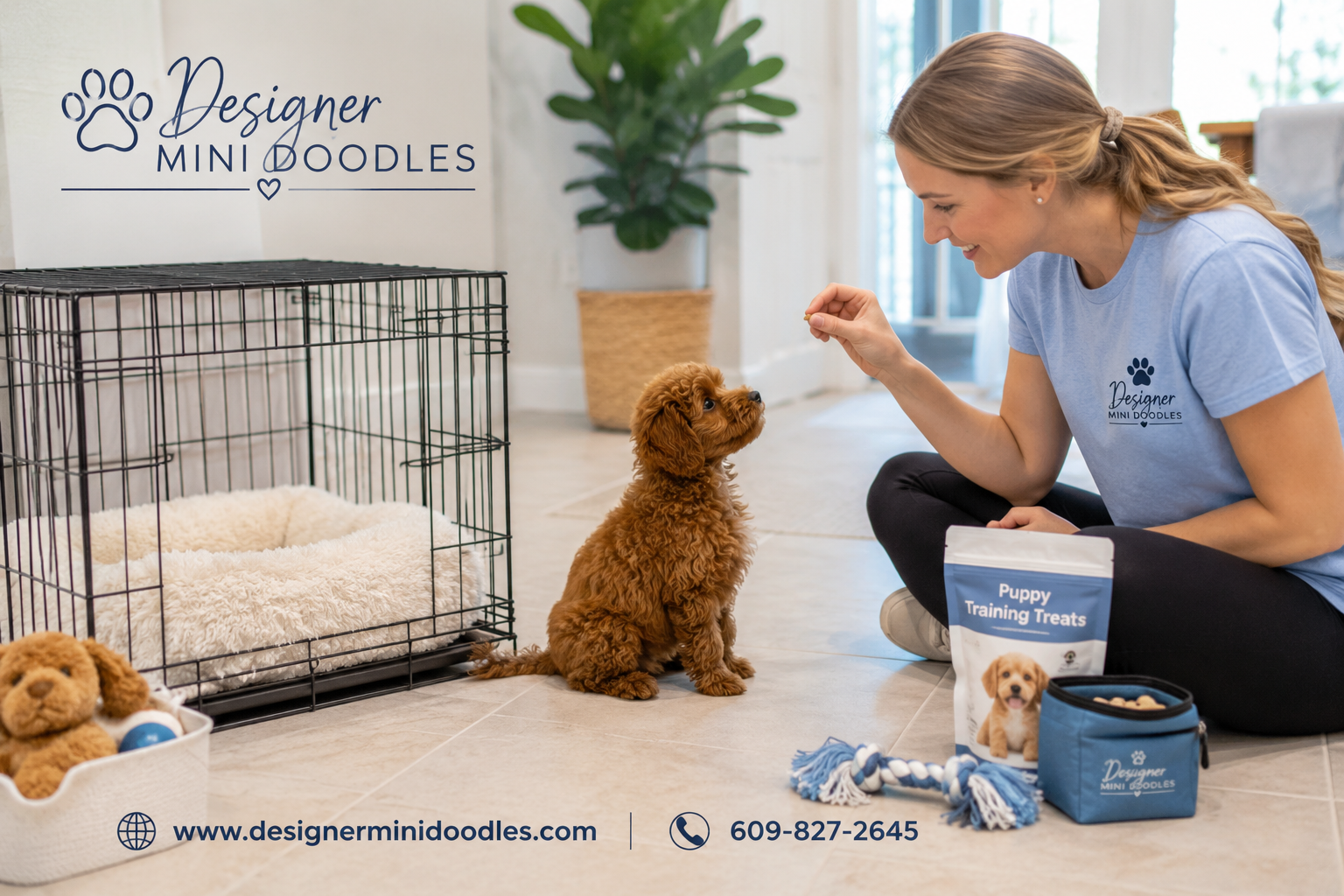
- Start with crate training. Make the crate a positive space with treats and a comfortable bed. Never use it as punishment.
- Use positive reinforcement exclusively. Toy doodles are sensitive dogs. Harsh corrections damage trust and slow progress.
- Keep sessions short. Five to ten minutes, three to four times daily, works better than one long session.
- Prioritize recall and leash manners. In Florida’s outdoor-friendly environment, a reliable recall is essential for safety.
- Socialize aggressively in the first 16 weeks. Puppy classes, dog-friendly stores, outdoor cafes — expose your toy doodle to as many positive experiences as possible.
Common training mistake: Carrying your toy doodle everywhere instead of letting them walk. This creates insecurity and can lead to behavioral issues. Let them explore the world on their own four feet.
Are Toy Doodles Good for Apartments?
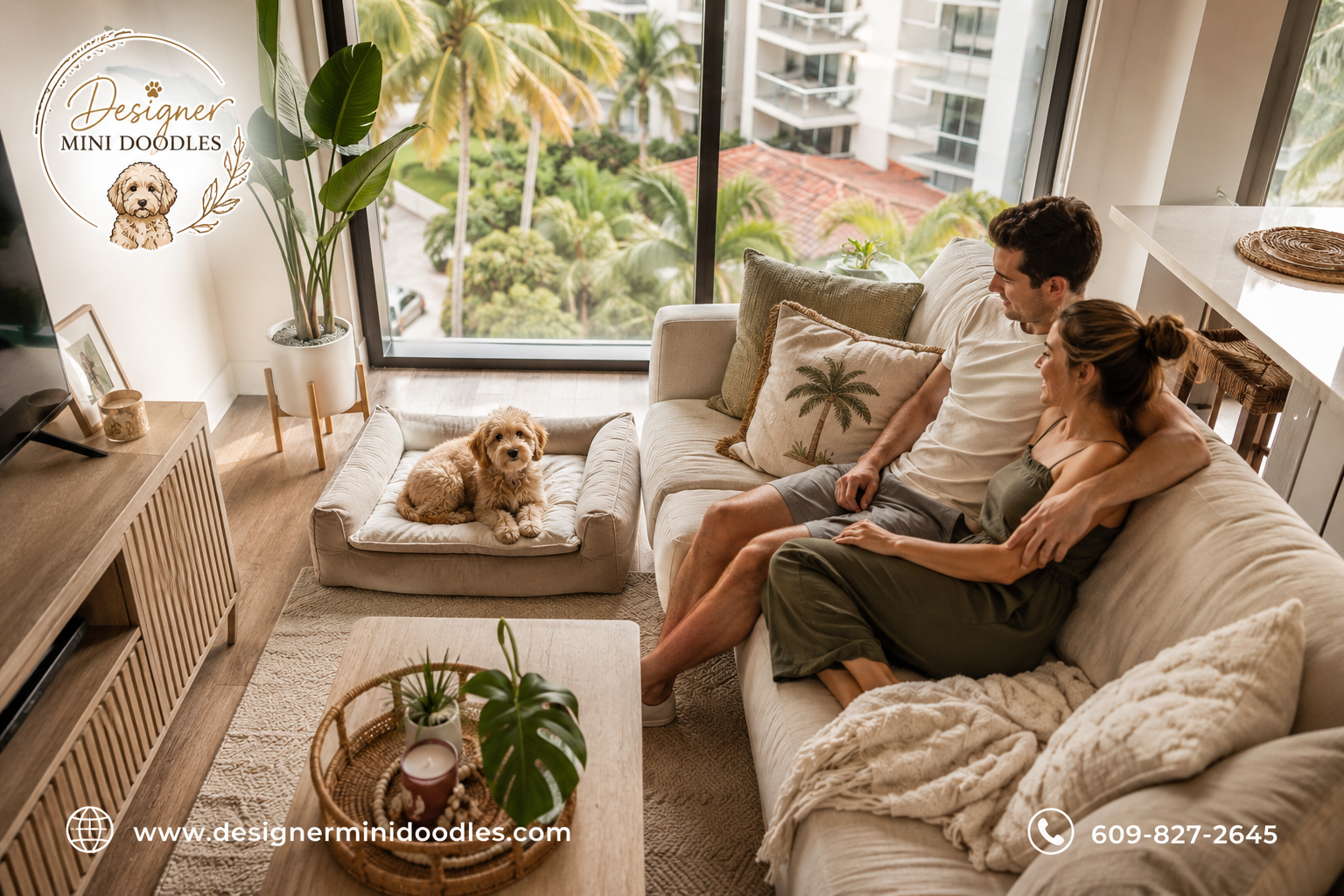
Toy doodles are one of the best breeds for apartment living, and Florida’s many condo and apartment communities make this a common question. Their small size (10–25 pounds), moderate energy level, and low-shedding coats check every box for apartment-friendly living.
Why they work well in apartments:
- Quiet compared to many small breeds (less prone to excessive barking when properly socialized)
- Don’t need a large yard — daily walks and indoor play are sufficient
- Low shedding means less cleanup in smaller spaces
- Adaptable to various living situations when raised with proper early socialization
What you’ll need to make it work:
- Two to three walks daily (20–30 minutes each)
- Mental stimulation through puzzle toys, training sessions, or sniff games
- A consistent potty routine, especially if you don’t have immediate yard access
- Regular grooming to keep the coat manageable in close quarters
Choose a toy doodle over a mini if you live in a smaller apartment or condo. The size difference (10–25 lbs vs. 25–50 lbs) makes a real impact in tight spaces.
Also worth noting: if you love small companion breeds, you might also be interested in mini French bulldog puppies for sale, another excellent apartment-friendly option.
Frequently Asked Questions
How long do toy doodles live?
Toy goldendoodles typically live 12 to 16 years. Smaller dogs generally live longer than larger breeds, and good genetics from health-tested parents further improve longevity.
Do toy doodles bark a lot?
Not typically. Toy doodles are moderate barkers compared to many small breeds. Early socialization and training significantly reduce nuisance barking.
Can I fly with a toy doodle?
Yes. Most toy doodles fit comfortably in airline-approved carriers for in-cabin travel. Check your airline’s specific weight and carrier size requirements before booking.
How often do toy doodles need grooming?
Every 4 to 6 weeks for professional grooming, with daily brushing at home to prevent matting. Florida’s humidity can accelerate matting, so stay consistent.
What’s the difference between a toy and micro goldendoodle?
Toy goldendoodles weigh 10 to 25 pounds, while micro goldendoodles stay under 10 pounds. Micros require more careful handling and are best for adults without very young children.
Do toy doodles need a lot of exercise?
Moderate exercise — about 30 to 60 minutes daily — is sufficient. They’re active enough for walks and play but don’t require the intense exercise of larger sporting breeds.
Are toy doodles easy to potty train?
Yes, especially when they come from a program that includes early housebreaking. Puppies from Designer Doodles’ program, which begins housebreaking and crate training before puppies go home, typically adjust within one to two weeks.
Can I get a toy doodle shipped to me in Florida?
Absolutely. Top breeders offer professional puppy nanny services that hand-deliver puppies to your door. Designer Doodles’ puppies are available to go to any home in the world through their dedicated nanny service.
What generation of toy doodle is best?
F1B (75% poodle, 25% golden retriever) and multigenerational crosses are most popular because they offer the most predictable coat type, size, and temperament.
Do toy doodles get along with other pets?
Generally yes. Their friendly disposition makes them good companions for other dogs and even cats, especially when introduced properly and socialized early.
What colors do toy doodles come in?
Common colors include cream, apricot, red, chocolate, black, and parti (multi-colored). Red and apricot are the most popular and often the most expensive.
Is a toy doodle right for seniors?
Yes. Their manageable size, affectionate nature, and moderate exercise needs make toy doodles excellent companions for older adults.
Conclusion
Finding the right toy doodles for sale in Florida comes down to one thing above all else: the quality of the breeding program behind the puppy. A well-bred toy goldendoodle from a program that invests in health testing, early neurological stimulation, socialization, housebreaking, and crate training will be healthier, calmer, and easier to live with than a cheaper puppy from an unverified source.
Your next steps:
- Define your ideal size. Decide between a toy (10–25 lbs) or micro (under 10 lbs) goldendoodle based on your living situation and family.
- Research breeders thoroughly. Prioritize health testing, professional credentials, and early development protocols. Visit the toy goldendoodle breeders at Designer Doodles to see what a top-tier program looks like.
- Prepare your home. Get a crate, grooming supplies, and high-quality puppy food before your new companion arrives.
- Budget realistically. Plan for $2,500 to $5,000 for the puppy plus $1,500 to $3,000 annually for ongoing care.
- Don’t limit yourself geographically. The best breeder for your family may not be the closest. Professional puppy nanny services make distance irrelevant.
Florida is a fantastic place to raise a toy doodle, and with the right preparation, your new puppy will be a beloved family member for the next 12 to 16 years.
References
- Orthopedic Foundation for Animals (OFA). “Canine Health Information Center.” ofa.org. Accessed 2026.
- American Kennel Club. “Poodle (Toy) Breed Information.” akc.org. Accessed 2026.
- Goldendoodle Association of North America (GANA). “Breed Standards and Generations.” goldendoodleassociation.com. Accessed 2026.