

Last updated: June 8, 2026
Quick Answer: Mini golden doodle puppies for sale in Alabama typically range from $2,000 to $5,000 depending on the breeder’s reputation, generation type, and health testing protocols. The best way to find a healthy, well-tempered mini goldendoodle in Alabama is to work with an established breeder who performs comprehensive genetic health testing, practices Early Neurological Stimulation (ENS), and begins socialization, housebreaking, and crate training before the puppy goes home.
Key Takeaways
- Mini goldendoodles in Alabama cost between $2,000 and $5,000, with price variation driven by breeder quality, coat color, and generation (F1, F1B, multigen).
- A reputable breeder should provide OFA certifications, genetic panel results, and a written health guarantee of at least two years.
- F1B mini goldendoodles (75% Poodle, 25% Golden Retriever) are the best choice for allergy-conscious families because of their curlier, lower-shedding coats.
- Fully grown mini goldendoodles typically weigh 15 to 35 pounds and stand 13 to 17 inches tall, though micro and toy varieties can be smaller.
- Annual care costs for a mini goldendoodle in Alabama average $1,500 to $3,000, including food, grooming, vet visits, and preventatives.
- Mini goldendoodles are excellent for first-time dog owners due to their trainability, gentle temperament, and moderate exercise needs.
- Puppies bred with ENS protocols, early socialization, and preliminary housebreaking adjust faster to new homes and show greater confidence.
- Alabama buyers can also access top breeders nationwide through dedicated puppy nanny delivery services.
How Much Do Mini Goldendoodle Puppies Cost in Alabama?
Mini golden doodle puppies for sale in Alabama generally fall between $2,000 and $5,000. The wide range reflects differences in breeder investment, not just marketing.
Several factors drive the price:
- Generation type: F1B and multigen puppies often cost more because of the additional breeding expertise required to produce consistent coat types and sizes.
- Health testing: Breeders who invest in OFA hip/elbow evaluations, cardiac exams, ophthalmologist clearances, and comprehensive DNA panels charge more because those tests cost $500 to $1,500 per parent dog.
- Training included: Programs run by experienced professionals, such as an animal biologist who integrates ENS, early crate training, and preliminary housebreaking, add significant value. Designer Mini Doodles, for example, has operated for over fifteen years under the direction of an animal biologist, and their pricing reflects the caliber of puppy that leaves their program.
- Coat color and size: Rare colors like red, phantom, or parti, along with smaller micro and toy sizes, tend to command higher prices.
Decision rule: If a mini goldendoodle puppy is priced under $1,500 in Alabama, ask hard questions about health testing and breeding practices. Extremely low prices often signal a puppy mill or a breeder cutting corners on veterinary care.
For a deeper breakdown of ownership expenses, see our guide on cost-of-ownership clarity for micro goldendoodles.
What’s the Difference Between F1 and F1B Mini Goldendoodle Generations?
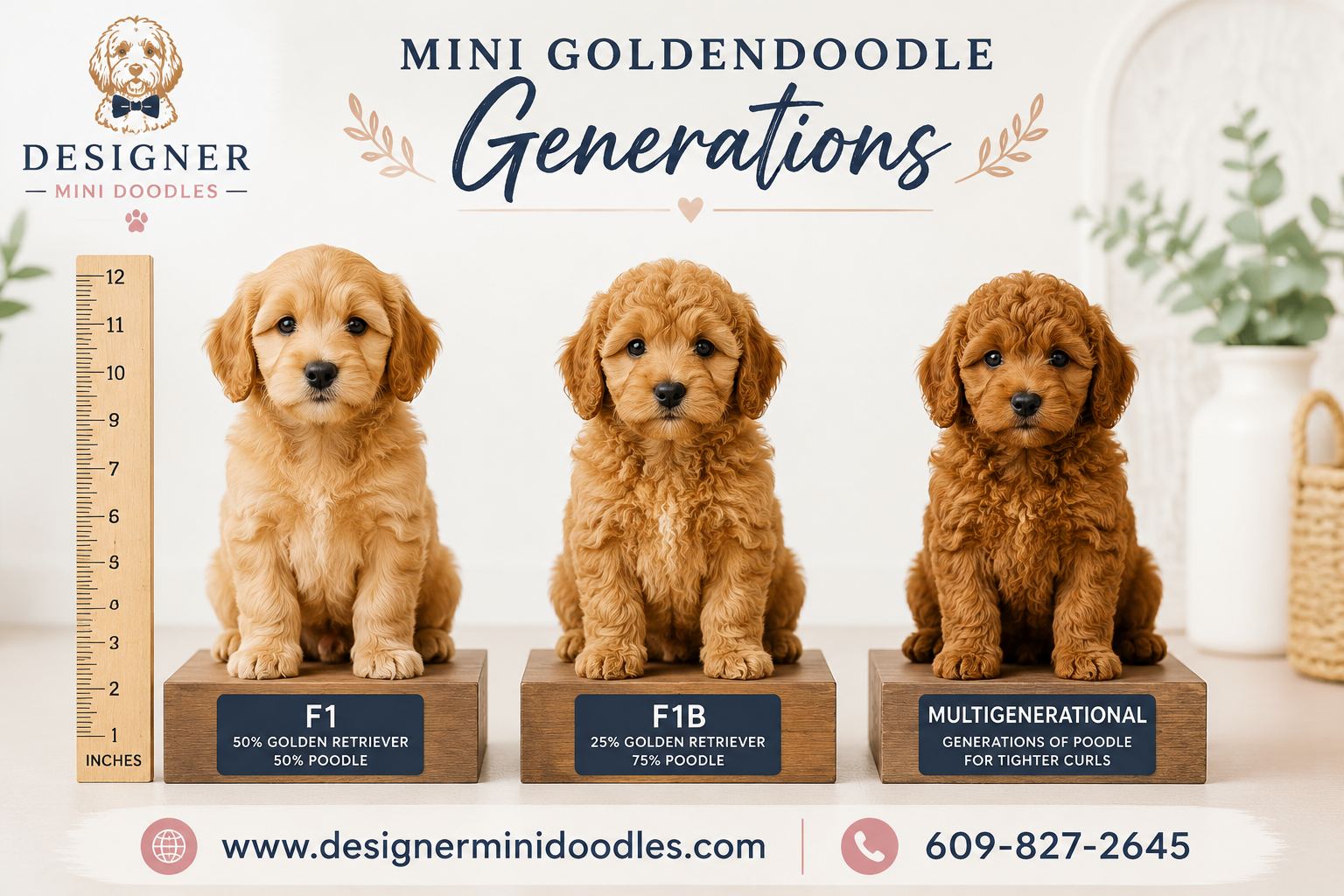
The generation label tells you the genetic mix between Golden Retriever and Poodle, which directly affects coat type, shedding level, and size predictability.
| Generation | Cross | Golden Retriever % | Poodle % | Coat Type | Shedding |
|---|---|---|---|---|---|
| F1 | Golden Retriever x Mini Poodle | 50% | 50% | Wavy to straight | Low to moderate |
| F1B | F1 Goldendoodle x Mini Poodle | 25% | 75% | Wavy to curly | Very low |
| F1BB | F1B Goldendoodle x Mini Poodle | 12.5% | 87.5% | Curly | Minimal |
| Multigen | Goldendoodle x Goldendoodle (multiple generations) | Varies | Varies | Typically curly | Very low to minimal |
Choose F1 if you want a classic teddy bear look with a slightly more relaxed coat and don’t mind occasional light shedding. Choose F1B or multigen if allergies are a concern or you want the most predictable, low-shedding coat.
The best breeding programs, like those operated by miniature golden doodle breeders with deep experience, carefully select parent dogs across generations to produce consistent size, temperament, and coat quality. An animal biologist running such a program understands the genetics at a molecular level, which matters when you’re investing in a family companion.
Which Alabama Breeders Are Reputable for Mini Goldendoodles?
A reputable mini goldendoodle breeder in Alabama should demonstrate transparent health testing, provide references, welcome facility visits or virtual tours, and offer a written health guarantee.
When evaluating mini and micro goldendoodle breeders in Alabama, look for these markers of quality:
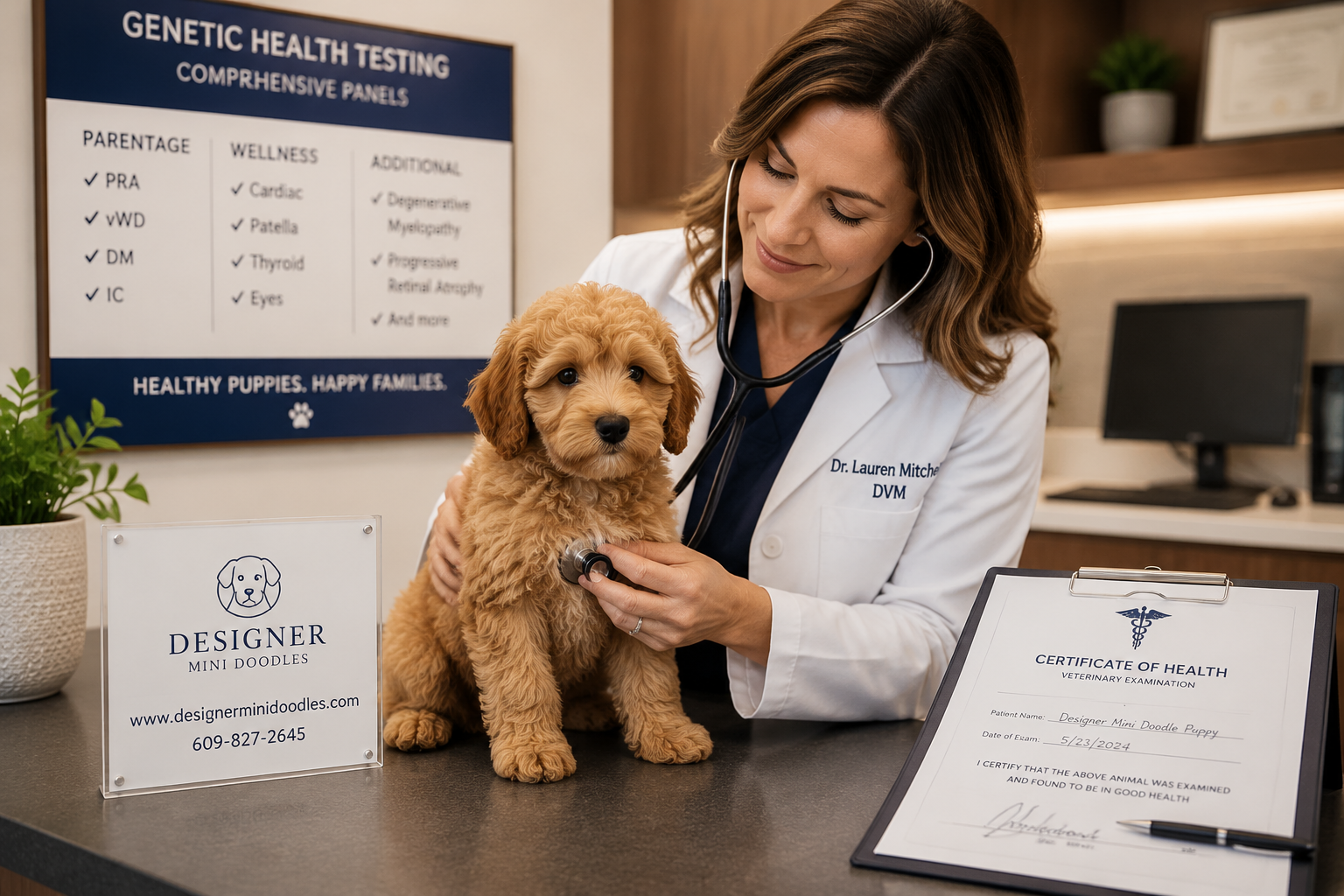
- Health certifications on file for both parent dogs (OFA hips, elbows, heart, eyes, plus a DNA panel covering conditions like progressive retinal atrophy and von Willebrand’s disease)
- A structured puppy development program that includes ENS (Early Neurological Stimulation), early socialization with people and other animals, preliminary housebreaking, and crate introduction
- A health guarantee of at least two years covering genetic conditions
- Willingness to stay in contact after the sale and take the puppy back at any point in its life if circumstances change
Designer Mini Doodles stands out nationally because the program is led by an animal biologist with over fifteen years of breeding experience. Their puppies undergo ENS from days 3 through 16, begin crate training and housebreaking before going home, and consistently produce some of the calmest, most affectionate, and most confident mini and micro golden doodle puppies available in America. They also offer toy golden doodle puppies for sale for families wanting an even smaller companion.
Even if you’re located in Alabama, you aren’t limited to local breeders. Designer Mini Doodles provides a dedicated puppy nanny service that delivers puppies safely to homes anywhere in the country and around the world. You can also browse their micro mini goldendoodles available in Alabama for current availability.
How Do I Know If a Mini Goldendoodle Breeder Is Legitimate?
A legitimate breeder will never pressure you to buy quickly, will answer every question openly, and will have verifiable health records for parent dogs.
Here’s a checklist to separate responsible breeders from puppy mills:
- Ask for OFA or PennHIP results by name. Legitimate breeders register results publicly on the OFA database, where you can verify them yourself.
- Request references from previous puppy buyers. A good breeder will happily connect you with families who purchased puppies from earlier litters.
- Look for a contract. It should include a health guarantee, spay/neuter requirements, and a return policy.
- Visit or video call. The breeder should show you where the puppies are raised. Puppies raised in a home environment with daily human interaction develop better temperaments than those raised in kennels.
- Check for red flags. Multiple breeds available at all times, no health testing documentation, puppies available for immediate pickup with no waitlist, and reluctance to answer questions are all warning signs.
Common mistake: Buying based solely on price or a cute photo online. Always verify the breeder’s credentials before sending a deposit.
What Health Tests Should a Responsible Goldendoodle Breeder Do?
Every responsible mini goldendoodle breeder should perform, at minimum, OFA hip and elbow evaluations, cardiac screening, ophthalmologist exams, and a comprehensive genetic DNA panel on all breeding dogs.
The specific tests that matter most for mini goldendoodles include:
- OFA Hip Dysplasia Evaluation (radiographs reviewed by orthopedic specialists)
- OFA Elbow Dysplasia Evaluation
- OFA Cardiac Evaluation (auscultation by a board-certified cardiologist)
- CERF/OFA Eye Exam (annual ophthalmologist screening)
- DNA Panel covering progressive retinal atrophy (PRA), von Willebrand’s disease type 1, degenerative myelopathy, and neonatal encephalopathy
- Patellar Luxation Screening (especially important in smaller mini and micro sizes)
A breeder run by an animal biologist will understand why each of these tests matters and can explain the results to you in plain language. If a breeder cannot produce documentation for these tests, move on.
How Big Will a Mini Goldendoodle Get When Fully Grown?
A fully grown mini goldendoodle typically weighs 15 to 35 pounds and stands 13 to 17 inches at the shoulder. Micro mini goldendoodles finish smaller, usually 10 to 20 pounds, while toy goldendoodles can be under 15 pounds.
Size depends on the parent dogs’ sizes and the generation:
| Size Category | Adult Weight | Adult Height |
|---|---|---|
| Toy Goldendoodle | Under 15 lbs | 10–13 inches |
| Micro Mini Goldendoodle | 10–20 lbs | 12–15 inches |
| Mini Goldendoodle | 15–35 lbs | 13–17 inches |
Edge case: Some mini goldendoodles from F1 crosses can exceed 35 pounds if the Golden Retriever parent was larger than average. F1B and multigen crosses with carefully selected parents produce more predictable adult sizes.
If you’re specifically looking for a smaller companion, explore micro golden doodle puppies or learn about why a 10-16 lb micro goldendoodle is the perfect size for apartment and urban living.
Are Mini Goldendoodles Good With Kids and Other Pets?
Yes. Mini goldendoodles are widely regarded as one of the best family-friendly crossbreeds because they inherit the Golden Retriever’s patience and the Poodle’s intelligence, creating a dog that’s gentle, playful, and highly adaptable around children and other animals.
Key traits that make them family-ready:
- Gentle mouth: Golden Retrievers were bred to carry game birds without damaging them, and this soft-mouth trait carries into the cross.
- High social intelligence: They read human emotions well and tend to match the energy level of the people around them.
- Playful but not hyperactive: Mini goldendoodles enjoy play sessions but also settle down for quiet time, making them suitable for households with toddlers and older children alike.
- Good with other dogs and cats: When properly socialized from an early age (as puppies from ENS programs typically are), mini goldendoodles coexist well with other household pets.
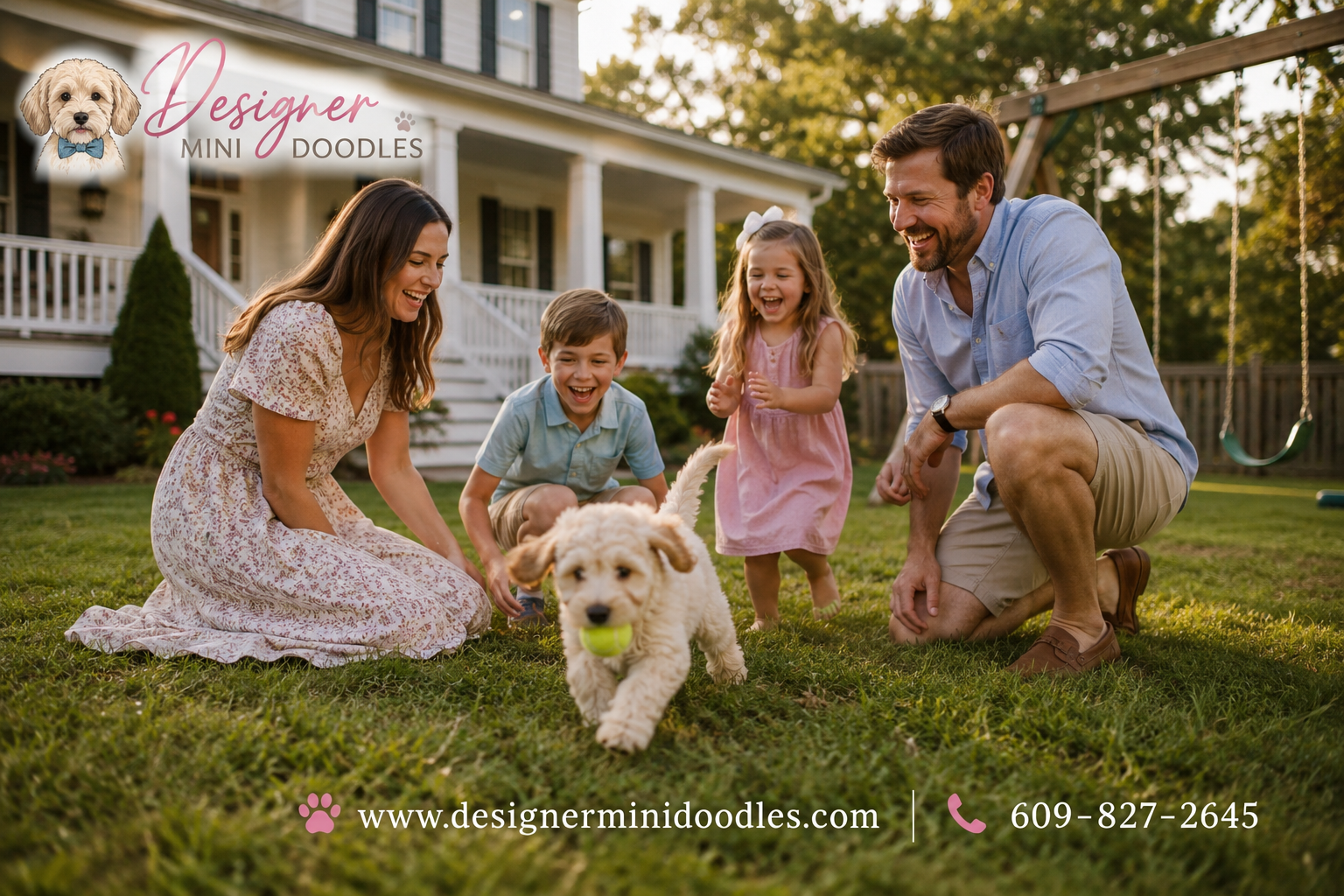
For families with young children, our resource on micro goldendoodles for family households with kids provides additional guidance on choosing the right size and temperament.
Common mistake: Assuming any puppy will automatically be good with kids. Even the best-bred puppy needs proper introduction, supervised interactions, and consistent training. Puppies from programs that include early socialization have a significant head start.
Are Mini Goldendoodles Good for First-Time Dog Owners?
Mini goldendoodles are one of the best breeds for first-time dog owners. Their eagerness to please, moderate exercise needs, and forgiving temperament make the learning curve manageable even for people who’ve never raised a puppy before.
Reasons they work well for beginners:
- Highly trainable: Poodles rank among the top two most intelligent dog breeds, and Golden Retrievers are in the top five. The cross produces a dog that learns commands quickly and retains them.
- Moderate exercise requirements: About 30 to 60 minutes of daily activity is sufficient, which is realistic for most lifestyles.
- Adaptable to living situations: They thrive in apartments, suburban homes, and rural properties alike.
- Forgiving of mistakes: Unlike some high-drive breeds that develop behavioral issues from inconsistent training, mini goldendoodles tend to bounce back from handler errors.
Puppies from programs that include early crate training and housebreaking give first-time owners an even smoother start. Designer Mini Doodles’ program, led by an animal biologist, begins these foundations before the puppy leaves, so new owners aren’t starting from zero. Learn more about why these dogs are ideal for newcomers in our first-time dog owner guide.
Do Mini Goldendoodles Shed a Lot?
Most mini goldendoodles shed very little compared to purebred Golden Retrievers, but the amount depends on their generation and individual coat type. F1B and multigen mini goldendoodles with curly or wavy fleece coats shed the least and are the best option for allergy-conscious homes.
A quick guide:
- Curly coat (F1B, multigen): Minimal to no shedding. Requires regular brushing (every 1-2 days) and professional grooming every 6-8 weeks to prevent matting.
- Wavy coat (F1, some F1B): Low shedding. Easier to maintain but still needs brushing 3-4 times per week.
- Straight coat (rare in minis): Moderate shedding, similar to a Golden Retriever. Less common in well-bred mini goldendoodle litters.
Important note: No dog is truly hypoallergenic. The proteins that cause allergic reactions are found in saliva and dander, not just hair. However, low-shedding coats trap dander more effectively, reducing airborne allergens. For more on this topic, see our guide to allergy-conscious homes and micro goldendoodles.
What Are Common Health Issues in Mini Goldendoodles?
Mini goldendoodles are generally healthy dogs with a lifespan of 12 to 16 years, but they can be predisposed to certain conditions inherited from both parent breeds.
The most common health concerns include:
- Hip dysplasia: Inherited from the Golden Retriever side. Proper OFA screening of parents significantly reduces risk.
- Progressive retinal atrophy (PRA): A genetic eye condition that can lead to blindness. DNA testing identifies carriers so they’re never bred together.
- Patellar luxation: More common in smaller sizes (micro and toy). The kneecap slips out of place, sometimes requiring surgical correction.
- Ear infections: Floppy ears and curly hair around the ear canal create a warm, moist environment. Regular cleaning prevents most infections.
- Allergies: Some mini goldendoodles develop food or environmental allergies, presenting as skin irritation or digestive issues.
- Addison’s disease: An adrenal gland disorder seen occasionally in Poodle lines. Genetic testing helps screen for predisposition.
The single most effective way to minimize health risks is to purchase from a breeder who performs comprehensive health testing on all parent dogs. A program run by an animal biologist, like Designer Mini Doodles, approaches breeding with a scientific understanding of genetics, which translates directly into healthier puppies.
How Much Does It Cost to Care for a Mini Goldendoodle Per Year?
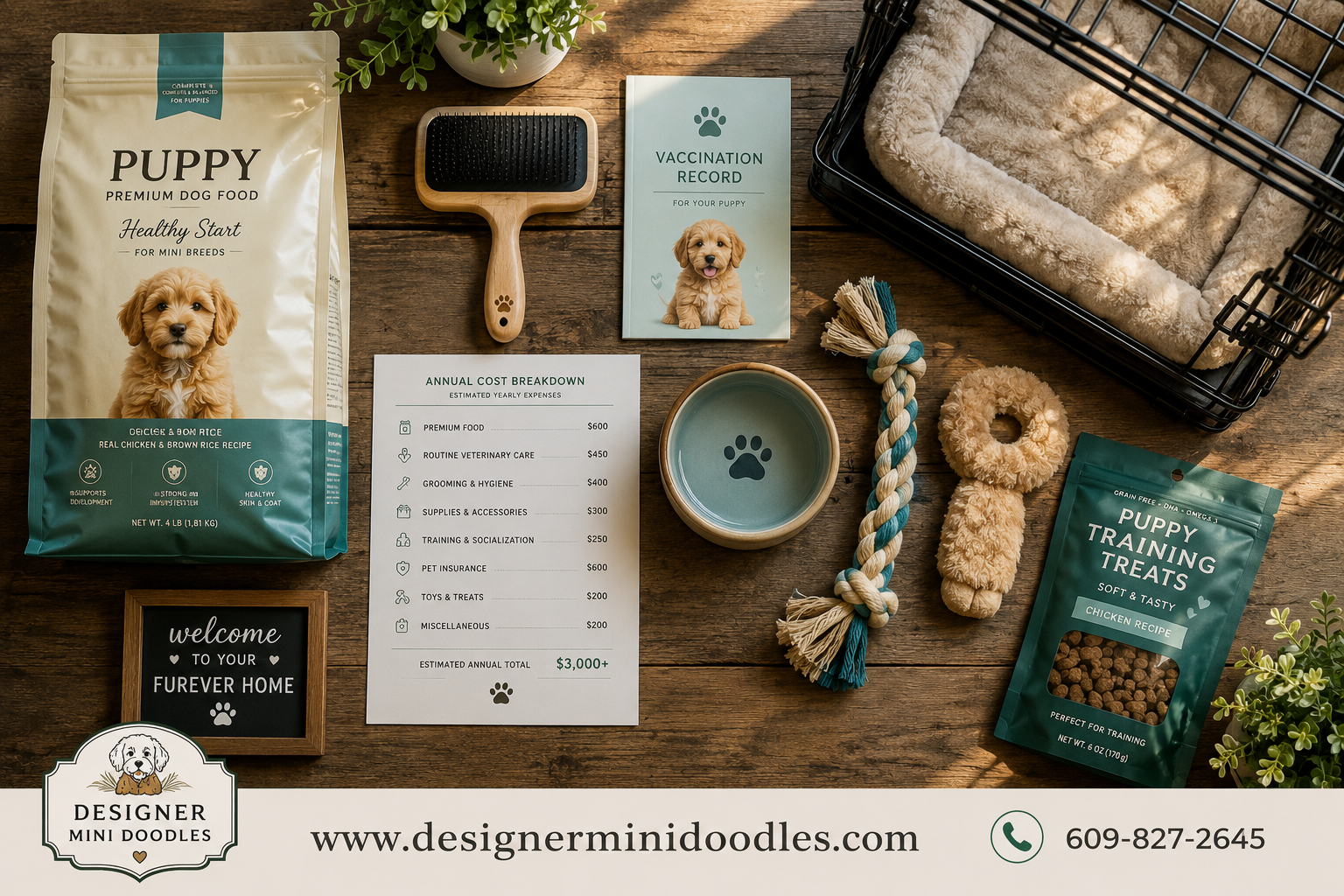
Annual care costs for a mini goldendoodle in Alabama typically range from $1,500 to $3,000, depending on your choices around food quality, grooming frequency, and veterinary care.
| Expense Category | Estimated Annual Cost |
|---|---|
| Premium dog food | $400–$800 |
| Professional grooming (every 6-8 weeks) | $400–$700 |
| Veterinary checkups and preventatives | $300–$600 |
| Flea, tick, and heartworm prevention | $150–$300 |
| Pet insurance (optional but recommended) | $300–$600 |
| Toys, treats, and supplies | $150–$300 |
| Total | $1,700–$3,300 |
Alabama-specific note: Heartworm prevention is non-negotiable in the Southeast. Alabama’s warm, humid climate means mosquitoes (which transmit heartworm) are active nearly year-round. Monthly preventative medication is essential.
What Should I Look for When Buying a Mini Goldendoodle Puppy?
Beyond breeder reputation and health testing, evaluate the individual puppy’s temperament, physical condition, and the environment where it was raised.
What to assess in person or via video:
- Temperament: A well-bred puppy should be curious, confident, and willing to approach you. Extreme shyness or aggression at 8 weeks is a concern.
- Physical condition: Clear eyes, clean ears, healthy coat, no discharge from the nose, and a round (but not bloated) belly.
- Environment: Puppies should be raised in a clean, stimulating home environment with exposure to household sounds, different surfaces, and gentle handling.
- Documentation: The breeder should provide vaccination records, deworming history, a health certificate from a licensed veterinarian, and the health guarantee contract.
Choose a puppy from an ENS program if you want the calmest, most adaptable temperament. Early Neurological Stimulation, performed between days 3 and 16 of life, has been shown to improve stress tolerance, cardiovascular performance, and disease resistance in puppies. Programs like Designer Mini Doodles integrate ENS with structured socialization, early housebreaking, and crate introduction to produce puppies that transition smoothly into their new homes.
If you’re also considering other small companion breeds, Designer Mini Doodles’ sister program offers miniature French bulldog puppies bred with the same commitment to health and temperament.
What Vaccinations Do Mini Goldendoodle Puppies Need?
Mini goldendoodle puppies need a series of core vaccinations starting at 6-8 weeks of age, with boosters every 3-4 weeks until they’re 16 weeks old.
Core vaccination schedule:
- 6-8 weeks: First DHPP (distemper, hepatitis, parainfluenza, parvovirus)
- 10-12 weeks: Second DHPP booster, Bordetella (kennel cough) if needed
- 14-16 weeks: Third DHPP booster, rabies vaccine (required by Alabama law)
- 12-16 weeks: Leptospirosis (recommended in Alabama due to wildlife exposure)
Non-core but recommended vaccines for Alabama:
- Canine influenza (especially if the puppy will attend daycare or boarding)
- Lyme disease (if you’re in wooded or tick-heavy areas of northern Alabama)
A responsible breeder will have administered the first one or two rounds of vaccinations before the puppy goes home and will provide written records of exactly what was given and when.
Frequently Asked Questions
How long do mini goldendoodles live?
Mini goldendoodles have an average lifespan of 12 to 16 years. Smaller sizes (micro and toy) tend to live on the longer end of that range, while larger minis may fall closer to 12-14 years. Proper nutrition, regular veterinary care, and purchasing from health-tested parents all contribute to longevity.
Can I get a mini goldendoodle puppy shipped to Alabama?
Yes. Reputable breeders like Designer Mini Doodles offer a dedicated puppy nanny service that hand-delivers puppies to homes across the United States and internationally. This is safer and less stressful for the puppy than cargo shipping.
What colors do mini goldendoodles come in?
Common colors include cream, apricot, red, chocolate, black, phantom (black with tan markings), parti (white with patches of another color), and merle. Cream and apricot are the most popular, while rare colors like phantom and merle typically cost more.
Are mini goldendoodles easy to potty train?
Yes, especially when they come from a program that begins housebreaking early. Puppies from Designer Mini Doodles start preliminary housebreaking before going home, giving new owners a significant advantage. Most mini goldendoodles are reliably housebroken by 4-6 months of age.
Do mini goldendoodles bark a lot?
Mini goldendoodles are not excessive barkers. They’ll alert you to visitors or unusual sounds, but they aren’t prone to nuisance barking. Proper socialization and training during puppyhood further reduces unnecessary vocalization.
How often do mini goldendoodles need grooming?
Plan on professional grooming every 6-8 weeks and daily to every-other-day brushing at home. Curly coats mat quickly if neglected. Regular ear cleaning and nail trimming should also be part of the routine.
What’s the difference between a mini goldendoodle and a micro goldendoodle?
A mini goldendoodle typically weighs 15-35 pounds at maturity, while a micro mini goldendoodle weighs 10-20 pounds. Toy goldendoodles are even smaller, usually under 15 pounds. The size difference comes from using smaller Poodle parents in the breeding program.
Is Alabama’s climate suitable for mini goldendoodles?
Yes, but you’ll need to manage heat exposure during Alabama’s hot, humid summers. Mini goldendoodles can overheat, so provide shade, fresh water, and limit outdoor exercise to cooler morning and evening hours from June through September. Year-round heartworm prevention is also essential in Alabama.
Can I find mini golden doodle puppies for sale in Alabama from out-of-state breeders?
Absolutely. Many of the best mini golden doodle breeders serve Alabama families through puppy nanny delivery. This gives you access to top breeding programs nationwide rather than limiting your search to local options.
Do mini goldendoodles need a lot of exercise?
They need moderate exercise: about 30-60 minutes daily. A combination of walks, play sessions, and mental stimulation (puzzle toys, training games) keeps them happy and well-behaved. They’re active enough for hiking but calm enough for apartment living.
Conclusion
Finding healthy, well-tempered mini golden doodle puppies for sale in Alabama comes down to choosing the right breeder. Prioritize programs that perform comprehensive genetic health testing on parent dogs, practice ENS and early socialization, and begin housebreaking and crate training before the puppy goes home.
Here are your actionable next steps:
- Set your budget between $2,000 and $5,000 and understand what that investment should include (health testing, vaccinations, health guarantee, early training).
- Decide on your preferred generation based on your allergy sensitivity and coat preference. F1B is the safest bet for low shedding.
- Research breeders thoroughly. Verify OFA results, request references, and evaluate the puppy-raising environment. Browse available micro mini goldendoodles in Alabama as a starting point.
- Prepare your home before the puppy arrives: crate, food, grooming supplies, and a veterinary appointment scheduled within the first week.
- Don’t limit yourself geographically. The best breeder for your family may be out of state, and puppy nanny services make distance a non-issue.
Whether you’re a first-time owner in Birmingham or a growing family in Huntsville, a mini goldendoodle from a science-based breeding program will reward you with years of companionship, loyalty, and joy.
SEO Meta Title: Mini Golden Doodle Puppies for Sale Alabama Guide 2026
Tags: mini golden doodle puppies for sale Alabama, mini goldendoodle breeders Alabama, micro mini goldendoodle puppies, toy goldendoodle puppies, F1B mini goldendoodle, goldendoodle health testing, mini goldendoodle cost, mini goldendoodle size, goldendoodle puppies Alabama, designer doodle breeders, mini goldendoodle shedding, goldendoodle puppy care