

Last updated: June 8, 2026
Quick Answer: Mini golden doodle puppies in Houston typically cost between $2,000 and $5,000 from reputable breeders, with prices varying based on generation, coat color, and breeder reputation. Houston’s large metro area gives buyers access to several quality breeders, rescue organizations, and nationwide programs that ship puppies via dedicated nanny services. The best mini goldendoodle breeders in the Houston area health-test parent dogs, perform early neurological stimulation (ENS), and begin socialization and housebreaking before puppies go home.
Key Takeaways
- Mini goldendoodles in Houston range from $2,000 to $5,000 depending on generation (F1, F1B, F2), size, and breeder quality.
- Fully grown mini goldendoodles stand 13 to 20 inches tall and weigh 15 to 35 pounds, making them well-suited for Houston apartments and suburban homes alike.
- F1B mini goldendoodles (75% Poodle) shed significantly less than F1s and are the better choice for allergy-conscious households.
- No dog is truly 100% hypoallergenic, but mini goldendoodles with curlier coats produce fewer allergens than most breeds.
- Reputable breeders conduct OFA hip, elbow, eye, and cardiac testing on parent dogs before breeding.
- Houston’s heat and humidity mean grooming every 6 to 8 weeks is essential to prevent matting and skin issues.
- Programs run by animal biologists that include ENS, early crate training, and socialization produce calmer, more confident puppies.
- Nationwide puppy nanny delivery services make it possible to get a top-quality mini goldendoodle shipped safely to any Houston home.

How Much Does a Mini Goldendoodle Puppy Cost in Houston?
Most mini golden doodle puppies in Houston sell for $2,500 to $4,500, though micro-sized and rare-color puppies can push past $5,000. Adoption through a rescue typically costs $250 to $600.
Several factors drive the price:
- Generation: F1B and multigen puppies often cost more because of their more predictable, low-shedding coats.
- Size: Micro mini goldendoodles (10 to 16 pounds fully grown) command higher prices than standard minis.
- Coat color: Red, apricot, and parti-color puppies tend to be priced at the top of the range.
- Health testing: Breeders who invest in OFA certifications, genetic panels, and veterinary care charge more, but you’re paying for long-term health assurance.
- Training included: Programs that provide early housebreaking, crate training, and ENS add real value to the purchase price.
| Cost Factor | Budget Range | Premium Range |
|---|---|---|
| F1 Mini Goldendoodle | $2,000 – $3,000 | $3,000 – $4,000 |
| F1B Mini Goldendoodle | $2,500 – $3,500 | $3,500 – $5,000 |
| Micro Mini Goldendoodle | $3,000 – $4,000 | $4,000 – $5,500 |
| Rescue/Adoption | $250 – $600 | N/A |
Common mistake: Choosing the cheapest puppy you can find. Breeders who cut corners on health testing, nutrition, and early socialization often produce puppies with behavioral problems or genetic conditions that cost thousands in vet bills later. For a broader look at mini and micro goldendoodle breeders in Texas, compare programs side by side before committing.
Average Price Range for Mini Goldendoodle Puppies in Texas
Across Texas as a whole, mini goldendoodle prices mirror the Houston market closely, ranging from about $2,000 to $5,000. Dallas, Austin, and San Antonio breeders charge comparable rates. Rural breeders may list puppies slightly lower, but factor in travel costs and verify that health testing standards are equivalent.
Texas has no statewide breeder licensing requirement beyond basic USDA rules for commercial operations, so the burden falls on you to vet the breeder’s credentials. Look for programs run by professionals with backgrounds in animal biology or veterinary science, because that expertise translates directly into healthier breeding decisions and better puppy outcomes.
Are Mini Goldendoodles Good With Kids and Other Pets?
Yes. Mini goldendoodles are one of the most family-friendly crossbreeds available, combining the Golden Retriever’s patience with the Poodle’s intelligence and trainability. They typically do well with children of all ages and coexist peacefully with cats, other dogs, and even smaller pets when properly socialized.
Why they excel with families:
- Golden Retrievers rank among the top breeds recommended for families by the American Kennel Club.
- Miniature Poodles are highly trainable and eager to please, which makes them responsive to household rules.
- Mini goldendoodles bred through programs that include ENS (Early Neurological Stimulation) and structured socialization tend to be calmer and more confident around unpredictable toddler behavior.
Choose a mini goldendoodle if your household has young children and you want a dog that’s sturdy enough to handle play but small enough to manage easily. If you have very small children under age three, consider a micro mini (10 to 16 pounds) with caution, as the puppy’s smaller size makes it more vulnerable to accidental rough handling. Our guide to micro goldendoodle sizing for family households with kids covers this in detail.
Edge case: If you already have a large, high-energy dog at home, introduce the mini goldendoodle puppy gradually. Size mismatches during play can cause injuries, especially in the first few months.
How Big Do Mini Goldendoodles Get When Fully Grown?
A fully grown mini goldendoodle typically stands 13 to 20 inches tall at the shoulder and weighs 15 to 35 pounds. They reach their adult height by about 12 months and fill out to their full weight by 12 to 18 months.
Size depends heavily on the parents:
- Micro mini goldendoodles (Toy Poodle parent): 10 to 16 pounds, 10 to 14 inches
- Mini goldendoodles (Miniature Poodle parent): 20 to 35 pounds, 14 to 20 inches
If staying compact matters to you, ask the breeder about the exact size of both parents and request weight records from previous litters. Reputable breeders can predict adult size within a few pounds. For those interested in the smallest option, micro goldendoodle puppies in the 10 to 16 pound range are ideal for apartment living in Houston’s urban core.
What’s the Difference Between F1 and F1B Mini Goldendoodles?
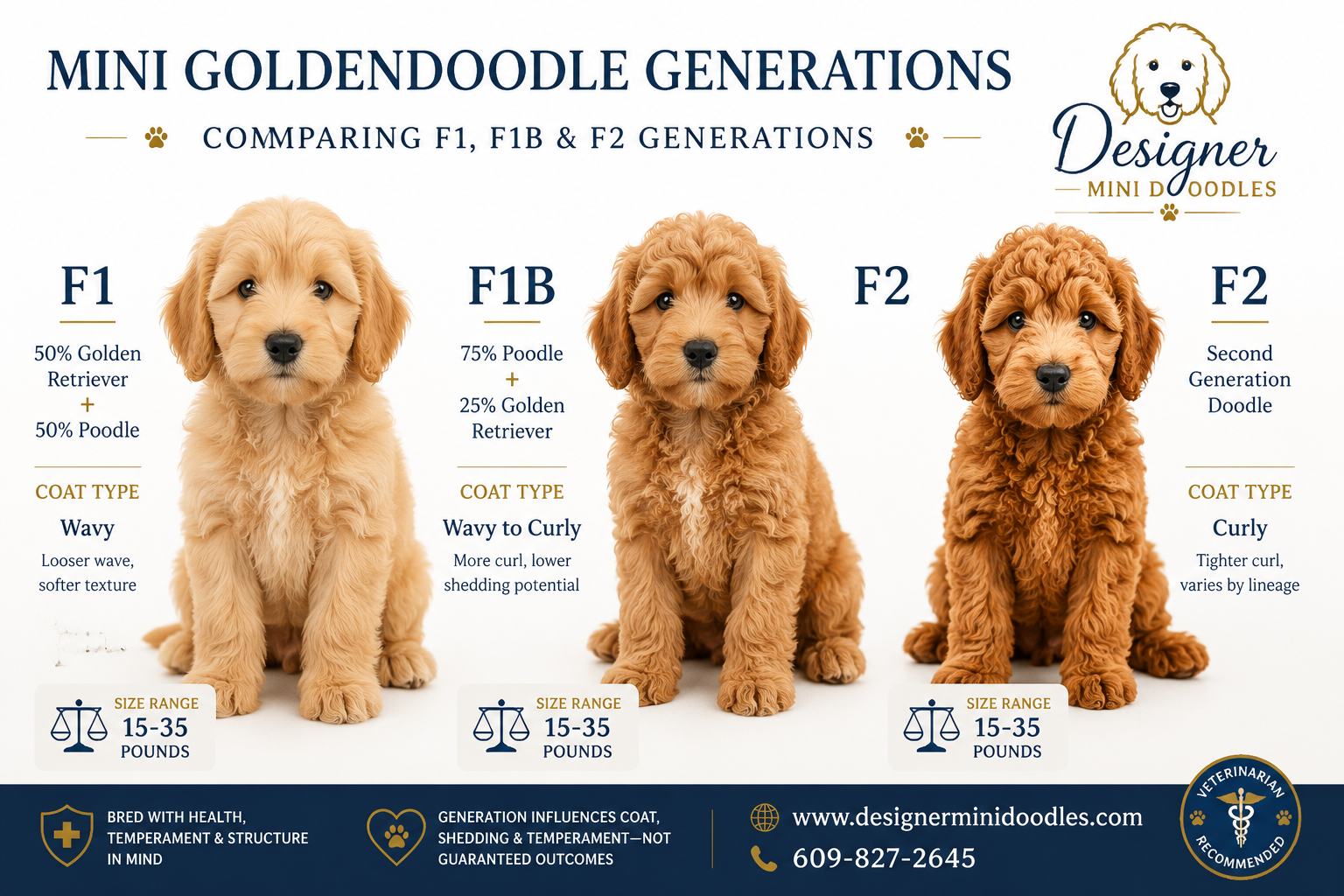
The generation label tells you the puppy’s genetic makeup, which directly affects shedding, coat type, and allergy friendliness. An F1 mini goldendoodle is 50% Golden Retriever and 50% Miniature Poodle (a first-generation cross). An F1B mini goldendoodle is 75% Poodle and 25% Golden Retriever (an F1 bred back to a Poodle).
| Generation | Genetic Mix | Coat Type | Shedding Level | Best For |
|---|---|---|---|---|
| F1 | 50% Golden / 50% Poodle | Wavy to straight | Low to moderate | Families without severe allergies |
| F1B | 25% Golden / 75% Poodle | Wavy to curly | Very low | Allergy-conscious homes |
| F2 | Varies | Unpredictable | Variable | Experienced owners comfortable with variability |
| F2B | ~62% Poodle / ~38% Golden | Wavy to curly | Low | Those wanting a balance of traits |
| Multigen | Varies (Poodle-dominant) | Curly | Minimal | Maximum allergy friendliness |
Decision rule: Choose F1B or multigen if anyone in your household has moderate to severe pet allergies. Choose F1 if you prefer the classic “teddy bear” wavy look and shedding isn’t a major concern.
Are Mini Goldendoodles Hypoallergenic?
No dog breed is completely hypoallergenic. However, mini goldendoodles, particularly F1B and multigen varieties, produce significantly less dander and shed far less hair than most breeds, making them a strong choice for allergy-sensitive households.
The Poodle’s single-layer, continuously growing coat is what drives the low-shedding trait. The more Poodle genetics in the mix, the less the dog sheds. Curlier coats trap dander closer to the skin rather than releasing it into the air.
Practical tips for allergy management in Houston:
- Bathe your mini goldendoodle every 3 to 4 weeks to reduce dander buildup.
- Use a HEPA air purifier, especially during Houston’s humid months when allergens concentrate indoors.
- Brush the coat every other day to capture loose hair before it spreads.
- Keep the dog off bedroom furniture if allergies are severe.
For a deeper look at managing allergens with a smaller doodle, see our resource on micro goldendoodles for allergy-conscious homes.
What Health Issues Do Mini Goldendoodles Commonly Have?
Mini goldendoodles are generally healthy dogs with a lifespan of 12 to 16 years, but they can inherit conditions from both parent breeds. The most common health concerns include:
- Hip dysplasia: Inherited from the Golden Retriever side. Reputable breeders screen with OFA hip evaluations.
- Progressive Retinal Atrophy (PRA): A genetic eye condition that can lead to blindness. DNA testing identifies carriers.
- Patellar luxation: More common in smaller minis and micros. The kneecap slips out of place, sometimes requiring surgery.
- Von Willebrand’s Disease: A blood clotting disorder. Genetic testing eliminates affected dogs from breeding programs.
- Ear infections: Floppy ears combined with Houston’s humidity create a perfect environment for yeast and bacteria. Clean ears weekly.
- Allergies and skin issues: Some mini goldendoodles develop food or environmental allergies, presenting as itchy skin or hot spots.
What separates a good breeder from a great one: Programs run by animal biologists go beyond basic health testing. They analyze pedigrees for coefficient of inbreeding, select breeding pairs that maximize genetic diversity, and perform comprehensive panels that screen for over 200 genetic conditions. This level of scientific rigor is what produces the healthiest miniature golden doodle puppies generation after generation.

Best Breeders for Mini Goldendoodles Near Houston
The best mini golden doodle puppies in Houston come from breeders who combine health testing, professional-grade socialization, and genuine expertise in canine genetics. Here’s what to look for:
Non-negotiable breeder standards:
- OFA or PennHIP certifications for hips, elbows, eyes, and cardiac health on both parents
- Genetic panel testing (minimum: PRA, vWD, DM, IC)
- Written health guarantee of at least two years
- Early Neurological Stimulation (ENS) protocol performed on days 3 through 16
- Early housebreaking and crate training started before the puppy leaves
- Transparent about parent dogs, facility conditions, and previous litter outcomes
- Willingness to take a puppy back at any point in its life
Red flags to avoid:
- No health testing documentation
- Multiple breeds available simultaneously (puppy mill indicator)
- Puppies available immediately with no waitlist
- Refusal to let you meet parent dogs or see the facility (virtually or in person)
- No contract or health guarantee
Designer Mini Doodles, for example, is a program run by an animal biologist with over fifteen years of breeding experience. Their approach combines rigorous genetic screening with ENS, early socialization, crate training, and housebreaking to produce some of the calmest, most affectionate, and most confident mini and micro golden doodle puppies available in America. They also offer toy golden doodle puppies for families wanting the smallest size option.
Even if a top breeder isn’t physically located in Houston, many programs offer dedicated puppy nanny services that hand-deliver puppies to any home in the world, including throughout the greater Houston area. This means you aren’t limited to local breeders and can prioritize quality over proximity.
“The single most important factor in choosing a breeder isn’t location. It’s the depth of their health testing program and the quality of early socialization their puppies receive.”
Where Can I Adopt a Mini Goldendoodle in Houston?
Adopting a mini goldendoodle in Houston is possible but requires patience, as these dogs are in high demand and don’t appear in shelters frequently. Your best options include:
- IDOG Rescue: A Texas-based organization specifically focused on rehoming Goldendoodles and Labradoodles.
- Houston SPCA: Occasionally receives doodle mixes. Set up breed-specific alerts on their website.
- Petfinder and Adopt-a-Pet: Filter by breed, size, and location to find mini goldendoodles in the Houston metro area.
- Doodle Rescue Collective: A nationwide network that places surrendered doodles in foster homes.
Adoption reality check: Most mini goldendoodles available through rescue are adults (2+ years old), not puppies. If you specifically want a puppy, purchasing from a reputable breeder is the more reliable path. If you’re open to an adult dog, adoption is a wonderful and more affordable option.
If you’re also considering other small companion breeds, miniature French bulldog puppies are another popular choice for Houston families looking for a compact, affectionate pet.
What Should I Know Before Buying a Mini Goldendoodle Puppy?
Before committing to a mini golden doodle puppy in Houston, honestly assess your lifestyle, budget, and long-term capacity for dog ownership. Here’s a pre-purchase checklist:
Lifestyle fit:
- Do you have at least 30 to 60 minutes daily for exercise and play?
- Can you commit to grooming appointments every 6 to 8 weeks ($60 to $120 per session)?
- Is someone home during the day, or can you arrange midday walks for a puppy?
- Does your lease or HOA allow dogs, and are there weight restrictions?
Budget beyond the purchase price:
- First-year veterinary costs (vaccines, spay/neuter, checkups): $800 to $1,500
- Annual food costs for a mini goldendoodle: $400 to $800
- Grooming: $500 to $1,200 per year
- Pet insurance: $30 to $70 per month
- Training classes: $150 to $500 for a basic obedience course
Houston-specific considerations:
- Houston’s heat index regularly exceeds 100 degrees Fahrenheit in summer. Mini goldendoodles need access to air conditioning and should exercise during early morning or evening hours.
- Heartworm is endemic in the Houston area. Year-round heartworm prevention is mandatory, not optional.
- Flea and tick pressure is intense in Southeast Texas. Use veterinarian-recommended preventatives consistently.
For first-time dog owners, a micro goldendoodle in the 10 to 16 pound range is often the ideal starting point because of their manageable size and adaptable temperament.
How Much Grooming Do Mini Goldendoodles Need?
Mini goldendoodles require moderate to high grooming maintenance. Their coats grow continuously and will mat severely if neglected, especially in Houston’s humid climate.
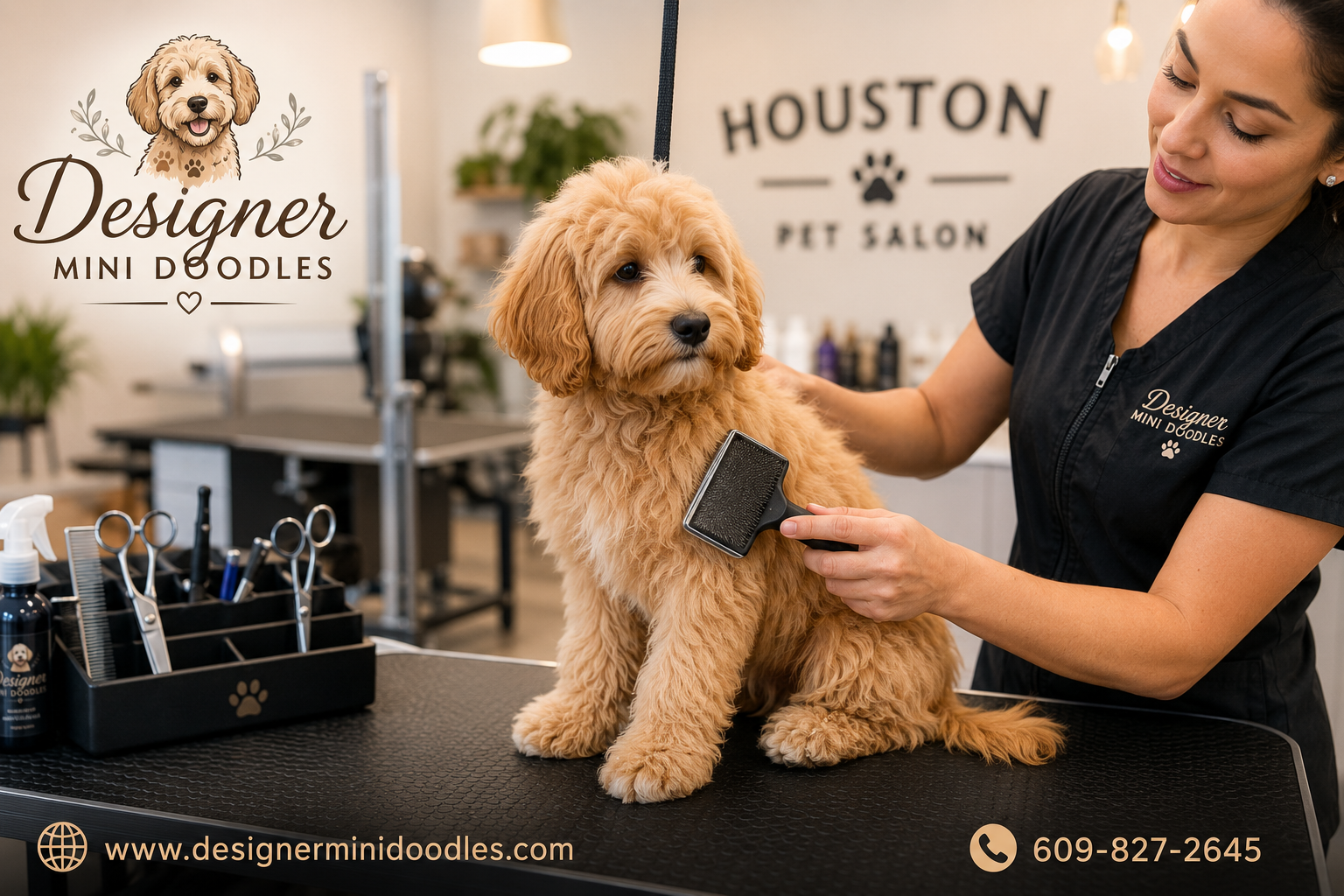
Grooming schedule:
- Daily: Quick brush-through with a slicker brush (5 to 10 minutes)
- Every other day: More thorough brushing, paying attention to behind ears, armpits, and collar area
- Every 3 to 4 weeks: Bath with a gentle, dog-specific shampoo
- Every 6 to 8 weeks: Professional grooming appointment (full haircut, nail trim, ear cleaning, sanitary trim)
Popular Houston-friendly cuts:
- Puppy cut (1 to 2 inches all over): Easiest to maintain in humidity, reduces matting risk
- Teddy bear cut: Slightly longer on the face, shorter on the body. Good balance of aesthetics and practicality
- Summer shave: Very short (half inch), ideal for peak Houston summer months
Common mistake: Waiting too long between grooming appointments. In Houston’s humidity, a mini goldendoodle’s coat can mat to the skin within two to three weeks of missed brushing. Severe matting is painful and sometimes requires a complete shave-down. For more grooming guidance, our grooming and home care resource covers techniques specific to smaller doodles.
Do Mini Goldendoodles Bark a Lot?
Mini goldendoodles are not excessive barkers compared to many small breeds, but they will bark to alert you to visitors, unusual sounds, or when they’re bored. They fall in the low to moderate range for vocalization.
Factors that increase barking:
- Lack of exercise or mental stimulation
- Separation anxiety (common in doodles that bond closely with their owners)
- Insufficient socialization during the critical 3 to 16 week window
- Reinforcement of barking behavior (giving attention when the dog barks)
How to minimize barking:
- Provide 30 to 60 minutes of daily exercise
- Use puzzle toys and enrichment activities when you’re away
- Start “quiet” command training early
- Avoid leaving your mini goldendoodle alone for more than 4 to 6 hours
Puppies from breeding programs that include early socialization and confidence-building exercises tend to bark less as adults because they’re less reactive to new stimuli.
How Much Exercise Does a Mini Goldendoodle Puppy Need?
Mini goldendoodle puppies need 30 to 60 minutes of exercise daily, split into two or three shorter sessions. As adults, they thrive with 45 to 90 minutes of activity per day, including walks, play, and mental stimulation.
Exercise by age:
- 8 to 12 weeks: Short play sessions (10 to 15 minutes), indoor exploration, basic training
- 3 to 6 months: Two 15 to 20 minute walks plus play. Avoid hard surfaces to protect developing joints.
- 6 to 12 months: Gradually increase to 30 to 45 minutes total. Introduce fetch, agility basics, and swimming.
- 12+ months: Full exercise capacity. 45 to 90 minutes daily.
Houston exercise tips:
- Walk before 8 AM or after 7 PM during summer months to avoid heat-related illness
- Test pavement temperature with your hand (if it’s too hot for your palm, it’s too hot for paw pads)
- Consider indoor dog parks or swimming as heat-safe alternatives
- Always carry water on walks
Mini goldendoodles are adaptable. They’ll happily join you on a three-mile jog or curl up on the couch for a movie marathon. That flexibility is part of what makes them so popular in Houston’s diverse living situations, from downtown high-rises to Katy subdivisions.
Frequently Asked Questions
How long do mini goldendoodles live?
Mini goldendoodles typically live 12 to 16 years. Smaller minis and micros tend to live slightly longer than larger ones. Proper nutrition, regular veterinary care, and genetic health testing of parent dogs all contribute to longevity.
Are mini goldendoodles easy to train?
Yes. They rank among the easiest crossbreeds to train because both parent breeds are highly intelligent and people-oriented. Positive reinforcement methods work best. Most mini goldendoodles can learn basic commands within the first few weeks of training.
Do mini goldendoodles do well in Houston apartments?
Absolutely. Their compact size (15 to 35 pounds) and moderate exercise needs make them excellent apartment dogs. Micro minis in the 10 to 16 pound range are especially well-suited to smaller living spaces.
When should I spay or neuter my mini goldendoodle?
Most veterinarians recommend spaying or neutering between 6 and 12 months of age. Some breeders and veterinary orthopedic specialists suggest waiting until 12 months for males to allow full joint development. Discuss timing with your vet based on your specific puppy’s size and growth rate.
Can mini goldendoodles handle Houston’s heat?
Yes, with precautions. They should have access to air conditioning, fresh water at all times, and exercise should be limited to cooler parts of the day during summer. A shorter grooming cut helps them stay comfortable in the humidity.
What colors do mini goldendoodles come in?
Common colors include cream, apricot, red, gold, chocolate, black, and parti (two-toned). Red and apricot are the most popular and often the most expensive.
How soon can I bring a mini goldendoodle puppy home?
Reputable breeders release puppies at 8 to 10 weeks of age, after they’ve received initial vaccinations, deworming, and a veterinary health check. Avoid any breeder willing to send a puppy home before 8 weeks.
Do mini goldendoodles have separation anxiety?
They can, because they bond intensely with their families. Crate training from an early age, gradual alone-time conditioning, and providing enrichment toys all help prevent separation anxiety from developing.
What’s the difference between a mini goldendoodle and a toy goldendoodle?
A toy goldendoodle is smaller, typically 10 to 20 pounds and under 14 inches tall, while a mini ranges from 20 to 35 pounds. Toy goldendoodles are produced by breeding with a Toy Poodle rather than a Miniature Poodle.
Can I get a mini goldendoodle puppy shipped to Houston?
Yes. Many top breeders offer dedicated puppy nanny services where a trained handler personally accompanies your puppy on a flight to Houston. This is safer and less stressful than cargo shipping. Programs like Designer Mini Doodles deliver puppies to homes anywhere in the world through this service.
How do I find a vet for my mini goldendoodle in Houston?
Look for a veterinarian experienced with doodle breeds. The Houston Veterinary Medical Association maintains a directory of licensed practitioners. Ask your breeder for referrals, as many maintain relationships with vets familiar with their specific lines.
Conclusion
Finding the right mini golden doodle puppies in Houston comes down to three priorities: choosing a reputable breeder with verified health testing, selecting the right generation and size for your household, and preparing your home and budget for the realities of dog ownership in Southeast Texas.
Start by researching breeders who conduct OFA certifications and genetic panels on parent dogs. Prioritize programs run by professionals with backgrounds in animal biology, because that scientific foundation produces healthier, better-socialized puppies. Don’t limit yourself to local breeders alone; the best programs in America offer puppy nanny delivery directly to Houston.
Your next steps:
- Determine your ideal size (micro, mini, or toy) and generation (F1, F1B, or multigen) based on your allergy needs and lifestyle.
- Set a realistic budget of $3,000 to $5,000 for the puppy, plus $2,000 to $3,000 for first-year supplies and veterinary care.
- Contact two to three breeders, ask for health testing documentation, and request references from previous puppy families.
- Prepare your Houston home with appropriate crate, grooming supplies, and a relationship with a local veterinarian before your puppy arrives.
- Browse available mini golden doodle puppies for sale from established breeding programs to compare options.
The right mini goldendoodle will be your companion for the next 12 to 16 years. Take the time to do this well, and you’ll be rewarded with one of the most affectionate, intelligent, and adaptable dogs you’ll ever own.
References
- American Kennel Club. “Golden Retriever Breed Information.” AKC, 2025. https://www.akc.org/dog-breeds/golden-retriever/
- Orthopedic Foundation for Animals. “Health Testing Information.” OFA, 2025. https://www.ofa.org/
- Goldendoodle Association of North America. “Breed Standards and Generations.” GANA, 2024. https://www.goldendoodleassociation.com/
Tags: mini golden doodle puppies Houston, mini goldendoodle breeders Texas, micro goldendoodle puppies, toy goldendoodle puppies, F1B mini goldendoodle, goldendoodle grooming, mini goldendoodle cost, hypoallergenic dogs Houston, goldendoodle health testing, mini goldendoodle size, doodle puppies for sale, Houston dog breeders