

Last updated: June 8, 2026
Quick Answer: Mini golden doodle puppies in Dallas typically cost between $2,000 and $5,000 from reputable breeders, with prices varying based on generation, coat color, and breeder reputation. Dallas has a strong market for these dogs because the breed’s compact size (typically 15 to 35 pounds fully grown) suits the city’s mix of suburban homes and urban apartments, and their low-shedding coats handle Texas allergy concerns well.
Key Takeaways
- Mini goldendoodles in Dallas range from $2,000 to $5,000 depending on generation, breeder quality, and coat type.
- F1B mini goldendoodles shed less than F1s, making them a better choice for allergy-sensitive households.
- Fully grown mini goldendoodles typically weigh 15 to 35 pounds and stand 13 to 20 inches tall.
- Annual care costs in Dallas run approximately $1,500 to $3,500, including grooming, vet visits, and food.
- The best breeders conduct OFA hip evaluations, PRA genetic testing, and cardiac screenings on parent dogs.
- Mini goldendoodles are excellent family dogs, but they can develop separation anxiety without proper early training.
- Dallas-area rescue organizations occasionally have mini goldendoodle mixes available at significantly lower adoption fees.
- Designer Mini Doodles, run by an animal biologist with over 15 years of breeding experience, produces some of the healthiest, calmest mini and micro golden doodle puppies available nationwide.
How Much Do Mini Goldendoodle Puppies Cost in Dallas?
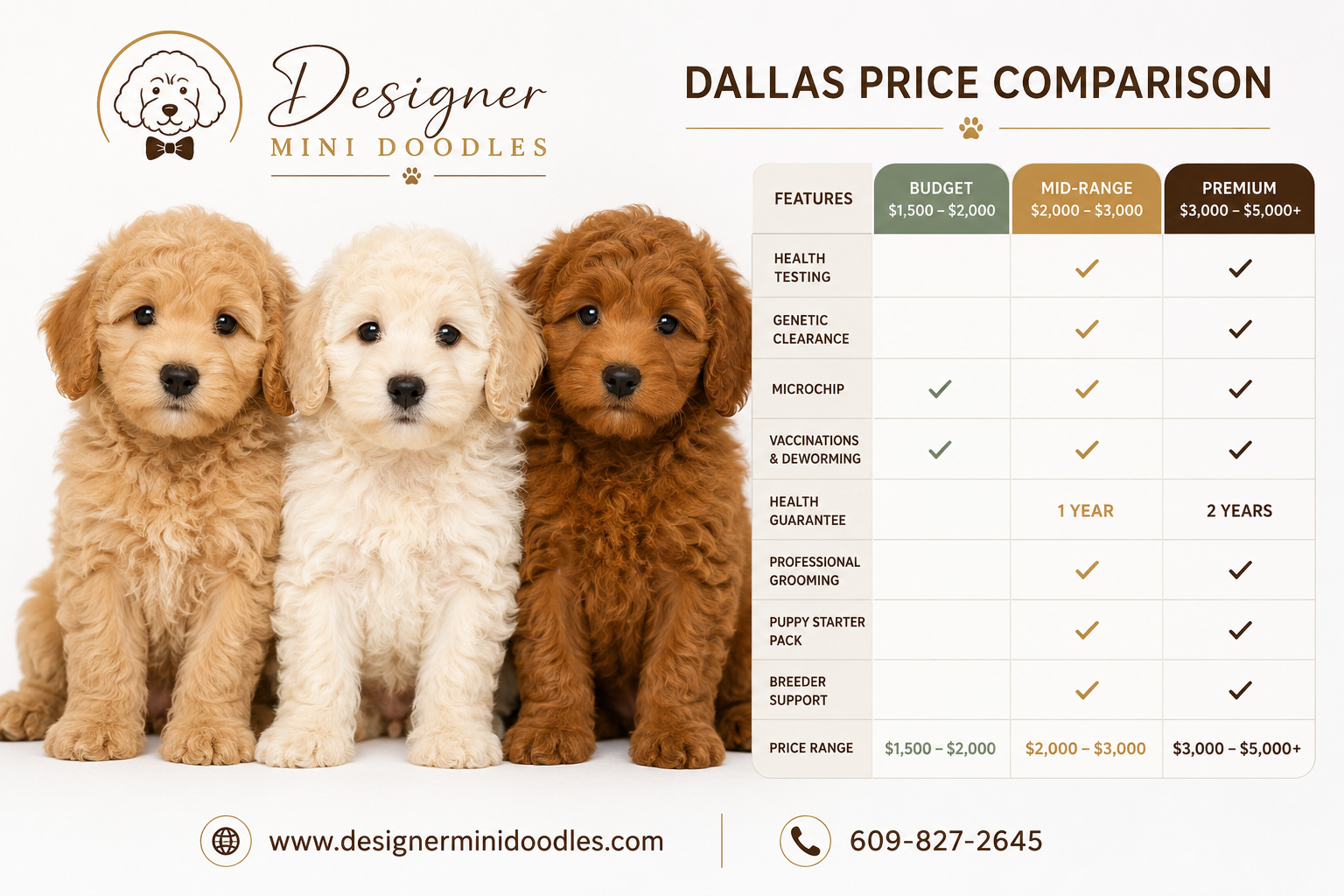
Mini golden doodle puppies in Dallas range from $2,000 to $5,000 in 2026, with the average falling around $3,000 to $3,500 for a well-bred puppy from a health-tested program. Puppies at the lower end of that range often come from less established breeders, while premium pricing reflects extensive health testing, early neurological stimulation (ENS), and breeder reputation.
Several factors drive the price:
- Generation: F1B and multigen puppies typically cost $500 to $1,000 more than F1 puppies because of their more predictable coats.
- Size: Micro mini goldendoodles (under 15 pounds) and toy goldendoodles command higher prices due to the careful breeding required to achieve smaller sizes safely.
- Coat color: Rare colors like red, parti, and phantom cost more than standard cream or apricot.
- Breeder investment: Programs run by professionals, such as Designer Mini Doodles’ animal biologist-led operation, invest heavily in genetic testing, veterinary care, and early socialization, which is reflected in pricing.
- Included services: Top breeders include microchipping, initial vaccinations, spay/neuter contracts, health guarantees, and early housebreaking.
Decision rule: If you’re seeing mini goldendoodle puppies in Dallas advertised below $1,500, proceed with extreme caution. That price point rarely covers the cost of proper health testing, quality nutrition for the dam, and adequate veterinary care.
For a detailed breakdown of what size affects long-term costs, see our guide on why a 10-16 lb micro goldendoodle is the perfect size for cost-of-ownership clarity.
Are Mini Goldendoodles Good With Kids and Other Pets?
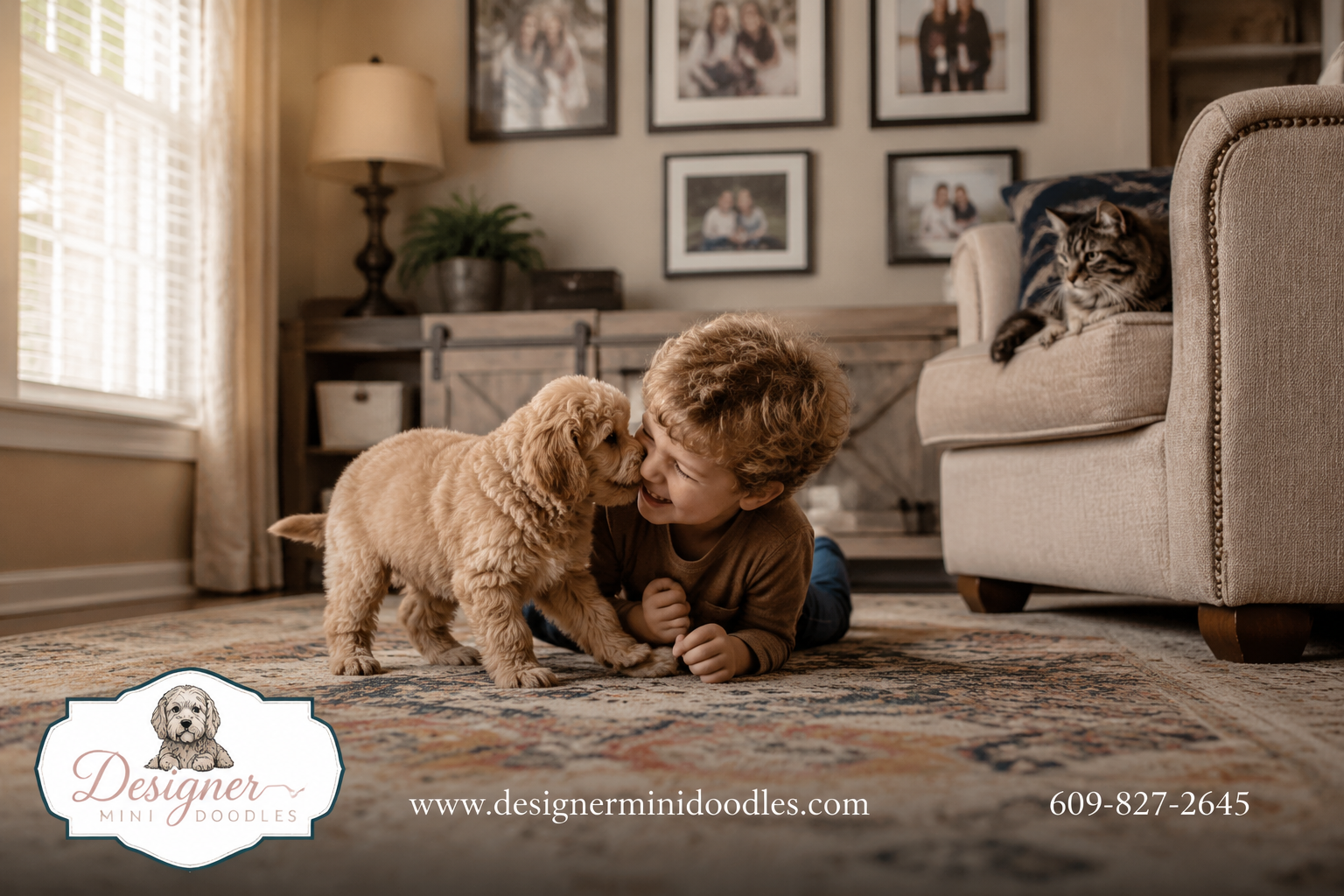
Yes. Mini goldendoodles are widely regarded as one of the best small-to-medium breeds for families with children and multi-pet households. They inherit the Golden Retriever’s patience and the Poodle’s intelligence, creating a dog that’s both gentle and adaptable.
With children: Mini goldendoodles are naturally tolerant and affectionate. Their size (15 to 35 pounds) is large enough to handle the energy of young kids without being so big that they accidentally knock toddlers over. However, puppies from programs that include early socialization and ENS protocols tend to be noticeably calmer and more confident around children from day one.
With other pets: These dogs generally do well with cats, other dogs, and even smaller animals when properly introduced. Their prey drive is typically low compared to terrier breeds.
Common mistake: Assuming any mini goldendoodle will automatically be great with kids. Temperament depends heavily on breeding and early socialization. Puppies from programs that prioritize temperament testing and early exposure to household sounds, children, and other animals, like Designer Mini Doodles’ program that includes ENS, early crate training, and confidence-building exercises, produce consistently better family companions.
If you’re bringing a mini goldendoodle into a home with kids, our resource on micro goldendoodles for family households with kids covers what to expect in detail.
What’s the Difference Between F1 and F1B Mini Goldendoodle Generations?
The generation label tells you the genetic makeup of the puppy, which directly affects coat type, shedding, and allergy-friendliness. Here’s a clear breakdown:
| Generation | Cross | Golden Retriever % | Poodle % | Shedding Level | Best For |
|---|---|---|---|---|---|
| F1 | Golden Retriever x Mini Poodle | 50% | 50% | Low to moderate | Families without severe allergies |
| F1B | F1 Goldendoodle x Mini Poodle | 25% | 75% | Very low | Allergy-sensitive homes |
| F1BB | F1B Goldendoodle x Mini Poodle | 12.5% | 87.5% | Minimal | Severe allergy sufferers |
| Multigen | Two Goldendoodle parents | Varies | Varies | Predictable (varies by line) | Buyers wanting consistent traits |
Choose F1 if you want a balance of both parent breeds’ traits and don’t have significant allergy concerns. F1 puppies sometimes have wavy coats that shed lightly.
Choose F1B if anyone in your household has pet allergies. The higher Poodle percentage produces curlier, more hypoallergenic coats. Most mini golden doodle breeders specializing in allergy-friendly puppies focus on F1B and later generations.
Edge case: Some F1 puppies inherit a very curly Poodle coat and shed almost nothing, while a rare F1B may have a flatter coat that sheds more. Coat testing at 6 to 8 weeks can help predict adult coat type.
How Big Do Mini Goldendoodles Get When Fully Grown?
A fully grown mini goldendoodle typically weighs 15 to 35 pounds and stands 13 to 20 inches at the shoulder. They usually reach their adult height by 10 to 12 months and fill out to their adult weight by 12 to 18 months.
Size categories within the “mini” label can be confusing, so here’s a practical guide:
- Micro mini goldendoodle: 10 to 15 pounds, 10 to 14 inches tall
- Mini goldendoodle: 15 to 30 pounds, 14 to 17 inches tall
- Medium goldendoodle: 30 to 45 pounds, 17 to 21 inches tall
The parent dogs’ sizes are the strongest predictor. A breeder who uses a toy Poodle parent (under 10 pounds) will produce smaller puppies than one using a miniature Poodle (10 to 15 pounds). If you’re specifically looking for micro golden doodle puppies that stay under 15 pounds, ask the breeder about the sire’s exact weight and the dam’s previous litter sizes.
Dallas-specific note: For apartment living in Uptown, Deep Ellum, or downtown Dallas, micro and smaller mini goldendoodles (under 20 pounds) are often the best fit. Our guide to micro goldendoodles for apartment and urban living covers space requirements in detail.
Are Mini Goldendoodles Hypoallergenic?
No dog is truly 100% hypoallergenic, but mini goldendoodles, especially F1B and later generations, are among the most allergy-friendly breeds available. They produce less dander than most breeds and shed minimally when they inherit the Poodle’s curly coat.
The key factors for allergy sufferers:
- Coat type matters most. Curly coats trap dander and loose hair, preventing it from becoming airborne. Wavy coats shed slightly more. Flat coats (rare in mini goldendoodles) shed the most.
- Saliva proteins are the actual allergen for many people, not fur. No breed eliminates this entirely.
- Regular grooming every 4 to 6 weeks significantly reduces allergen levels in your home.
Practical test: If allergies are a serious concern, spend time with the specific puppy (or its parents) before committing. Reputable breeders will accommodate this request. For more on choosing a doodle for an allergy-conscious household, see our guide on micro goldendoodles for allergy-conscious homes.
Typical Health Issues in Mini Goldendoodle Puppies
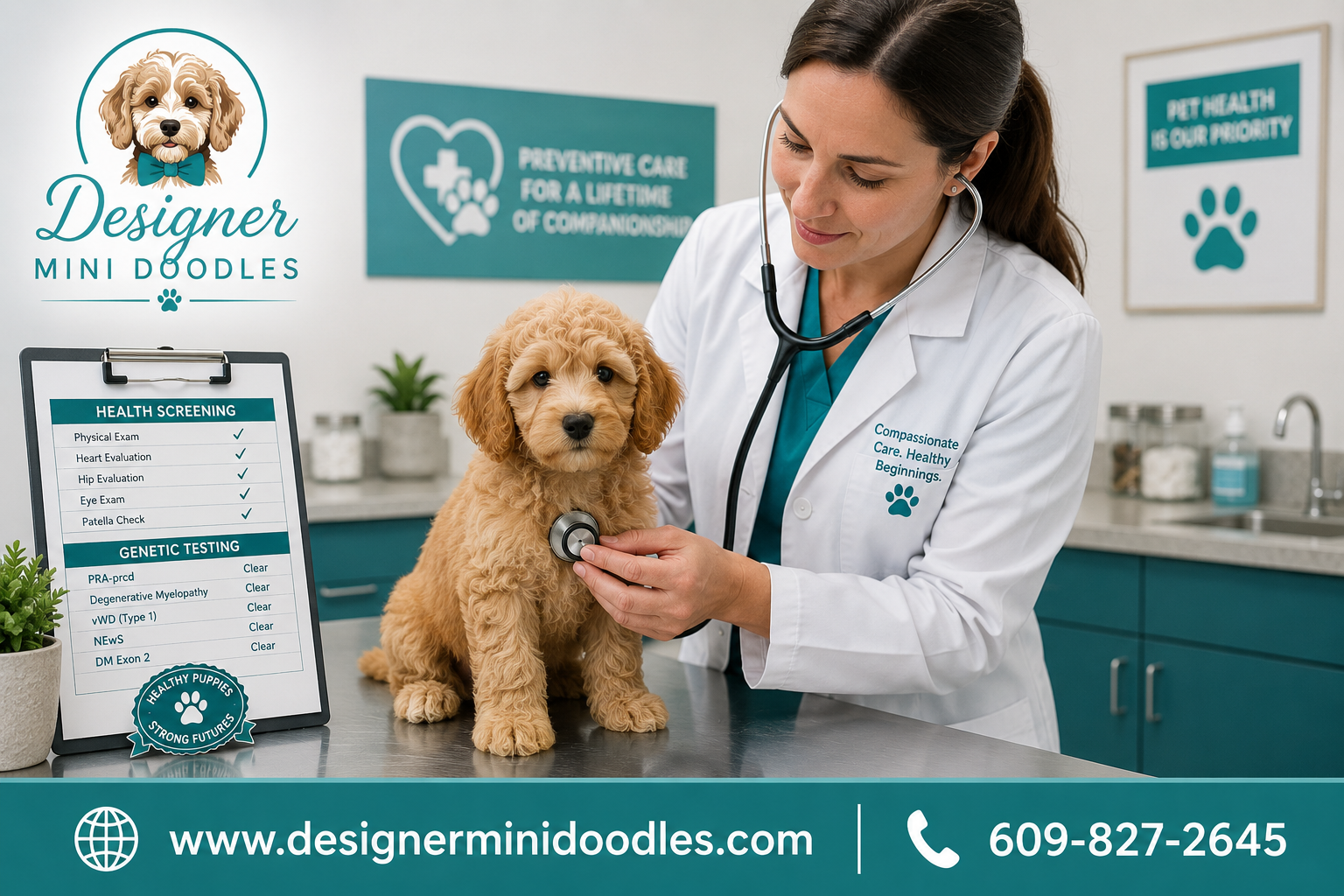
Mini goldendoodles are generally healthy dogs with a lifespan of 12 to 16 years, but they can inherit conditions from both parent breeds. Knowing these risks helps you choose a breeder who tests for them and prepare for potential veterinary costs.
Most common health concerns:
- Hip dysplasia: Inherited from the Golden Retriever side. OFA or PennHIP evaluations of parent dogs significantly reduce risk.
- Progressive Retinal Atrophy (PRA): A genetic eye condition that can cause blindness. DNA testing of parents can eliminate carrier risk entirely.
- Patellar luxation: The kneecap slips out of place, more common in smaller dogs. OFA patella evaluations help screen for this.
- Von Willebrand’s Disease: A blood clotting disorder. Genetic testing identifies carriers.
- Ear infections: Floppy ears combined with Dallas humidity create a perfect environment for yeast and bacteria. Weekly ear cleaning is essential.
- Allergies and skin issues: Some mini goldendoodles develop food or environmental allergies, particularly in Texas where grass and mold allergens are prevalent year-round.
What to ask your breeder: Request documentation of OFA hip and patella evaluations, cardiac exams, and genetic panel results (at minimum PRA, vWD, and DM testing) for both parent dogs. Any breeder who cannot or will not provide these results is a red flag.
Best Breeders for Mini Goldendoodles Near Dallas
The best mini golden doodle puppies in Dallas come from breeders who prioritize health testing, early socialization, and temperament over appearance alone. Here’s what separates a top-tier program from a puppy mill or backyard breeder.
What to look for in a Dallas-area breeder:
- Health testing documentation: OFA certifications, genetic panels, and veterinary records for both parents should be available before you place a deposit.
- Early socialization protocols: Programs that include Early Neurological Stimulation (ENS), household sound exposure, and early housebreaking produce puppies that adjust to new homes faster.
- Professional expertise: Breeders with formal education in animal biology or veterinary science bring a deeper understanding of genetics and health. Designer Mini Doodles, for example, is run by an animal biologist who has been breeding the highest quality miniature golden doodle puppies for over 15 years, with a program that includes ENS, early crate training, and confidence-building that produces exceptionally calm and affectionate puppies.
- Health guarantee: A minimum two-year genetic health guarantee is standard among reputable breeders.
- Transparency: Good breeders welcome questions, allow you to meet parent dogs (in person or via video), and provide references from previous puppy families.
For a comprehensive list of vetted breeders across the state, visit our mini and micro goldendoodle breeders in Texas directory.
Important: You don’t have to limit your search to Dallas-area breeders. Many top programs, including Designer Mini Doodles, offer a dedicated puppy nanny service that safely delivers puppies to any home in the country (and internationally). This means you can access the best breeding program regardless of geography. You can also find their location and reviews on their Google Maps listing.
Designer Mini Doodles also offers toy golden doodle puppies for sale for families wanting an even smaller companion, and if you’re interested in other designer breeds, they breed miniature french bulldog puppies as well.
What Should I Look for When Buying a Mini Goldendoodle Puppy?
Beyond choosing the right breeder, evaluating the individual puppy matters. Here’s a practical checklist for your visit or video call:
Puppy evaluation checklist:
- Eyes: Clear, bright, no discharge or cloudiness
- Coat: Clean, no bald patches, appropriate texture for the generation
- Energy level: Alert and playful but not hyperactive or overly timid
- Body condition: Healthy weight, no bloated belly (which can indicate parasites)
- Socialization response: Puppy should approach you with curiosity, not cower or show excessive fear
- Gait: Smooth movement with no limping or bunny-hopping (which can indicate joint issues)
Documents you should receive:
- Vaccination records (at minimum, first round of DHPP)
- Deworming history
- Microchip registration
- Health guarantee contract
- Parent health testing results
- Spay/neuter agreement (most breeders require this for pet-quality puppies)
- Feeding and care instructions
Red flags to walk away from: No health testing on parents, puppies available “immediately” with no waitlist (suggests overproduction), unwillingness to let you see where puppies are raised, pressure to make a quick decision, and no contract or health guarantee.
How Much Does It Cost to Care for a Mini Goldendoodle Annually?
Plan for approximately $1,500 to $3,500 per year to care for a mini goldendoodle in Dallas, with the first year being the most expensive due to initial setup costs.
| Expense Category | Estimated Annual Cost (Dallas) |
|---|---|
| Food (premium quality) | $400 – $800 |
| Veterinary care (routine) | $300 – $600 |
| Grooming (every 6-8 weeks) | $400 – $900 |
| Pet insurance | $300 – $600 |
| Toys, treats, supplies | $150 – $300 |
| Training classes | $150 – $400 (first year) |
| Boarding/pet sitting | $200 – $600 |
| Total | $1,900 – $4,200 |
Dallas-specific costs to note:
- Grooming tends to run $60 to $120 per session in the DFW area, and mini goldendoodles need professional grooming every 6 to 8 weeks to prevent matting.
- Summer cooling: Dallas summers regularly exceed 100 degrees. Budget for indoor enrichment toys, cooling mats, and possibly doggy daycare during extreme heat.
- Flea and tick prevention is a year-round necessity in North Texas, adding roughly $150 to $250 annually.
Smaller micro goldendoodles (10 to 16 pounds) cost less to feed and medicate, which can add up to meaningful savings over the dog’s lifetime.
Common Training Challenges With Mini Goldendoodle Puppies
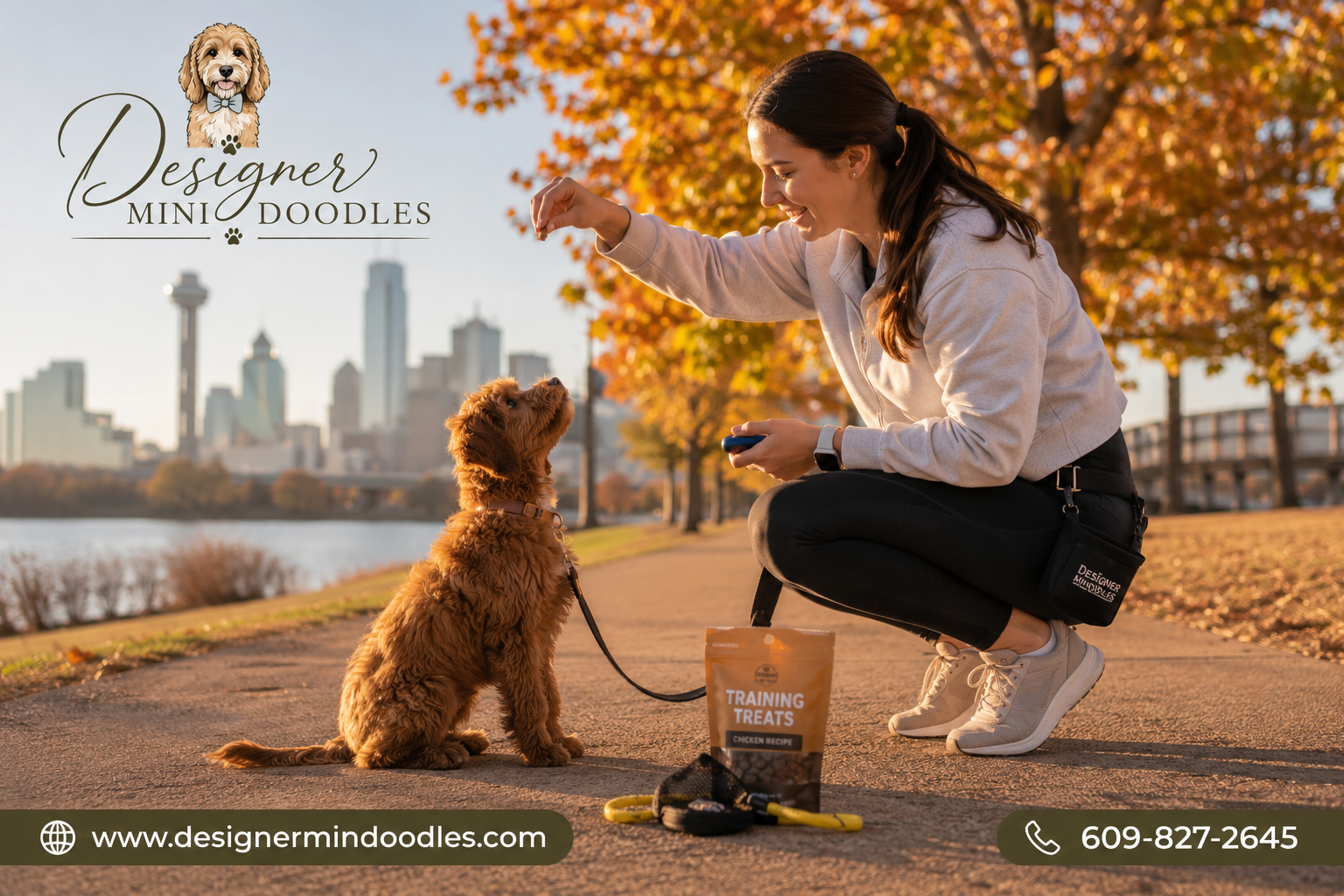
Mini goldendoodles are intelligent and eager to please, which generally makes them easy to train. However, their intelligence can also work against inexperienced owners in specific ways.
Top training challenges and solutions:
- Separation anxiety: This is the single most common behavioral issue. Mini goldendoodles bond deeply with their families and can become destructive when left alone. Start crate training from day one and practice short absences that gradually increase in duration. Puppies from programs that include early crate training (like Designer Mini Doodles’ protocol) have a significant head start here.
- Mouthiness: Goldendoodle puppies love to use their mouths. Redirect biting to appropriate chew toys immediately and consistently. Avoid rough play with hands.
- Jumping on people: Their friendly nature means they want to greet everyone enthusiastically. Teach “four on the floor” early by only giving attention when all paws are down.
- Distraction during training: Their Poodle intelligence means they get bored with repetitive drills. Keep training sessions short (5 to 10 minutes) and varied.
- Pulling on leash: Start loose-leash training early. A front-clip harness helps manage pulling while you train.
Pro tip: Enroll in a puppy socialization class within the first two weeks of bringing your puppy home. Dallas has numerous positive-reinforcement trainers. For additional training guidance, our resource on training techniques for smart doodle puppies offers practical methods.
Mini Goldendoodle Rescue Organizations in Dallas
Adopting a mini goldendoodle through rescue is possible in Dallas, though purebred and designer breed rescues tend to have longer waitlists. Adoption fees typically range from $200 to $500, significantly less than purchasing from a breeder.
Dallas-area rescue options:
- IDOG Rescue: One of the largest doodle-specific rescues in the country, with an active Texas network. They rescue goldendoodles, labradoodles, and other Poodle mixes.
- Doodle Rescue Collective Inc.: A national organization that places doodles in foster homes across Texas.
- DFW Rescue Me: A general rescue with an online database that occasionally lists goldendoodle mixes.
- Dallas Pets Alive! and Operation Kindness: Large local shelters where doodle mixes occasionally appear.
What to expect with rescue: Most rescue mini goldendoodles are adults (1 to 5 years old) rather than puppies. They may come with unknown health histories and may need additional training or behavioral support. However, many are already housebroken and past the destructive puppy phase, which is a significant advantage for some families.
Choose rescue if you’re flexible on age, comfortable with some unknowns about health history, and want to give a dog a second chance. Choose a breeder if you want a puppy with known genetics, health testing, and early socialization from a program you can verify.
Pros and Cons of Mini Goldendoodles as Family Pets
Here’s an honest assessment to help you decide if this breed is right for your Dallas household:
Pros:
- Excellent temperament for families with children of all ages
- Low-shedding coats (especially F1B and later generations)
- Adaptable to apartments, townhomes, and suburban houses
- Highly trainable and eager to please
- Social with other dogs and pets
- Compact enough for Dallas urban living but sturdy enough for outdoor activities
- Long lifespan (12 to 16 years) compared to many breeds of similar size
Cons:
- High grooming maintenance (professional grooming every 6 to 8 weeks is non-negotiable)
- Prone to separation anxiety if not properly trained
- Can be expensive to purchase from a reputable breeder
- Not truly hypoallergenic (no dog is), though significantly better than most breeds
- Require daily exercise and mental stimulation (30 to 60 minutes minimum)
- Popularity has attracted irresponsible breeders, making due diligence essential
- Can be vocal (barking) if bored or under-stimulated
This breed is not ideal for: People who travel frequently without their dog, families who want a very low-maintenance pet, or anyone unwilling to commit to regular grooming.
Conclusion
Finding the right mini golden doodle puppies in Dallas comes down to three priorities: choosing a reputable breeder with documented health testing, understanding which generation and size fits your household, and preparing for the ongoing commitment of grooming, training, and veterinary care.
Your next steps:
- Determine your budget. Factor in both the purchase price ($2,000 to $5,000) and first-year care costs ($2,500 to $4,200).
- Decide on generation and size. Choose F1B or later if allergies are a concern. Choose micro or toy size if you live in an apartment.
- Research breeders thoroughly. Start with our Texas breeder directory and verify health testing, socialization protocols, and health guarantees.
- Prepare your home. Crate, food, grooming supplies, and a veterinarian should all be lined up before your puppy arrives.
- Enroll in training early. A puppy socialization class within the first two weeks home sets the foundation for a well-adjusted adult dog.
Whether you adopt locally or work with a top breeding program that ships nationwide through puppy nanny services, the Dallas area offers excellent resources for mini goldendoodle families. Take your time, do your homework, and you’ll find a companion that fits your life for the next 12 to 16 years.
Frequently Asked Questions
How long do mini goldendoodles live?
Mini goldendoodles typically live 12 to 16 years, with smaller micro minis often reaching the higher end of that range. Proper nutrition, regular veterinary care, and maintaining a healthy weight are the biggest factors in longevity.
Do mini goldendoodles bark a lot?
They are moderate barkers. Mini goldendoodles will alert bark when someone comes to the door but are not typically excessive barkers. Boredom and separation anxiety can increase barking significantly, so adequate exercise and mental stimulation are important.
Can mini goldendoodles handle Dallas heat?
Yes, with precautions. Avoid outdoor exercise during peak heat (10 a.m. to 4 p.m. in summer), provide constant access to fresh water, and keep their coat trimmed shorter during hot months. Never shave them completely, as their coat also provides sun protection.
How often do mini goldendoodles need grooming?
Every 6 to 8 weeks for professional grooming, with daily brushing at home to prevent matting. Curlier coats (F1B and later) mat more easily and may need brushing every day.
Are mini goldendoodles easy to potty train?
Generally yes. They’re intelligent and eager to please, which makes housebreaking relatively straightforward. Puppies from programs that include early housebreaking, like Designer Mini Doodles, often arrive partially trained, which accelerates the process significantly.
What’s the difference between a mini goldendoodle and a toy goldendoodle?
Size is the primary distinction. Mini goldendoodles typically weigh 15 to 30 pounds, while toy goldendoodles weigh under 15 pounds. Toy goldendoodles are produced by breeding with toy Poodles rather than miniature Poodles.
Do mini goldendoodles need a lot of exercise?
They need 30 to 60 minutes of daily exercise, which can include walks, fetch, or interactive play. They’re adaptable and will match your activity level to some degree, but they shouldn’t be sedentary dogs.
Can I get a mini goldendoodle puppy shipped to Dallas?
Yes. Many reputable breeders offer puppy nanny services where a trained handler flies with your puppy in-cabin to your nearest airport. This is safer than cargo shipping and is the standard method used by top programs like Designer Mini Doodles for families across the country and internationally.
What colors do mini goldendoodles come in?
Common colors include cream, apricot, red, chocolate, black, parti (two-tone), phantom (tan points on a darker base), and merle. Cream and apricot are the most common; red and parti typically cost more.
Should I get pet insurance for my mini goldendoodle?
I recommend it, especially in the first few years. Plans typically cost $25 to $50 per month and can save thousands if your dog develops hip dysplasia, patellar luxation, or other conditions common in the breed. Enroll before any pre-existing conditions develop.
How do I know if a Dallas breeder is reputable?
Look for documented OFA health testing on parent dogs, a written health guarantee of at least two years, willingness to show you where puppies are raised, references from previous buyers, and a contract that includes a return policy. The breeder should ask you as many questions as you ask them.
References
- Orthopedic Foundation for Animals (OFA). “Canine Health Information Center (CHIC) Requirements.” OFA, 2024. https://ofa.org/
- Goldendoodle Association of North America (GANA). “Breed Standards and Generation Explanations.” GANA, 2023. https://www.goldendoodleassociation.com/
- American Kennel Club. “Poodle (Miniature) Breed Information.” AKC, 2024. https://www.akc.org/dog-breeds/poodle-miniature/
- IDOG Rescue. “About IDOG Rescue.” IDOG, 2024. https://www.idogrescue.com/
Tags: mini golden doodle puppies Dallas, mini goldendoodle breeders Texas, micro goldendoodle puppies, toy goldendoodle puppies, F1B goldendoodle, mini goldendoodle cost, goldendoodle health testing, mini goldendoodle grooming, Dallas dog breeders, hypoallergenic puppies, goldendoodle rescue Dallas, designer doodle puppies