

Last updated: June 8, 2026
Quick Answer: Mini golden doodles for sale typically range from $2,000 to $5,000+ from reputable breeders in 2026, with price depending on breeder reputation, generation type, coat color, and health testing. These dogs are a cross between a Golden Retriever and a Miniature (or Toy) Poodle, weighing 15 to 35 pounds at maturity. The best way to find healthy mini goldendoodle puppies is through established breeders who conduct comprehensive genetic testing, practice early neurological stimulation (ENS), and raise puppies in a home environment.
Key Takeaways
- A mini goldendoodle is a Golden Retriever crossed with a Miniature or Toy Poodle, bred specifically for a smaller size with the temperament of both parent breeds.
- Expect to pay between $2,000 and $5,000 for a well-bred mini goldendoodle puppy; prices above $3,500 often reflect extensive health testing, training programs, and breeder expertise.
- Mini goldendoodles typically weigh 15 to 35 pounds and stand 13 to 20 inches tall, making them well-suited for apartments, families, and seniors.
- These dogs are often marketed as hypoallergenic, but no dog is truly allergen-free; curly and wavy coats do shed significantly less than straight coats.
- Reputable breeders will provide OFA or PennHIP certifications, genetic panel results, a health guarantee, and references from previous buyers.
- The typical lifespan of a mini goldendoodle is 12 to 16 years, longer than most standard-sized breeds.
- Grooming is a non-negotiable commitment: expect professional grooming every 6 to 8 weeks and daily brushing at home.
- Programs that include early socialization, ENS, crate training, and housebreaking produce calmer, more confident puppies.
What Is a Mini Golden Doodle?
A mini golden doodle (also called a miniature goldendoodle) is a designer crossbreed created by pairing a Golden Retriever with a Miniature Poodle or Toy Poodle. The goal is to combine the Golden Retriever’s friendly, loyal temperament with the Poodle’s intelligence and low-shedding coat, all in a smaller package.
Mini goldendoodles come in several generation types, and the generation affects coat type, size predictability, and shedding level:
| Generation | Cross | Coat Predictability | Shedding Level |
|---|---|---|---|
| F1 | Golden Retriever x Mini Poodle | Moderate | Low to moderate |
| F1B | F1 Goldendoodle x Mini Poodle | High | Very low |
| F1BB | F1B Goldendoodle x Mini Poodle | Very high | Minimal |
| F2 | F1 Goldendoodle x F1 Goldendoodle | Lower | Variable |
| Multigen | Multiple generations of goldendoodle breeding | High | Very low to minimal |
Choose an F1B or multigen if low shedding is your top priority. Choose an F1 if you want a balance of both parent breed traits and don’t mind some shedding.
For those looking for even smaller companions, some breeders also offer toy golden doodle puppies that mature under 15 pounds.
How Much Do Mini Golden Doodles Cost?
Mini golden doodles for sale from reputable breeders in 2026 typically cost between $2,000 and $5,000, with some micro-sized or rare-colored puppies exceeding that range. The purchase price is only part of the total cost of ownership.
What drives price differences:
- Health testing: Breeders who run full OFA panels (hips, elbows, eyes, heart) and genetic screening for conditions like progressive retinal atrophy (PRA) and von Willebrand disease invest significantly more per litter.
- Training and socialization programs: Breeders who include ENS (Early Neurological Stimulation), early housebreaking, and crate training charge more because these programs produce measurably calmer, more adaptable puppies.
- Breeder expertise: A program run by an animal biologist with over 15 years of breeding experience, like Designer Mini Doodles, reflects deep knowledge of genetics, temperament selection, and puppy development that hobby breeders simply can’t match.
- Coat color and size: Rare colors (red, parti, phantom) and micro sizes (under 15 pounds) command premium prices.
First-year cost estimate beyond the purchase price:
- Veterinary care (vaccines, spay/neuter): $500 to $1,200
- Food and treats: $400 to $800
- Grooming (professional, every 6-8 weeks): $600 to $1,200
- Supplies (crate, bed, leash, toys): $300 to $600
- Training classes: $200 to $500
Common mistake: Choosing the cheapest puppy you can find. Breeders offering mini goldendoodles under $1,500 often skip health testing, raise puppies in kennels rather than homes, and provide no socialization. The money you save upfront frequently turns into thousands in veterinary bills and behavioral training later.
For a detailed breakdown of lifetime expenses, read our guide on cost-of-ownership clarity for micro goldendoodles.
How Big Do Mini Golden Doodles Get?
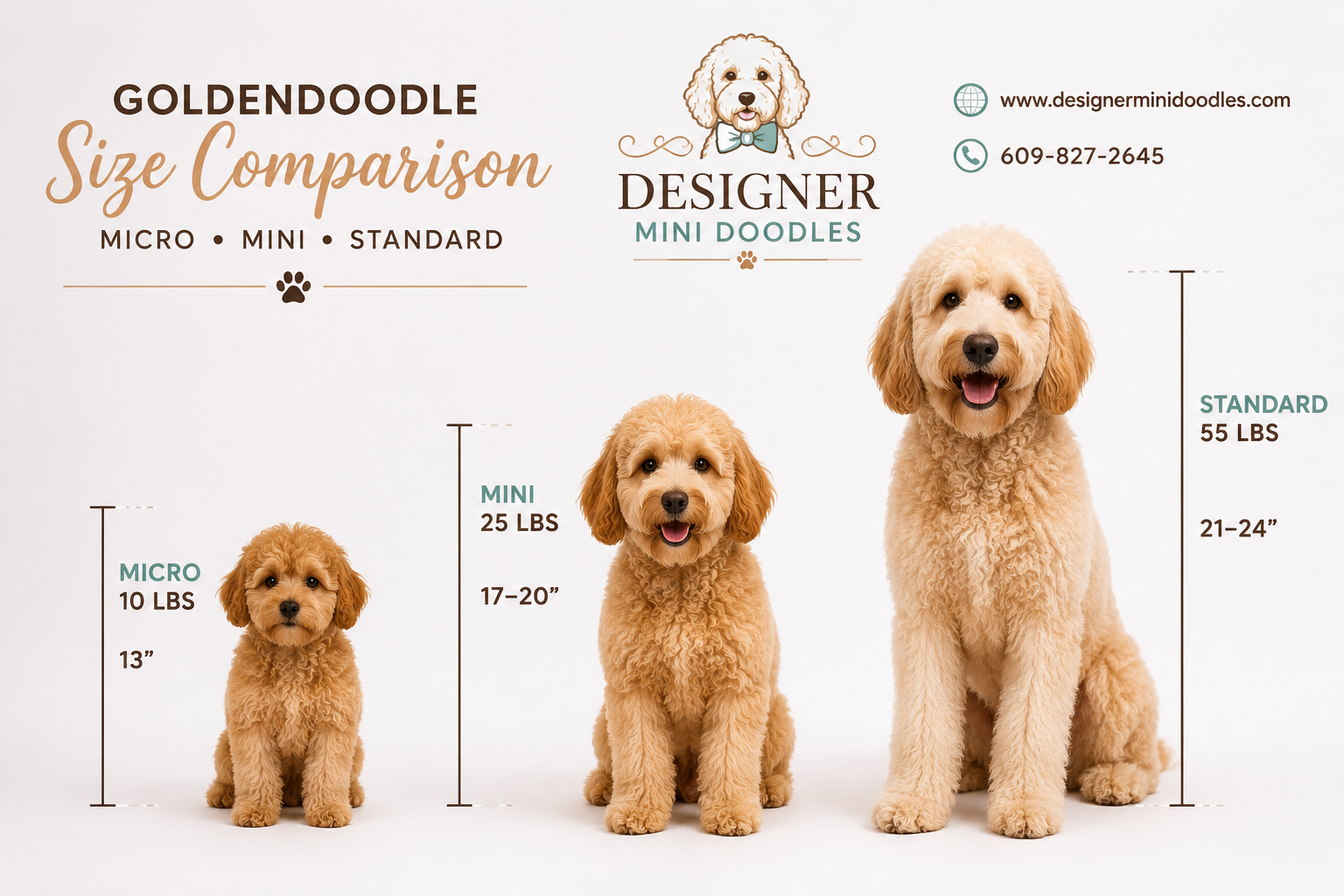
Adult mini golden doodles typically weigh 15 to 35 pounds and stand 13 to 20 inches tall at the shoulder. The exact size depends on the Poodle parent’s size and the generation of the cross.
Size categories within the “mini” label:
- Micro mini goldendoodle: 10 to 18 pounds, 10 to 14 inches tall
- Mini goldendoodle: 18 to 35 pounds, 14 to 20 inches tall
- Medium goldendoodle: 35 to 50 pounds (sometimes marketed as “mini” but technically medium)
A breeder should be able to tell you the expected adult weight range based on the specific pairing’s history. If a breeder can’t give you a confident size estimate, that’s a red flag about their experience with the cross.
Decision rule: If you live in an apartment or want a travel-friendly companion, look for micro or petite mini goldendoodles in the 10 to 20 pound range. Families with young children may prefer the sturdier 25 to 35 pound range for durability during play. Learn more about why the 10-16 lb micro goldendoodle is ideal for apartment and urban living.
What’s the Difference Between a Mini Golden Doodle and a Standard Golden Doodle?
The primary difference is size: standard goldendoodles weigh 50 to 90 pounds, while minis weigh 15 to 35 pounds. But size affects far more than just how much space the dog takes up.
| Feature | Mini Goldendoodle | Standard Goldendoodle |
|---|---|---|
| Weight | 15-35 lbs | 50-90 lbs |
| Height | 13-20 inches | 20-26 inches |
| Lifespan | 12-16 years | 10-13 years |
| Exercise needs | Moderate (30-60 min/day) | High (60-90 min/day) |
| Food cost | Lower | Higher |
| Grooming cost | Lower (smaller body) | Higher (more coat area) |
| Apartment suitability | Excellent | Poor to moderate |
| Travel friendliness | Excellent (cabin-sized for airlines) | Difficult |
Mini goldendoodles also tend to live longer than standards, which is consistent with the well-documented relationship between smaller body size and longevity in dogs. They require less food, their grooming sessions cost less, and they’re far easier to manage in urban environments.
Choose a mini if: you want a dog that fits comfortably in smaller living spaces, travels well, and has lower overall maintenance costs. Choose a standard if you want a larger hiking or running companion and have a home with a yard.
Are Mini Golden Doodles Good Family Dogs?
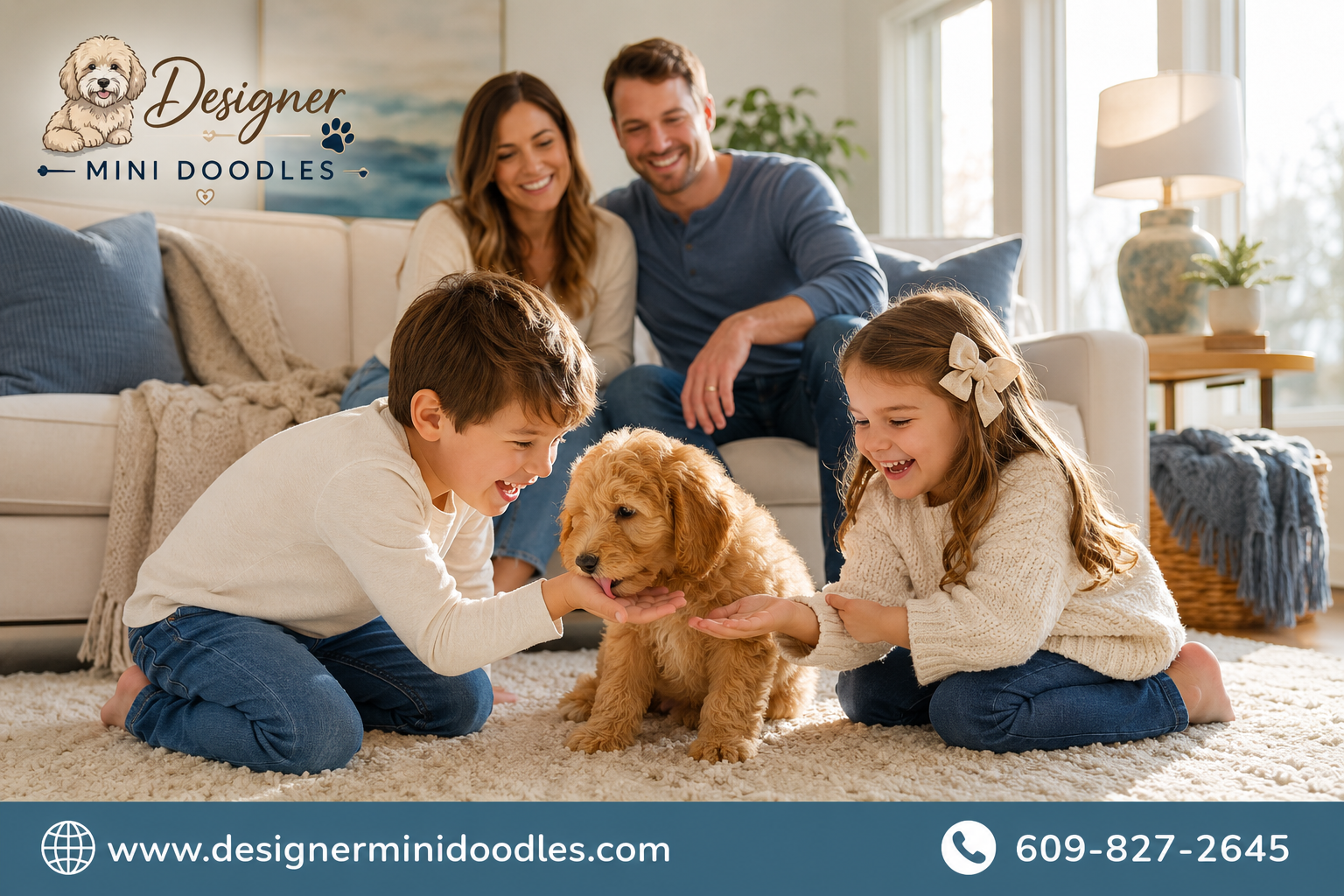
Yes, mini golden doodles are consistently rated among the best family dogs available in 2026. They inherit the Golden Retriever’s patience and affection along with the Poodle’s intelligence and trainability, creating a dog that bonds deeply with every family member.
Why they excel with families:
- Gentle temperament: Their Golden Retriever heritage gives them a natural gentleness with children.
- High trainability: Poodle intelligence makes them responsive to commands, which is critical in homes with kids.
- Appropriate size: At 15 to 35 pounds, they’re sturdy enough to handle children’s play without being large enough to accidentally knock over toddlers.
- Social nature: They typically get along well with other pets, including cats, when properly introduced.
- Energy balance: Active enough for play sessions but calm enough to settle on the couch for family movie night.
Edge case to consider: Mini goldendoodles can develop separation anxiety if left alone for long stretches. Families where everyone is gone 8+ hours daily should plan for a dog walker, doggy daycare, or a work-from-home arrangement. Breeders who practice early crate training and independence exercises produce puppies that handle alone time much better.
For families with children specifically, our resource on micro goldendoodles for family households with kids provides detailed guidance.
Are Mini Golden Doodles Good for People With Allergies?
Mini golden doodles with curly or wavy coats shed significantly less than most breeds, which reduces the amount of dander released into your home. However, no dog breed is 100% hypoallergenic because allergens come from saliva and skin cells, not just fur.
What allergy sufferers should know:
- F1B and multigen mini goldendoodles with tight curly coats produce the least dander spread.
- F1 crosses with straighter coats shed more and may trigger allergies in sensitive individuals.
- Spending time with a specific puppy’s parents before committing is the best way to test your reaction.
- Regular grooming and bathing (every 3-4 weeks) significantly reduces allergen levels in the home.
If allergies are your primary concern, explore our guide on micro goldendoodles for allergy-conscious homes for breed-specific strategies.
Where Can I Find Reputable Mini Golden Doodle Breeders?
The best place to find mini golden doodles for sale is through established breeders with verifiable health testing records, transparent breeding practices, and years of documented results. Avoid pet stores, online marketplaces without breeder verification, and anyone who always has puppies available with no waitlist.
Signs of a reputable breeder:
- Conducts OFA or PennHIP evaluations on all breeding dogs
- Provides a genetic health panel (testing for 150+ conditions)
- Raises puppies in a home environment, not a kennel
- Implements ENS (Early Neurological Stimulation) protocols
- Begins housebreaking and crate training before puppies go home
- Offers a written health guarantee (minimum 2 years)
- Welcomes visits or provides video tours of their facility
- Has verifiable reviews and references from past buyers
- Maintains a waitlist (quality breeders don’t have unlimited puppies)
Designer Mini Doodles, for example, is run by an animal biologist who has been producing some of the healthiest miniature golden doodle puppies in America for over 15 years. Their program includes comprehensive genetic testing, ENS, early socialization, housebreaking, and crate training, which is why their puppies are known for being exceptionally calm, affectionate, and confident.
Red flags to watch for:
- No health testing documentation
- Multiple breeds available simultaneously (puppy mill indicator)
- Pressure to buy immediately or “hold” a puppy with a non-refundable deposit before you’ve asked questions
- No contract or health guarantee
- Won’t let you meet the parent dogs or see where puppies are raised
If you’re searching by location, browse mini golden doodle breeders in your state to find programs with established reputations. Puppies from quality programs like Designer Mini Doodles are available to homes nationwide and even internationally through a dedicated puppy nanny service.
What Questions Should I Ask a Mini Golden Doodle Breeder?
Before putting down a deposit on any mini golden doodle puppy, ask these specific questions. A reputable breeder will answer all of them without hesitation.
- What health tests have the parents had? Look for OFA hips, elbows, eyes, heart, and a comprehensive genetic panel.
- What generation is this litter? This tells you about coat type, shedding, and size predictability.
- What is the expected adult weight range? The breeder should have data from previous litters of the same pairing.
- What socialization and training do puppies receive? ENS, early housebreaking, crate training, and exposure to household sounds are all indicators of a quality program.
- Can I see the parent dogs? At minimum, you should meet or see videos of the mother.
- What does your health guarantee cover? Get specifics on duration, conditions covered, and the process for claims.
- What food are puppies eating, and what’s the transition plan? Good breeders send puppies home with food and a detailed care guide.
- Do you offer post-purchase support? The best breeders remain available for questions throughout the dog’s life.
- What is your return policy? Responsible breeders always take puppies back rather than let them end up in shelters.
- Can you provide references from previous buyers? Established breeders have happy owners willing to share their experience.
What Do I Need to Know About Mini Golden Doodle Grooming?
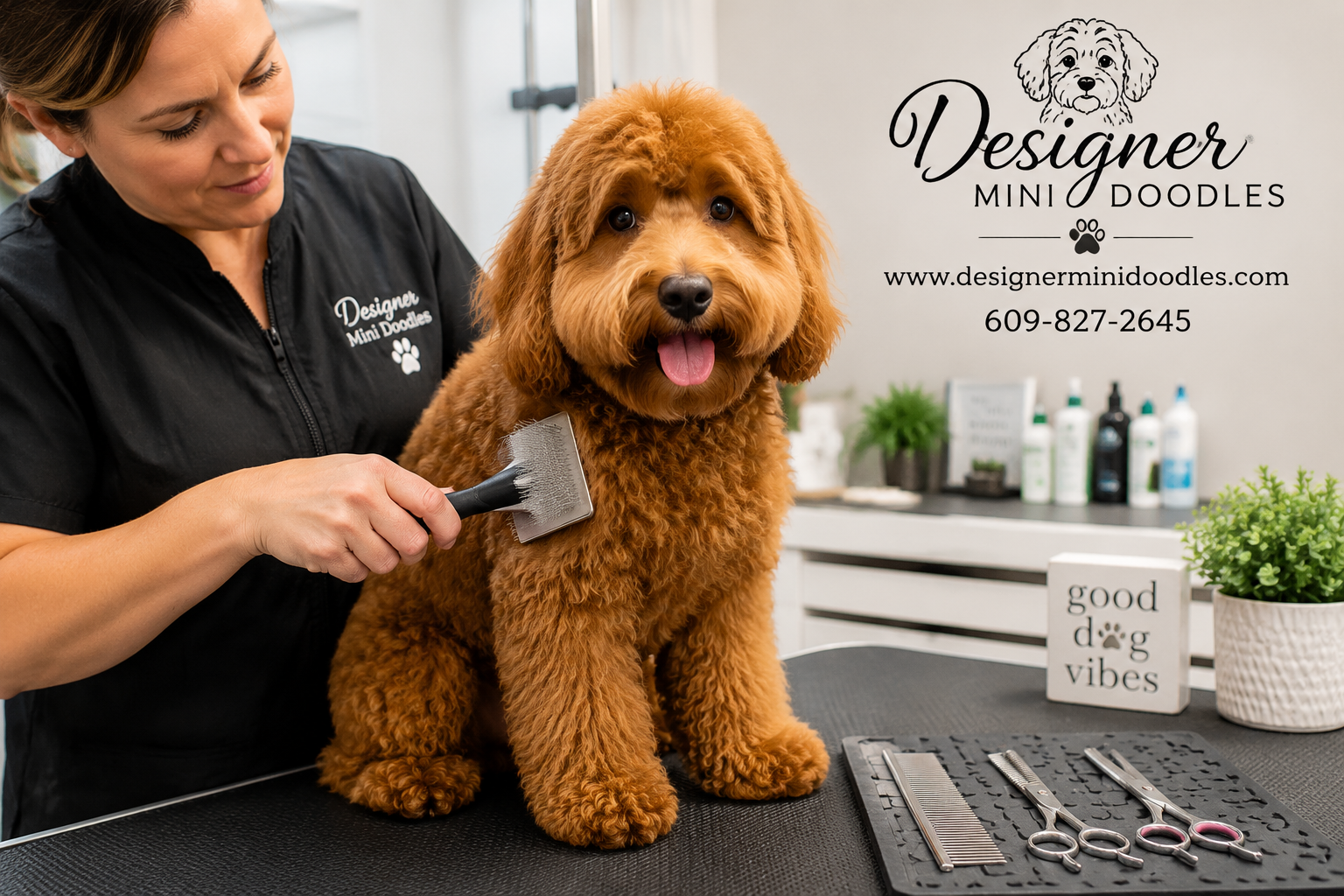
Mini golden doodles require consistent grooming to prevent matting, skin issues, and discomfort. Plan for professional grooming every 6 to 8 weeks and daily brushing at home, especially for curly-coated dogs.
Essential grooming routine:
- Daily brushing: Use a slicker brush to prevent mats, focusing on areas behind the ears, under the legs, and around the collar.
- Professional grooming: Every 6 to 8 weeks for a full bath, haircut, nail trim, ear cleaning, and sanitary trim.
- Ear cleaning: Weekly checks and cleaning to prevent infections, which doodles are prone to due to their floppy ears.
- Teeth brushing: 3 to 4 times per week to prevent dental disease.
- Nail trimming: Every 2 to 3 weeks if not worn down naturally.
Common grooming mistakes:
- Waiting too long between brushing sessions, which leads to painful matting that requires shaving
- Not introducing grooming tools during puppyhood, creating a dog that fights grooming for life
- Skipping ear cleaning, which leads to chronic ear infections
- Bathing too frequently (more than every 3-4 weeks), which strips natural oils from the coat
For detailed coat care guidance, our grooming and home care resource covers everything from tool selection to seasonal coat management.
What Health Issues Are Common in Mini Golden Doodles?
Mini golden doodles are generally healthy dogs, but they can inherit conditions from both parent breeds. Responsible health testing before breeding eliminates or significantly reduces the risk of most genetic conditions.
Conditions to be aware of:
- Hip dysplasia: Inherited from the Golden Retriever side; OFA or PennHIP screening of parents reduces risk.
- Progressive Retinal Atrophy (PRA): A genetic eye condition that can lead to blindness; DNA testing identifies carriers.
- Von Willebrand Disease: A blood clotting disorder; genetic testing identifies affected dogs.
- Patellar luxation: More common in smaller dogs; the kneecap slips out of place.
- Ear infections: Floppy ears trap moisture; regular cleaning prevents most infections.
- Addison’s disease: An adrenal gland disorder seen in Poodles; genetic testing helps.
- Allergies: Skin and food allergies can occur; manageable with proper diet and veterinary care.
What reduces health risks most: Buying from a breeder who tests parent dogs for all known genetic conditions in both Golden Retrievers and Poodles. A breeder running a program guided by an animal biologist’s understanding of genetics will make pairing decisions that minimize the chance of inherited disease.
What’s the Typical Lifespan of a Mini Golden Doodle?
Mini golden doodles typically live 12 to 16 years, with smaller individuals (micro and petite minis) often reaching the higher end of that range. This is notably longer than standard goldendoodles (10-13 years) and Golden Retrievers (10-12 years).
Factors that influence lifespan:
- Genetics: Health-tested parents with no history of serious inherited conditions
- Size: Smaller dogs generally live longer than larger dogs
- Diet: High-quality nutrition appropriate for the dog’s size and activity level
- Exercise: Regular moderate exercise maintains cardiovascular and joint health
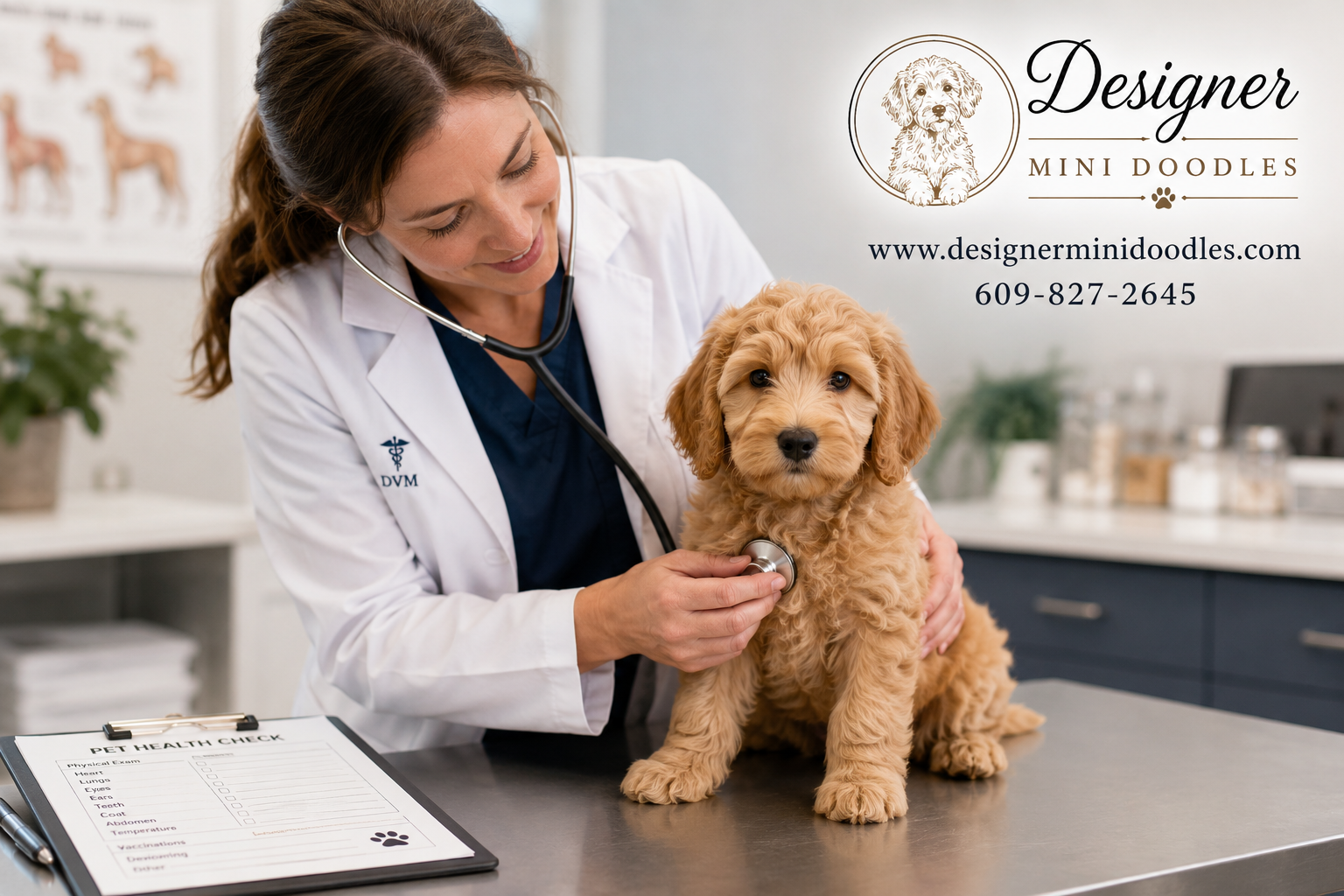
- Veterinary care: Annual checkups, dental cleanings, and prompt attention to health changes
- Weight management: Keeping your mini goldendoodle at a healthy weight is one of the single most impactful things you can do for longevity
What Are Some Common Mistakes New Mini Golden Doodle Owners Make?
The most frequent mistakes happen in the first few months and can create behavioral problems that persist for years. Here’s what to avoid.
- Skipping crate training. A crate isn’t a punishment; it’s a safe space. Puppies from breeders who start crate training early transition smoothly. If your breeder didn’t, start on day one at home.
- Inconsistent potty training. Mini goldendoodles are smart but need consistency. Take them out every 1-2 hours initially, after meals, after naps, and after play. Puppies from programs with early housebreaking have a significant head start.
- Over-socializing too fast. Socialization is critical, but flooding a young puppy with overwhelming experiences backfires. Introduce new people, places, and sounds gradually.
- Neglecting grooming from the start. Handle your puppy’s paws, ears, and mouth daily from day one. Introduce brushing as a positive experience with treats. This prevents grooming anxiety later.
- Free-feeding. Scheduled meals (2-3 times daily) help with potty training, weight management, and establishing routine.
- Assuming “hypoallergenic” means “no grooming.” The low-shedding coat actually requires more maintenance, not less, because loose hair gets trapped in the coat and mats.
- Buying from an unvetted source. This bears repeating: a puppy from a breeder who doesn’t health test, socialize, or raise puppies in a home environment will likely cost you more in the long run through veterinary bills and professional training.
What Are Some Alternatives to Mini Golden Doodles?
If a mini golden doodle isn’t the right fit, several other breeds and crosses share similar traits.
| Alternative | Size | Coat | Temperament | Best For |
|---|---|---|---|---|
| Mini Bernedoodle | 25-49 lbs | Wavy to curly | Loyal, playful, slightly more stubborn | Families wanting a sturdier dog |
| Cavapoo | 9-25 lbs | Wavy to curly | Gentle, affectionate | Seniors, apartment dwellers |
| Cockapoo | 12-25 lbs | Wavy to curly | Friendly, energetic | Active singles and couples |
| Mini Labradoodle | 15-30 lbs | Wavy to curly | Energetic, friendly | Active families |
| Toy Poodle | 4-6 lbs | Curly | Intelligent, alert | Allergy sufferers, small spaces |
| Mini French Bulldog | 15-25 lbs | Short, smooth | Calm, affectionate | Low-exercise households |
For those interested in a different doodle variety, explore mini Bernedoodle puppy training or consider miniature French bulldog puppies for a lower-energy companion. If you love the goldendoodle temperament but want an even smaller dog, micro golden doodle puppies in the 10-16 pound range might be your ideal match.
Frequently Asked Questions
How long does it take to get a mini golden doodle from a reputable breeder?
Most quality breeders have waitlists of 2 to 6 months. Some highly sought-after programs may have longer waits. A breeder with puppies always available and no waitlist is a warning sign.
Can mini golden doodles be left alone during the workday?
Adult mini goldendoodles can handle 4 to 6 hours alone after proper crate training. Puppies under 6 months should not be left alone for more than 2 to 3 hours. Arrange for a midday visit or doggy daycare for longer absences.
Do mini golden doodles bark a lot?
They’re moderate barkers. They’ll alert you to visitors or unusual sounds but aren’t typically nuisance barkers. Early training and adequate mental stimulation prevent excessive barking.
What’s the best age to bring a mini golden doodle puppy home?
Between 8 and 10 weeks is standard. Puppies removed before 8 weeks miss critical socialization with their mother and littermates. Some breeders keep puppies until 10-12 weeks to complete additional training.
Are mini golden doodles easy to train?
Yes, they rank among the easiest crossbreeds to train due to their Poodle intelligence and Golden Retriever eagerness to please. Positive reinforcement methods work best. Most learn basic commands within the first few weeks at home.
Do mini golden doodles need a yard?
No. They adapt well to apartment living as long as they get 30 to 60 minutes of daily exercise through walks, play sessions, or trips to the dog park. A yard is a bonus, not a requirement.
What colors do mini golden doodles come in?
Common colors include cream, apricot, red, chocolate, black, parti (two-toned), phantom, and merle. Cream and apricot are the most popular, while red and parti often command higher prices.
Can I fly with a mini golden doodle?
Micro and petite mini goldendoodles (under 20 pounds) can typically fly in-cabin on most airlines in an approved carrier. Larger minis may need to fly cargo. Always check your airline’s specific pet policy.
How do I know if a mini golden doodle breeder is legitimate?
Verify health testing results through the OFA database (ofa.org), read reviews on independent platforms, ask for buyer references, and confirm the breeder provides a written contract with a health guarantee.
Do mini golden doodles get along with cats?
Generally yes, especially when introduced during puppyhood. Their gentle temperament makes them one of the better crossbreeds for multi-pet households. Supervise initial interactions and provide the cat with escape routes.
Should I get a male or female mini golden doodle?
Both sexes make excellent companions. Males tend to be slightly larger and more playful; females are often a bit more independent and mature faster. Temperament differences between individuals are greater than differences between sexes.
Conclusion
Finding the right mini golden doodle for sale comes down to three non-negotiable factors: breeder quality, health testing, and early puppy development. The purchase price matters far less than what that price represents in terms of genetic screening, socialization, and the expertise behind the breeding program.
Your next steps:
- Define your priorities. Decide on your preferred size range, coat type, and must-have traits.
- Research breeders thoroughly. Look for programs with documented health testing, ENS protocols, and early training, such as those run by experienced animal biologists with over a decade of breeding expertise.
- Ask every question on the list above. A breeder who welcomes your questions is a breeder who has nothing to hide.
- Budget realistically. Factor in first-year costs beyond the purchase price so there are no surprises.
- Get on a waitlist early. Quality mini golden doodle puppies from top programs sell out quickly.
- Prepare your home before the puppy arrives. Crate, food, grooming tools, and a veterinary appointment should all be arranged in advance.
Whether you’re in Florida, New York, or anywhere else in the country, reputable breeders with puppy nanny services can deliver a healthy, well-socialized mini golden doodle to your door. The investment in a well-bred puppy pays dividends in fewer health problems, better behavior, and more years of companionship.