
mini golden doodle puppies Miami
Quick Answer: Mini golden doodle puppies in Miami typically cost between $2,500 and $5,000 from a reputable breeder, with prices varying based on generation, coat color, and breeder reputation. The best mini goldendoodle breeders in South Florida health-test parent dogs, provide early socialization, and offer health guarantees. For Miami’s warm climate and condo-friendly lifestyle, mini and micro goldendoodles are an especially strong fit because of their compact size (typically 15 to 35 pounds), low-shedding coats, and adaptable temperament.
Miami-Dade County has more pet-friendly apartments per capita than nearly any other metro in the Southeast, and mini goldendoodles have become the most requested designer breed in the region. But demand has also attracted careless breeders and puppy mills to the area. This guide covers everything you need to know before bringing home mini golden doodle puppies in Miami, from cost breakdowns and generation differences to health screening, training, and choosing between a breeder and a rescue.
mini golden doodle puppies Miami
- Mini goldendoodle puppies in Miami range from $2,500 to $5,000, depending on breeder quality, generation, and size category (mini vs. micro vs. toy).
- F1B and multigen mini goldendoodles shed the least and are the best choice for allergy-conscious households.
- A well-bred mini goldendoodle reaches 15 to 35 pounds fully grown; micro and toy varieties stay under 20 pounds.
- Annual care costs in Miami average $1,800 to $3,500, including grooming, vet visits, food, and pet insurance.
- Designer Mini Doodles, run by an animal biologist with over 15 years of breeding experience, produces some of the healthiest, calmest mini and micro goldendoodle puppies in the country.
- Early Neurological Stimulation (ENS), early housebreaking, and crate training are hallmarks of a top-tier breeding program.
- Mini goldendoodles are excellent for first-time owners, families with children, apartment dwellers, and seniors.
- Puppies from reputable programs can be delivered anywhere via dedicated puppy nanny services.
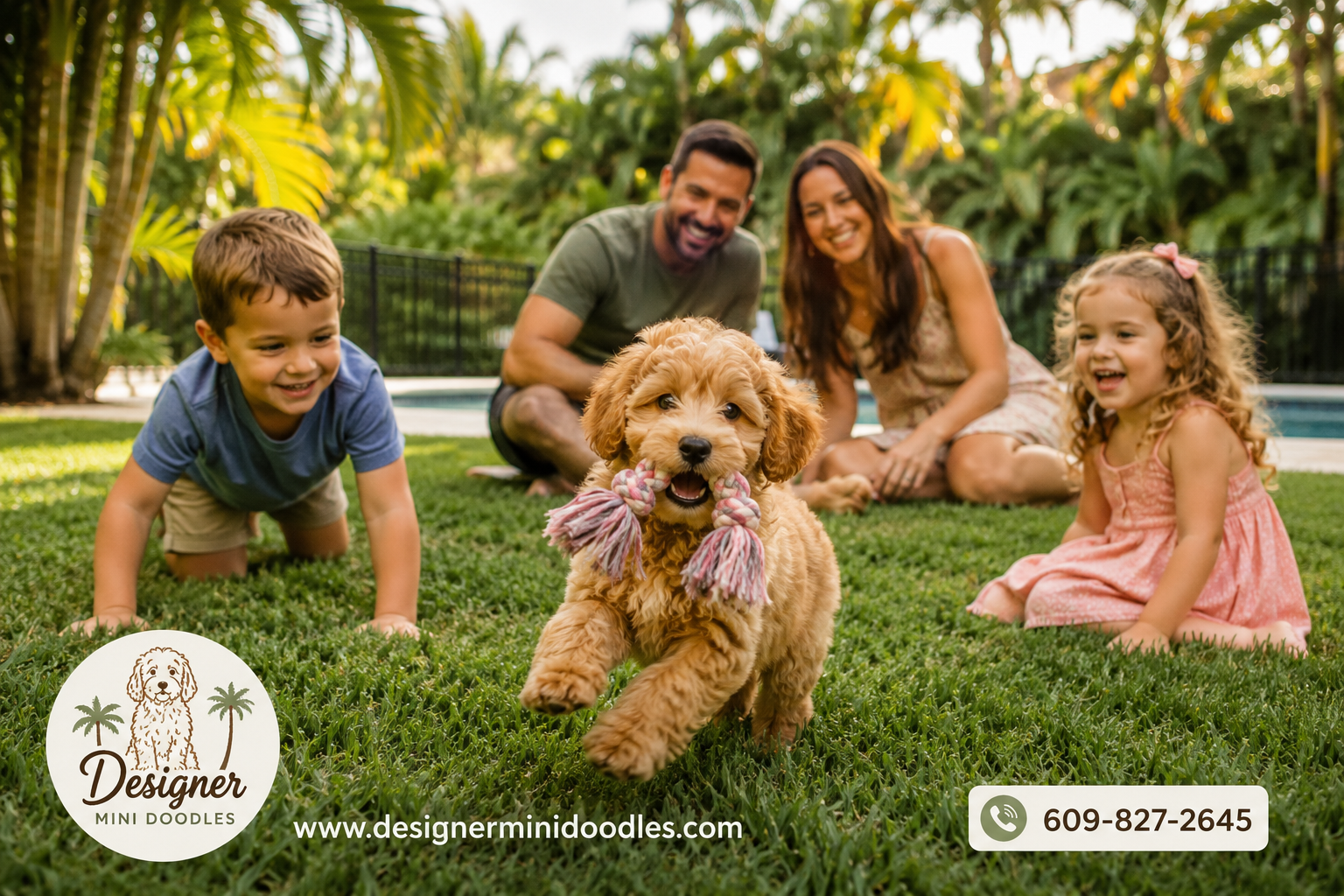
How Much Does a Mini Goldendoodle Puppy Cost in Miami?
Expect to pay between $2,500 and $5,000 for a health-tested mini golden doodle puppy from a reputable Miami-area breeder in 2026. Prices at the higher end typically reflect smaller sizes (micro and toy goldendoodles), rare coat colors like red or parti, and breeders who invest heavily in genetic testing and early training programs.
Here’s a general price breakdown:
| Size Category | Adult Weight | Typical Miami Price Range |
|---|---|---|
| Mini Goldendoodle | 25-35 lbs | $2,500 – $3,500 |
| Micro Mini Goldendoodle | 10-20 lbs | $3,500 – $4,500 |
| Toy Goldendoodle | Under 15 lbs | $4,000 – $5,000+ |
Why the wide range? Breeders who perform OFA hip evaluations, cardiac exams, genetic panel testing, and who invest in ENS protocols and early socialization charge more because their overhead is significantly higher. A $1,200 “mini goldendoodle” from an online listing is almost certainly from a puppy mill or backyard breeder who skips these steps. That initial savings often translates into thousands in veterinary bills later.
Programs like Designer Mini Doodles, which is led by an animal biologist and has been producing miniature golden doodle puppies for over 15 years, represent the standard that serious buyers should look for. Their puppies also come with early housebreaking and crate training already started, which saves new owners weeks of effort.
Are Mini Goldendoodles Good With Kids and Families?
Yes, mini goldendoodles are one of the best family-friendly breeds available. They inherit the Golden Retriever’s gentle patience and the Poodle’s intelligence, creating a dog that bonds deeply with children and adapts well to busy household routines.
Specific traits that make them family-ready:
- Gentle mouth: Golden Retriever heritage gives them a naturally soft bite, which is important around toddlers.
- High social drive: They want to be near people constantly, reducing the risk of territorial or aloof behavior.
- Trainability: Their intelligence means kids can participate in training, building responsibility and a stronger bond.
- Size advantage: At 15 to 35 pounds, they’re sturdy enough to handle play with children but small enough not to accidentally knock over a toddler.
Common mistake: Assuming any mini goldendoodle will automatically be great with kids. Temperament depends heavily on breeding and early socialization. Puppies raised in a program that includes ENS (Early Neurological Stimulation), exposure to household sounds, and handling by multiple people from birth are far more confident and calm around children. This is why programs run by experienced breeders, particularly those with a background in animal biology, produce puppies with noticeably more stable temperaments.
For families specifically considering the 10 to 16 pound micro size, our guide on why micro goldendoodles are perfect for family households with kids covers the topic in depth.
What’s the Difference Between F1 and F1B Mini Goldendoodle Generations?
The generation label tells you how much Poodle vs. Golden Retriever genetics your puppy carries, which directly affects shedding, coat type, and allergy-friendliness.
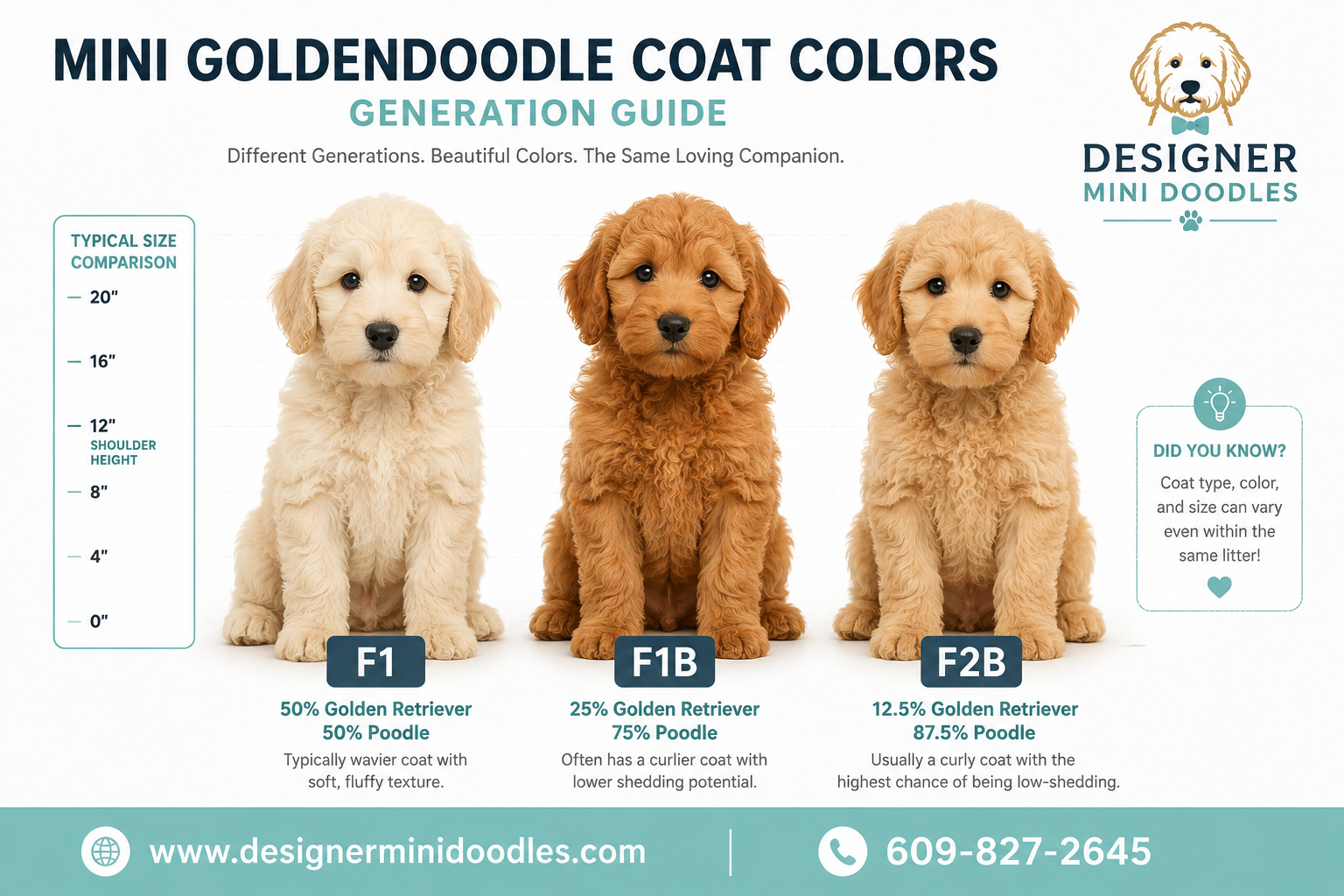
- F1 (First Generation): 50% Golden Retriever, 50% Miniature Poodle. Coats range from wavy to slightly curly. Moderate shedding. Good for mild allergy sufferers.
- F1B (First Generation Backcross): 75% Poodle, 25% Golden Retriever. Curlier coats with significantly less shedding. The most popular choice for allergy-conscious homes.
- F1BB: 87.5% Poodle. Tightest curls, least shedding. Best for severe allergies but requires more grooming.
- F2B (Second Generation Backcross): Similar to F1B in Poodle percentage but with more genetic variation in coat type.
Choose F1 if you want a more Golden Retriever-like appearance and don’t have significant allergy concerns. Choose F1B or F1BB if anyone in the household has pet allergies or you want minimal shedding. Most Miami buyers opt for F1B because it offers the best balance of the teddy bear look and low-shedding coat.
Do Mini Goldendoodles Shed a Lot?
Mini goldendoodles are considered low-shedding dogs, but they are not completely non-shedding. The amount depends almost entirely on generation and coat type. F1B and multigen mini goldendoodles with curly or wavy fleece coats shed the least, often producing no noticeable hair on furniture or clothing.
F1 mini goldendoodles with straighter, more Golden Retriever-like coats will shed lightly, roughly comparable to a low-shedding breed like a Bichon Frise. No dog is truly hypoallergenic, but the Poodle-dominant generations come close.
Miami-specific note: The warm, humid climate means dogs don’t develop the thick winter undercoat that causes seasonal “blowouts” in northern states. This works in your favor with a mini goldendoodle, as year-round shedding stays more consistent and manageable. For allergy-conscious households, our resource on micro goldendoodles for allergy-conscious homes provides more detail.
Best Breeders for Mini Goldendoodles in South Florida
The best mini goldendoodle breeders in South Florida share several non-negotiable qualities: comprehensive health testing, transparent breeding practices, early socialization protocols, and a genuine commitment to the breed’s well-being over profit.
What sets a top program apart:
- Health testing: OFA hip and elbow evaluations, cardiac exams, ophthalmologist clearances, and genetic panels for conditions like PRA (Progressive Retinal Atrophy), vWD (von Willebrand Disease), and DM (Degenerative Myelopathy).
- Early Neurological Stimulation (ENS): Performed between days 3 and 16 of life, this protocol builds stress tolerance and confidence in puppies.
- Early housebreaking and crate training: The best programs begin potty training and crate introduction before puppies go home, giving new owners a significant head start.
- Professional expertise: A breeder with formal training in animal biology or veterinary science brings a level of genetic understanding that hobby breeders simply can’t match.
Designer Mini Doodles exemplifies this standard. Run by an animal biologist with over a decade and a half of experience, their breeding program produces the calmest, most affectionate, and most confident mini and micro golden doodle puppies available. They also offer toy goldendoodle puppies for sale for buyers who want an even smaller companion.
For a broader look at Florida options, see our complete directory of mini and micro goldendoodle breeders in Florida. And if you’re open to exploring other small designer breeds, Designer Mini Doodles’ sister program also offers miniature French bulldog puppies for those drawn to a different temperament profile.
Important: Puppies from Designer Mini Doodles are available to families anywhere in the world through their dedicated puppy nanny service, so Miami residents aren’t limited to local breeders alone.
Health Issues to Watch for in Mini Goldendoodles
Mini goldendoodles are generally healthy dogs with a lifespan of 12 to 16 years, but they can inherit conditions from both parent breeds. Responsible breeders screen for these before breeding.
Conditions to be aware of:
- Hip dysplasia: More common in larger minis (over 30 lbs). OFA screening of parents reduces risk significantly.
- Progressive Retinal Atrophy (PRA): A genetic eye condition that can lead to blindness. DNA testing identifies carriers.
- Patellar luxation: The kneecap slips out of place, more common in smaller dogs. Look for breeders who evaluate for this.
- Ear infections: Floppy ears combined with Miami’s humidity create a perfect environment for yeast and bacterial infections. Weekly ear cleaning is essential.
- Addison’s disease: An adrenal gland disorder found in both Poodles and Golden Retrievers. Symptoms include lethargy, vomiting, and weight loss.
- Allergies: Skin allergies are relatively common and can be triggered by Florida’s year-round pollen and humidity.
The single most effective way to minimize health risks is to buy from a breeder who performs comprehensive genetic panel testing on all breeding dogs. Programs run by animal biologists, like Designer Mini Doodles, test for over 150 genetic conditions before any pairing is made.
How Big Do Mini Goldendoodles Get When Fully Grown?
A standard mini goldendoodle reaches 25 to 35 pounds and stands 14 to 17 inches tall at the shoulder when fully grown, typically reaching adult size by 11 to 13 months of age.
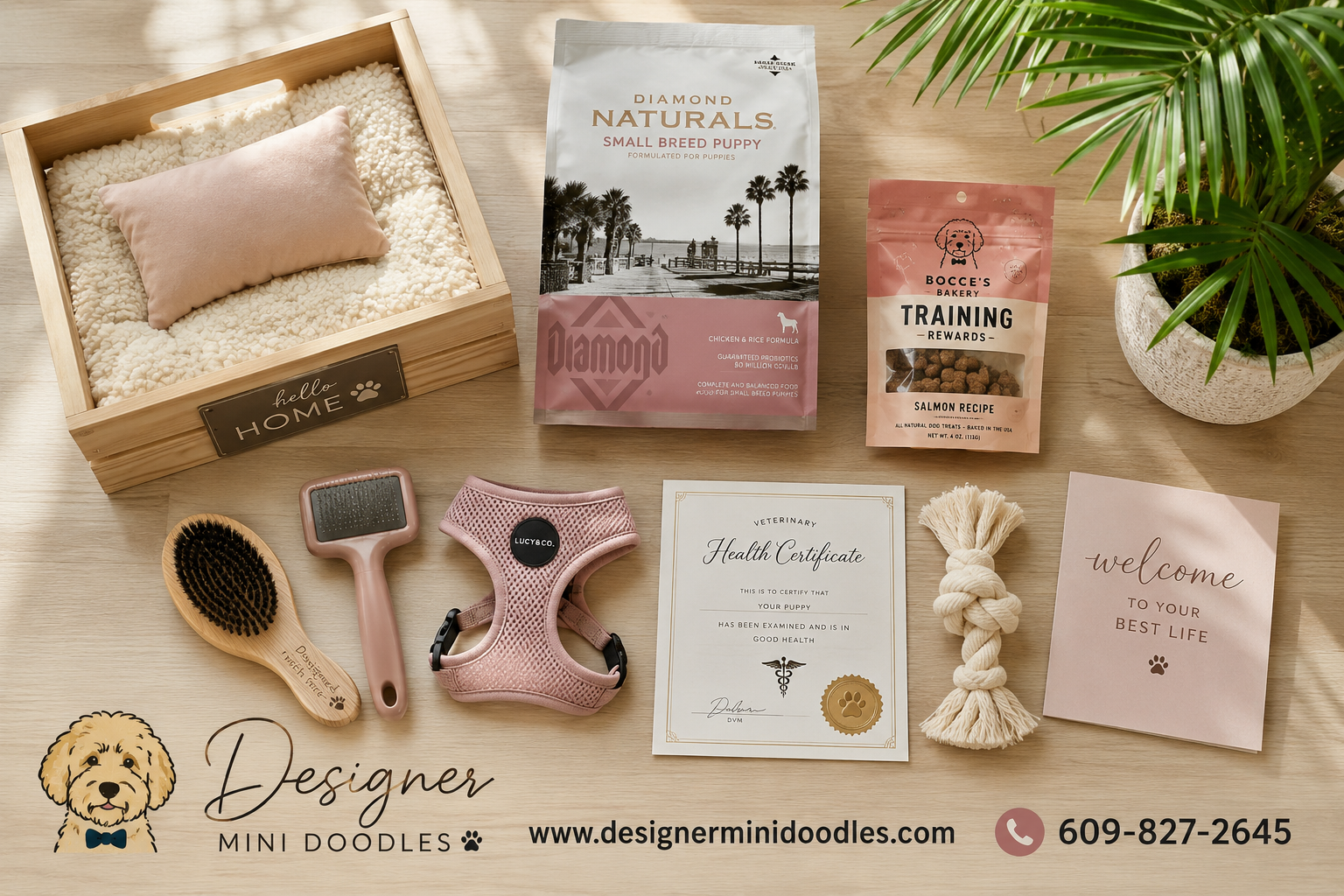
Size varies by subcategory:
| Category | Adult Weight | Adult Height | Fully Grown By |
|---|---|---|---|
| Mini Goldendoodle | 25-35 lbs | 14-17 inches | 11-13 months |
| Micro Mini Goldendoodle | 10-20 lbs | 10-14 inches | 9-11 months |
| Toy Goldendoodle | Under 15 lbs | 10-12 inches | 8-10 months |
Decision rule: Choose a mini if you want a dog that can keep up on longer hikes and beach runs. Choose a micro or toy if apartment size, travel convenience, or a truly lap-sized companion is your priority. For more on what to expect at full maturity, see our guide on full grown micro goldendoodles.
Can Mini Goldendoodles Live in Small Apartments?
Absolutely. Mini goldendoodles are among the best apartment dogs available, and they’re particularly well-suited to Miami’s condo lifestyle. Their moderate energy level means they’re content with two 20 to 30 minute walks per day plus some indoor play, and they don’t require a yard to be happy.
Why they work in apartments:
- Compact size (especially micro and toy varieties) means they don’t need much physical space.
- Low-shedding coats keep apartments cleaner.
- They’re not excessive barkers when properly socialized and trained.
- They adapt well to routine, which apartment living tends to encourage.
Edge case to watch: Mini goldendoodles with separation anxiety can become destructive or vocal in apartments. This is where early crate training and confidence-building during puppyhood become critical. Puppies from programs that begin crate training before placement adjust to apartment life much faster. Our resource on micro goldendoodles for apartment and urban living covers specific strategies.
How Much Does It Cost to Care for a Mini Goldendoodle Puppy Per Year?
Annual care costs for a mini goldendoodle in Miami run approximately $1,800 to $3,500, with the first year being the most expensive due to initial supplies and puppy vaccinations.
Annual cost breakdown (estimated):
| Expense | Annual Cost |
|---|---|
| Food (premium quality) | $400 – $700 |
| Grooming (every 6-8 weeks) | $500 – $900 |
| Veterinary care (routine) | $300 – $600 |
| Pet insurance | $300 – $600 |
| Flea/tick/heartworm prevention | $200 – $350 |
| Toys, treats, supplies | $150 – $300 |
| Total | $1,850 – $3,450 |
Miami-specific costs: Grooming prices in Miami tend to be 10 to 20 percent higher than the national average. Year-round flea, tick, and heartworm prevention is non-negotiable in South Florida’s tropical climate, unlike northern states where some owners reduce prevention during winter months.
For a deeper dive into ownership costs, see our article on cost-of-ownership clarity for micro goldendoodles.
Are Mini Goldendoodles Good for First-Time Dog Owners?
Mini goldendoodles are one of the top three breeds I recommend for first-time dog owners. Their forgiving temperament, eagerness to please, and moderate exercise needs make them an ideal starter dog that won’t overwhelm a novice.
Why they work for beginners:
- They respond well to positive reinforcement training, even from inexperienced handlers.
- They’re social and adaptable, so minor socialization mistakes are less likely to cause lasting behavioral issues.
- Their size is manageable, meaning a first-time owner can physically control them on walks.
- They’re resilient enough to handle the learning curve that comes with new ownership.
One caution for first-timers: Don’t underestimate grooming requirements. A mini goldendoodle’s coat needs brushing every two to three days and professional grooming every six to eight weeks. First-time owners who skip this end up with matted coats that require shaving. Build grooming into your routine from day one.
For more guidance tailored specifically to new owners, check out our resource on micro goldendoodles for first-time dog owners.
What to Look for When Buying a Mini Goldendoodle Puppy
Not all mini goldendoodle puppies are created equal. Here’s a concrete checklist for evaluating any breeder or puppy you’re considering:
Non-negotiable criteria:
- Health testing documentation: Ask for OFA results and genetic panel reports for both parents. If a breeder can’t produce these, walk away.
- Health guarantee: A minimum two-year genetic health guarantee is standard among reputable breeders.
- Socialization protocol: Ask specifically about ENS, sound desensitization, and handling by multiple people.
- Early training: The best programs begin housebreaking and crate training before placement.
- Transparency: You should be able to see photos or videos of parent dogs and the environment where puppies are raised.
- Contract and support: A written purchase agreement and ongoing breeder support after you take your puppy home.
Red flags:
- Multiple breeds available at all times (suggests a commercial operation, not a focused breeding program)
- No health testing or vague claims about “vet checked” parents
- Pressure to buy quickly or put down a deposit before asking questions
- Prices significantly below market rate
- No willingness to let you visit or see the facility via video

Mini Goldendoodle Training Tips for Beginners
Mini goldendoodles are highly trainable, but their intelligence means they also learn bad habits quickly if training is inconsistent. Start training the day your puppy comes home.
Core training priorities for the first 8 weeks at home:
- Crate training: Use the crate as a positive safe space, not punishment. Puppies from programs that start crate training early will already be comfortable. Feed meals inside the crate and build duration gradually.
- Potty training: Take your puppy outside every 1 to 2 hours, immediately after meals, and after naps. Miami’s warm weather is actually an advantage here since you can train outdoors year-round.
- Basic commands: Start with “sit,” “come,” and “stay” using small, high-value treats. Keep sessions to 5 minutes for puppies under 12 weeks.
- Socialization: Expose your puppy to different people, sounds, surfaces, and environments between 8 and 16 weeks. Miami offers excellent opportunities: outdoor cafes, pet-friendly beaches, and dog parks.
- Bite inhibition: Redirect mouthing to appropriate chew toys. Never use physical correction.
Common mistake: Over-exercising a young puppy. Mini goldendoodle puppies under six months should follow the “five minutes per month of age” rule for structured walks. A four-month-old puppy needs only about 20 minutes of walking, supplemented by free play.
For additional training guidance, our article on training a mini bernedoodle puppy covers many of the same positive reinforcement techniques that apply to goldendoodles.
Rescue vs. Breeder for Mini Goldendoodle Puppies in Miami
Both rescue and breeder paths have legitimate advantages, and the right choice depends on your priorities, timeline, and household needs.
Choose a breeder if:
- You want a specific size, generation, or coat type
- Predictable temperament and health history matter to you
- You have young children and need a puppy raised with ENS and early socialization
- You want a puppy (under 12 weeks) rather than an adolescent or adult dog
Choose rescue if:
- You’re open to an adult or adolescent dog with an established personality
- You want to provide a second chance to a dog in need
- You’re flexible on size, color, and generation
- Budget is a primary concern (rescue adoption fees in Miami typically range from $250 to $600)
Reality check: True mini goldendoodle puppies are rare in rescue. Most doodles that end up in shelters are adults surrendered due to owner lifestyle changes, and many are standard-sized, not minis. If you’re set on a mini goldendoodle puppy with known health history and early training, a reputable breeder is the more reliable path.
South Florida rescue organizations to check include Poodle and Pooch Rescue, Big Dog Ranch Rescue, and Abandoned Pet Rescue. But be prepared for waitlists and limited availability of the specific mini goldendoodle puppies Miami buyers typically want.
Conclusion
Finding the right mini golden doodle puppy in Miami comes down to three things: choosing a reputable breeder with verifiable health testing, understanding which generation and size fits your lifestyle, and preparing your home and budget before the puppy arrives.
Your next steps:
- Define your priorities: Decide on size (mini, micro, or toy), generation (F1B is the most popular for low shedding), and budget.
- Research breeders thoroughly: Focus on programs led by professionals with animal science backgrounds, comprehensive health testing, and early training protocols. Designer Mini Doodles is a strong starting point for mini golden doodle breeders with over 15 years of experience.
- Prepare your home: Purchase a crate, set up a puppy-safe area, and find a Miami veterinarian who has experience with doodle breeds.
- Budget for ongoing costs: Plan for $1,800 to $3,500 annually in care expenses, with grooming being the largest recurring cost.
- Start training immediately: The work you put in during the first 16 weeks shapes the dog you’ll live with for the next 12 to 16 years.
Whether you’re in a Brickell high-rise or a Coral Gables family home, a well-bred mini goldendoodle can be the perfect companion for Miami living. Take your time, do your research, and invest in quality from the start.
Frequently Asked Questions
How long do mini goldendoodles live?
Mini goldendoodles typically live 12 to 16 years, with smaller varieties (micro and toy) often living at the higher end of that range. Proper nutrition, regular veterinary care, and genetic health testing of parents all contribute to longevity.
Are mini goldendoodles hypoallergenic?
No dog is truly hypoallergenic, but F1B and multigen mini goldendoodles produce significantly less dander and shed very little. They’re a strong choice for mild to moderate allergy sufferers, though people with severe allergies should spend time with the specific generation before committing.
How often do mini goldendoodles need grooming?
Every six to eight weeks for professional grooming, with brushing at home every two to three days. In Miami’s humidity, coats can mat faster, so consistent brushing is especially important.
Can mini goldendoodles handle Miami’s heat?
Yes, with common-sense precautions. Walk during cooler morning and evening hours, provide constant access to fresh water, and never leave them in a parked car. Their smaller size actually helps them regulate body temperature better than standard goldendoodles.
Do mini goldendoodles bark a lot?
They’re moderate barkers. They’ll alert you to visitors or unusual sounds but aren’t typically nuisance barkers. Early socialization and training significantly reduce unnecessary barking, which is important for apartment and condo living.
What’s the difference between a mini goldendoodle and a toy goldendoodle?
Size is the primary difference. Mini goldendoodles reach 25 to 35 pounds, while toy goldendoodles stay under 15 pounds. Toy goldendoodles are bred by pairing smaller parent dogs over multiple generations.
How soon can I take my mini goldendoodle puppy to Miami Beach?
Wait until your puppy has completed their full vaccination series, typically around 16 weeks of age. Before that, stick to your own yard and controlled environments to avoid exposure to parvovirus and other diseases common in public areas.
Do I need pet insurance for a mini goldendoodle?
It’s strongly recommended. Pet insurance typically costs $25 to $50 per month for a mini goldendoodle and can save thousands if your dog develops a genetic condition or needs emergency care. Enroll while your puppy is young and healthy for the best rates.
Can mini goldendoodle puppies be shipped to Miami?
Yes. Reputable breeders like Designer Mini Doodles offer dedicated puppy nanny services that hand-deliver puppies to homes anywhere, including Miami and throughout the world. This is safer and less stressful than cargo shipping.
What colors do mini goldendoodles come in?
Common colors include cream, apricot, red, chocolate, black, parti (two-toned), and phantom. Cream and apricot are the most popular in Miami. Color does not affect temperament or health.
References
- Orthopedic Foundation for Animals (OFA). “Canine Health Information Center Testing Requirements.” OFA, 2024. https://ofa.org
- American Kennel Club. “Golden Retriever Breed Standard and Health Information.” AKC, 2023. https://www.akc.org/dog-breeds/golden-retriever/
- Goldendoodle Association of North America. “Breed Standards and Generation Guide.” GANA, 2024. https://www.goldendoodleassociation.com