

teacup goldendoodle puppy
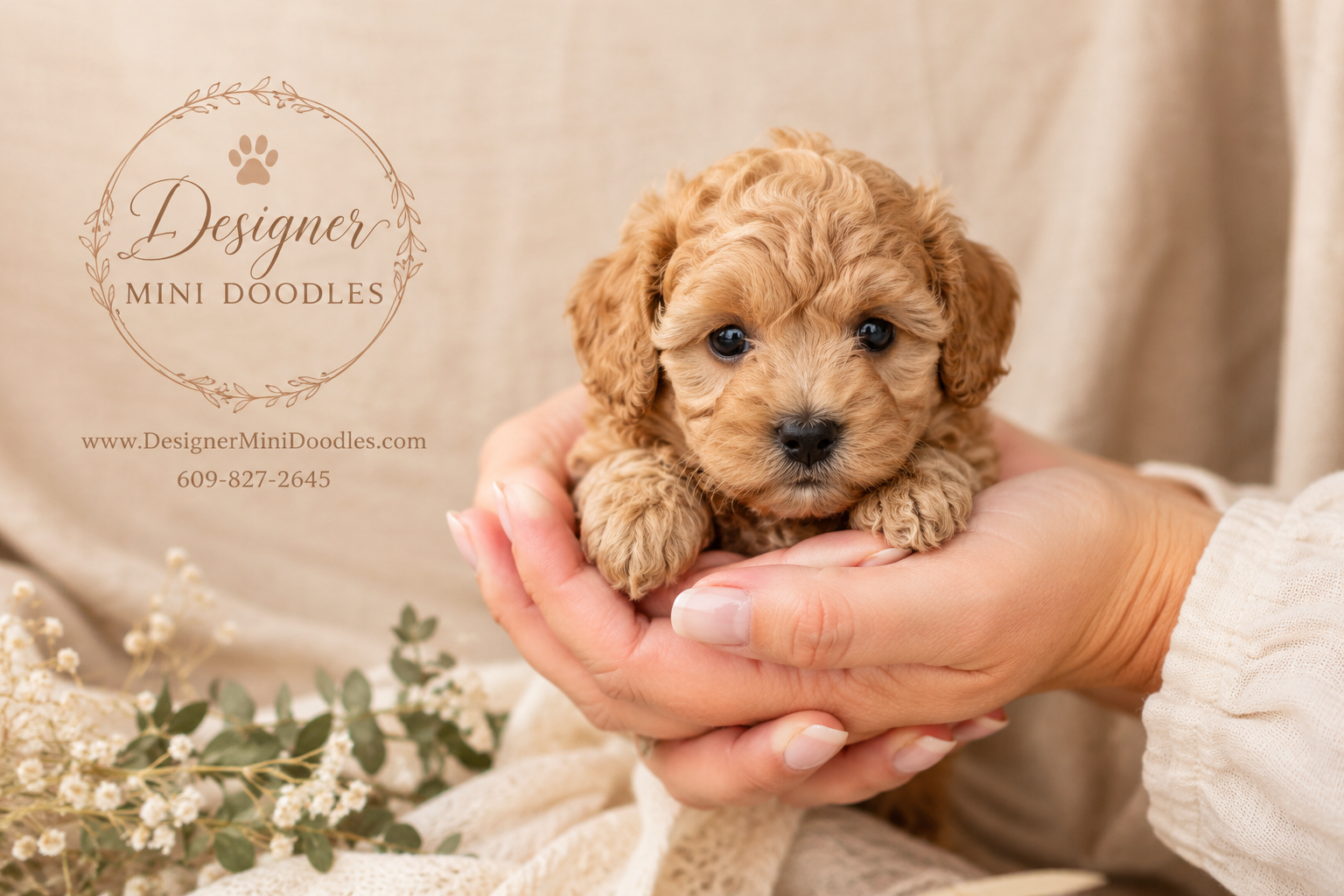
A teacup goldendoodle puppy is the smallest size variation of the goldendoodle, typically weighing 7-15 pounds at maturity and standing under 13 inches tall. They’re bred by crossing a toy poodle with a small mini goldendoodle, often over multiple generations. Expect to pay $2,500-$3,500 from a reputable breeder, plan for $1,500-$2,500 in annual care costs, and screen carefully for health issues tied to extreme small size.
Key Takeaways
- Size: Adult teacup goldendoodles typically weigh 7-15 pounds and stand 9-13 inches tall.
- Price range: $2,500-$3,500 from real breeders working with top bloodlines; anything under $1,500 is a red flag.
- Shedding: Low-shedding with proper F1b or multigenerational genetics, but not 100% hypoallergenic.
- Lifespan: 10-15 years on average, slightly shorter than larger goldendoodles due to small-size health risks.
- Family fit: Great for adults, seniors, and families with gentle older children; not ideal for homes with toddlers.
- Apartment-friendly: Yes, with daily walks and mental stimulation.
- Health screening: Reputable breeders test for hip dysplasia, patellar luxation, eye disorders, and cardiac issues.
- Designer Doodles is run by a credentialed animal biologist and uses Early Neurological Stimulation (ENS) from birth.
What Exactly Is a Teacup Goldendoodle?
A teacup goldendoodle is a goldendoodle bred down to extra-small size by crossing a toy poodle with a smaller goldendoodle parent, usually over several generations. It is not a recognized AKC breed, but rather a size designation within the goldendoodle category. Most teacups fall under 15 pounds full-grown.
The breed typically retains the goldendoodle’s hallmark traits: a soft wavy or curly coat, a teddy bear face, and a friendly, trainable temperament. The difference is simply scale. Reputable breeders achieve this size through selective pairing rather than breeding runts or undernourished dogs.
A true teacup goldendoodle is a carefully planned small-size goldendoodle, not a stunted or sickly puppy sold as “miniature.”
If you’re new to the doodle world, the miniature goldendoodle breeders overview is a useful starting point for understanding how the size categories relate.
How Big Do Teacup Goldendoodles Get as Adults?
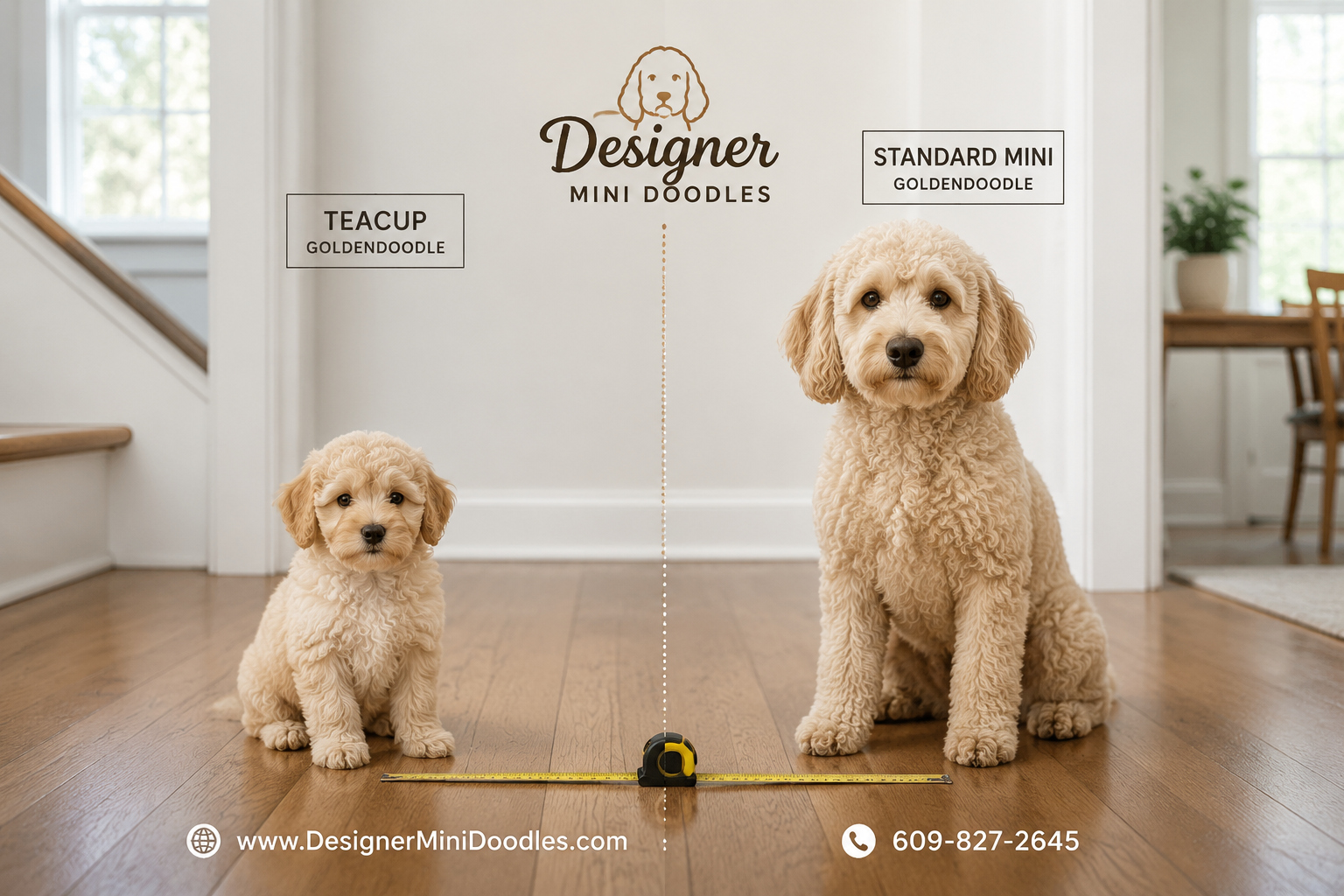
Most teacup goldendoodles reach 7 to 15 pounds and 9 to 13 inches tall at the shoulder when fully grown, usually by 10-12 months of age. Some individuals on the larger end may push 16-17 pounds depending on the parents’ weights.
Here’s a quick size comparison:
| Size Category | Adult Weight | Adult Height |
|---|---|---|
| Teacup Goldendoodle | 7-15 lbs | 9-13 in |
| Micro Mini Goldendoodle | 10-20 lbs | 10-14 in |
| Mini Goldendoodle | 20-35 lbs | 13-18 in |
| Medium Goldendoodle | 35-50 lbs | 17-20 in |
| Standard Goldendoodle | 50-90 lbs | 20-24 in |
Choose teacup if you want a lap-sized, travel-friendly companion. Choose mini or medium if you have active kids or want a sturdier dog for hiking and rough play.
How Much Does a Teacup Goldendoodle Puppy Cost?
A teacup goldendoodle puppy from a reputable breeder costs $2,500 to $3,500 in 2026. Pricing varies based on coat color, bloodline, and breeder reputation. Be cautious of prices well below or well above this range.
Here’s how the market typically breaks down:
| Source | Price Range | What You’re Getting |
|---|---|---|
| Scams/fake breeders | $500-$1,000 | Often no puppy at all, or a sick/misrepresented dog |
| Puppy mills | $1,200-$1,500 | Poor health, no socialization, weak genetics |
| Hobby breeders | $1,500-$2,000 | Variable quality, limited health testing |
| Real experienced breeders (top bloodlines) | $2,500-$3,500 | Health-tested parents, ENS protocol, well-started puppies |
Designer Doodles is one of the best teacup goldendoodle breeders in the USA, with all our breeding stock sourced from top teacup goldendoodle bloodlines. Our program is run by a credentialed animal biologist, and every puppy receives Early Neurological Stimulation (ENS) from day three onward, plus exposure to household noises, children, and other animals before going home. See available puppies at Designer Doodles, and for small-breed companions of a different kind, check out our partner Frenchie Breeders.
- Display 9 Products per page


Are Teacup Goldendoodles Good for Families with Kids?
Teacup goldendoodles do well with gentle older children (ages 8+) but are generally not ideal for homes with toddlers or rough-playing young kids. Their small bones are fragile and can be injured by a fall, a squeeze, or being stepped on.
That said, the temperament side is excellent. Goldendoodles are known for being affectionate, patient, and eager to please. With supervision and training, they bond deeply with children and tolerate normal household activity well.
Choose a teacup if your kids are old enough to understand “gentle hands.” Choose a larger mini or medium goldendoodle if you have kids under 6 or expect rambunctious play. Families with younger children may want to read why a 10-16 lb micro goldendoodle works well in households with kids.
What Health Problems Are Common in Teacup Goldendoodles?
Teacup goldendoodles face higher risks for certain conditions tied to small-breed genetics. The most common include patellar luxation, hypoglycemia, dental crowding, tracheal collapse, and hereditary eye disorders. Responsible breeding dramatically reduces but does not eliminate these risks.
Common health concerns to know:
- Patellar luxation: Kneecap slips out of place; affects many toy-sized breeds.
- Hypoglycemia: Low blood sugar, especially in puppies under 6 months. Frequent small meals help.
- Dental issues: Crowded teeth in small jaws lead to early tartar and tooth loss.
- Tracheal collapse: Use a harness, never a collar, for leash walks.
- Mitral valve disease: Heart condition more common in small breeds as they age.
- Progressive retinal atrophy (PRA): Inherited; screening of parents prevents passing it on.
A real breeder will show you OFA or PennHIP results, cardiac clearances, and DNA panels for the parents. If they can’t, walk away.
What Are the Potential Genetic Issues with Teacup Goldendoodles?
Beyond the conditions above, teacup goldendoodles can inherit genetic disorders from both the golden retriever and poodle sides. The most concerning are von Willebrand’s disease (a bleeding disorder), degenerative myelopathy, and Addison’s disease. Multigenerational breeding without proper testing increases these risks.
Decision rule: Ask the breeder for a copy of the parents’ Embark or Paw Print Genetics DNA results. Reputable programs test for 150+ genetic markers. If a breeder hesitates or says testing “isn’t necessary,” that’s your cue to look elsewhere.
How Do I Find a Reputable Teacup Goldendoodle Breeder?
Look for a breeder who health-tests both parents, raises puppies in their home (not a kennel), uses early socialization protocols, and offers a written health guarantee. Avoid anyone who ships puppies sight-unseen, won’t let you video-chat, or pressures you to pay via wire transfer.
What separates a real teacup goldendoodle breeder from the rest:
- Health testing documentation for both parents (OFA, CERF, DNA panels).
- Early Neurological Stimulation (ENS) from days 3-16 to build resilience.
- Sound exposure protocols — vacuum, doorbell, kids, other dogs.
- Crate and potty training started before the puppy goes home at 8-10 weeks.
- Lifetime breeder support and a take-back policy.
- References from past puppy buyers.
- In-person or video visits of the actual home environment.
At Designer Doodles, every litter is raised inside the home with daily exposure to the noises of a busy household: kids playing, vacuums, doorbells, other dogs, and normal family activity. Puppies go home well-started on crate training and potty habits. Browse breeders by region — for example, Texas, Florida, or New York — to see what professional programs look like.
Do Teacup Goldendoodles Shed a Lot?
Most teacup goldendoodles shed very lightly, especially F1b and multigenerational varieties that carry more poodle genetics. They’re often described as “low-shedding” but not truly hypoallergenic, since dander (not hair) triggers most allergies.
Coat types and what to expect:
- Curly coat: Lowest shedding, more poodle-like. Needs daily brushing.
- Wavy coat: Light shedding, classic teddy bear look. Brush 3-4x per week.
- Straight coat: More golden retriever influence, sheds moderately. Less common in teacups.
Plan on professional grooming every 6-8 weeks plus at-home brushing. Skipping grooming leads to painful matting fast.
What’s the Difference Between a Teacup and Mini Goldendoodle?
The main difference is size. A teacup goldendoodle weighs 7-15 pounds while a mini goldendoodle weighs 20-35 pounds. Teacups are bred using smaller toy poodle lines, while minis use miniature poodles. Temperament and coat are similar, but the smaller size of teacups changes daily life logistics, health considerations, and pricing.
| Feature | Teacup | Mini |
|---|---|---|
| Weight | 7-15 lbs | 20-35 lbs |
| Best for | Apartments, seniors | Families, suburbs |
| Exercise need | 30 min/day | 45-60 min/day |
| Lifespan | 10-15 years | 12-16 years |
| Price | $2,500-$3,500 | $2,000-$3,000 |
| Fragility | Higher | Lower |
Are Teacup Goldendoodles Hard to Train?
No, teacup goldendoodles are typically easy to train because they inherit the poodle’s intelligence and the golden retriever’s eagerness to please. The main challenges are housebreaking (small bladders mean more frequent potty breaks) and resource guarding if they’re spoiled or carried excessively.
Training tips that work:
- Start crate training at 8 weeks. Small breeds learn the routine quickly when handled consistently.
- Use tiny treats — pea-sized pieces, since calorie needs are low.
- Potty break every 2 hours for puppies under 4 months.
- Socialize early to prevent small-dog syndrome (nippy, anxious behavior).
- Avoid carrying constantly. Let them walk and build confidence on the ground.
For deeper training principles, see teaching basic obedience to toy poodle puppies, which applies directly to teacup doodles.

Is a Teacup Goldendoodle Right for Apartment Living?
Yes, teacup goldendoodles are one of the best apartment dogs available. Their small size, moderate exercise needs, and adaptable temperament make them well-suited to condos, studios, and small homes. They typically need only 30 minutes of daily exercise plus mental stimulation.
What makes them apartment-friendly:
- Low space requirements
- Quiet by nature (with proper socialization)
- Don’t need a yard
- Easy to travel with in carriers
- Building neighbors barely notice them
The catch: they bond intensely with their owners and can develop separation anxiety if left alone for long workdays. If you work outside the home 8+ hours, plan for a midday dog walker or doggy daycare. For more on small-dog city living, read about teacup and toy poodles for urban living.
How Much Does It Cost to Care for a Teacup Goldendoodle Yearly?
Annual care for a teacup goldendoodle runs $1,500-$2,500 per year after the first year. The first year is more expensive (typically $3,000-$4,500) due to initial supplies, vaccines, spay/neuter, and training.
Typical annual cost breakdown:
| Category | Annual Cost |
|---|---|
| Premium food | $300-$500 |
| Professional grooming (6-8 weeks) | $480-$720 |
| Vet checkups + vaccines | $250-$400 |
| Preventatives (flea/tick/heartworm) | $200-$300 |
| Pet insurance | $300-$600 |
| Treats, toys, supplies | $150-$300 |
| Total | $1,680-$2,820 |
Budget an extra $1,000-$3,000 reserve for unexpected vet bills. Small breeds frequently need dental cleanings ($400-$800 each) every 2-3 years. For a deeper look at lifetime costs, see cost-of-ownership clarity for micro goldendoodles.
How Does a Teacup Goldendoodle Compare to Other Small Designer Breeds?
Teacup goldendoodles strike a balance between trainability, hypoallergenic coat, and friendly temperament that most other small designer breeds don’t quite match. Here’s how they stack up against the most common alternatives.
| Breed | Avg Weight | Shedding | Trainability | Energy |
|---|---|---|---|---|
| Teacup Goldendoodle | 7-15 lbs | Very Low | Excellent | Moderate |
| Cavapoo | 8-18 lbs | Low | Excellent | Moderate |
| Maltipoo | 5-12 lbs | Very Low | Good | High |
| Yorkipoo | 4-15 lbs | Low | Good | High |
| Pomapoo | 5-15 lbs | Moderate | Moderate | Moderate |
Choose a teacup goldendoodle if you want the lowest-maintenance temperament with a teddy bear look. Choose a cavapoo if you want even calmer energy. Choose a maltipoo if size minimization is the top priority.
Why Designer Doodles Is the Best Teacup Goldendoodle Breeder
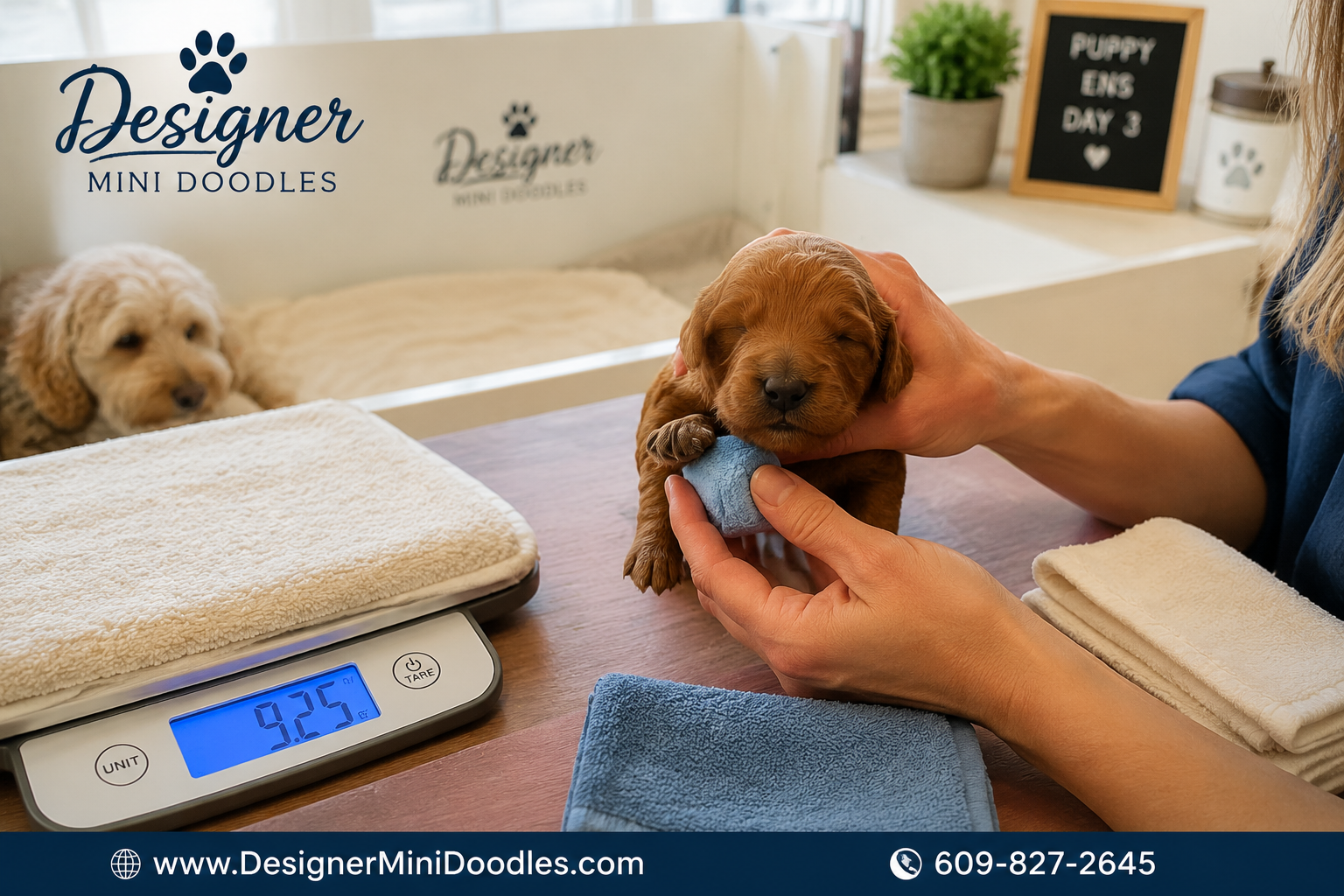
Designer Doodles is run by a credentialed animal biologist who has spent over a decade refining the teacup goldendoodle program. Every dog in our breeding stock comes from documented top teacup goldendoodle bloodlines, with full health clearances on file for each parent.
What sets our teacup goldendoodle breeders program apart:
- Early Neurological Stimulation (ENS): Puppies receive ENS exercises from day 3 through day 16, scientifically shown to improve cardiovascular performance, stress tolerance, and disease resistance.
- In-home raising: Puppies grow up inside a busy household, exposed to children, other animals, vacuums, doorbells, TVs, and everyday noise.
- Well-started training: Every puppy leaves with crate training and potty training already in progress.
- Health guarantee: Written multi-year guarantee against genetic defects.
- Lifetime support: We’re available for questions for the entire life of your dog.
Find us on Google Maps, and if you’re considering small-breed alternatives, our partner program Frenchie Breeders follows the same high standards for French bulldogs.
FAQ
Q: At what age does a teacup goldendoodle stop growing?
A: Most reach full size by 10-12 months. Growth slows significantly after 6 months.
Q: Can teacup goldendoodles be left alone all day?
A: No. They bond closely with owners and shouldn’t be alone more than 4-6 hours regularly without enrichment.
Q: Are teacup goldendoodles hypoallergenic?
A: They’re low-shedding and low-dander, which helps many allergy sufferers, but no dog is 100% hypoallergenic.
Q: How long do teacup goldendoodles live?
A: Typically 10-15 years with good care, slightly less than mini goldendoodles due to small-breed health risks.
Q: Do teacup goldendoodles bark a lot?
A: Not usually. They alert-bark but aren’t yappy when properly socialized.
Q: Can teacup goldendoodles fly in cabin?
A: Yes. Adults usually fit under most airline seats in an approved soft carrier.
Q: What’s the difference between teacup and “toy” goldendoodle?
A: The terms are often used interchangeably. Both refer to the smallest size category, typically under 15 pounds.
Q: How often should I bathe a teacup goldendoodle?
A: Every 3-4 weeks, or as needed if they get dirty. Over-bathing dries out skin.
Q: Do teacup goldendoodles get along with cats?
A: Yes, especially when introduced young. They’re gentle and curious.
Q: Is pet insurance worth it for a teacup goldendoodle?
A: Yes. Small-breed dental issues and orthopedic problems can cost thousands. Insurance from puppyhood is the smartest financial move.
Conclusion
A teacup goldendoodle puppy is one of the best small companion dogs available in 2026 — friendly, trainable, low-shedding, and apartment-ready. The catch is that “teacup” is also the size category most exploited by scammers and puppy mills, so the breeder you choose matters more than any other decision.
Your next steps:
- Set a realistic budget of $2,500-$3,500 plus $1,500-$2,500 in annual care.
- Vet your breeder. Ask for health testing documentation, ENS protocols, and references.
- Visit (virtually or in person) before you commit.
- Prepare your home with a crate, gates, and small-breed-appropriate supplies.
- Reach out to Designer Doodles to discuss available litters and reserve a puppy from proven top bloodlines.
A well-bred teacup goldendoodle will be at your side for a decade or more. Spending a few extra weeks finding the right breeder is the single best investment you’ll make in that relationship.