

teacup doodle puppies
Teacup doodle puppies are miniature crossbreeds (typically Goldendoodle, Bernedoodle, or Cavapoo lines) selectively bred to stay under 10–12 pounds at adulthood. Expect to pay $2,500–$3,500 from an experienced, health-tested breeder working with top bloodlines. They thrive in apartments and quiet family homes, but their small size brings real medical risks (hypoglycemia, fragile bones, dental crowding) that demand careful sourcing and daily care.

teacup doodle puppies
- Teacup doodle puppies typically weigh 5–12 lbs full grown, achieved by breeding to Toy Poodle lines (not by underfeeding).
- Legitimate breeders charge $2,500–$3,500; anything under $1,500 is almost always a scam, puppy mill, or backyard breeder.
- They’re excellent for apartments, seniors, and allergy-conscious homes, but generally not ideal for households with toddlers under 5.
- Lifespan is 12–16 years when bred responsibly, but they’re prone to hypoglycemia, luxating patella, and dental disease.
- Look for breeders using ENS (Early Neurological Stimulation), early socialization, and verifiable bloodline records.
- Feeding costs are low (~$25–$40/month), but vet care, grooming, and dental work can run $1,200–$2,000 annually.
- A teacup doodle is a 15-year commitment, not an accessory — sourcing matters more than price.
What Exactly Is a Teacup Doodle Puppy?
A teacup doodle is a deliberately downsized version of a poodle-mix breed, produced by crossing a Toy or Teacup Poodle with another small parent (Mini Golden Retriever lines, Cavalier King Charles, Mini Bernese, etc.). Adult weight typically falls between 5 and 12 pounds.
“Teacup” is a marketing term, not an AKC-recognized size class. Reputable breeders use it to describe the smallest end of the toy spectrum — dogs achieved through generations of careful pairings, not runts or undernourished pups.
Common varieties include:
- Teacup Goldendoodle — the most popular; gentle, low-shed, teddy-bear face
- Teacup Bernedoodle — tri-colored, calmer temperament
- Teacup Cavapoo — affectionate, slightly stockier build
- Teacup Maltipoo / Yorkipoo — ultra-petite, 4–7 lbs
If you want a deeper look at the size sweet spot just above teacup, our breakdown of the 10–16 lb micro Goldendoodle explains why slightly larger doodles often suit first-time owners better.
How Much Do Teacup Doodle Puppies Cost?
Expect to pay $2,500 to $3,500 for a healthy teacup doodle puppy from a verified, experienced breeder with documented top bloodlines. Price reflects health testing, genetic screening, ENS protocols, and the difficulty of producing safe teacup litters.
Here’s how the market actually breaks down:
| Source | Typical Price | What You’re Getting |
|---|---|---|
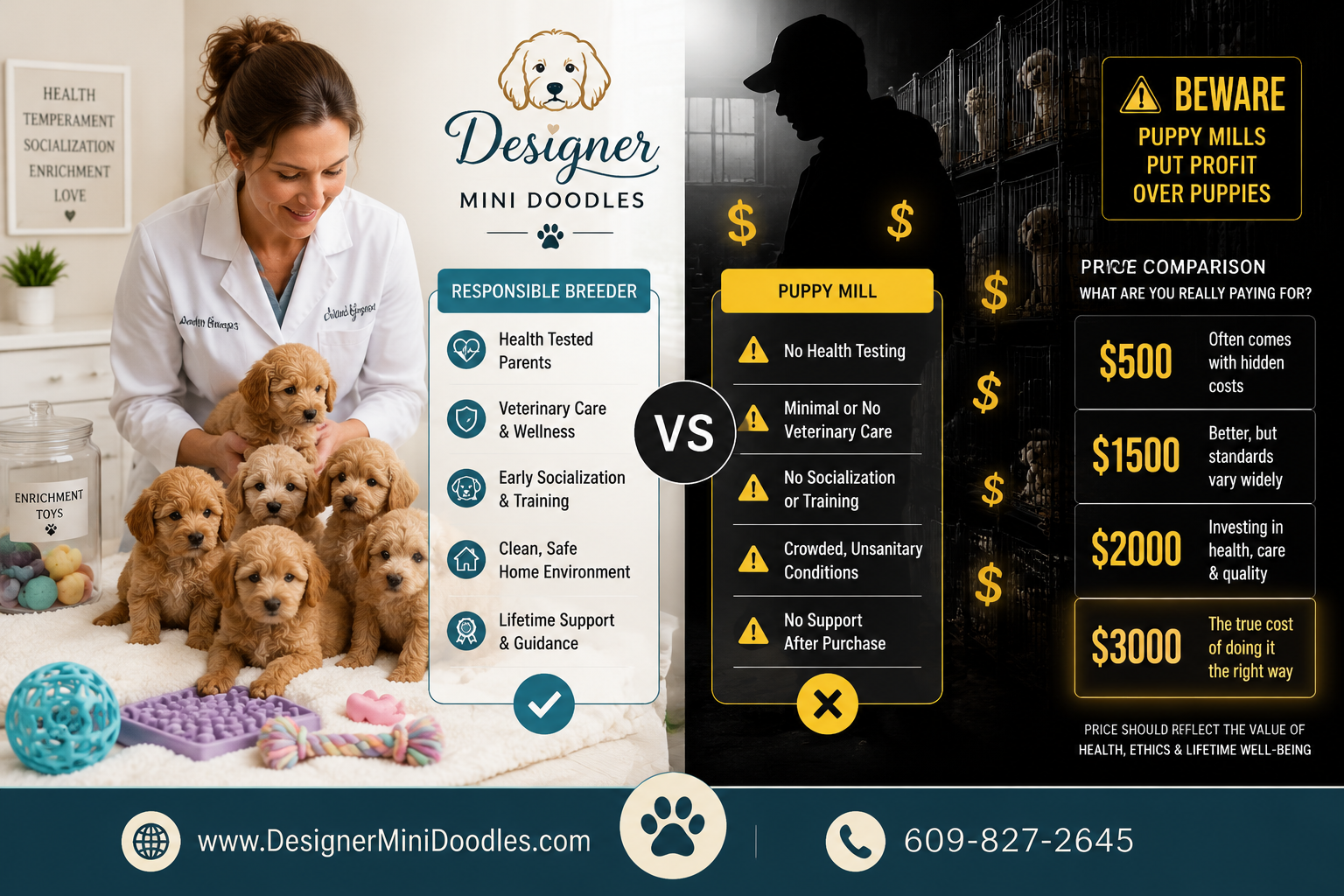
| Scams / online fraud | $500–$1,000 | No puppy, or a sick/misrepresented dog |
| Puppy mills | $1,200–$1,500 | Poor genetics, undersocialized, frequent illness |
| Hobby breeders | $1,500–$2,000 | Variable quality; limited health testing |
| Experienced breeders (top bloodlines) | $2,500–$3,500 | Health-tested parents, ENS, socialization, support |
Decision rule: If a “teacup doodle” listing is priced under $1,500, assume something is wrong until proven otherwise. Demand to video-call the breeder, see the parents, and review OFA/PennHIP and genetic panels.
Where Can I Buy a Legitimate Teacup Doodle Puppy?
Buy only from breeders who let you video-tour their facility, show health clearances on both parents, and provide a written health guarantee. At Designer Doodles, the breeding program is run by a credentialed animal biologist, and all dams and sires are sourced from top teacup goldendoodle bloodlines with verifiable pedigrees.
What separates a real teacup goldendoodle breeder from the rest:
- Health testing on both parents (OFA hips, eyes, cardiac, genetic panel)
- ENS (Early Neurological Stimulation) starting day 3 of life
- Puppies raised inside a busy home — exposed to vacuums, kids, other animals, doorbells
- Crate training and house training started before pickup
- Written health guarantee (minimum 1 year, ideally 2)
- Lifetime breeder support after you take the puppy home
Red flags to walk away from:
- Won’t let you video-call or visit
- Multiple breeds, dozens of litters available year-round
- No health testing documentation
- Pressure to pay via wire transfer or gift cards
- Prices that seem “too good to be true”
For families looking at related small doodle options, our guides on raising confident black toy and teacup poodles and red toy and teacup poodles from puppyhood cover the same sourcing principles in more depth. If you’re also exploring small flat-faced breeds, Frenchie Breeders follow similar health-first standards.
You can also verify a real breeder’s physical operation through their Google Maps listing — legitimate breeders have a real, reviewable address.
- Display 9 Products per page




How Big Do Teacup Doodle Puppies Get as Adults?
Adult teacup doodles typically weigh 5–12 pounds and stand 8–12 inches at the shoulder. Final size depends on the parents — ask your breeder for the weights of the sire, dam, and previous litters.
Rough growth benchmarks:
- 8 weeks: 1.5–3 lbs
- 16 weeks: 3–5 lbs
- 6 months: 4–8 lbs
- 12 months: near full adult size
Common mistake: Buyers assume a “teacup” advertised at 8 weeks will stay tiny forever. Many “teacups” actually grow into 15–20 lb mini doodles. A breeder who can’t show you adult weight data for prior litters is guessing.
Teacup Doodle vs Standard Doodle: Key Differences
The biggest difference is size and fragility. Standard doodles (40–70 lbs) are sturdier and better with rough play; teacup doodles (5–12 lbs) are companion-focused and need protection from injury.
| Feature | Teacup Doodle | Standard Doodle |
|---|---|---|
| Adult weight | 5–12 lbs | 40–70 lbs |
| Lifespan | 12–16 years | 10–13 years |
| Exercise needs | 20–30 min/day | 60+ min/day |
| Apartment-friendly | Excellent | Moderate |
| Good with toddlers | Risky | Excellent |
| Annual food cost | $300–$500 | $800–$1,500 |
| Grooming cost | $40–$60/visit | $80–$120/visit |
| Health risk profile | Higher (small-dog issues) | Lower overall |
Choose teacup if you want a lap companion, live in a small space, or have limited mobility. Choose standard if you have kids under 8 or an active outdoor lifestyle.
Are Teacup Doodles Good for Families with Kids?
Teacup doodles work best in homes with children ages 8 and older who understand how to handle small dogs gently. They are generally not recommended for toddlers or preschoolers because of injury risk in both directions.
Why the caution:
- A 7-pound dog can suffer a fractured leg from a 3-foot fall or a misplaced step
- Small dogs may nip when frightened by sudden grabs
- Resource guarding can develop quickly with food-dropping toddlers
If you have older kids who can be taught to sit on the floor before holding the puppy, a teacup doodle can absolutely thrive. For younger families, our guide to micro Goldendoodles for households with kids explains why the 10–16 lb range often fits better.
Are Teacup Doodles Good for Apartment Living?
Yes — teacup doodles are among the best small breeds for apartments, condos, and urban homes. Their low exercise needs, quiet temperament (when properly socialized), and tiny footprint suit small spaces well.
What makes them apartment-ideal:
- Indoor potty options (pee pads, indoor grass) work easily
- Short daily walks (20–30 minutes) are enough
- They tolerate elevators, stairs, and being carried in a tote
- Most are low-shed and allergy-friendlier than many breeds
The catch: they can become vocal barkers without early socialization. Choose a breeder who exposes pups to doorbells, deliveries, and neighbor noise from day one. See our notes on teacup poodles for urban living for apartment-specific training tips.

What Health Problems Do Teacup Breeds Have?
Teacup doodles face higher rates of small-dog conditions, including hypoglycemia, luxating patella, dental crowding, tracheal collapse, and heart murmurs. Responsible breeding reduces but does not eliminate these risks.
Most common issues to watch for:
- Hypoglycemia (low blood sugar) — especially in puppies under 4 months; symptoms include lethargy, wobbliness, tremors. Feed 3–4 small meals daily.
- Luxating patella — kneecap dislocation; affects roughly 1 in 4 toy breeds per veterinary literature
- Dental crowding and disease — small jaws don’t fit 42 teeth well; daily brushing is non-negotiable
- Tracheal collapse — use a harness, never a collar leash
- Heart murmurs and patent ductus arteriosus — annual cardiac checks recommended
- Open fontanelles — soft spots on the skull that may not close
For a deeper safety breakdown, see this teacup poodle puppy safety guide on preventing common injuries.
Teacup Doodle Lifespan and Potential Medical Issues
Teacup doodles typically live 12–16 years when sourced from health-tested parents and given proper care. Smaller dogs generally outlive larger breeds, but only if dental and orthopedic issues are managed proactively.
Lifetime medical considerations:
- Annual dental cleanings under anesthesia ($400–$800 each) starting around age 3
- Knee surgery for severe luxating patella: $1,500–$3,000 per knee
- Cardiac monitoring annually after age 7
- Senior bloodwork every 6 months after age 10
Pet insurance is worth considering — expect $30–$50/month for solid coverage on a small breed.
How to Care for a Tiny Teacup Doodle Puppy
The first 16 weeks are the most critical. Feed small meals every 4 hours, prevent falls, and never leave the puppy unsupervised on furniture. Treat them like a glass ornament until they hit 4 pounds.
Daily care essentials:
- Feed 3–4 small meals of high-quality puppy food until 6 months
- Keep Karo syrup or Nutri-Cal on hand for hypoglycemia emergencies
- Use a harness, not a collar, on walks
- Block stairs and high furniture with gates and ramps
- Brush teeth daily with enzymatic dog toothpaste
- Groom every 4–6 weeks professionally; brush at home 2–3x weekly
- Vaccinate on schedule but discuss split doses with your vet
For practical onboarding, the first 30 days home with a toy or teacup poodle puppy walks through hour-by-hour expectations.
How Much Does It Cost to Feed a Teacup Doodle?
Feeding a teacup doodle costs $25–$40 per month, or roughly $300–$500 annually. A 5–10 lb dog eats about 1/3 to 1/2 cup of high-quality kibble daily.
Realistic monthly budget breakdown:
- Premium kibble (4-lb bag lasts ~6 weeks): $18–$30
- Training treats: $5–$10
- Dental chews: $8–$12
- Fresh food toppers (optional): $15–$25
Watch out for: cheap fillers cause dental tartar and GI issues faster in small breeds. Spend the extra $10/month on a meat-first food. Our healthy diet plans for toy poodle puppies applies directly to teacup doodles.
Best Training Tips for Tiny Teacup Doodle Puppies
Use positive reinforcement, short 3–5 minute sessions, and tiny treats (pea-sized or smaller). Teacup doodles are smart and eager but tire quickly and bore easily.
Training priorities in order:
- Name recognition and recall — start day one
- Potty training — take out every 90 minutes; reward immediately
- Crate training — small crate, blanket cover, no punishment use
- Bite inhibition — yelp and disengage when nipped
- Handling tolerance — touch ears, paws, mouth daily
- Socialization — 100 new people, places, sounds before 16 weeks
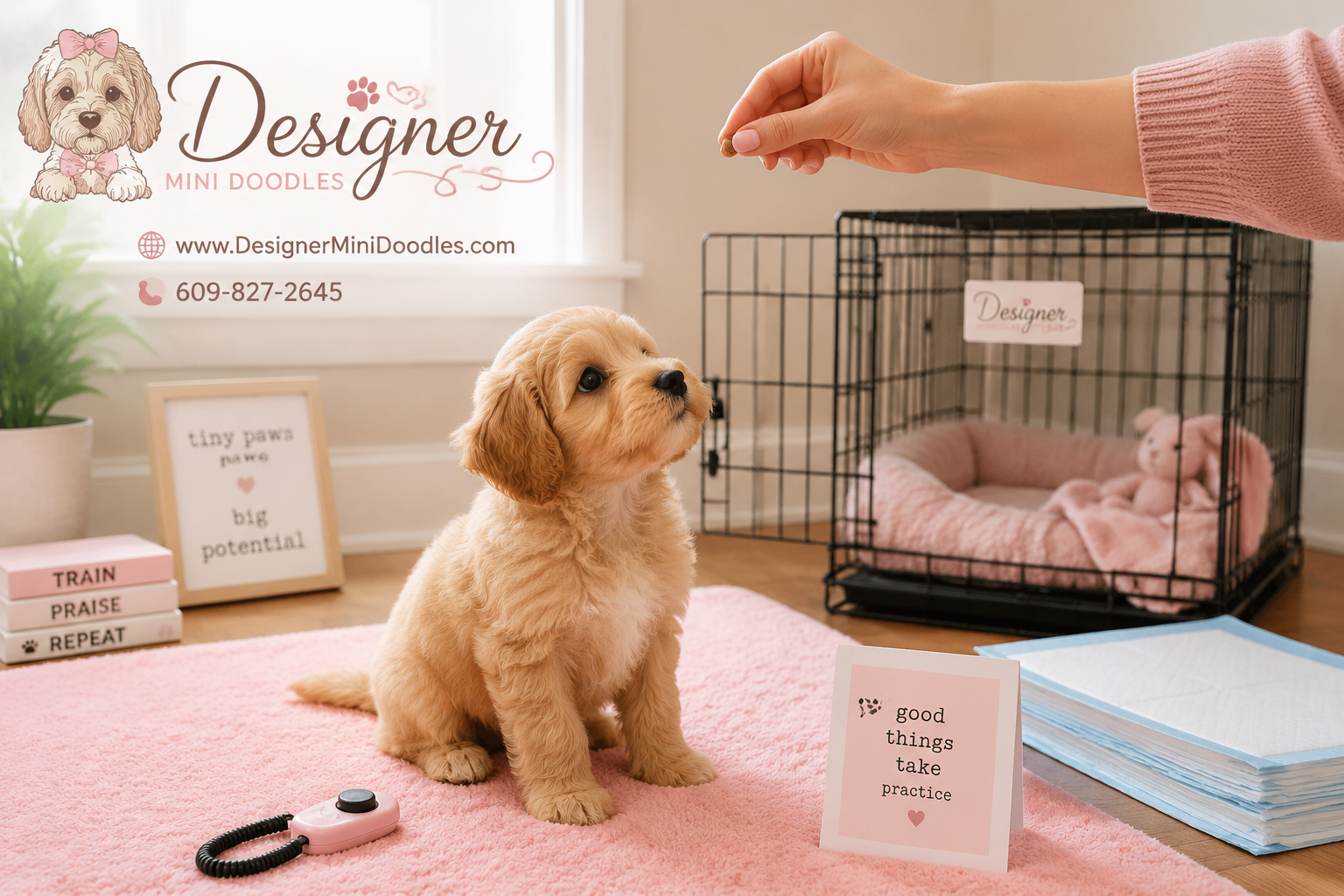
Programs like ENS (Early Neurological Stimulation), used at Designer Doodles from days 3–16, measurably improve stress resilience and trainability. If you missed our crate training guide for toy poodles, it applies directly to teacup doodle pups.
Common Mistakes First-Time Teacup Puppy Owners Make
The biggest mistakes I see are buying on price, skipping the harness, and treating teacup doodles like accessories rather than dogs.
Top 10 first-owner mistakes:
- Buying the cheapest puppy — $800 puppies cost $5,000 in vet bills
- Using a collar leash — causes tracheal damage
- Letting them jump off couches — leg fractures are common
- Skipping breakfast — triggers hypoglycemia in pups under 4 months
- Over-treating — even 3 extra treats can cause weight gain in a 6-lb dog
- No dental care — leads to extractions by age 4
- Carrying everywhere — they need to walk and build confidence
- Skipping socialization — creates fearful, reactive adults
- Falling for “rare” color premiums — color shouldn’t double the price
- Not researching the breeder — the single most expensive mistake
Pros and Cons of Teacup Doodle Puppies
Pros:
- Excellent for apartments and small homes
- Low-shed, allergy-friendlier coats
- Long lifespan (12–16 years)
- Travel-friendly (under airline carry-on weight limits)
- Affectionate, intelligent, eager to please
- Low food and exercise costs
Cons:
- Higher risk of injury and medical issues
- Not ideal with young children
- Expensive vet bills for dental and orthopedic care
- Can develop “small dog syndrome” without training
- Require careful, gradual socialization
- Limited reputable breeders (lots of scams in market)
FAQ
Q: Are teacup doodles hypoallergenic?
A: No dog is 100% hypoallergenic, but teacup doodles with poodle-dominant coats shed minimally and produce less dander, making them tolerable for many allergy sufferers.
Q: How long can a teacup doodle be left alone?
A: Adults can handle 4–6 hours; puppies under 6 months should not be alone more than 2–3 hours due to hypoglycemia and potty needs.
Q: Do teacup doodles bark a lot?
A: They can, especially without socialization. Early exposure to household noises and confident leadership keep barking manageable.
Q: Can teacup doodles fly in the cabin?
A: Yes — most weigh under the 15–20 lb airline carry-on limit. Confirm carrier size with your airline.
Q: What’s the difference between a teacup and a micro doodle?
A: Teacup typically refers to under 12 lbs; micro usually means 10–16 lbs. Micro doodles are sturdier and often easier for first-time owners.
Q: Do teacup doodles need a lot of grooming?
A: Yes — brush 2–3x weekly and schedule professional grooming every 4–6 weeks to prevent matting.
Q: Are male or female teacup doodles better?
A: Personality varies more by individual than sex. Both make excellent companions when properly raised.
Q: How early can I bring a teacup doodle home?
A: Never before 10 weeks. Tiny breeds benefit from staying with the litter until 10–12 weeks for socialization and weight stability.
Q: Will my teacup doodle get along with cats?
A: Usually yes, especially when introduced young. Their small size makes them less intimidating to cats.
Q: Do teacup doodles need other dogs for company?
A: Not required, but they often thrive with a calm canine companion. Avoid pairing with large, rough-playing breeds.
Conclusion
Teacup doodle puppies offer one of the most rewarding pet-ownership experiences available — but only when you start with the right dog from the right breeder. The difference between a $1,000 puppy mill purchase and a $3,000 professionally raised pup isn’t price; it’s 15 years of health, temperament, and quality of life.
Your next steps:
- Set a realistic budget: $2,500–$3,500 for the puppy, plus $1,500 first-year setup
- Interview 2–3 breeders by video call before sending any deposit
- Verify health testing documentation on both parents in writing
- Ask about ENS, socialization protocols, and crate-training progress
- Read the breeder’s contract carefully — guarantees and return policies matter
- Prepare your home: harness, ramp, crate, vet contact, hypoglycemia supplies
If you’re ready to start your search, browse our available mini and micro goldendoodle puppies or learn more about our breeding program philosophy. The right teacup doodle isn’t the cheapest or the smallest — it’s the one bred with intention, raised with love, and matched carefully to your life.
Sources
- Orthopedic Foundation for Animals (OFA) — Health Testing Statistics, 2024 — https://ofa.org
- American Veterinary Medical Association — Toy Breed Health Considerations, 2023 — https://www.avma.org
- Journal of Small Animal Practice — Patellar Luxation Prevalence in Toy Breeds, 2022