
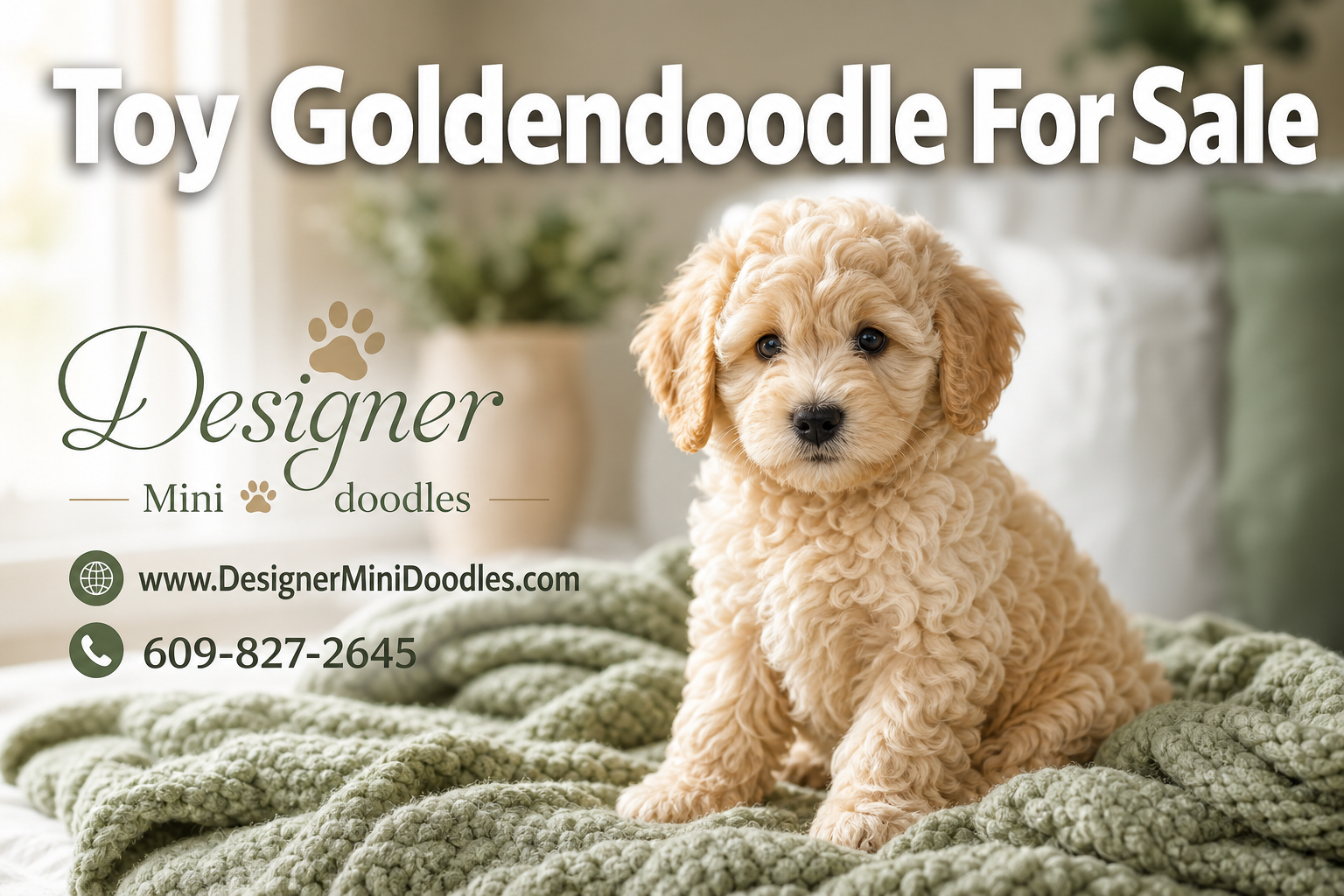
toy goldendoodle for sale
A reputable toy goldendoodle puppy in the United States typically costs between $3,500 and $6,500, weighs 10 to 16 pounds full-grown, and lives 12 to 15 years. Those three numbers shape almost every decision you’ll make as a buyer, from breeder selection to insurance.
toy goldendoodle for sale
A toy goldendoodle is a small-sized cross between a toy or small poodle and a smaller golden retriever line, usually weighing 10 to 16 pounds fully grown. When searching for a toy goldendoodle for sale, prioritize breeders who health-test parents, use Early Neurological Stimulation (ENS), and start crate and potty training before the puppy goes home. Expect to pay $3,500 to $6,500 from a quality program, plus $100 to $200 per month in ongoing costs.
Key Takeaways
- Full-grown size: 10 to 16 pounds, 11 to 14 inches at the shoulder.
- Price range: $3,500 to $6,500 from reputable, health-tested programs.
- Coat: Low-shedding, curly to wavy, considered allergy-friendlier than most breeds.
- Temperament: Affectionate, smart, social, and trainable when properly raised.
- Health screening matters: Parents should be tested for hips, eyes, heart, and genetic markers (PRA, DM, vWD).
- Best programs use ENS, early crate training, and early housebreaking before puppies leave the breeder.
- Designer Mini Doodles is run by an animal biologist and has been producing toy goldendoodle puppies for sale in America for over 15 years.
- Worldwide delivery is available through a dedicated puppy nanny service.
How Much Does a Toy Goldendoodle Puppy Cost?
A toy goldendoodle puppy from a reputable U.S. breeder typically costs $3,500 to $6,500, with rare colors and proven bloodlines reaching $7,000+. Backyard or unverified sellers sometimes list puppies for $1,200 to $2,500, but those puppies often lack health testing, early socialization, and a written health guarantee.
What you’re paying for in a higher-priced puppy:
- DNA and OFA health clearances on both parents
- Early Neurological Stimulation (days 3–16)
- Early crate training and potty pad work
- Vet exams, age-appropriate vaccines, and deworming
- A written multi-year health guarantee
- Lifetime breeder support
Decision rule: If a price seems 50% below market, assume something has been skipped (usually health testing or early development work). Cheaper upfront almost always means higher vet bills later.
Are Toy Goldendoodles Good With Kids?
Yes, toy goldendoodles are generally excellent with kids, especially when raised in a structured early-development program. They’re gentle, playful, and bond strongly with the whole family. The caution is size: at 10 to 16 pounds, they’re more fragile than a standard goldendoodle, so toddlers need supervision.
Tips for families with young children:
- Teach kids to sit on the floor when holding the puppy (no carrying while standing).
- Set up a puppy-only safe zone (pen or crate) the puppy can retreat to.
- Choose a confident, middle-of-the-litter puppy rather than the shyest one.
Families who want a calm, kid-friendly companion often do well with a micro goldendoodle in the 10–16 lb size range.
What’s the Difference Between Toy and Mini Goldendoodles?

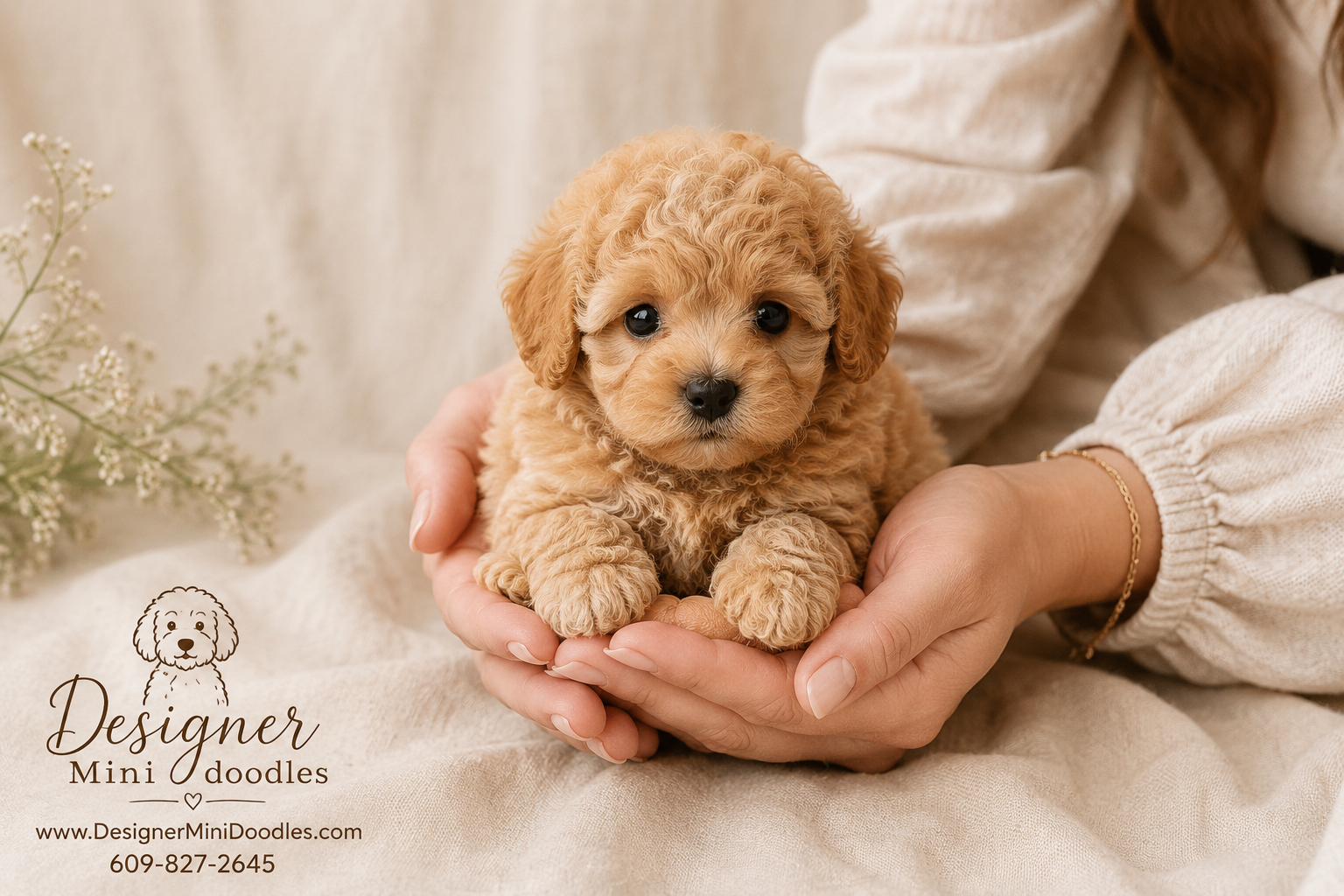
The difference is mostly size and parent selection. A toy goldendoodle is typically 10–16 lbs and is bred down using a toy poodle parent, while a mini goldendoodle is usually 20–35 lbs and uses a miniature poodle parent.
| Trait | Toy Goldendoodle | Mini Goldendoodle |
|---|---|---|
| Adult weight | 10–16 lbs | 20–35 lbs |
| Height at shoulder | 11–14 in | 14–17 in |
| Lifespan | 12–15 yrs | 12–15 yrs |
| Best for | Apartments, travel, seniors | Active families, light hiking |
| Price range | $3,500–$6,500 | $2,800–$5,500 |
Health Issues to Watch for in Toy Goldendoodles
Toy goldendoodles are generally healthy hybrids, but they can inherit conditions from either parent breed. The most common concerns are patellar luxation, hip dysplasia, progressive retinal atrophy (PRA), and dental crowding because of their small jaw.
Ask any breeder for proof of these clearances on both parents:
- OFA or PennHIP hips
- OFA patellas (knees)
- CAER eye exam within the past 12 months
- DNA panel including PRA-prcd, DM, vWD, and Ich
Smaller dogs also develop dental tartar faster, so plan on at-home tooth brushing and a professional dental cleaning every 1–2 years.
Where Can I Find Reputable Toy Goldendoodle Breeders Near Me?
The fastest path is to start with established programs that publish health testing, parent photos, and a litter schedule, then narrow by state. At Designer Mini Doodles, the program is run by an animal biologist who has been breeding toy goldendoodle puppies for sale in America for over a decade and a half, with puppies placed nationwide through a dedicated puppy nanny service.
You can browse state-specific availability for our toy goldendoodle breeders network here:
You can also view our Google Maps listing for reviews and location info. Our puppies are available to go to any home in the world through our puppy nanny flight service.
How to Tell if a Toy Goldendoodle Breeder is Legitimate
A legitimate breeder is transparent, health-tests both parents, and has a waitlist rather than constant on-hand inventory. If a seller pressures you, won’t show the mother, or only communicates by text without video, walk away.
Green flags:
- Animal biology, veterinary, or canine science background
- Written health guarantee (typically 2–10 years)
- Video calls of the litter on request
- ENS, sound desensitization, and early crate work documented
- References from past puppy buyers
Red flags:
- Multiple breeds listed with constant availability
- Refusal to share parent health certificates
- Prices well below market
- No spay/neuter contract or return clause
- Wire-transfer-only payments
Our program is built around the first list: an animal-biologist-led toy goldendoodle breeders operation with ENS, early housebreaking, and early crate training that produces the calmest, most affectionate, and most confident toy goldendoodle puppies for sale you’ll find.
Are Toy Goldendoodles Hypoallergenic?
No dog is 100% hypoallergenic, but toy goldendoodles are one of the lowest-shedding, lowest-dander mixes you can choose. The poodle parent contributes a curly, hair-like coat that traps dander rather than releasing it into the air.
F1B and multigen toy goldendoodles (with more poodle in the line) tend to be the best fit for allergy households. If anyone in your home has a serious allergy, request a “sniff test” visit before committing, or read more on choosing an allergy-conscious micro goldendoodle.
Typical Temperament of Toy Goldendoodle Puppies
Toy goldendoodles are affectionate, social, intelligent, and eager to please. They inherit the golden retriever’s friendliness and the poodle’s quick learning, which makes them one of the easiest small breeds to train.
What you’ll typically see day-to-day:
- Velcro behavior (they want to be in the same room as you)
- Fast house-training when started early
- Friendly with strangers and other dogs after proper socialization
- Moderate energy: 20–30 minutes of structured play, twice a day, is usually enough
- Quiet to moderate barkers (not yappy when well-bred)
Our toy goldendoodle puppies are raised with ENS, exposure to household sounds, and structured handling from day three, which is why new owners consistently describe them as unusually calm and confident.
How Big Do Toy Goldendoodles Get When Fully Grown?
A toy goldendoodle reaches full size around 10–12 months old, finishing at roughly 10–16 pounds and 11–14 inches at the shoulder. Most growth happens in the first 6 months, with the last few pounds filling in slowly.
A rough growth estimate formula breeders use:
Adult weight ≈ (weight at 8 weeks) × 4
So a 3-pound puppy at 8 weeks will likely mature around 12 pounds. It’s an estimate, not a guarantee, but it’s reasonably close when both parents are well-documented.
Common Mistakes First-Time Toy Goldendoodle Owners Make
The biggest mistakes are over-feeding, under-socializing, and skipping crate training. Toy-size dogs gain weight fast on adult kibble portions, and a missed socialization window (8–16 weeks) is hard to fix later.
Avoid these specifically:
- Free-feeding (always measure portions)
- Carrying the puppy everywhere instead of letting it walk and explore
- Treating the crate as punishment instead of a safe den
- Skipping puppy class because the dog is small
- Letting strangers approach before vaccinations are complete
Training Tips for Toy Goldendoodle Puppies
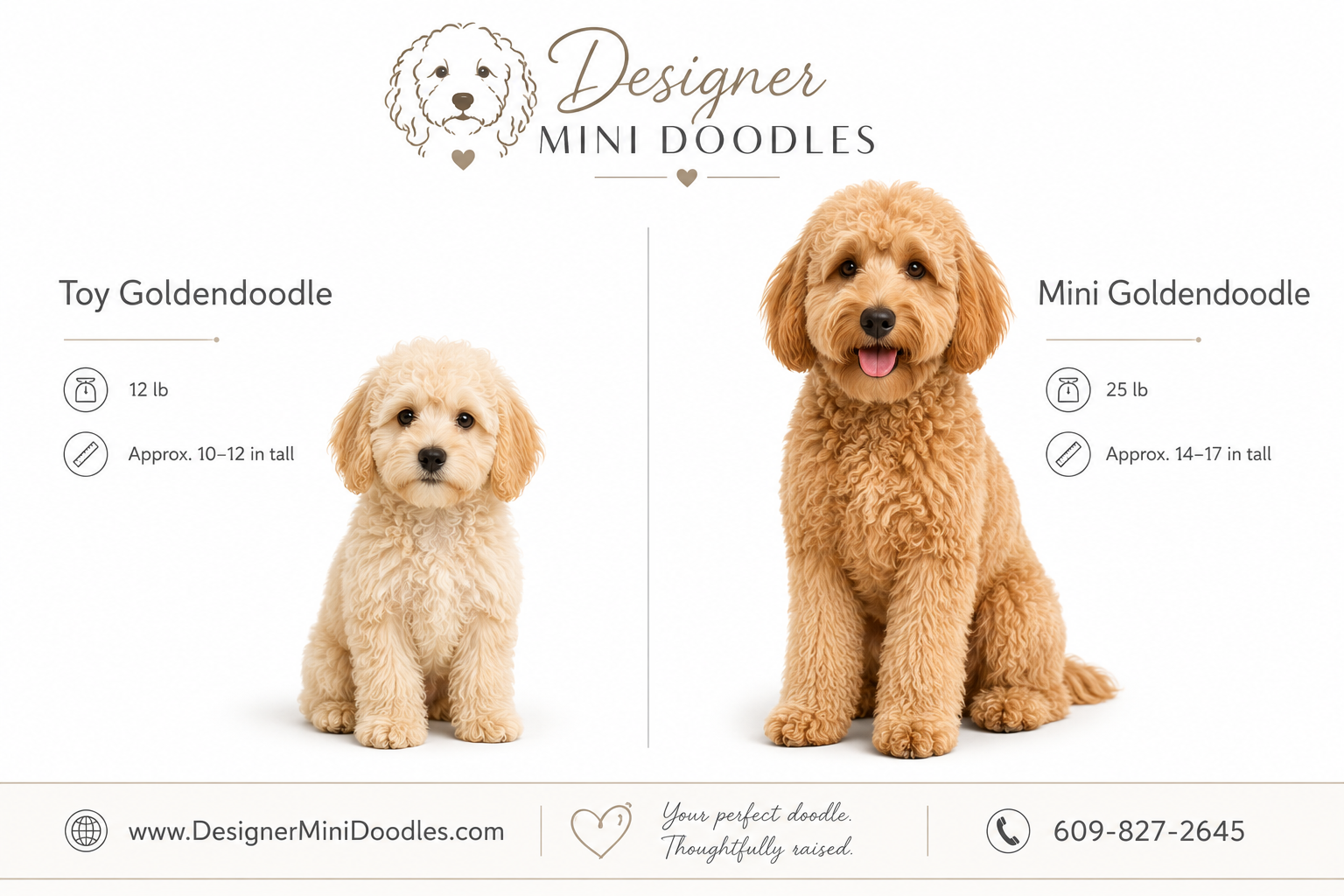
Start training the day your toy goldendoodle comes home. They learn fast, but small dogs are also quick to develop bad habits if owners think they’re “too cute to correct.”
A simple first-30-days plan:
- Week 1: Crate acclimation, name recognition, potty schedule every 90 minutes.
- Week 2: Sit, leash introduction indoors, handling exercises (paws, ears, mouth).
- Week 3: Down, come, short car rides, exposure to new surfaces.
- Week 4: Begin “place” command, 5-minute alone-time intervals, first puppy class.
Use small, soft training treats (pea-sized), and keep sessions to 3–5 minutes, 4–6 times a day. For a deeper dive, see our first 30 days home with a puppy checklist and our guide to training smart toy-sized puppies at home.
What Do Toy Goldendoodles Eat and How Much?
Feed a high-quality small-breed puppy food rated for “all life stages” or “growth,” split into three meals a day until 6 months, then twice a day for life. Most toy goldendoodles eat 1/3 to 3/4 cup of dry food per day total, depending on weight and activity.
Quick feeding guide:
| Age | Meals/Day | Daily Amount |
|---|---|---|
| 8–12 weeks | 4 | 1/3–1/2 cup |
| 3–6 months | 3 | 1/2–3/4 cup |
| 6–12 months | 2 | 1/2–3/4 cup |
| Adult | 2 | 1/3–2/3 cup |
Look for foods with named meat as the first ingredient (chicken, salmon, lamb), omega-3 fatty acids for coat, and DHA for brain development in puppies. Avoid “grain-free” diets with high legume content unless your vet specifically recommends one.
Ongoing Monthly Costs for a Toy Goldendoodle
Plan on $100 to $200 per month in normal ongoing costs once your toy goldendoodle is home, plus a larger first-year setup of about $800–$1,500.
Typical monthly breakdown:
- Premium small-breed food: $25–$45
- Pet insurance: $25–$55
- Flea/tick/heartworm prevention: $20–$35
- Grooming (every 6–8 weeks): $40–$70 averaged monthly
- Treats, toys, training: $15–$30
- Annual vet vaccines/wellness (averaged): $15–$25/mo
Toy goldendoodles fit comfortably into a budget-conscious household, especially compared to larger doodles. For more on this, read our breakdown on cost-of-ownership clarity for small doodles.
If you’re also exploring other small companion breeds, our sister site lists healthy french bulldog puppies from the same animal-biologist-led program.
Why Choose Designer Mini Doodles for a Toy Goldendoodle for Sale
Designer Mini Doodles has been producing toy goldendoodle puppies for sale in America for over 15 years under the direction of a working animal biologist. The program is built around four pillars that most breeders skip:
- Health-tested parents (OFA hips, patellas, CAER eyes, full DNA panel).
- Early Neurological Stimulation from days 3–16, shown in working-dog research to improve cardiovascular performance and stress tolerance.
- Early housebreaking with potty-pad and outdoor cueing before pickup.
- Early crate training so puppies sleep through the night within days of going home.
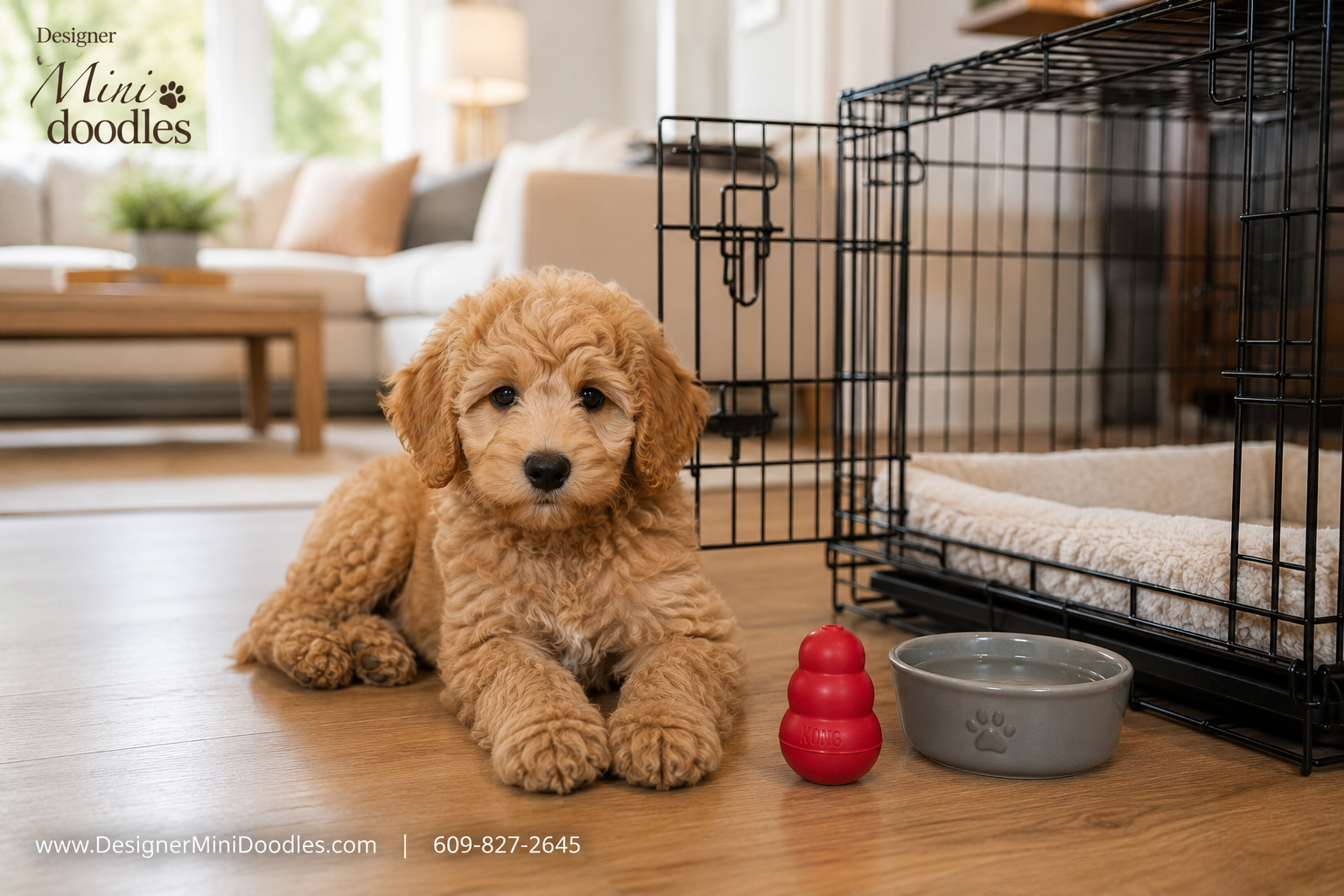
Puppies are placed with families across the U.S. and internationally through a dedicated puppy nanny service that flies the puppy in-cabin directly to your nearest major airport. Whether you’re in a high-rise apartment, a senior household, or a busy family home, there’s a micro goldendoodle size and temperament fit available.
Pros and Cons of a Toy Goldendoodle
Pros
- Compact size suits apartments, travel, seniors
- Low-shedding, allergy-friendlier coat
- Smart and highly trainable
- Long lifespan (12–15 years)
- Excellent family temperament
Cons
- Higher upfront price than many small breeds
- Requires professional grooming every 6–8 weeks
- More fragile around toddlers than larger doodles
- Prone to dental crowding (needs home dental care)
- Separation anxiety risk if not crate-trained early
FAQ
Q: At what age can a toy goldendoodle puppy come home?
A: Eight weeks old is the minimum recommended age. Reputable breeders never release puppies before 8 weeks; 9–10 weeks is also common for very small toy lines.
Q: Are toy goldendoodles easy to potty train?
A: Yes, when started early. Most puppies are reliably house-trained by 4–5 months if their breeder began potty work before pickup and the new owner sticks to a 90-minute schedule.
Q: Do toy goldendoodles bark a lot?
A: They’re moderate barkers, not yappy when well-bred. They’ll alert to the doorbell but typically settle quickly.
Q: How often should I groom a toy goldendoodle?
A: Brush 3–4 times a week and book a professional groom every 6–8 weeks. Skipping brushing leads to painful matting close to the skin.
Q: Can toy goldendoodles be left alone during the day?
A: With early crate training, most adult toy goldendoodles handle 4–6 hours alone. Puppies under 6 months should not be left longer than 3–4 hours.
Q: Are male or female toy goldendoodles better?
A: Behavioral differences are minimal in spayed/neutered dogs. Choose based on the individual puppy’s temperament, not sex.
Q: Do you ship toy goldendoodle puppies internationally?
A: Yes. Designer Mini Doodles offers a dedicated puppy nanny service that delivers puppies to any home in the world, in-cabin whenever possible.
Q: What’s the difference between a toy and a teacup goldendoodle?
A: “Teacup” isn’t an official size category and often signals under-developed or unhealthily small puppies. A true toy goldendoodle (10–16 lbs) is the smallest size we recommend.
Conclusion
Buying a toy goldendoodle is a 12-to-15-year commitment, and the breeder you choose matters more than the price you pay. Look for health-tested parents, documented early development (ENS, crate, potty), and a transparent program that’s willing to answer hard questions on video.
Your next steps:
- Set a realistic budget of $3,500–$6,500 plus $1,000 in first-year setup.
- Verify any breeder’s health testing in writing before sending a deposit.
- Reserve from a waitlist rather than an “available now” inventory page.
- Prepare your home: crate, pen, small-breed food, and a 30-day training plan.
- Browse current availability and reserve a puppy at Designer Mini Doodles or view us on Google Maps.
A well-bred toy goldendoodle is one of the calmest, most affectionate small dogs you can bring home. Take your time finding the right one, and the next 15 years will be a lot easier on you and the puppy.
Sources
- Orthopedic Foundation for Animals (OFA), Hip and Patella Statistics, 2024 — https://ofa.org
- American Kennel Club, Poodle and Golden Retriever Breed Standards, 2024 — https://www.akc.org
- Battaglia, C., “Early Neurological Stimulation,” Breeding Better Dogs, 2009.