

toy goldendoodle breeders near me
The best toy goldendoodle breeders near you are small-scale, health-tested programs that conduct OFA and DNA screening, raise puppies in-home with Early Neurological Stimulation (ENS), and offer a written health guarantee. Expect to pay $3,500–$6,500 for a well-bred toy goldendoodle puppy in 2026, with adult weights typically between 10 and 20 pounds. Avoid any “breeder” who won’t let you video-call to see the parents, the whelping area, and the litter.
Key Takeaways
- A toy goldendoodle is an F1b or multigen cross (Golden Retriever × Toy Poodle lines) typically weighing 10–20 lbs at maturity and standing 11–14 inches tall.
- Quality toy goldendoodle breeders near me should provide parent health clearances (hips, elbows, eyes, cardiac, DNA panel) and an in-home raising environment.
- Expect puppy prices of $3,500–$6,500; anything under $2,000 is a red flag for puppy mills or backyard breeders.
- Toy goldendoodles are low-shedding but not 100% hypoallergenic — coat type varies by generation.
- They’re well-suited to apartments, families with gentle older kids, and first-time owners who can commit to training and grooming.
- Designer Mini Doodles, run by a credentialed animal biologist, has bred toy goldendoodle puppies for over 15 years using ENS, early housebreaking, and early crate training.
- Puppies can be flown to any home worldwide through a dedicated puppy nanny service.
What Exactly Is a Toy Goldendoodle?
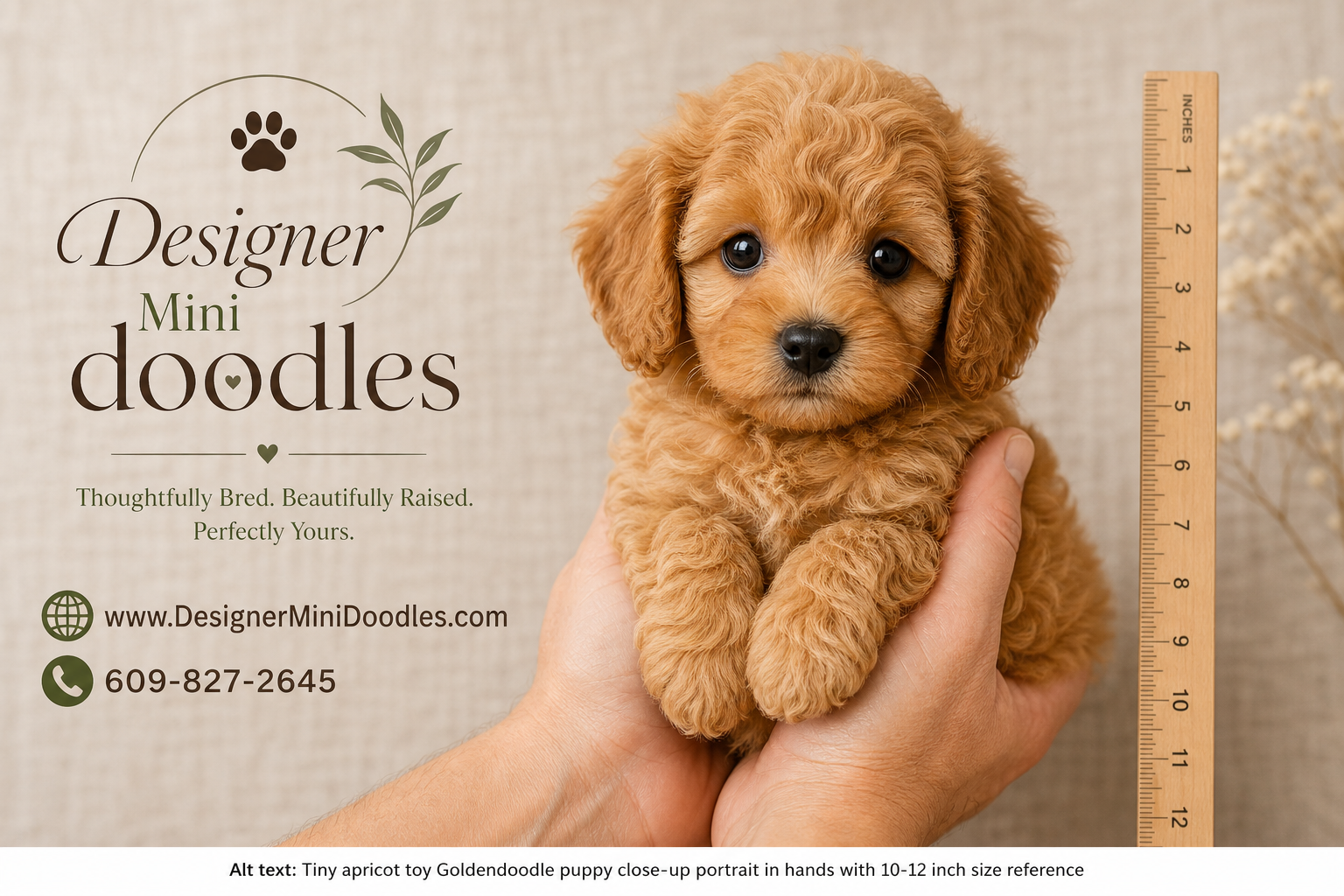
A toy goldendoodle is the smallest size variation of the goldendoodle, created by breeding a Golden Retriever (usually through a mini goldendoodle parent) with a Toy Poodle. Adult toy goldendoodles typically weigh 10 to 20 pounds and stand about 11 to 14 inches at the shoulder.
Most toy goldendoodles sold today are F1b (75% poodle, 25% golden retriever) or multigenerational (F2b, F3). These generations are bred specifically for smaller size, curlier low-shedding coats, and a stable, friendly temperament. If you want a true toy-sized adult, ask the breeder for the projected adult weight in writing based on parent and grandparent weights.
Quick rule: If both parents weigh under 20 lbs and have several generations of small ancestors, the litter will produce reliable toy-sized puppies.
How Much Do Toy Goldendoodle Puppies Cost in 2026?
A well-bred toy goldendoodle puppy costs $3,500 to $6,500 from a reputable breeder in 2026. Rare colors (merle, parti, true red, phantom) and “micro” sizes under 12 lbs typically command the upper end of that range.
Here’s what the price tiers usually look like:
| Price Range | What You’re Getting | Risk Level |
|---|---|---|
| Under $1,500 | Often backyard/mill, no health testing | Very high |
| $1,500–$3,000 | Mixed quality, limited testing | Moderate to high |
| $3,500–$5,000 | Reputable breeder, full health panel, ENS | Low |
| $5,000–$6,500+ | Champion lines, rare colors, micro size, guarantees | Low |
A fair price reflects vet care, genetic testing (often $300–$500 per parent), C-sections common in toy breeds, ENS protocols, and the breeder’s time. If a “toy goldendoodle puppy” costs the same as a tank of gas, walk away.
Are Toy Goldendoodles Good with Kids?
Yes — toy goldendoodles are generally excellent with gentle, supervised older children (around age 6 and up), but their small size makes them fragile around toddlers. A 12-pound puppy can be seriously injured by an excited 3-year-old, even unintentionally.
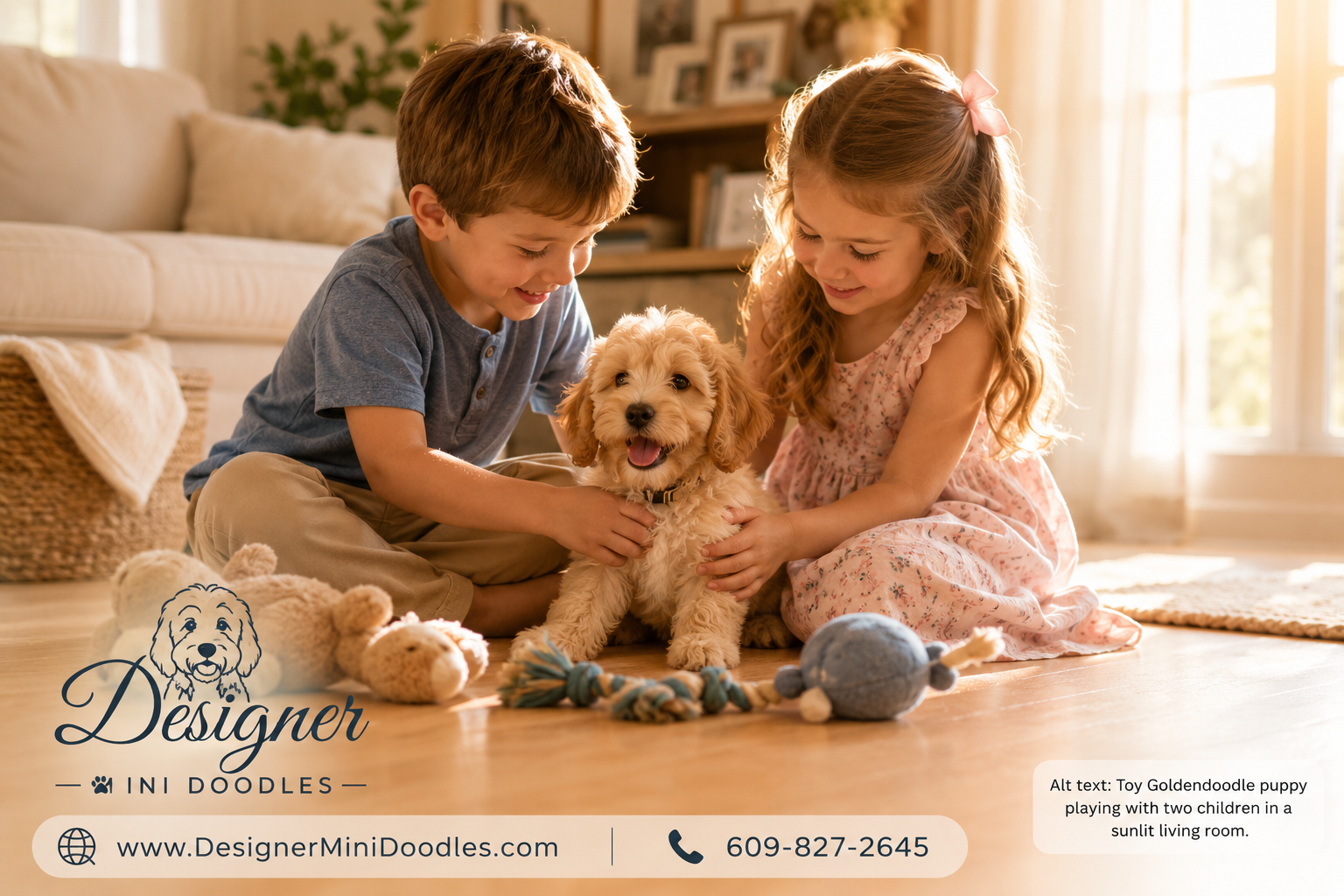
What makes them family-friendly:
- Affectionate, people-oriented temperament inherited from the Golden Retriever side
- Smart and trainable from the Poodle side — easier to teach kids’ rules
- Low-shedding coat helps families with mild allergies
- High social drive; they thrive on family involvement
Choose a toy goldendoodle if: your children are old enough to handle a small dog calmly, and you want a velcro companion.
Pick a mini goldendoodle (15–30 lbs) instead if: you have young kids who play roughly. See our guide on why a 10–16 lb micro goldendoodle is great for family households with kids.
What Health Problems Should I Watch Out For?
Toy goldendoodles are generally healthy with a 12–15 year lifespan, but smaller dogs inherit some breed-specific risks. The most common health issues to screen for include:
- Patellar luxation (kneecap slipping) — common in toy-sized dogs
- Progressive Retinal Atrophy (PRA) — DNA-testable
- Von Willebrand’s Disease (vWD) — bleeding disorder, DNA-testable
- Hip dysplasia — OFA or PennHIP screening on parents
- Dental crowding — small mouths, big teeth (see our dental care tips for tiny mouths)
- Cardiac issues — parents should have OFA cardiac clearance
- Hypoglycemia in very young puppies under 4 lbs
Reputable toy goldendoodle breeders will hand you parent health clearances before you ask. If they hesitate, that’s your answer.
What’s the Difference Between Toy and Mini Goldendoodles?
The difference comes down to size and which poodle parent is used. Toy goldendoodles use a Toy Poodle in the breeding line and finish at 10–20 lbs. Mini goldendoodles use a Miniature Poodle and finish at 20–35 lbs.
| Feature | Toy Goldendoodle | Mini Goldendoodle |
|---|---|---|
| Adult weight | 10–20 lbs | 20–35 lbs |
| Adult height | 11–14 in | 14–18 in |
| Best for | Apartments, seniors, travel | Active families, suburbs |
| Exercise needs | 30–45 min/day | 45–60 min/day |
| Price range | $3,500–$6,500 | $2,500–$5,000 |
| Lifespan | 12–15 years | 12–15 years |
If you’re torn, our deep dive on why a 10–16 lb micro goldendoodle is the perfect size breaks down the lifestyle fit.
How Do I Find the Best Toy Goldendoodle Breeders in My State?
The best toy goldendoodle breeders near me are typically small in-home programs (not commercial kennels) that produce 2–6 litters per year and require an application. Start by searching state-specific directories and asking for referrals from local vets, groomers, and goldendoodle Facebook groups.
We maintain curated, vetted breeder pages by state. Pick yours:
- Toy & mini goldendoodle breeders in Texas
- Florida breeders
- Georgia breeders
- California breeders
- North Carolina breeders
- New York breeders
- Pennsylvania breeders
- Tennessee breeders
- Ohio breeders
- Illinois breeders
- Virginia breeders
If your state isn’t listed, our main breeder directory covers all 50 states.
How to Check If a Goldendoodle Breeder Is Reputable
A reputable breeder welcomes scrutiny. Run any breeder through this checklist before sending a deposit.
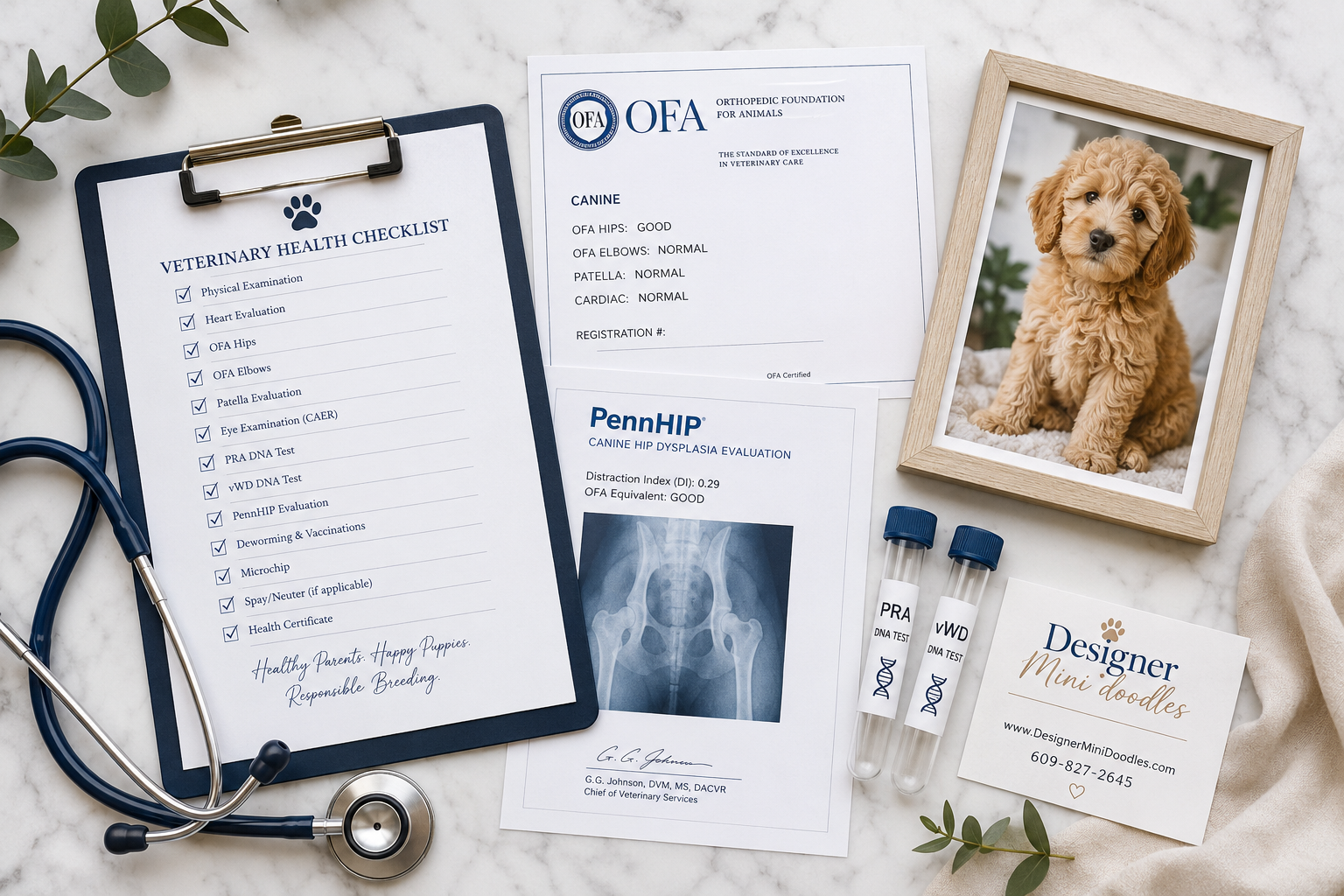
The 10-point reputable breeder checklist:
- Provides written OFA or PennHIP clearances for both parents
- Provides a recent DNA panel (Embark, Paw Print, or equivalent)
- Lets you video tour the home and meet the dam
- Raises puppies inside the home, not in a barn or outbuilding
- Uses Early Neurological Stimulation (ENS) from days 3–16
- Begins early housebreaking and crate training before pickup
- Has a written 2+ year genetic health guarantee
- Requires a spay/neuter contract for pet-quality puppies
- Will take the dog back at any age if you can’t keep it
- Asks you questions — they care where their puppies go
Common scam signs: wire-only payment, prices way below market, stock photos, refusal to video call, or pressure to “decide today.”
Are Toy Goldendoodles Hypoallergenic?
Toy goldendoodles are low-shedding but no dog is truly 100% hypoallergenic. Allergic reactions come from dander and saliva proteins, not just hair. That said, F1b and multigen toy goldendoodles with curly coats produce far less dander than most breeds and work well for many mild-to-moderate allergy sufferers.
If allergies are a serious concern:
- Request an F1b or F2b (higher poodle percentage)
- Visit the puppies in person before committing
- Spend at least 30 minutes handling the litter to test your reaction
- Read our piece on why micro goldendoodles fit allergy-conscious homes
Common Mistakes First-Time Toy Goldendoodle Owners Make
The biggest mistake first-time owners make is underestimating training needs because the puppy is small and cute. Toy goldendoodles are smart and sensitive — without structure, they develop separation anxiety, barking habits, and resource guarding.
Other frequent mistakes:
- Skipping crate training because the puppy “seems fine”
- Overfeeding — these dogs gain weight fast and joints suffer
- Under-socializing during the critical 8–16 week window
- Cheap grooming — matted coats require shave-downs; budget $80–$120 every 6–8 weeks
- Buying on impulse from the first available litter instead of vetting the breeder
- Letting kids carry the puppy — falls cause broken legs in toy breeds
Set the foundation early. Our guide on teaching toy poodles indoor manners and boundaries applies directly to toy goldendoodles too.
How Big Do Toy Goldendoodles Get?
Most toy goldendoodles finish between 10 and 20 pounds and 11 to 14 inches tall at the shoulder. Final adult size depends on both parents’ weights and the generation.
A reliable estimation method: take the puppy’s weight at 8 weeks, multiply by 4.3, and add 10% for males. For example, a 2.5 lb puppy at 8 weeks will likely mature around 11–13 lbs.
Beware “micro” or “teacup” claims below 8 lbs — sub-8-pound adults carry serious health risks including fragile bones, dental crowding, and hypoglycemia. The healthy sweet spot is 10–16 lbs.
Is a Toy Goldendoodle Right for an Apartment?
Yes — toy goldendoodles are one of the best apartment dogs available. They’re small enough for tight square footage, adaptable, and quieter than most toy breeds when properly trained. Their daily exercise need (30–45 minutes) is realistic for urban schedules.
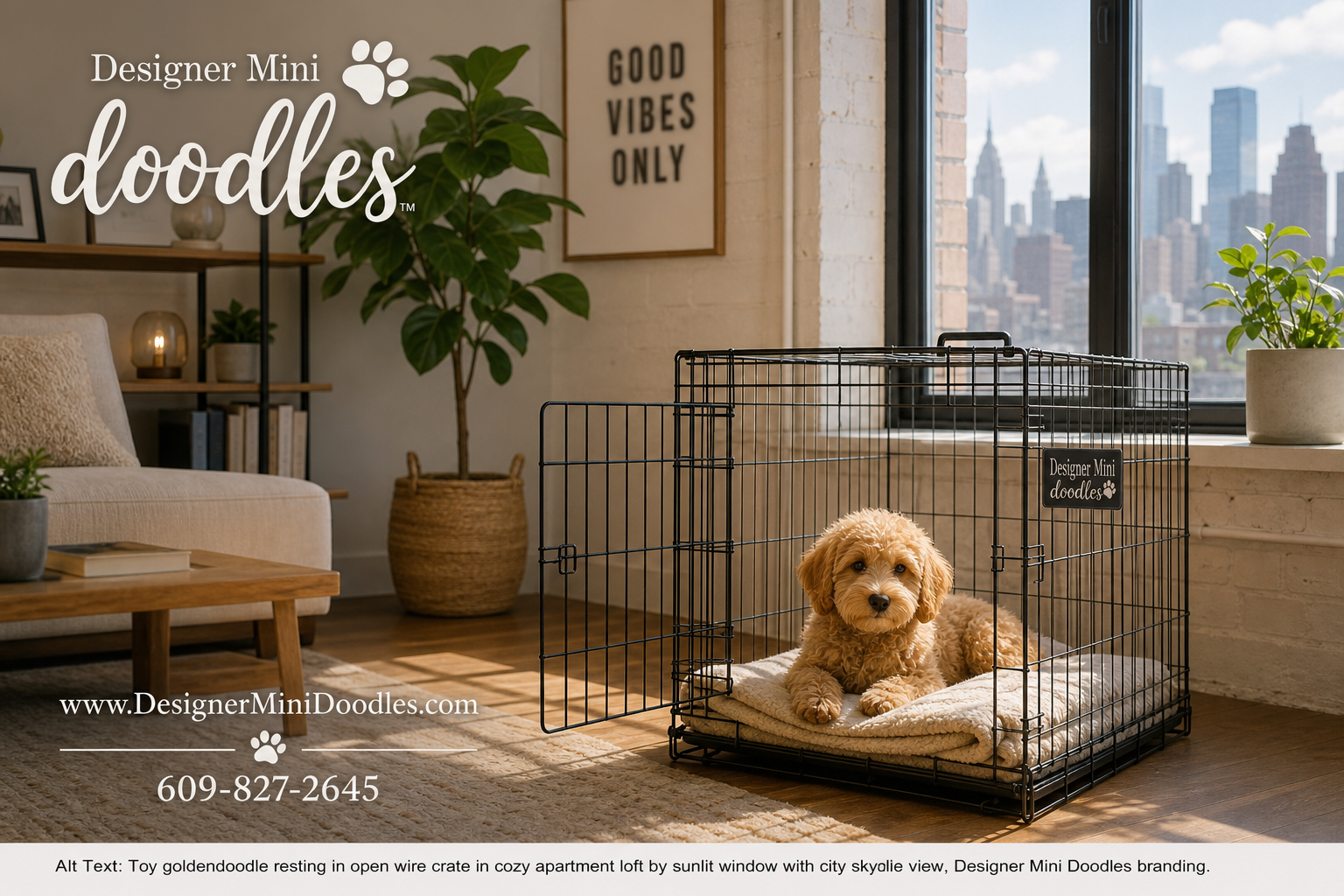
Apartment-friendly traits:
- Small footprint and quiet by nature when socialized
- Low shedding — easier on small living spaces
- Highly trainable for elevator and lobby manners
- Travel-friendly for weekend trips (learn more about travel-friendly micro goldendoodles)
The catch: they bond hard and don’t love being alone for 10-hour workdays. If you work outside the home full-time, plan for a midday walker or daycare.
Rescue vs Breeder for Toy Goldendoodles
Choose a rescue if you’re open to an adult dog, flexible on size and coat type, and willing to work through some retraining. Choose a breeder if you need predictable size, temperament, coat, and health history — especially important for allergy sufferers and homes with children.
Toy goldendoodle rescues are rare because the breed is in high demand; most “doodle rescues” carry standard or mini sizes. Try Doodle Rock Rescue, IDOG Rescue, or Poo-Mix Rescue if you want to go that route.
Reputable breeders, on the other hand, give you ENS-raised puppies with documented health clearances. Both paths are valid — choose the one that fits your life.
Why Designer Mini Doodles Stands Out
Designer Mini Doodles has been breeding toy goldendoodle puppies for sale in America for over 15 years, led by a credentialed animal biologist. Our program is built around three pillars:
- Genetic excellence — every breeding parent has full OFA clearances and a comprehensive DNA panel.
- Early development protocols — ENS from days 3–16, early scent introduction, sound desensitization, early housebreaking, and early crate training before puppies leave us.
- Temperament selection — we breed for the calmest, most affectionate, and most confident toy goldendoodle puppies, not just the cutest.
The result is puppies that transition into homes with minimal stress, sleep through the night in their crates within days, and bond quickly with kids and other pets.
“We’re not producing puppies. We’re producing future family members who arrive already housebroken-started and crate-confident.”
Looking for something different? We also breed micro goldendoodle lines, mini bernedoodle puppies, and parti toy poodles. If you prefer a brachycephalic companion, our partner program offers premium french bulldog puppies with the same health-first standards.
Worldwide Delivery and Where to Find Us
Our puppies are available to any home in the world through our dedicated puppy nanny flight service. Nannies fly in-cabin with your puppy for door-to-door delivery — common destinations include Canada, the UK, EU, UAE, Australia, and Singapore.
Visit us in person or find us here:
- Main site: designerminidoodles.com
- Google Maps listing
FAQ
How long is the waitlist for a toy goldendoodle puppy?
Typical waitlists for reputable breeders run 3–9 months. Rare colors and micro sizes can stretch to 12+ months.
What’s the smallest healthy toy goldendoodle size?
Around 10 lbs at adulthood. Anything under 8 lbs carries elevated health risks and is not recommended.
Do toy goldendoodles bark a lot?
They can if under-stimulated or anxious, but properly socialized toy goldendoodles are moderate barkers — alert without being yappy.
How often do toy goldendoodles need grooming?
Professional grooming every 6–8 weeks, plus brushing 3–4 times per week to prevent matting. Curly coats mat fastest.
Can I get a toy goldendoodle if I work full-time?
Yes, with planning. Use a midday dog walker, daycare 2–3 days a week, or work-from-home flexibility. They struggle with 10-hour solo days.
Are male or female toy goldendoodles better?
Both make excellent pets. Females tend to be slightly more independent, males slightly more affectionate — but individual temperament matters more than sex.
What food is best for a toy goldendoodle puppy?
A high-quality small-breed puppy formula (Royal Canin Small Puppy, Hill’s Science Diet Small Paws, or similar) for the first 12 months.
Do toy goldendoodles get along with cats?
Yes, especially when introduced as puppies. Their golden retriever heritage makes them naturally tolerant of other pets.
How early can a toy goldendoodle puppy come home?
8 weeks minimum. Reputable breeders never release puppies before 8 weeks, and many wait until 10 weeks for toy sizes.
Is pet insurance worth it for a toy goldendoodle?
Yes — patellar surgery alone can cost $3,000–$5,000. Insurance from day one (Trupanion, Healthy Paws, Embrace) is highly recommended.
Conclusion: Your Next Steps
Finding the right toy goldendoodle breeders near me isn’t about geography — it’s about credentials, transparency, and the early developmental work that turns a puppy into a stable adult. Use the 10-point checklist above on every breeder you talk to, expect to invest $3,500–$6,500, and never skip the video tour.
Your action plan this week:
- Pick your state from the directory above and review 3–5 breeders.
- Email each one asking for parent health clearances and a video call.
- Apply to your top 1–2 choices — good breeders work by application, not first-come-first-served.
- Budget for grooming ($80–$120 every 6–8 weeks), food, insurance, and a small training package.
- Prepare your home with a crate, x-pen, and puppy-proofed space before pickup day.
When you’re ready, reach out to Designer Mini Doodles to discuss available litters, upcoming pairings, and our worldwide puppy nanny service. Fifteen years of breeding the calmest, most confident toy goldendoodles is waiting on the other end.
Sources
- Orthopedic Foundation for Animals (OFA) — Health Database, 2024 — https://ofa.org
- American Kennel Club (AKC) — Goldendoodle Breed Information, 2024 — https://www.akc.org
- Embark Veterinary — Genetic Health Conditions in Doodle Breeds, 2024 — https://embarkvet.com
- Goldendoodle Association of North America (GANA) — Breeding Standards, 2024 — https://goldendoodleassociation.com