
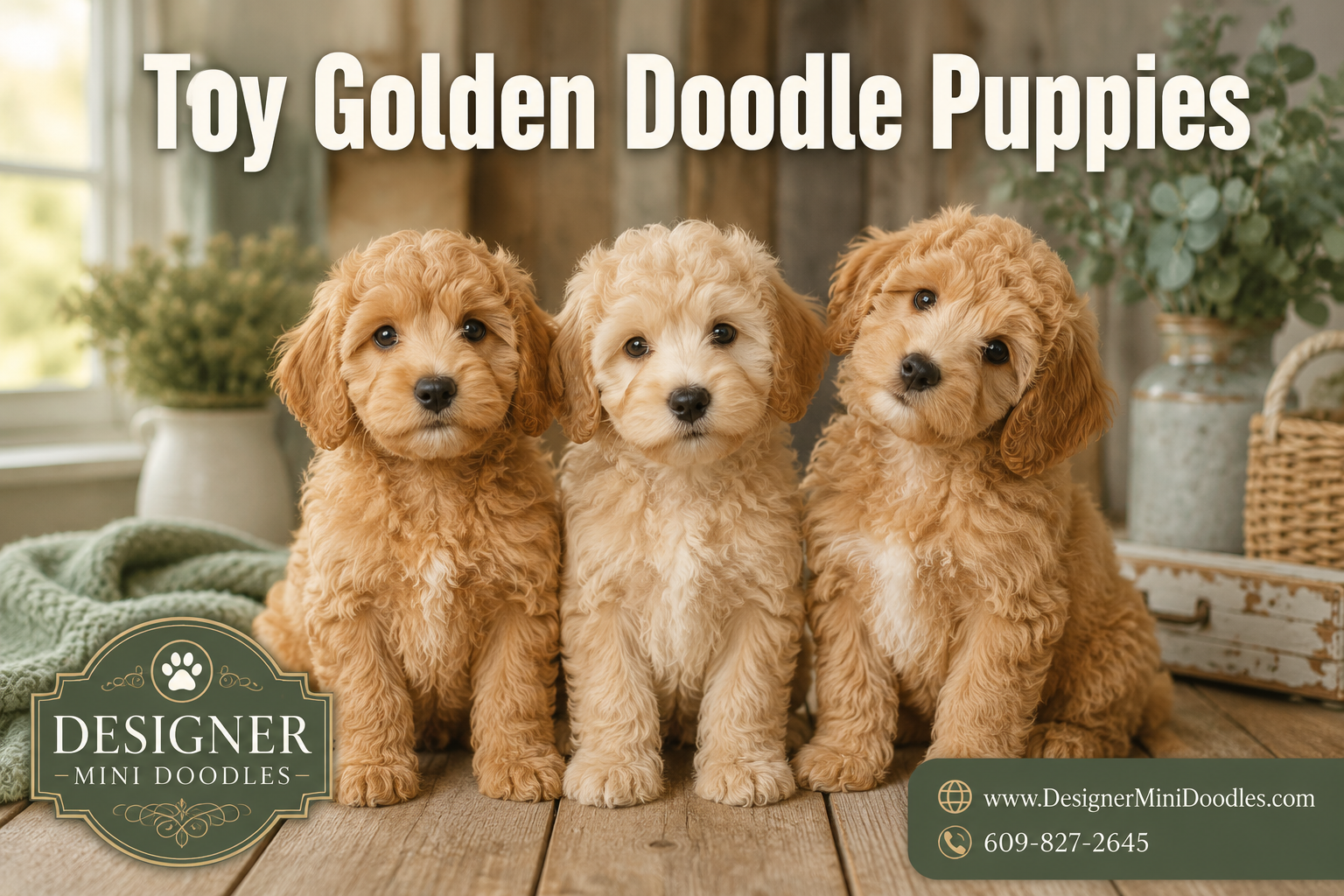
toy golden doodle puppies
Toy goldendoodle puppies are a cross between a Golden Retriever and a Toy Poodle, typically weighing 10–20 pounds fully grown and standing under 14 inches tall. They are affectionate, highly trainable, low-shedding, and well-suited to apartments, families with kids, and first-time dog owners. Expect to pay $2,500–$5,000 from a reputable breeder,
 toy golden doodle puppies
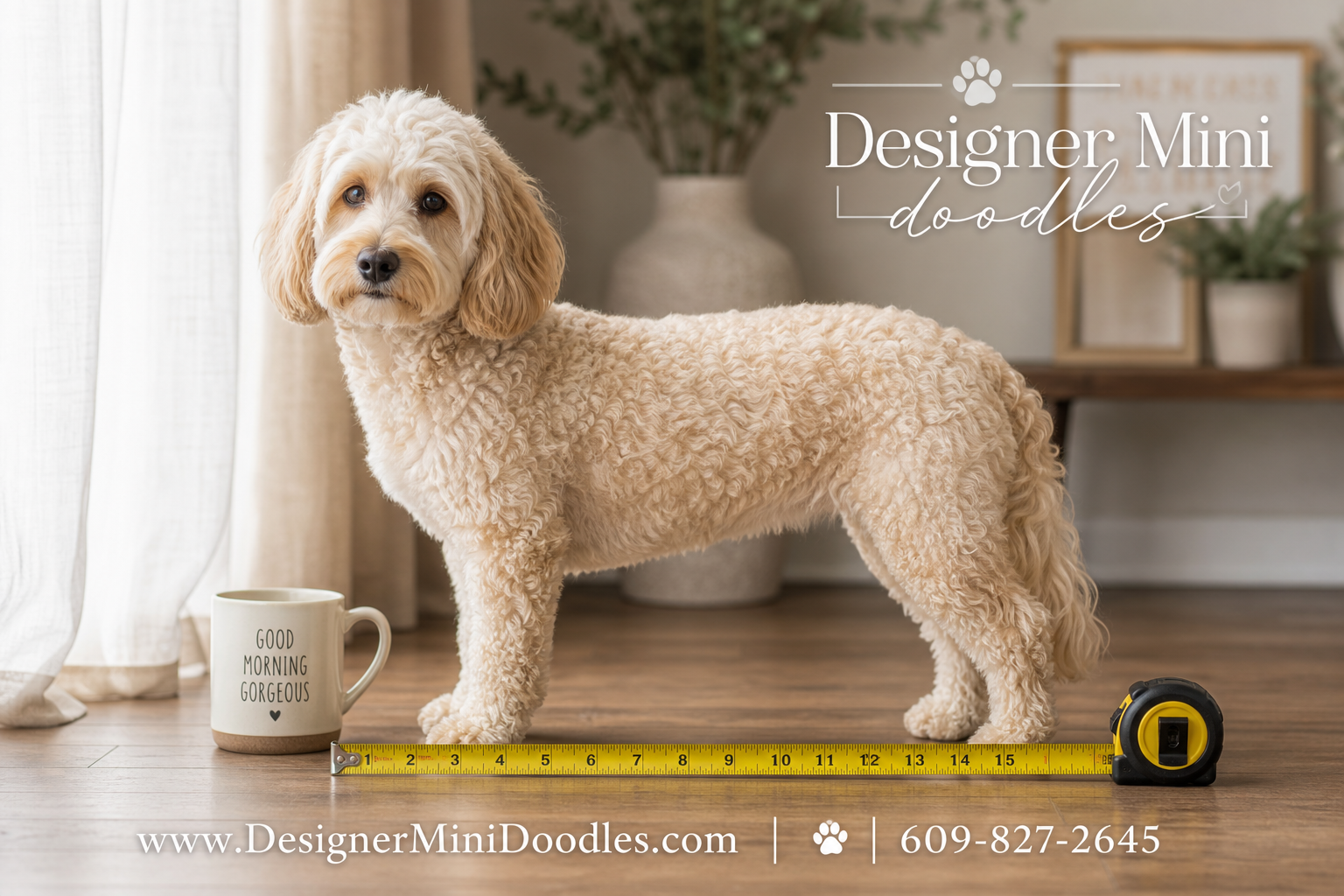
- Size: Adult toy goldendoodles usually finish at 10–20 lbs and 11–14 inches tall.
- Temperament: Calm, social, eager to please, and great with kids and other pets.
- Cost: Typical price range is $2,500–$5,000; health-tested parents and early training programs cost more.
- Coat: Low-shedding wavy or curly coat; needs brushing 3–4 times a week and a professional groom every 6–8 weeks.
- Exercise: 30–45 minutes of daily activity plus short training sessions are enough for most.
- Health: Generally healthy with a 12–15 year lifespan when bred responsibly.
- Apartment-friendly: Small size, quiet temperament, and adaptability make them ideal for urban living.
- Training: One of the easiest small breeds to train, perfect for first-time owners.
What Are Toy Golden Doodle Puppies?
Toy goldendoodles are an F1, F1B, or multigenerational cross between a Golden Retriever (usually through a mini parent) and a Toy Poodle. The Toy Poodle parent keeps the adult size small, typically 10–20 pounds. They combine the friendliness of a Golden with the intelligence and low-shedding coat of a Poodle.
At our program, every toy goldendoodle puppy is raised by an animal biologist with over 15 years of breeding experience. We use Early Neurological Stimulation (ENS), early crate training, and early housebreaking starting in the first weeks of life, which produces puppies that arrive home calmer, more confident, and easier to settle than the industry average. If you’d like to see available litters, you can browse current toy goldendoodle puppies on our site.
How Big Do Toy Goldendoodles Get When Fully Grown?
Fully grown toy goldendoodles typically weigh 10 to 20 pounds and stand 11 to 14 inches at the shoulder. Most finish growing by 9–12 months. The size depends largely on the Poodle parent and whether the puppy is F1, F1B, or multigen.
| Doodle Type | Adult Weight | Adult Height |
|---|---|---|
| Toy Goldendoodle | 10–20 lbs | 11–14 in |
| Micro Mini Goldendoodle | 10–16 lbs | 10–13 in |
| Mini Goldendoodle | 20–35 lbs | 13–18 in |
| Standard Goldendoodle | 50–80 lbs | 20–24 in |
If you want a predictable small adult size, ask the breeder for parent weights and a written size estimate. Our micro goldendoodle program specifically targets the 10–16 lb sweet spot that works best in apartments and small homes.
Are Toy Goldendoodles Good With Kids and Other Pets?
Yes, toy goldendoodles are one of the best small breeds for families. They are gentle, patient, and rarely show aggression when bred and socialized correctly. They usually do well with cats, other dogs, and even small pets when introduced calmly.
A few practical rules:
- Supervise play with toddlers — at 12 pounds, a toy goldendoodle can be injured by rough handling, not the other way around.
- Use baby gates to give the puppy a quiet retreat space.
- Introduce other pets on neutral ground first, then in short sessions at home.
 ))
))
For more on family fit, see our guide on why a 10–16 lb micro goldendoodle works in family households with kids.
How Much Does a Toy Goldendoodle Puppy Cost?
Expect to pay $2,500 to $5,000 for a well-bred toy goldendoodle puppy in the U.S. in 2026. Puppies from breeders who do full genetic health testing, ENS, and early training tend to sit at the higher end of that range — and they’re usually worth it.
What drives the price:
- Health testing on both parents (hips, elbows, eyes, cardiac, PRA, vWD)
- Coat color and rarity (red, parti, phantom often cost more than cream)
- Size guarantee (true toy/micro sizes are harder to produce)
- Early training program (crate, potty, ENS, socialization)
- Health guarantee length (1–2 years is standard, longer is better)
Budget another $1,500–$3,000 in the first year for food, vet care, grooming, supplies, and insurance. For a deeper breakdown, read our cost-of-ownership clarity guide.
What Health Problems Do Toy Goldendoodles Commonly Have?
Toy goldendoodles are generally healthy, with a lifespan of 12–15 years. The most common conditions to screen for are inherited from the parent breeds.
Conditions to ask the breeder about:
- Hip and elbow dysplasia (less common in toys than standards, but still tested)
- Patellar luxation (slipping kneecaps — more common in small breeds)
- Progressive Retinal Atrophy (PRA) — genetic eye disease
- von Willebrand’s Disease (vWD) — blood clotting disorder
- Ear infections from floppy, hair-filled ears
- Dental crowding common in toy-size dogs
Reputable breeders test parents through OFA, PennHIP, and panel DNA tests (Embark or Paw Print Genetics) and provide results before you pay a deposit.
Toy Goldendoodle vs Mini Goldendoodle: What’s the Difference?
The main difference is size. Toy goldendoodles finish at 10–20 lbs, while mini goldendoodles finish at 20–35 lbs. The toy is produced by breeding to a Toy Poodle; the mini uses a Miniature Poodle.
Quick decision rule:
- Choose a toy goldendoodle if you live in an apartment, travel often, want a lap-friendly dog, or have limited yard space.
- Choose a mini goldendoodle if you have kids who roughhouse, want a hiking buddy, or prefer a slightly sturdier dog.
Temperament is very similar between the two — both are friendly, smart, and trainable. Coat, shedding, and grooming needs are also nearly identical.
How Much Exercise Does a Toy Goldendoodle Need Daily?
A healthy adult toy goldendoodle needs about 30–45 minutes of exercise per day, split into two sessions. Puppies need less in terms of sustained walks but more frequent short bursts of play.
A balanced daily routine:
- One 20-minute walk
- One 10–15 minute play session (fetch, tug, flirt pole)
- 5–10 minutes of training or puzzle work
- Free sniffing time in the yard or on a long line
They also need mental exercise. Skipping this is the number one cause of nuisance behaviors (barking, chewing) in this breed. See our active lifestyle guide for ideas.
Are Toy Goldendoodles Hard to Train for First-Time Dog Owners?
No, toy goldendoodles are among the easiest breeds for first-time owners. Both parent breeds rank in the top 5 for intelligence and trainability. Most puppies pick up basic commands (sit, down, come, crate) within 1–2 weeks of consistent practice.
What makes them easy:
- Strong food and praise motivation
- Naturally soft, non-stubborn temperament
- Quick at reading human cues
- Eager to please rather than independent
Our puppies leave for new homes already started on crate training and potty training, which removes the hardest first two weeks for new owners. Read more about why this matters for first-time dog owners.
Do Toy Goldendoodles Shed a Lot?
No, toy goldendoodles shed very little. Most have a wavy or curly low-shedding coat inherited from the Poodle parent. F1B and multigen toy goldendoodles tend to be the lowest-shedding and best for allergy-conscious homes.
A few honest caveats:
- “Hypoallergenic” is not absolute — people with severe allergies should meet the parents first.
- Straight-coated F1 puppies (rare in toy lines) may shed lightly.
- All coats still drop a small amount of dead hair that gets caught in the curls — this is what you brush out.
For households with allergy concerns, see our allergy-conscious home guide.
What Should I Feed a Toy Goldendoodle Puppy?
Feed a toy goldendoodle puppy a high-quality small-breed puppy formula with 26–32% protein and 14–18% fat, divided into 3–4 small meals per day until 6 months, then 2 meals daily. Small breeds are prone to hypoglycemia, so don’t skip meals.
What I recommend:
- AAFCO-approved small-breed puppy food (Royal Canin Mini Puppy, Hill’s Science Diet Small Paws Puppy, Purina Pro Plan Small Breed)
- Fresh water available at all times
- Limit treats to 10% of daily calories
- Avoid grain-free unless prescribed (the FDA has flagged a possible link to DCM in some grain-free diets)
- Transition slowly when switching foods (over 7–10 days)
Ask your breeder what the puppy is currently eating and stick with it for at least the first two weeks at home.
 ))
))
What Are the Grooming Requirements for Toy Goldendoodles?
Toy goldendoodles need brushing 3–4 times per week and a professional grooming appointment every 6–8 weeks. Their coat doesn’t shed out on its own — without regular care, it mats quickly, especially behind the ears, under the legs, and on the belly.
Essential grooming routine:
- Brush with a slicker brush and metal comb (the comb must reach the skin)
- Bathe every 3–4 weeks with a gentle dog shampoo
- Clean ears weekly and pluck if your vet recommends it
- Trim nails every 2–3 weeks
- Brush teeth 3+ times per week
Budget $60–$100 per professional groom. Starting grooming routines in puppyhood makes a lifelong difference — see our grooming and home care guide.
How Do I Find a Reputable Toy Goldendoodle Breeder?
A reputable toy goldendoodle breeder will health-test both parents, raise puppies in their home, allow you to meet or video-meet the parents, provide a written health guarantee, and never pressure you into a quick deposit.
Green flags:
- Full OFA + DNA testing on both parents (results visible on request)
- Limited litters per year (4–8, not 30+)
- Puppies stay until at least 8 weeks
- Early socialization, ENS, and crate/potty training
- Lifetime breeder support and take-back policy
- Detailed contract with a health guarantee
Red flags:
- No health testing or vague “vet checked” claims
- Multiple breeds and constant availability
- Pressure to wire money fast
- No video calls or visit options
- Prices that look too good to be true
We’ve been breeding toy goldendoodle puppies under the direction of an animal biologist for over 15 years, with health-tested parents and a structured early development program. Our puppies ship safely to any home in the world through our dedicated puppy nanny service. You can also check our Google Maps listing for reviews and location.
If you’re looking by state, we have detailed breeder guides for Pennsylvania, Florida, Texas, New York, and California, among others. Looking for a different small breed? See our french bulldog puppies program as well.
What Is the Typical Temperament of Toy Goldendoodle Puppies?
Toy goldendoodles are affectionate, social, intelligent, and calmer than most small breeds. They bond closely with their people, get along with strangers and other dogs, and rarely show the nervous, yappy behavior common in some toy breeds.
Personality traits you can expect:
- Velcro-style attachment to their main person
- Playful but not hyperactive
- Quick to settle once exercised
- Sensitive to harsh tones (positive training works best)
- Mild separation anxiety risk if left alone too long without training
Our early handling and ENS protocol specifically targets a calm, confident, affectionate baseline temperament, which is the single biggest factor in whether a puppy adjusts smoothly to a new home.
Are Toy Goldendoodles Good Apartment Dogs?
Yes, toy goldendoodles are excellent apartment dogs. Their small size, low shedding, moderate exercise needs, and quiet temperament make them one of the best urban-living breeds.
 ))
))
Why they fit apartment life:
- 10–20 lb adult size suits small spaces
- Rarely bark without cause when properly socialized
- Easy to potty train (especially with our early start)
- Travel well in carriers and elevators
- Low odor and low shedding
For city dwellers, read our guide on why a 10–16 lb micro goldendoodle is perfect for apartment and urban living.
Pros and Cons at a Glance
Pros
- Small, manageable size
- Low-shedding, allergy-friendlier coat
- Affectionate, family-friendly temperament
- Highly trainable for first-time owners
- Long lifespan (12–15 years)
- Apartment and travel-friendly
Cons
- Higher upfront cost than many breeds
- High grooming maintenance (or grooming bills)
- Can develop separation anxiety if left alone too much
- Small size requires careful handling around toddlers
- Limited breeders producing true toy size
FAQ
How long do toy goldendoodles live?
Most toy goldendoodles live 12–15 years with proper care, regular vet visits, and a healthy weight.
Can toy goldendoodles be left alone?
They tolerate 4–6 hours alone once adult and crate-trained. Puppies need someone home every 2–3 hours for potty breaks.
Do toy goldendoodles bark a lot?
No, they are moderate barkers. Most alert-bark briefly at the door but settle quickly. Excessive barking usually signals boredom or anxiety.
At what age is a toy goldendoodle full grown?
Most reach full size by 9–12 months. They reach full emotional maturity around 18–24 months.
Are toy goldendoodles hypoallergenic?
No dog is fully hypoallergenic, but toy goldendoodles (especially F1B and multigen) are among the best options for people with mild allergies.
Is a male or female toy goldendoodle better?
Both are equally affectionate and trainable. Once spayed or neutered, behavior differences are minimal — pick the puppy whose temperament fits your home.
Can toy goldendoodles fly in-cabin on planes?
Yes, most adults stay under the 20-lb in-cabin weight limit for major airlines when in an approved carrier.
How soon can I bring my toy goldendoodle puppy home?
Reputable breeders release puppies at 8 weeks at the earliest. Earlier than that risks behavioral and health issues.
Conclusion
Toy goldendoodle puppies offer a rare combination of small size, low shedding, easy trainability, and a genuinely affectionate temperament — which is why demand has stayed strong year after year. They fit apartments, families, seniors, and first-time owners equally well, provided you choose a breeder who does the foundational work before the puppy ever leaves the nursery.
Your next steps:
- Decide on size, coat, and budget (use the comparison table above).
- Make a shortlist of 2–3 breeders who health-test, do early training, and offer support.
- Schedule a video call or visit and ask for health clearances in writing.
- Prepare your home: crate, gate, food, vet appointment, grooming plan.
- Reserve a puppy from a planned litter rather than rushing to whoever has one available now.
If you’d like help finding the right match, our team raises toy goldendoodle puppies year-round under an animal biologist’s direct supervision, with early training built in and puppy nanny delivery available worldwide.
Sources
- Orthopedic Foundation for Animals (OFA) — Health testing guidelines, ofa.org
- American Kennel Club — Poodle and Golden Retriever breed standards, akc.org
- FDA Center for Veterinary Medicine — Grain-free diet and DCM update, 2022, fda.gov
- Embark Veterinary — Canine genetic health testing panels, embarkvet.com