

Last updated: June 8, 2026
Quick Answer: Micro golden doodle puppies for sale typically cost between $3,000 and $5,500 from reputable breeders in 2026, with prices varying based on coat color, generation, and breeder reputation. These tiny companions weigh 10 to 16 pounds fully grown, combine the intelligence of a Toy or Miniature Poodle with the gentle temperament of a Golden Retriever, and are well-suited for apartments, families with children, and allergy-conscious households. The key to a healthy micro goldendoodle starts with choosing a breeder who conducts genetic health testing, practices Early Neurological Stimulation (ENS), and prioritizes temperament over appearance alone.
Key Takeaways
- Micro goldendoodles mature to 10-16 pounds and stand 10-14 inches tall, making them significantly smaller than mini goldendoodles (25-35 pounds).
- Annual care costs range from $1,500 to $3,000, covering food, grooming, veterinary visits, and supplies.
- Reputable breeders run by professionals with backgrounds in animal biology produce the healthiest, most well-adjusted puppies through structured breeding programs.
- These dogs are considered low-shedding and more suitable for allergy sufferers, though no dog is 100% hypoallergenic.
- Early socialization, crate training, and housebreaking started by the breeder dramatically improve a puppy’s transition to your home.
- Micro goldendoodles are excellent apartment dogs, family companions, and travel-friendly pets when properly bred and trained.
- Common health concerns include patellar luxation, progressive retinal atrophy, and dental crowding, all of which responsible breeders screen for.
- First-time owners should avoid puppy mills, skip health testing, or underestimate grooming needs at their peril.
What’s the Difference Between Mini and Micro Goldendoodles?
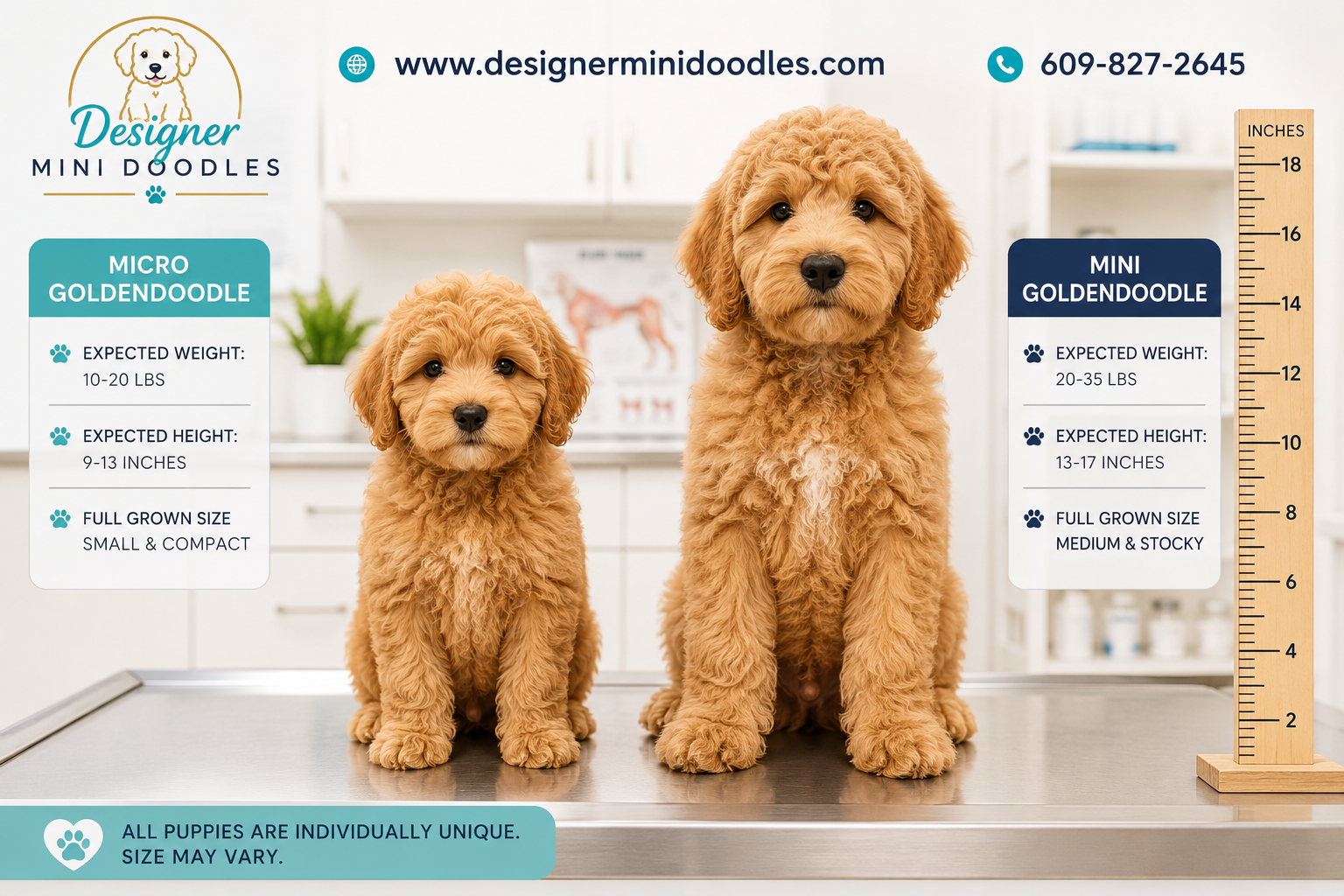
The core difference is size: mini goldendoodles typically weigh 25 to 35 pounds at maturity, while micro goldendoodles weigh just 10 to 16 pounds. This size gap comes from the Poodle parent used in the breeding program.
Mini goldendoodles are usually a cross between a Golden Retriever and a Miniature Poodle. Micro goldendoodles, on the other hand, involve a Toy Poodle (or a very small Miniature Poodle) crossed with a smaller Golden Retriever or an already-downsized mini goldendoodle. The result is a dog that retains the Golden Retriever’s friendly disposition in a package small enough to carry in one arm.
| Feature | Mini Goldendoodle | Micro Goldendoodle |
|---|---|---|
| Adult Weight | 25-35 lbs | 10-16 lbs |
| Height | 14-17 inches | 10-14 inches |
| Poodle Parent | Miniature Poodle | Toy Poodle |
| Exercise Needs | Moderate-high | Moderate |
| Lifespan | 12-15 years | 12-16 years |
| Ideal Living Space | House with yard | Apartment or house |
Choose micro if you live in a smaller space, travel frequently, or want a dog that’s easy to manage physically. Choose mini if you want a slightly sturdier dog for rougher play or longer hikes. For a deeper look at why the 10-16 pound range works so well for active households, read our guide on why a 10-16 lb micro goldendoodle is the perfect size for active lifestyles.
How Much Does a Micro Goldendoodle Puppy Cost?
Expect to pay between $3,000 and $5,500 for micro golden doodle puppies for sale from a reputable breeder in 2026. Prices at the higher end reflect multi-generational breeding programs, extensive health testing, early training protocols, and rare coat colors like red, apricot, or parti.
Several factors drive the price:
- Breeder expertise and credentials. A breeding program led by an animal biologist who has been refining bloodlines for over 15 years will command higher prices because of the investment in genetic health, temperament selection, and puppy development protocols like ENS and early socialization.
- Health testing. OFA certifications, genetic panels for conditions like PRA and vWD, and cardiac evaluations add cost but protect you from thousands in future veterinary bills.
- Early training. Breeders who begin housebreaking, crate training, and basic manners before the puppy goes home save you weeks of effort and produce calmer, more confident puppies.
- Generation. F1B and multigenerational micro goldendoodles (which have a higher Poodle percentage) tend to cost more because their coats are more predictably low-shedding.
- Coat color. Red, cream, and parti-colored puppies often carry a premium.
Common mistake: Buyers who find micro goldendoodle puppies listed for under $1,500 should proceed with extreme caution. That price point rarely covers the cost of proper health testing, quality nutrition, and veterinary care, and often signals a puppy mill or backyard breeder.
How Big Do Micro Goldendoodles Get When Fully Grown?
A fully grown micro goldendoodle typically weighs between 10 and 16 pounds and stands 10 to 14 inches at the shoulder. Most reach their adult size by 10 to 12 months of age, though they may continue filling out slightly until 14 months.
The final size depends on the specific parents. A breeder with a long track record can predict adult size more accurately because they’ve observed multiple generations from the same bloodlines. At Designer Mini Doodles, for example, the breeding program has been refined by an animal biologist for over a decade and a half, producing consistently sized micro goldendoodles that fall squarely in the 10-16 pound range.
Edge case: Some breeders market “teacup goldendoodles” at under 10 pounds. Dogs bred to be that small often face serious health complications, including fragile bones, hypoglycemia, and organ issues. The 10-16 pound micro range offers the small-dog experience without the extreme health risks.
Are Micro Goldendoodles Hypoallergenic?
No dog is truly hypoallergenic, but micro goldendoodles are among the best options for allergy-conscious homes. Their Poodle heritage gives them a low-shedding, often curly or wavy coat that traps dander rather than releasing it into the air.
The key variable is generation. F1B micro goldendoodles (75% Poodle, 25% Golden Retriever) and multigenerational crosses tend to shed the least and produce less dander. A straight F1 cross (50/50) may still shed moderately.
For households where allergies are a primary concern, we recommend exploring why a 10-16 lb micro goldendoodle is the perfect size for allergy-conscious homes, which breaks down coat types and dander management in detail.
Decision rule: If anyone in your household has moderate to severe pet allergies, request an F1B or multigenerational puppy and spend time with the specific puppy before committing. Most reputable breeders will accommodate this.
Do Micro Goldendoodles Shed a Lot?
Micro goldendoodles are low-shedding dogs, but they are not zero-maintenance. Their wavy to curly coats trap loose hair instead of dropping it on your furniture, which means less shedding around the house but more frequent grooming to prevent matting.
Grooming requirements:
- Brush thoroughly every 2-3 days (daily for curlier coats)
- Professional grooming every 6-8 weeks
- Regular ear cleaning to prevent infections (floppy ears trap moisture)
- Dental care, especially important for smaller dogs prone to crowding
The trade-off is straightforward: you get a dog that won’t cover your couch in fur, but you’ll invest more time and money in coat maintenance. Budget approximately $60 to $90 per professional grooming session.
What Health Issues Do Micro Goldendoodles Have?
The most common health concerns in micro goldendoodles include patellar luxation, progressive retinal atrophy (PRA), hip dysplasia (less common than in standard goldendoodles), dental crowding, and von Willebrand’s disease. A well-bred micro goldendoodle from health-tested parents has a significantly lower risk for all of these conditions.
What responsible breeders test for:
- OFA patella evaluations to screen for luxating kneecaps
- PRA genetic panel to identify carriers of progressive blindness
- Cardiac screening for congenital heart defects
- Hip evaluations (especially in the Golden Retriever parent)
- Von Willebrand’s disease genetic testing
A breeding program run by an animal biologist will typically go beyond the minimum testing requirements. At Designer Mini Doodles, over 15 years of selective breeding has allowed the program to track health outcomes across multiple generations, reducing the incidence of hereditary conditions through careful pairing.
Red flag: If a breeder cannot provide documentation of health testing for both parents, walk away. Verbal assurances are not enough.
How Much Does It Cost to Care for a Micro Goldendoodle Annually?
Annual care costs for a micro goldendoodle range from $1,500 to $3,000 after the initial purchase, depending on your location and the level of care you provide. Here’s a realistic breakdown:
| Expense Category | Estimated Annual Cost |
|---|---|
| Premium dog food | $300-$500 |
| Professional grooming (6-8 visits) | $400-$700 |
| Veterinary wellness exams and vaccines | $250-$500 |
| Flea/tick/heartworm prevention | $150-$300 |
| Pet insurance | $300-$600 |
| Toys, treats, and supplies | $150-$300 |
| Emergency fund contribution | $200-$400 |
For a detailed breakdown of ownership costs specific to the micro size range, see our resource on cost-of-ownership clarity for 10-16 lb micro goldendoodles.
Pro tip: The smaller size of micro goldendoodles actually saves money on food and medication compared to standard or even mini goldendoodles. A 12-pound dog eats roughly one-third the food of a 35-pound dog.
Are Micro Goldendoodles Good With Kids?
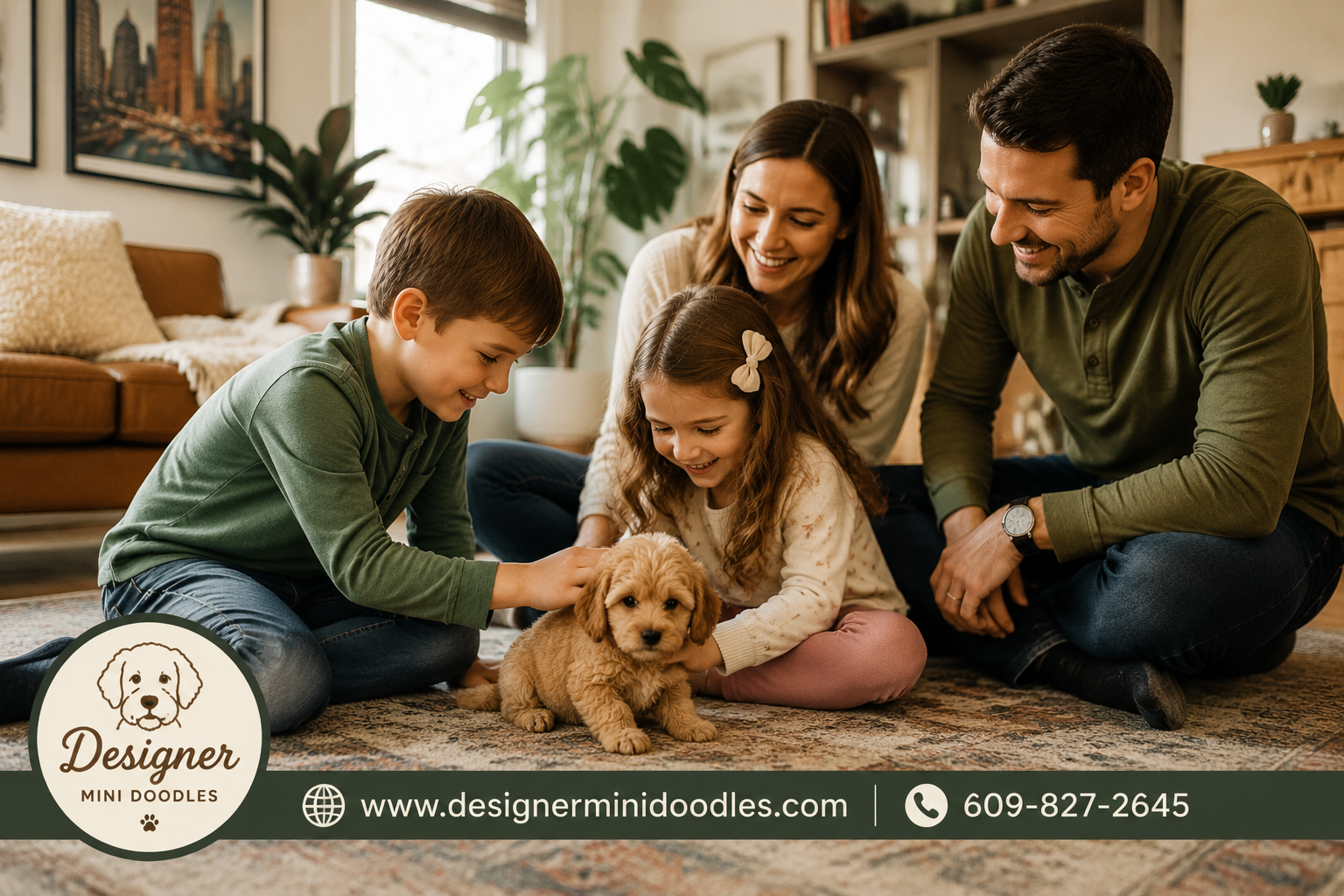
Yes, micro goldendoodles are excellent family dogs. They inherit the Golden Retriever’s patience and affection along with the Poodle’s intelligence and playfulness, making them naturally gentle with children. However, their small size means supervision is essential with very young children who might accidentally handle them too roughly.
Best practices for families:
- Teach children to sit on the floor when holding the puppy rather than standing
- Supervise all interactions with toddlers and children under 6
- Establish “puppy-free zones” where the dog can retreat when overstimulated
- Involve children in feeding and gentle training exercises to build mutual respect
Micro goldendoodles from breeders who practice ENS (Early Neurological Stimulation) and structured socialization tend to be calmer and more confident around the unpredictable movements and sounds that come with children. Learn more about why micro goldendoodles are ideal for family households with kids.
Are Micro Goldendoodles Good for Apartments?
Micro goldendoodles are one of the best doodle varieties for apartment living. Their compact 10-16 pound frame, moderate exercise needs, and typically quiet demeanor make them well-suited to smaller spaces, provided they receive 30 to 45 minutes of daily exercise and mental stimulation.
Why they work in apartments:
- Small enough to be comfortable in limited square footage
- Generally not excessive barkers (though this varies by individual)
- Can get adequate exercise from indoor play, short walks, and puzzle toys
- Easy to transport in elevators and through common areas
- Most apartment breed restrictions don’t apply to dogs under 20 pounds
When it might not work: If you’re gone 10+ hours a day with no midday break, any dog will struggle in an apartment. Micro goldendoodles are social dogs that can develop separation anxiety if left alone for extended periods. Consider a dog walker or doggy daycare if your schedule demands long absences.
For apartment-specific guidance, our article on micro goldendoodles for apartment and urban living covers everything from space setup to noise management.
Where Can I Find Reputable Micro Goldendoodle Breeders Near Me?
Start by looking for breeders who are transparent about their health testing, breeding practices, and puppy-raising protocols. A reputable breeder will welcome your questions, provide references, and show you where the puppies are raised.
Signs of a reputable breeder:
- Conducts OFA and genetic health testing on all breeding dogs and provides documentation
- Raises puppies in a home environment, not a kennel
- Practices Early Neurological Stimulation (ENS) and structured socialization
- Begins early housebreaking and crate training before puppies go home
- Offers a health guarantee (typically 1-2 years)
- Has verifiable credentials, such as a background in animal biology or veterinary science
- Maintains a waitlist (quality breeders rarely have puppies available immediately)
- Is willing to take a puppy back at any point in its life if the owner can’t keep it
Designer Mini Doodles operates one of the most established micro golden doodle puppy breeding programs in the country, led by an animal biologist with over 15 years of experience. The program produces the calmest, most affectionate, and most confident micro and mini golden doodle puppies through rigorous health testing, ENS protocols, early housebreaking, and early crate training.
Nationwide availability: Even if you don’t live near a top breeder, many reputable programs offer a dedicated puppy nanny service that safely delivers your new puppy to any home in the world. This means you’re not limited to local breeders and can prioritize quality over proximity.
If you’re searching by state, here are some popular regional resources:
- Micro goldendoodle breeders in Florida
- Micro goldendoodle breeders in Georgia
- Micro goldendoodle breeders in North Carolina
Designer Mini Doodles also offers toy golden doodle puppies for sale and even miniature french bulldog puppies for those exploring other small breeds.
What Should I Look for When Buying a Micro Goldendoodle Puppy
Beyond breeder reputation, evaluate the specific puppy you’re considering. A healthy, well-adjusted micro goldendoodle puppy should display clear physical and behavioral markers.
Physical checklist:
- Clear, bright eyes with no discharge
- Clean ears without redness or odor
- Soft, clean coat with no bald patches
- Healthy weight (not bloated or bony)
- Alert and responsive to sounds and movement
- No limping or reluctance to move
Behavioral checklist:
- Approaches you with curiosity, not cowering or excessive shyness
- Recovers quickly from startling sounds (a sign of good ENS and socialization)
- Plays well with littermates without excessive aggression
- Comfortable being handled and held
Documentation you should receive:
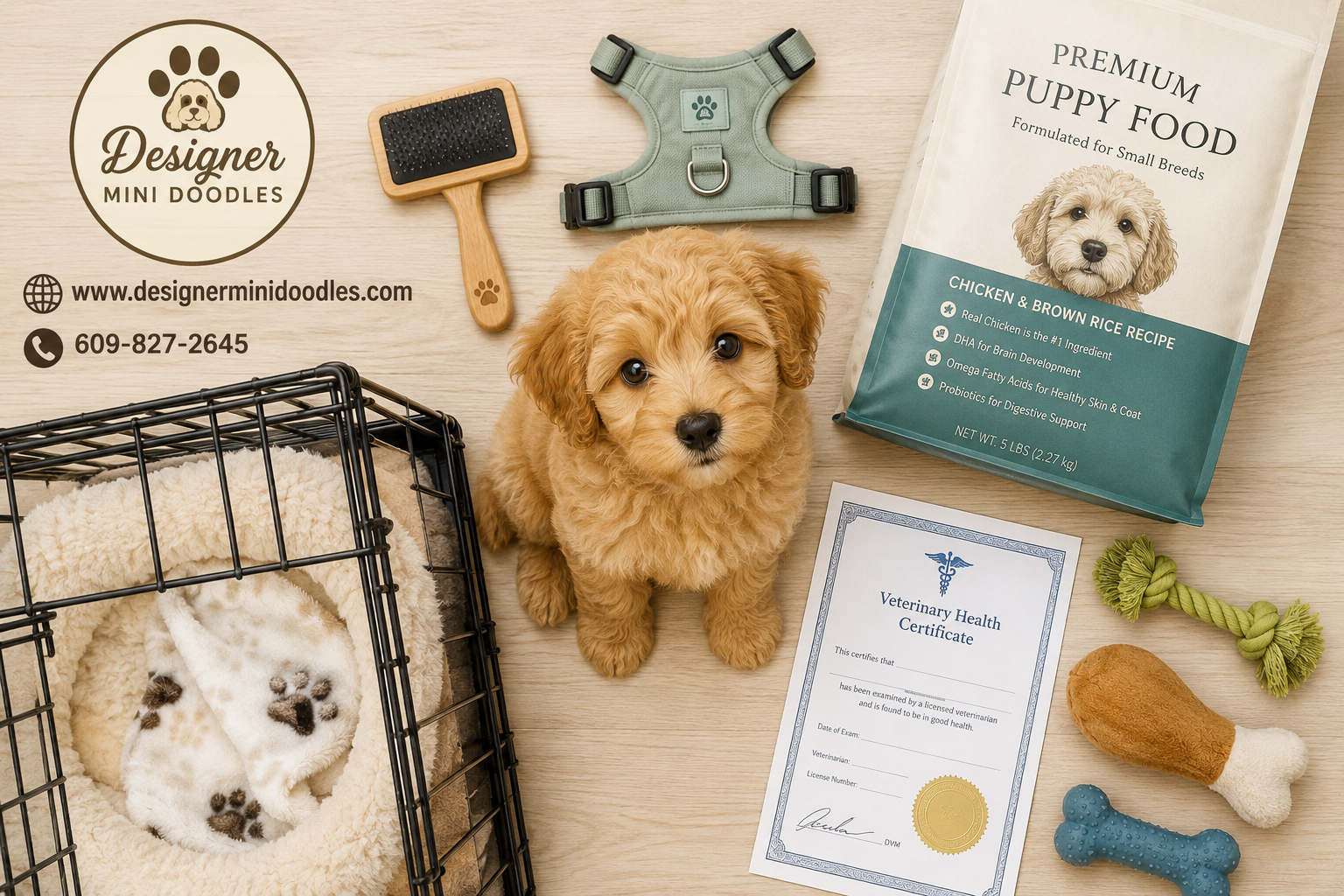
- Veterinary health records and vaccination history
- Genetic health testing results for both parents
- A written health guarantee
- Microchip information
- Feeding schedule and food recommendations
- A contract outlining breeder and buyer responsibilities
Common mistake: Choosing a puppy based solely on color or appearance. Temperament and health should always come first. A skilled breeder can help match you with the puppy whose personality best fits your household.
How to Train a Micro Goldendoodle Puppy
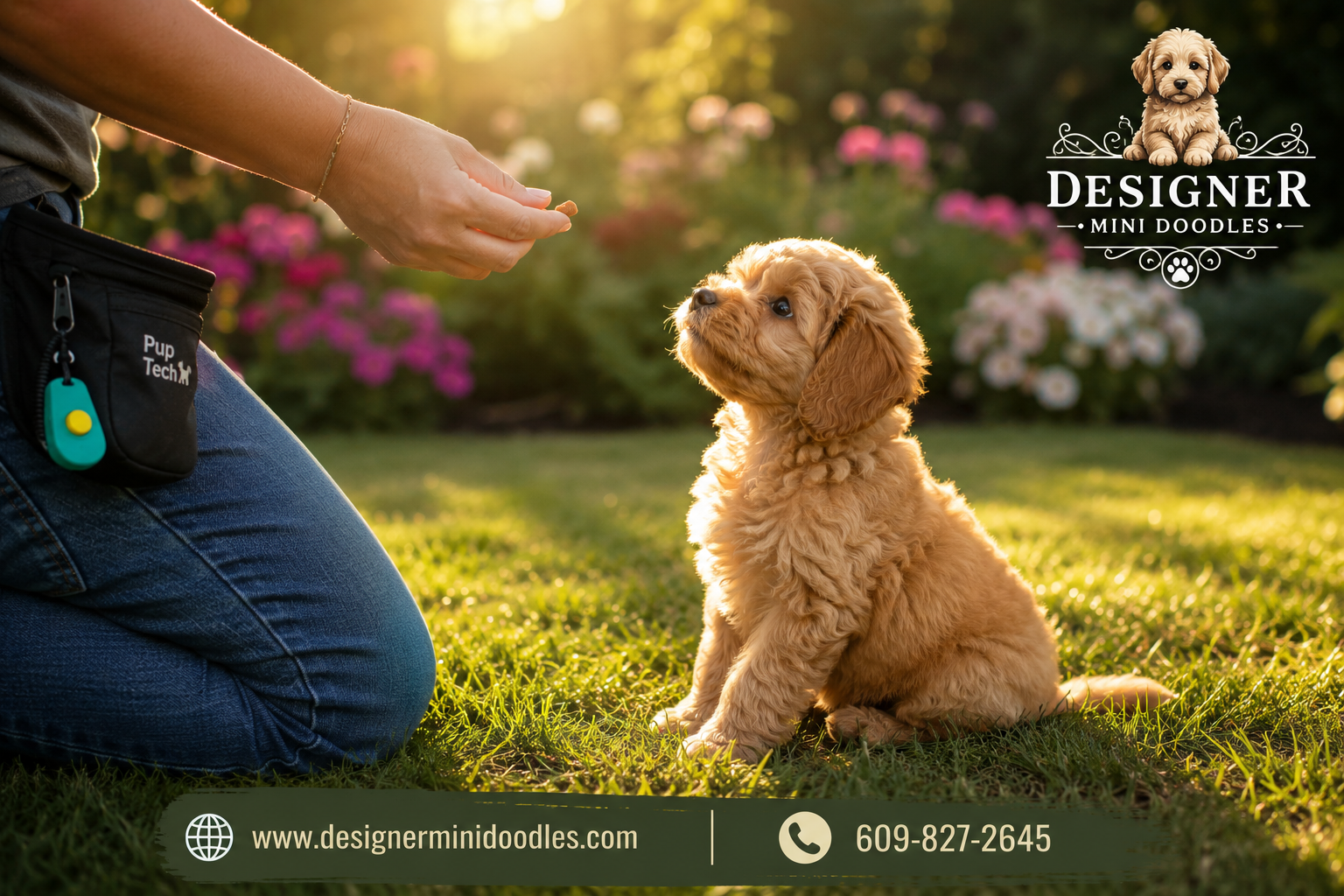
Micro goldendoodles are highly trainable thanks to their Poodle intelligence and Golden Retriever eagerness to please. Most respond best to positive reinforcement methods, and puppies from breeders who start early training have a significant head start.
Training timeline:
- Weeks 3-8 (breeder phase): ENS exercises, early socialization with people and household sounds, introduction to crate and potty area. The best breeders handle this critical window meticulously.
- Weeks 8-12 (new home adjustment): Continue crate training, establish a consistent potty schedule (every 1-2 hours), begin basic commands like “sit” and “name recognition.”
- Weeks 12-16: Expand to “stay,” “come,” and leash walking. Begin controlled socialization with other vaccinated dogs.
- Months 4-6: Introduce more complex commands, increase duration of “stay” and “down,” and work on impulse control exercises.
- Months 6-12: Reinforce all commands in varied environments, address any adolescent regression (it’s normal), and maintain consistency.
Key training principles for micro goldendoodles:
- Keep sessions short (5-10 minutes for puppies)
- Use high-value treats cut into tiny pieces
- Be consistent with commands and expectations across all family members
- Never use physical punishment, which damages trust and can create anxiety in small dogs
- Prioritize socialization during the critical 8-16 week window
For structured training approaches tailored to this size, explore our training and enrichment guide for micro goldendoodles.
Common Mistakes First-Time Micro Goldendoodle Owners Make
Even well-intentioned owners make predictable errors with their first micro goldendoodle. Knowing these in advance can save you stress, money, and heartache.
Mistake 1: Skipping the breeder vetting process. Buying from the first available listing because you’re excited leads to health and behavioral problems down the road. Take the time to verify health testing, visit (or video call) the breeding facility, and ask detailed questions.
Mistake 2: Underestimating grooming needs. That adorable fluffy coat mats quickly. Owners who skip regular brushing end up with a severely matted dog that requires a full shave-down, which is stressful for the puppy and expensive for you.
Mistake 3: Overfeeding. A 12-pound dog needs far less food than most people assume. Obesity in micro goldendoodles leads to joint problems, diabetes, and shortened lifespan. Follow your breeder’s and veterinarian’s feeding guidelines precisely.
Mistake 4: Carrying the dog everywhere. Small dogs still need to walk, explore, and build confidence on their own four feet. Owners who carry their micro goldendoodle constantly can inadvertently create a fearful, anxious dog.
Mistake 5: Skipping dental care. Small breeds are prone to dental crowding and early tooth decay. Start brushing teeth early and schedule professional dental cleanings as recommended by your vet.
Mistake 6: Inconsistent training. Because micro goldendoodles are small and cute, owners often let behaviors slide that they wouldn’t tolerate in a larger dog, like jumping, demand barking, or resource guarding. Small dog, same rules.
Mistake 7: Not puppy-proofing adequately. A 10-pound puppy can squeeze into spaces you wouldn’t expect. Secure electrical cords, remove small objects from floor level, and block access to stairs until the puppy is old enough to navigate them safely.
Frequently Asked Questions
How long do micro goldendoodles live?
Micro goldendoodles have an average lifespan of 12 to 16 years. Smaller dogs generally live longer than larger breeds, and good genetics combined with proper care can push them toward the higher end of that range.
Do micro goldendoodles bark a lot?
Most micro goldendoodles are not excessive barkers, but individual temperament and training matter. Puppies raised with ENS and early socialization tend to be calmer and less reactive to triggers that cause barking.
Can micro goldendoodles be left alone during the workday?
Adult micro goldendoodles can typically handle 4-6 hours alone after proper crate training. Puppies under 6 months should not be left alone for more than 2-3 hours. If your workday is longer, arrange for a midday dog walker.
What generation of micro goldendoodle is best?
F1B (backcross to Poodle) and multigenerational micro goldendoodles are generally preferred because their coats are more predictably low-shedding and their size is more consistent. F1 crosses can vary more widely in both traits.
Are micro goldendoodles good for seniors?
Yes. Their small size, moderate exercise needs, and affectionate nature make them excellent companions for older adults. They’re easy to manage physically and provide consistent companionship without demanding intense activity.
How often do micro goldendoodles need to go to the vet?
Puppies need visits every 3-4 weeks until about 16 weeks old for vaccinations. After that, healthy adult micro goldendoodles should see a vet annually for wellness exams, with dental checkups recommended every 6-12 months.
What’s the best food for a micro goldendoodle?
A high-quality small-breed formula with named protein sources (chicken, salmon, lamb) as the first ingredient. Avoid foods with corn, soy, or artificial preservatives. Your breeder should provide specific food recommendations when you pick up your puppy.
Can I fly with a micro goldendoodle?
Yes. Most micro goldendoodles fit comfortably in airline-approved carriers that slide under the seat. Their small size makes them one of the most travel-friendly doodle varieties. Check your airline’s specific pet policy before booking.
Do micro goldendoodles get along with other pets?
Generally, yes. Their friendly temperament extends to other dogs and often to cats when properly introduced. Early socialization with other animals during the critical development window makes a significant difference.
How do I find micro golden doodle puppies for sale near me?
Start with established breeders who have verifiable health testing programs and years of documented results. Many top breeders, including Designer Mini Doodles, ship nationwide through puppy nanny services, so you aren’t limited to your local area. Always prioritize breeder quality over geographic convenience.
Conclusion
Finding the right micro golden doodle puppies for sale comes down to three non-negotiable priorities: a reputable breeder with documented health testing, a puppy-raising program that includes ENS and early training, and realistic expectations about the time and cost of ownership.
Start your search by vetting breeders thoroughly. Ask for health testing documentation, inquire about their socialization and training protocols, and don’t rush the process because a waitlist is a good sign, not a bad one. Budget $3,000 to $5,500 for the puppy and $1,500 to $3,000 annually for ongoing care.
If you’re ready to take the next step, explore available miniature golden doodle puppies from a breeding program backed by over 15 years of expertise in animal biology. Whether you’re in a downtown apartment or a suburban home, a well-bred micro goldendoodle can be the perfect addition to your family, and with dedicated puppy nanny services, your new companion can reach you anywhere in the world.
SEO Meta Title: Micro Golden Doodle Puppies for Sale: 2026 Buyer Guide
Tags: micro goldendoodle puppies for sale, micro goldendoodle breeders, mini goldendoodle puppies, toy goldendoodle puppies, micro goldendoodle price, goldendoodle puppy care, hypoallergenic dogs, small doodle breeds, micro goldendoodle size, goldendoodle training tips, apartment dogs, designer doodle puppies