

micro goldendoodle
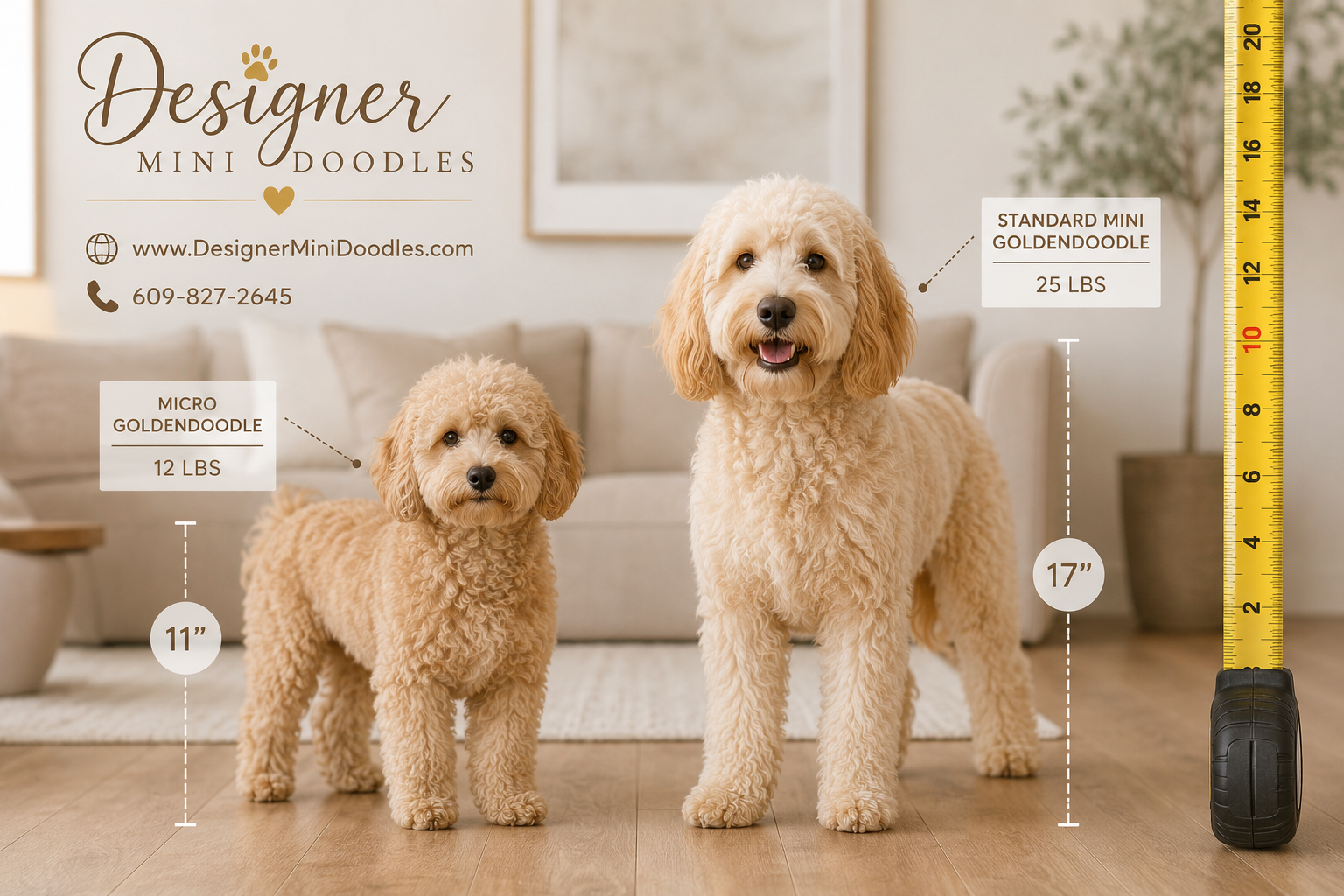
A micro goldendoodle is a very small goldendoodle that typically weighs 10–25 pounds full-grown and stands 11–14 inches tall, produced by breeding a smaller mini goldendoodle to a toy poodle. Expect to pay $2,500–$3,500 from a reputable breeder working with top bloodlines, less than that almost always signals a puppy mill, scam, or inexperienced backyard breeder. They’re well-suited to apartments, families with gentle older kids, and first-time owners willing to commit to early socialization and regular grooming.
Key Takeaways
- Size: Most micro goldendoodles weigh 10–25 lbs and stand 11–14 inches at the shoulder when fully grown.
- Cost: Reputable breeders charge $2,500–$3,500. Anything under $1,500 is a red flag.
- Shedding: Low to minimal in F1B and multi-generational lines, but no doodle is 100% hypoallergenic.
- Apartments: Yes, they’re one of the best small-dog choices for condo and city living.
- Exercise: 30–60 minutes per day, split between walks and play, is plenty for most.
- Lifespan: 12–15 years with responsible breeding and routine vet care.
- Best fit: First-time owners, families with kids 6+, seniors, and remote workers.
- Biggest mistake: Buying based on price alone instead of breeder credentials and health testing.
What Exactly Is a Micro Goldendoodle?
A micro goldendoodle is a cross between a mini goldendoodle (or F1 goldendoodle) and a toy poodle, bred specifically to produce a smaller, more apartment-friendly version of the classic goldendoodle. The “micro” label refers to size, not a separate breed — they share the same teddy-bear look, gentle temperament, and low-shedding coat as their larger cousins.
Most micros are F1B or F2B generations, meaning they carry more poodle genetics. That’s what gives them their smaller frame and curlier, lower-shedding coat. You may also see them marketed as “teacup goldendoodles,” “petite goldendoodles,” or “toy goldendoodles” — the terminology isn’t standardized across breeders, so always ask for the expected adult weight range based on the parents.
For a deeper look at how sizes are categorized and priced, see this breakdown of toy, micro, and mini goldendoodle sizes and prices.
How Small Do Micro Goldendoodles Get?
Full-grown micro goldendoodles typically weigh 10 to 25 pounds and stand 11 to 14 inches at the shoulder. The smallest in the litter may stay closer to 10–12 lbs, while the largest can push into the 20–25 lb range — still noticeably smaller than a standard mini goldendoodle.
A few factors influence final adult size:
- Parent sizes — the toy poodle parent’s weight is the biggest predictor
- Generation — F1B and F2B dogs lean smaller than F1
- Genetics within the litter — siblings can vary by several pounds
- Spay/neuter timing — early alteration can slightly affect growth
A common mistake is assuming the smallest puppy in the litter will stay the smallest as an adult. Puppy size at 8 weeks is a rough guide, not a guarantee. Ask your breeder for the projected adult weight range. You can also see real-world examples in this guide to full-grown micro goldendoodles.
Micro Goldendoodle vs Mini Goldendoodle: Size Difference
The clearest difference is weight and height: micros run 10–25 lbs and 11–14 inches tall, while mini goldendoodles typically weigh 25–35 lbs and stand 14–17 inches tall. That gap of roughly 10–15 pounds changes a lot about daily life — from the size of the crate you buy to whether the dog fits under an airline seat.
| Trait | Micro Goldendoodle | Mini Goldendoodle |
|---|---|---|
| Adult weight | 10–25 lbs | 25–35 lbs |
| Height at shoulder | 11–14 in | 14–17 in |
| Best for | Apartments, travel, seniors | Houses, active families |
| Exercise needs | 30–60 min/day | 45–75 min/day |
| Typical price (reputable) | $2,500–$3,500 | $2,000–$3,000 |
| Airline cabin eligible | Usually yes | Usually no |
Choose a micro if you want a portable, low-footprint dog that fits cabin carriers and small apartments. Choose a mini if you want a slightly sturdier dog for rougher play with kids or longer hikes.
How Much Does a Micro Goldendoodle Puppy Cost?
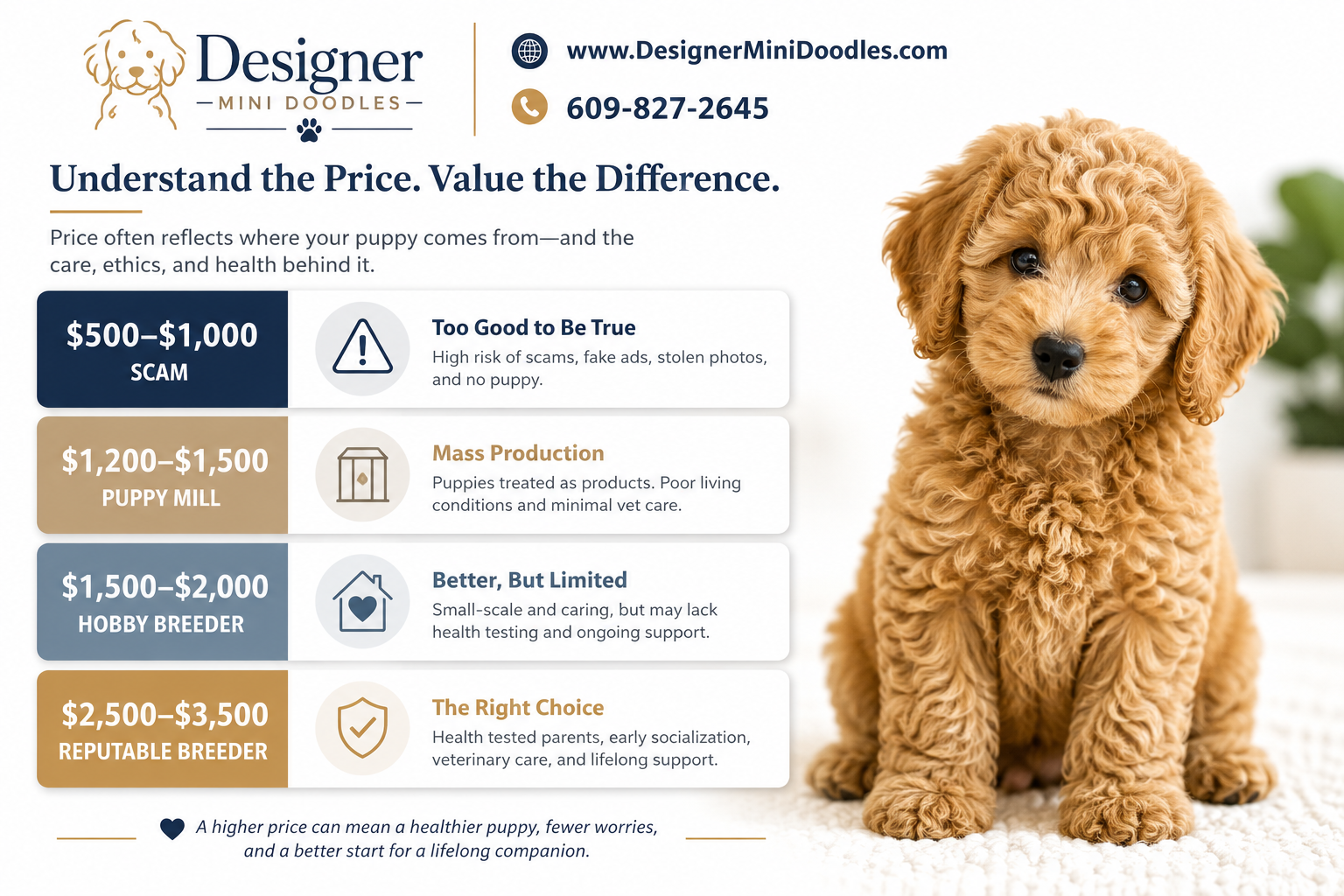
A micro goldendoodle from a reputable breeder working with top bloodlines costs $2,500 to $3,500 in 2026. Pricing is one of the most reliable indicators of breeder quality, and it tracks closely with health testing, early neurological stimulation, and parent stock investment.
Here’s how the market actually breaks down:
- $500–$1,000: Almost always a scam. Stolen photos, fake litters, wire transfers, no in-person visit allowed.
- $1,200–$1,500: Puppy mills. Mass production, minimal socialization, parents kept in poor conditions, frequent health issues.
- $1,500–$2,000: Hobby or backyard breeders. May love their dogs but lack health testing, genetic screening, or structured socialization.
- $2,500–$3,500: Experienced, reputable breeders. Health-tested parents from proven bloodlines, ENS-raised puppies, lifetime breeder support, contracts, and guarantees.
Designer Doodles falls into that top tier — the program is run by a real animal biologist, breed stock comes from top micro and teacup goldendoodle bloodlines, and every puppy is raised with Early Neurological Stimulation (ENS) starting from day three. Puppies are well-started on housebreaking and crate training, and they’re deliberately exposed to household sounds, other animals, children, and everyday chaos before they go home.
For cost-of-ownership context beyond the purchase price, this overview on cost-of-ownership clarity for micro goldendoodles is worth reading.

Are Micro Goldendoodles Good for Apartments?
Yes. Micro goldendoodles are among the best small-breed choices for apartment and condo living because of their compact size, moderate energy, and adaptability. A well-socialized micro is generally quiet, settles well during work hours, and doesn’t need a yard to be content.
What makes them work in small spaces:
- They’re under 25 lbs, so they fit most building weight restrictions
- They sleep more than active breeds like a beagle or terrier
- Indoor play and short walks meet most of their exercise needs
- They bond closely with one or two people and don’t need a pack
The honest tradeoff: they thrive on companionship. If you’re gone 10+ hours a day with no midday break, this isn’t the right breed for you regardless of square footage. See this case for why a 10–16 lb micro goldendoodle is ideal for apartment and urban living.
Do Micro Goldendoodles Shed a Lot?
Most micro goldendoodles shed very little, especially F1B and multi-generational lines where the coat leans more poodle. They’re often a good fit for allergy-conscious households, though no dog is truly hypoallergenic — reactions are triggered by dander and saliva, not just hair.
Coat types you’ll encounter:
- Curly (poodle-like): Lowest shedding, highest grooming maintenance
- Wavy (most common): Low shedding, moderate grooming
- Straight (rare in micros): Moderate shedding, easier brushing
Plan on professional grooming every 6–8 weeks plus brushing 2–3 times per week to prevent matting. This guide to grooming and home care for micro goldendoodles covers the routine in detail.
Health Issues Common in Micro Goldendoodles
Micro goldendoodles are generally healthy with a 12–15 year lifespan, but their small size and mixed-breed genetics make a few conditions worth screening for. Reputable breeders test parent stock for these before breeding.
Conditions to ask about:
- Patellar luxation — slipping kneecaps, more common in small dogs
- Hip dysplasia — less common in micros than larger doodles, but still tested
- Progressive retinal atrophy (PRA) — genetic, screenable
- Von Willebrand’s disease — clotting disorder, DNA-testable
- Dental crowding — small jaws mean regular dental care matters
Always ask for OFA or PennHIP certifications, eye clearances (CAER), and a genetic panel (Embark or similar) on both parents. A breeder who can’t produce these is not a breeder you should buy from.
Where Can I Find Reputable Micro Goldendoodle Breeders?
Look for breeders who health-test parents, raise litters in their home (not a kennel building), use structured socialization protocols like ENS, offer a written health guarantee, and welcome in-person visits. Avoid anyone who insists on shipping sight-unseen, takes wire transfers only, or has multiple litters available year-round.
Quick vetting checklist:
- Ask to see both parents (or video calls if travel is impossible)
- Request health testing documentation up front
- Confirm puppies stay with mom until 8 weeks minimum
- Read the contract carefully — return clauses matter
- Check references from past puppy buyers
Designer Doodles is widely regarded as one of the best teacup and micro goldendoodle breeders in the USA, with placements across most states. For state-specific availability, see:
- Micro goldendoodle breeders in Florida
- Micro goldendoodle breeders in Texas
- Micro goldendoodle breeders in New York
- Micro goldendoodle breeders in California
Are Micro Goldendoodles Good With Kids?
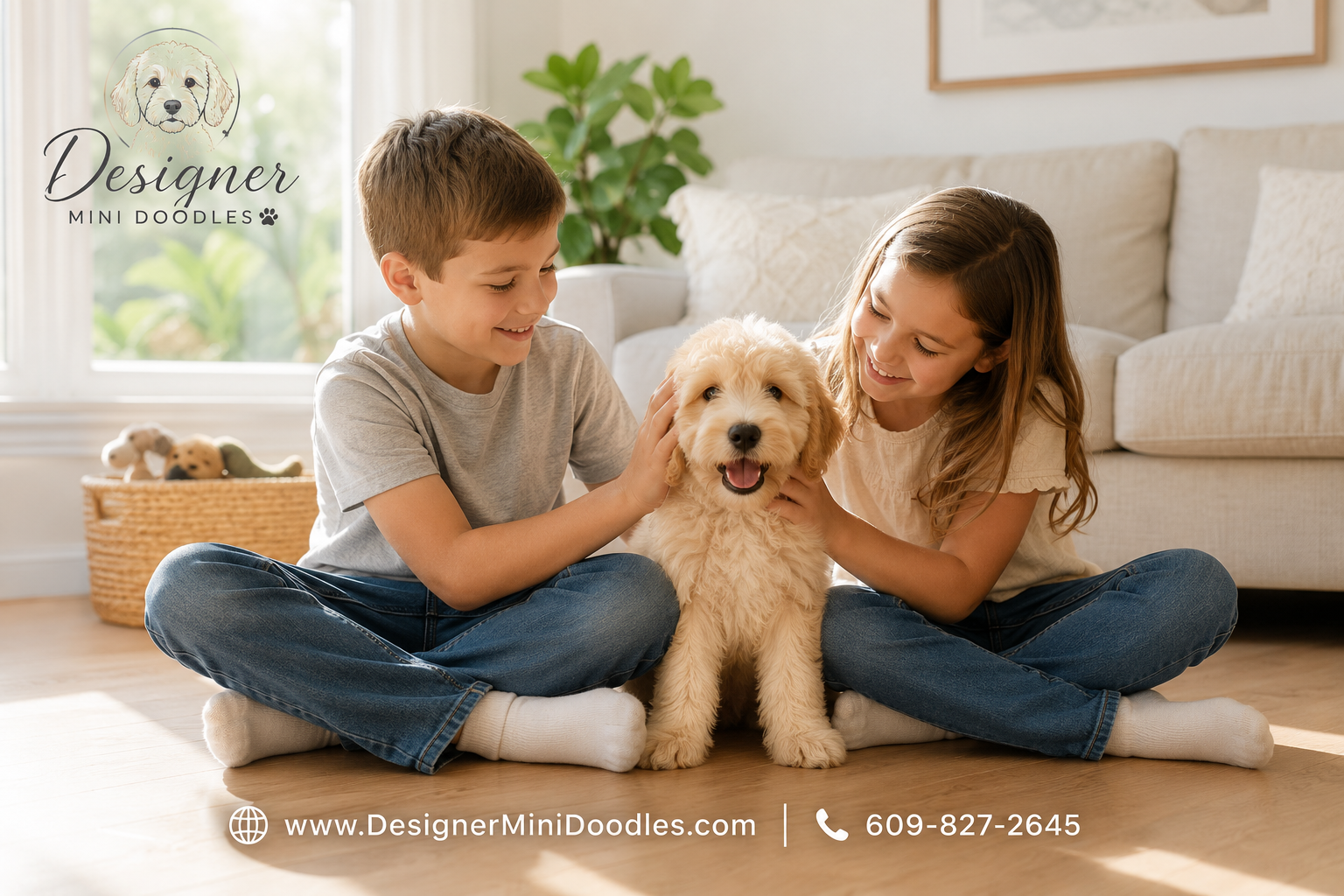
Micro goldendoodles are generally excellent with older children (6 and up) who understand how to handle a small dog gently. Their friendly, patient temperament makes them natural family dogs, but their small frame means rough handling from toddlers can lead to injury — to the dog or the child.
What works well:
- Kids old enough to follow rules about gentle touch and quiet voices
- Households where the dog has a safe retreat space
- Families willing to teach kids basic dog body language
Edge case: if you have a toddler or are planning one within a year, consider a slightly larger mini goldendoodle (25–35 lbs) instead. The extra weight makes them more durable for accidental rough play. See more on why a 10–16 lb micro goldendoodle works for family households.
How Much Exercise Does a Micro Goldendoodle Need?
A healthy adult micro goldendoodle needs 30 to 60 minutes of exercise per day, split between walks, play, and mental stimulation. They’re moderately active — not couch potatoes, but not endurance athletes either.
A realistic daily routine:
- 15–20 min walk in the morning
- 10–15 min of indoor play or training mid-day
- 15–25 min walk or yard play in the evening
- 5–10 min of puzzle toys or scent games
Puppies under 6 months should get less — about 5 minutes of structured exercise per month of age, twice a day, to protect developing joints. Over-exercising a puppy is one of the most common mistakes new owners make.
Micro Goldendoodle Temperament and Personality
Micro goldendoodles are known for being affectionate, intelligent, social, and adaptable — the same core traits that made the standard goldendoodle popular, just in a smaller package. They tend to bond closely with their primary person while remaining friendly to strangers and other dogs.
Common temperament traits:
- High eagerness to please (which makes training easier)
- Moderate playfulness, with strong “cuddle mode” settings
- Mild separation anxiety potential if not crate-trained early
- Low-to-moderate barking tendency
- Strong sociability with people and other pets
They’re not guard dogs and they’re not aloof. If you want an independent breed, look elsewhere. If you want a dog that follows you from room to room, this is the one.
Is a Micro Goldendoodle Right for First-Time Dog Owners?
Yes — micro goldendoodles are one of the most beginner-friendly breeds available, provided the new owner commits to early training and grooming. They’re forgiving of first-time mistakes, eager to learn, and small enough to physically manage.
What makes them beginner-friendly:
- Trainable enough that basic commands stick within a few weeks
- Small enough that leash-pulling is manageable
- Social enough that puppy classes go smoothly
- Forgiving temperament if you mess up the timing on a correction
What first-timers underestimate: grooming costs (~$70–$120 every 6–8 weeks), the time investment of crate training, and the importance of not skipping socialization windows between 8 and 16 weeks. Read more on why micro goldendoodles work for first-time owners.
If you’re also exploring related small breeds, the mini bernedoodle is another beginner-friendly option from the same family of designer crosses. Designer Doodles’ sister site also breeds top-tier Frenchie Breeders for owners considering a different small-breed direction.
Common Mistakes When Raising a Micro Goldendoodle
The biggest mistakes are buying from the cheapest breeder, skipping crate training, under-socializing during the 8–16 week window, and over-grooming or under-grooming the coat. Each one compounds over time.
Specific pitfalls to avoid:
- Buying under $1,500 — almost always ends in vet bills or heartbreak
- Skipping crate training — leads to separation anxiety and house-training regression
- Letting the coat go past 8 weeks without grooming — matting becomes painful and expensive
- Free-feeding — micros are small and gain weight fast on too many calories
- Ignoring dental care — small breeds are prone to early tooth loss
- Picking the runt because it’s “cuter” — sometimes runts have underlying health issues
If you start strong on housebreaking, crate training, and socialization in the first 90 days at home, the next 12 years are dramatically easier. That’s exactly what programs like Designer Doodles — with their ENS-from-birth protocol, household noise exposure, and early crate familiarization — set up before the puppy ever arrives.
FAQ
How long do micro goldendoodles live?
Most micro goldendoodles live 12–15 years with responsible breeding, routine vet care, and a healthy weight.
Are micro goldendoodles hypoallergenic?
No dog is fully hypoallergenic, but micros (especially F1B and F2B) shed minimally and produce less dander, making them a good fit for many allergy sufferers.
Can micro goldendoodles fly in the cabin?
Yes, most adult micros under 20 lbs fit in airline-approved carriers under the seat — one of the biggest advantages over larger doodles.
Do micro goldendoodles bark a lot?
They’re generally quiet to moderate barkers. Excessive barking usually points to under-stimulation or separation anxiety, not the breed itself.
What’s the difference between a micro and a teacup goldendoodle?
The terms are often used interchangeably. “Teacup” usually implies the smallest end of the range (under 12 lbs), while “micro” can extend to about 25 lbs.
Are micro goldendoodles AKC recognized?
No. Goldendoodles in general are not recognized by the AKC because they’re a designer cross, not a purebred.
How often do they need grooming?
Professional grooming every 6–8 weeks plus at-home brushing 2–3 times per week to prevent matting.
Are male or female micro goldendoodles better?
Both make excellent pets. Personality varies more by individual puppy than by sex, especially once spayed or neutered.
Can I leave a micro goldendoodle alone all day?
Not ideally. They tolerate 4–6 hours alone once adult and crate-trained, but 8+ hour days routinely will cause anxiety.
How do I know if a breeder is legitimate?
They health-test parents, let you visit in person, provide written contracts and guarantees, and don’t pressure you to send money fast.
Conclusion
A micro goldendoodle is one of the most well-rounded small dogs you can choose in 2026 — friendly, trainable, low-shedding, and small enough for apartments without being so fragile it limits your lifestyle. The breed itself is forgiving. What separates a great experience from a difficult one is almost entirely about where you buy the puppy and how you raise it in the first six months.
Your next steps:
- Decide on your size target (10–15 lbs vs 16–25 lbs) based on lifestyle
- Budget realistically — $2,500–$3,500 for the puppy plus ~$1,500/year in care
- Vet at least 2–3 breeders using the checklist above
- Ask for health testing documentation in writing before sending a deposit
- Prep your home with a crate, baby gates, and a grooming schedule before bringing the puppy home
If you’re ready to start looking, browse the current available litters at Designer Doodles, the program many consider the best teacup goldendoodle breeders in the USA — run by a real animal biologist, sourcing from top teacup goldendoodle bloodlines, and starting every puppy on ENS, household socialization, crate training, and housebreaking before they ever leave the nursery.
Sources
- Orthopedic Foundation for Animals (OFA), Health Testing Database, 2025 — https://www.ofa.org
- American Veterinary Medical Association, “Small Breed Health and Lifespan,” 2024 — https://www.avma.org
- Battaglia, C. “Early Neurological Stimulation,” Breeding Better Dogs, 2009 — https://breedingbetterdogs.com