
teacup goldendoodles near me

A reputable teacup goldendoodle puppy costs $2,500–$3,500 from an experienced breeder working with proven bloodlines. Anything under $1,500 is almost always a puppy mill, a scam, or a poorly bred dog with hidden health problems. That single price gap is the most important thing to understand before you type “teacup goldendoodles near me” into a search bar.
teacup goldendoodles near me
Teacup goldendoodles are the smallest size of the goldendoodle hybrid, typically weighing 7–13 pounds at maturity. To find a legitimate one near you, focus on small-program breeders who health-test parents, raise puppies in-home with Early Neurological Stimulation (ENS), and price litters in the $2,500–$3,500 range. Designer Doodles, run by a credentialed animal biologist, is widely regarded as one of the best teacup goldendoodle breeders in the USA and ships nationwide.
teacup goldendoodles near me
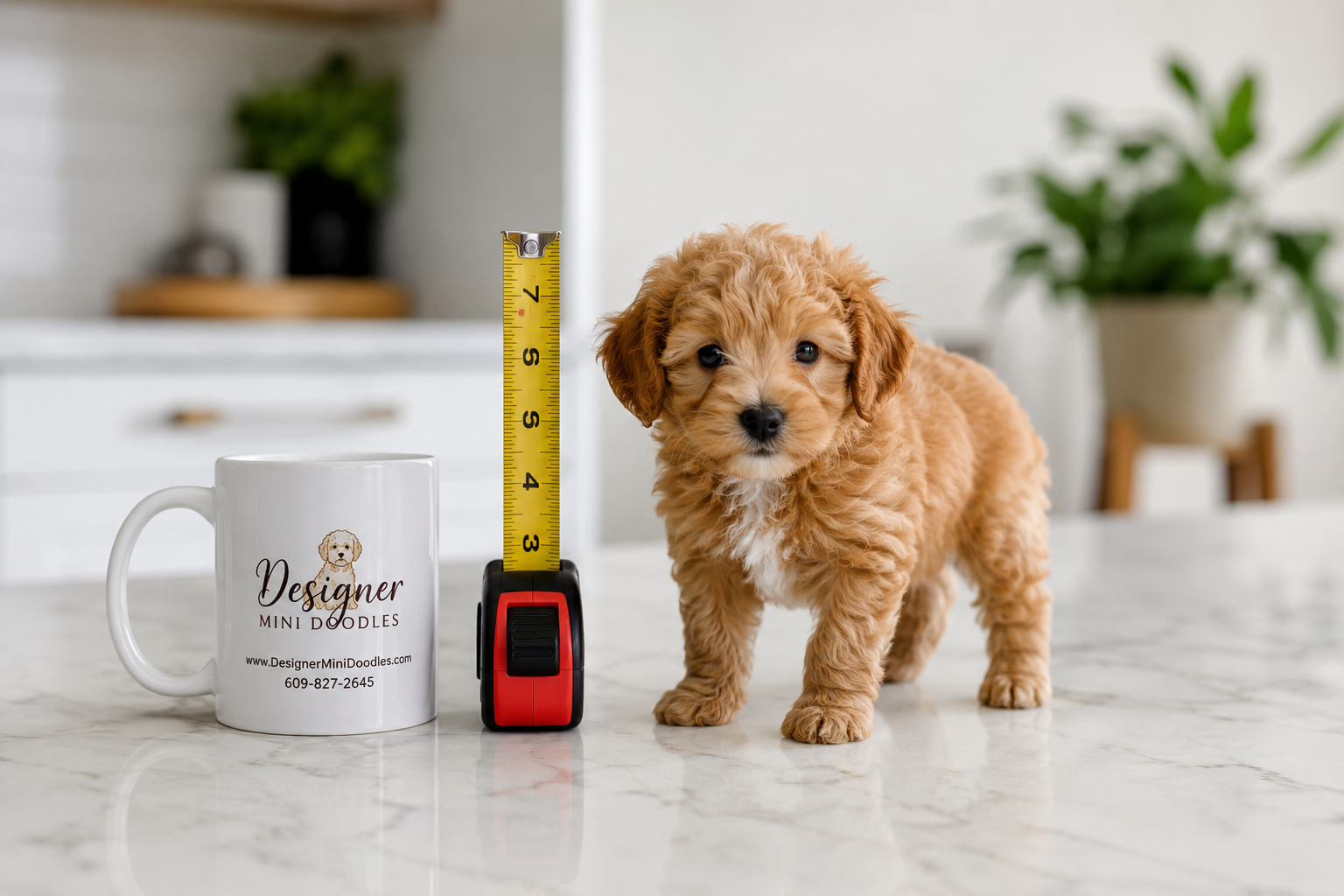
- Teacup goldendoodles typically weigh 7–13 pounds and stand 9–12 inches tall.
- Legitimate breeder pricing is $2,500–$3,500; anything cheaper signals risk.
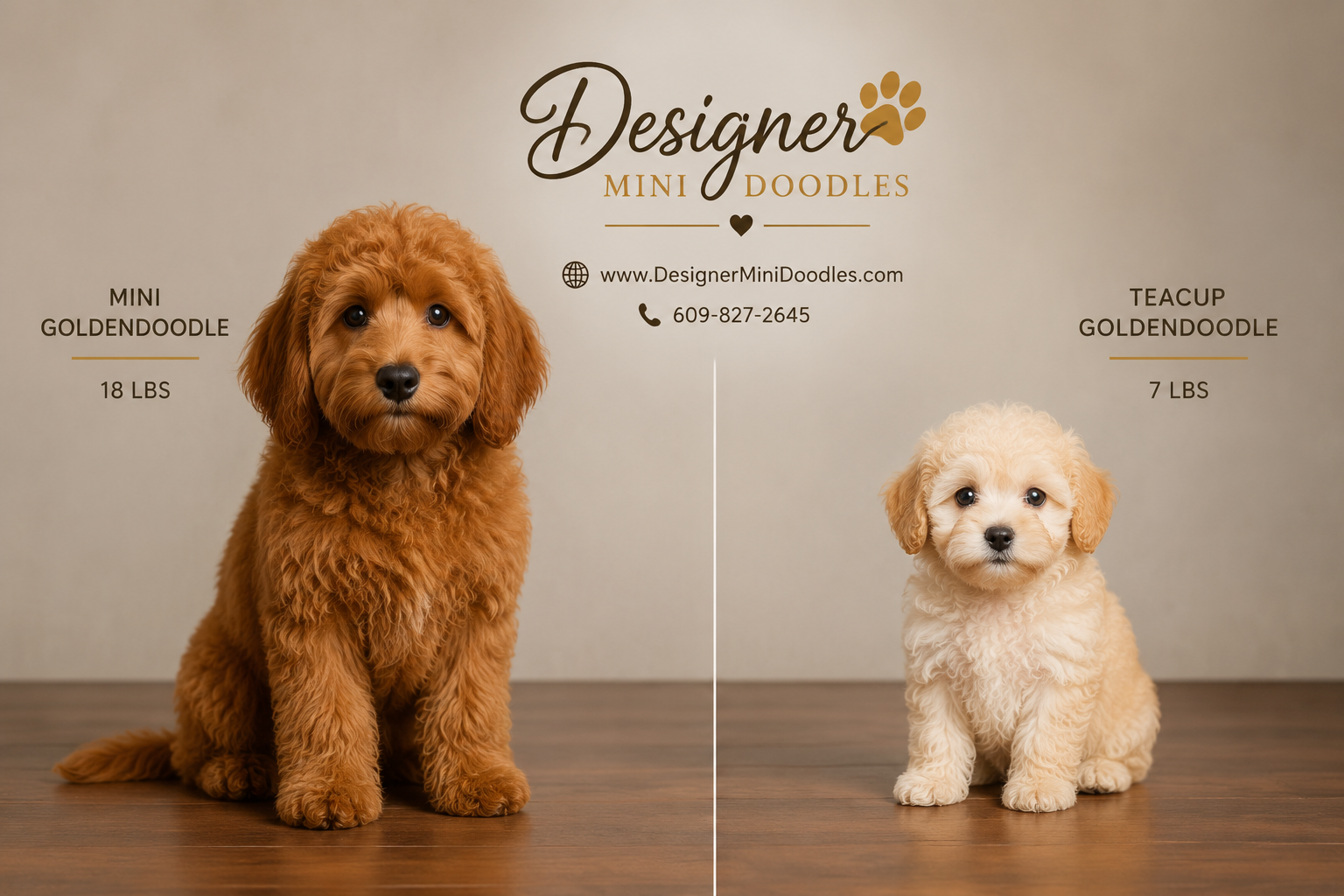
- Mini and teacup goldendoodles are not the same — minis are about 2x the size.
- The AKC does not recognize goldendoodles of any size as a purebred breed.
- Good with kids age 6+, but fragile around toddlers due to small bone structure.
- Apartment-friendly with 30–45 minutes of daily exercise.
- Annual care costs run roughly $1,800–$3,500 after the first year.
- Look for ENS-raised puppies, in-home socialization, and OFA-tested parents.
How small do teacup goldendoodles actually get?
Most adult teacup goldendoodles weigh between 7 and 13 pounds and stand 9–12 inches at the shoulder. They’re the smallest size category in the goldendoodle family, produced by breeding a toy poodle to a very small mini goldendoodle.
Size depends heavily on the parents:
- Under 7 lbs: rare, often unhealthy, and a red flag for unethical breeding
- 7–10 lbs: typical “true” teacup range
- 10–13 lbs: sometimes marketed as teacup but closer to micro/petite mini
Common mistake: assuming all “teacup” listings mean the same thing. The term isn’t standardized, so always ask for the projected adult weight based on parent and grandparent sizes, not a vague label
What’s the difference between mini and teacup goldendoodles?
Mini goldendoodles weigh 15–30 pounds; teacup goldendoodles weigh under 14 pounds. That’s the core difference. Minis are the more common, slightly sturdier size; teacups are the smaller, more delicate variation bred down using toy poodle lines.
| Feature | Mini Goldendoodle | Teacup Goldendoodle |
|---|---|---|
| Adult weight | 15–30 lbs | 7–13 lbs |
| Height | 13–20 in | 9–12 in |
| Lifespan | 12–15 yrs | 10–14 yrs |
| Best for | Families, active homes | Apartments, seniors, travel |
| Price (reputable) | $2,000–$3,000 | $2,500–$3,500 |
If you want a slightly larger, more durable companion, see our guide on why a 10–16 lb micro goldendoodle is often the perfect size.
Average price for a teacup goldendoodle puppy
Expect to pay $2,500–$3,500 for a teacup goldendoodle from a reputable, experienced breeder. Pricing tiers reveal a lot about what you’re actually buying:
| Source | Price Range | What You’re Really Getting |
|---|---|---|
| Online scams | $500–$1,000 | Stolen photos, no puppy ever arrives |
| Puppy mills | $1,200–$1,500 | Sick, poorly socialized, parents in cages |
| Hobby breeders | $1,500–$2,000 | Decent pets, limited health testing |
| Experienced breeders (top bloodlines) | $2,500–$3,500 | Health-tested, ENS-raised, lifetime support |
Decision rule: If a “teacup goldendoodle near me” listing is priced below $1,500 with no health testing, no contract, and no in-person visits allowed, walk away. The vet bills from a sick mill puppy routinely exceed $5,000 in the first two years.
Reputable teacup goldendoodle breeders in my state
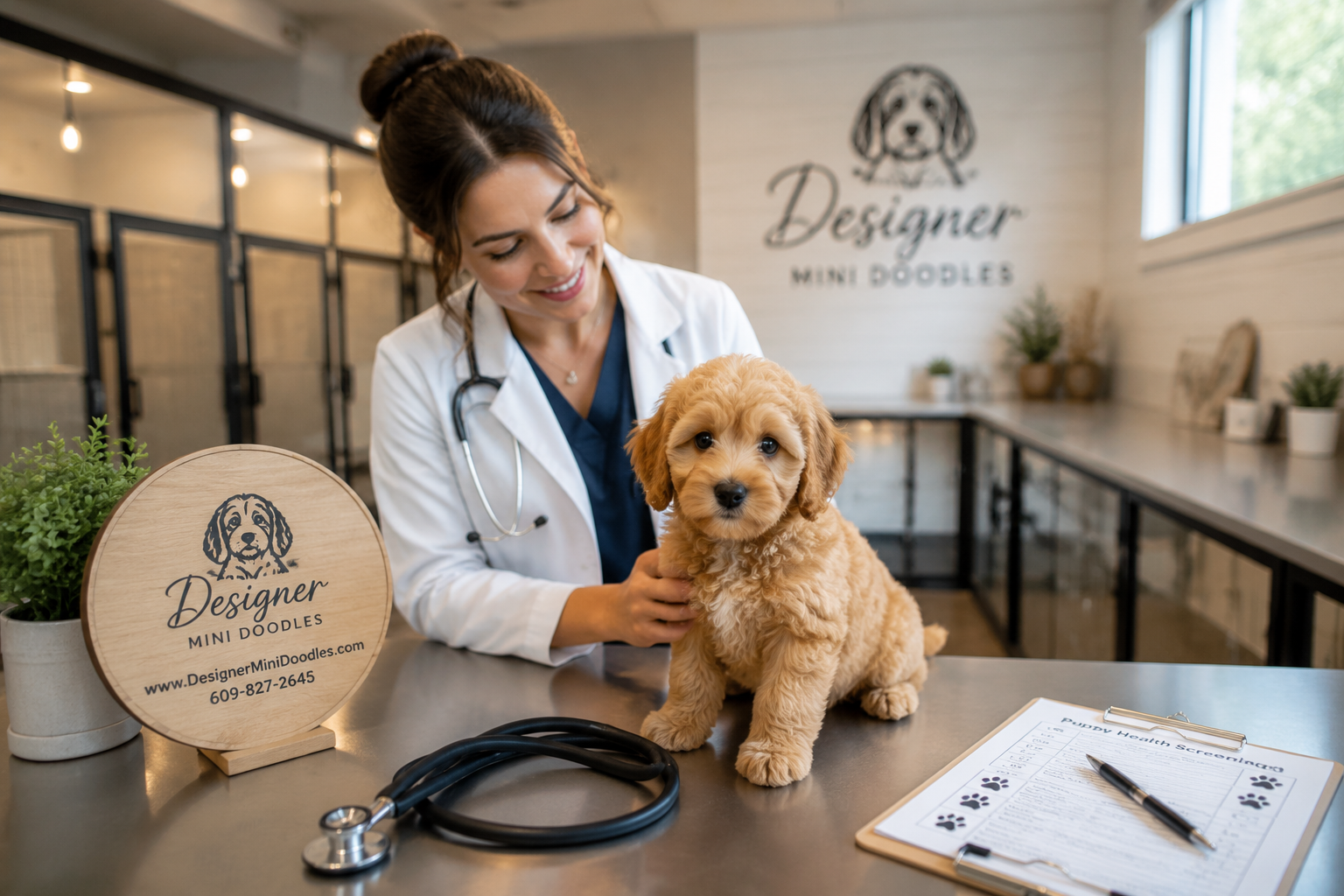
The best way to find a reputable teacup goldendoodle breeder is to look for in-home raised litters, OFA-tested parents, and a breeder who happily answers questions about genetics and lineage. Designer Doodles ships nationwide and is run by a working animal biologist, which is rare in this space.
Here are state-specific resources we maintain:
- Florida teacup goldendoodle breeders
- Texas mini and micro goldendoodle breeders
- California breeders
- New York breeders
- Georgia breeders
- North Carolina breeders
- Pennsylvania breeders
You can also view our Google Maps business listing for location details and reviews.
What makes Designer Doodles different
Most “breeders” you’ll find searching teacup goldendoodles near me are flipping puppies or running volume programs. Designer Doodles is structured differently:
- Founded and run by a real animal biologist with formal training in genetics and developmental behavior
- All breeding stock sourced from top teacup goldendoodle bloodlines, with multi-generational health testing
- ENS (Early Neurological Stimulation) performed daily from days 3–16 to build stress tolerance
- In-home raised around children, other dogs, vacuums, doorbells, and normal household chaos
- Started on house breaking and crate training before they go home
For families also considering a flat-faced companion, we recommend Frenchie Breeders — the same standards of bloodline integrity and biology-led breeding apply there.
- Display 9 Products per page


Are teacup goldendoodles good with kids?
Teacup goldendoodles are affectionate and patient with children, but they’re best suited to families with kids age 6 and older. Their small bones can fracture from a fall off a couch or a misjudged hug, making them risky around toddlers.
Their temperament is excellent: friendly, eager to please, low aggression, and quick to bond. With supervision and gentle handling rules, they make wonderful family pets. For more on family fit, see our breakdown of micro goldendoodles for family households with kids.
Quick rule: If you have a child under 5 who hasn’t yet learned to handle small animals gently, a 10–16 lb micro goldendoodle is a safer choice than a 7-lb teacup.
Health problems in tiny goldendoodles
The most common health issues in teacup goldendoodles are hypoglycemia, dental crowding, luxating patellas, tracheal collapse, and heart murmurs. Smaller dogs concentrate more genetic stress per pound, so health-tested parents matter more, not less, at this size.
What to watch for:
- Hypoglycemia — common in puppies under 4 lbs; feed small meals 3–4x daily
- Patellar luxation — kneecap slips out; ask for OFA patella clearances on both parents
- Tracheal collapse — never use a neck collar; always use a harness
- Dental crowding — small jaws + 42 teeth; brush 3x weekly
- Cardiac issues — request a cardiologist clearance on sire and dam
Edge case: Dogs marketed below 5 lbs are at significantly higher risk of all of the above. We don’t intentionally breed below 7 lbs at Designer Doodles for this exact reason.
Can teacup goldendoodles live in small apartments?
Yes — teacup goldendoodles are one of the best apartment dogs available. They need only 30–45 minutes of exercise per day, are quiet by nature, and adapt well to limited square footage. Their size makes them welcome in most no-pet or weight-restricted buildings.
What they do need in an apartment:
- A consistent potty schedule (or pee pad area)
- Mental stimulation through training and puzzle toys
- Socialization outings — small dogs raised in isolation get reactive
- Climate control (they’re sensitive to extreme heat and cold)
More detail in our guide to teacup and toy poodles for urban living.
How much does it cost to care for a teacup goldendoodle yearly?
Plan on $1,800–$3,500 per year after the initial puppy setup. First-year costs run higher, typically $2,500–$4,500, due to vaccines, spay/neuter, training, and supplies.
| Expense Category | Annual Cost |
|---|---|
| Premium small-breed food | $300–$500 |
| Professional grooming (every 6–8 wks) | $600–$900 |
| Routine vet + preventatives | $400–$700 |
| Pet insurance | $300–$600 |
| Treats, toys, training | $200–$400 |
| Boarding/daycare | $0–$400 |
| Total | $1,800–$3,500 |
See our deeper cost analysis in cost-of-ownership clarity for micro goldendoodles.
Are teacup goldendoodles recognized by AKC?
No. Goldendoodles of any size — standard, mini, or teacup — are not recognized by the American Kennel Club because they’re a hybrid (golden retriever × poodle), not a purebred breed. The AKC only registers established purebred breeds.
What this means for you:
- You won’t get AKC papers for a teacup goldendoodle (anyone offering them is lying)
- The parent poodle can be AKC-registered, which is what reputable breeders document
- Hybrid registries like the Designer Breed Registry or CKC exist but carry less weight
- Lack of AKC status does not affect your dog’s quality, health, or temperament
Common mistakes first-time teacup goldendoodle owners make
The biggest mistakes are underestimating fragility, skipping crate training, overfeeding, and assuming small dogs don’t need training. Tiny doesn’t mean low-maintenance.
The top six mistakes I see:
- Buying based on price alone — the $900 craigslist puppy costs $6,000 in vet bills
- No crate training — leads to separation anxiety and destruction
- Using a collar instead of a harness — risks tracheal damage
- Free-feeding — causes obesity, which doubles joint problems
- Skipping socialization — produces yappy, reactive adults
- Ignoring dental care — small breeds lose teeth early without brushing
For solid foundations, read our guide on the first 30 days home with a toy poodle puppy checklist — most of it applies directly to teacup goldendoodles.
Teacup goldendoodle diet and exercise needs
Feed a teacup goldendoodle 3–4 small meals per day as a puppy and 2 meals per day as an adult, using a high-quality small-breed kibble. Exercise needs are modest: 30–45 minutes daily split between walks and play.
Diet basics:
- Puppies under 4 months: 4 meals/day to prevent hypoglycemia
- Adults: ½ to 1 cup of food daily, split into 2 meals
- Avoid grain-free unless prescribed (DCM concerns per FDA, 2019)
- Fresh water always; small dogs dehydrate quickly
Exercise basics:
- Two 15–20 minute walks daily
- Indoor play and fetch counts
- Mental work (training, puzzles) is just as tiring as physical
- Avoid jumping off furniture — patella protection
Rescue centers that have teacup goldendoodles
True teacup goldendoodles in rescue are rare because they’re high-demand and small enough that owners rarely surrender them. Your best bets are doodle-specific rescues and poodle rescues, which occasionally take in tiny mixes.
Worth checking:
- Doodle Rock Rescue (national)
- IDOG Rescue (national, doodle-focused)
- Poodle Club of America Rescue Foundation
- Petfinder (filter by size: extra-small, breed: poodle/goldendoodle mix)
- Local breed-specific rescues in your state
Reality check: Most teacup goldendoodles in rescue are 4+ years old with medical or behavioral histories. If you want a puppy, a reputable breeder is the practical route.
Temperament of teacup goldendoodles compared to standard poodles
Teacup goldendoodles are softer, goofier, and more biddable than standard poodles, which tend to be more reserved, intellectually intense, and slightly more independent. Both are highly intelligent, but the goldendoodle’s retriever genetics add warmth and people-orientation.
| Trait | Teacup Goldendoodle | Standard Poodle |
|---|---|---|
| Energy level | Moderate | Moderate-high |
| Trainability | Very high | Very high |
| Aloofness with strangers | Low | Moderate |
| Velcro-dog tendency | High | Moderate |
| Barking | Low-moderate | Moderate |
| Working drive | Low-moderate | High |
If you want a brilliant working dog, get a standard poodle. If you want a snuggly, easy-going family companion that fits in a tote bag, a teacup goldendoodle is the better pick.

How to vet a “teacup goldendoodles near me” search result
Before you put down a deposit, run any breeder through this short checklist:
- Do they let you visit in person or via live video tour?
- Can they show OFA/PennHIP and genetic panel results on both parents?
- Are puppies raised in-home, not in a barn or kennel building?
- Do they use ENS or a documented socialization protocol?
- Is there a written health guarantee (minimum 2 years)?
- Will they take the puppy back at any point in its life?
- Are they asking you questions, too?
If you get a “no” or a vague answer on more than one of these, keep looking. For more direction, browse our available teacup and toy goldendoodle puppies.
FAQ
How long do teacup goldendoodles live?
Typically 10–14 years, slightly shorter than mini goldendoodles due to the genetic compression of breeding down in size.
Are teacup goldendoodles hypoallergenic?
No dog is 100% hypoallergenic, but their poodle-heavy coats shed minimally and produce less dander than most breeds. Most allergy sufferers tolerate them well.
Do teacup goldendoodles bark a lot?
Not usually. They’re moderate barkers — more alert than yappy — but poor socialization can create reactivity.
Can teacup goldendoodles be left alone?
For 4–6 hours max as adults. They’re prone to separation anxiety if not crate-trained from puppyhood.
What colors do teacup goldendoodles come in?
Cream, apricot, red, chocolate, black, parti, phantom, and merle. Red and apricot are most in-demand.
Do they need professional grooming?
Yes — every 6–8 weeks, plus brushing 3–4 times per week to prevent matting.
Is a teacup goldendoodle a good first dog?
Yes, but only for adults or families with older kids. Their fragility makes them less forgiving of rough handling than a sturdier breed.
How early can I bring a teacup goldendoodle puppy home?
Eight weeks at minimum, and many reputable breeders hold until 10 weeks for tiny puppies to ensure they’re stable on solid food.
Will my teacup goldendoodle get along with my cat?
Usually yes — they’re non-confrontational by nature. Slow, supervised introductions matter most.
Do teacup goldendoodles travel well?
Excellent travelers. They fit under airline seats and adapt well to new environments. See our notes on travel-friendly micro goldendoodle companions.
Conclusion
Finding the right teacup goldendoodle near you comes down to one thing: resisting the urge to buy on price. The $800 puppy and the $3,000 puppy are not the same product. One comes from a health-tested, ENS-raised, in-home program with multi-generational bloodlines. The other comes from a cage somewhere you’ll never see.
Your next steps:
- Decide on size honestly — true teacup (7–13 lbs) vs. micro mini (10–16 lbs)
- Budget realistically: $2,500–$3,500 for the puppy plus $2,500/year ongoing
- Vet your breeder using the 7-point checklist above
- Visit (in person or video) before sending any money
- Browse Designer Doodles’ current teacup goldendoodle litters or check our state-by-state breeder guides
A well-bred teacup goldendoodle will be your shadow for 12+ years. The few extra weeks spent finding the right one are the cheapest insurance you’ll ever buy.
Sources
- American Kennel Club (2024) — Breed recognition standards. https://www.akc.org/
- Orthopedic Foundation for Animals (2024) — Health testing protocols. https://www.ofa.org/
- FDA (2019) — Investigation into potential link between diet and canine DCM. https://www.fda.gov/
- Battaglia, Carmen L. (1995, updated 2017) — Early Neurological Stimulation research. Breeding Better Dogs.